New York Northern District Bankruptcy Guide and Forms Package for Chapters 7 or 13
Overview of this form
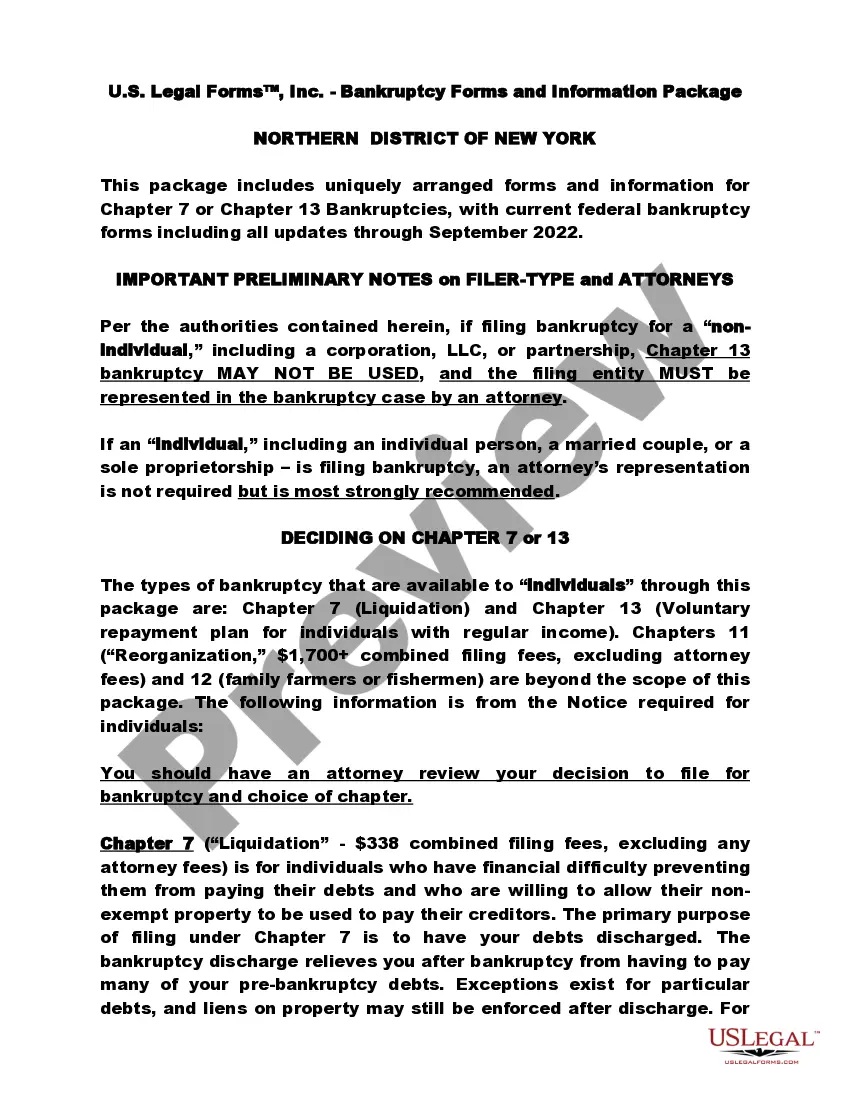
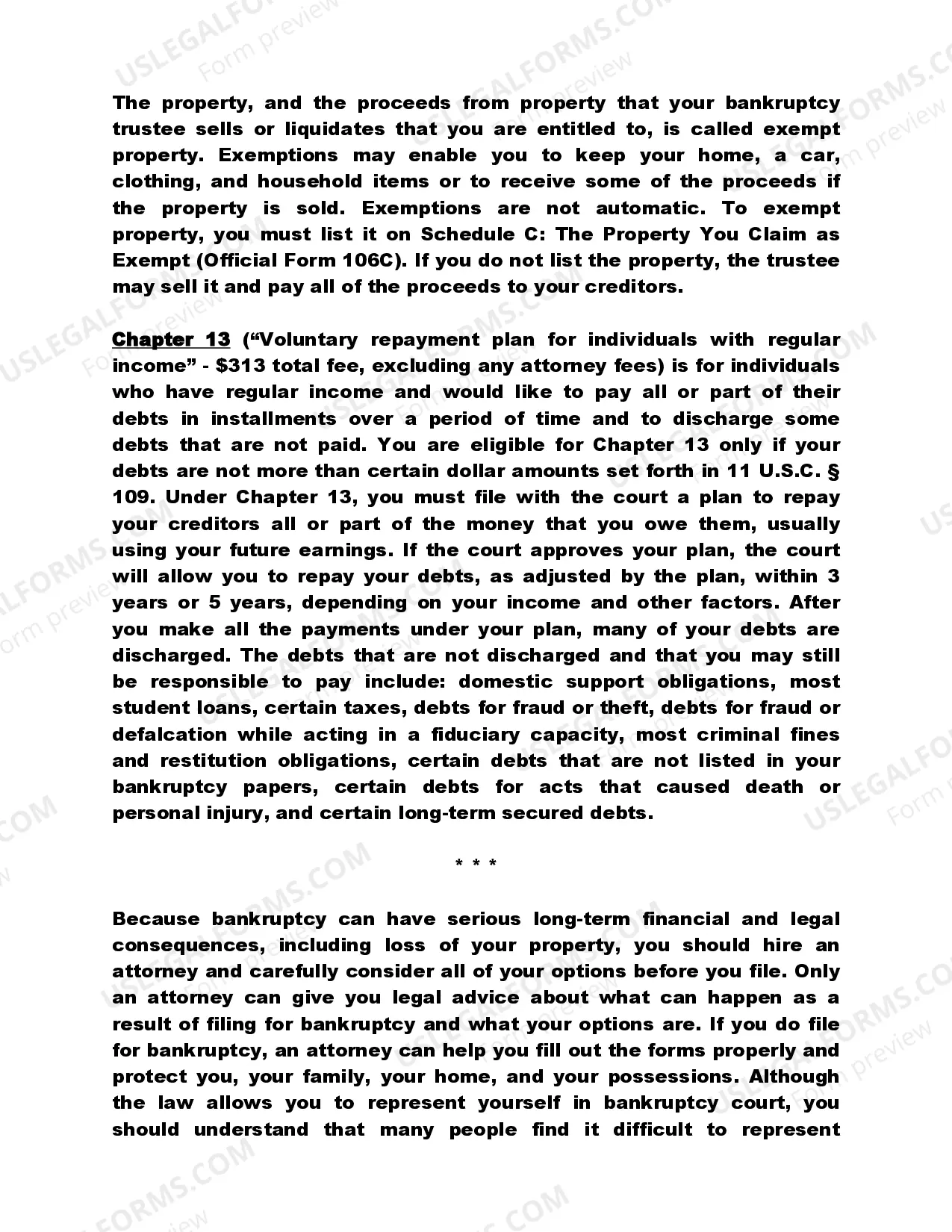
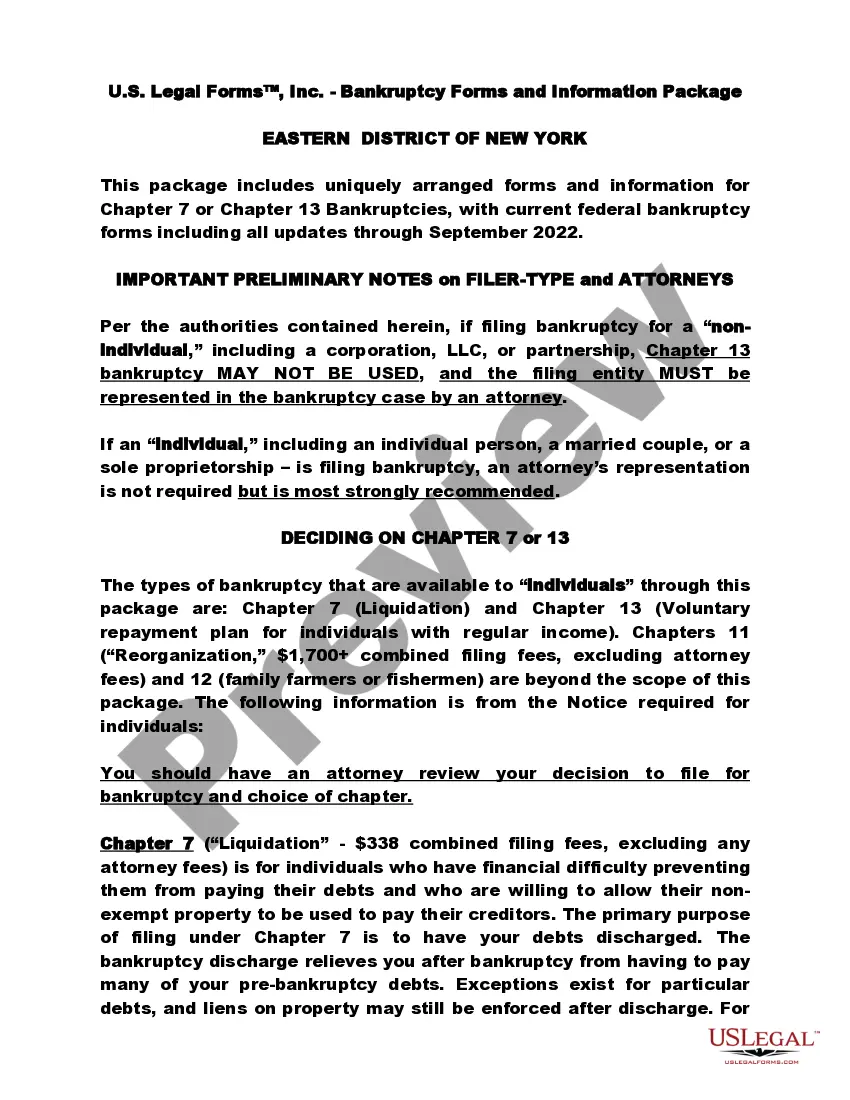
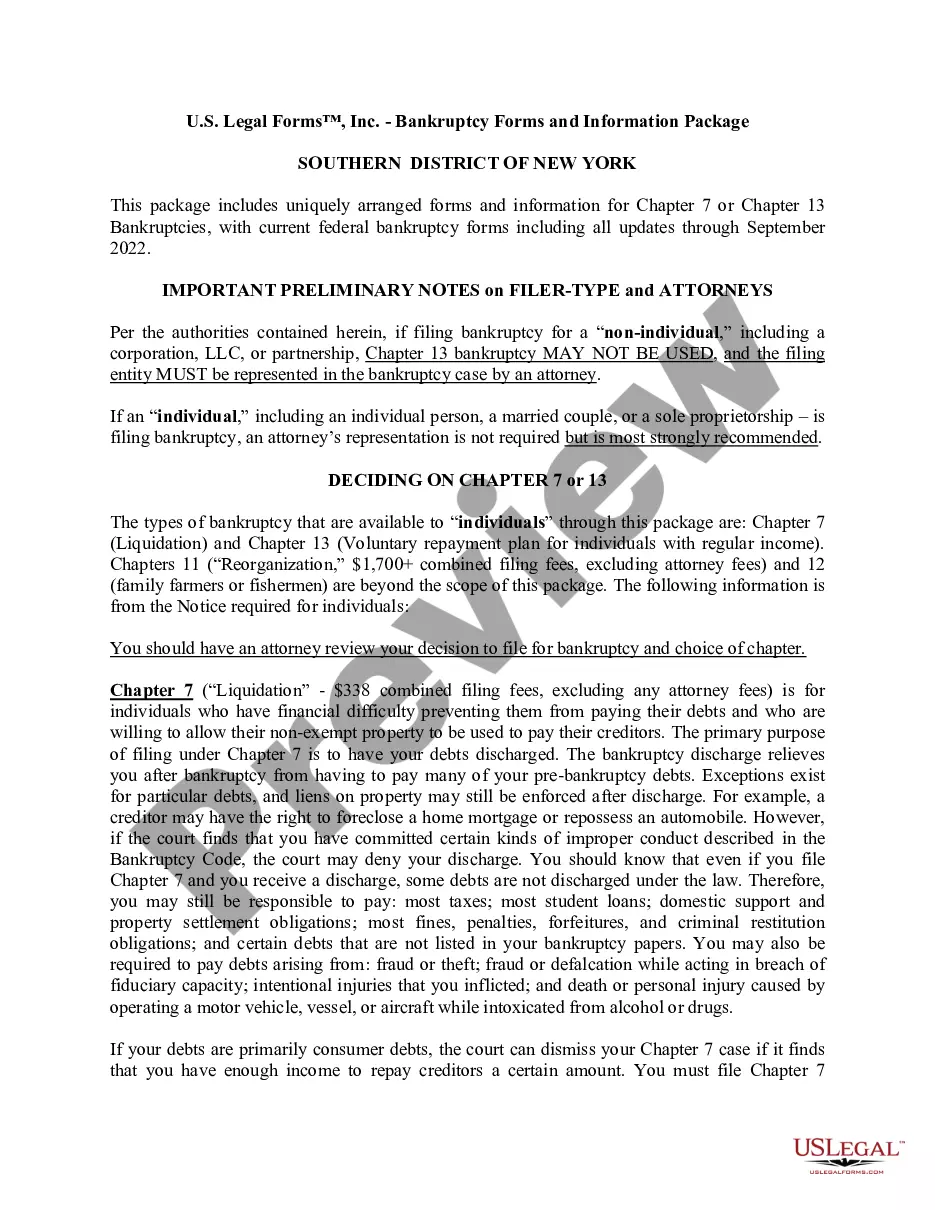
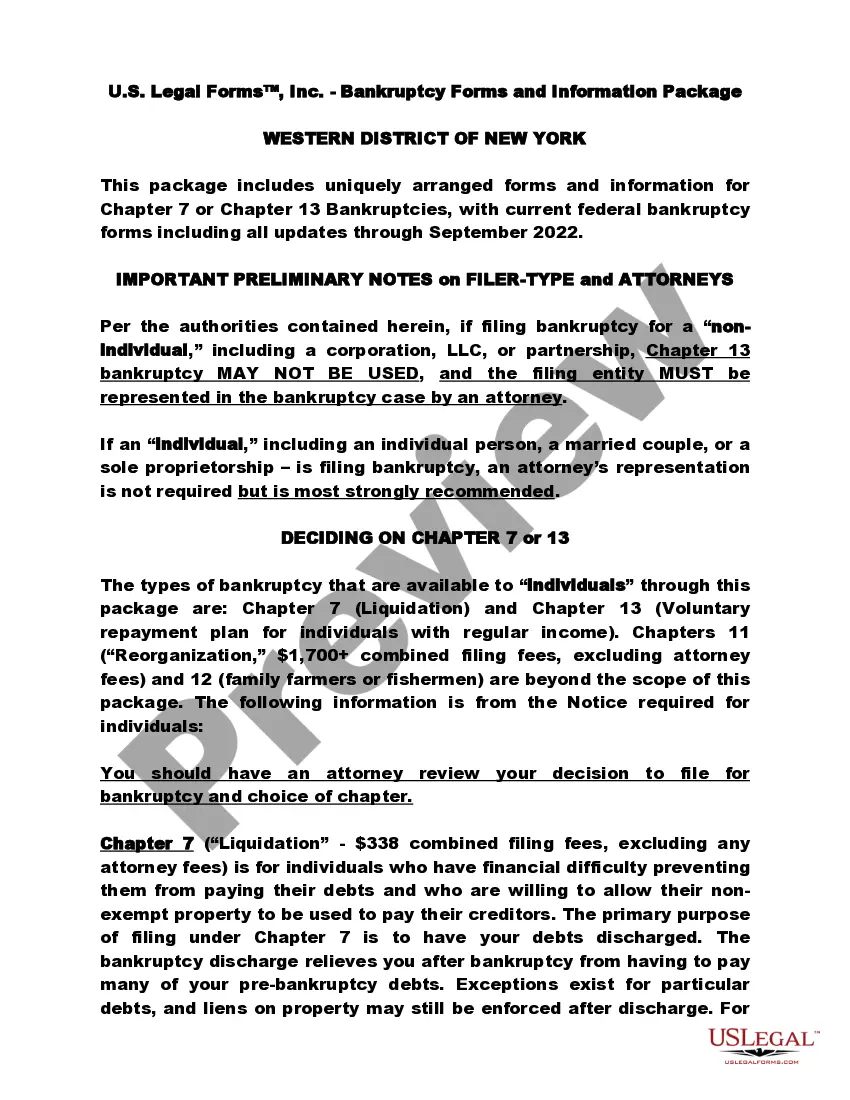
The New York Northern District Bankruptcy Guide and Forms Package for Chapters 7 or 13 includes comprehensive legal forms and detailed instructions for filing bankruptcy under these chapters. It is specifically designed for individuals seeking relief from financial difficulties, distinguishing itself from other bankruptcy forms by focusing on either liquidation (Chapter 7) or a repayment plan (Chapter 13). This package provides essential resources for users to navigate their bankruptcy filings effectively.
Key components of this form
- Chapter 7 and Chapter 13 bankruptcy options explained.
- Eligibility criteria and filing fees for each chapter.
- Step-by-step instructions on how to file.
- Forms required for filing under each chapter, including financial disclosure requirements.
- Information on exemptions and how to claim exempt property.
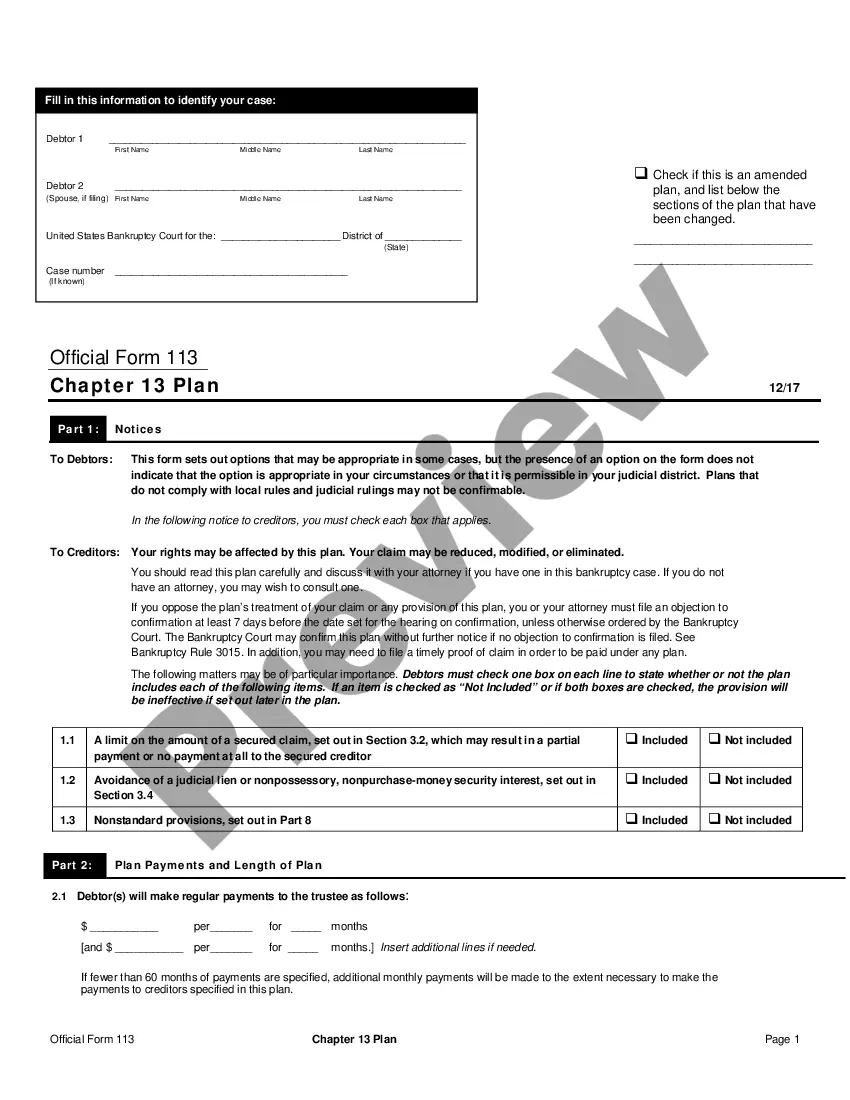
- Sample repayment plans for Chapter 13 filings.
When to use this form
This form package should be used when individuals in the New York Northern District are considering filing for bankruptcy due to financial hardship. It is suitable for those needing to liquidate their non-exempt assets to pay off debts under Chapter 7 or those with regular income who wish to repay debts over time under Chapter 13. By using this package, filers will have access to all necessary forms and information tailored for their bankruptcy process.
Who this form is for
- Individuals or married couples facing overwhelming debts.
- Sole proprietors seeking debt relief options.
- Those who have limited income and are considering liquidation of assets.
- Individuals with a steady income interested in a structured repayment plan.
Steps to complete this form
- Select the appropriate chapter for your bankruptcy case (Chapter 7 or 13).
- Gather all necessary financial documentation, including income statements and a list of debts.
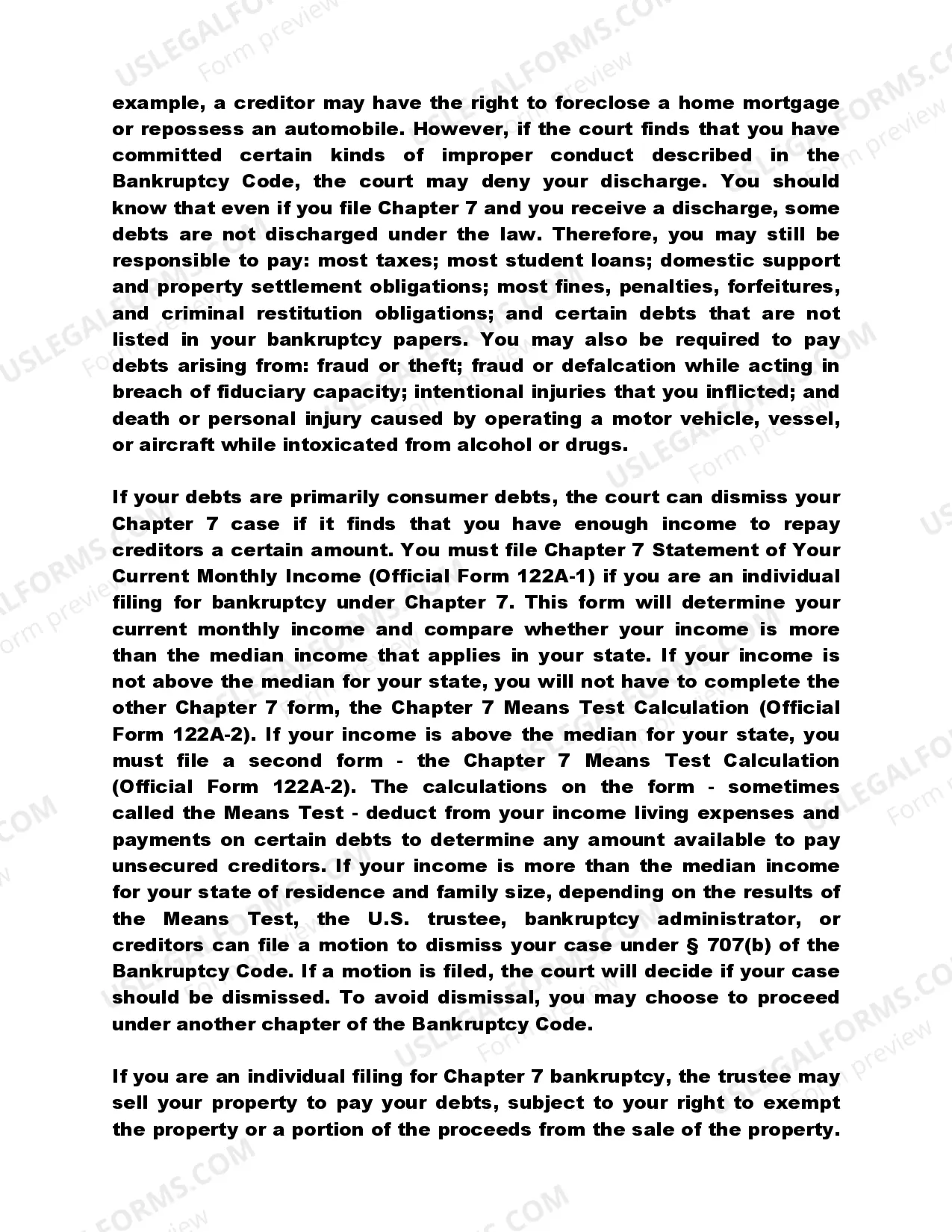
- Complete the required forms, including Official Form 122A-1 for Chapter 7, if applicable.
- List any property you wish to claim as exempt on Schedule C (Official Form 106C).
- Submit your completed forms and the filing fee to the court.
Is notarization required?
This form does not typically require notarization unless specified by local law. Always check with local court regulations to confirm if notarization is necessary for your specific filing.
Get your form ready online
Our built-in tools help you complete, sign, share, and store your documents in one place.
Make edits, fill in missing information, and update formatting in US Legal Forms—just like you would in MS Word.
Download a copy, print it, send it by email, or mail it via USPS—whatever works best for your next step.
Sign and collect signatures with our SignNow integration. Send to multiple recipients, set reminders, and more. Go Premium to unlock E-Sign.
If this form requires notarization, complete it online through a secure video call—no need to meet a notary in person or wait for an appointment.
We protect your documents and personal data by following strict security and privacy standards.

Make edits, fill in missing information, and update formatting in US Legal Forms—just like you would in MS Word.

Download a copy, print it, send it by email, or mail it via USPS—whatever works best for your next step.

Sign and collect signatures with our SignNow integration. Send to multiple recipients, set reminders, and more. Go Premium to unlock E-Sign.

If this form requires notarization, complete it online through a secure video call—no need to meet a notary in person or wait for an appointment.

We protect your documents and personal data by following strict security and privacy standards.
Mistakes to watch out for
- Failing to disclose all income and debts accurately.
- Not listing exempt property, which could result in loss of assets.
- Choosing the wrong bankruptcy chapter for financial circumstances.
- Submitting incomplete or incorrect forms to the court.
Benefits of completing this form online
- Convenience of downloading forms directly from your home.
- Editability allows tailoring of forms to individual situation.
- Reliable information provided by licensed attorneys ensures compliance with legal standards.
- Access to up-to-date revisions and instructions helps avoid filing delays.
Looking for another form?
Form popularity
FAQ
With Chapter 7, those types of debts are wiped out with your filing's court approval, which can take a few months. Under Chapter 13, you need to continue making payments on those balances throughout your court-instructed repayment plan; afterwards, the unsecured debts may be discharged.
Advise you on whether to file a bankruptcy petition. Advise you under which chapter to file. Advise you on whether your debts can be discharged. Advise you on whether or not you will be able to keep your home, car, or other property after you file. Advise you of the tax consequences of filing.
Stop making payments on debts that will get wiped out in bankruptcy and pay your attorney instead. borrow the fees from a friend, family member, or even your employer. retain a bankruptcy lawyer who will handle creditor calls while you pay fees over time. file on your own.
Chapter 7 bankruptcy is designed to relieve you of unsecured debts, such as medical expenses. There is no rule that requires you to use a lawyer to file a petition. You can do the filing yourself, which is called pro se, but we recommend that you do your research first.
There is no threshold amount that you need to reach to file a bankruptcy. Some chapters of bankruptcy have debt limits, but there is no such thing as a debt minimum. That being said, you certainly can and should evaluate if filing a bankruptcy makes sense in your current situation.
Six months of paycheck stubs. six months of bank statements. tax returns (the last two years) current investment and retirement statements. current mortgage and car loan statements. home and car valuations (printouts from online sources work)
For many debtors, Chapter 7 bankruptcy is a better option than Chapter 13 bankruptcy.For instance, Chapter 7 is quicker, many filers can keep all or most of their property, and filers don't pay creditors through a three- to five-year Chapter 13 repayment plan.
Identifying Information. The Voluntary Petition for Individuals Filing for Bankruptcy form acts as the cover sheet for your paperwork. Your Property. Your Exempt Property. Your Collateralized Debt. Your Other Debt. Your Contracts and Leases. Your Codebtors. Your Income.
B 101 Voluntary Petition for Individuals Filing for Bankruptcy. B 101A Initial Statement About an Eviction Judgment Against You (only if you have eviction judgment against you)