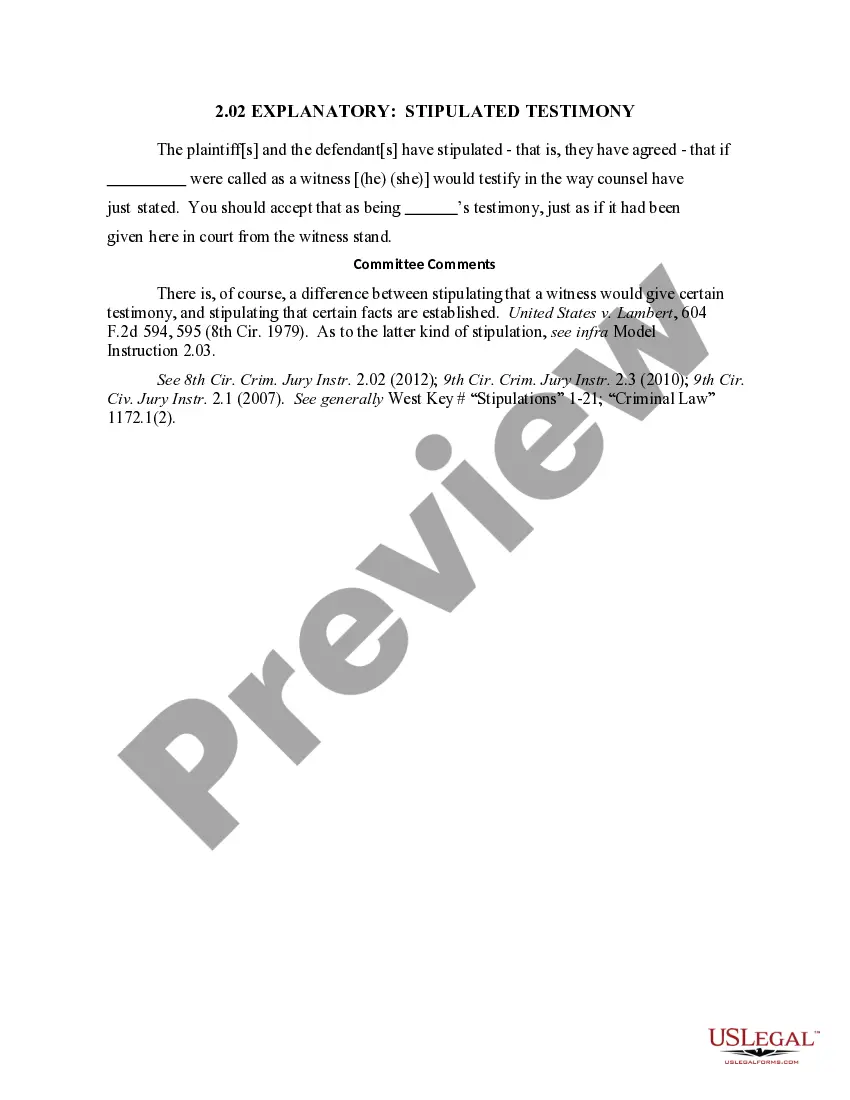
2.02 EXPLANATORY: STIPULATED TESTIMONY
What is this form?
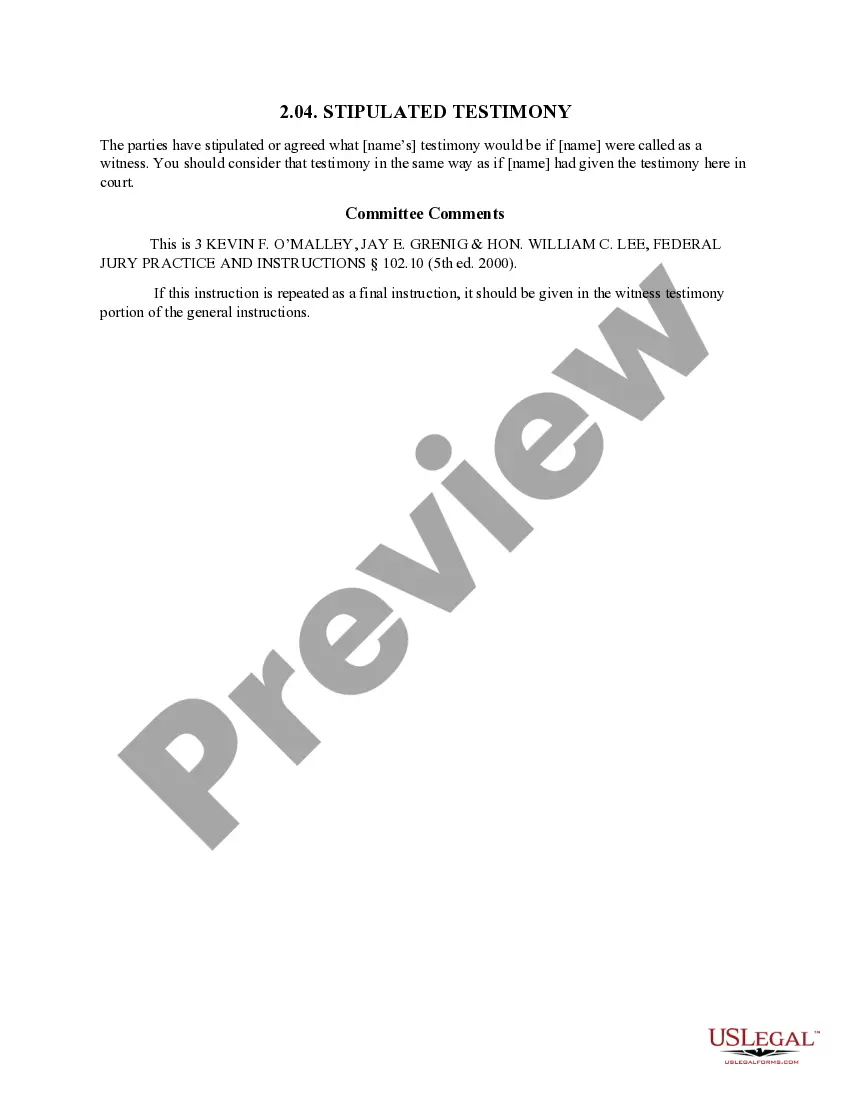
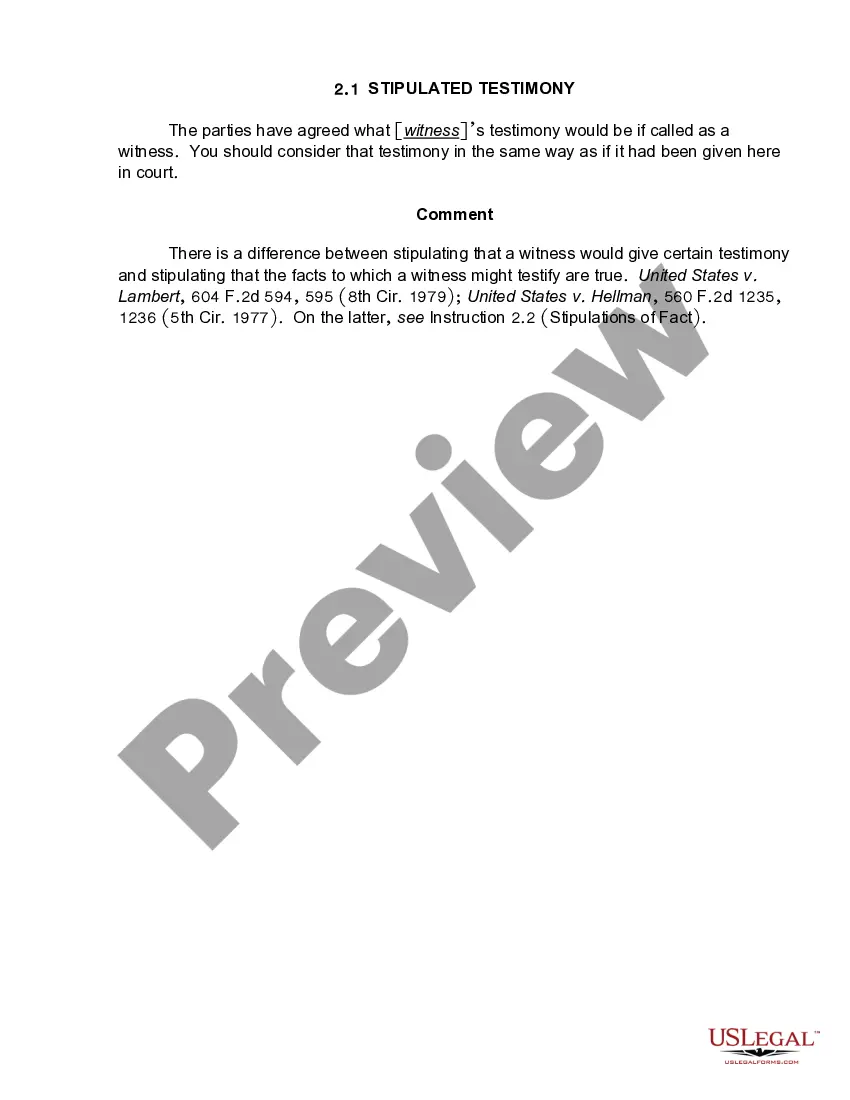
The 2.02 Explanatory: Stipulated Testimony form is designed to facilitate the acceptance of testimony without the need for a witness to appear in court. This form is utilized when both the plaintiff and the defendant agree on the content of a witness's testimony, allowing that testimony to be accepted as if it had been given live in court. It is essential for legal proceedings where certain testimonies are stipulated rather than contested in person.
Form components explained
- The identification of the plaintiff and defendant who have stipulated the testimony.
- A summary of what the witness would have testified if called to the stand.
- Clear instructions for jurors to accept the stipulated testimony as valid evidence.
- References to applicable legal precedents regarding the nature of stipulations.
- A distinction between stipulated testimony and general facts that are established.
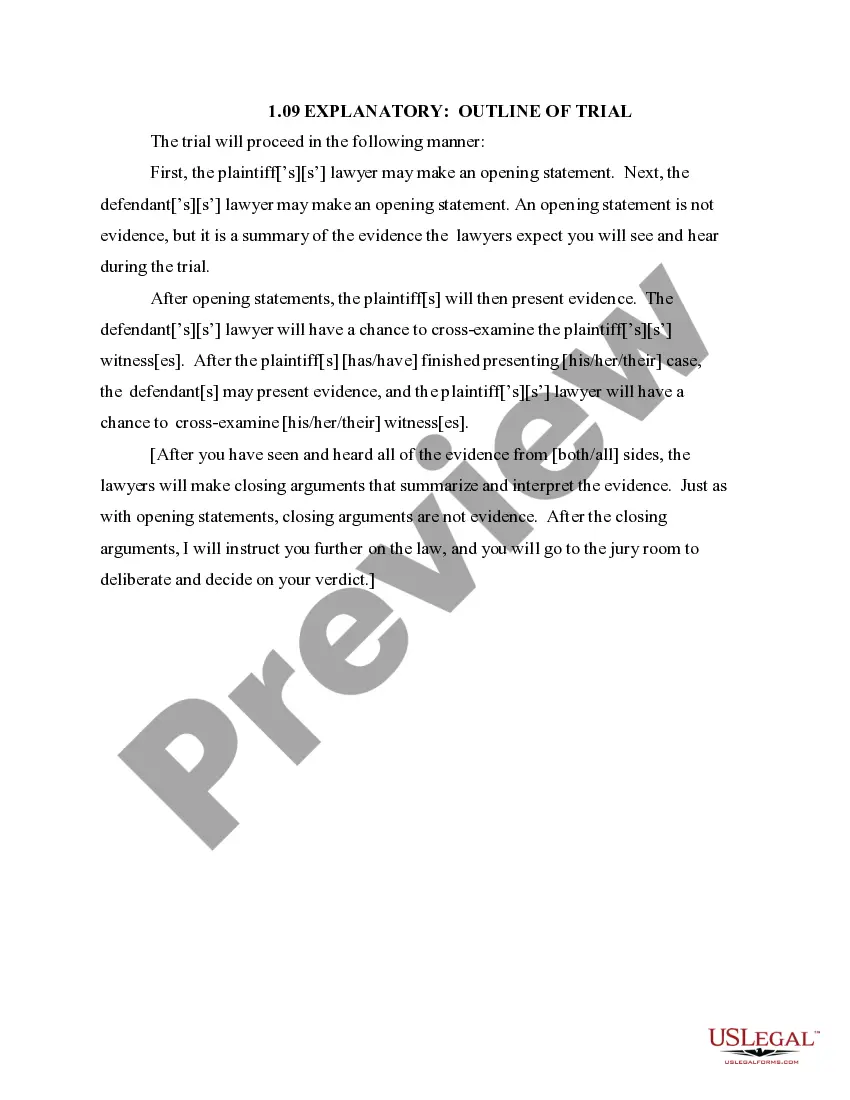
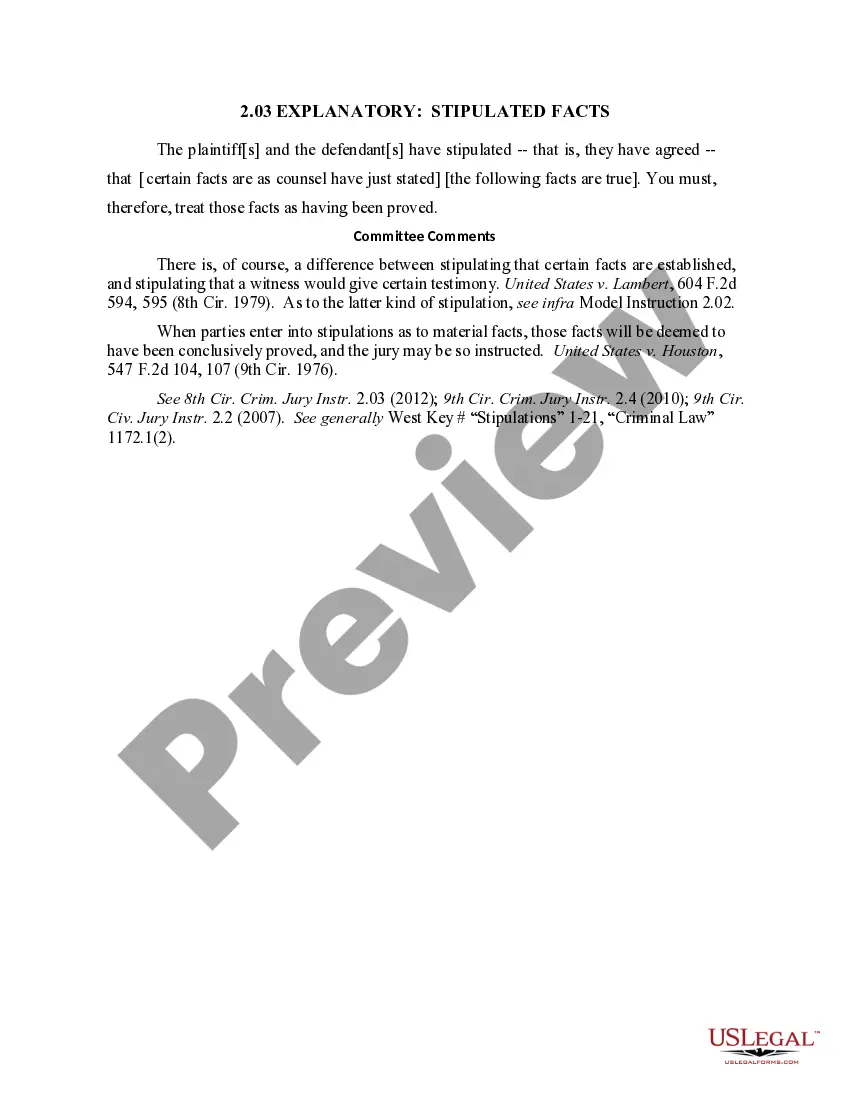
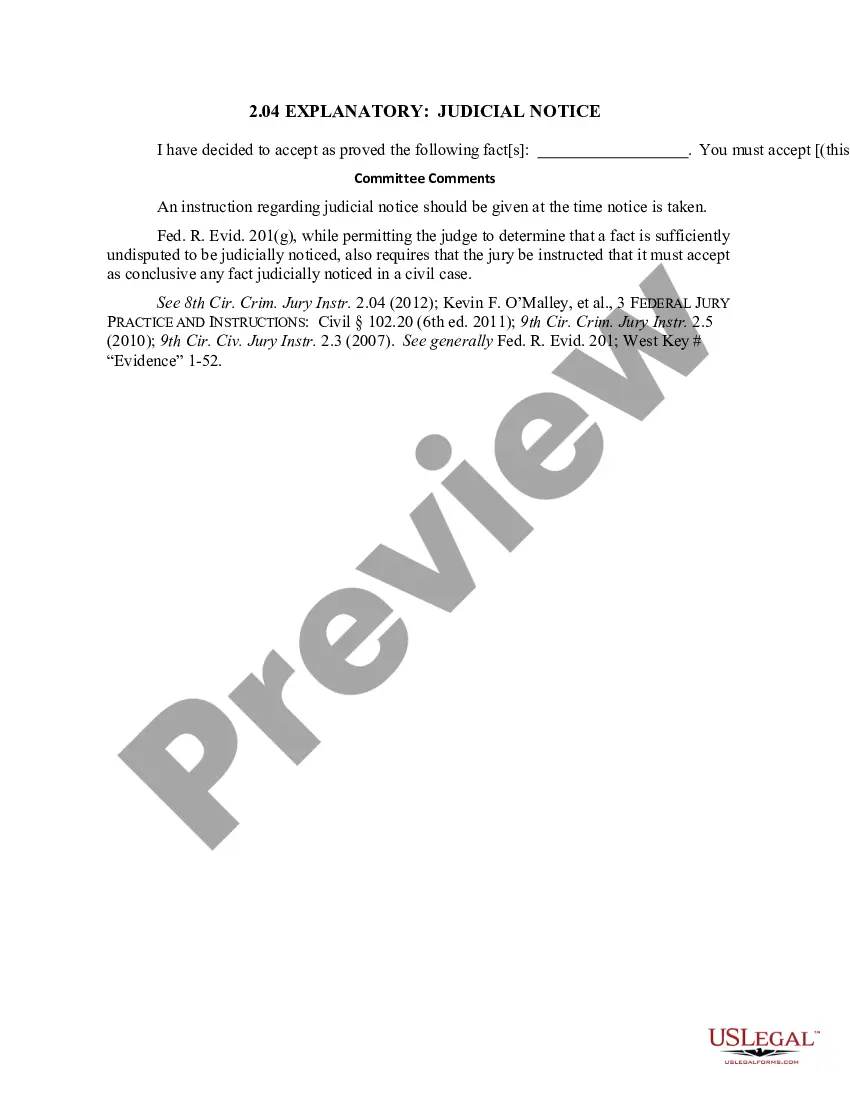
When this form is needed
This form is commonly used in legal situations where a witness is unable to attend the trial, yet both parties agree on what the witness would have said. It is particularly helpful in speeding up proceedings by minimizing the number of witnesses needed and avoiding unnecessary delays during trial. For example, it may be appropriate in cases involving expert testimonies or when a witness has health issues that prevent their attendance.
Who can use this document
- Attorneys representing plaintiffs and defendants in civil or criminal trials.
- Parties involved in a lawsuit who wish to stipulate testimony without calling a witness.
- Legal professionals seeking to expedite court processes.
- Individuals or businesses engaged in litigation requiring witness statements but facing logistical issues with witness attendance.
Instructions for completing this form
- Identify the parties involved (plaintiff and defendant) and provide their names.
- Clearly state the name of the witness whose testimony is being stipulated.
- Summarize the testimony that would have been given by the witness.
- Ensure that both parties agree to the stipulation and sign where indicated.
- Provide any necessary legal references or case law to support the stipulation.
Notarization guidance
Notarization is generally not required for this form. However, certain states or situations might demand it. You can complete notarization online through US Legal Forms, powered by Notarize, using a verified video call available anytime.
Get your form ready online
Our built-in tools help you complete, sign, share, and store your documents in one place.
Make edits, fill in missing information, and update formatting in US Legal Forms—just like you would in MS Word.
Download a copy, print it, send it by email, or mail it via USPS—whatever works best for your next step.
Sign and collect signatures with our SignNow integration. Send to multiple recipients, set reminders, and more. Go Premium to unlock E-Sign.
If this form requires notarization, complete it online through a secure video call—no need to meet a notary in person or wait for an appointment.
We protect your documents and personal data by following strict security and privacy standards.

Make edits, fill in missing information, and update formatting in US Legal Forms—just like you would in MS Word.

Download a copy, print it, send it by email, or mail it via USPS—whatever works best for your next step.

Sign and collect signatures with our SignNow integration. Send to multiple recipients, set reminders, and more. Go Premium to unlock E-Sign.

If this form requires notarization, complete it online through a secure video call—no need to meet a notary in person or wait for an appointment.

We protect your documents and personal data by following strict security and privacy standards.
Mistakes to watch out for
- Failing to obtain the agreement of both parties before completing the form.
- Not providing a clear and accurate summary of the witness's testimony.
- Neglecting to properly sign and date the stipulation.
- Using vague language that does not specify the details of the testimony.
Benefits of using this form online
- Convenience of accessing the form anytime, anywhere.
- Editability allows users to input specific details relevant to their case.
- Reliability in ensuring the form is drafted following legal guidelines.
What to keep in mind
- The Stipulated Testimony form allows for witness testimony to be accepted without live appearances.
- This form helps streamline the legal process and can benefit cases with unavailable witnesses.
- Both parties must agree to the testimony outlined in the form.
Looking for another form?
Form popularity
FAQ
Under the Federal Rules of Evidence, the former testimony exception to the hearsay rule allows former testimony of a witness in one proceeding involving the same issue and same parties to be admissible in a second proceeding, provided that (1) there is a meaningful opportunity to cross examine or to develop the
A stipulation is simply an agreement between the parties. To be effective, the stipulation must be in writing and signed by the judge or made on the record in open court.
A stipulation of fact leaves that fact no longer at issue, and must be accepted by the jury. By contrast, a stipulation as to testimony does not compel the jury to accept as true all the facts within the stipulated testimony, but permits the jury to accept the stipulated evidence in whole, in part, or not at all.
A criminal defendant's right to access witnesses and evidence is essentially the right to present a defense. The accused should expect to be heard, present evidence that is material to her defense, compel witness testimony, and counter the evidence presented by the prosecution.
This stipulation might put some sort of limit on the agreement. For example, if you run a fencing company and offer a sale, you can stipulate that to get the sale price, the fence must be ordered by a certain date. Your customer, in turn, might stipulate that the work must be finished before the ground freezes.
A stipulation is an agreement between adverse parties as to the definition or identification of a statement or pieces of evidence that are material to the case. Trial judges typically accept stipulations of fact presented by parties.
A stipulation of fact leaves that fact no longer at issue, and must be accepted by the jury. By contrast, a stipulation as to testimony does not compel the jury to accept as true all the facts within the stipulated testimony, but permits the jury to accept the stipulated evidence in whole, in part, or not at all.
A credible witness is a witness who comes across as competent and worthy of belief. Their testimony is assumed to be more than likely true due to their experience, knowledge, training, and sense of honesty. The judge and jurors will use these factors to determine whether they believe the witness is credible.