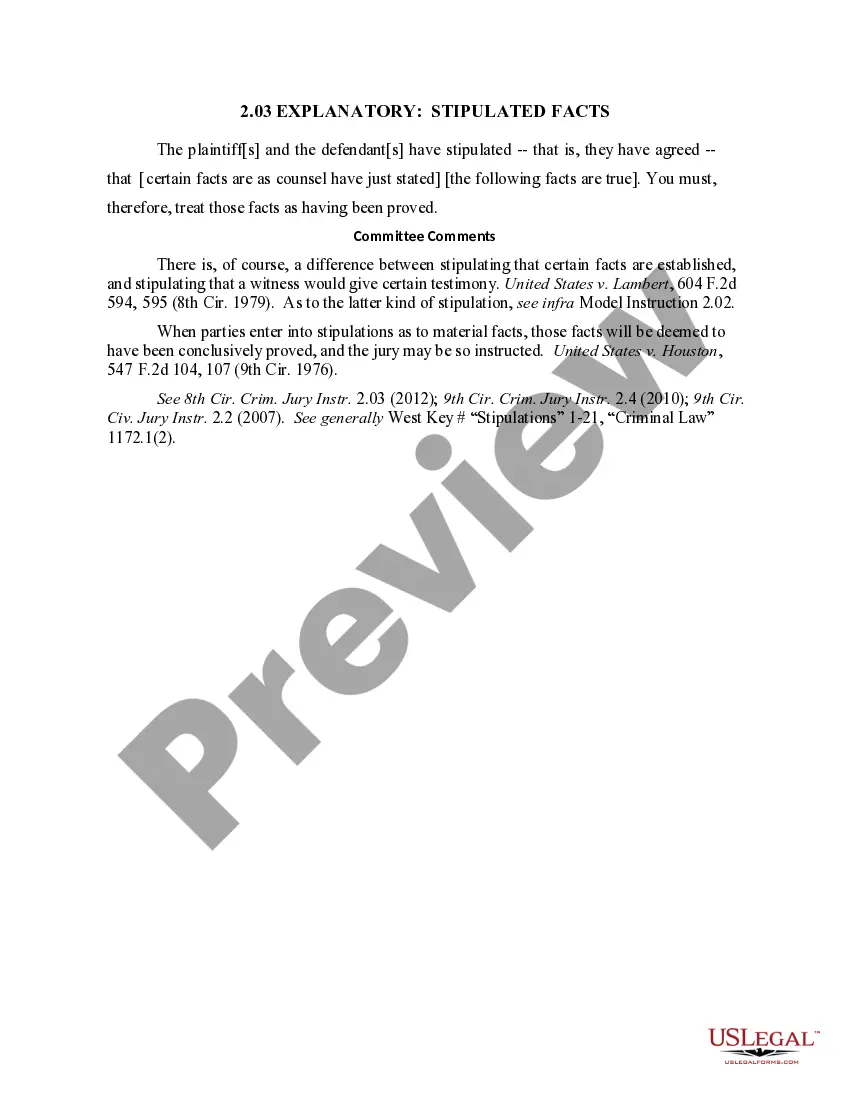
2.03 EXPLANATORY: STIPULATED FACTS
About this form
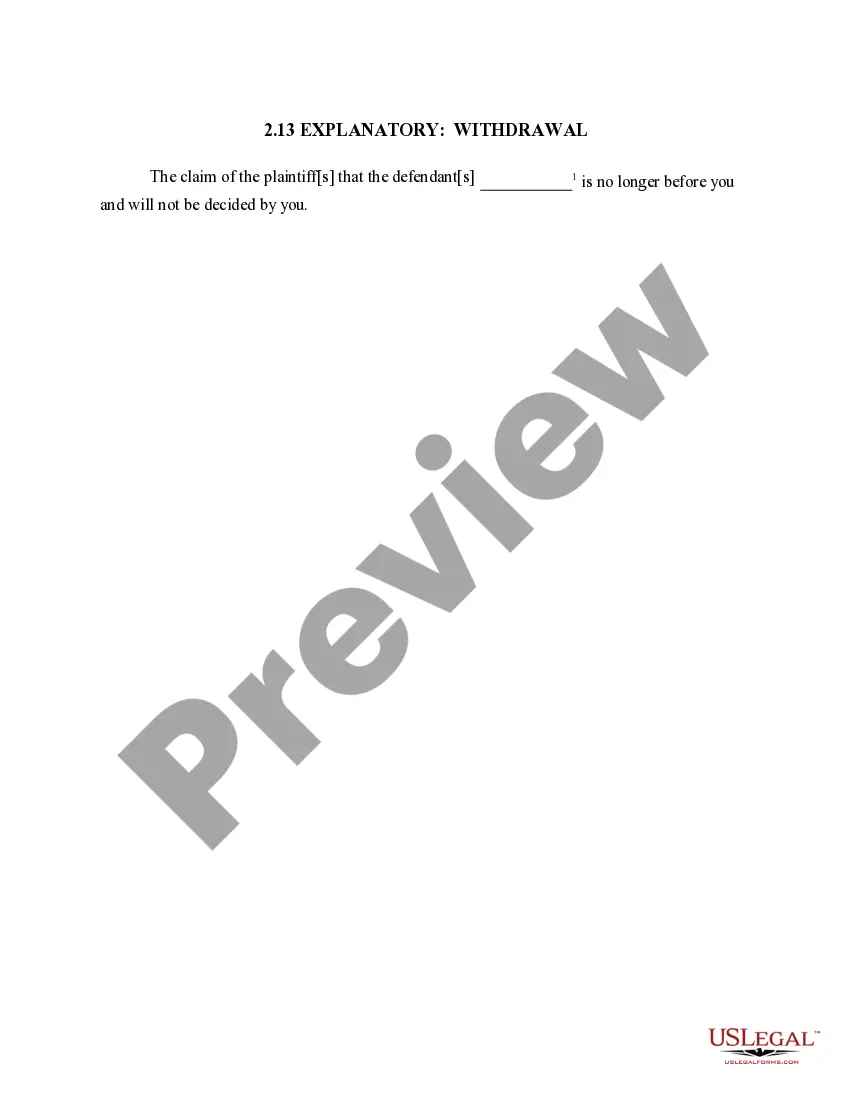
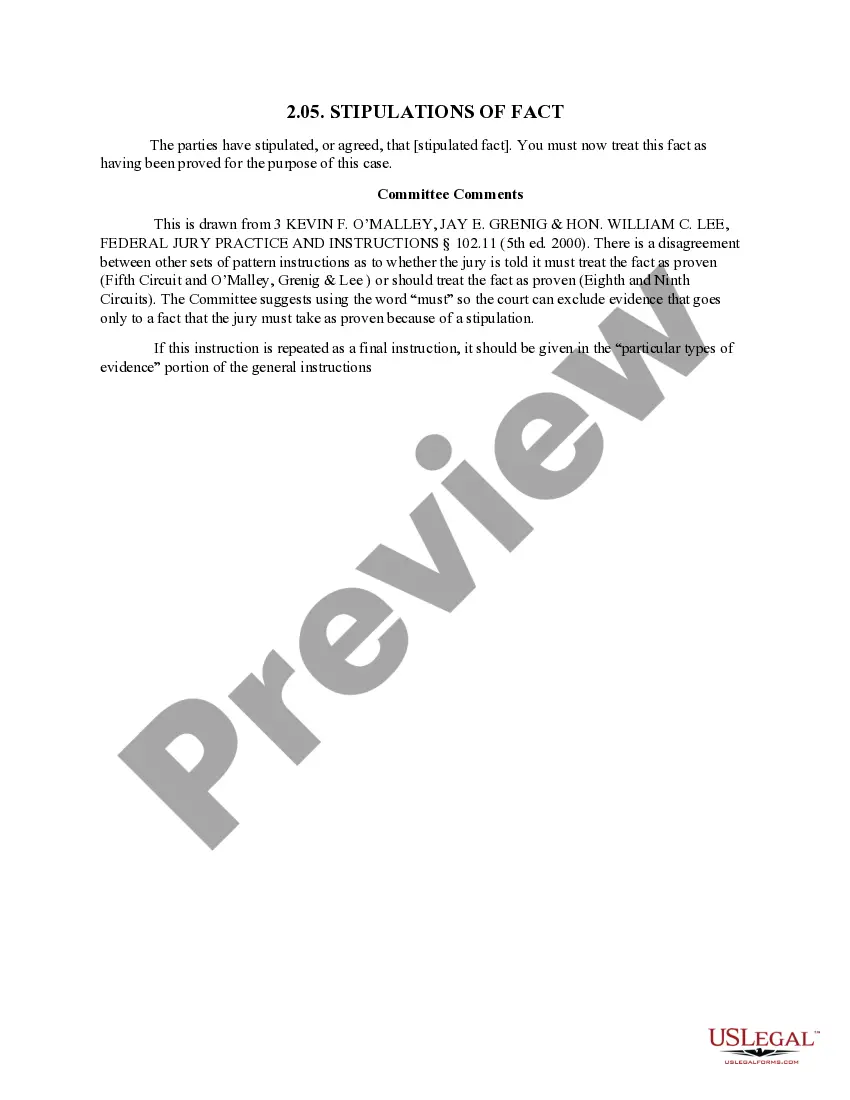
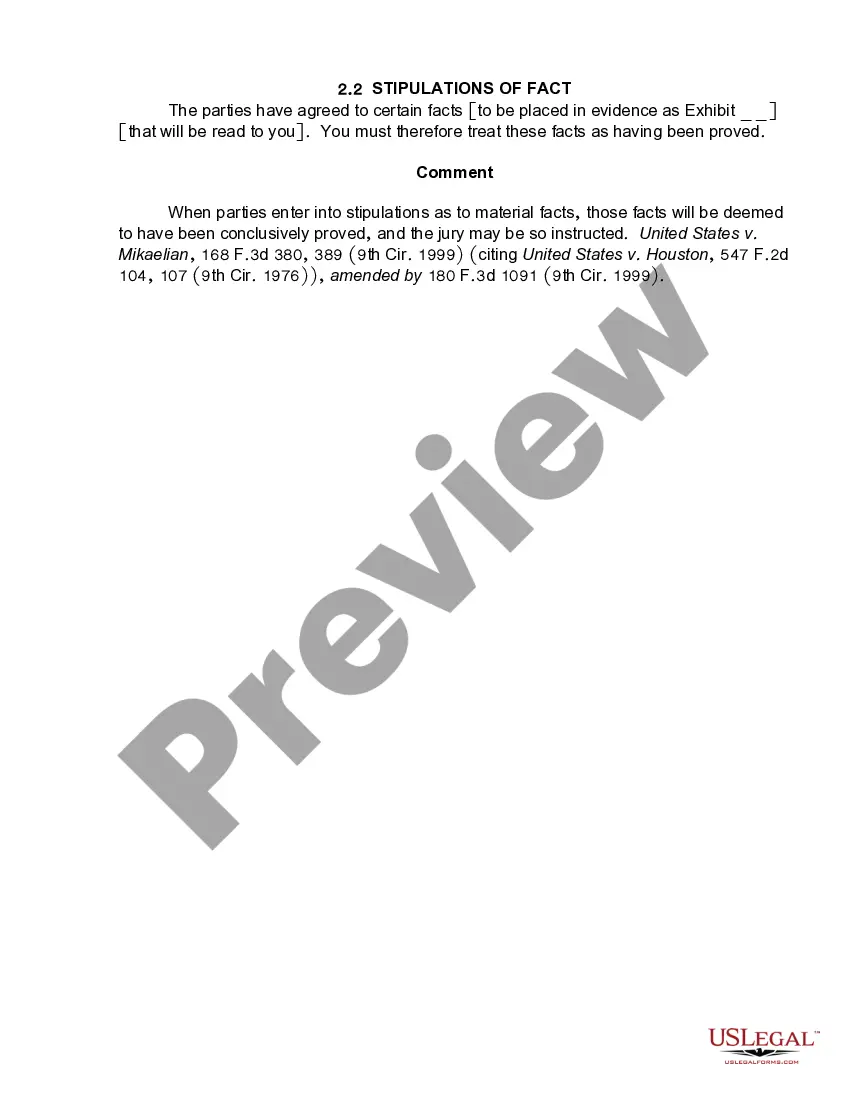
The 2.03 Explanatory: Stipulated Facts form is used in legal proceedings to formally recognize and declare certain facts as established by agreement between the plaintiff(s) and defendant(s). This form helps streamline the trial process by allowing the jury to treat these stipulated facts as proven, which can save time and reduce disputes over these specific points. Unlike other forms that may relate to witness testimonies or other legal arguments, this form is specifically focused on agreed facts between the parties involved.
What’s included in this form
- Identification of the parties involved in the stipulation.
- Clear articulation of the stipulated facts that both parties agree upon.
- Instructions for the jury to treat these facts as conclusively proven.
- References to relevant case law that underlines the importance of stipulations.
When to use this document
This form should be used in scenarios where both parties in a legal action agree on certain factual elements of the case. This may occur before trial to eliminate distractions and streamline proceedings, such as when the facts are undisputed or easily verifiable. Utilizing this form can help minimize complications in court by clearly laying out what is mutually accepted as truth.
Who needs this form
The following individuals or entities should consider using this form:
- Plaintiffs and defendants involved in a civil or criminal trial.
- Legal representatives wishing to facilitate agreement on factual issues.
- Parties looking to reduce trial time by establishing points of common ground.
Completing this form step by step
- Identify the names of the plaintiff(s) and defendant(s) involved in the case.
- Clearly state the facts that both parties have agreed to stipulate.
- Include any relevant case law or references supporting the stipulation.
- Finalize the document by including signatures from both parties or their legal representatives.
Notarization guidance
This form does not typically require notarization to be legally valid. However, some jurisdictions or document types may still require it. US Legal Forms provides secure online notarization powered by Notarize, available 24/7 for added convenience.
Get your form ready online
Our built-in tools help you complete, sign, share, and store your documents in one place.
Make edits, fill in missing information, and update formatting in US Legal Forms—just like you would in MS Word.
Download a copy, print it, send it by email, or mail it via USPS—whatever works best for your next step.
Sign and collect signatures with our SignNow integration. Send to multiple recipients, set reminders, and more. Go Premium to unlock E-Sign.
If this form requires notarization, complete it online through a secure video call—no need to meet a notary in person or wait for an appointment.
We protect your documents and personal data by following strict security and privacy standards.

Make edits, fill in missing information, and update formatting in US Legal Forms—just like you would in MS Word.

Download a copy, print it, send it by email, or mail it via USPS—whatever works best for your next step.

Sign and collect signatures with our SignNow integration. Send to multiple recipients, set reminders, and more. Go Premium to unlock E-Sign.

If this form requires notarization, complete it online through a secure video call—no need to meet a notary in person or wait for an appointment.

We protect your documents and personal data by following strict security and privacy standards.
Common mistakes
- Failing to clearly articulate the agreed-upon facts, leading to confusion.
- Omitting necessary signatures which can invalidate the stipulation.
- Not referencing relevant case law or legal precedents that support the stipulated facts.
Why use this form online
- Convenient access to legally sound templates drafted by licensed attorneys.
- Editable formats that allow for customization based on the case specifics.
- Instant download options that save time in preparation for court.
Looking for another form?



Form popularity
FAQ
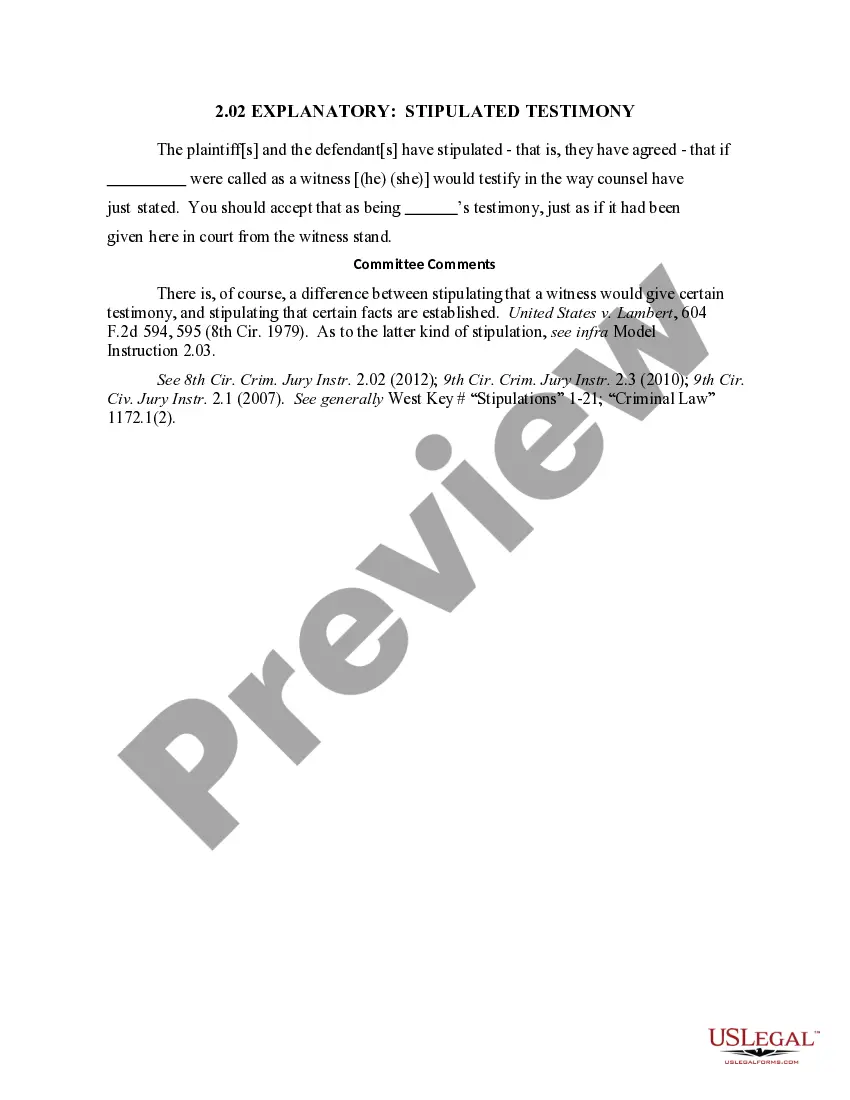
A stipulation of fact leaves that fact no longer at issue, and must be accepted by the jury. By contrast, a stipulation as to testimony does not compel the jury to accept as true all the facts within the stipulated testimony, but permits the jury to accept the stipulated evidence in whole, in part, or not at all.
Once parties agree to stipulated facts, the stipulation becomes evidence that the fact is true that can be used against any of the parties to the stipulation. Moreover, a party may ask the judge to prohibit the other party from introducing contrary evidence, as the stipulated fact is no longer in dispute.
Once parties agree to stipulated facts, the stipulation becomes evidence that the fact is true that can be used against any of the parties to the stipulation. Moreover, a party may ask the judge to prohibit the other party from introducing contrary evidence, as the stipulated fact is no longer in dispute.
This stipulation might put some sort of limit on the agreement. For example, if you run a fencing company and offer a sale, you can stipulate that to get the sale price, the fence must be ordered by a certain date. Your customer, in turn, might stipulate that the work must be finished before the ground freezes.
The purpose of stipulations is to familiarize the court with facts relevant to the case which are not disputed in order that the judge may begin the trial, already familiar with the undisputed facts, at the point where the disputed evidence begins.
A ?stipulation? is an agreement between two parties that is submitted to the judge for approval. It eliminates the need to go to court and have a judge decide an issue. A written ?Stipulation and Order? includes the parties' agreement, both of their notarized signatures, and the judge's signature.
A stipulation could mean a fact, promise, or provision in a contract agreed by two parties. In contracts, a stipulation used to define an agreement that ended with specific formalities in a ceremony. In contemporary use, stipulation means a material condition or a requirement in an agreement.
For example, the defendant may stipulate to the fact that he had a drink on the night in question but did not stipulate that he was legally intoxicated when an officer stopped him.