2.04 Stipulated Testimony
Understanding this form
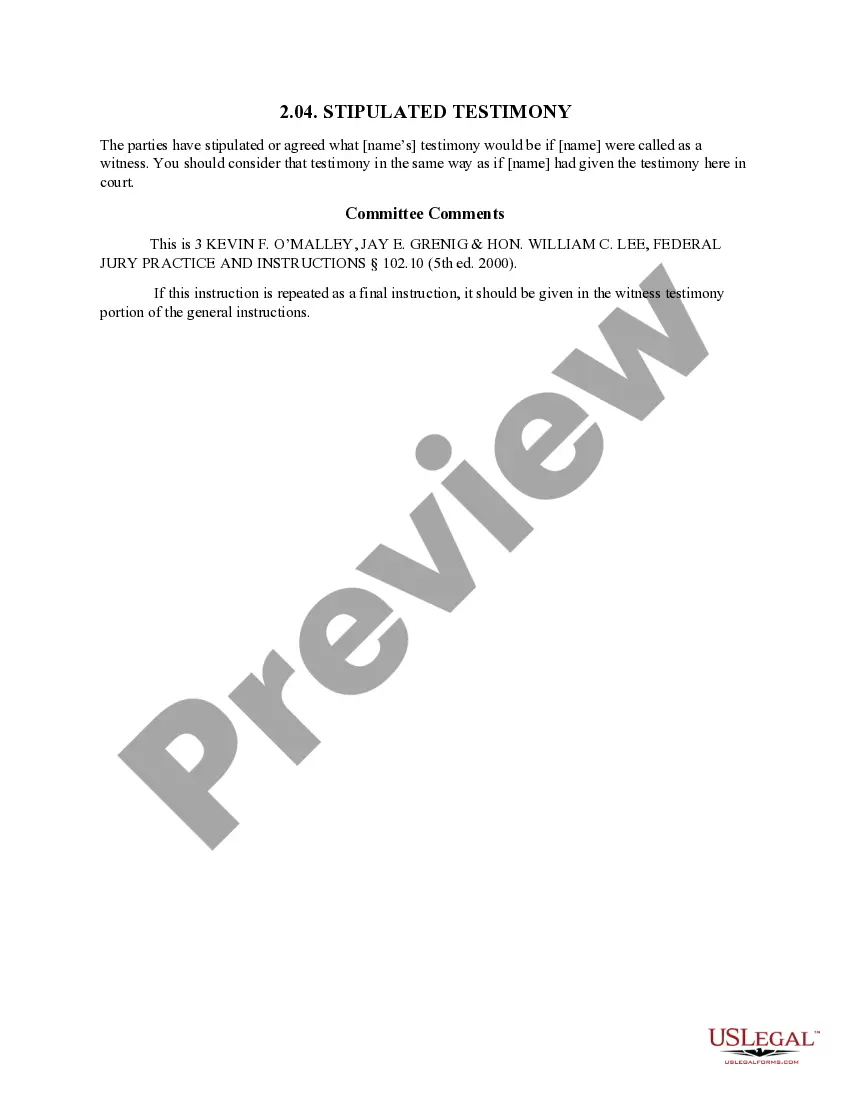
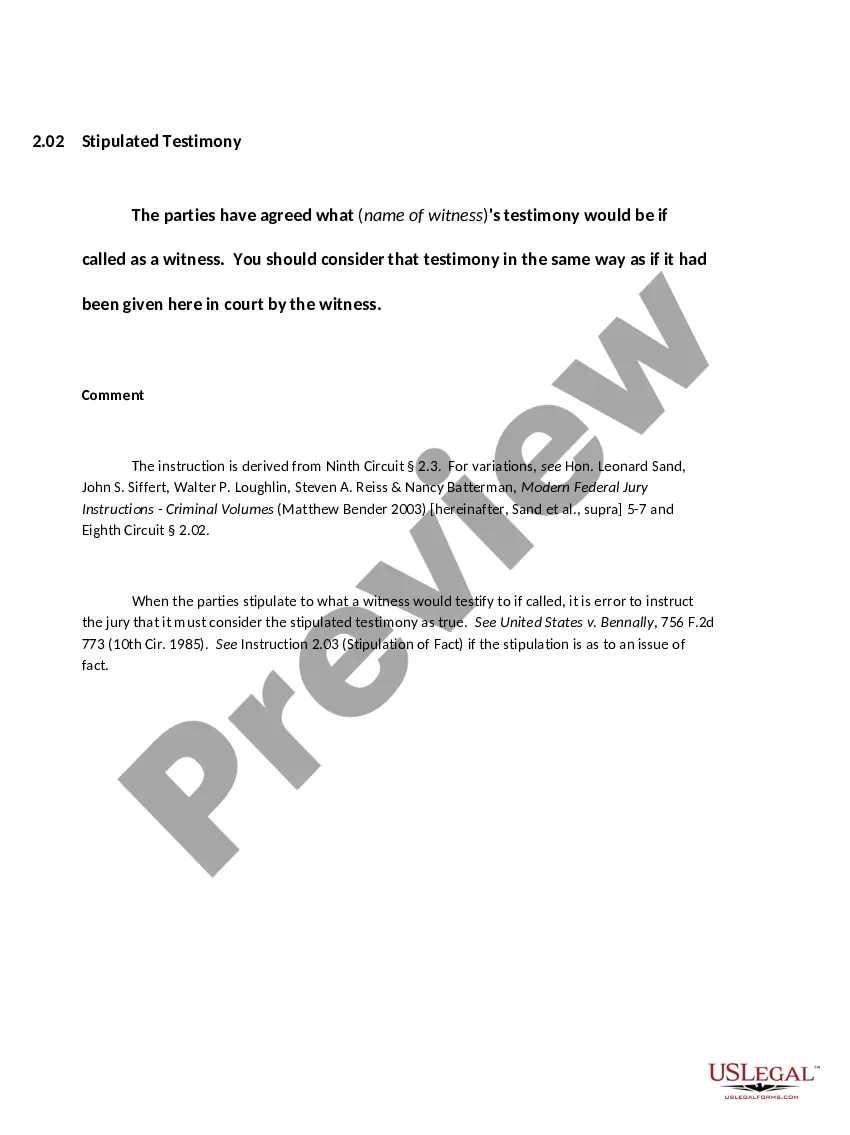
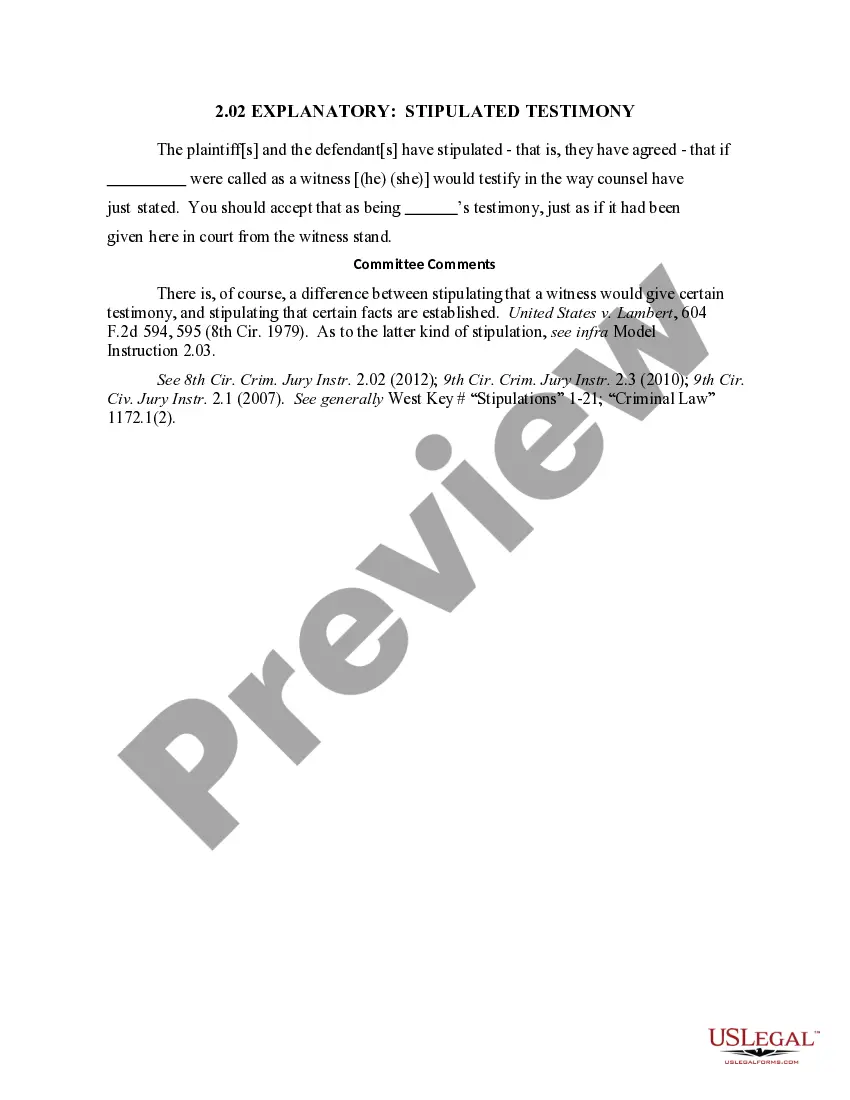
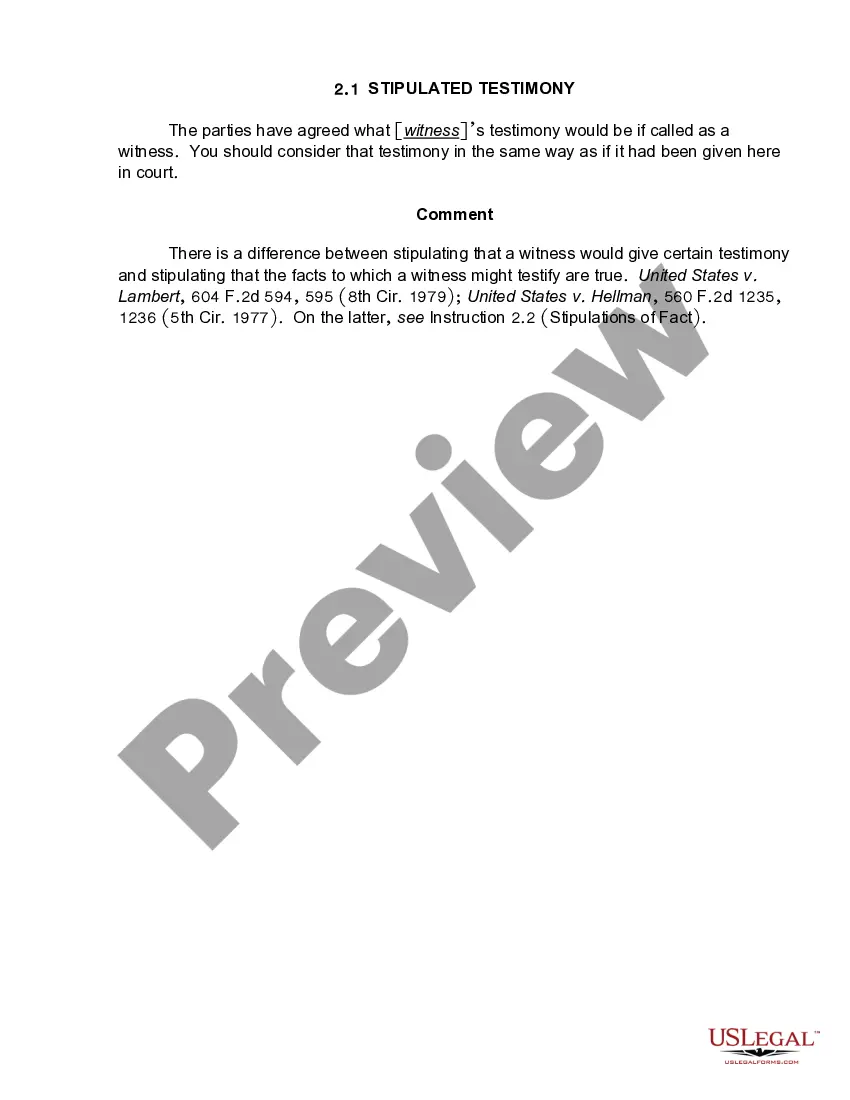
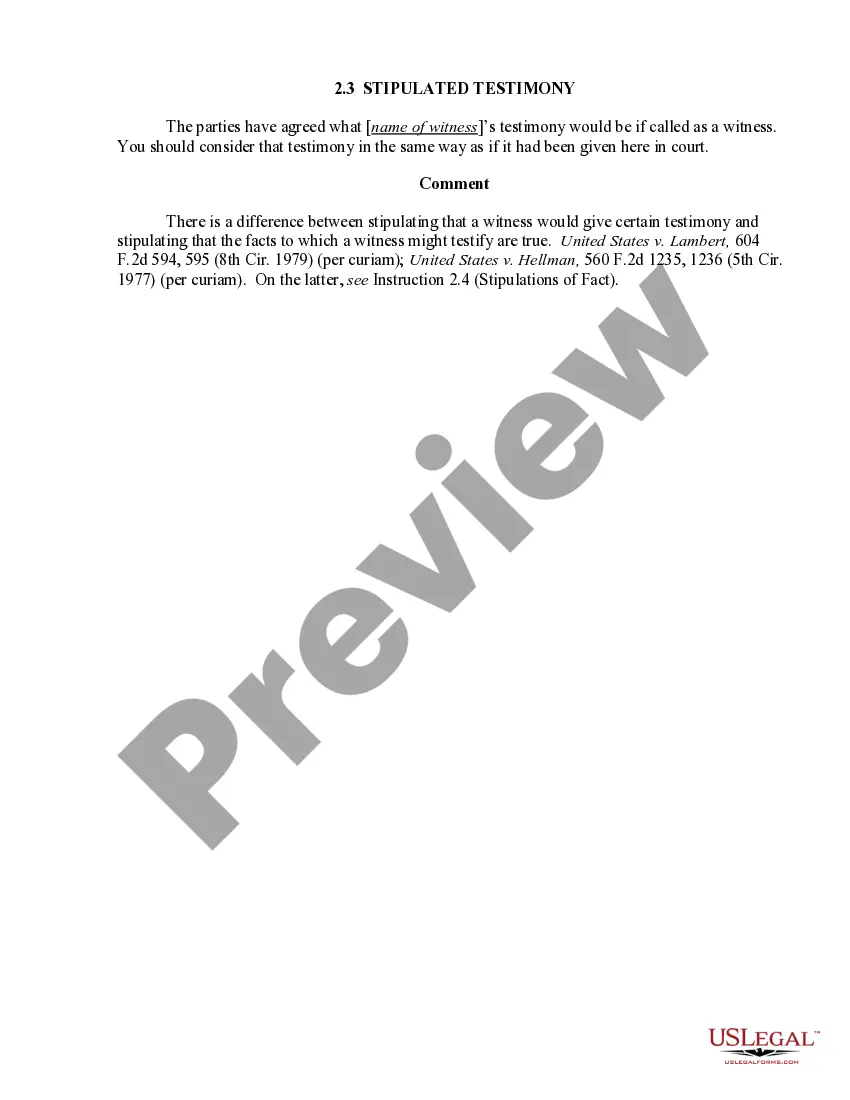
The 2.04 Stipulated Testimony form is a legal document used in court proceedings to present the agreed-upon testimony of a witness when that witness is not physically present. This form allows both parties to stipulate what the witness would have testified, ensuring that the testimony is treated as if it were given live in court. This is particularly useful in cases where a witness may be unable to attend due to various circumstances, thereby streamlining the judicial process and preserving essential evidence.
What’s included in this form
- Identification of the witness whose testimony is being stipulated.
- Clear statement of the testimony that would have been given by the witness.
- Instructions for the jury on how to treat the stipulated testimony as if it were given in person.
When to use this document
This form should be utilized in legal situations where a witness's absence is anticipated or unavoidable. Scenarios might include cases where a witness is ill, traveling, or otherwise unable to appear in court. Using this form ensures that the agreed statements from the witness still have legal weight and can be considered by the jury.
Who should use this form
Eligible users of this form typically include:
- Attorneys representing parties in a civil or criminal case.
- Litigants who have reached an agreement on the testimony of a witness.
- Judges who require a formalized method to include absent witness testimony during proceedings.
Steps to complete this form
- Identify all parties involved in the case.
- Name the witness whose testimony is being stipulated.
- Clearly outline the specific testimony that the witness would provide.
- Ensure both parties agree to the stipulated testimony and sign where required.
Notarization requirements for this form
This form usually doesn’t need to be notarized. However, local laws or specific transactions may require it. Our online notarization service, powered by Notarize, lets you complete it remotely through a secure video session, available 24/7.
Get your form ready online
Our built-in tools help you complete, sign, share, and store your documents in one place.
Make edits, fill in missing information, and update formatting in US Legal Forms—just like you would in MS Word.
Download a copy, print it, send it by email, or mail it via USPS—whatever works best for your next step.
Sign and collect signatures with our SignNow integration. Send to multiple recipients, set reminders, and more. Go Premium to unlock E-Sign.
If this form requires notarization, complete it online through a secure video call—no need to meet a notary in person or wait for an appointment.
We protect your documents and personal data by following strict security and privacy standards.

Make edits, fill in missing information, and update formatting in US Legal Forms—just like you would in MS Word.

Download a copy, print it, send it by email, or mail it via USPS—whatever works best for your next step.

Sign and collect signatures with our SignNow integration. Send to multiple recipients, set reminders, and more. Go Premium to unlock E-Sign.

If this form requires notarization, complete it online through a secure video call—no need to meet a notary in person or wait for an appointment.

We protect your documents and personal data by following strict security and privacy standards.
Typical mistakes to avoid
- Failing to include all pertinent details of the witness's testimony.
- Not obtaining proper agreement from both parties on the stipulated testimony.
- Omitting signatures or necessary endorsements on the form.
Advantages of online completion
- Convenience of immediate access to download and complete the form.
- Editability of the document allows users to tailor it to their specific situation.
- Reliability of having a form drafted in line with legal standards.
Legal use & context
- This form is recognized in legal proceedings for its ability to convey witness testimony effectively.
- Stipulated testimony holds the same weight as live testimony, provided all parties are in agreement.
- Potential limitations may arise if the stipulated testimony is challenged by opposing parties.
Looking for another form?
Form popularity
FAQ
A stipulation is an agreement between attorneys on opposite sides of a case, designed to shorten litigation or make the case simpler.
A stipulation is an agreement between adverse parties as to the definition or identification of a statement or pieces of evidence that are material to the case. Trial judges typically accept stipulations of fact presented by parties.
A stipulation is an agreement between attorneys on opposite sides of a case, designed to shorten litigation or make the case simpler. Attorneys can stipulate to virtually any facts involved in the case, or to agree on certain procedures that will be allowed.
A stipulation is a term for voluntary agreements between opposing parties in litigation. And courts permit stipulations of fact, expected witness testimony, procedural rules, and the admissibility of evidence.
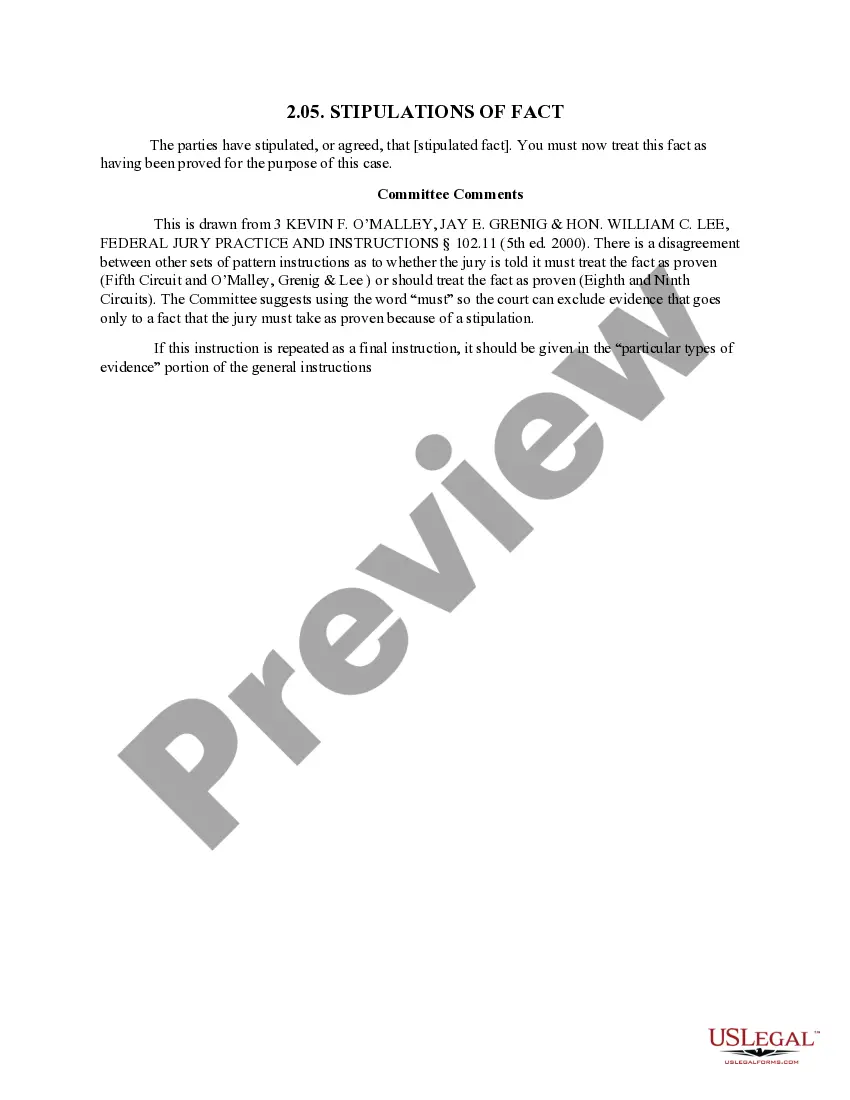
A stipulation of fact leaves that fact no longer at issue, and must be accepted by the jury. By contrast, a stipulation as to testimony does not compel the jury to accept as true all the facts within the stipulated testimony, but permits the jury to accept the stipulated evidence in whole, in part, or not at all.
In litigation, a stipulation generally means an agreement between opposing parties concerning a relevant point. Furthermore, in a judicial proceeding, a stipulation is binding without consideration. In admiralty practice, we can define stipulation as a recognizance like a bail for the appearance of a defendant.
This stipulation might put some sort of limit on the agreement. For example, if you run a fencing company and offer a sale, you can stipulate that to get the sale price, the fence must be ordered by a certain date. Your customer, in turn, might stipulate that the work must be finished before the ground freezes.
A stipulation of fact leaves that fact no longer at issue, and must be accepted by the jury. By contrast, a stipulation as to testimony does not compel the jury to accept as true all the facts within the stipulated testimony, but permits the jury to accept the stipulated evidence in whole, in part, or not at all.