Stipulated Testimony
About this form
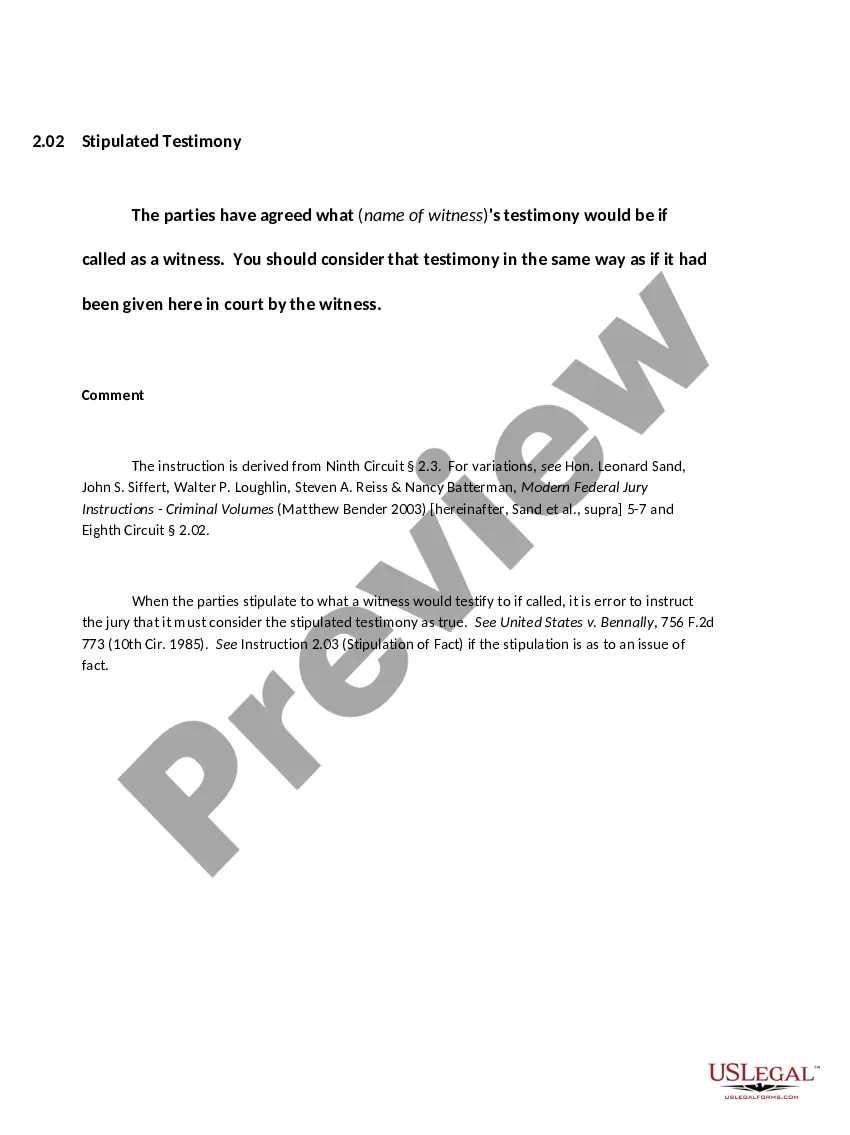
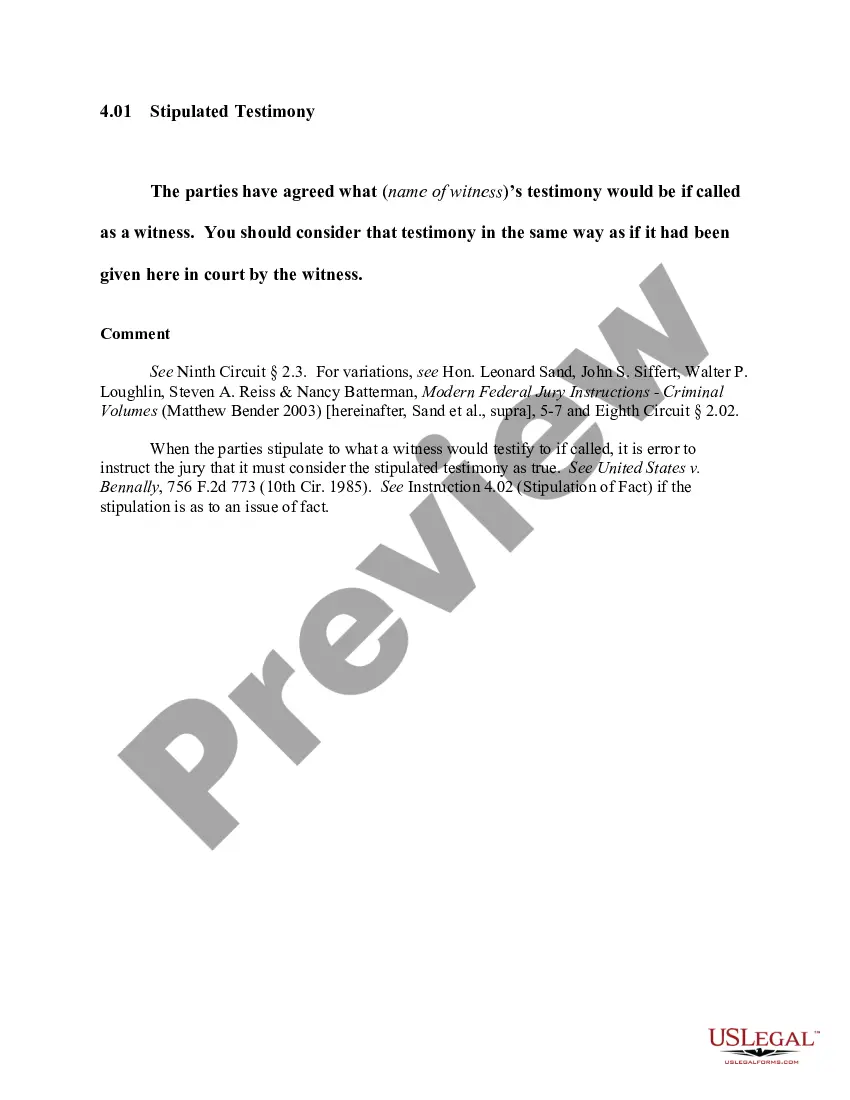
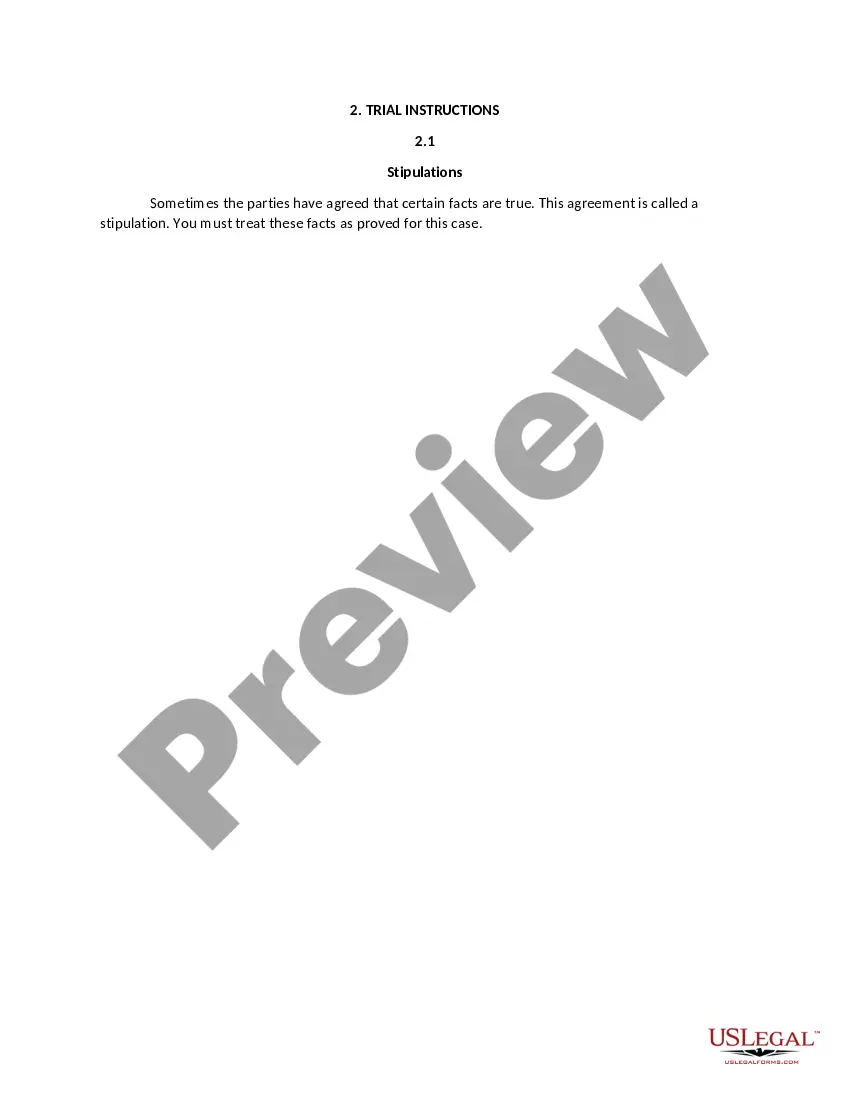
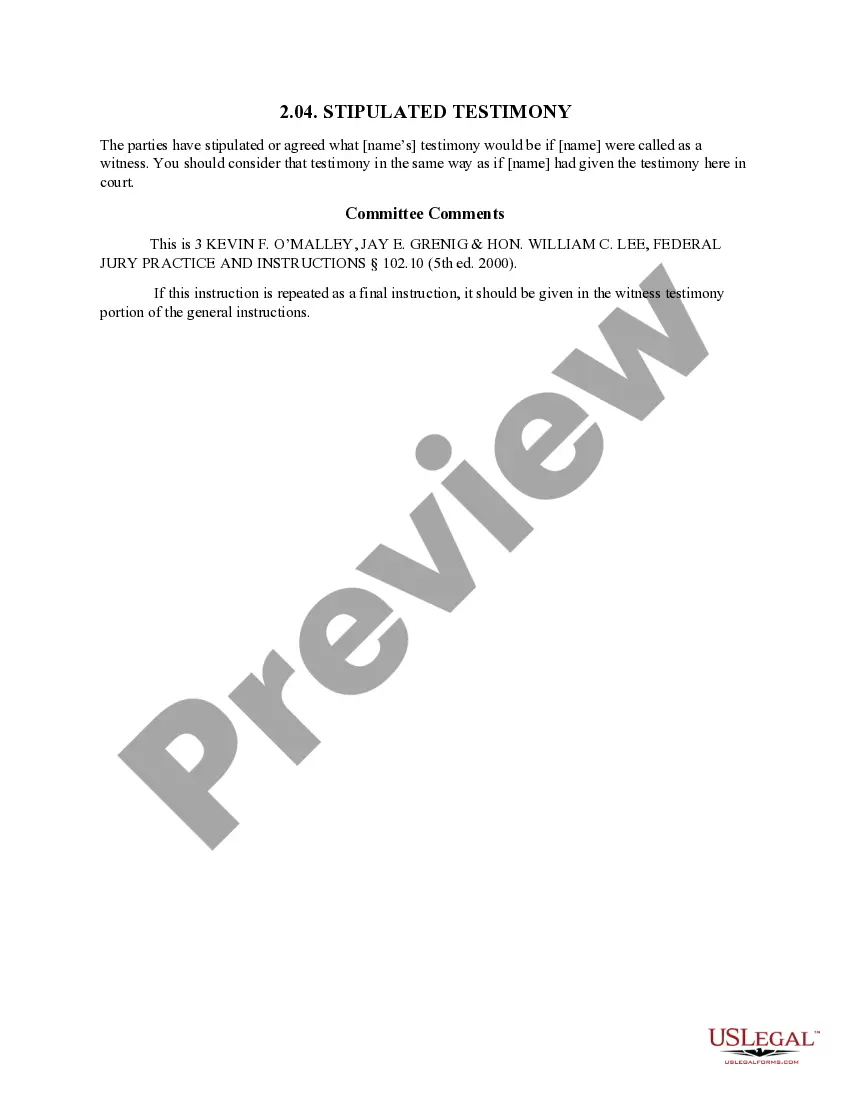
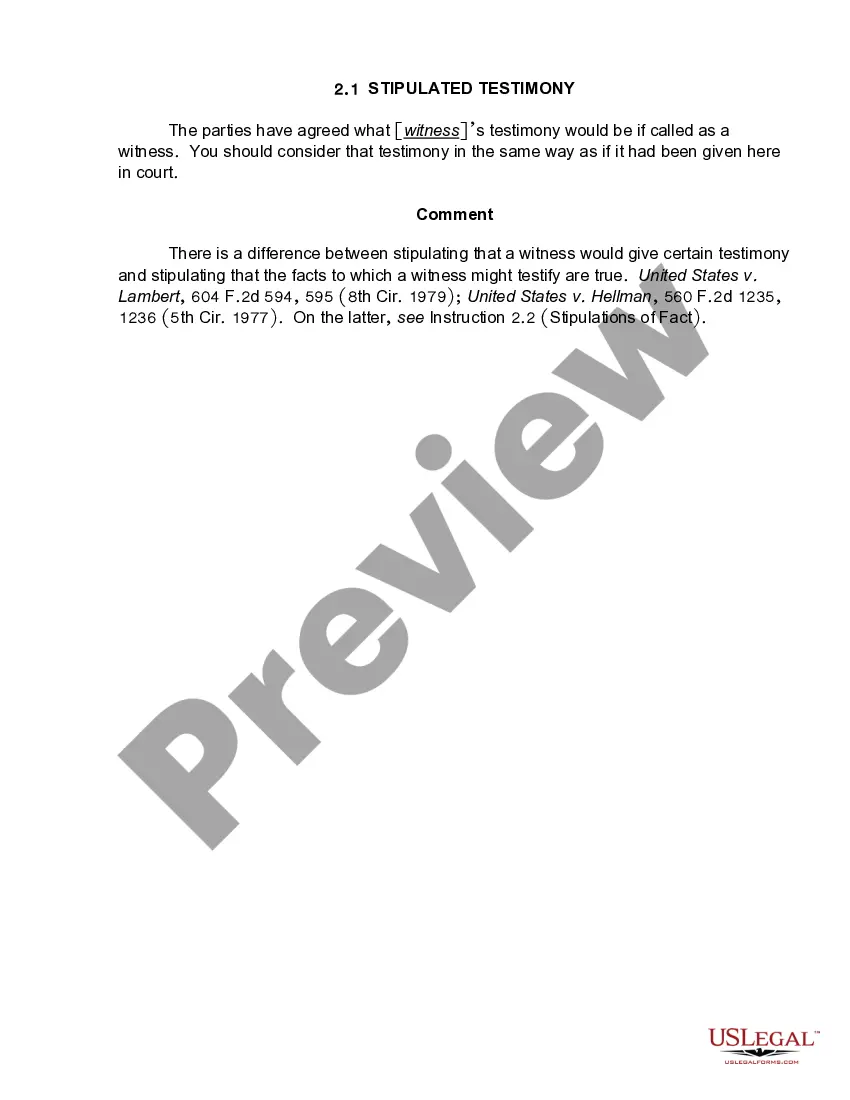
The Stipulated Testimony form allows parties involved in a legal case to agree on what a witness would testify if called to the stand. This agreement ensures that the jury considers the testimony in the same manner as if it were delivered live in court. It streamlines legal processes by eliminating the need for a witness's physical presence while maintaining the integrity of their statements.
Key parts of this document
- Name of witness: Section where the witness whose testimony is being stipulated is identified.
- Agreed testimony: Contains the parties' consensus on what the testimony would include.
- Jury instruction: Guidance for the jury on how to interpret the stipulated testimony.
When to use this form
This form is particularly useful in any legal proceedings where the testimony of a witness is crucial, but the witness cannot appear in court. Scenarios include cases where the witness is unavailable due to illness, scheduling conflicts, or other extenuating circumstances. Using this form can help expedite trials and ensure that the jury has access to key information.
Who needs this form
- Attorneys representing clients in legal proceedings.
- Parties involved in civil or criminal cases seeking to streamline their trial process.
- Witnesses who have agreed with all parties on what their testimony would be.
Instructions for completing this form
- Identify the parties involved by entering their names and contact information.
- Specify the name of the witness whose testimony is being stipulated.
- Clearly outline the content of the testimony that all parties have agreed upon.
- Provide any necessary jury instruction regarding the interpretation of the stipulated testimony.
- Ensure that all parties review and sign the document to formalize the agreement.
Is notarization required?
This form does not typically require notarization to be legally valid. However, some jurisdictions or document types may still require it. US Legal Forms provides secure online notarization powered by Notarize, available 24/7 for added convenience.
Get your form ready online
Our built-in tools help you complete, sign, share, and store your documents in one place.
Make edits, fill in missing information, and update formatting in US Legal Forms—just like you would in MS Word.
Download a copy, print it, send it by email, or mail it via USPS—whatever works best for your next step.
Sign and collect signatures with our SignNow integration. Send to multiple recipients, set reminders, and more. Go Premium to unlock E-Sign.
If this form requires notarization, complete it online through a secure video call—no need to meet a notary in person or wait for an appointment.
We protect your documents and personal data by following strict security and privacy standards.

Make edits, fill in missing information, and update formatting in US Legal Forms—just like you would in MS Word.

Download a copy, print it, send it by email, or mail it via USPS—whatever works best for your next step.

Sign and collect signatures with our SignNow integration. Send to multiple recipients, set reminders, and more. Go Premium to unlock E-Sign.

If this form requires notarization, complete it online through a secure video call—no need to meet a notary in person or wait for an appointment.

We protect your documents and personal data by following strict security and privacy standards.
Common mistakes to avoid
- Failing to clearly identify the witness, leading to confusion about who the testimony pertains to.
- Not specifying the complete content of the agreed testimony.
- Assuming the jury must accept the stipulated testimony as true without proper instruction.
Why complete this form online
- Convenience of accessing the form from anywhere at any time.
- Easy editing options to customize the form according to specific needs.
- Assurance that forms are drafted by licensed attorneys to ensure compliance with legal standards.
Main things to remember
- The Stipulated Testimony form allows parties to agree on witness statements without requiring the witness's physical presence.
- It is useful in various legal contexts, especially when testimony is vital but the witness cannot appear.
- The form should clearly outline all agreed testimony and jury instructions for proper legal consideration.
Looking for another form?
Form popularity
FAQ
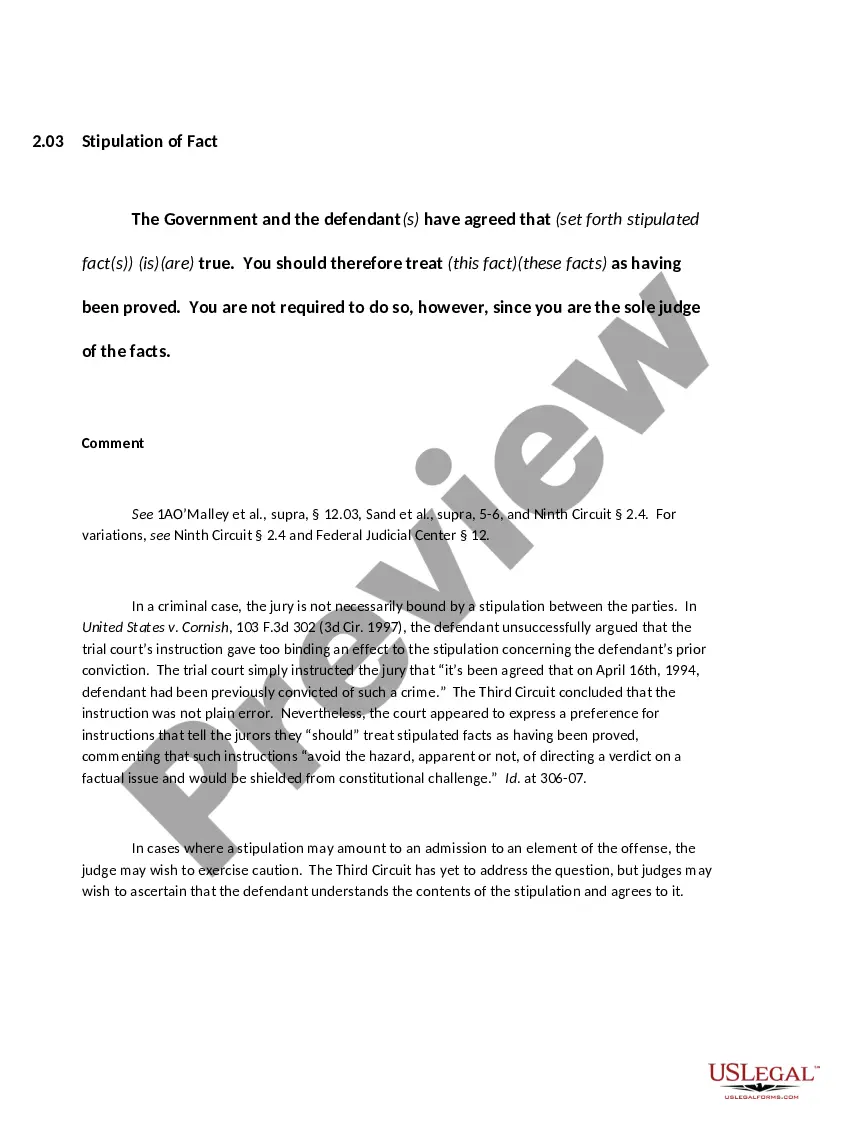
A stipulation of fact leaves that fact no longer at issue, and must be accepted by the jury. By contrast, a stipulation as to testimony does not compel the jury to accept as true all the facts within the stipulated testimony, but permits the jury to accept the stipulated evidence in whole, in part, or not at all.
A stipulation of fact leaves that fact no longer at issue, and must be accepted by the jury. By contrast, a stipulation as to testimony does not compel the jury to accept as true all the facts within the stipulated testimony, but permits the jury to accept the stipulated evidence in whole, in part, or not at all.
A stipulation is simply an agreement between the parties. To be effective, the stipulation must be in writing and signed by the judge or made on the record in open court.
A stipulation is an agreement between adverse parties as to the definition or identification of a statement or pieces of evidence that are material to the case. Trial judges typically accept stipulations of fact presented by parties.
This stipulation might put some sort of limit on the agreement. For example, if you run a fencing company and offer a sale, you can stipulate that to get the sale price, the fence must be ordered by a certain date. Your customer, in turn, might stipulate that the work must be finished before the ground freezes.
A stipulation is an agreement between attorneys on opposite sides of a case, designed to shorten litigation or make the case simpler. Attorneys can stipulate to virtually any facts involved in the case, or to agree on certain procedures that will be allowed.