Nevada Special or Limited Power of Attorney for Real Estate Sales Transaction By Seller
What is this form?
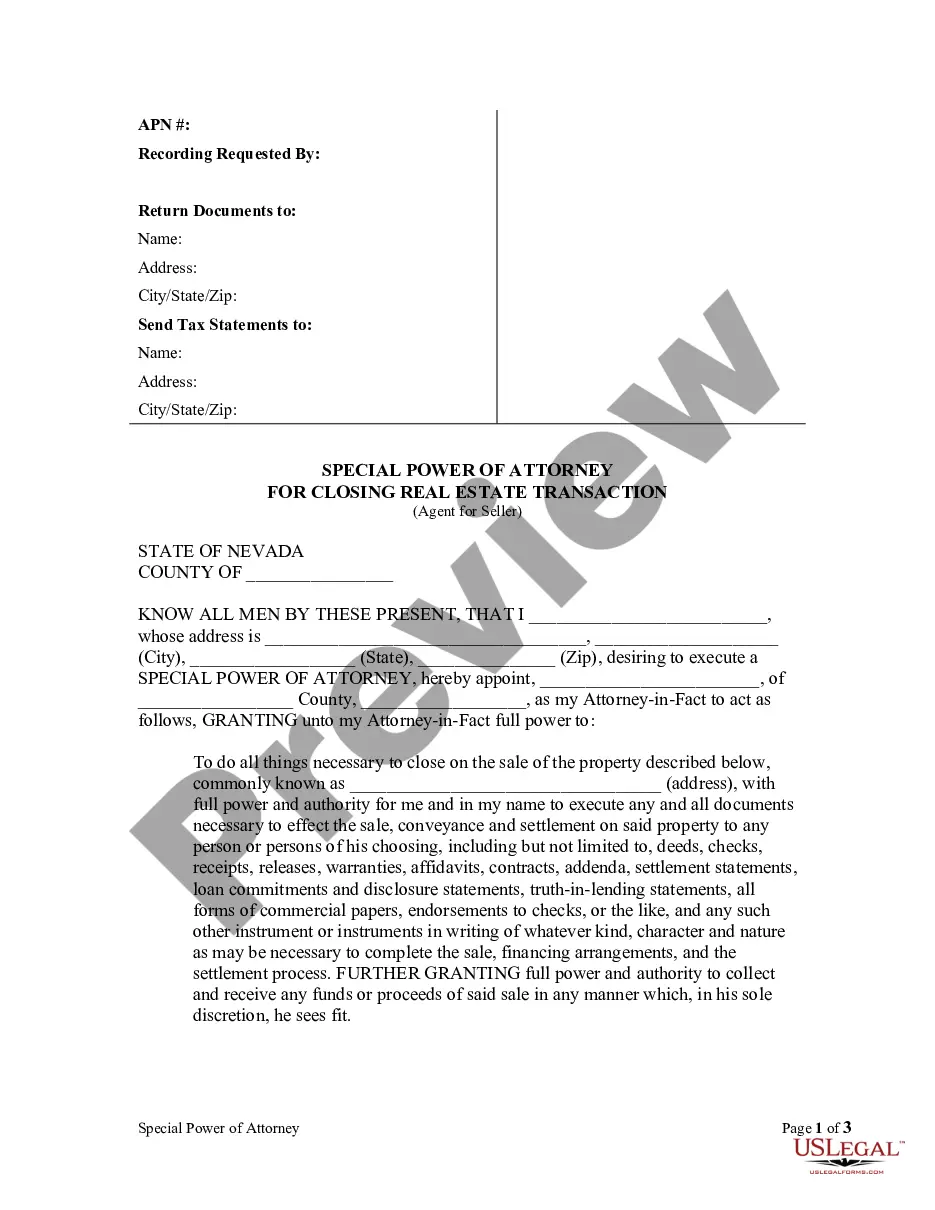
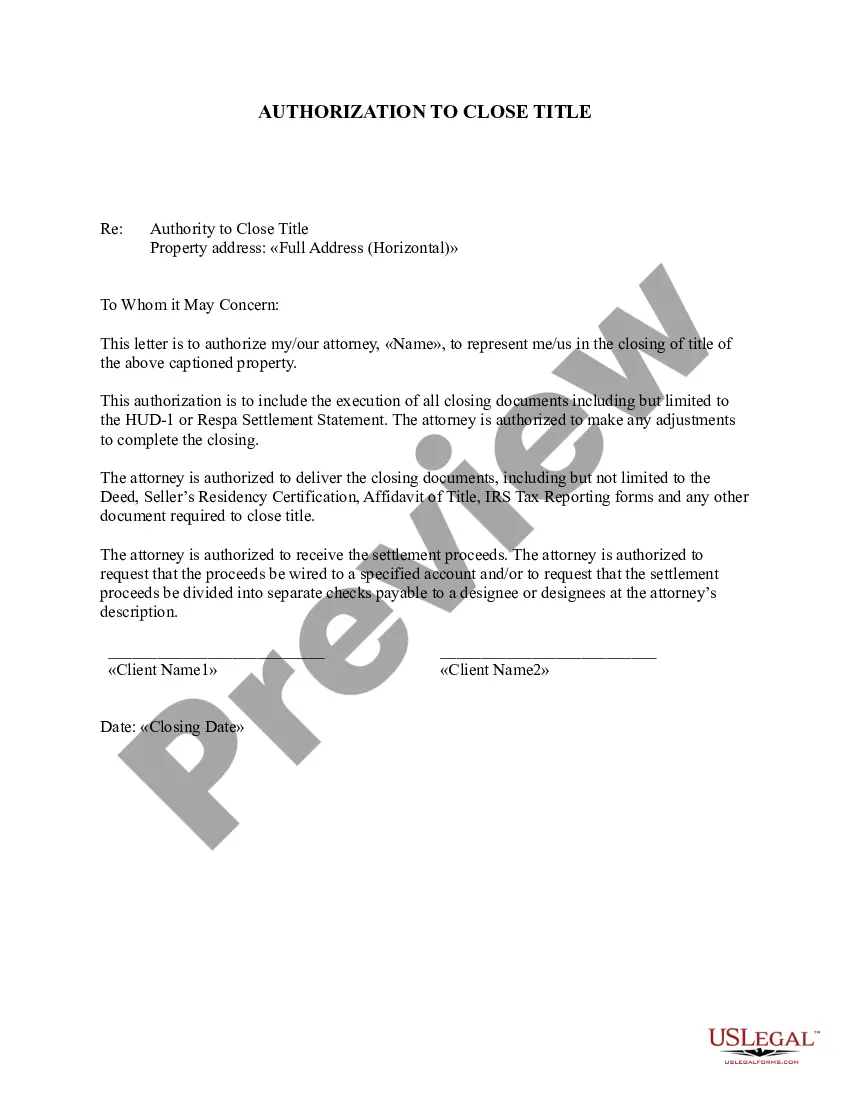
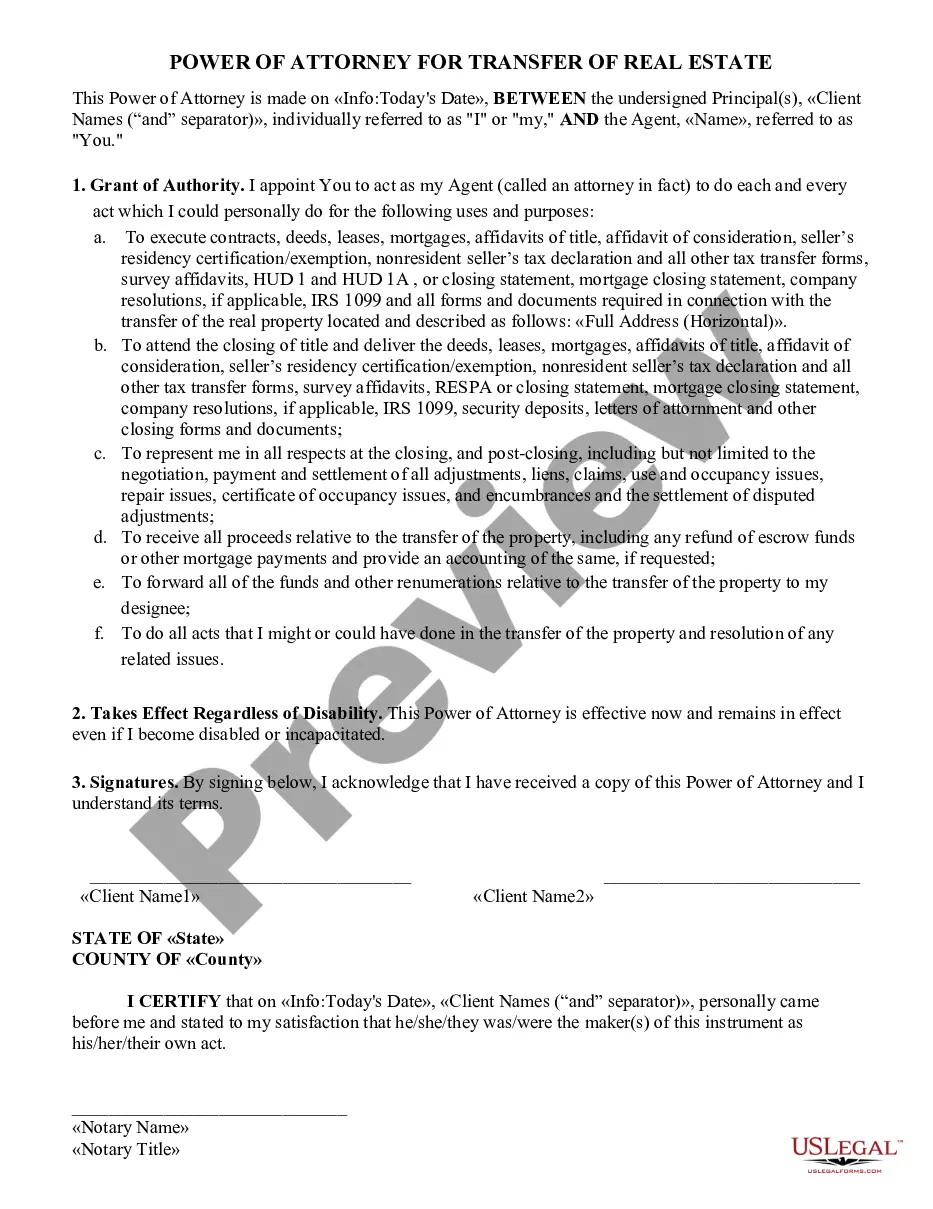
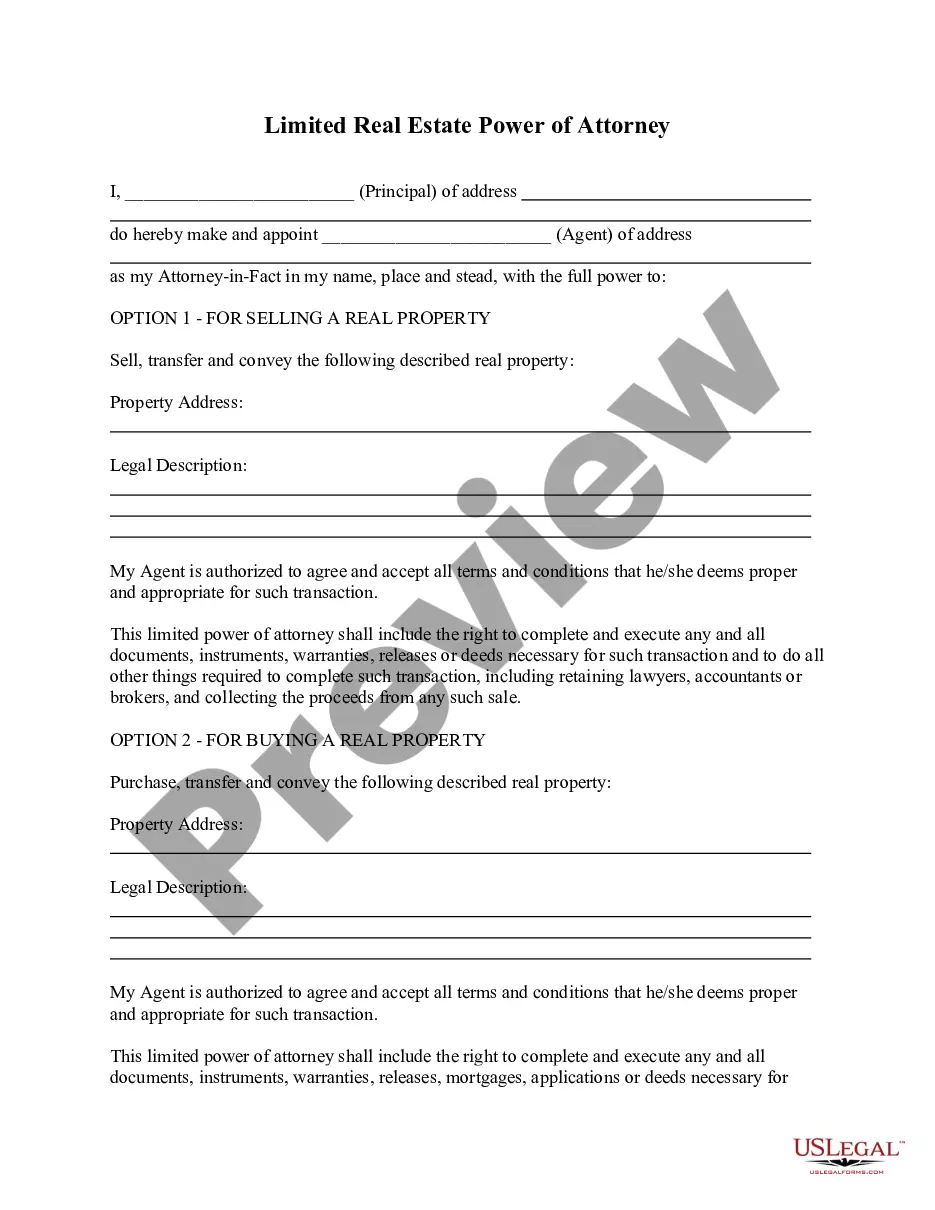
The Special or Limited Power of Attorney for Real Estate Sales Transaction By Seller is a legal document that allows a seller to appoint an attorney-in-fact to handle the sale of a specific property. This form provides the designated representative with the authority to execute necessary documents and act on behalf of the seller, ensuring a smooth transaction. Unlike a general power of attorney, this form is specifically tailored for real estate sales transactions, limiting the agent's powers to the sale of particular property only.
What’s included in this form
- Information about the seller, including name and address.
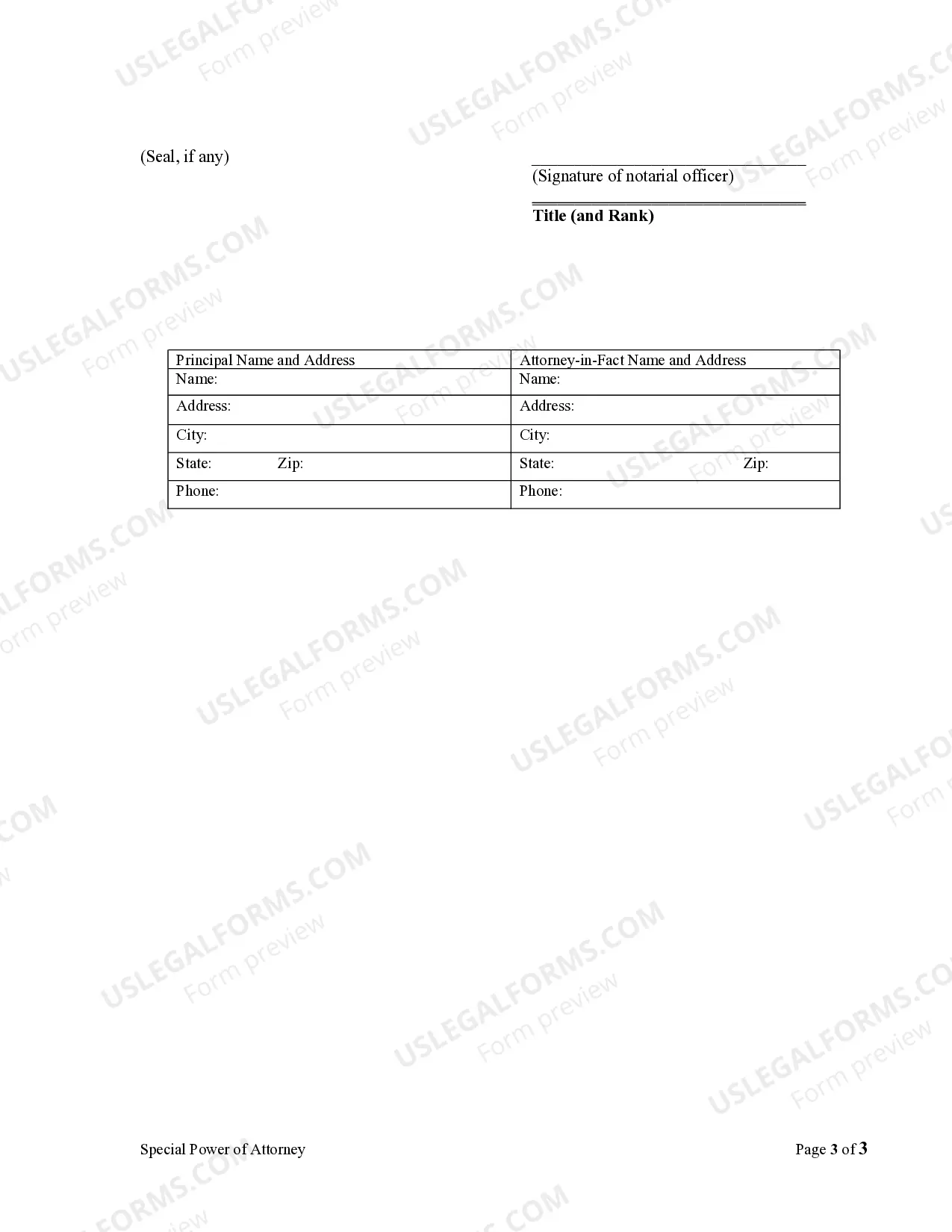
- Name and address of the attorney-in-fact being appointed.
- Full power of attorney granted for executing all necessary documents related to the sale.
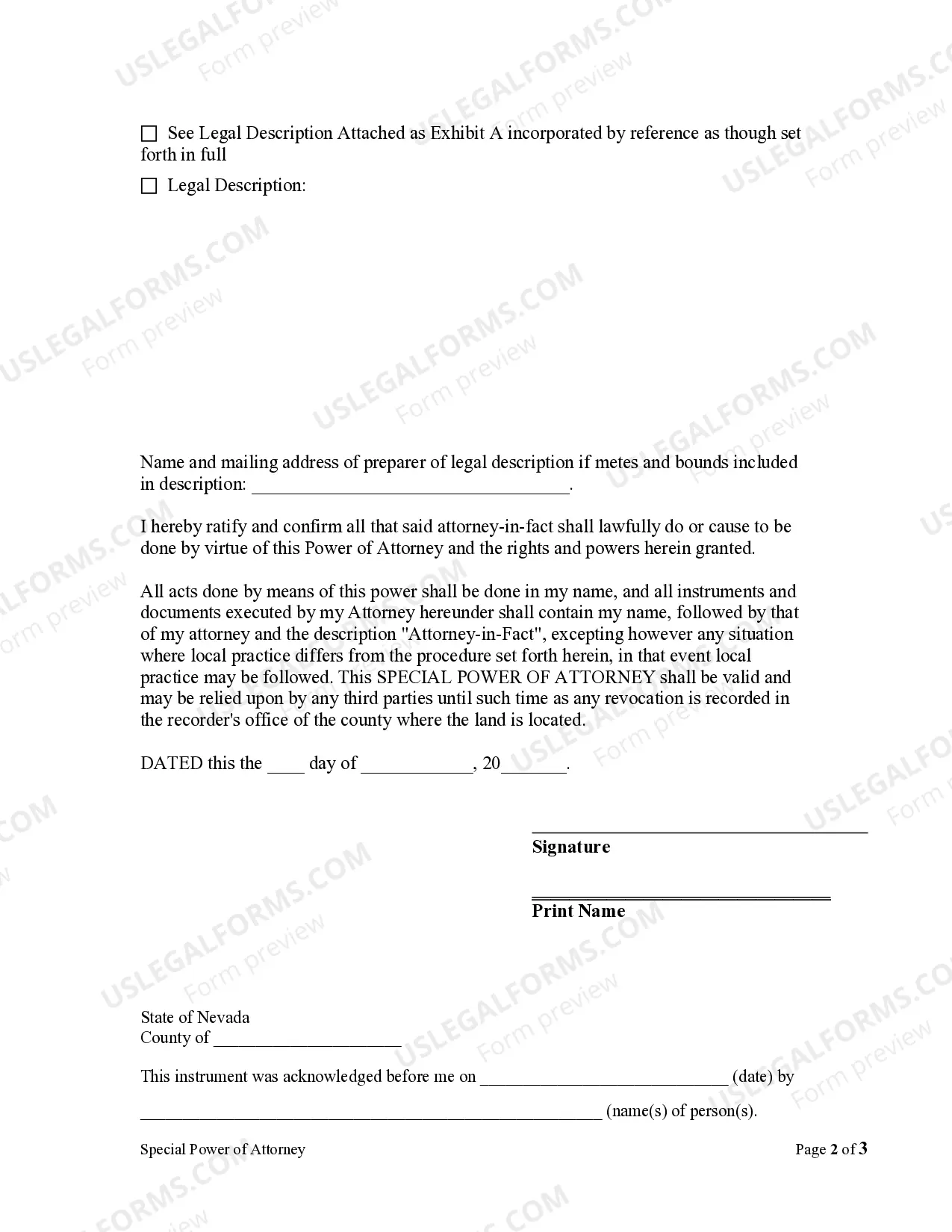
- A clear legal description of the property being sold.
- Signature section for the seller, including the date of signing.
- Notarization section to confirm the identity of the parties involved.

When this form is needed
This form should be used when a seller needs to delegate authority to another person to handle all aspects of selling a property. Situations may include the seller being unable to attend closing due to distance, health, or other obligations. It's also useful when the seller prefers to have a trusted individual manage the sale process on their behalf.
Intended users of this form
This form is intended for:
- Property sellers who need to appoint a representative for their sale.
- Individuals unable to personally handle their real estate transactions.
- Those selling property located in jurisdictions that recognize this specific type of power of attorney.
How to complete this form
- Identify the seller's name and address at the top of the form.
- Clearly state the name and county of the attorney-in-fact.
- Provide a detailed legal description of the property being sold.
- Sign and date the document to validate the power of attorney.
- Have the document notarized to confirm the signing party's identity.
Notarization guidance
To make this form legally binding, it must be notarized. Our online notarization service, powered by Notarize, lets you verify and sign documents remotely through an encrypted video session.
Get your form ready online
Our built-in tools help you complete, sign, share, and store your documents in one place.
Make edits, fill in missing information, and update formatting in US Legal Forms—just like you would in MS Word.
Download a copy, print it, send it by email, or mail it via USPS—whatever works best for your next step.
Sign and collect signatures with our SignNow integration. Send to multiple recipients, set reminders, and more. Go Premium to unlock E-Sign.
If this form requires notarization, complete it online through a secure video call—no need to meet a notary in person or wait for an appointment.
We protect your documents and personal data by following strict security and privacy standards.

Make edits, fill in missing information, and update formatting in US Legal Forms—just like you would in MS Word.

Download a copy, print it, send it by email, or mail it via USPS—whatever works best for your next step.

Sign and collect signatures with our SignNow integration. Send to multiple recipients, set reminders, and more. Go Premium to unlock E-Sign.

If this form requires notarization, complete it online through a secure video call—no need to meet a notary in person or wait for an appointment.

We protect your documents and personal data by following strict security and privacy standards.
Common mistakes to avoid
- Failing to provide a clear description of the property.
- Not signing and dating the form correctly.
- Forgetting to have the document notarized, if required.
- Not specifying the authority granted to the attorney-in-fact clearly.
Advantages of online completion
- Convenience of accessing and completing the form from anywhere.
- Editability allows for quick updates to information.
- Reliable templates drafted by licensed attorneys ensure legal compliance.
What to keep in mind
- This form allows a seller to appoint someone to handle the sale of their property.
- It is essential for sellers who cannot be present at the closing.
- Ensure all sections are completed accurately and notarization is obtained if required.
- Check local laws for any additional requirements related to power of attorney documents.
Looking for another form?


Form popularity
FAQ
The non-durable power of attorney is used only for a set period of time and usually for a particular transaction in which you grant your agent authority to act on your behalf. Once the transaction is completed, or should the principal become incapacitated during this time, the non-durable power of attorney ceases.
A Power of Attorney, like a Trust, does not need to be registered or recorded in the public records in order to be effective. It does have to be in writing, signed, witnessed and notarized.
The durable power of attorney is almost always required. This instrument gives another person specific powers to sign for an individual in a real estate transaction where the exact name and description of the property is stated in the document.
What's the difference between durable and general power of attorney? A general power of attorney ends the moment you become incapacitated.A durable power of attorney stays effective until the principle dies or until they act to revoke the power they've granted to their agent.
There is no recording of a power of attorney in Nevada. Typically when a new power of attorney is created, it will read that it supersedes and/or revokes any prior power of attorney made.
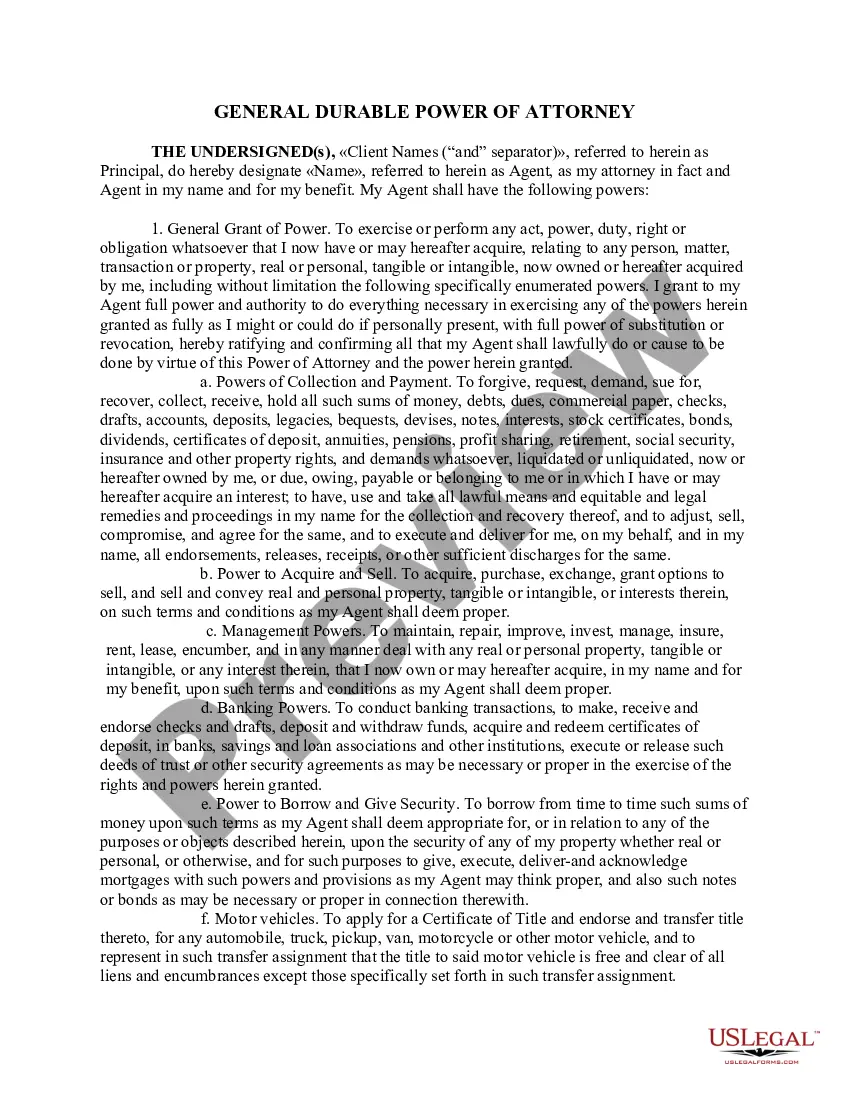
General Power of Attorney. Durable Power of Attorney. Special or Limited Power of Attorney. Springing Durable Power of Attorney.
A limited PoA, amongst other things, grants the PoA holder access and permission to execute trades/orders on your trading account, on your behalf. However, it does not allow the PoA holder to perform withdrawals requests or transfer of funds. All withdrawals must be requested by the authorized signatory of the account.
Remember that all of the authorized agents under the power of attorney or representatives in an estate must sign the listing agreement, disclosure documents, etc. For example, when there are two executors in an estate, then they both must sign the Listing Contract.