Authorization to Close Title
About this form
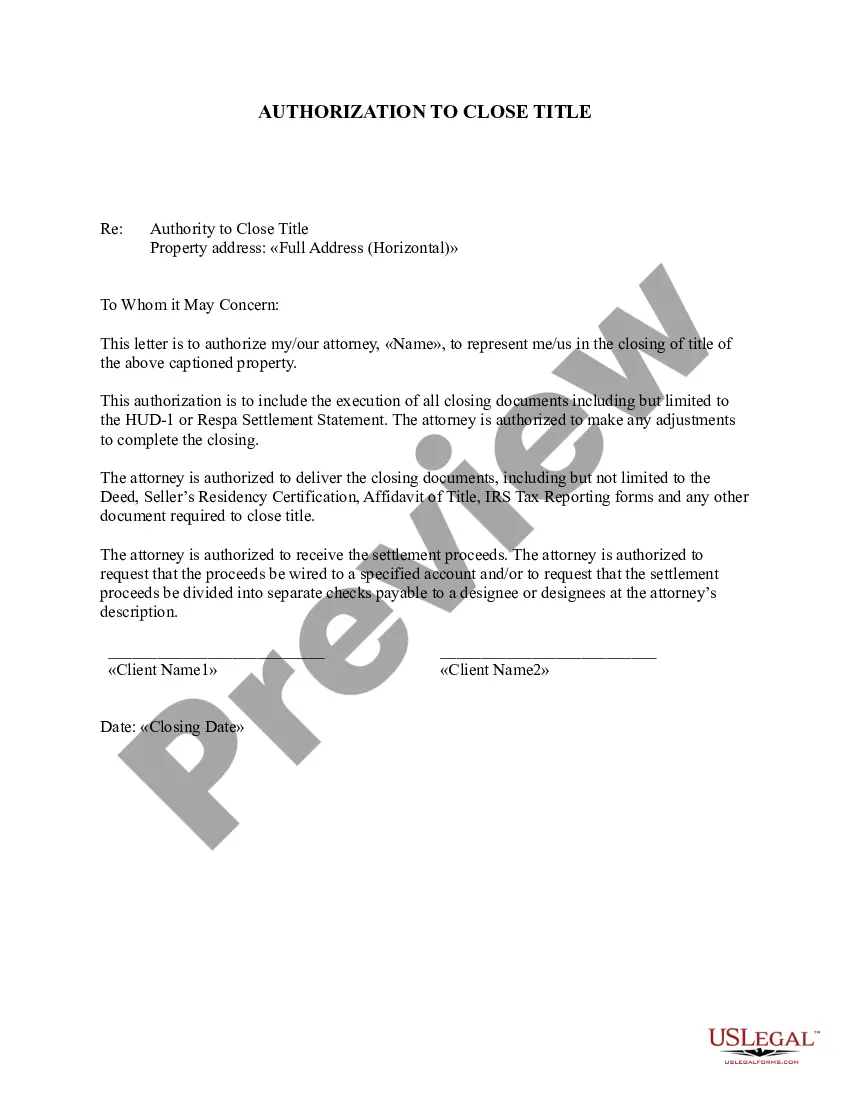
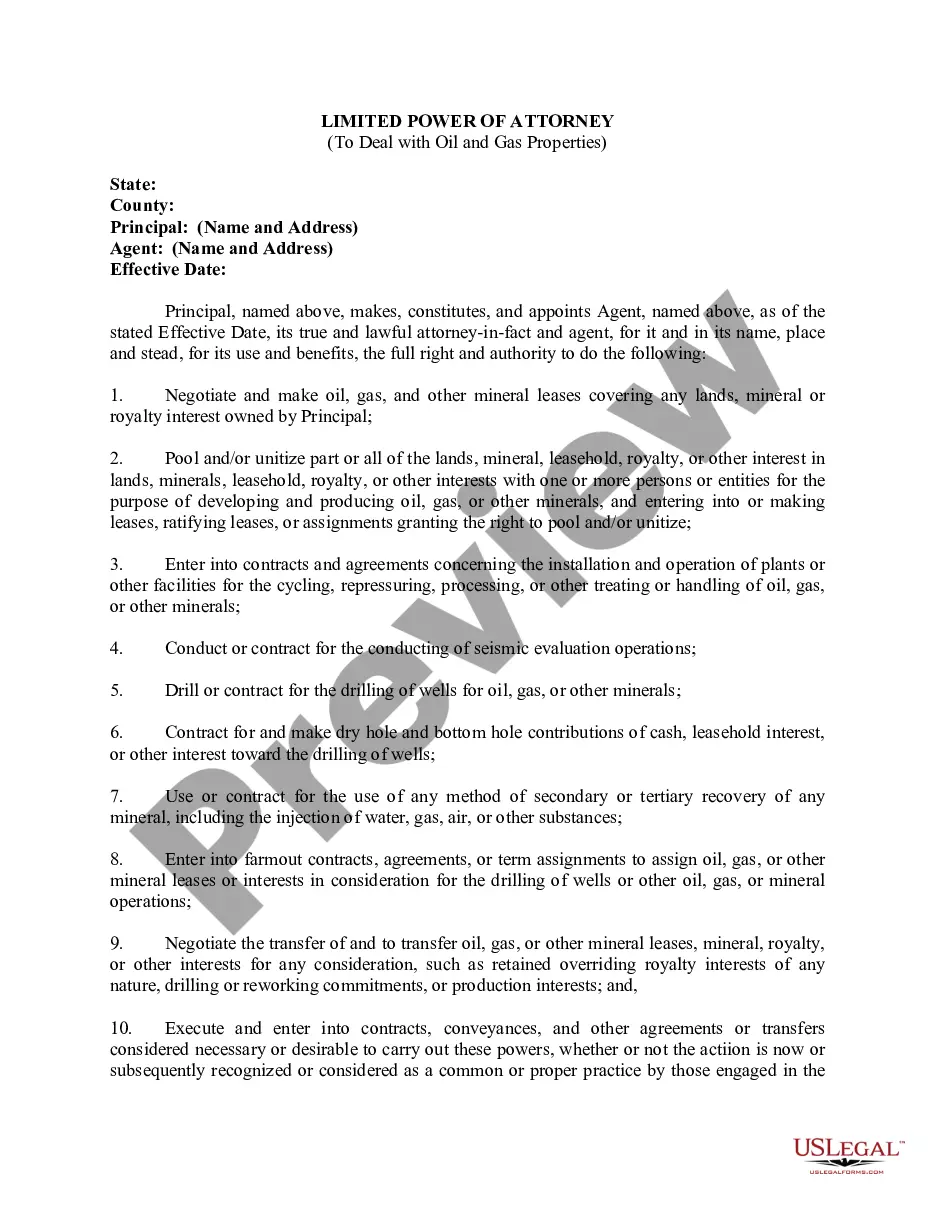
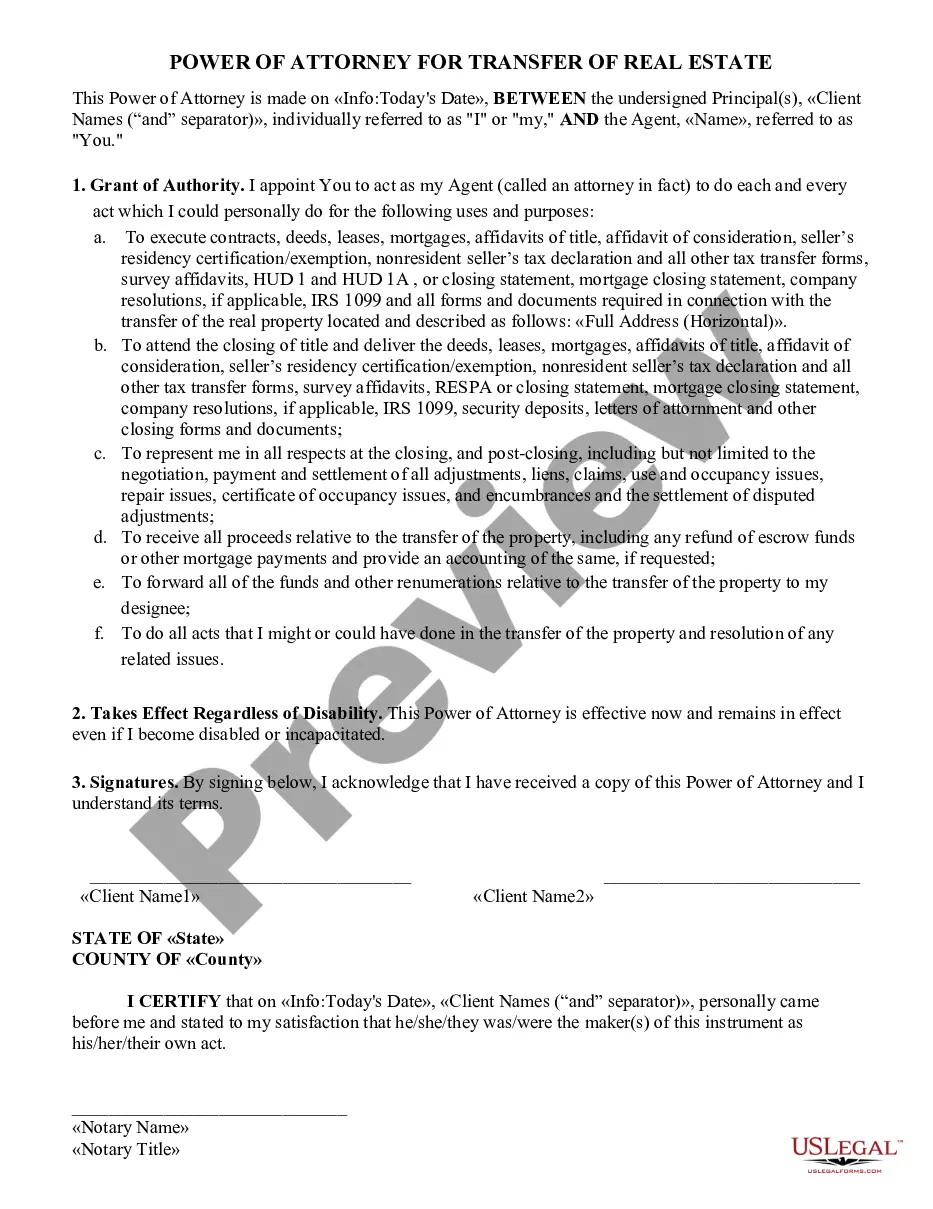
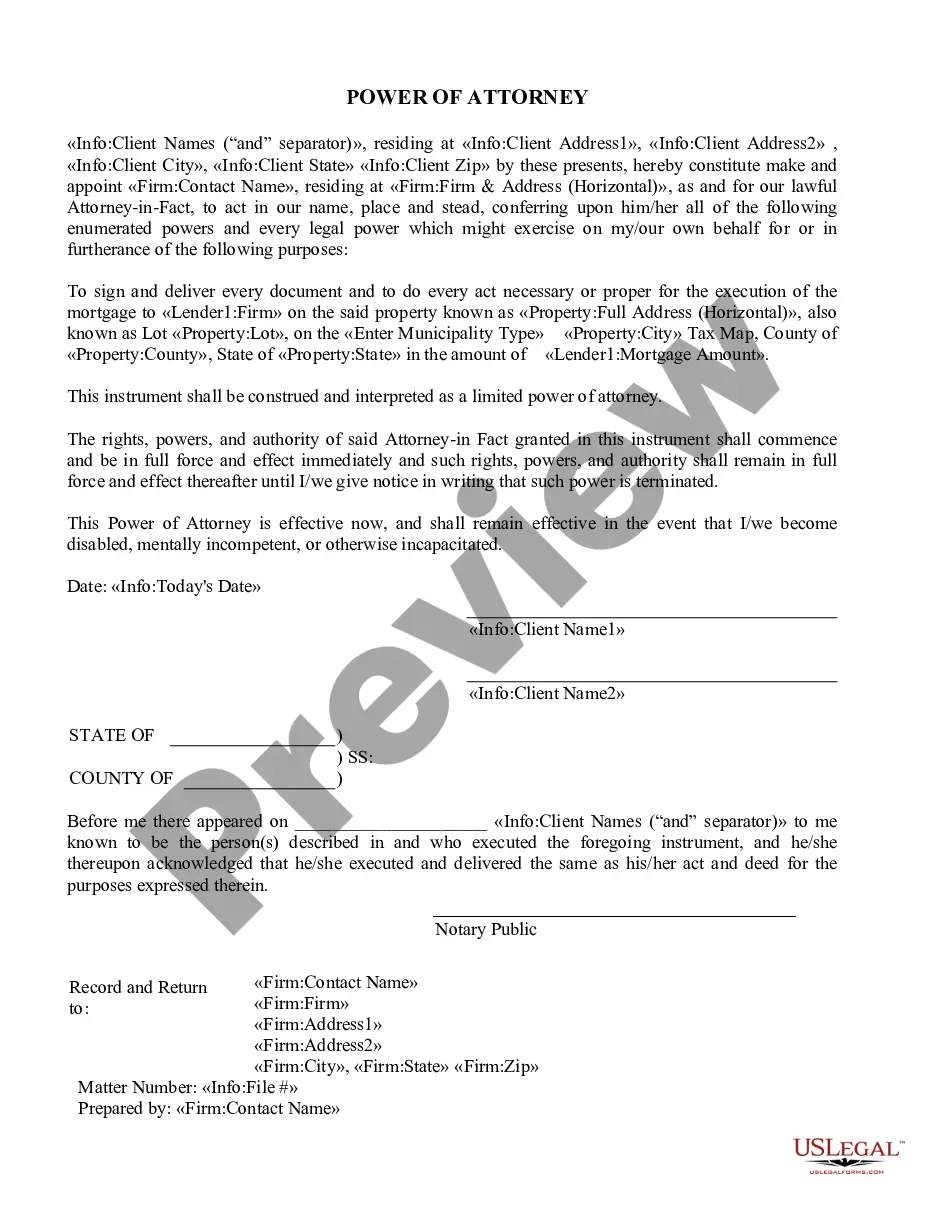
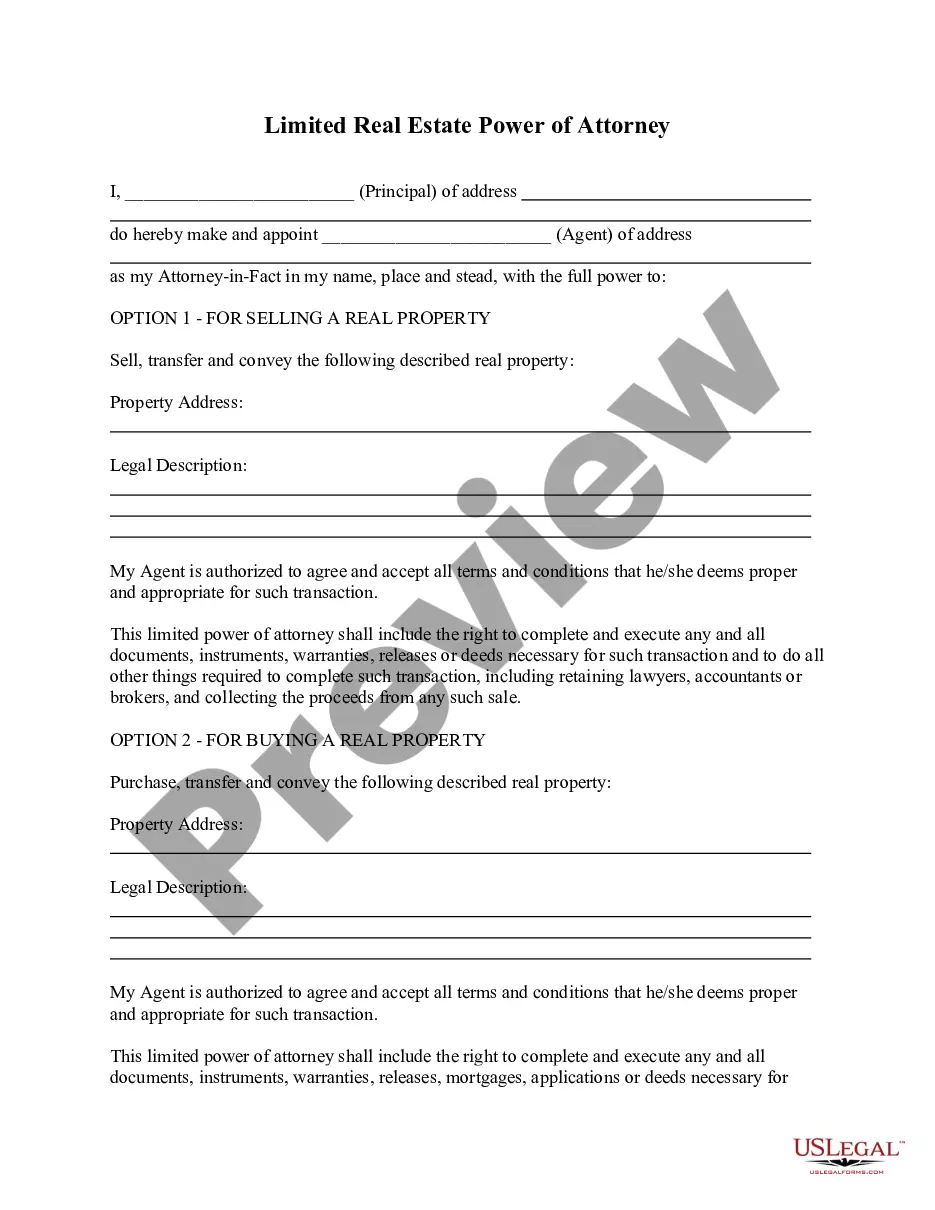
The Authorization to Close Title form allows an individual to empower an attorney-in-fact or agent to act on their behalf during the closing of a property title. This form differs from a general power of attorney, as it specifically pertains to the processes and documents involved in property transactions. With this authorization, your designated attorney can execute all necessary closing documents, manage financial disbursements, and ensure a smooth transfer of property ownership.
What’s included in this form
- Property address: Specifies the full address of the property involved.
- Attorney's name: Identifies the attorney-in-fact or agent authorized to act on your behalf.
- Scope of authority: Outlines the specific powers granted to the attorney, including signing closing documents.
- Settlement proceeds: Authorizes the attorney to receive and manage the distribution of settlement funds.
- Client signatures: Requires the signatures of the principal(s) to validate the authorization.
- Closing date: Indicates the date when the title closing will take place.
When this form is needed
This form is essential when you cannot personally attend the closing of a property title. It is commonly used in scenarios such as being out of state, having health issues, or being otherwise unavailable. By using this form, you ensure that your interests are represented and that the closing process can proceed without delays.
Who should use this form
- Homeowners selling or buying property who need to delegate closing authority.
- Individuals unable to attend the closing due to personal circumstances.
- Anyone who wishes to authorize an attorney to handle real estate transactions on their behalf.
Steps to complete this form
- Identify the parties: Enter your name as the principal and the name of the attorney as the agent.
- Specify the property: Provide the full address of the property for which the closing is authorized.
- Outline the powers: Review and confirm the scope of authority granted to the attorney.
- Enter dates: Fill in the closing date and ensure all dates align with your timeline.
- Sign and date: Both clients must sign and date the form to validate the authorization.
Notarization requirements for this form
This form does not typically require notarization unless specified by local law. Always verify local regulations to ensure compliance with any notarization requirements that may apply in your area.
Get your form ready online
Our built-in tools help you complete, sign, share, and store your documents in one place.
Make edits, fill in missing information, and update formatting in US Legal Forms—just like you would in MS Word.
Download a copy, print it, send it by email, or mail it via USPS—whatever works best for your next step.
Sign and collect signatures with our SignNow integration. Send to multiple recipients, set reminders, and more. Go Premium to unlock E-Sign.
If this form requires notarization, complete it online through a secure video call—no need to meet a notary in person or wait for an appointment.
We protect your documents and personal data by following strict security and privacy standards.

Make edits, fill in missing information, and update formatting in US Legal Forms—just like you would in MS Word.

Download a copy, print it, send it by email, or mail it via USPS—whatever works best for your next step.

Sign and collect signatures with our SignNow integration. Send to multiple recipients, set reminders, and more. Go Premium to unlock E-Sign.

If this form requires notarization, complete it online through a secure video call—no need to meet a notary in person or wait for an appointment.

We protect your documents and personal data by following strict security and privacy standards.
Common mistakes to avoid
- Failing to provide the complete property address.
- Not signing the form, which invalidates the authorization.
- Omitting the attorney's name or providing incorrect details.
Why complete this form online
- Convenience: Download and complete at your own pace from the comfort of your home.
- Editability: Customize the form as needed to fit your specific situation.
- Reliability: Access forms created by licensed attorneys, ensuring legal validity.
Looking for another form?
Form popularity
FAQ
A Closing Protection Letter, commonly called a CPL (or in some states an Insured Closing Letter ?ICL?), is an agreement from a title insurance company designed to protect the lender against issues that might arise from non-compliance with lender written closing instructions, fraud or negligence on the part of the
A Closing Protection Letter is added protection for the Insured Party (usually the lender/buyer) against actual loss of funds incurred within a specific transaction due to misconduct by the closing agent.
CPLs must be issued when either the title insurance agent or the title underwriter conducts the closing. For those parties to a transaction who are obtaining a policy of title insurance, the charge is $25 for the closing protection letter.
What is the Closing Instructions form? The Closing Instructions form is a document signed by the buyer, seller and real estate brokers in a real estate transaction.
What is a Title Company Closing Instruction Letter? A Title Company Closing Instruction Letter (the ?Closing Instruction Letter?) is a letter addressed to the title company regarding the procedures for the closing of the purchase and sale of a property or financing secured by real property.
Each party will decide whether or not it is necessary. However, a lender will rarely hire a title agent without the issuance of a CPL, and the burden of the fee is typically placed on the buyer.
In a Closing Protection Letter, your underwriter agrees to reimburse the addressee if your title agency is guilty of fraud or dishonesty in handling the closing money or documents, which courts have said covers more than just theft of the loan money, or if you fail to follow certain written closing instructions.
The escrow or settlement agent oversees closing of the transaction.