Texas Tax Affidavit Designation Other Property as Homestead Property
What this document covers
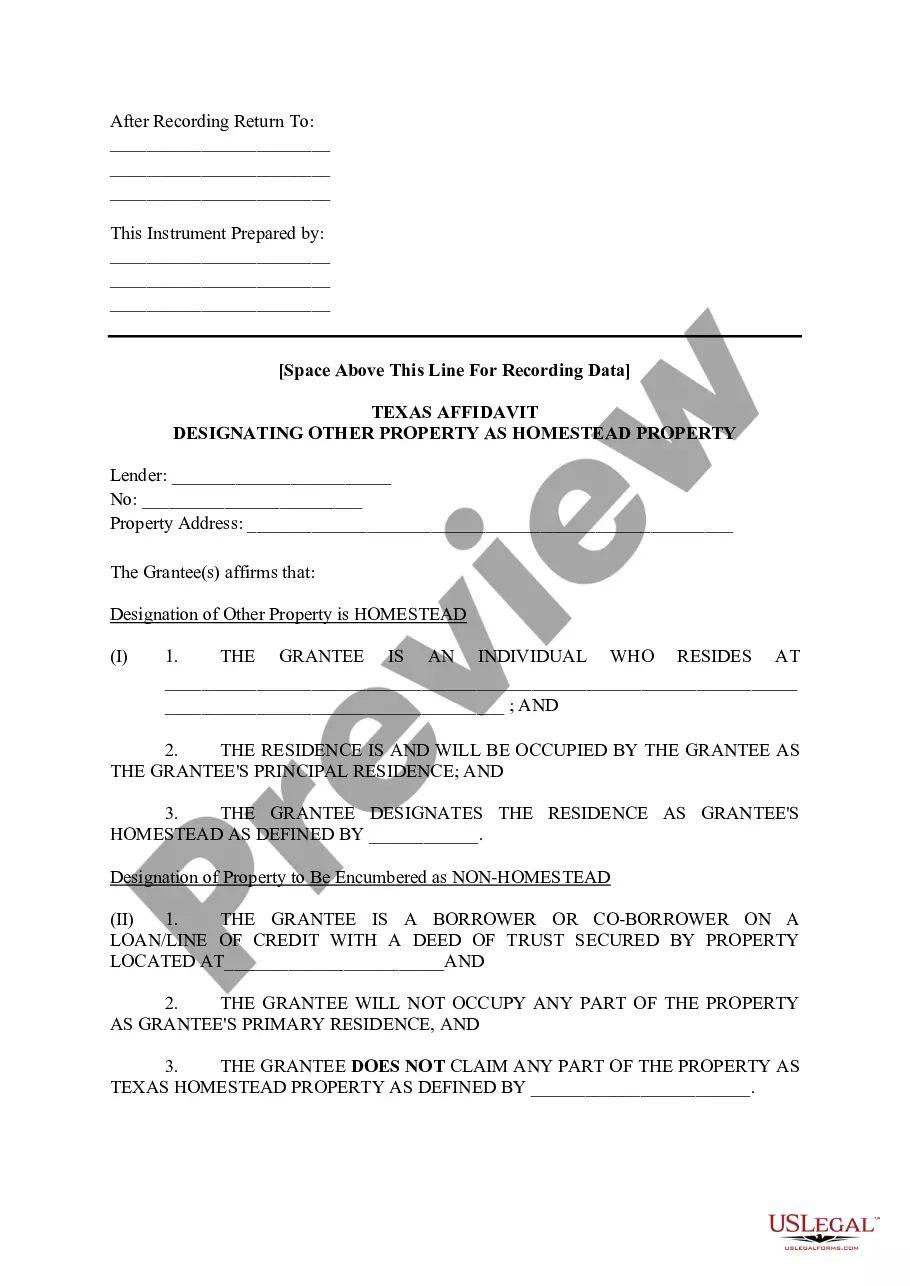
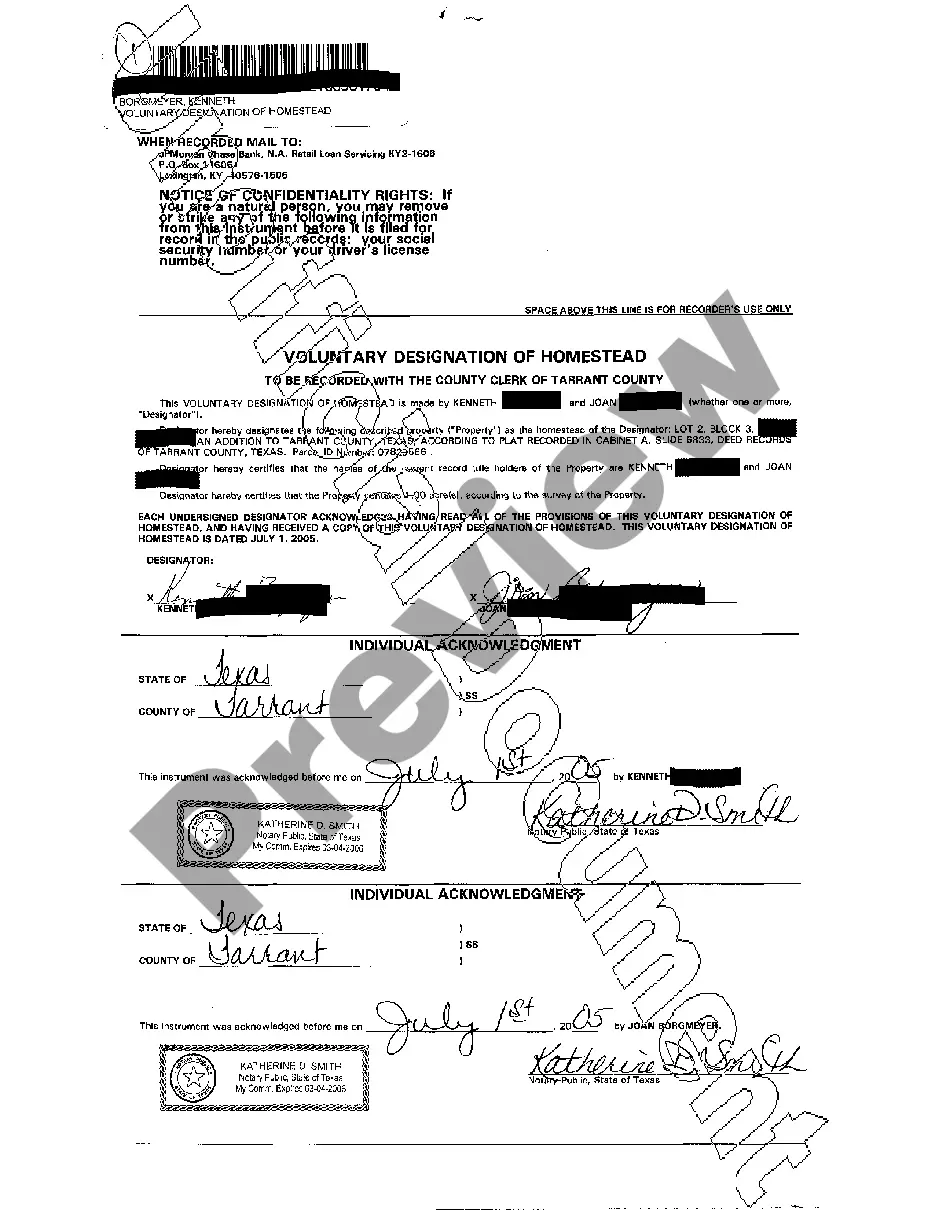
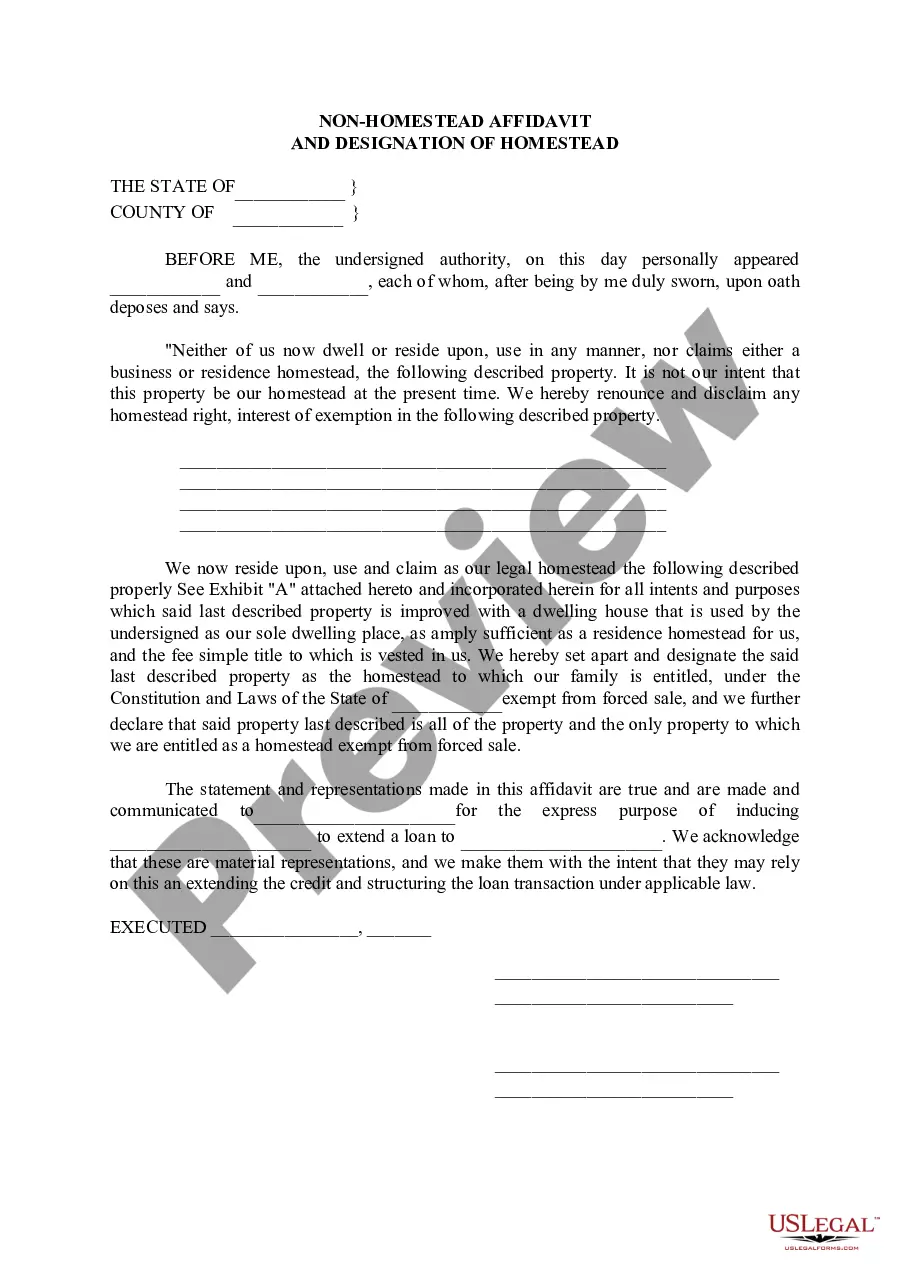
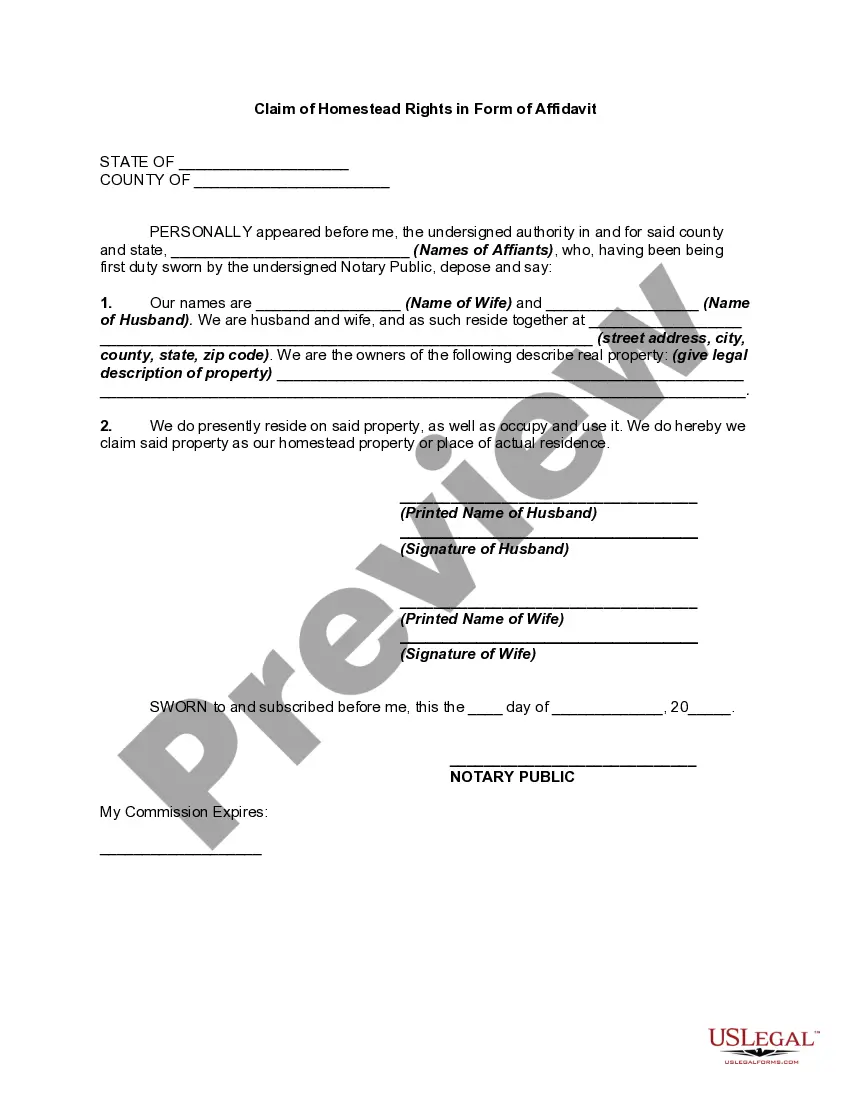
The Tax Affidavit Designation Other Property as Homestead Property is a legal document used in Texas to declare a different property as homestead property under state law. This affidavit specifies the primary residence as well as the location of any non-homestead property. It serves an important purpose in defining which property qualifies for certain exemptions and protections under Texas law, distinguishing it from other legal forms related to property ownership and tax exemptions.
Main sections of this form
- Identification of the lender and loan number.
- Property address of the designated homestead.
- Affirmation that the grantee resides at the specified address as their principal residence.
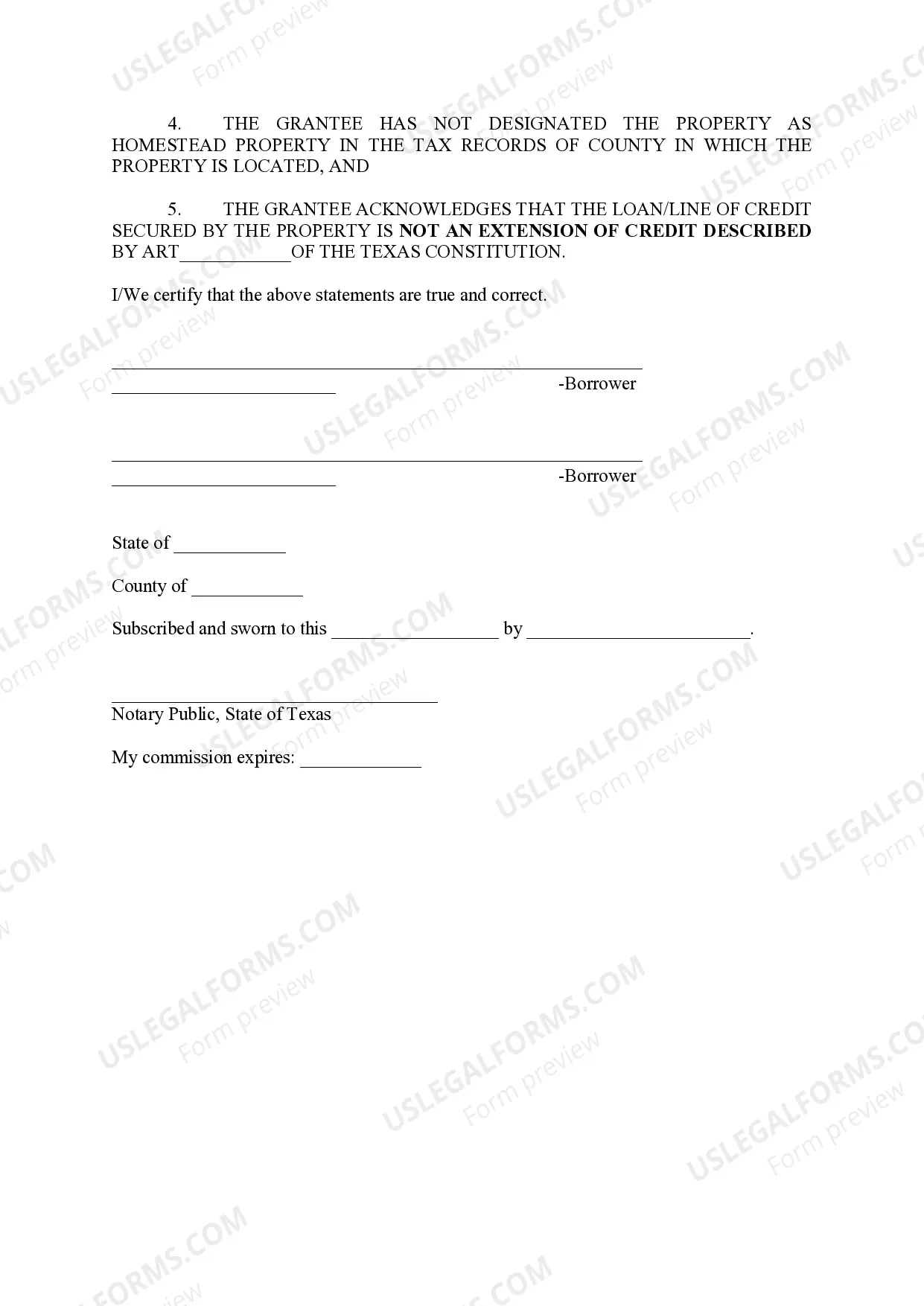
- Designation of non-homestead property along with details regarding its use and absence from tax records.
- Notarization section for validation of the document.
When to use this form
This form is applicable in various situations, such as when a homeowner wishes to establish a primary residence as a legal homestead in Texas while designating another property as non-homestead. It is particularly useful in securing homestead exemptions for tax purposes or confirming the status of a loan secured by a non-homestead property. Use this affidavit when you need to clarify your property designations to protect your rights and ensure compliance with local regulations.
Who needs this form
- Homeowners in Texas looking to establish their primary residence as a homestead.
- Individuals taking out loans secured by properties that they do not intend to occupy as their primary residence.
- Borrowers or co-borrowers addressing tax exemptions related to property ownership.
Steps to complete this form
- Enter the lender's name and loan number at the top of the form.
- Specify the property address you wish to designate as your homestead.
- Fill in your current residence address and affirm your occupation of that residence.
- Identify any non-homestead property and explain its use.
- Complete the acknowledgment section and ensure it is notarized for legal validity.
Is notarization required?
Yes, this form must be notarized to be legally valid. US Legal Forms offers integrated online notarization services, allowing you to complete the required notarization via secure video call at any time, ensuring your document is properly executed without the need for travel.
Get your form ready online
Our built-in tools help you complete, sign, share, and store your documents in one place.
Make edits, fill in missing information, and update formatting in US Legal Forms—just like you would in MS Word.
Download a copy, print it, send it by email, or mail it via USPS—whatever works best for your next step.
Sign and collect signatures with our SignNow integration. Send to multiple recipients, set reminders, and more. Go Premium to unlock E-Sign.
If this form requires notarization, complete it online through a secure video call—no need to meet a notary in person or wait for an appointment.
We protect your documents and personal data by following strict security and privacy standards.

Make edits, fill in missing information, and update formatting in US Legal Forms—just like you would in MS Word.

Download a copy, print it, send it by email, or mail it via USPS—whatever works best for your next step.

Sign and collect signatures with our SignNow integration. Send to multiple recipients, set reminders, and more. Go Premium to unlock E-Sign.

If this form requires notarization, complete it online through a secure video call—no need to meet a notary in person or wait for an appointment.

We protect your documents and personal data by following strict security and privacy standards.
Common mistakes
- Failing to provide accurate property addresses can lead to disputes.
- Not having the form notarized, thus making it legally invalid.
- Incorrectly designating properties as homestead or non-homestead may affect tax exemptions.
Advantages of online completion
- Convenience of immediate access to the form for downloading and printing.
- Editability allows for customization to fit individual circumstances before finalizing.
- Reliability of attorney-drafted content that complies with Texas law.
Looking for another form?

Form popularity
FAQ
(US) a house and adjoining land designated by the owner as his fixed residence and exempt under the homestead laws from seizure and forced sale for debts. The place of the house or home place.
To qualify, a home must meet the definition of a residence homestead: The home's owner must be an individual (for example: not a corporation or other business entity) and use the home as his or her principal residence on Jan. 1 of the tax year. An age 65 or older or disabled exemption is effective as of Jan.
The Texas Homestead Exemption The homestead exemption is available only for your principal residence. Vacation or rental properties are not covered under the exemption, nor are properties owned by corporations rather than individuals.
The homestead exemption is an automatic benefit in some states while, in others, homeowners must file a claim with the state in order to receive it. Since a homestead property is considered a person's primary residence, no exemptions can be claimed on other owned property, even residences.
You think your Spring Texas home has a homestead exemption but you are not 100% sure. So how can you easily find out if you have a homestead exemption? At the Harris County Appraisal District website of www.hcad.org you can look up your account and see which if any exemptions have been applied to your account.
To qualify, a home must meet the definition of a residence homestead: The home's owner must be an individual (for example: not a corporation or other business entity) and use the home as his or her principal residence on Jan. 1 of the tax year. An age 65 or older or disabled exemption is effective as of Jan.
Affiant acknowledges the Homestead Property as legally sufficient to qualify as his legal homestead. This Affidavit is made to induce Lender to make a mortgage loan on the Non-Homestead Property, or to grant other financial accommodations, secured by a Deed of Trust on the Non-Homestead Property.
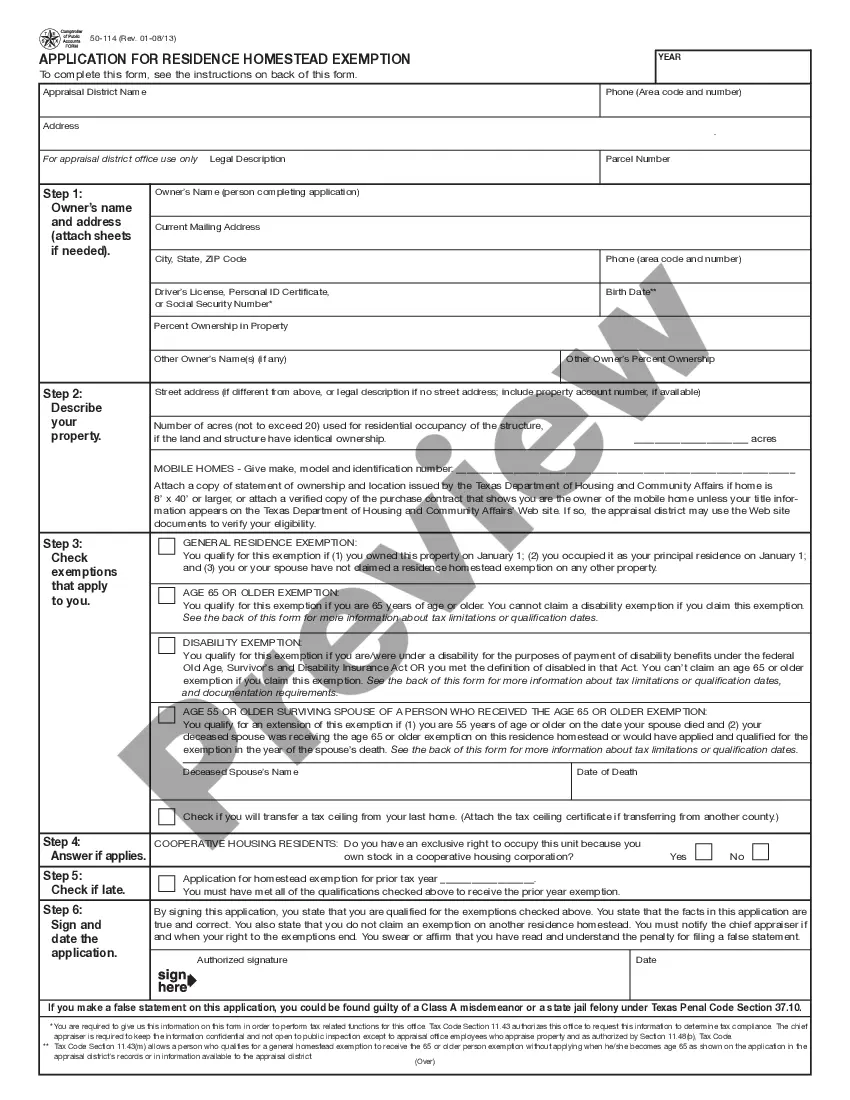
How do I apply for a homestead exemption? To apply for a homestead exemption, you need to submit an application with your county appraisal district. Filing an application is free and only needs to be filed once. The application can be found on your appraisal district website or using Texas Comptroller Form 50-114.
You cannot have more than one homestead at the same time.