South Carolina Quitclaim Deed - Timeshare - Two Individuals to a Trust
What this document covers
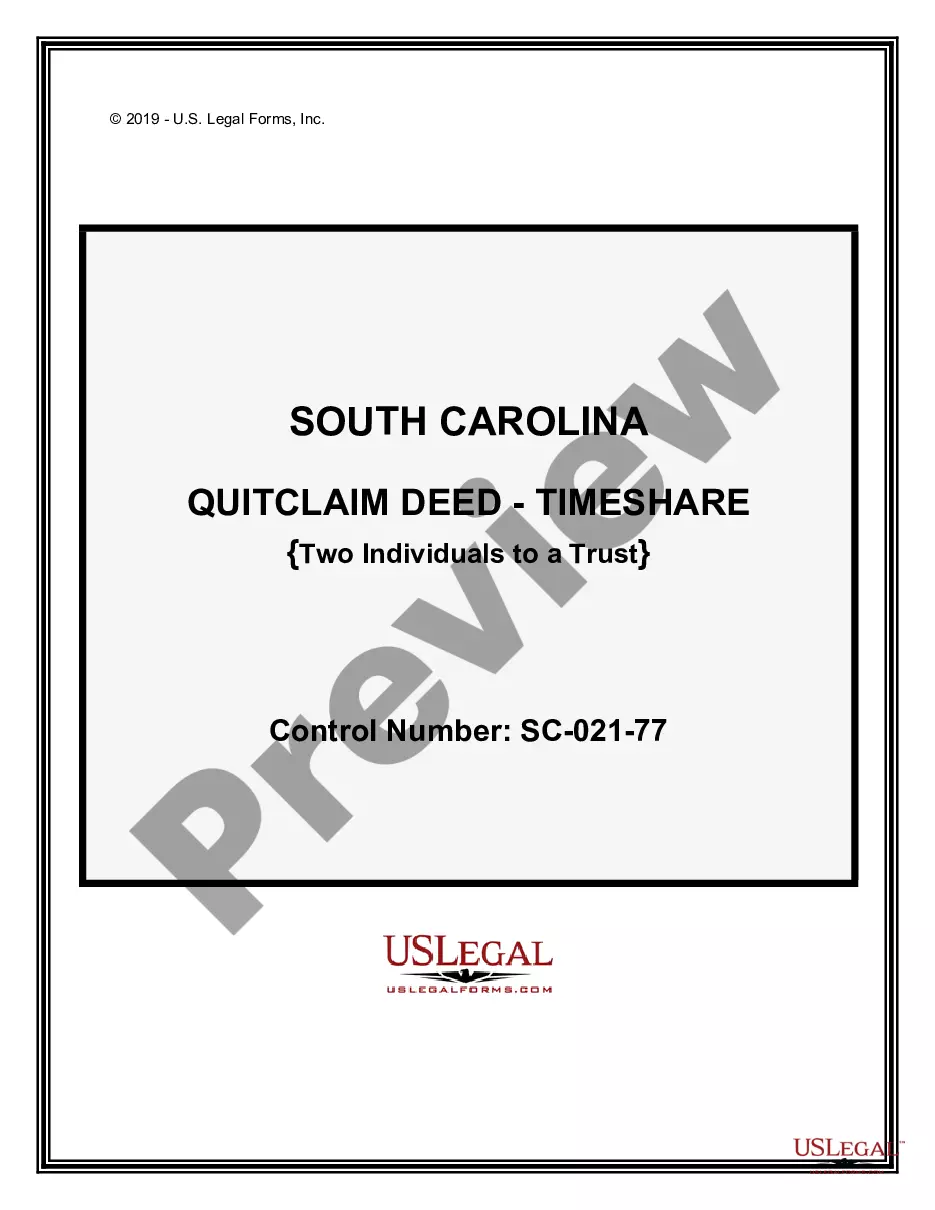
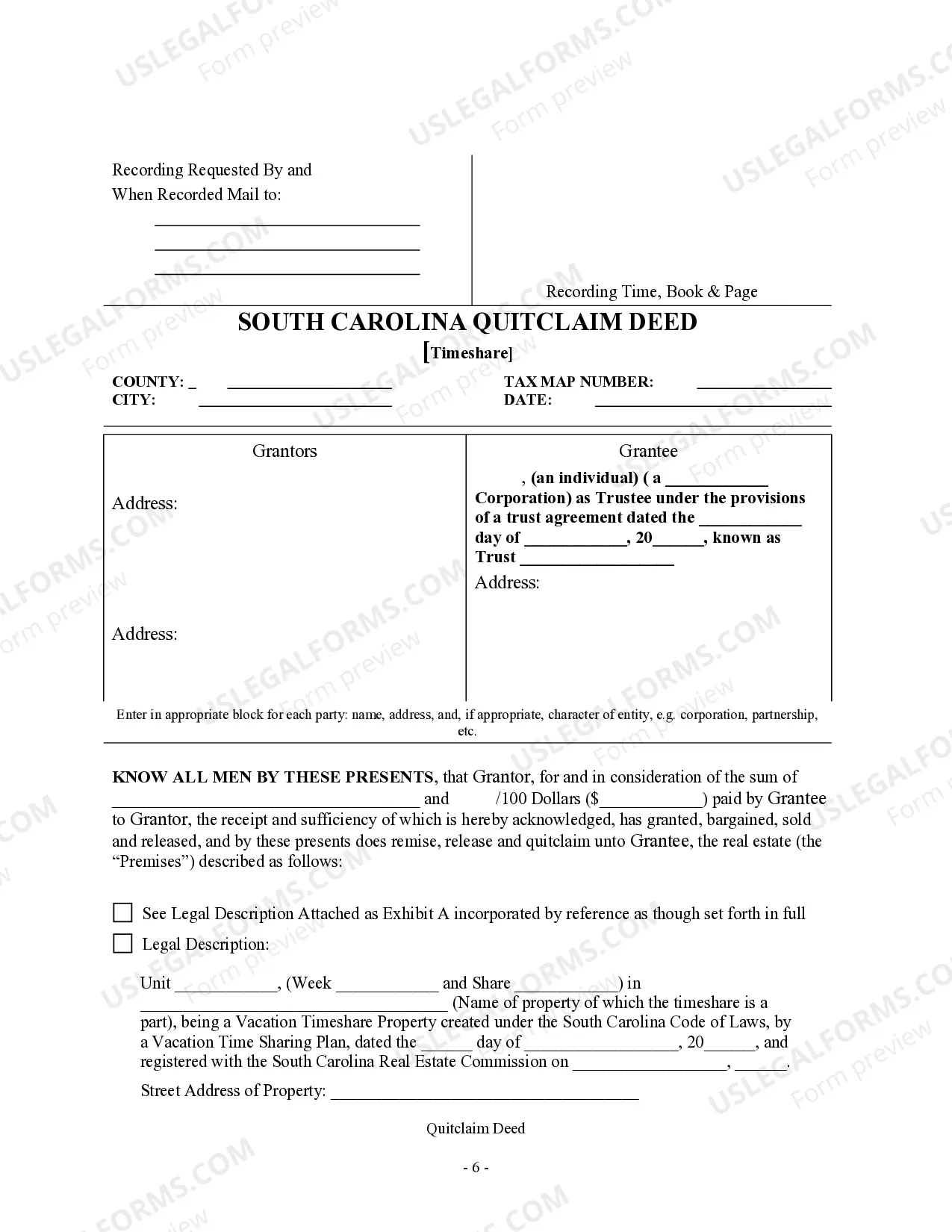
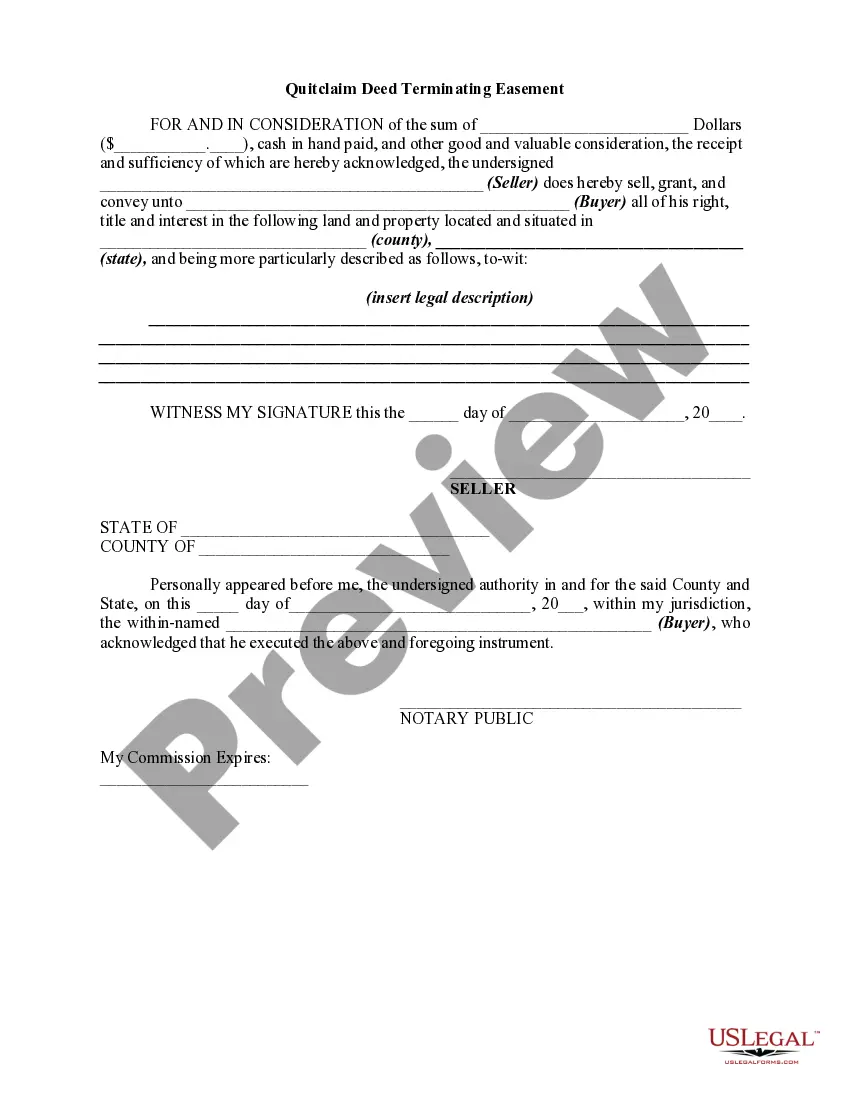
The Quitclaim Deed - Timeshare - Two Individuals to a Trust is a legal document that allows two individual grantors to transfer their interest in a timeshare property to a trust. Unlike warranty deeds, this quitclaim deed does not guarantee the title but rather conveys whatever interest the grantors hold. It is often used when individuals wish to simplify property transfers into a trust for estate planning or management purposes.
What’s included in this form
- Identification of the grantors (two individuals) and grantee (the trust).
- A legal description of the timeshare property being transferred.
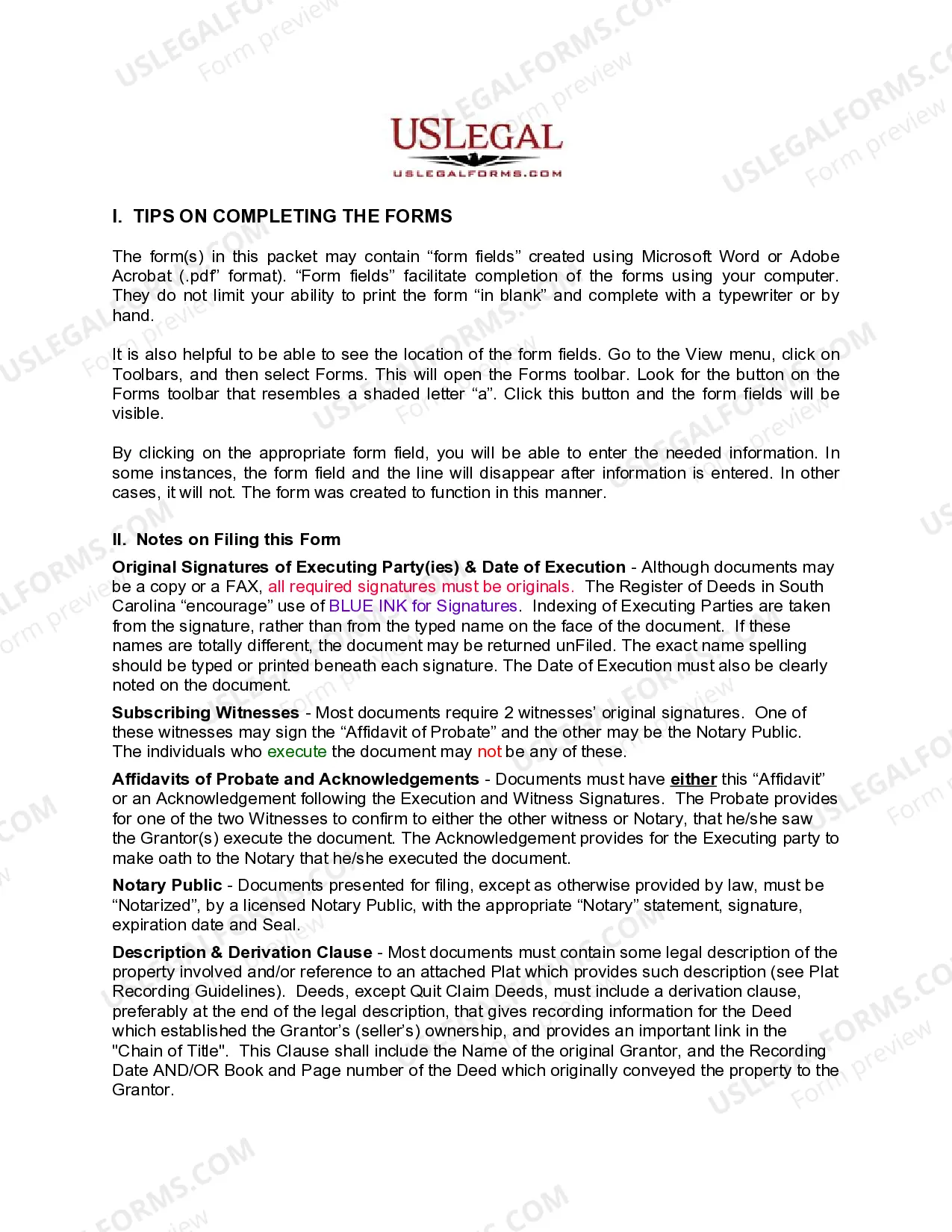
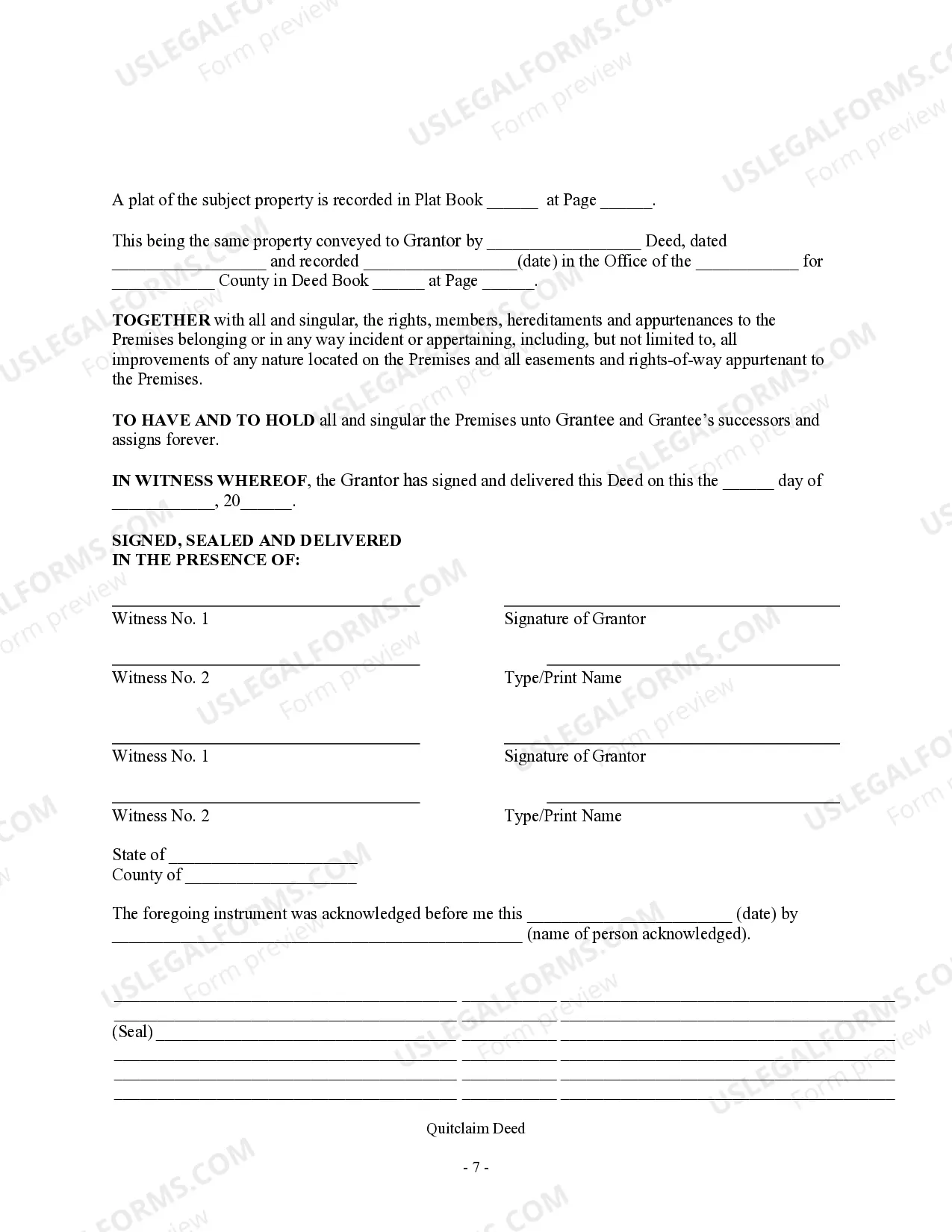
- Original signatures of all parties involved.
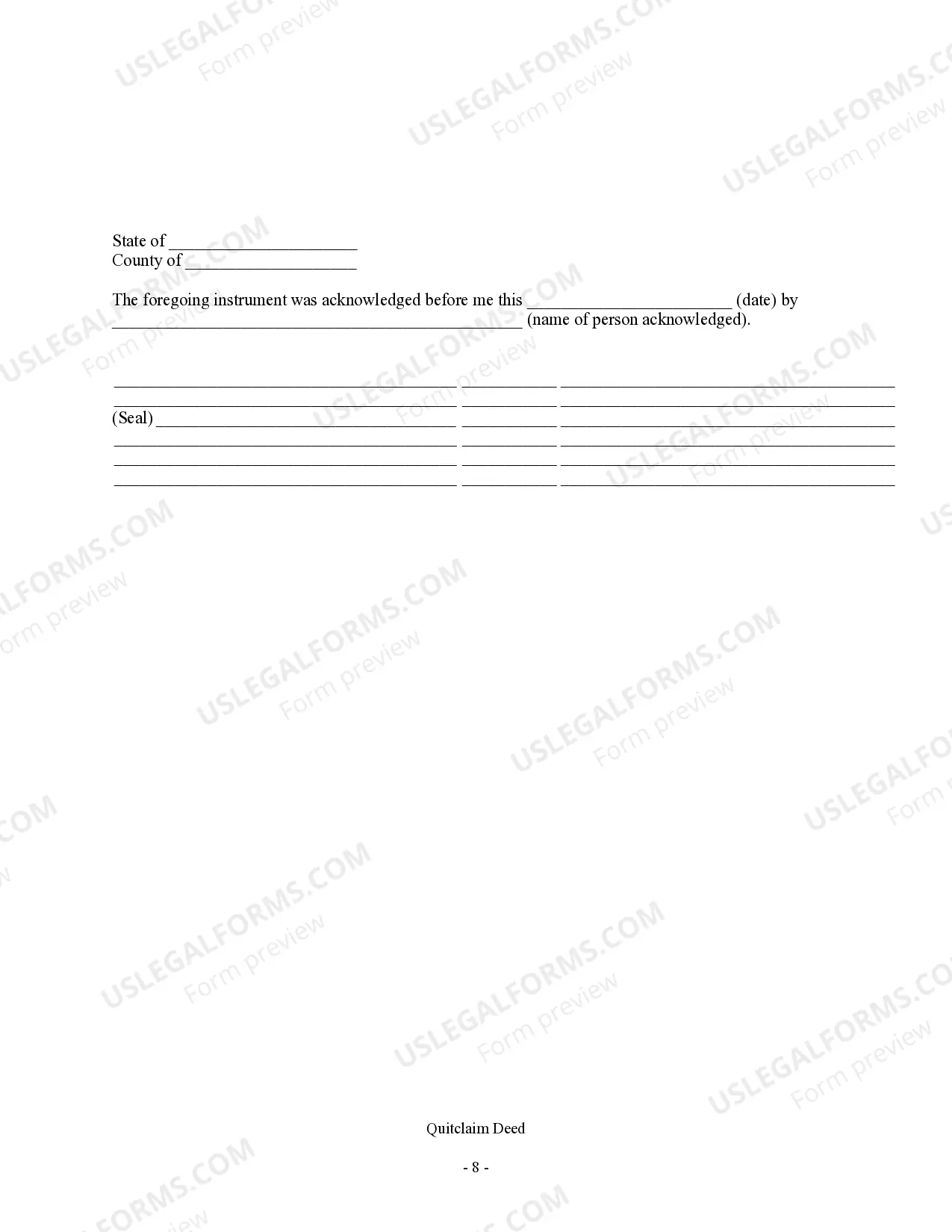
- Witness signatures and notarization requirements.
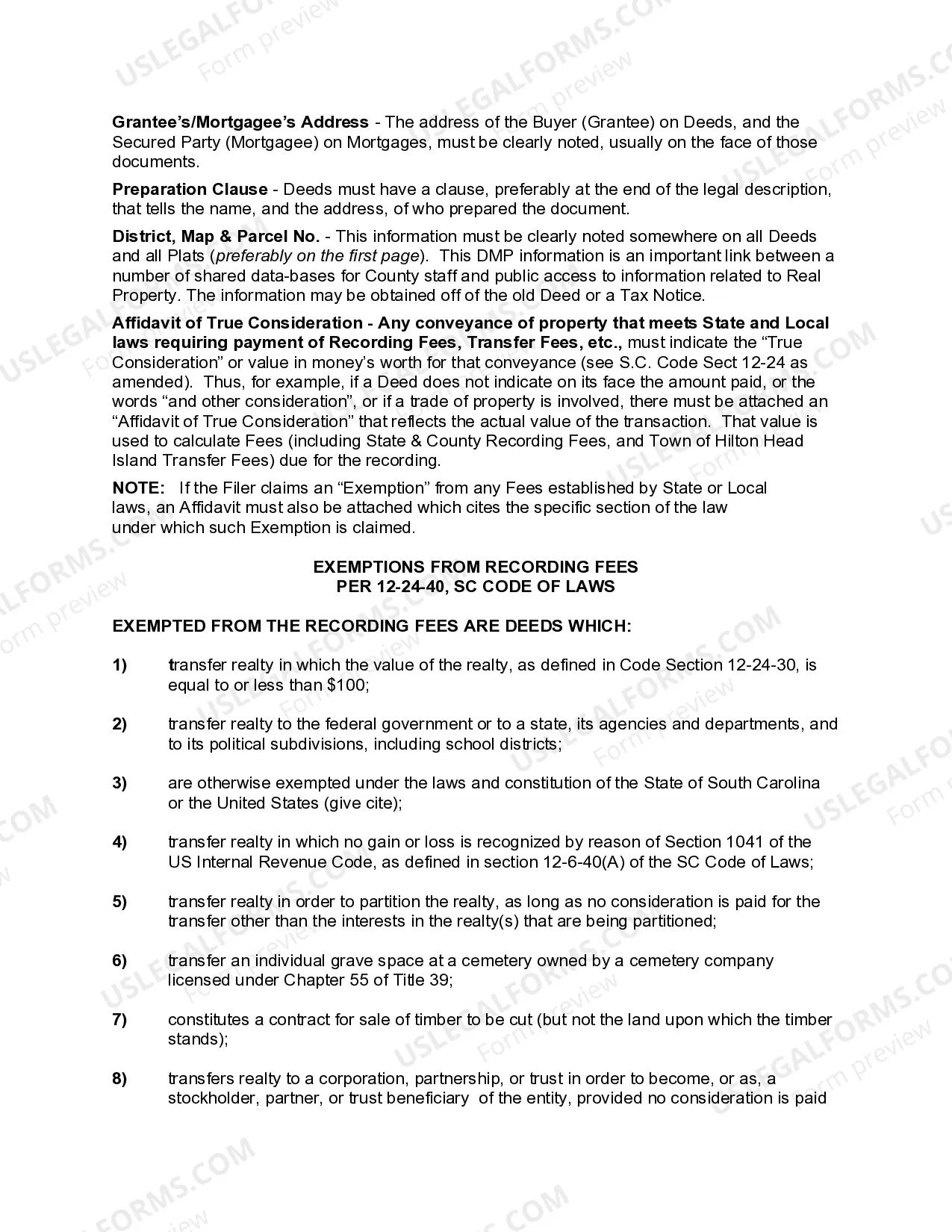
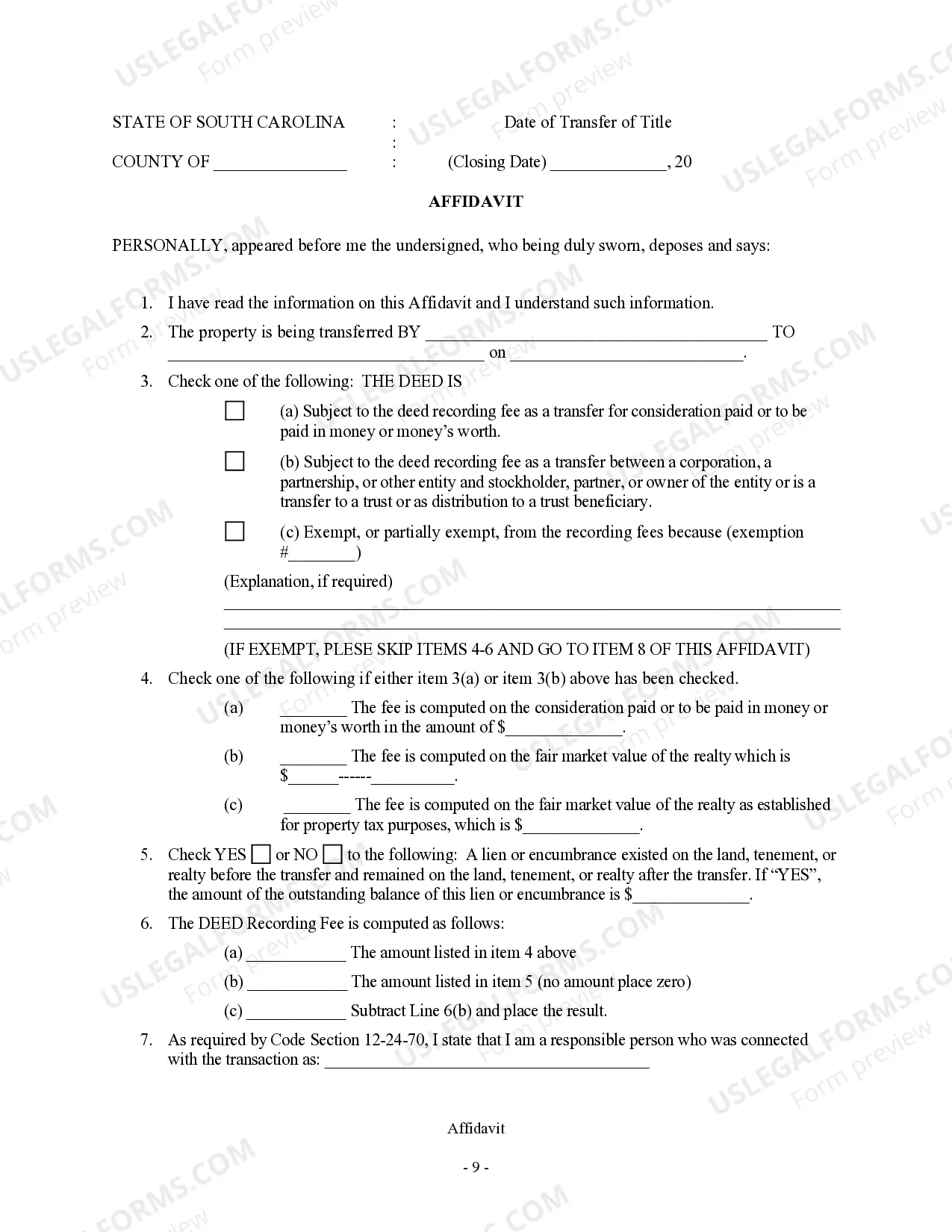
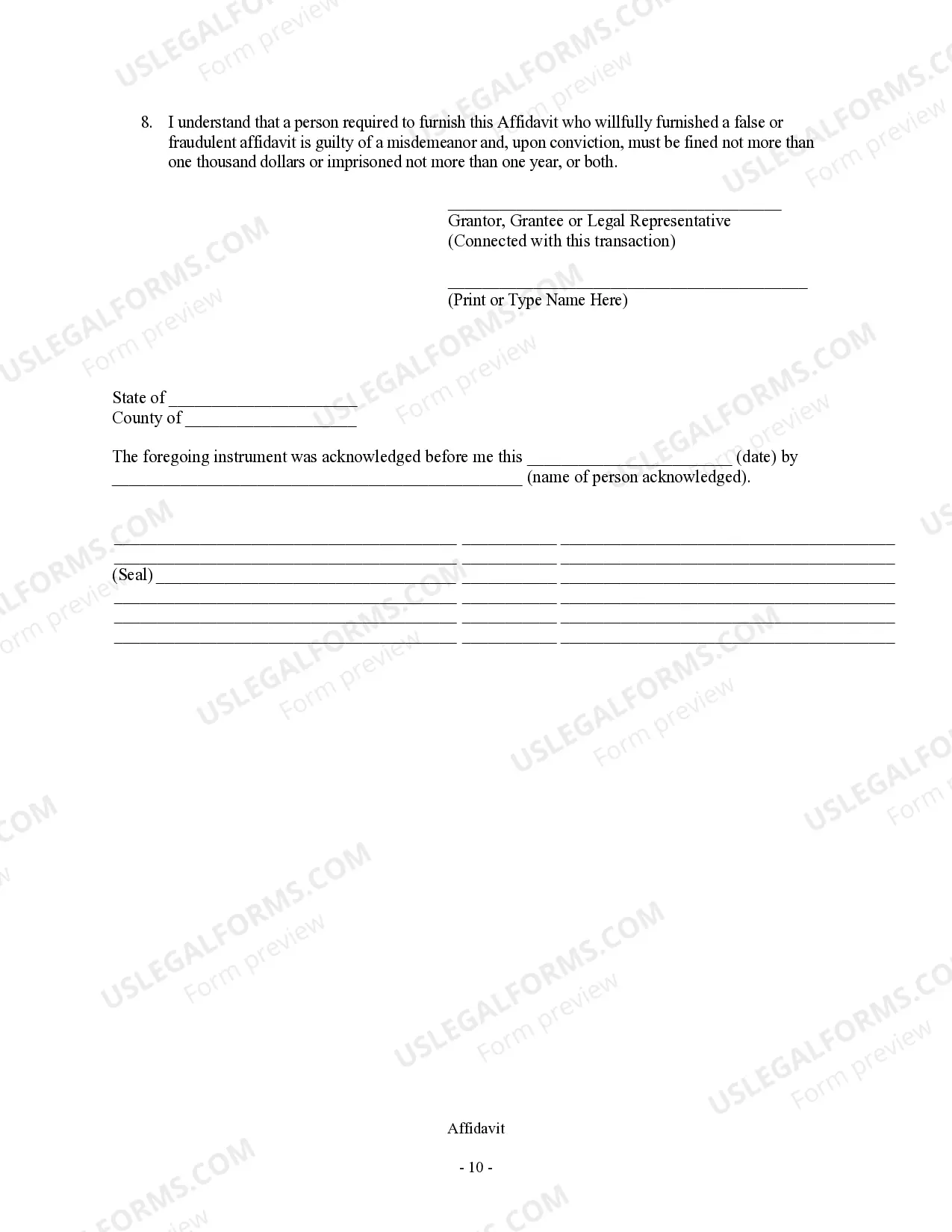
- Affidavit of True Consideration to disclose the property's value.
- Details for filing, including space for recording information.




When this form is needed
This form is useful when two individuals want to transfer their ownership interest in a timeshare property to a trust. This may occur during estate planning, when consolidating property under a trust for management, or when simplifying the inheritance process for beneficiaries.
Who can use this document
- Two individuals who currently own a timeshare and wish to transfer their interest to a trust.
- Individuals looking to manage estate planning or simplify property transfers.
- Trustees who need formal documentation of property interests held within a trust.
How to prepare this document
- Identify the parties: Clearly list the names of the two individual grantors and the trust as the grantee.
- Specify the property: Provide the complete legal description of the timeshare property being conveyed.
- Gather signatures: Ensure all grantors sign the deed in the presence of witnesses and a notary public.
- Complete the affidavit: Fill in the Affidavit of True Consideration to disclose the property's value and any applicable exemption to recording fees.
- File the deed: Submit the signed document to the appropriate Register of Deeds office for recording.
Does this document require notarization?
To make this form legally binding, it must be notarized. Our online notarization service, powered by Notarize, lets you verify and sign documents remotely through an encrypted video session.
Get your form ready online
Our built-in tools help you complete, sign, share, and store your documents in one place.
Make edits, fill in missing information, and update formatting in US Legal Forms—just like you would in MS Word.
Download a copy, print it, send it by email, or mail it via USPS—whatever works best for your next step.
Sign and collect signatures with our SignNow integration. Send to multiple recipients, set reminders, and more. Go Premium to unlock E-Sign.
If this form requires notarization, complete it online through a secure video call—no need to meet a notary in person or wait for an appointment.
We protect your documents and personal data by following strict security and privacy standards.

Make edits, fill in missing information, and update formatting in US Legal Forms—just like you would in MS Word.

Download a copy, print it, send it by email, or mail it via USPS—whatever works best for your next step.

Sign and collect signatures with our SignNow integration. Send to multiple recipients, set reminders, and more. Go Premium to unlock E-Sign.

If this form requires notarization, complete it online through a secure video call—no need to meet a notary in person or wait for an appointment.

We protect your documents and personal data by following strict security and privacy standards.
Common mistakes to avoid
- Failing to include original signatures from all grantors.
- Omitting required witness signatures or notary verification.
- Not providing an accurate legal description of the property.
- Forgetting to complete the affidavit concerning the value of the property.
- Not referring to the correct recording information for previous deeds.
Benefits of using this form online
- Convenience of downloading and completing the form from anywhere.
- Editability to customize the form according to your specific needs.
- Access to accurate legal templates drafted by licensed attorneys.
- Simplicity in filing instructions and details to ensure compliance.
Main things to remember
- This form is specifically designed for transferring timeshare ownership from individuals to a trust.
- Accurate completion and notarization are crucial for legal validity.
- Using this form can simplify the asset transfer process and streamline estate planning.
Looking for another form?

Form popularity
FAQ
A person who signs a quitclaim deed to transfer property they do not own results in no title at all being transferred since there is no actual ownership interest. The quitclaim deed only transfers the type of title you own.
Yes, a quit claim deed supercedes the trust. The only thing that can be done is to file a suit in court challenging the deed as the product of fraud and undue influence. A court action like that will cost thousands of dollars, but might be worth it if the house was owned free and clear.
The Quit Claim Deed must be signed by the person who is relinquishing interest in the timeshare - the grantor. This individual will describe the timeshare property. In most states the grantee - the person to whom the property is being granted - must also sign the Quit Claim Deed.
No. And unless the deed identifies the trust as an owner, then father is the owner of an interest. It is a common mistake to set up a trust and then fail to deed property into the trust. However, you cannot force him to make the changes you are...
The drawback, quite simply, is that quitclaim deeds offer the grantee/recipient no protection or guarantees whatsoever about the property or their ownership of it. Maybe the grantor did not own the property at all, or maybe they only had partial ownership.
Quitclaim deeds are most often used to transfer property between family members. Examples include when an owner gets married and wants to add a spouse's name to the title or deed, or when the owners get divorced and one spouse's name is removed from the title or deed.
A quitclaim deed is a legal instrument that is used to transfer interest in real property.The owner/grantor terminates (quits) any right and claim to the property, thereby allowing the right or claim to transfer to the recipient/grantee.
Recording: Quitclaim deeds in South Carolina are recorded and filed with the County Registrar of Deeds office. Choose the office in the county where the property is located. Fees: Each county has its own filing fee for quitclaim deeds in South Carolina.