Interview Evaluation Form - Checklist with Hiring Recommendation
Understanding this form
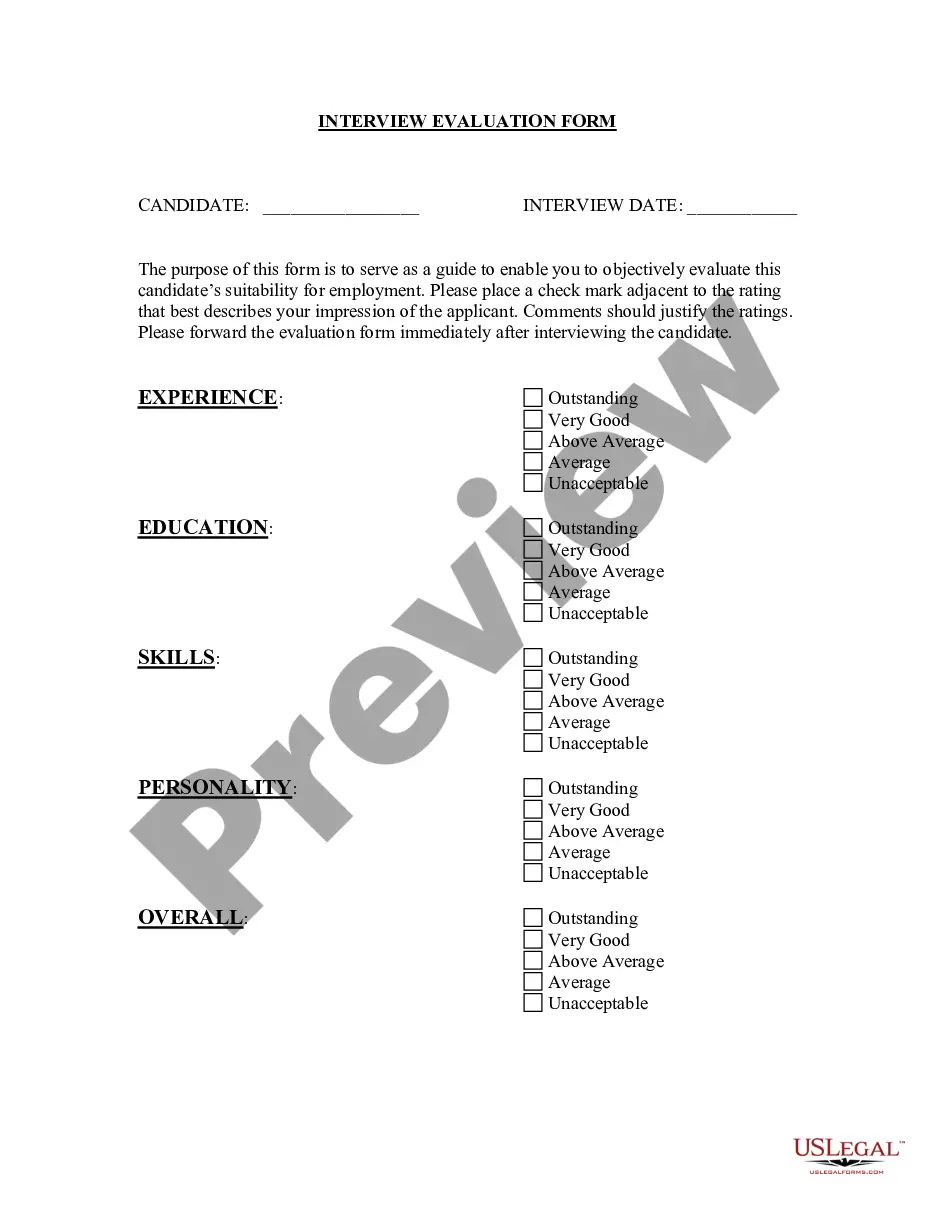
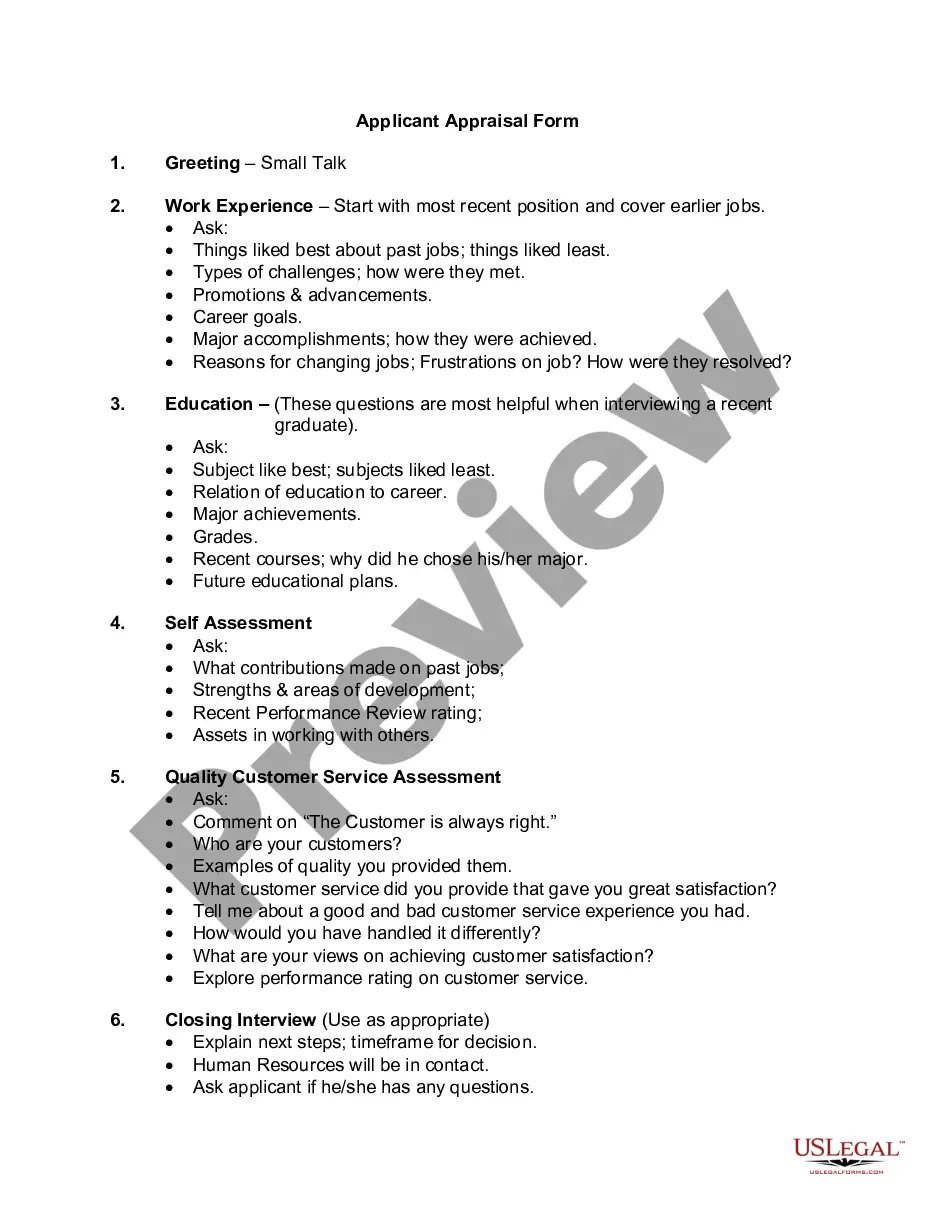
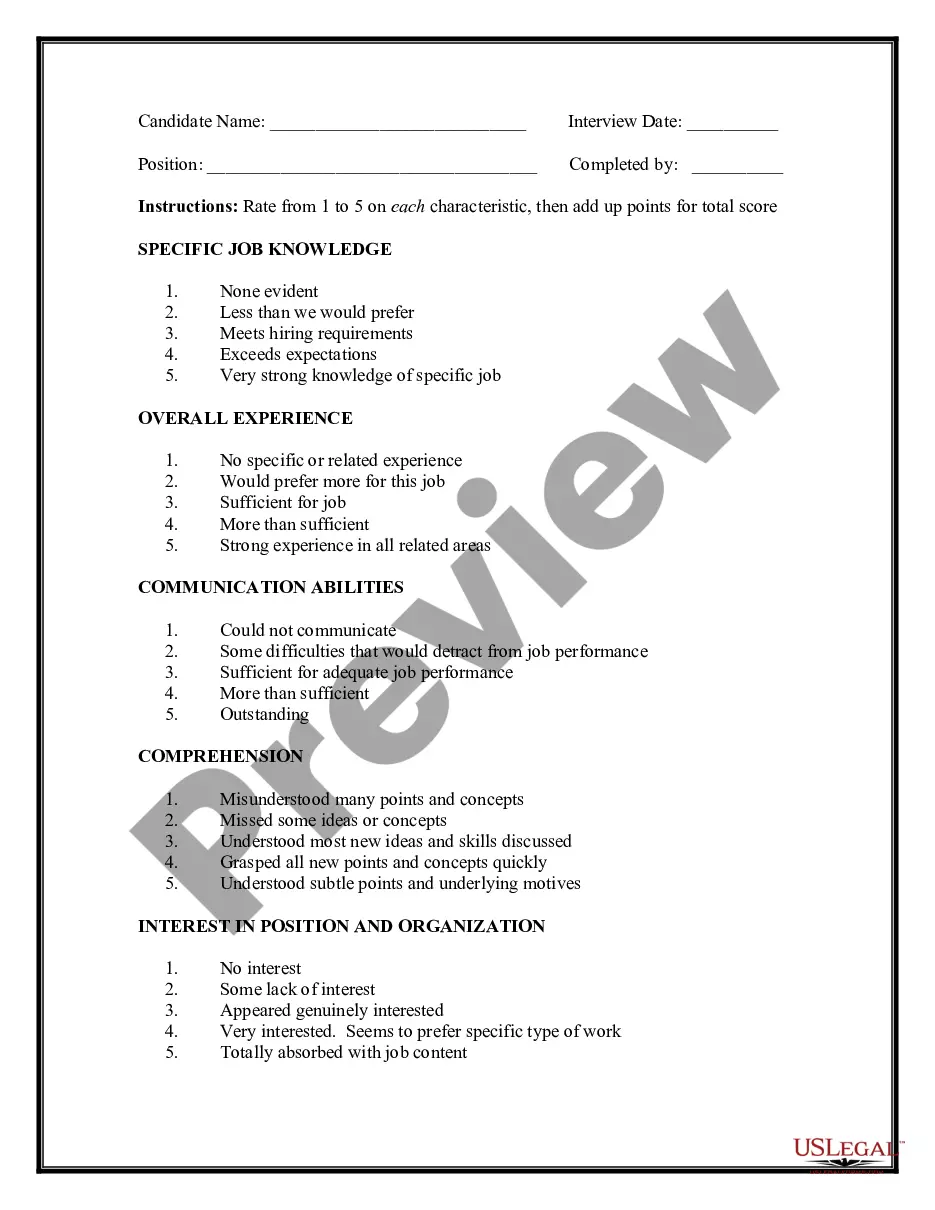
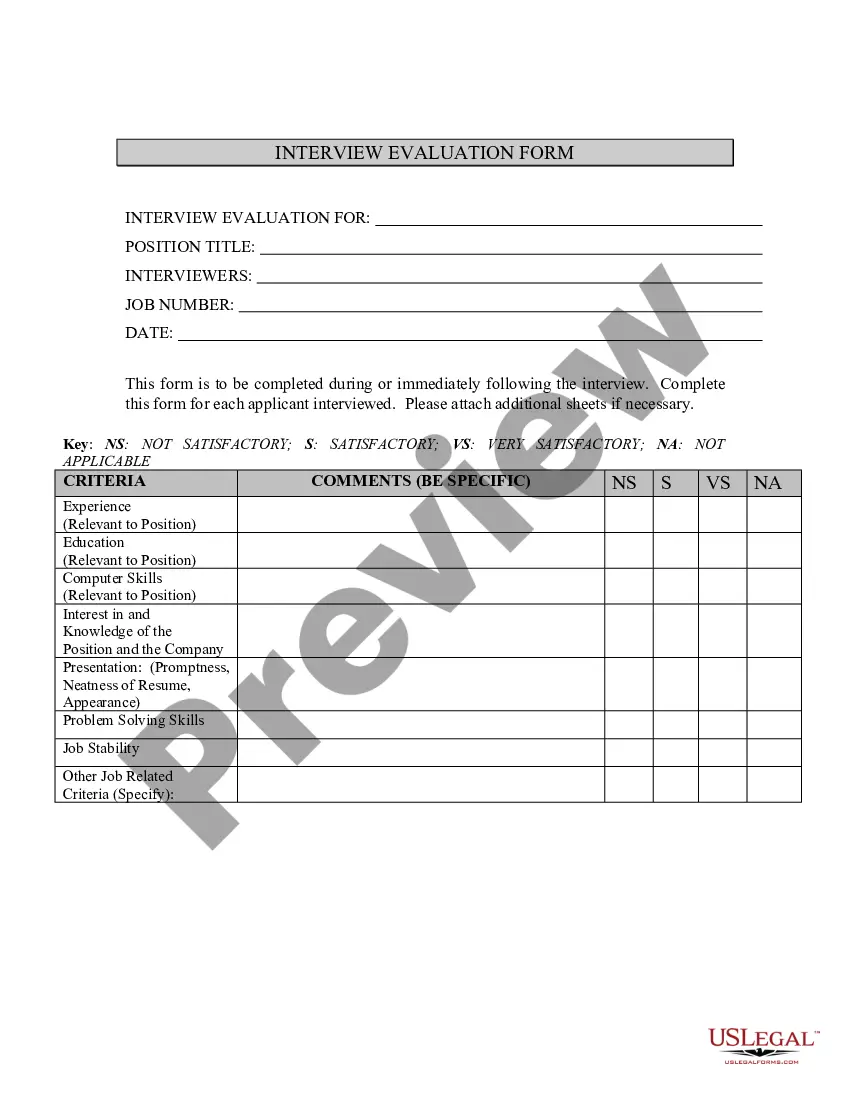
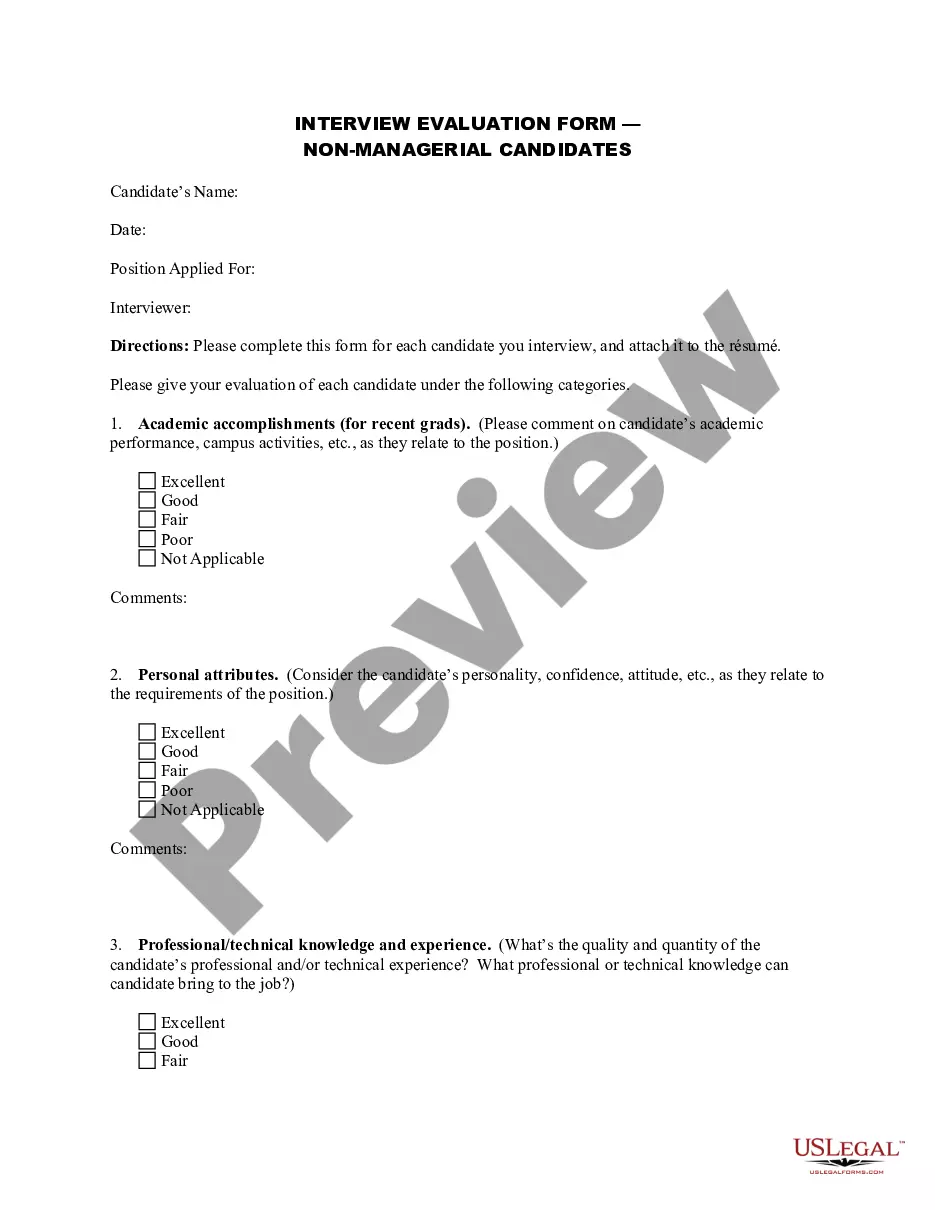
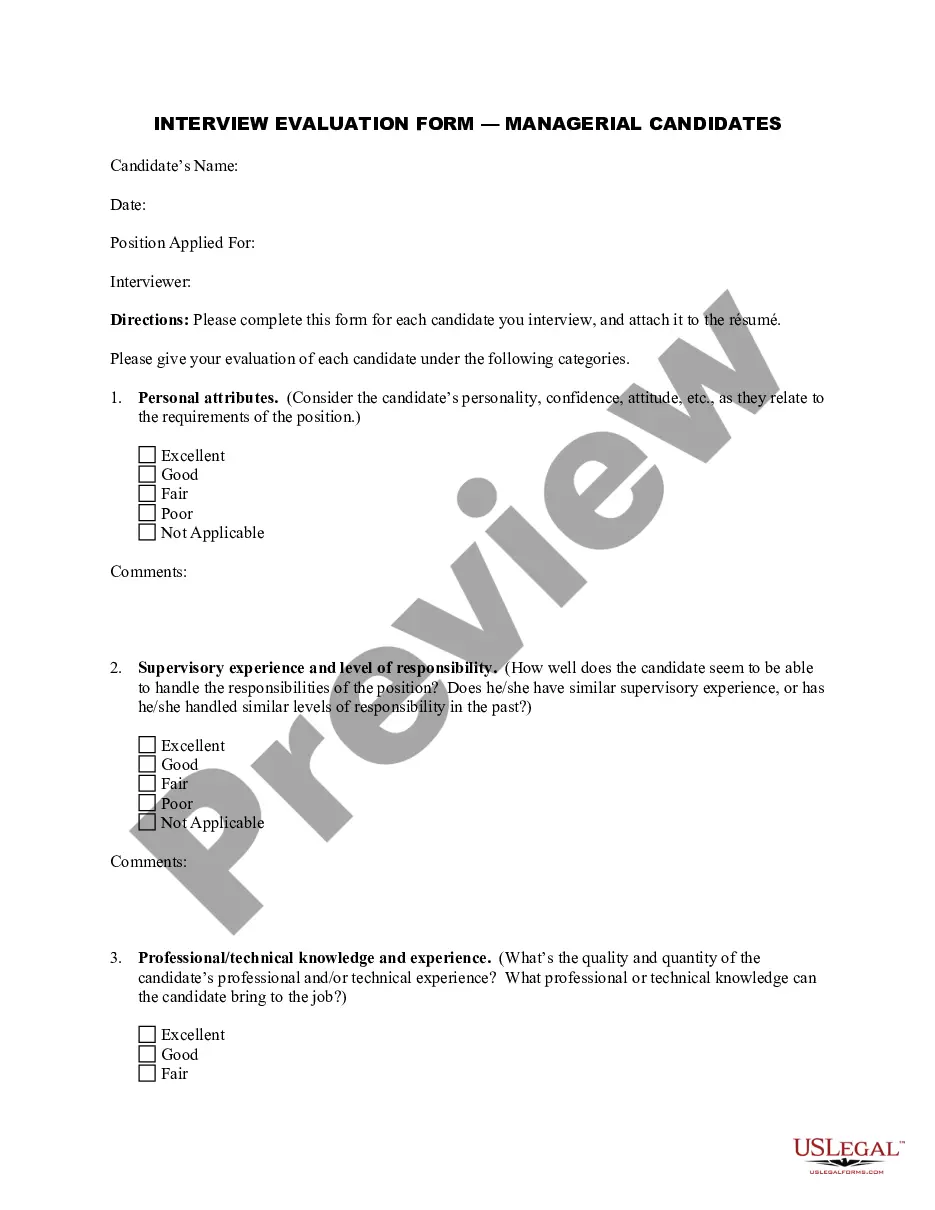
The Interview Evaluation Form - Checklist with Hiring Recommendation is a structured tool designed to help employers assess candidates during the interview process. This form evaluates applicants based on their experience, education, skills, and personality traits, making it easier to compare candidates objectively. Unlike informal evaluations, this standardized form aids in making informed hiring decisions by providing clear criteria for assessment. Utilizing this form promotes consistency and fairness in the hiring process.
Form components explained
- CANDIDATE name and INTERVIEW DATE fields for identification.
- Evaluation sections for EXPERIENCE, EDUCATION, SKILLS, PERSONALITY, and OVERALL rating, each with specific rating categories.
- Comments section to justify ratings and provide additional insights.
- Prompt to forward the completed evaluation form after the interview.
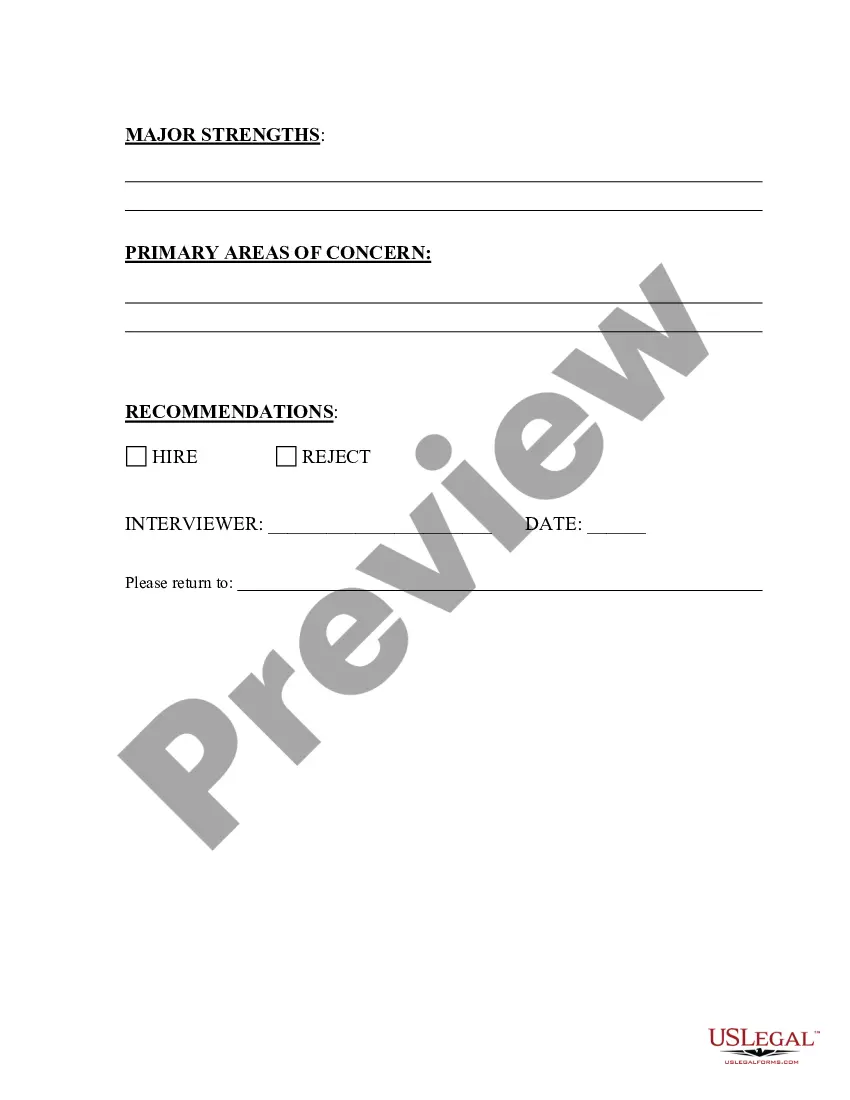
- Space for listing MAJOR STRENGTHS of the candidate.
When to use this form
This form is ideal for use during the hiring process whenever interviews are conducted to evaluate potential candidates. It is particularly useful in organizations that want to ensure a systematic and fair approach to hiring. By using this evaluation form, interviewers can maintain a record of their assessments, which can be referred to later when making hiring decisions or comparing multiple candidates.
Who can use this document
- Human resources personnel involved in the recruitment process.
- Hiring managers looking to objectively evaluate candidates.
- Interview teams that aim to standardize candidate assessments.
- Organizations wanting to maintain a structured hiring procedure.
How to complete this form
- Enter the candidate's name and the date of the interview at the top of the form.
- Evaluate the candidateâs EXPERIENCE by placing a check mark in the corresponding rating category.
- Assess the candidateâs EDUCATION similarly, selecting the appropriate rating that reflects their qualifications.
- Evaluate the candidateâs SKILLS and PERSONALITY using the rating scale provided.
- Provide an overall rating by selecting the most accurate description of the candidate's suitability.
- Add any additional comments and outline the candidate's MAJOR STRENGTHS at the end of the form to justify the ratings given.
Notarization guidance
This form does not typically require notarization unless specified by local law.
Get your form ready online
Our built-in tools help you complete, sign, share, and store your documents in one place.
Make edits, fill in missing information, and update formatting in US Legal Forms—just like you would in MS Word.
Download a copy, print it, send it by email, or mail it via USPS—whatever works best for your next step.
Sign and collect signatures with our SignNow integration. Send to multiple recipients, set reminders, and more. Go Premium to unlock E-Sign.
If this form requires notarization, complete it online through a secure video call—no need to meet a notary in person or wait for an appointment.
We protect your documents and personal data by following strict security and privacy standards.

Make edits, fill in missing information, and update formatting in US Legal Forms—just like you would in MS Word.

Download a copy, print it, send it by email, or mail it via USPS—whatever works best for your next step.

Sign and collect signatures with our SignNow integration. Send to multiple recipients, set reminders, and more. Go Premium to unlock E-Sign.

If this form requires notarization, complete it online through a secure video call—no need to meet a notary in person or wait for an appointment.

We protect your documents and personal data by following strict security and privacy standards.
Mistakes to watch out for
- Failing to provide specific comments to support ratings, which can make evaluations less meaningful.
- Not forwarding the evaluation form promptly after the interview.
- Overlooking the importance of meeting with other interviewers to discuss evaluations before finalizing decisions.
Why complete this form online
- Convenience of accessing the form from any device, allowing for timely evaluations.
- Editability for customizing or adapting the form to meet specific organizational needs.
- Reliability in documenting candidate assessments, which can aid in compliance and accountability.
Legal use & context
- This form can help protect an organization from claims of bias or discrimination by documenting the hiring process.
- It establishes a formal record of candidate evaluations, which can be referenced in future hiring discussions or disputes.
Summary of main points
- The Interview Evaluation Form is essential for standardized candidate assessments.
- Completing the form helps maintain an objective and fair hiring process.
- Providing comments alongside ratings is crucial for meaningful evaluations and decision-making.
Looking for another form?
Form popularity
FAQ
Educational background. Relevant work experience. Specific skills or technical skills Ability to work in a team environment. Leadership qualities. Critical thinking and problem solving. Communication skills. Attitude and motivation.
1Skills. Whether the candidate possesses the skills required for the position.2Experience. Whether the candidate has related experience in job, function, industry and geography as the ones required for the job.3Salary. Whether the expectations can fit the budgets.4Culture fit.
Assessments are an essential part of the recruiting process and are sandwiched between the initial screening process and the final interview.Online assessments are conducted to evaluate and measure the readiness of applicants for a particular job post.
Scan resumes first for basic qualifications. Look for more specific criteria. Consider career trajectory. Identify top candidates. Narrow your list further. Consider an aptitude test.
1Educational background.2Relevant work experience.3Specific skills or technical skills4Ability to work in a team environment.5Leadership qualities.6Critical thinking and problem solving.7Communication skills.8Attitude and motivation.Evaluating Candidates After an Interview - Paycor\nwww.paycor.com > resource-center > articles > evaluating-candidates-after-...
Having the Education and Skills. A Passion for the Role. Seeing You as Cultural Fit. Motivation and Commitment. Flexibility and Adaptability.
Examples: 2713 This candidate is familiar with our company and showed interest in learning more about our upcoming projects. Considering Hiring manager's notes about the candidate's performance on the assignment, I think he/she will be a very good fit for this role and the company in general.
Create a candidate assessment form. Objectivity and clear success metrics are the best way to perform an interview evaluation. Pay attention to answer delivery. 2022 Eye contact. 2022 Words and speech. 2022 Body language.
Leadership. Even in entry-level positions, most employers look for evidence of leadership qualities. Teamwork. Communication and Interpersonal Skills. Analytical Skills. Dependability and a Strong Work Ethic. Maturity and a Professional Attitude. Adaptability and Flexibility. Good Personality.