Sample Letter for Revised Settlement Documents
What this document covers
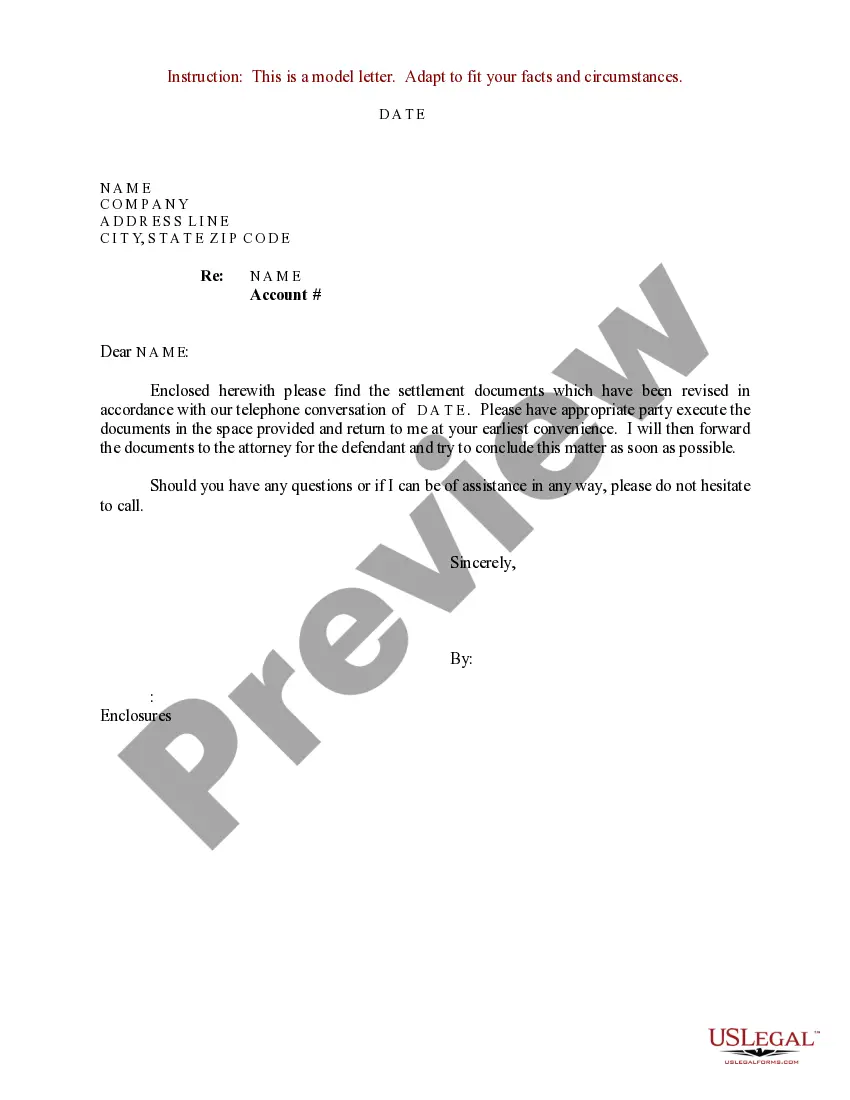
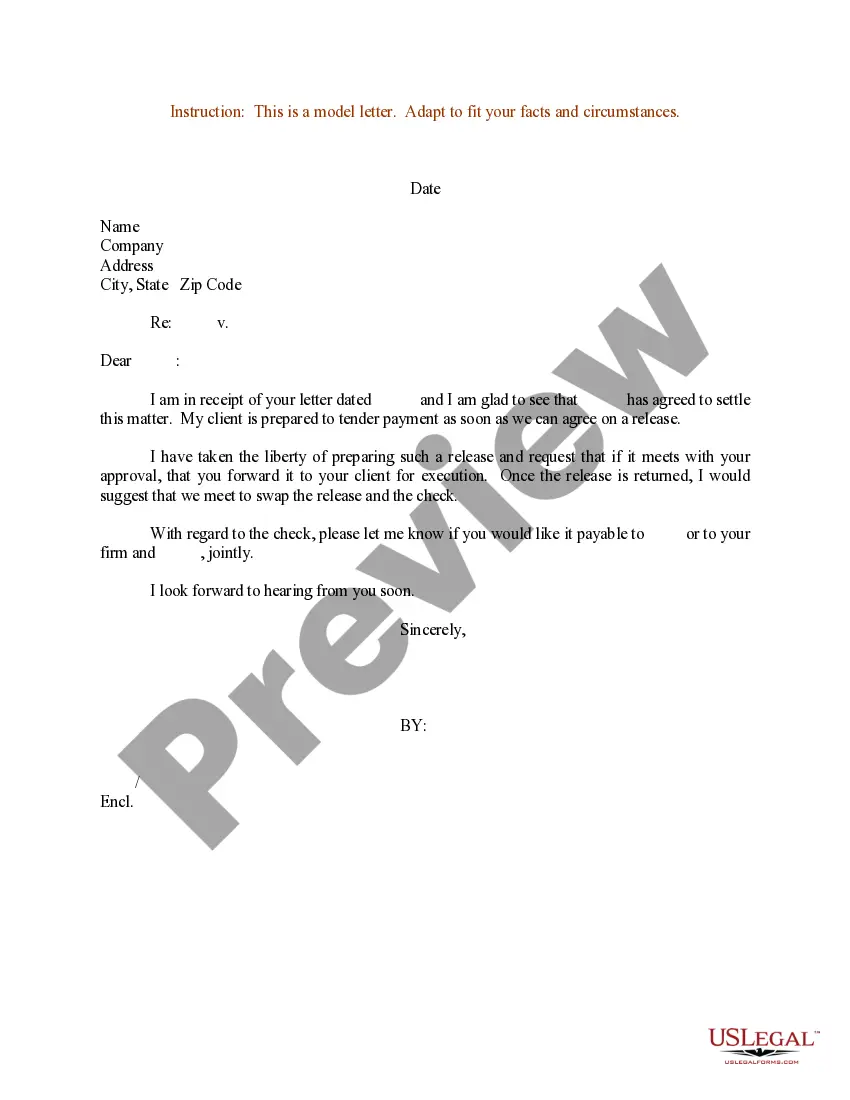
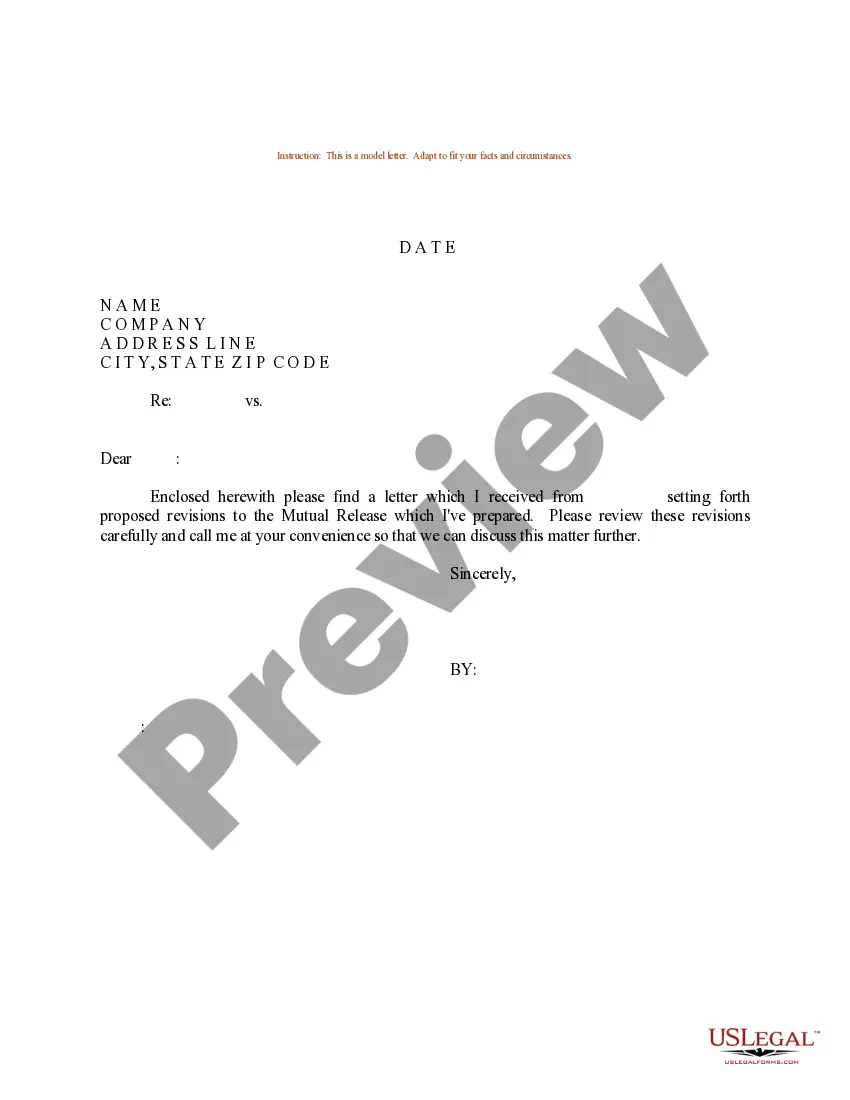
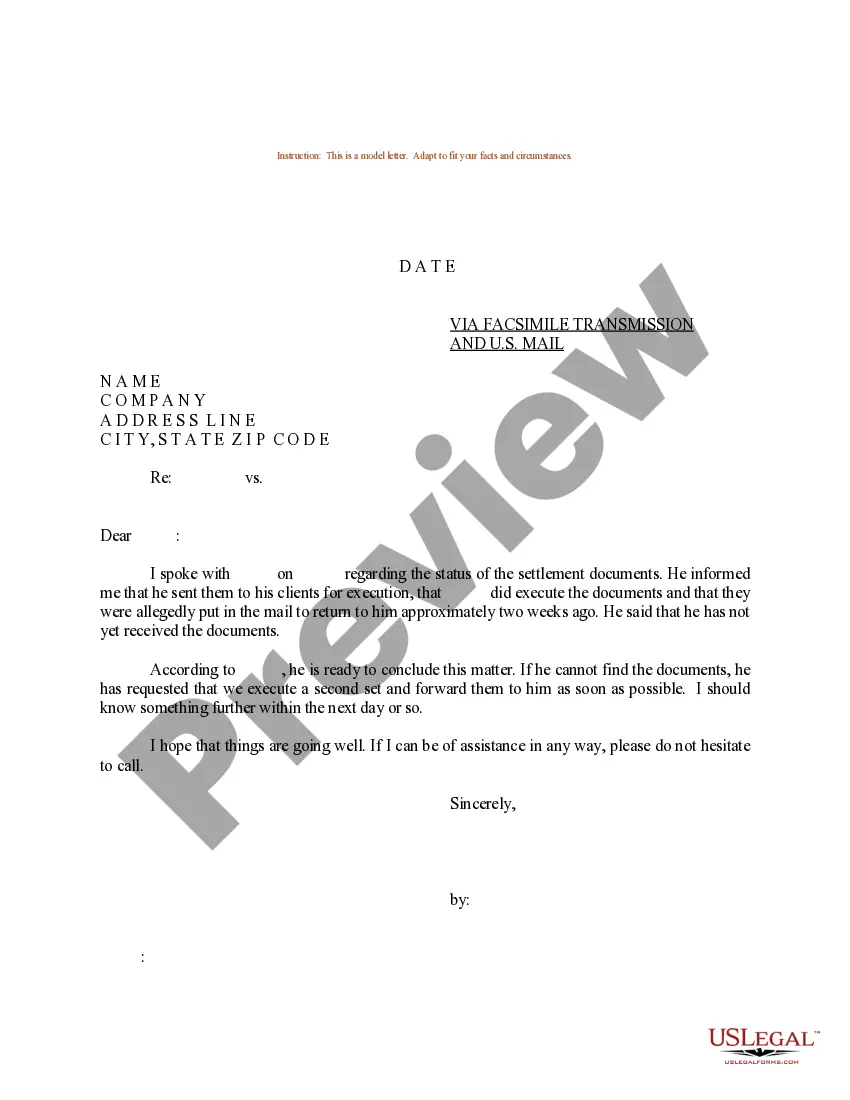
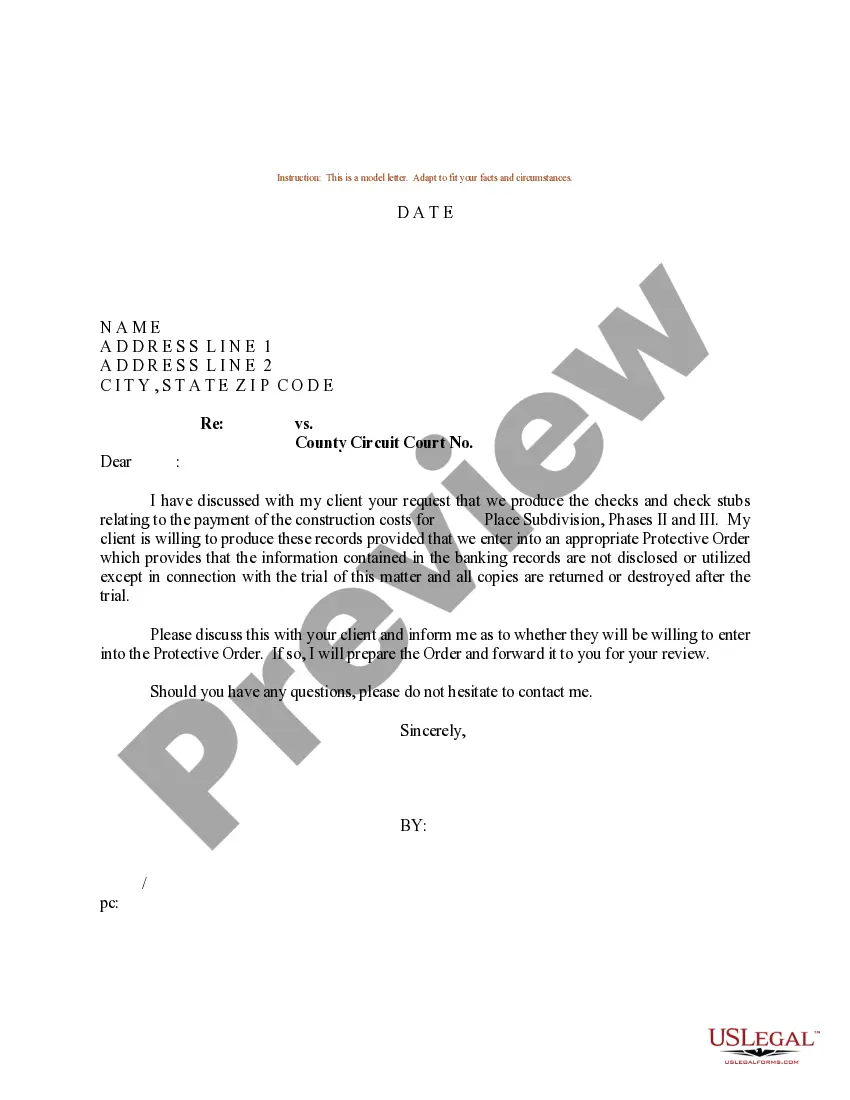
This Sample Letter for Revised Settlement Documents is a template letter intended to facilitate the communication of revised settlement documents between parties involved in a legal agreement. The form is designed to streamline the process of obtaining signatures on settlement documents, ensuring that all parties are aligned with the terms discussed. Unlike general letters, this sample specifically addresses adjustments made to settlement documents based on previous conversations.
What’s included in this form
- Date of correspondence
- Recipient's name and company information
- Subject line referencing the name associated with the account
- Salutation to the recipient
- Detailed explanation of enclosed revised settlement documents
- Instructions for execution and return of documents
- Contact information for further inquiries
- Signature line for sender
Situations where this form applies
This sample letter should be used when you have previously discussed revisions to settlement documents with another party and need to formally present those revised documents for signatures. It is particularly useful in situations where changes have been made due to negotiations, clarifications, or additional requirements that arise during settlement discussions.
Who needs this form
- Individuals involved in legal settlements
- Attorneys representing clients in settlement negotiations
- Companies or organizations settling disputes
- Parties seeking to finalize settlement agreements
Steps to complete this form
- Enter the date of the letter at the top of the document.
- Fill in the recipient's name, company, and address details.
- Customize the subject line to reflect the account name relevant to the settlement.
- Include specifics about the revisions discussed in the letter body.
- Provide your contact information for any follow-up questions.
- Sign the letter in the designated space before sending.
Is notarization required?
This form does not typically require notarization to be legally valid. However, some jurisdictions or document types may still require it. US Legal Forms provides secure online notarization powered by Notarize, available 24/7 for added convenience.
Get your form ready online
Our built-in tools help you complete, sign, share, and store your documents in one place.
Make edits, fill in missing information, and update formatting in US Legal Forms—just like you would in MS Word.
Download a copy, print it, send it by email, or mail it via USPS—whatever works best for your next step.
Sign and collect signatures with our SignNow integration. Send to multiple recipients, set reminders, and more. Go Premium to unlock E-Sign.
If this form requires notarization, complete it online through a secure video call—no need to meet a notary in person or wait for an appointment.
We protect your documents and personal data by following strict security and privacy standards.

Make edits, fill in missing information, and update formatting in US Legal Forms—just like you would in MS Word.

Download a copy, print it, send it by email, or mail it via USPS—whatever works best for your next step.

Sign and collect signatures with our SignNow integration. Send to multiple recipients, set reminders, and more. Go Premium to unlock E-Sign.

If this form requires notarization, complete it online through a secure video call—no need to meet a notary in person or wait for an appointment.

We protect your documents and personal data by following strict security and privacy standards.
Common mistakes
- Failing to include the correct date on the letter.
- Not specifying the recipient's full name or contact details.
- Forgetting to indicate the details of the revisions clearly.
- Neglecting to provide your own contact information.
- Leaving the letter unsigned or without the appropriate signature line.
Benefits of using this form online
- Conveniently editable to meet specific needs.
- Available for immediate download in a user-friendly Word format.
- Prepared by licensed attorneys for reliability and legal accuracy.
- Accessible at any time, allowing for quick adjustments and updates.
- Reduces the time spent on drafting letters from scratch.
Looking for another form?

Form popularity
FAQ
Where do I put the words "without prejudice" on a document or email? There are no rules about this but generally, at the top of any document or in the subject line etc - so that it is instantly clear to the reader.
State that the offer you received is unacceptable. Refute any statements in the adjustor's letter that are inaccurate and damaging to your claim. Re-state an acceptable figure. Explain why your counteroffer is appropriate, including the reasons behind your general damages demands.
It should include your name, address, and a date for the letter. If sending to an insurance company, you would include their name, address, and a line directing the personal injury demand letter to the attention of an adjustor by name and title if one has been assigned to your claim.
Outline The Incident. You will need to start by outlining the details of the accident. Detail Your Injuries. Explain All Of Your Damages. Calculate Your Settlement Demand. Attach Relevant Documents. Get Help From An Attorney.
Understand the claim. The first step is to carefully review the claim. Layout the terms. Be specific when offering a settlement. Include a tempting payout. The key is to make an appealing offer that still undercuts the original demand. Give a response timeframe.
No, a demand letter is not necessary prior to filing a superior court limited/unlimited jurisdiction lawsuit in California.
An attorney is usually not necessary at this point and you can write a demand letter on your own. To write one, gather necessary documents, draft your letter, and send the letter to your opposing party.
A settlement demand letter is used to ask for a settlement. The demand letter indicates that you are willing and ready to settle your claim related to your slip and fall accident, car crash, construction accident, or other injury.