Michigan Warranty Deed to Separate Property of One Spouse to Both Spouses as Joint Tenants
About this form
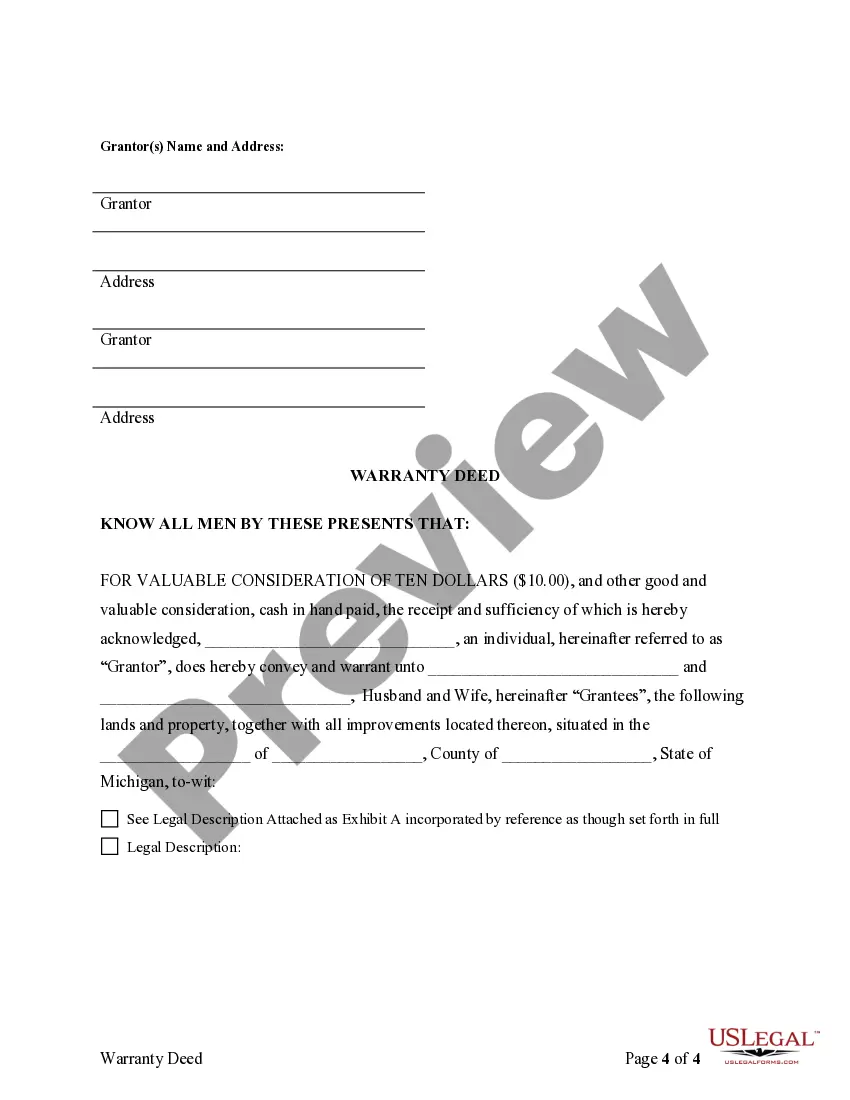
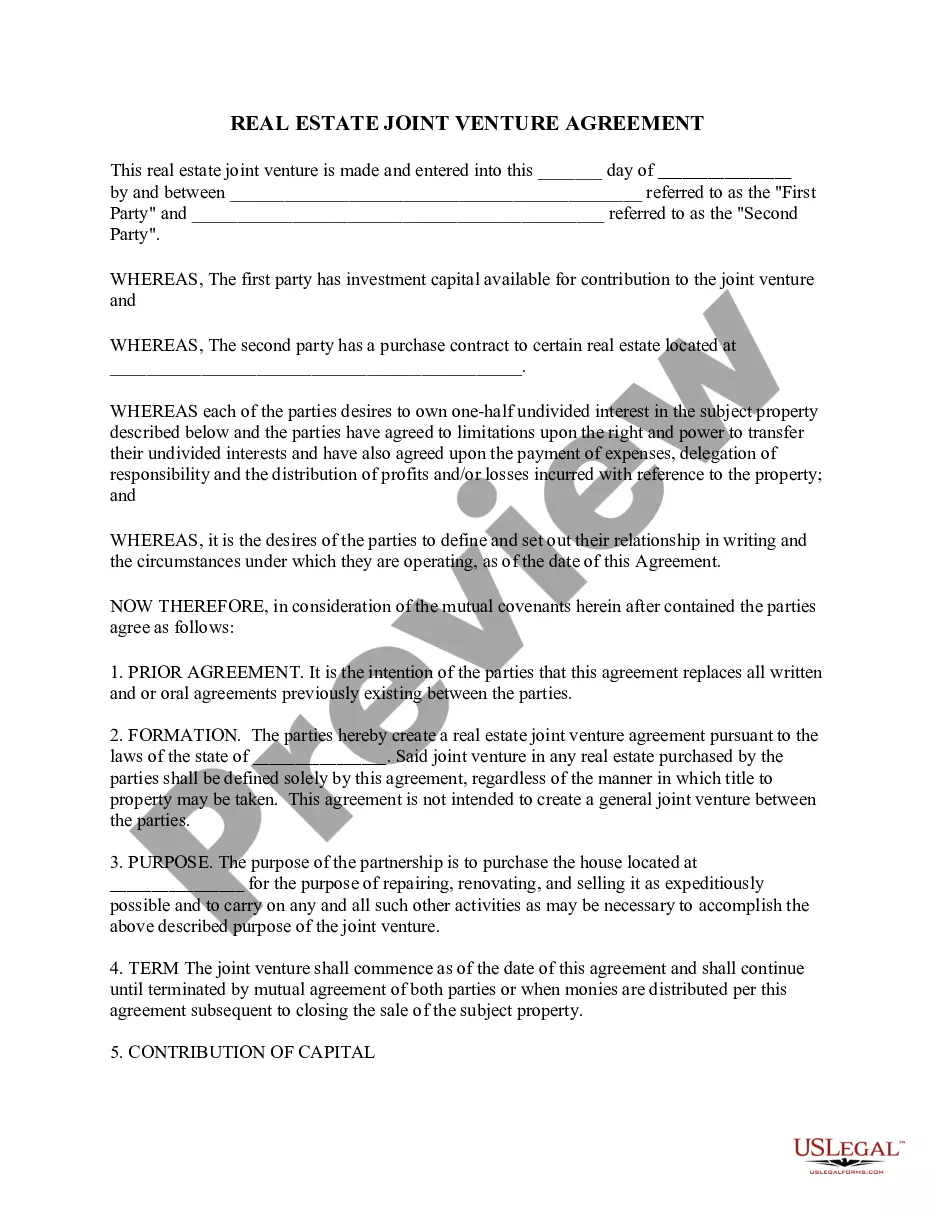
The Warranty Deed to Separate Property of One Spouse to Both Spouses as Joint Tenants is a legal document that allows one spouse to transfer ownership of property to both themselves and their spouse as joint tenants. This form is specifically designed for situations where a wife wishes to denote the property as being jointly owned with her husband, establishing rights of survivorship between the two parties. This differs from other forms of deed, such as quitclaim deeds, which may not guarantee a clear title or specify joint ownership rights.
Form components explained
- Grantor and grantee details: information about the spouse transferring the property and the joint tenants.
- Legal description of the property: a detailed description that identifies the property being transferred.
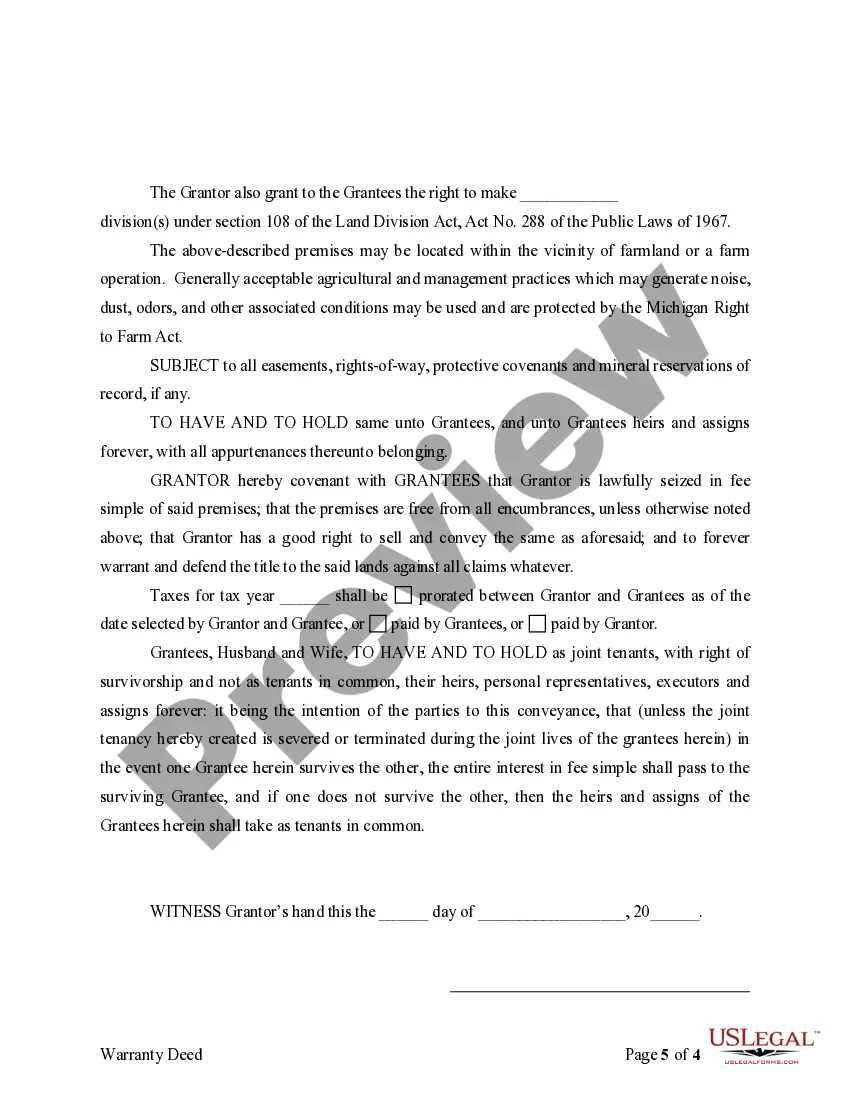
- Covenant of title: assures that the grantor has the right to convey the property and defends against claims.
- Information on taxes: outlines how property taxes will be prorated or paid between the spouses.
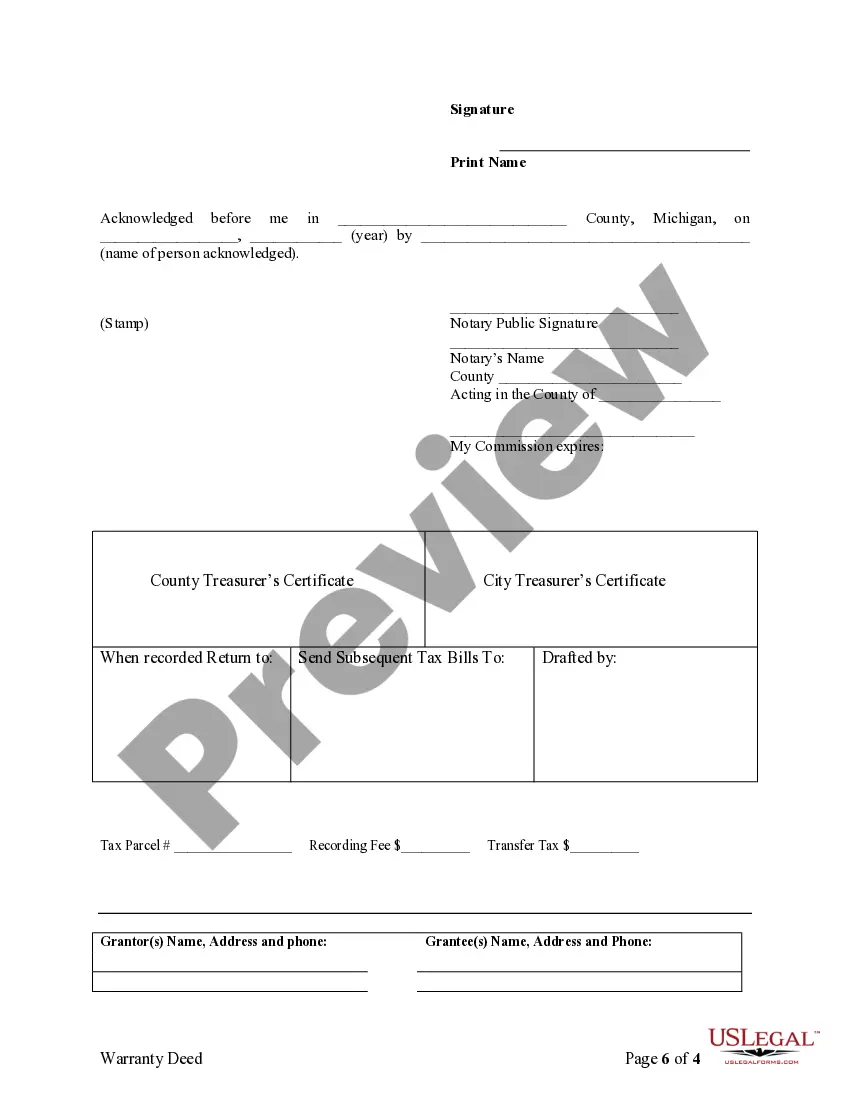
- Signatures and witness requirements: places for necessary signatures and dates for validation.





When to use this form
This form is typically used when one spouse wishes to transfer their separate property to both spouses jointly. Common scenarios include marriage, estate planning, or when a spouse wants to clarify ownership and ensure rights of survivorship. It can help avoid potential complications in property transfer in the event of one spouse's death, ensuring that the surviving spouse retains full ownership of the property.
Who should use this form
- Married couples who own property and wish to transfer ownership to include both spouses.
- Wives who own separate property and desire to make it joint property with their husband.
- Couples planning for estate management and future transfer of real estate assets.
Steps to complete this form
- Identify the parties: enter the names and addresses of the grantor (the transferring spouse) and grantees (both spouses).
- Specify the property: provide a legal description of the property being transferred.
- Enter tax arrangement: determine how property taxes will be handled between the parties.
- Sign the document: the grantor must sign the form in the appropriate location, possibly in front of a notary.
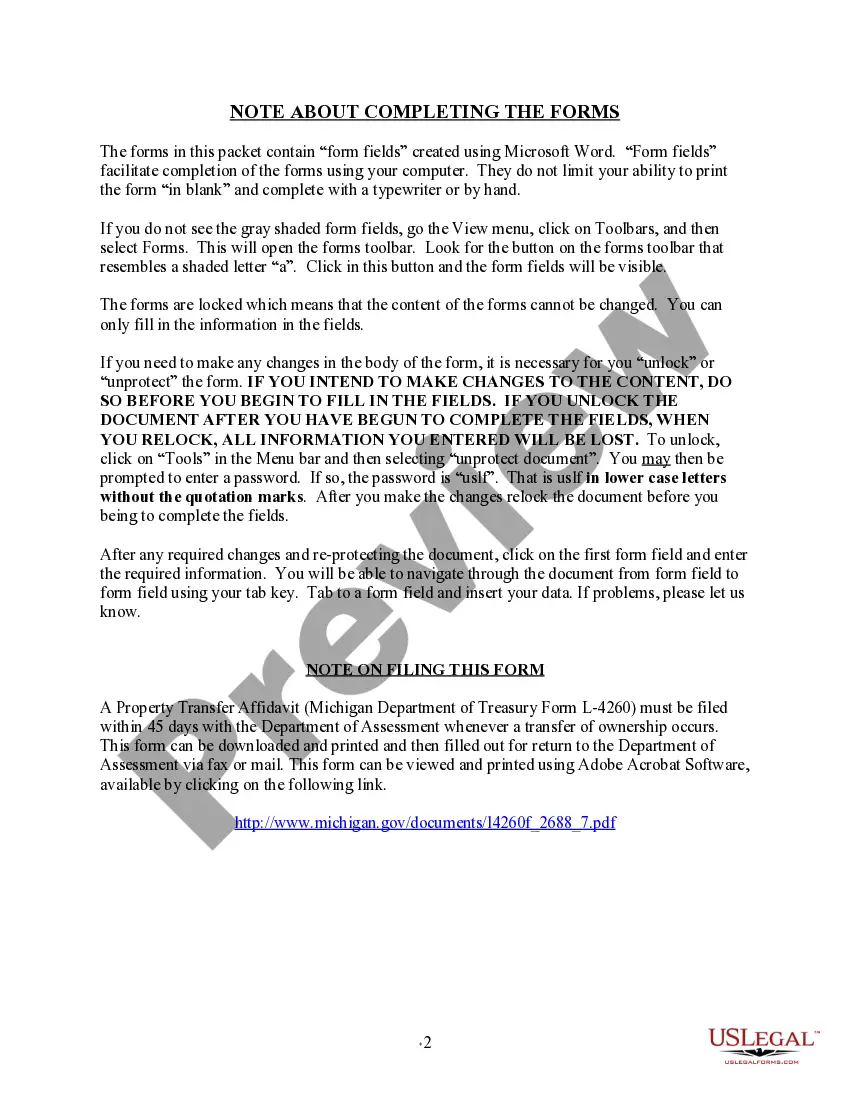
- File the affidavit: ensure the Property Transfer Affidavit is completed and submitted as required by Michigan law.
Is notarization required?
This document requires notarization to meet legal standards. US Legal Forms provides secure online notarization powered by Notarize, allowing you to complete the process through a verified video call, available 24/7.
Get your form ready online
Our built-in tools help you complete, sign, share, and store your documents in one place.
Make edits, fill in missing information, and update formatting in US Legal Forms—just like you would in MS Word.
Download a copy, print it, send it by email, or mail it via USPS—whatever works best for your next step.
Sign and collect signatures with our SignNow integration. Send to multiple recipients, set reminders, and more. Go Premium to unlock E-Sign.
If this form requires notarization, complete it online through a secure video call—no need to meet a notary in person or wait for an appointment.
We protect your documents and personal data by following strict security and privacy standards.

Make edits, fill in missing information, and update formatting in US Legal Forms—just like you would in MS Word.

Download a copy, print it, send it by email, or mail it via USPS—whatever works best for your next step.

Sign and collect signatures with our SignNow integration. Send to multiple recipients, set reminders, and more. Go Premium to unlock E-Sign.

If this form requires notarization, complete it online through a secure video call—no need to meet a notary in person or wait for an appointment.

We protect your documents and personal data by following strict security and privacy standards.
Mistakes to watch out for
- Failing to include the complete legal description of the property, which can lead to confusion about ownership.
- Not properly signing or dating the document, which may invalidate the deed.
- Neglecting to file the required Property Transfer Affidavit within the 45-day deadline.
Benefits of using this form online
- Convenience: easily fill out the form from home without needing to visit a legal office.
- Editability: make necessary changes before finalizing, reducing the risk of errors.
- Instant access: download the form right after purchase, saving time on paperwork.
Looking for another form?
Form popularity
FAQ
If one owner goes into care, the jointly owned property can still be managed by the remaining owner. However, the situation may create complications regarding financial responsibilities and decision-making. It's important to consult legal documents and possibly seek assistance from professionals to navigate this issue effectively. Utilizing US Legal Forms can help you draft a Michigan Warranty Deed to Separate Property of One Spouse to Both Spouses as Joint Tenants, addressing potential future scenarios.
Yes, there is a crucial difference between joint tenants and joint tenants with rights of survivorship. Joint tenants own property together without rights of survivorship, meaning that if one owner passes away, their share may not automatically transfer to the other. In contrast, joint tenants with rights of survivorship ensure that the property automatically goes to the surviving owner. Understanding this distinction is vital when creating a Michigan Warranty Deed to Separate Property of One Spouse to Both Spouses as Joint Tenants.
To fill out a warranty deed for joint tenants, start by clearly identifying the property and the current owner. Next, include the names of both spouses as joint tenants, ensuring you specify their rights to the property. When drafting the deed, consider using a template from US Legal Forms to simplify the process and ensure accuracy. This approach will help you create a valid Michigan Warranty Deed to Separate Property of One Spouse to Both Spouses as Joint Tenants.
Removing someone from a deed without their permission can be complex and often requires legal action, especially if both parties hold ownership rights. Generally, creating a Michigan Warranty Deed to Separate Property of One Spouse to Both Spouses as Joint Tenants necessitates consent from all joint owners. It's crucial to consult with a legal professional to explore your options and understand the implications.
To remove a joint tenant from a deed, you will usually need to draft a new Michigan Warranty Deed to Separate Property of One Spouse to Both Spouses as Joint Tenants that reflects the desired ownership structure. This deed must be signed, notarized, and recorded to be effective. Legal assistance can help streamline this process and ensure it meets all legal standards.
Removing a joint tenant from your title generally involves creating a new Michigan Warranty Deed to Separate Property of One Spouse to Both Spouses as Joint Tenants. This deed should clearly indicate the change in ownership and must be filed with the local recorder's office. It’s advisable to consult a legal expert to ensure compliance with all legal requirements.
To remove a tenant from a joint tenancy, you may need to execute a new Michigan Warranty Deed to Separate Property of One Spouse to Both Spouses as Joint Tenants that reflects the change in ownership. This deed must be properly filed with the appropriate county office. Engaging a legal professional can help you navigate this process smoothly.
Dividing jointly owned property can be achieved through various methods, including negotiation, mediation, or legal proceedings. One option is to create a Michigan Warranty Deed to Separate Property of One Spouse to Both Spouses as Joint Tenants, which allows for a clear transfer of ownership. It's beneficial to consult with a legal expert to ensure a fair and equitable division.
To remove a joint owner from a deed, you typically need to execute a new Michigan Warranty Deed to Separate Property of One Spouse to Both Spouses as Joint Tenants. This process involves drafting a new deed that specifies the remaining owner and filing it with the county recorder's office. Ensure that you follow state laws and consider seeking legal advice to avoid potential complications.
One significant disadvantage of joint tenancy ownership is that it can limit individual control over the property. For instance, if one joint tenant wants to sell or mortgage their share, they may need the consent of the other joint tenants. This situation can complicate decisions regarding the property, particularly in the context of a Michigan Warranty Deed to Separate Property of One Spouse to Both Spouses as Joint Tenants, where both parties must agree on any actions taken.