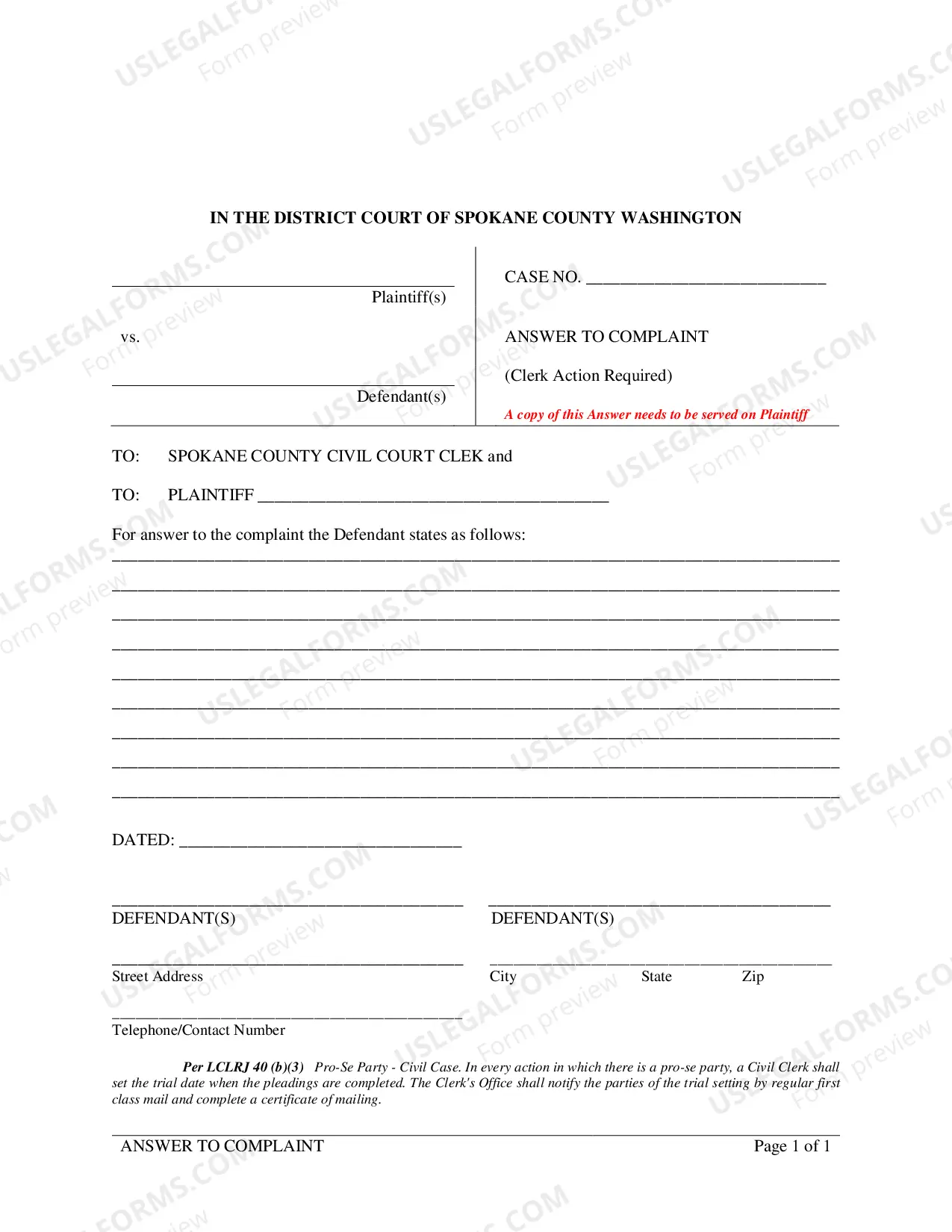
Store Lease-Tenant Oriented
What this document covers
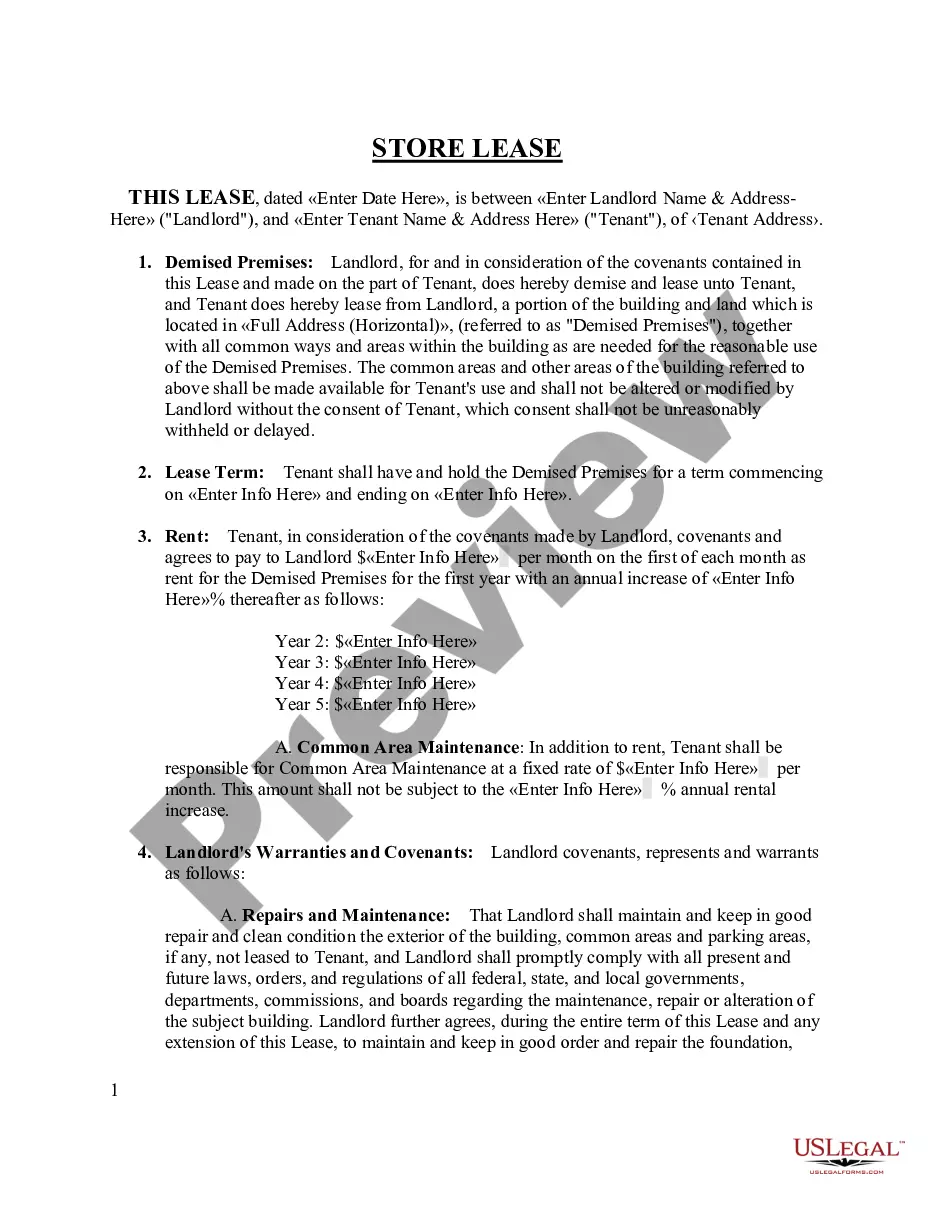
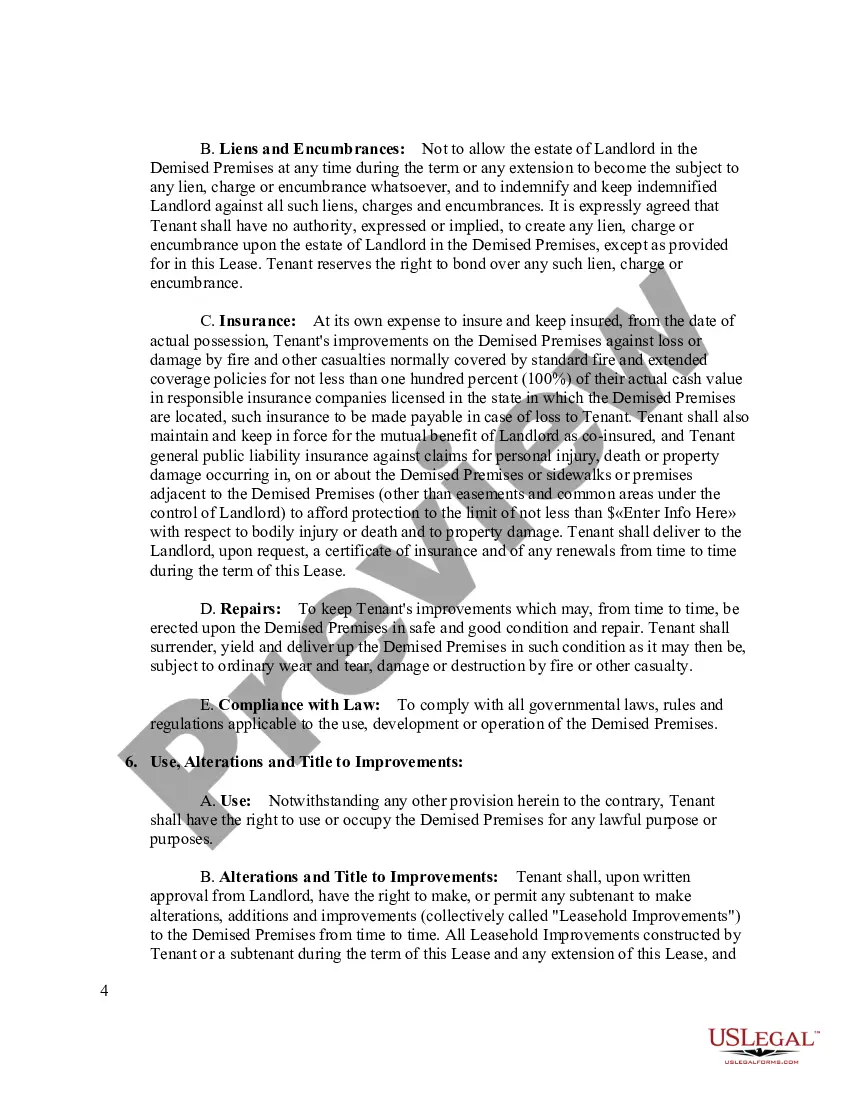
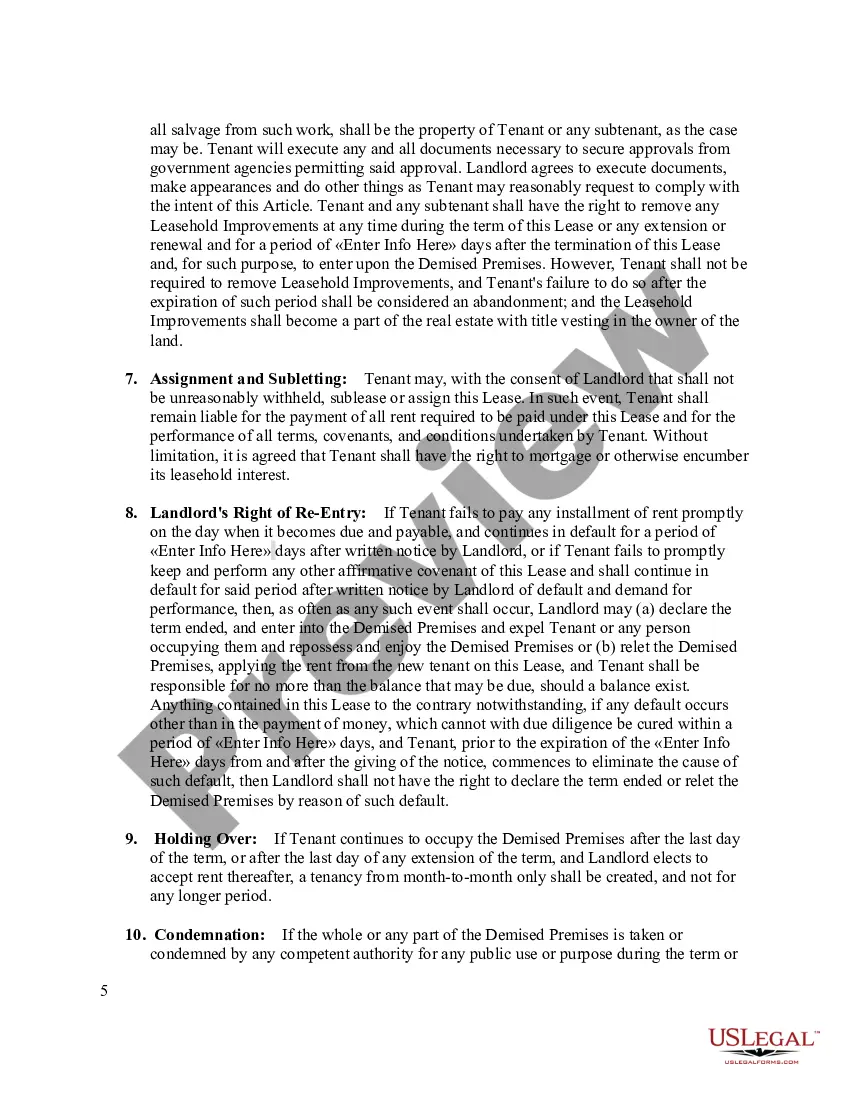
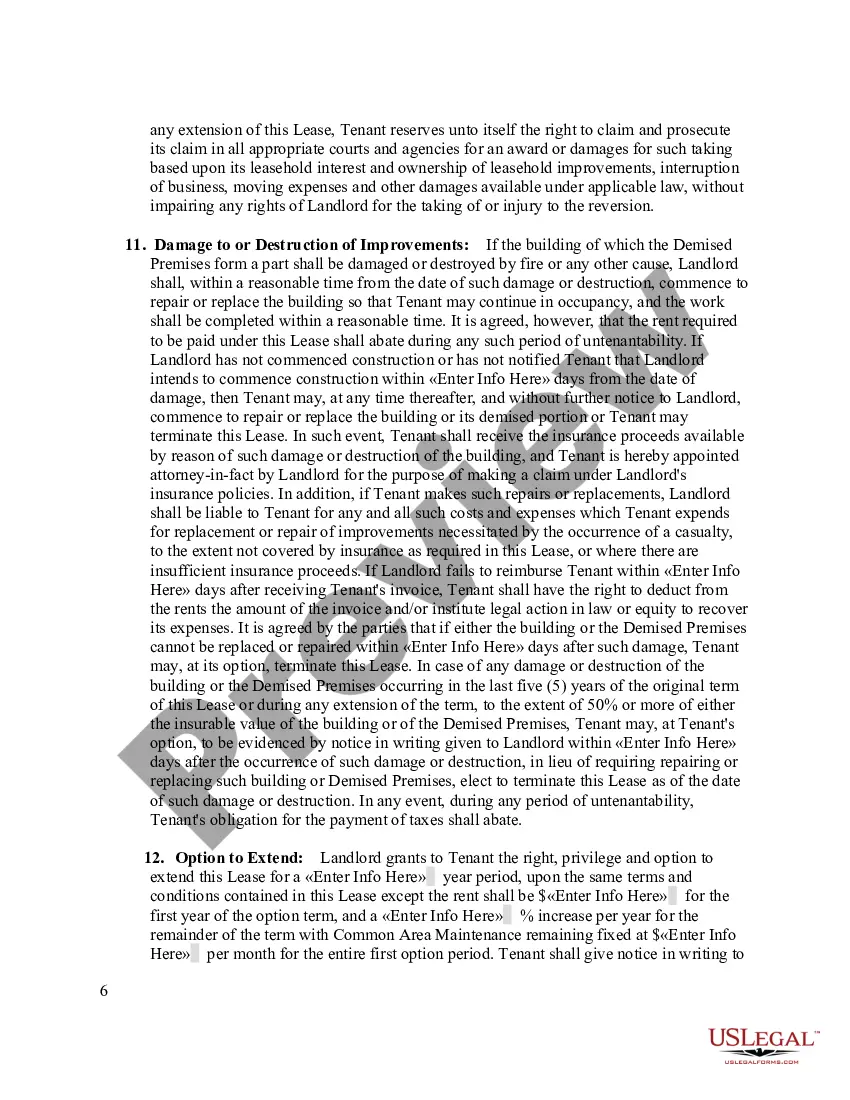
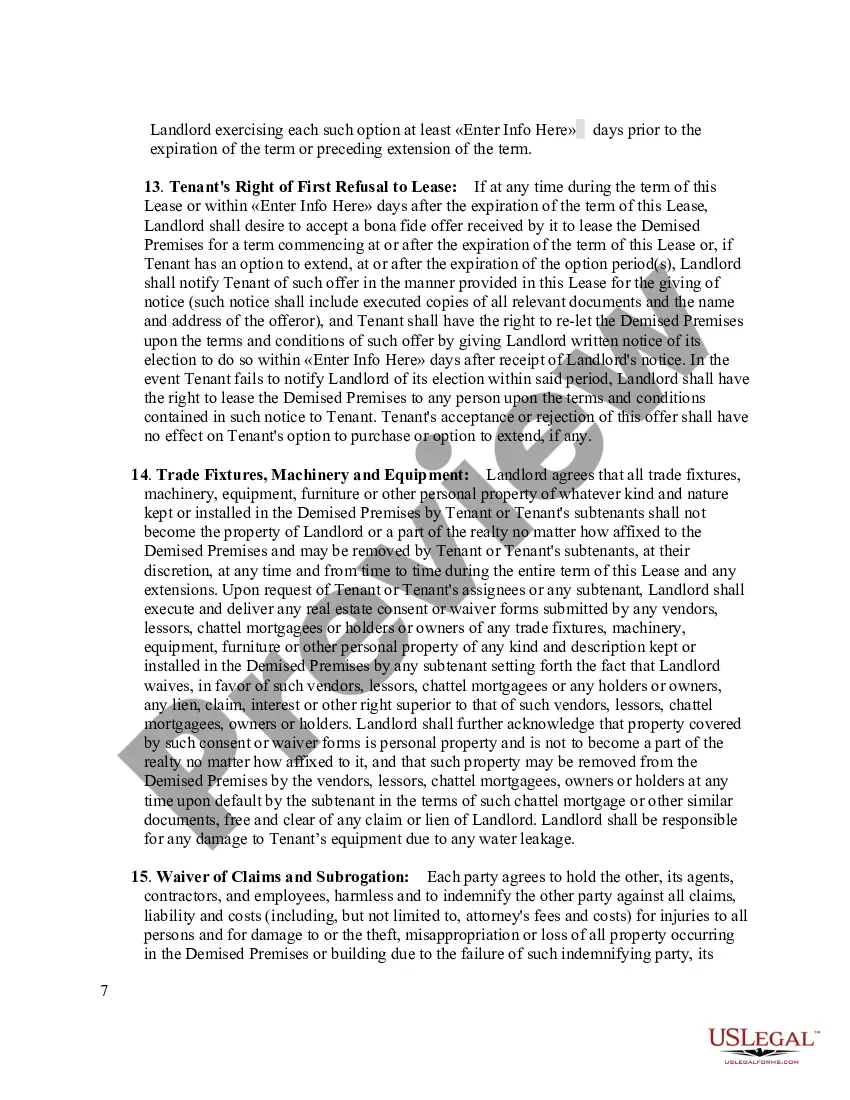
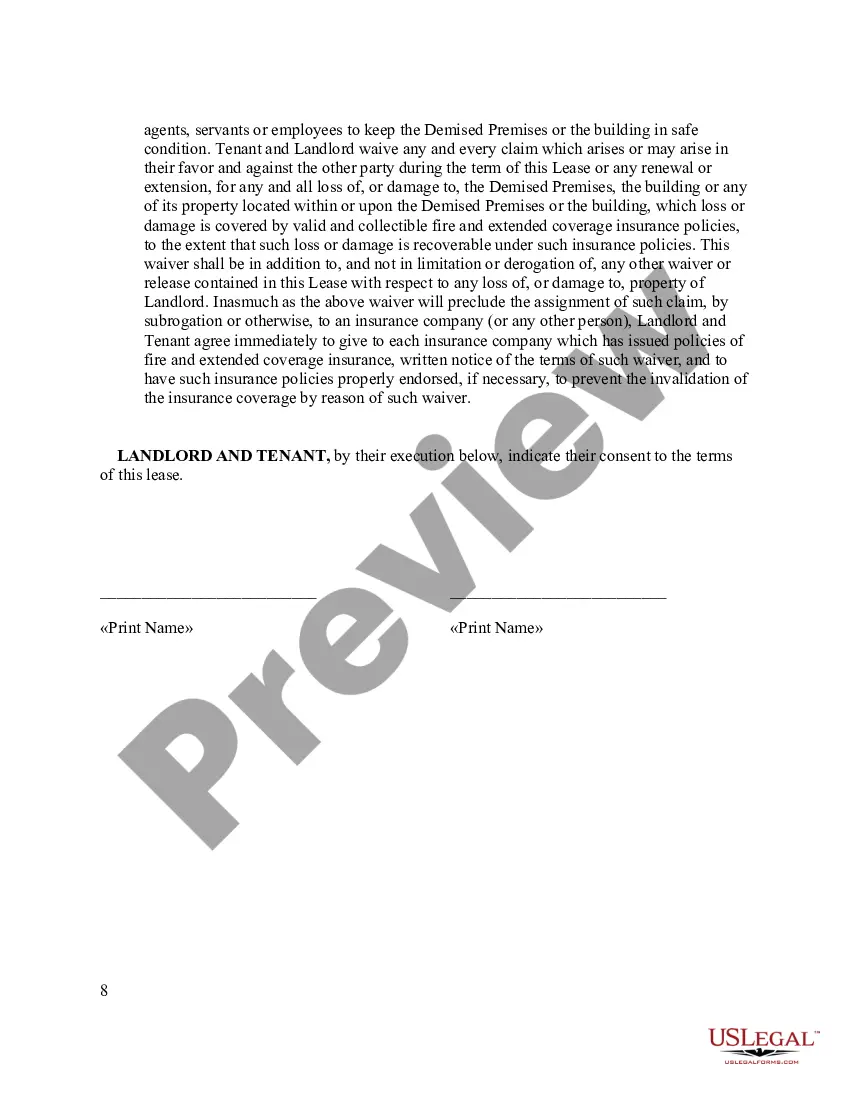
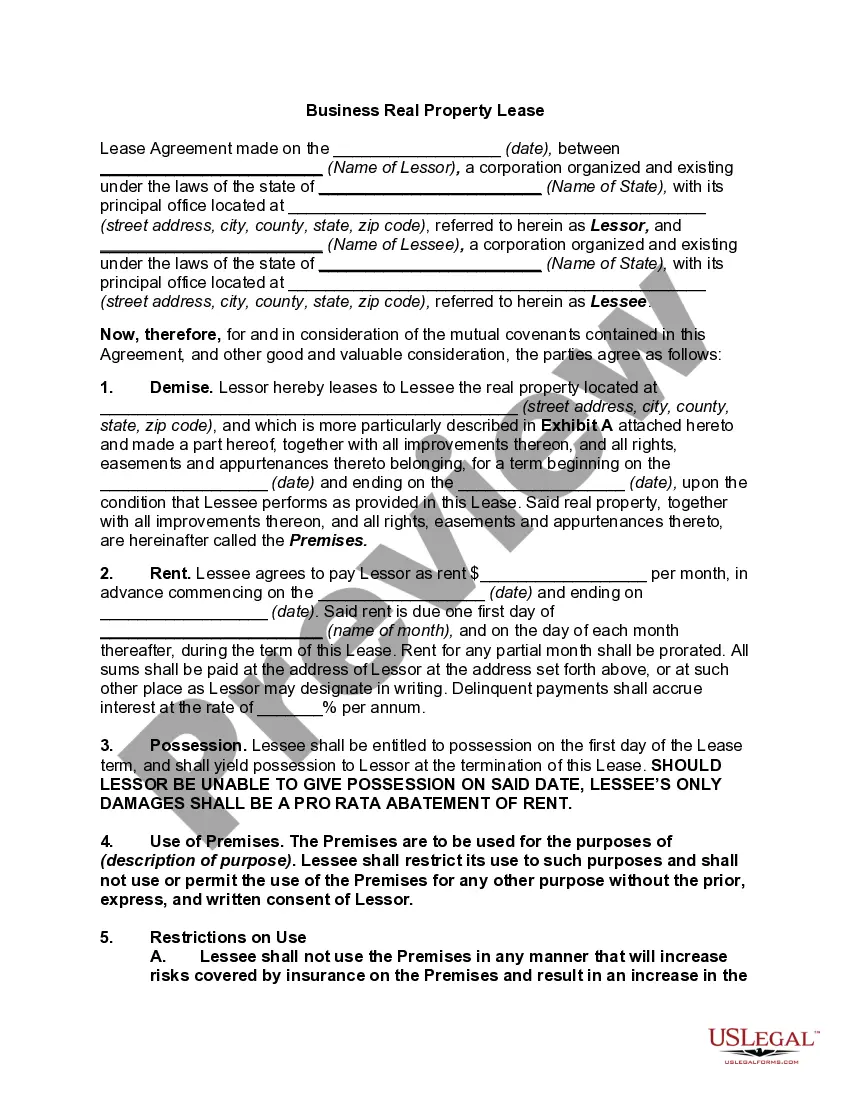
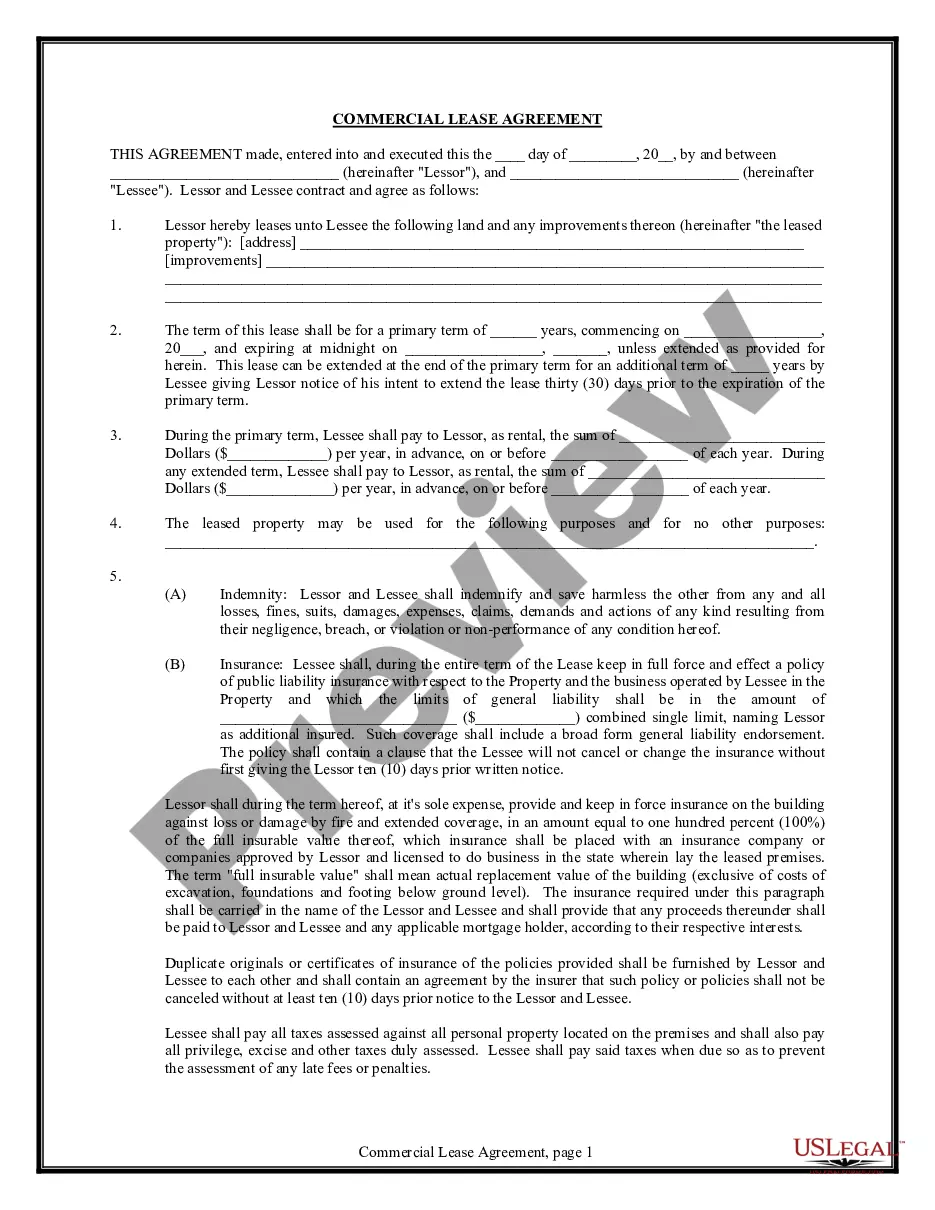
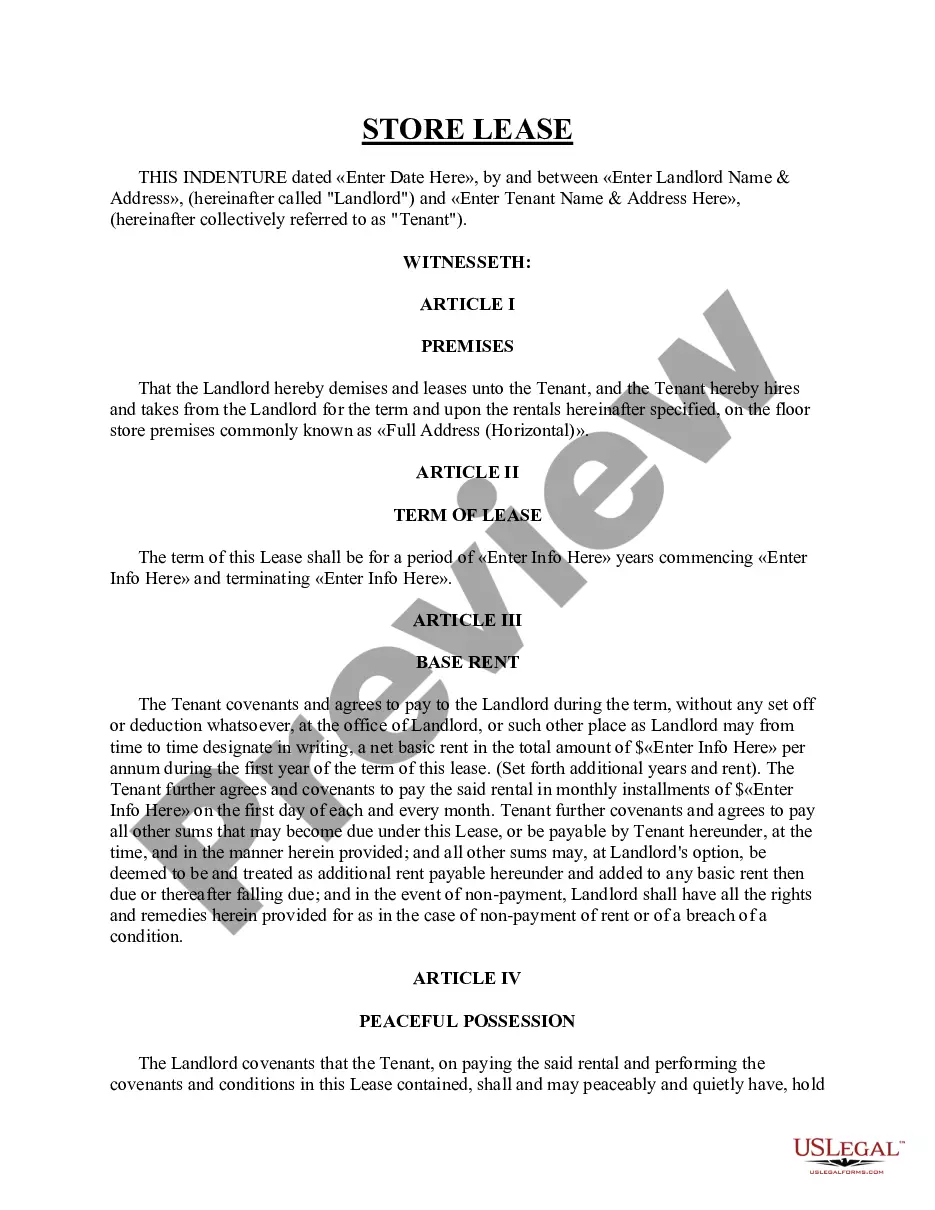
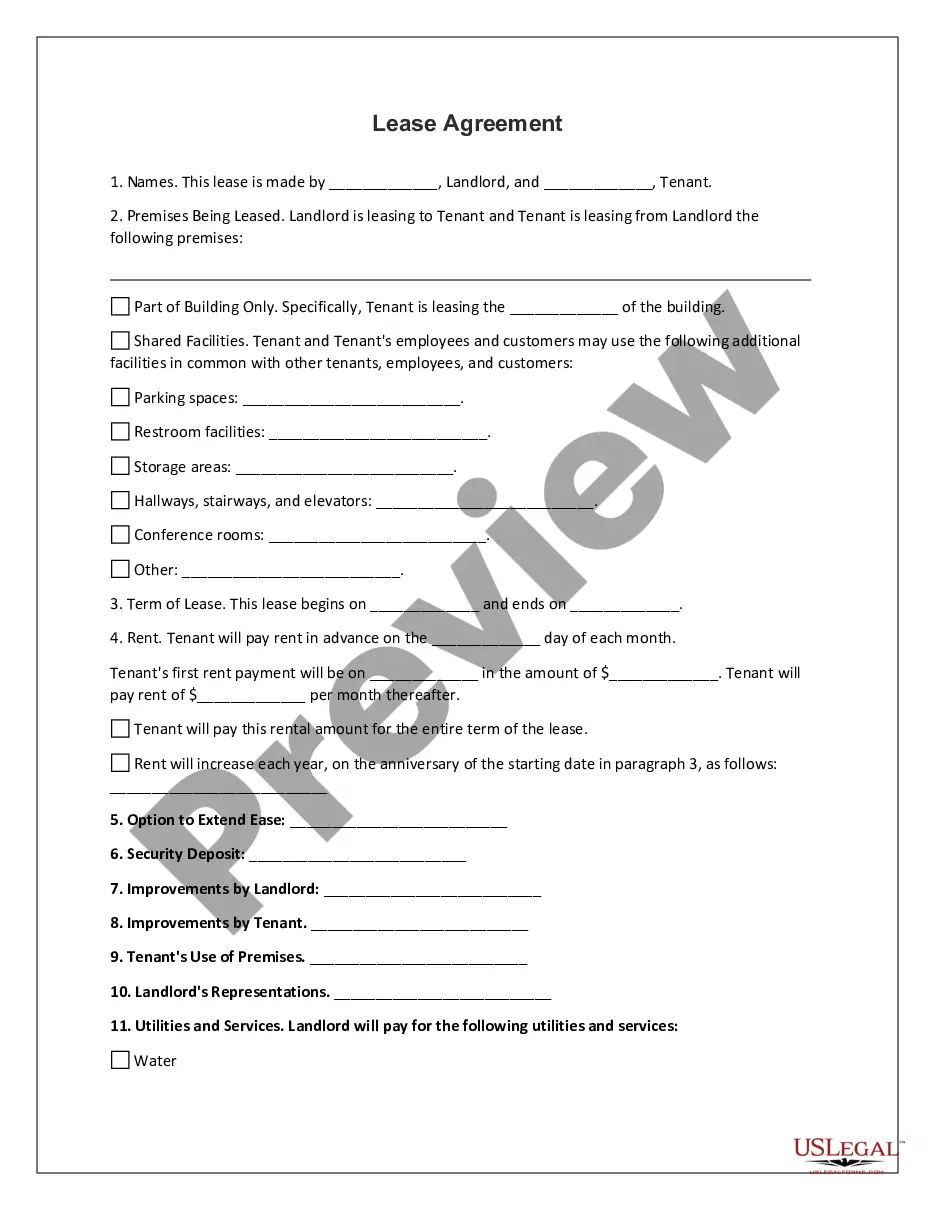
The Store Lease-Tenant Oriented form is a commercial leasing agreement tailored specifically for tenants renting retail space. This form outlines the responsibilities and rights of both landlords and tenants, distinguishing itself from residential lease agreements, which are governed by different legal frameworks. By using this form, tenants can ensure their interests are protected while leasing commercial property for their store operations.
Key parts of this document
- Identification of parties: Clearly states the landlord and tenant names and addresses.
- Description of the demised premises: Specifies the portion of the property being leased and includes common areas available for tenant use.
- Rent details: Outlines the base rent and annual increases over the lease term.
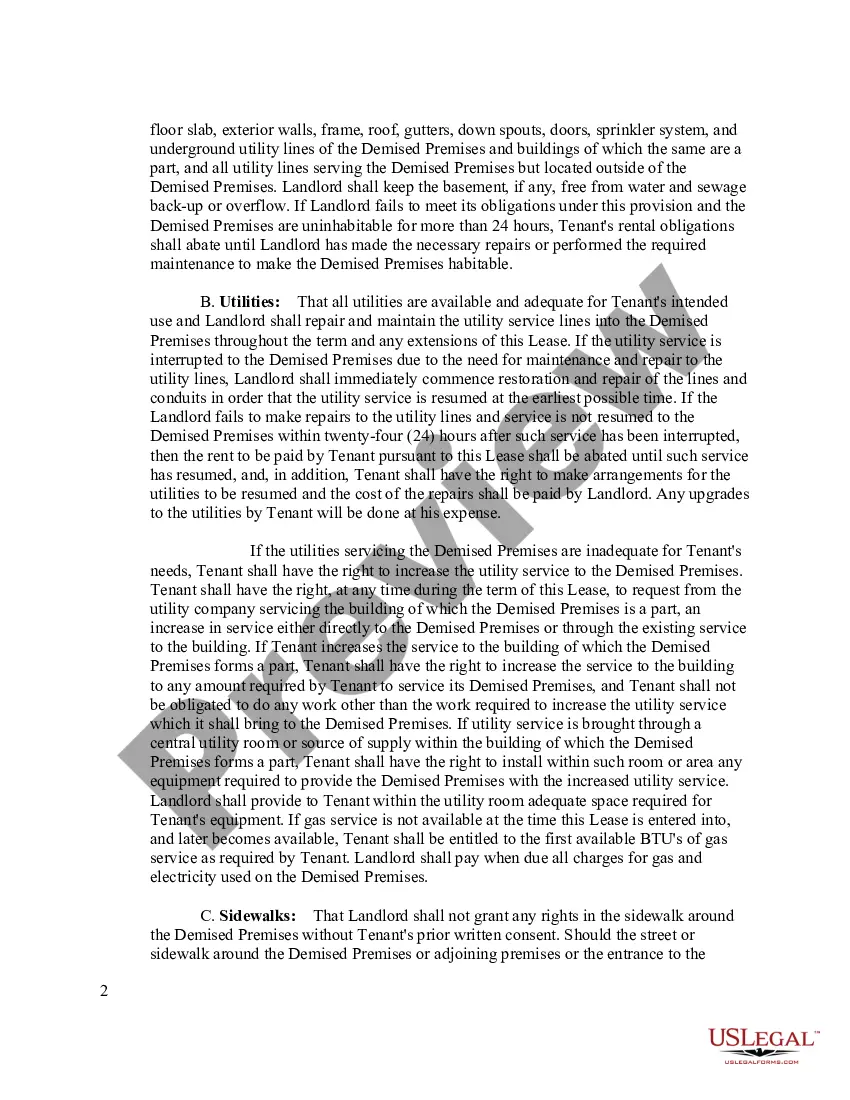
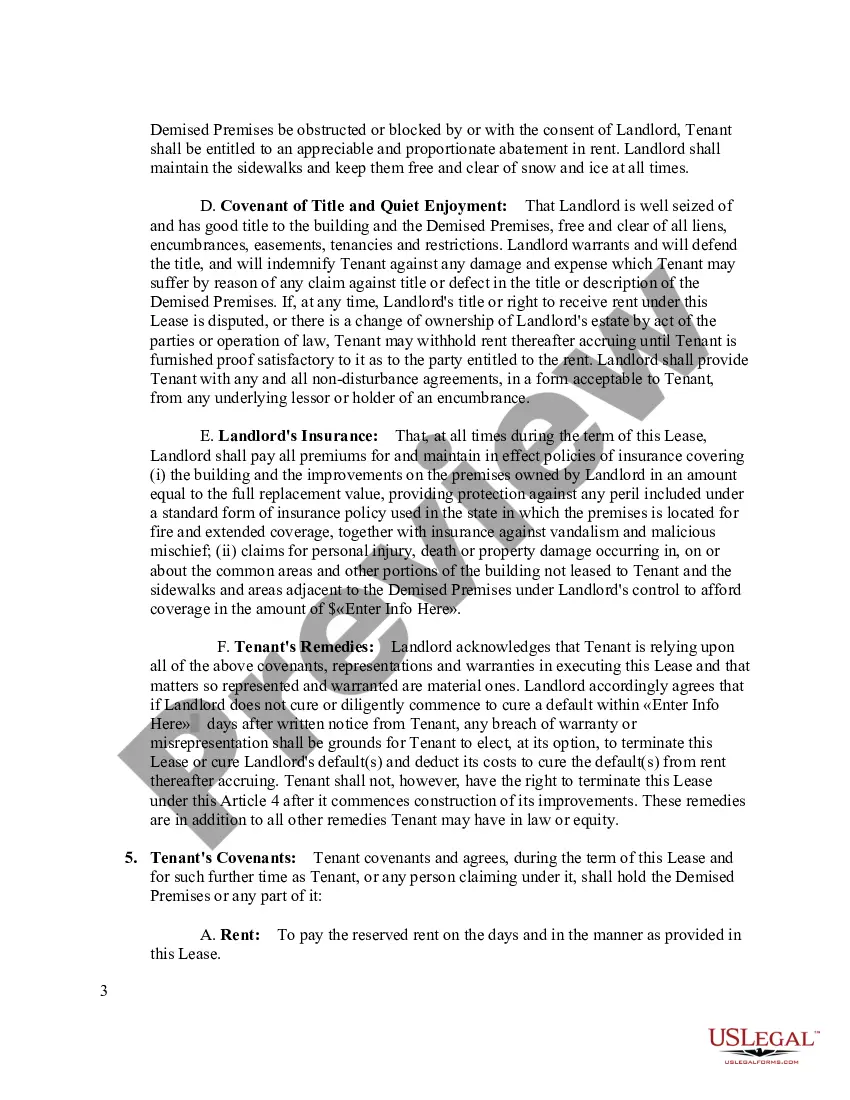
- Repair and maintenance obligations: Defines the landlord's responsibilities regarding property upkeep.
- Utilities clause: Addresses the availability and maintenance of utility services.
- Tenant's rights concerning alterations: Allows tenants to make improvements to the leased premises with prior approval.
Situations where this form applies
This Store Lease-Tenant Oriented form should be used when a business owner wants to lease a commercial space for operating a retail store. It is particularly useful when negotiating terms of occupancy, setting rent amounts, and defining the responsibilities of both the landlord and the tenant to avoid disputes and ensure clarity about the terms of lease.
Who can use this document
- Business owners seeking retail space for their stores.
- Landlords who wish to create a structured lease agreement for commercial tenants.
- Real estate professionals managing commercial properties.
- Financial institutions evaluating commercial leases for lending purposes.
Instructions for completing this form
- Identify the landlord and tenant by entering their full names and addresses.
- Specify the location and details of the demised premises to be leased.
- Enter the start and end dates of the lease term.
- Detail the monthly rent and any annual increases in a clear format.
- Complete all relevant clauses, especially those addressing repairs, maintenance, and utilities.
- Have both parties review the lease before signing to ensure mutual understanding and agreement.
Notarization requirements for this form
This form does not typically require notarization unless specified by local law. However, having the lease notarized can provide an additional layer of legal security for both parties.
Get your form ready online
Our built-in tools help you complete, sign, share, and store your documents in one place.
Make edits, fill in missing information, and update formatting in US Legal Forms—just like you would in MS Word.
Download a copy, print it, send it by email, or mail it via USPS—whatever works best for your next step.
Sign and collect signatures with our SignNow integration. Send to multiple recipients, set reminders, and more. Go Premium to unlock E-Sign.
If this form requires notarization, complete it online through a secure video call—no need to meet a notary in person or wait for an appointment.
We protect your documents and personal data by following strict security and privacy standards.

Make edits, fill in missing information, and update formatting in US Legal Forms—just like you would in MS Word.

Download a copy, print it, send it by email, or mail it via USPS—whatever works best for your next step.

Sign and collect signatures with our SignNow integration. Send to multiple recipients, set reminders, and more. Go Premium to unlock E-Sign.

If this form requires notarization, complete it online through a secure video call—no need to meet a notary in person or wait for an appointment.

We protect your documents and personal data by following strict security and privacy standards.
Mistakes to watch out for
- Failing to specify the exact premises being leased, which can lead to misunderstandings.
- Neglecting to outline rent increase terms clearly, which can create disputes later.
- Omitting the tenant's obligations for maintenance and repairs, leading to property neglect.
- Not reviewing the lease for compliance with state and local laws.
Why use this form online
- Easy customization to meet specific leasing needs.
- Access to legal guidance through comprehensive templates.
- Time-saving and convenient downloadable format.
- Utilizing templates drafted by licensed attorneys to ensure legal protections.
Legal use & context
- Ensures both parties are aware of their rights and responsibilities under the lease terms.
- Helps avoid disputes regarding rent payments, property conditions, and utilities.
- Acts as a legally binding document, enforceable in a court of law if necessary.
Summary of main points
- The Store Lease-Tenant Oriented form is essential for tenants seeking to lease commercial space for their stores.
- It clearly outlines the obligations of both parties regarding rent, maintenance, and repairs.
- Customization ensures that specific requirements and local laws are taken into account.
- A well-drafted lease can help prevent misunderstandings and protect the interests of all parties involved.
Looking for another form?

Form popularity
FAQ
Percentage rent, or a percentage lease, is a type of lease seen in commercial real estate. It is a rental charge based on the gross income of the tenant rather than a fixed monthly or annual value.
A net lease is a type of lease where the tenant pays a portion or all of the property taxes, insurance fees, and maintenance costs for a property, in addition to base rent.
Percentage leases are most commonly used for retail properties (especially malls). In a percentage lease, tenants pay a base rent plus a portion of the gross sales they make from conducting business in the building.
In a full-service gross lease, a tenant pays a base rate. All operating expenses, including property taxes, property insurance, utilities, and common area maintenance, are paid for by the landlord. Hence, why it is called full service!
Gross leases are most common for commercial properties such as offices and retail space. The tenant pays a single, flat amount that includes rent, taxes, utilities, and insurance.
A Triple Net Lease (NNN Lease) is the most common type of lease in commercial buildings. In a NNN lease, the rent does not include operating expenses. Operating expenses include utilities, maintenance, property taxes, insurance and property management.