Clause Dealing with the Installation Maintenance Use and Operation of Communications Equipment When There Is a Rooftop Manager
Understanding this form
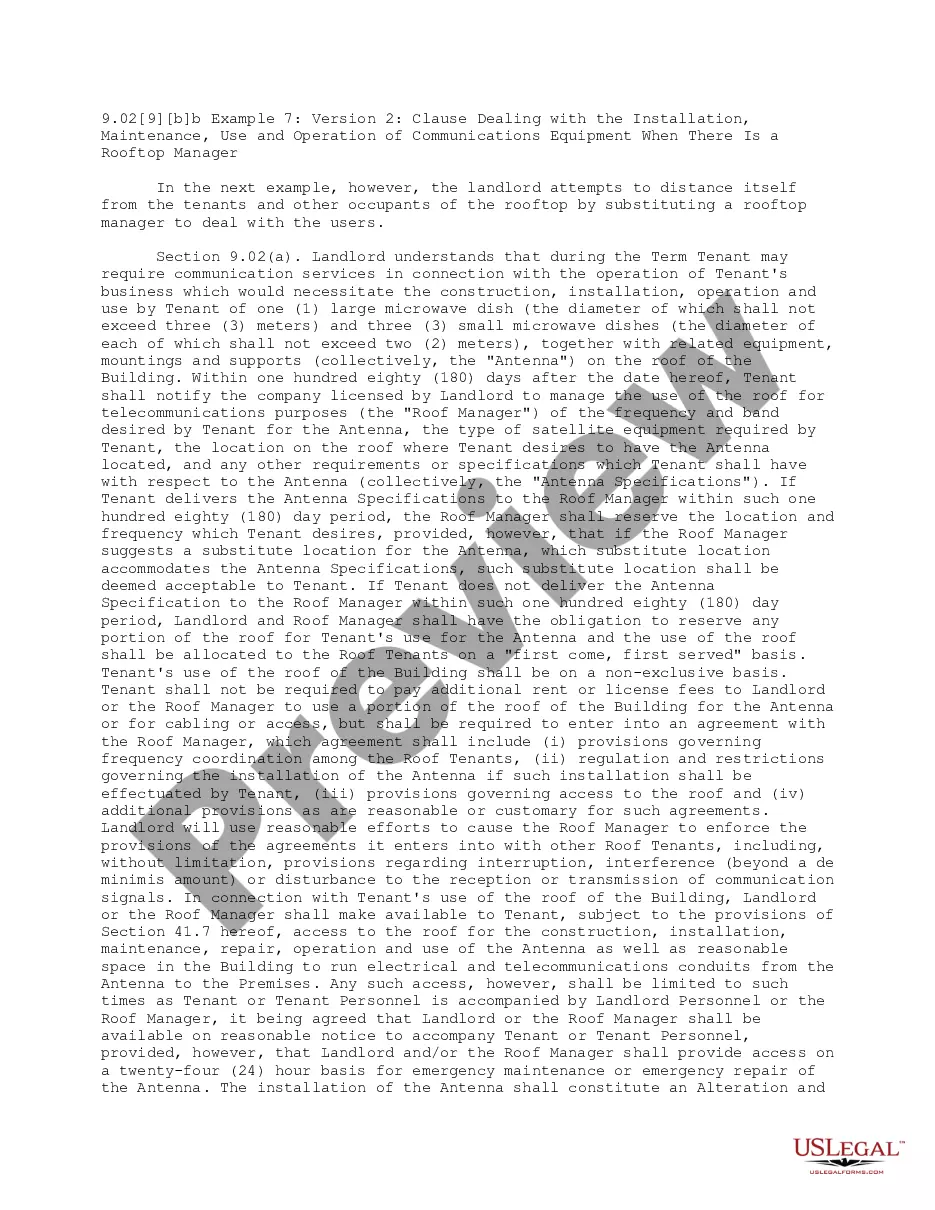
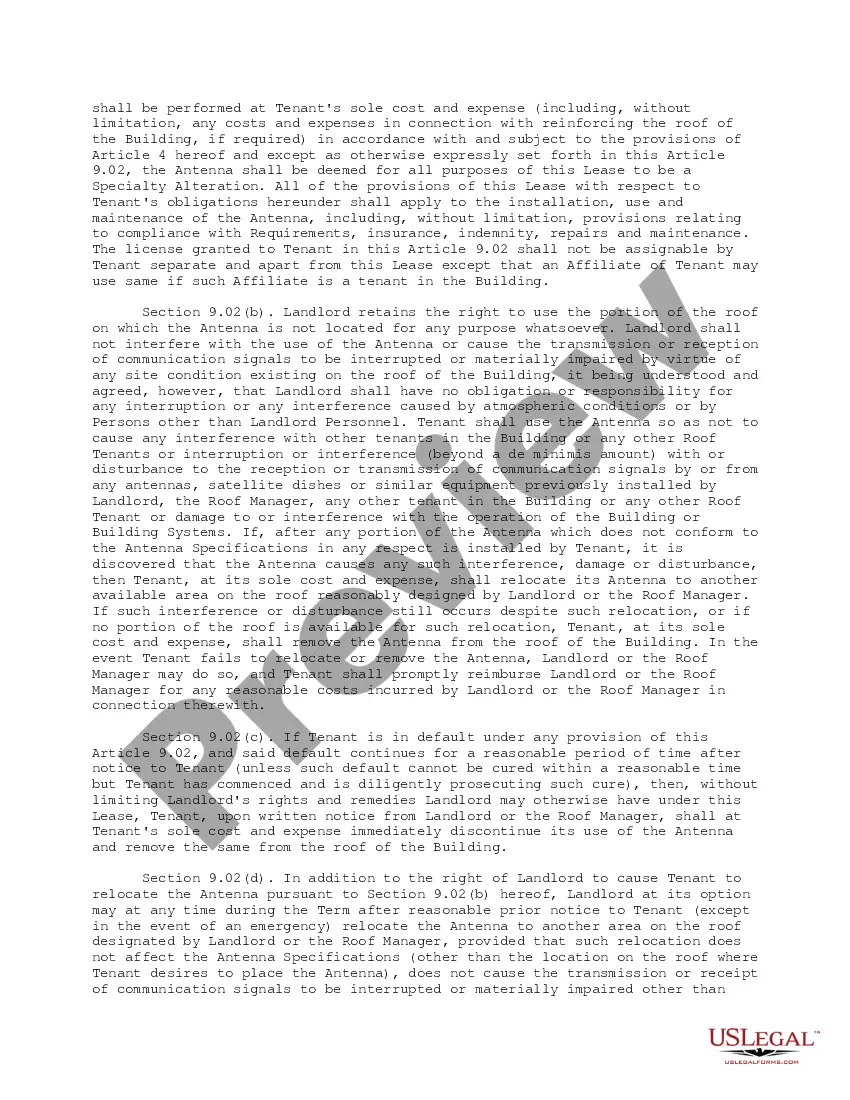
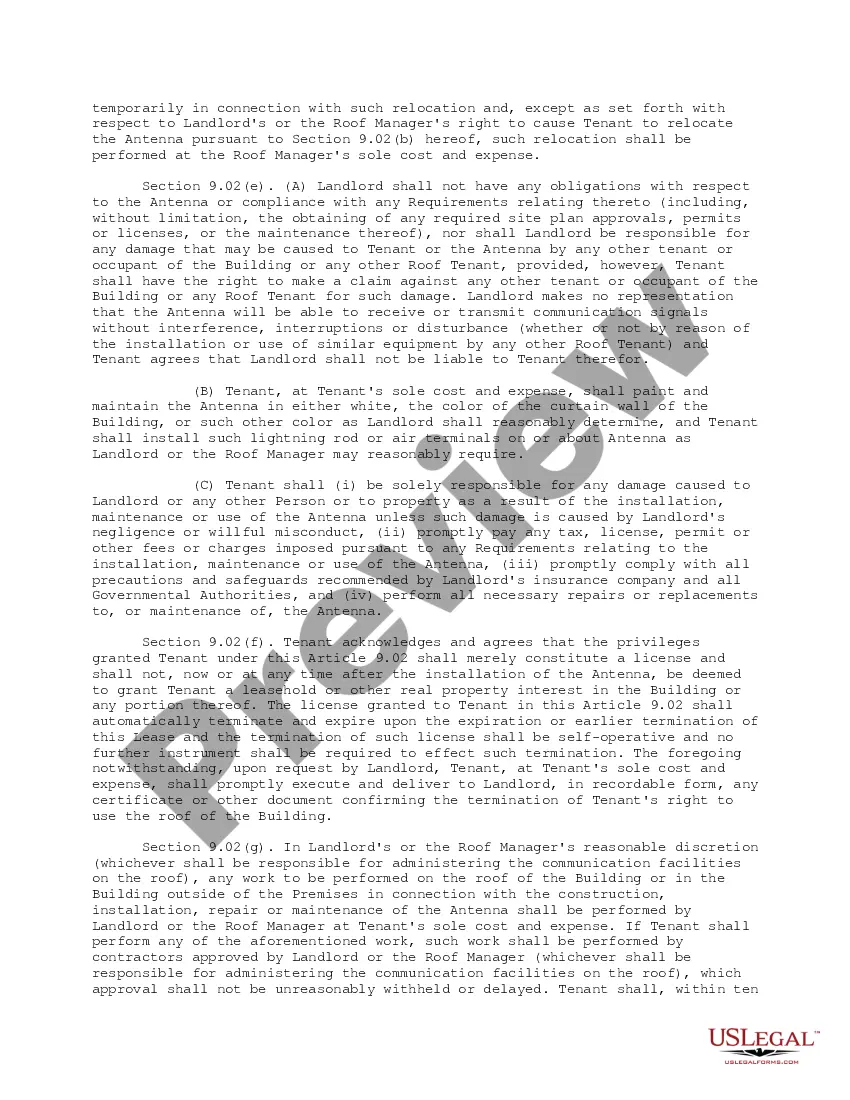
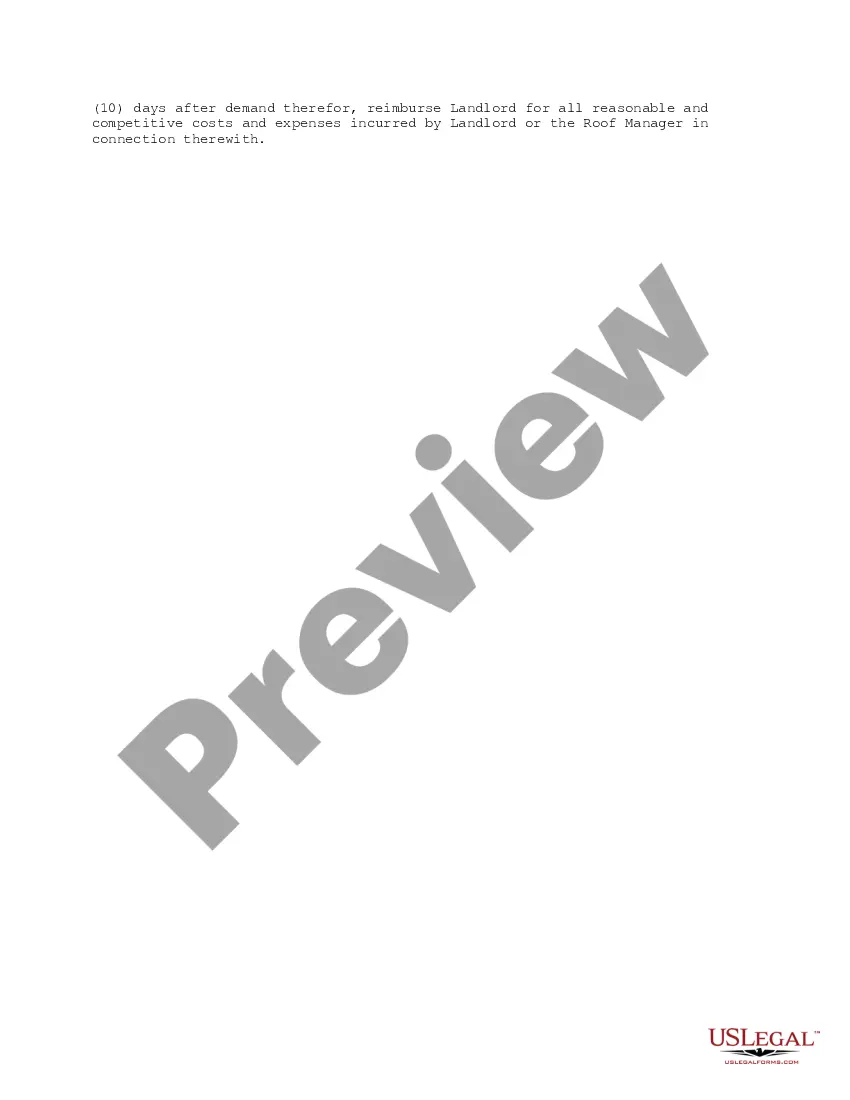
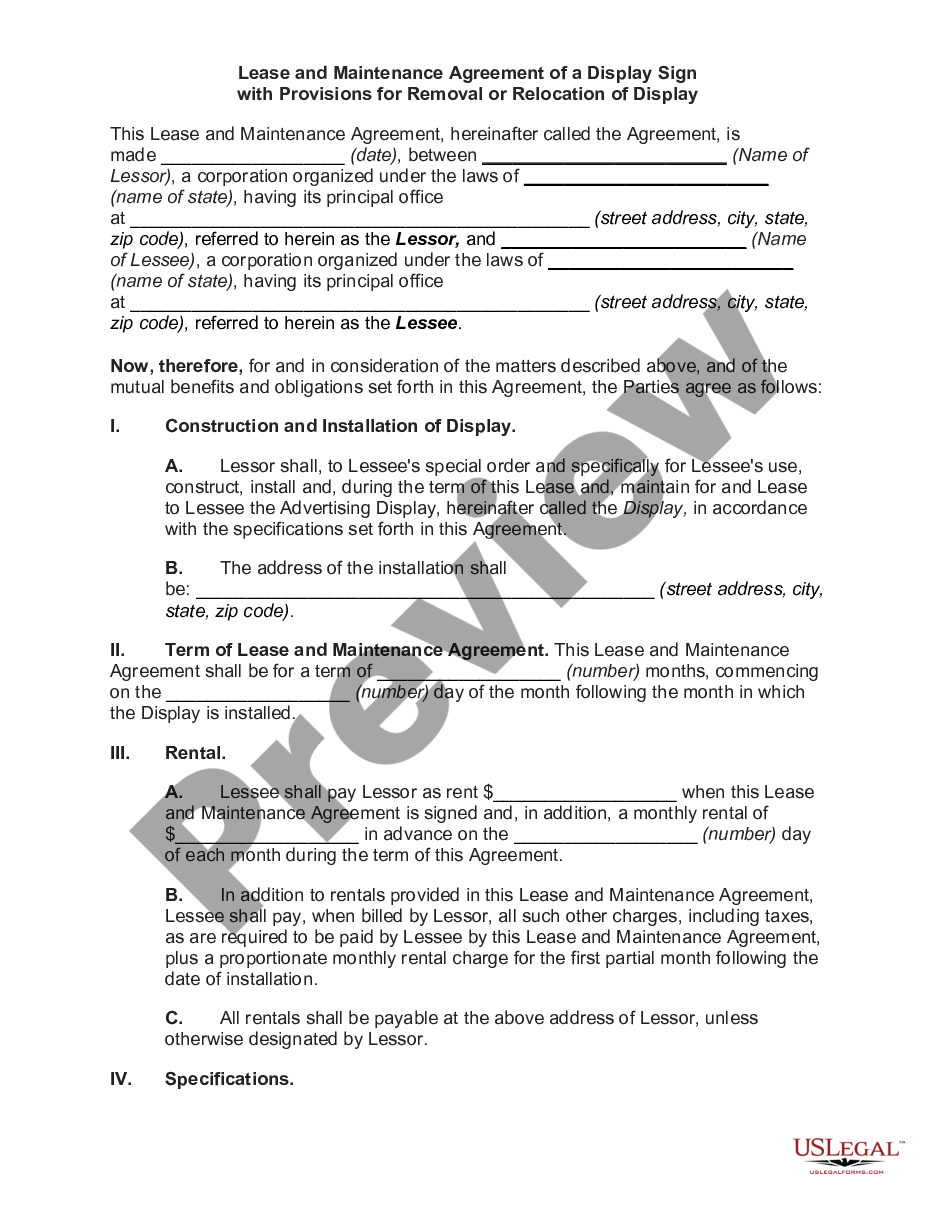
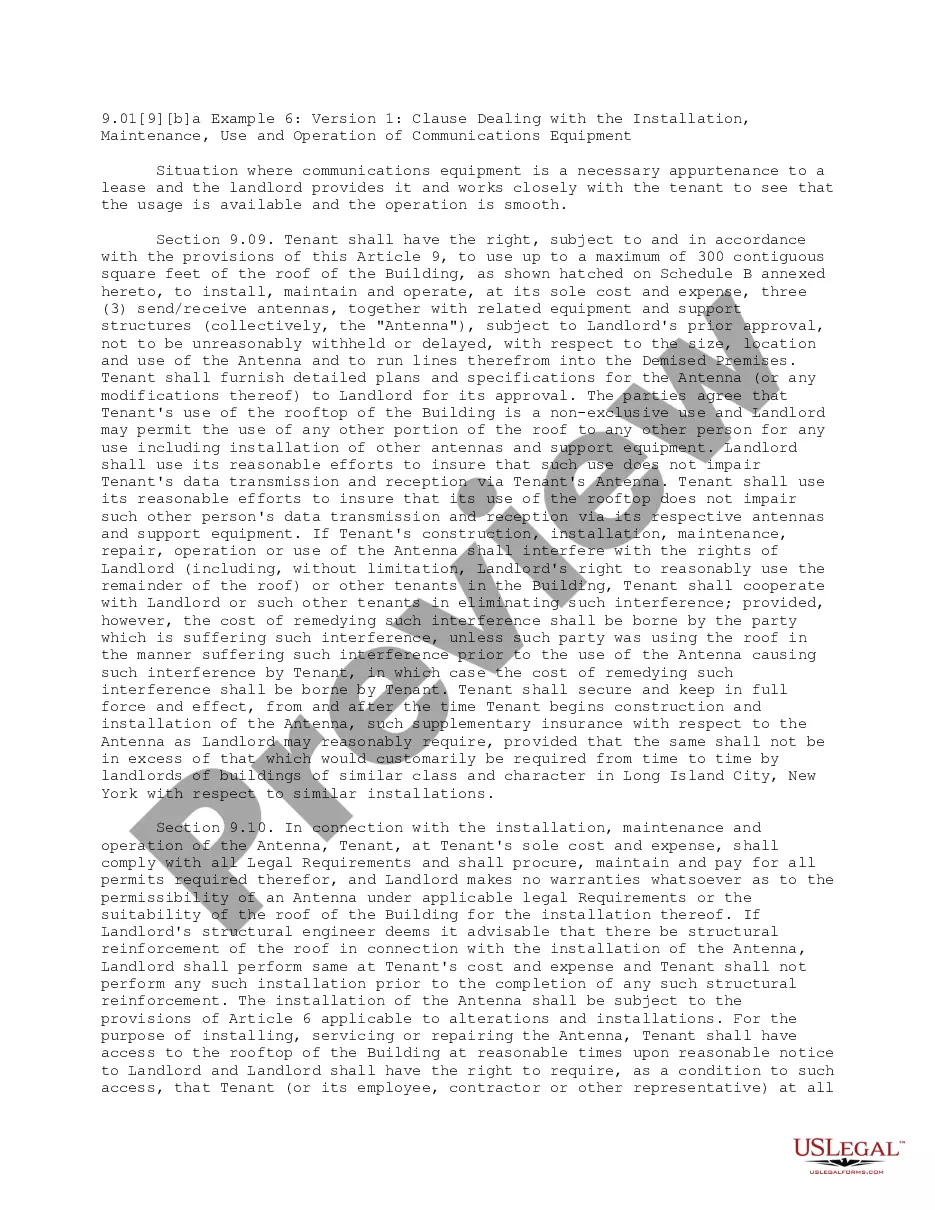
This form is a clause for commercial leases that outlines the terms for the installation, maintenance, use, and operation of communications equipment on the roof of a building. It designates a rooftop manager to handle tenant needs related to communication services, thereby limiting the landlord's involvement. This clause is vital for tenants who require specific communication installations for their business operations, differentiating it from standard lease agreements by focusing on rooftop communication equipment and the responsibilities of both parties regarding its use.
Key components of this form
- Designation of a rooftop manager to manage communication installations and usage.
- Requirements for tenants regarding antenna specifications and locations on the roof.
- Limitations on landlord responsibilities related to communication issues caused by external factors.
- Specifications for maintenance, installation, and access rights for the antennas.
- Conditions under which landlords can relocate antennas installed by tenants.
Common use cases
This form is used when a tenant needs to install communication equipment on the roof of a commercial property. It is essential for scenarios where the tenant requires consistent communication services, such as businesses reliant on telecommunication connectivity for operations. It is also applicable when negotiating terms for rooftop space usage with a landlord, ensuring clarity on responsibilities and operations.
Who can use this document
- Commercial tenants who plan to install communication equipment on a building rooftop.
- Landlords managing properties with rooftop spaces for communication equipment.
- Property managers responsible for overseeing tenant communications services.
How to complete this form
- Identify the landlord and tenant involved in the agreement.
- Specify the types and locations of communication equipment to be installed.
- Clearly outline the responsibilities of the rooftop manager regarding communication services.
- Detail the access times and conditions for maintenance on the rooftop.
- Ensure all terms regarding interference and compliance are included in the agreement.
Notarization guidance
This form does not typically require notarization to be legally valid. However, some jurisdictions or document types may still require it. US Legal Forms provides secure online notarization powered by Notarize, available 24/7 for added convenience.
Get your form ready online
Our built-in tools help you complete, sign, share, and store your documents in one place.
Make edits, fill in missing information, and update formatting in US Legal Forms—just like you would in MS Word.
Download a copy, print it, send it by email, or mail it via USPS—whatever works best for your next step.
Sign and collect signatures with our SignNow integration. Send to multiple recipients, set reminders, and more. Go Premium to unlock E-Sign.
If this form requires notarization, complete it online through a secure video call—no need to meet a notary in person or wait for an appointment.
We protect your documents and personal data by following strict security and privacy standards.

Make edits, fill in missing information, and update formatting in US Legal Forms—just like you would in MS Word.

Download a copy, print it, send it by email, or mail it via USPS—whatever works best for your next step.

Sign and collect signatures with our SignNow integration. Send to multiple recipients, set reminders, and more. Go Premium to unlock E-Sign.

If this form requires notarization, complete it online through a secure video call—no need to meet a notary in person or wait for an appointment.

We protect your documents and personal data by following strict security and privacy standards.
Typical mistakes to avoid
- Not specifying the exact locations for communication equipment, leading to potential disputes.
- Failing to communicate with the rooftop manager about installation requirements timely.
- Neglecting to address maintenance responsibilities adequately within the clause.
Advantages of online completion
- Convenient access to professional legal templates tailored for businesses.
- Editability allows you to customize the clause to fit specific needs.
- Reliable resources drafted by licensed attorneys enhance legal compliance.
Legal use & context
- The clause serves as a binding agreement between tenants and landlords regarding rooftop installations.
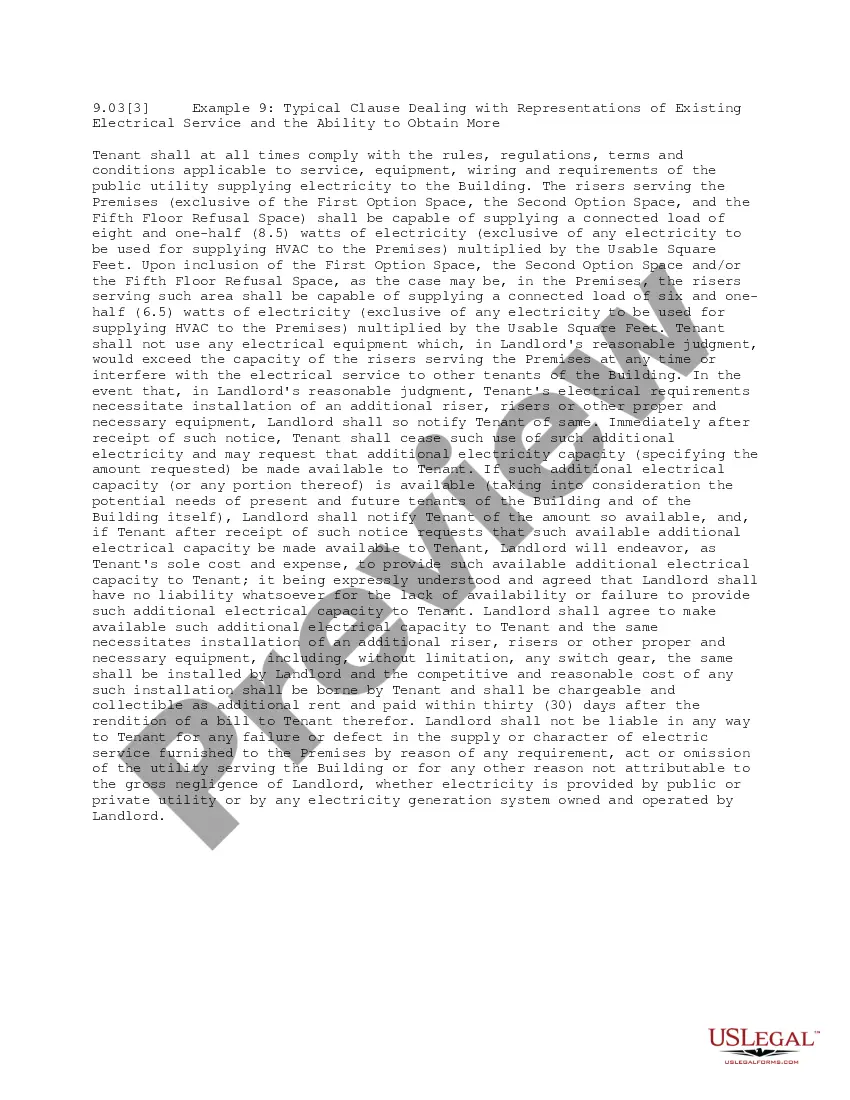
- It outlines clear responsibilities, reducing the risk of disputes over communication signal interference.
- This form is enforceable in court provided that it meets the criteria outlined in the commercial lease agreement.
Summary of main points
- This clause is essential for tenants needing rooftop communication installations.
- Clearly defined terms help ensure smooth operation and maintenance of antennas.
- Using this form can prevent misunderstandings between landlords and tenants while protecting both parties' interests.
Looking for another form?

Form popularity
FAQ
The Commercial Roofing is such a material that is used to seal the roofs of the commercial structures so as to protect them. The Commercial Roofing is very popular with the home owners and is even rising with each day. The commercial metal roofs are very durable and versatile.
What is a Commercial Roof? Commercial and residential roofs vary in design. A commercial roof tends to have a low slope or is entirely flat and much larger than a typical residential roof. Flat roofs tend to require more maintenance and involve repairs of larger spaces that are installed in sections.
For an average 20,000 sq. foot commercial roof, it will usually cost between $3.50 and $7.50 per square foot in materials and labor to install a typical single-ply membrane commercial roofing system. It can be as high as $12-14/sq. ft.
Built-Up Roofing (BUR) Membrane. Metal Roofing. Modified Bitumen Roofing. Thermoset (EPDM) Roof Membrane. Thermoplastic (PVC & TPO) Roof Membrane. Garden Green Roofing System.
Composition. Even if you know the difference between single-ply and built-up roofing (BUR), you may not know which type of single-ply roof your building has. Age. Repair Record. Repair Budget. Manufacturer's Warranty.
Built-Up Roofing (BUR) Membrane. Metal Roofing. Modified Bitumen Roofing. Thermoset (EPDM) Roof Membrane. Thermoplastic (PVC & TPO) Roof Membrane. Garden Green Roofing System.
Commercial Flat Roofs They can be constructed from any number of materials, including: TPO (thermoplastic polyolefin), PVC (polyvinyl chloride), EPDM (ethylene propylene diene methylene), regular and modified bitumen, and built-up roofing.
What type of flat roof is the best? Built-up Roofing (BUR) Thermoplastic Single-Ply Membrane Roofing (PVC & TPO) Thermoset Single-Ply Membrane Roofing (EPDM) Modified Bitumen Roofing (Mod Bit or MB) Garden or Green Roofing Systems.