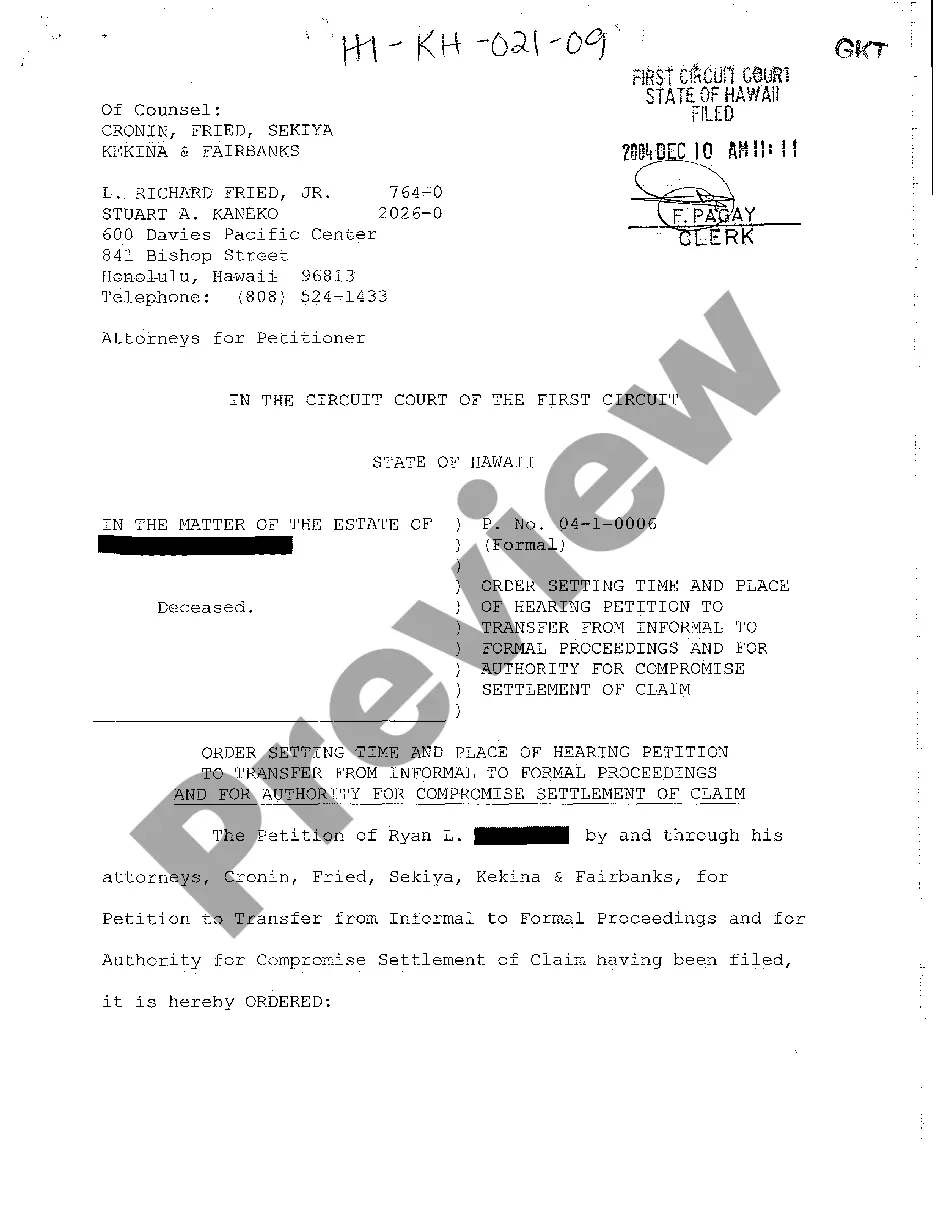
Surety Agreement
About this form
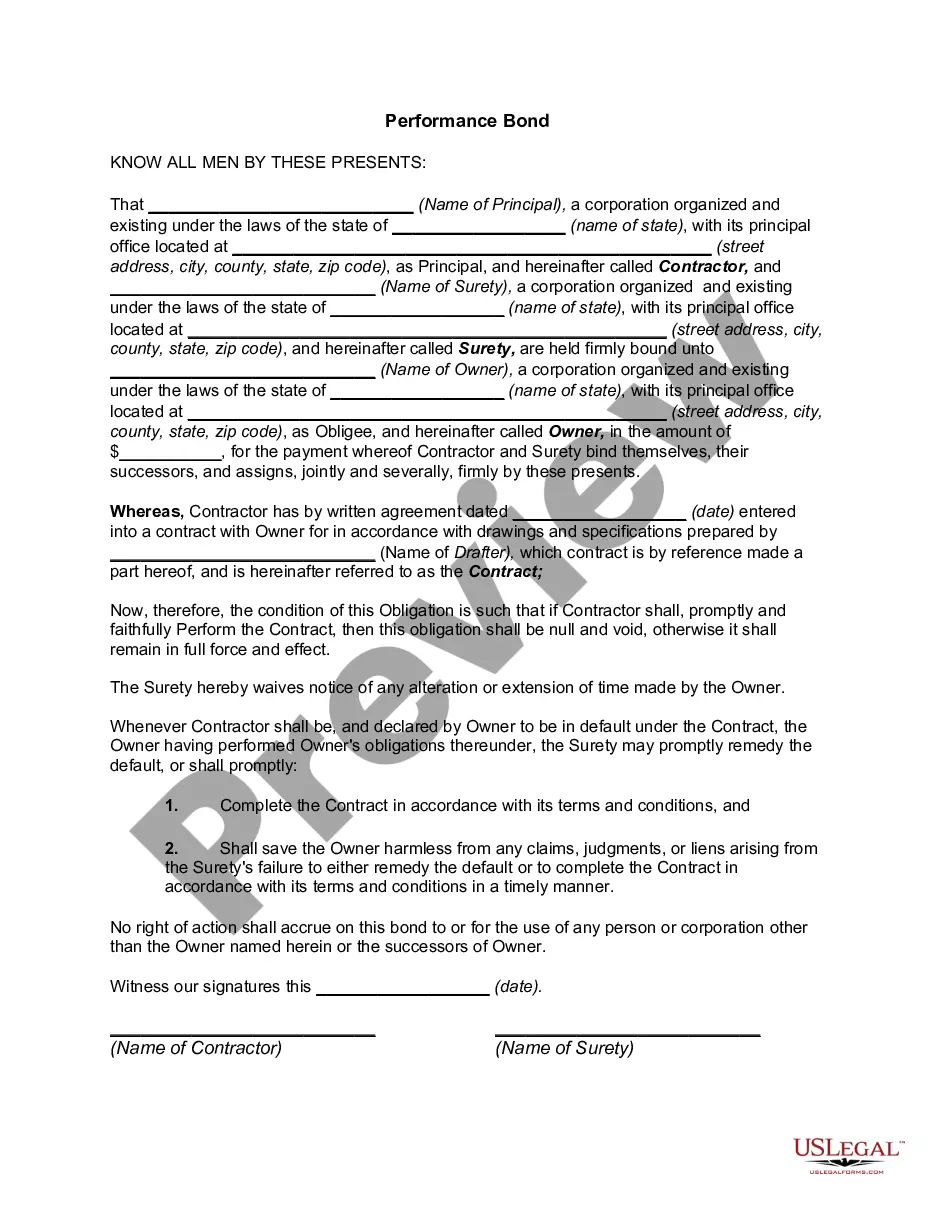
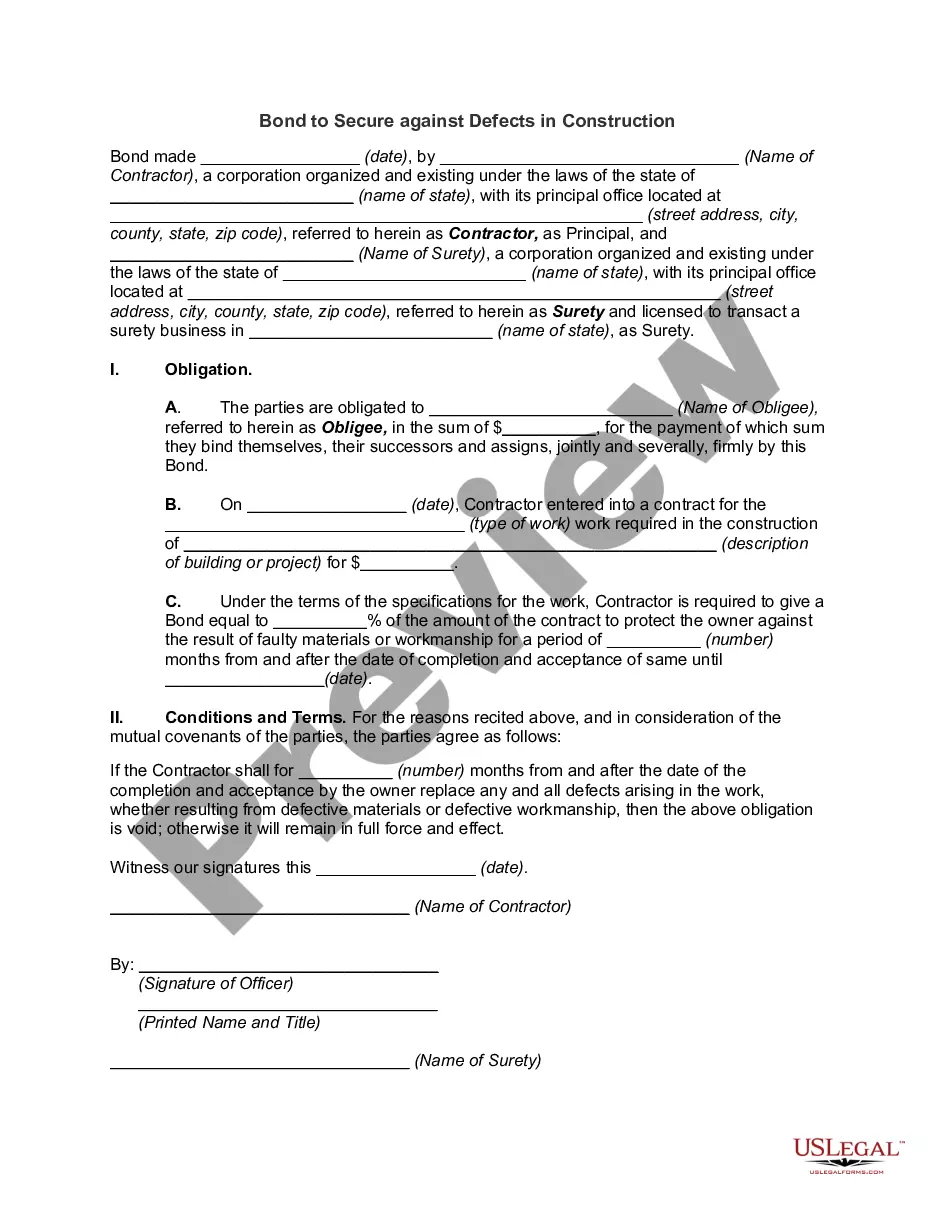
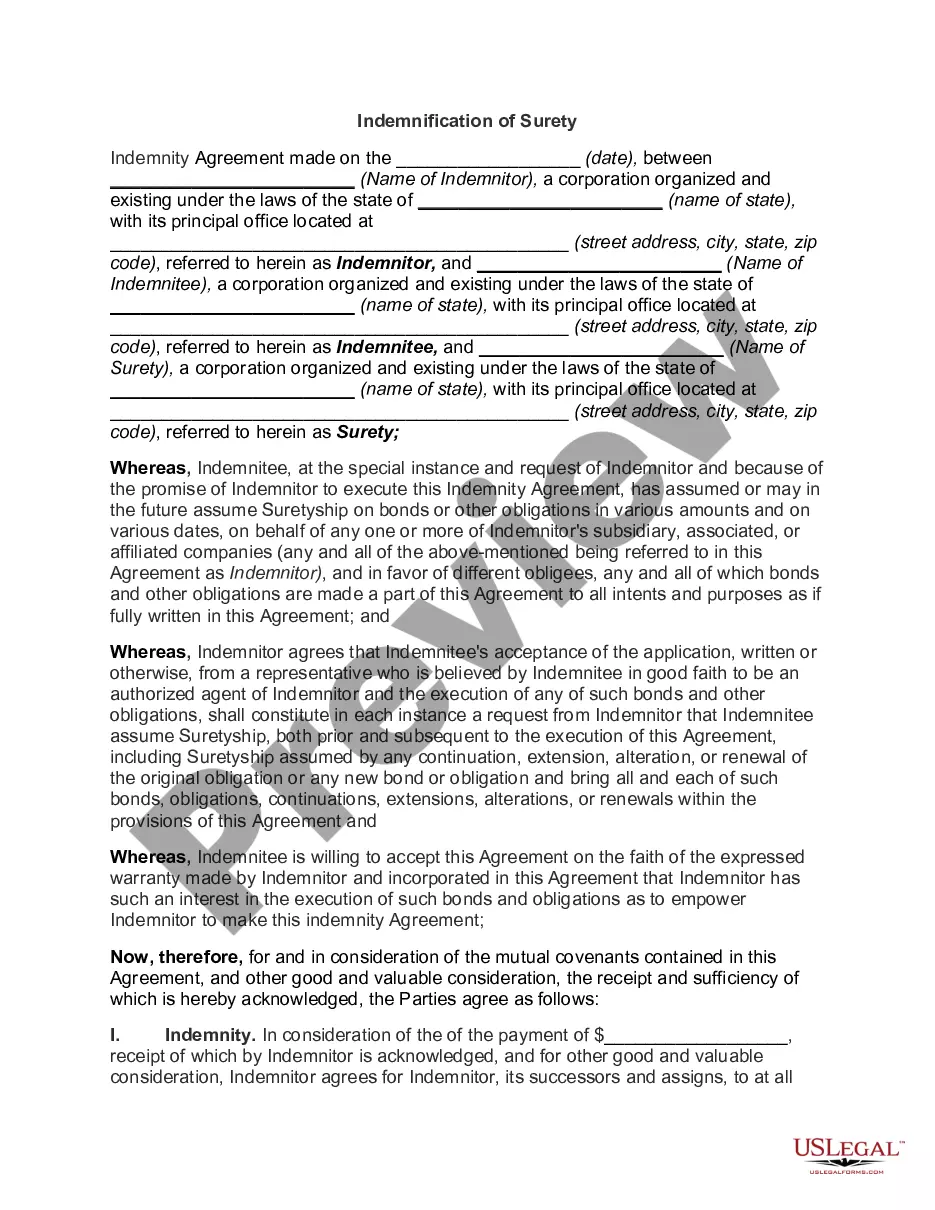
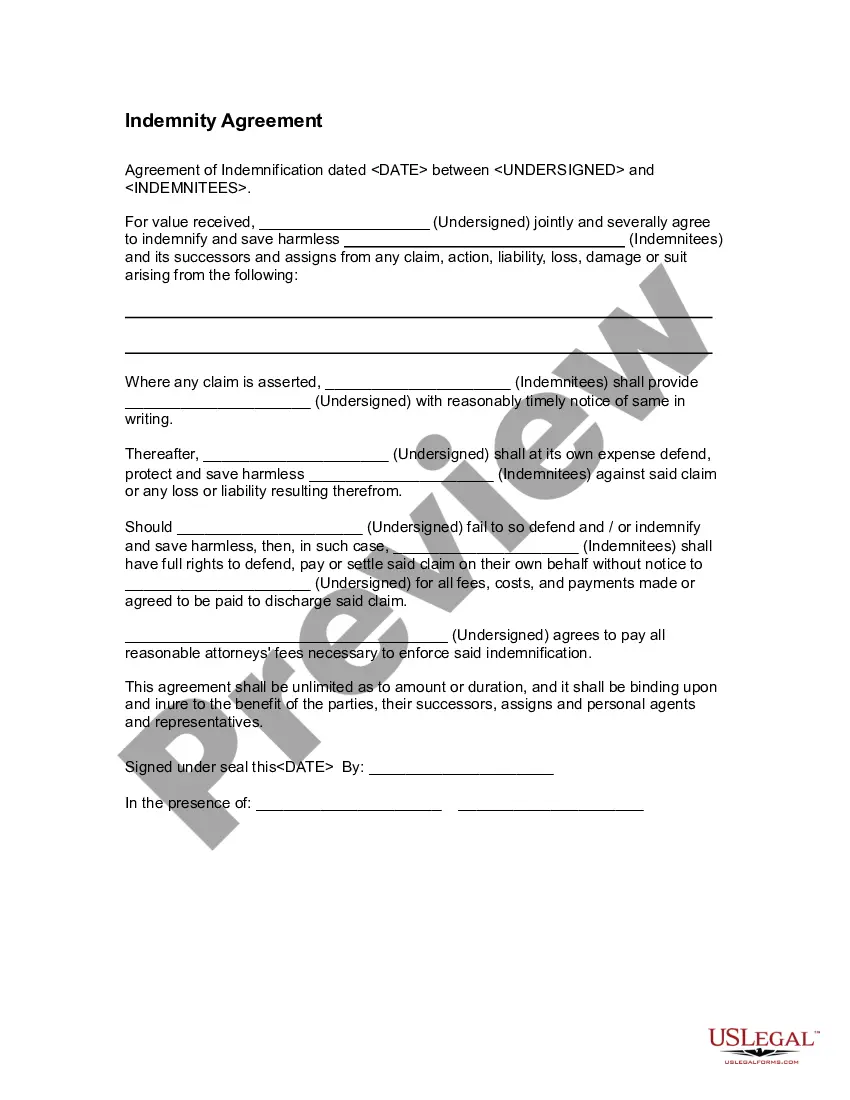
A surety agreement is a legal document in which a surety agrees to take responsibility for a debt or obligation of another party, known as the principal. This type of agreement ensures that the surety will fulfill the obligation if the principal fails to do so. It is distinct from other contracts as it involves a third party who guarantees performance or payment on behalf of another, often in financial contexts such as loans or service contracts.
What’s included in this form
- Identification of the surety and principal parties, including names and addresses.
- Financial qualifications of the surety, specified in an attached exhibit.
- Acknowledgment of indebtedness arising from an underlying contract.
- Liability terms outlining when the surety's obligation ends.
- Conditions for notice of demand for payment by the obligee.
- Jurisdiction for legal actions related to the bond.
When this form is needed
This form is typically used in situations involving financial agreements where one party (the principal) may not be able to fulfill their obligations. For example, a contractor may require a surety agreement from a subcontractor to guarantee project completion. It can also be necessary when applying for loans, leasing agreements, or any contract requiring assurance of payment or performance.
Who should use this form
- Businesses seeking to ensure their contracts are backed by a financial guarantee.
- Individuals acting as sureties on behalf of another party's obligations.
- Lenders requiring additional security for loans or credit extensions.
- Contractors or service providers who need assurance that their clients will meet payment obligations.
Steps to complete this form
- Enter the date of the agreement at the top of the document.
- Fill in the names and addresses for both the surety and principal parties.
- Specify the financial qualifications by listing the necessary assets in Exhibit A.
- Provide the name and address of the obligee, along with the specific amount guaranteed.
- Ensure all parties read and understand their obligations before signing.
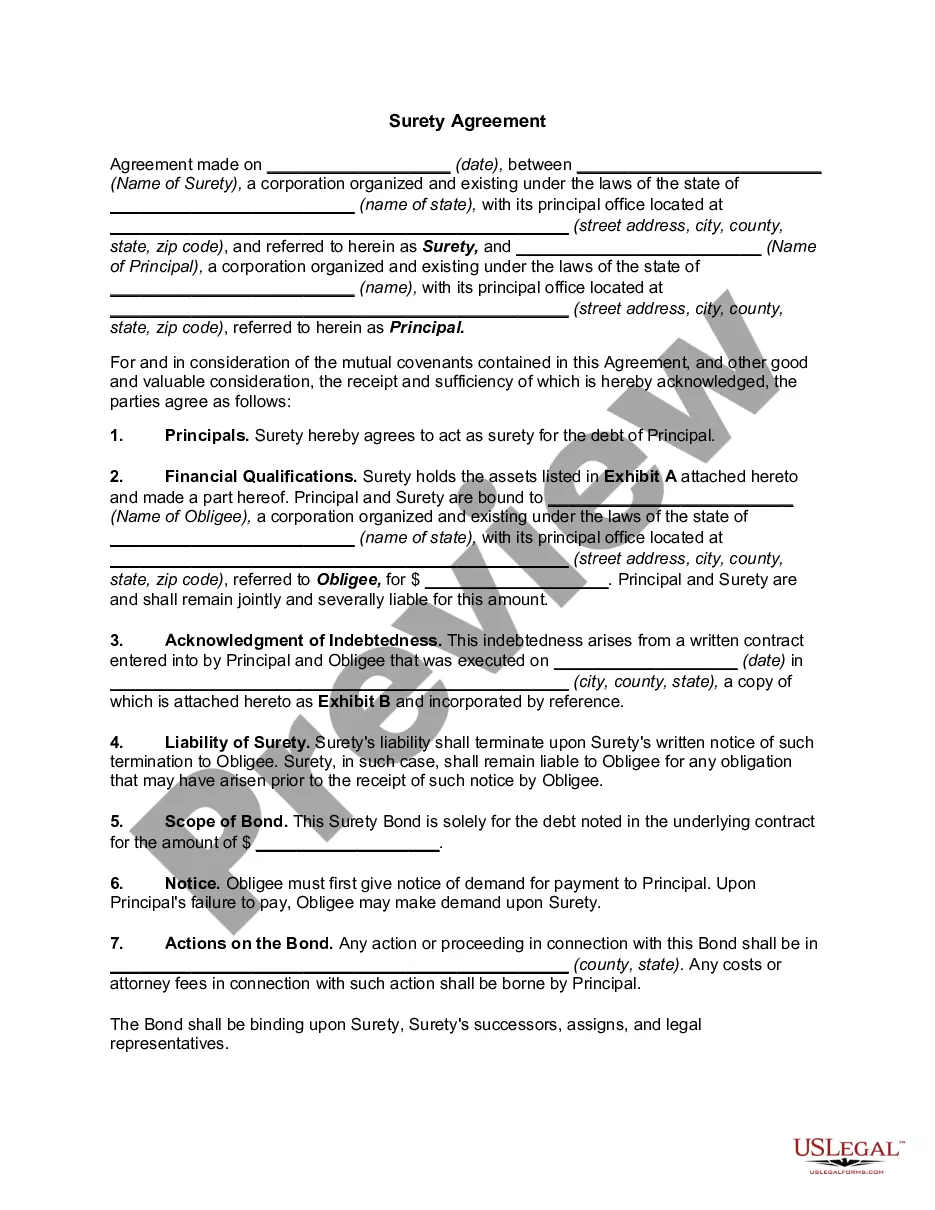
- Complete the required signatures and print the names of the individuals signing.
Is notarization required?
This form does not typically require notarization unless specified by local law. Proper signatures of all parties are essential for it to be legally binding, but notarization may not be necessary.
Get your form ready online
Our built-in tools help you complete, sign, share, and store your documents in one place.
Make edits, fill in missing information, and update formatting in US Legal Forms—just like you would in MS Word.
Download a copy, print it, send it by email, or mail it via USPS—whatever works best for your next step.
Sign and collect signatures with our SignNow integration. Send to multiple recipients, set reminders, and more. Go Premium to unlock E-Sign.
If this form requires notarization, complete it online through a secure video call—no need to meet a notary in person or wait for an appointment.
We protect your documents and personal data by following strict security and privacy standards.

Make edits, fill in missing information, and update formatting in US Legal Forms—just like you would in MS Word.

Download a copy, print it, send it by email, or mail it via USPS—whatever works best for your next step.

Sign and collect signatures with our SignNow integration. Send to multiple recipients, set reminders, and more. Go Premium to unlock E-Sign.

If this form requires notarization, complete it online through a secure video call—no need to meet a notary in person or wait for an appointment.

We protect your documents and personal data by following strict security and privacy standards.
Typical mistakes to avoid
- Failing to correctly identify the parties involved, leading to legal confusion.
- Neglecting to attach required exhibits, such as financial qualifications.
- Not specifying the exact obligations of the principal, which can create ambiguity.
- Overlooking state-specific legal requirements for surety agreements.
Why complete this form online
- Convenience of downloading and completing the form at your own pace.
- Editability allows for quick updates as parties or obligations change.
- Access to trusted, attorney-drafted templates ensures legal validity.
- Easy storage and retrieval of forms for future reference.
Looking for another form?


Form popularity
FAQ
This means, a $75,000 surety bond will cost a good credit applicant somewhere between $562 and $1,875. For a bad credit applicant the cost will be in the range between $1,875 and $7,500. Here is a breakdown of what your premiums are likely to be based on your credit score.
At its simplest, a surety bond requires the surety to pay a set amount of money to the obligee if a principal fails to perform a contractual obligation.The surety bond requires the principal to sign an indemnity agreement that pledges company and personal assets to reimburse the surety if a claim occurs.
On average, the cost for a surety bond falls somewhere between 1% and 15% of the bond amount. That means you may be charged between $100 and $1,500 to buy a $10,000 bond policy. Most premium amounts are based on your application and credit health, but there are some bond policies that are written freely.
Obligee a person or organization to whom another party (the "obligor") owes an obligation. In a bonding situation, this is the party that requires and receives the protection of the bond.
When it comes to surety bonds, you will not need to pay month-to-month. In fact, when you get a quote for a surety bond, the quote is a one-time payment quote. This means you will only need to pay it one time (not every month).Most bonds are quoted at a 1-year term, but some are quoted at a 2-year or 3-year term.
The principal is the party being required to obtain the surety bond by the obligee. When filling out a surety bond application, you are the principal. The obligee requires the principal to obtain a surety bond to ensure they uphold their end of the agreement.
Examples of these bonds include construction and environmental performance, payment, supply, maintenance, and warranty bonds. Commercial surety helps obtain capacity at the lowest cost for all corporate surety needs.International surety examines the unique surety requirements internationally.
The cost of your $50,000 surety bond depends mostly on your personal credit score. Applicants with good credit usually pay premiums between 0.75% and 2.5%, which means between $375 and $1,250 per year. Applicants with bad credit, on the other hand, pay premiums in the range of 2.5% to 10%, or between $1,250 and $5,000.
On average, the cost for a surety bond falls somewhere between 1% and 15% of the bond amount. That means you may be charged between $100 and $1,500 to buy a $10,000 bond policy. Most premium amounts are based on your application and credit health, but there are some bond policies that are written freely.