Bond to Secure against Defects in Construction
About this form
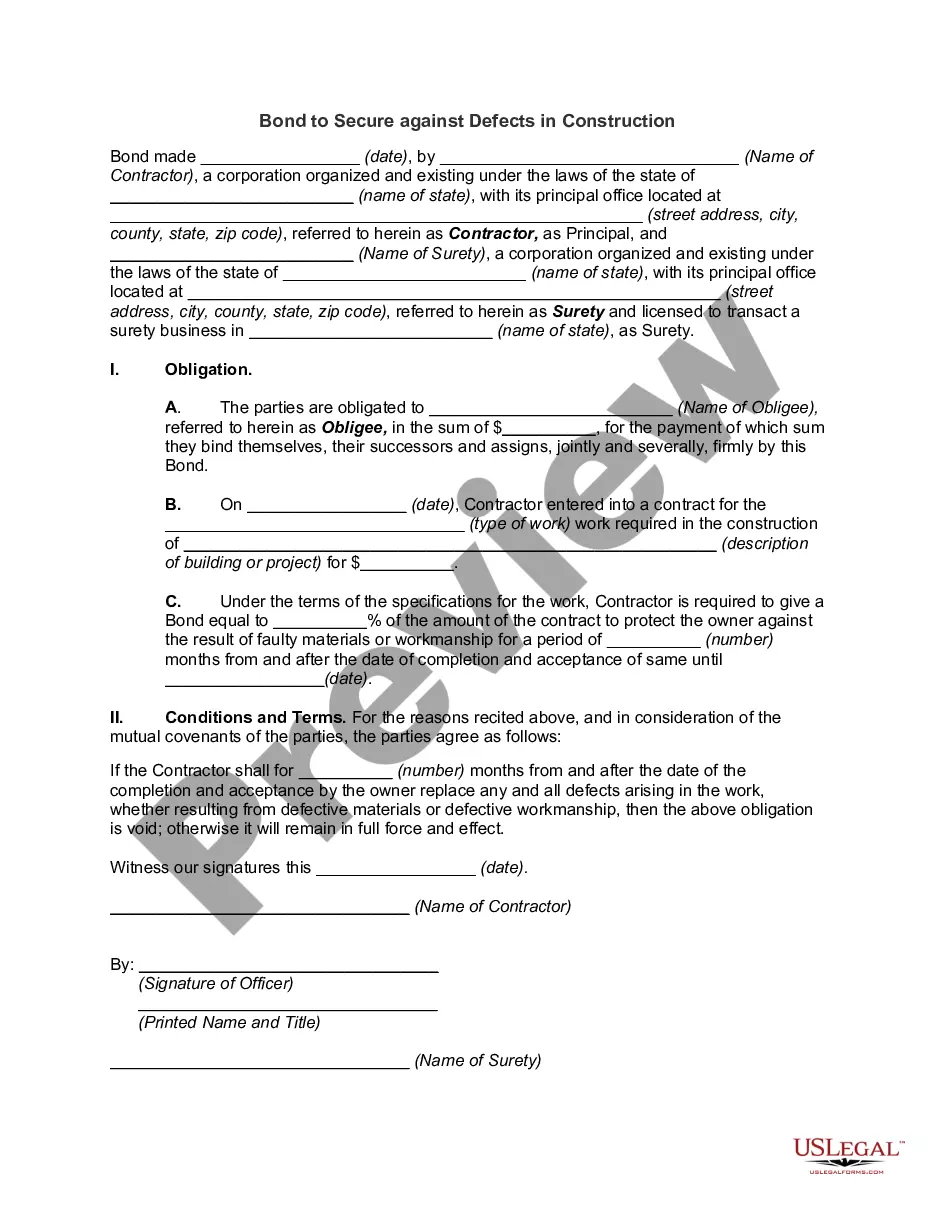
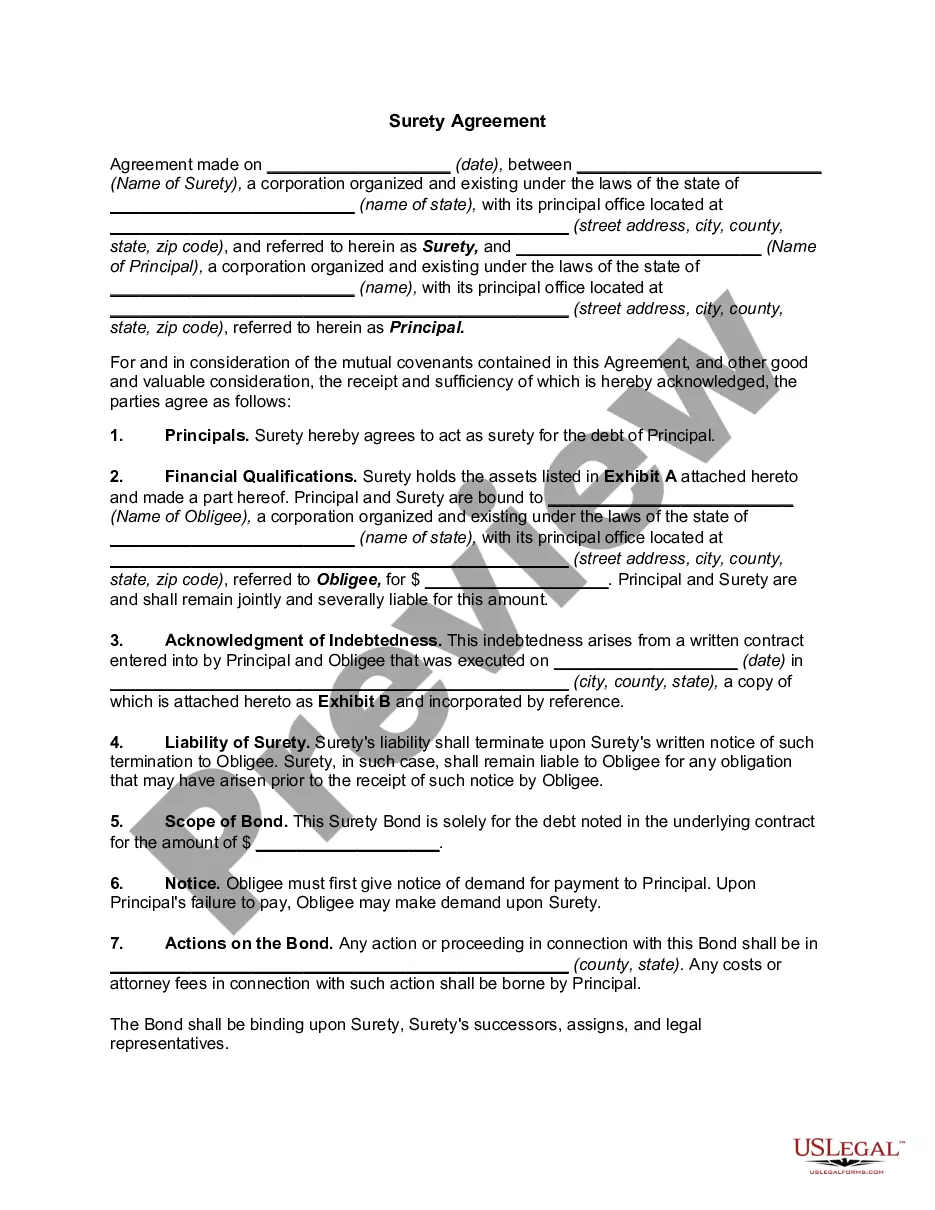
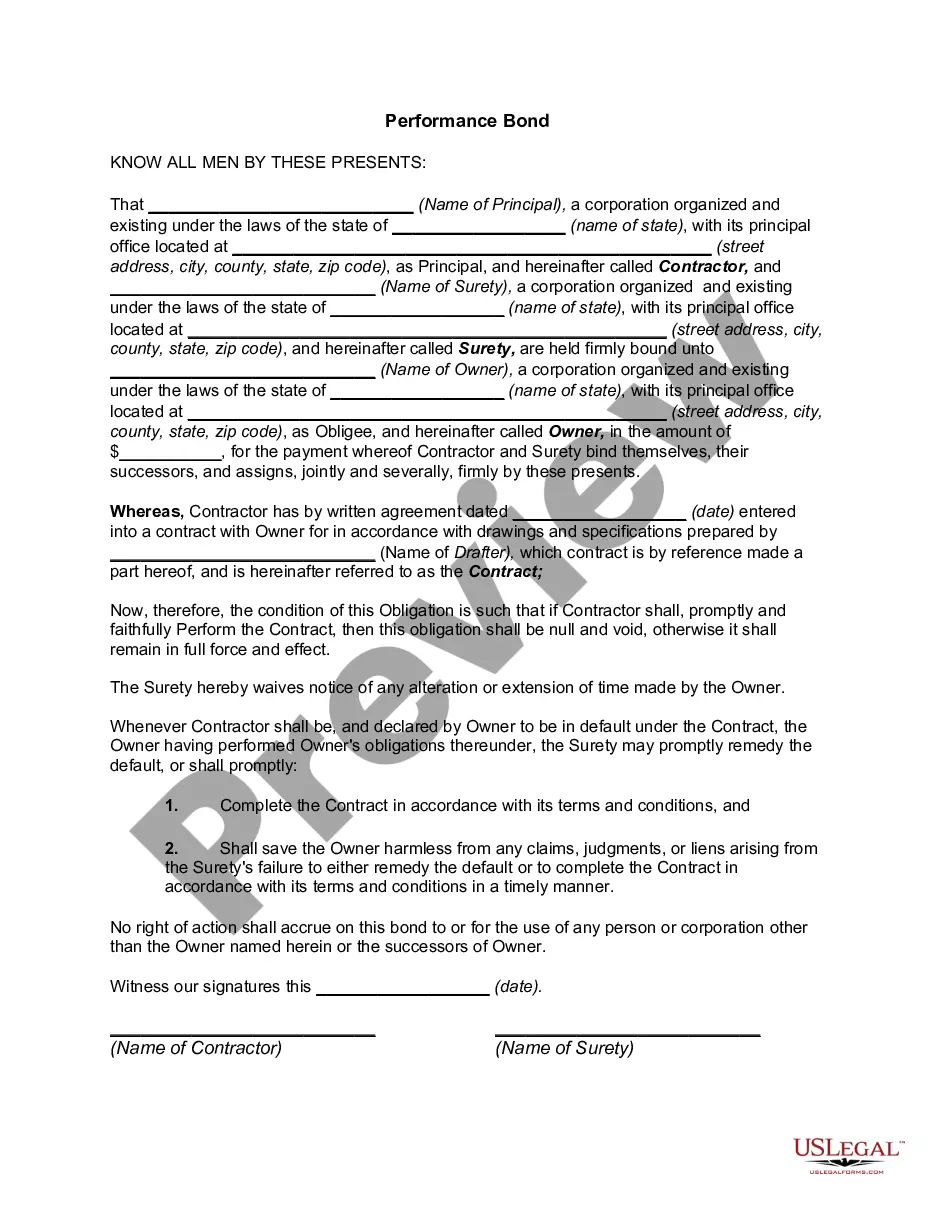
The Bond to Secure against Defects in Construction is a surety bond that ensures satisfactory completion of a construction project by a contractor. This document provides a guarantee to the project owner, protecting them from potential defects in workmanship or materials. Unlike other agreements, this bond specifically addresses issues related to construction defects and holds the contractor accountable for repairs within a specified timeframe.
Key components of this form
- The bond parties: identifies involved parties including the contractor, surety, and obligee.
- Obligation amount: states the financial amount guaranteeing the project.
- Contract details: outlines the type of work and project description.
- Bond requirements: specifies the percentage and time period for coverage against defects.
- Conditions for voiding the bond: details when the bond becomes void based on defect replacement.
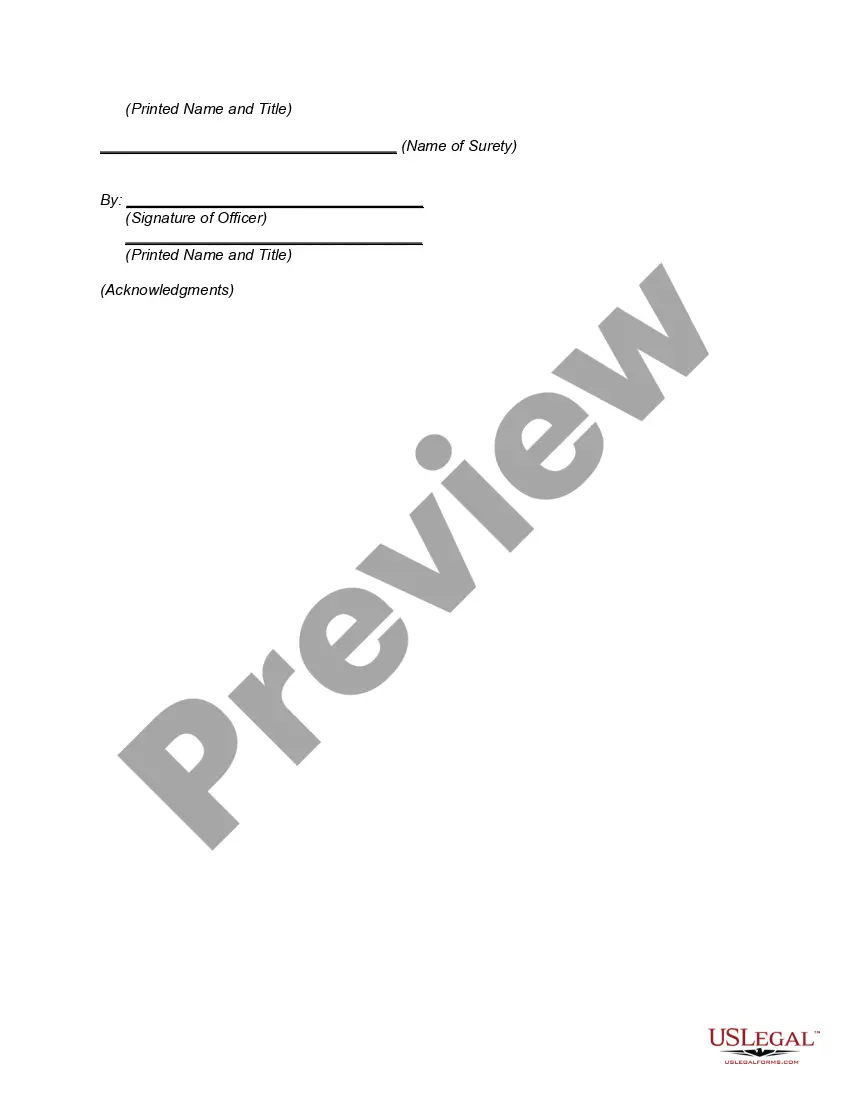
- Signatures and acknowledgments: includes required signatures from the contractor and surety.

Common use cases
This bond is essential when a contractor is hired for a construction project, ensuring that the owner is financially protected against poor workmanship or materials. It should be used when the contract specifically requires a bond to address potential defects after project completion, typically within a defined period.
Intended users of this form
- Contractors who are required to provide a performance bond for their projects.
- Project owners seeking protection against construction defects.
- Surety companies providing the bond as a guarantee for the contractor's obligations.
Steps to complete this form
- Identify and enter the date of the bond.
- Provide the contractor's name, state of incorporation, and principal office address.
- Specify the surety's name, state of incorporation, and office address.
- Fill in the name of the obligee and the total obligation amount.
- Detail the contract date, type of work, and project description along with the monetary amount for the contract.
- Enter the percentage for the bond and the months for which defects will be covered.
- Gather signatures from the contractor and surety representatives, noting their printed names and titles.
Notarization guidance
This form does not typically require notarization unless specified by local law. However, it is often best practice to have it notarized to strengthen its legal validity.
Get your form ready online
Our built-in tools help you complete, sign, share, and store your documents in one place.
Make edits, fill in missing information, and update formatting in US Legal Forms—just like you would in MS Word.
Download a copy, print it, send it by email, or mail it via USPS—whatever works best for your next step.
Sign and collect signatures with our SignNow integration. Send to multiple recipients, set reminders, and more. Go Premium to unlock E-Sign.
If this form requires notarization, complete it online through a secure video call—no need to meet a notary in person or wait for an appointment.
We protect your documents and personal data by following strict security and privacy standards.

Make edits, fill in missing information, and update formatting in US Legal Forms—just like you would in MS Word.

Download a copy, print it, send it by email, or mail it via USPS—whatever works best for your next step.

Sign and collect signatures with our SignNow integration. Send to multiple recipients, set reminders, and more. Go Premium to unlock E-Sign.

If this form requires notarization, complete it online through a secure video call—no need to meet a notary in person or wait for an appointment.

We protect your documents and personal data by following strict security and privacy standards.
Mistakes to watch out for
- Not including all required party names and signatures.
- Failing to specify the correct obligation amount.
- Missing the contract details, which can lead to confusion about the project.
- Not adhering to state-specific requirements when applicable.
Benefits of using this form online
- Convenience of downloading the form from anywhere at any time.
- Editability allows for quick customization to meet specific project needs.
- Access to guidance from licensed attorneys ensures reliability and legal accuracy.
Looking for another form?
Form popularity
FAQ
The Security Bond Definition is a surety bond that is secured by some sort of collateral. In many surety bond cases, there is not any collateral required. Thus, the surety will simply issue the bond, like a performance bond or payment bond, based on the financial standing of the underlying entity being bonded.
This is one way a surety bond differs from an insurance policy. While an insurance company does not expect to be paid back for a claim, a surety company does.You are also responsible for paying back the surety company every penny they pay out on a claim, including all costs associated with the claim.
Three items that affect bonding capacity are the net quick assets a contractor has, the experience of the contracting firm, and the performance history of the contracting firm.
The Defect bond is to provide the City Protection against any defects in workmanship, design and construction. There are two (2) types of Defect Bonds: Utility. Street & Drainage.
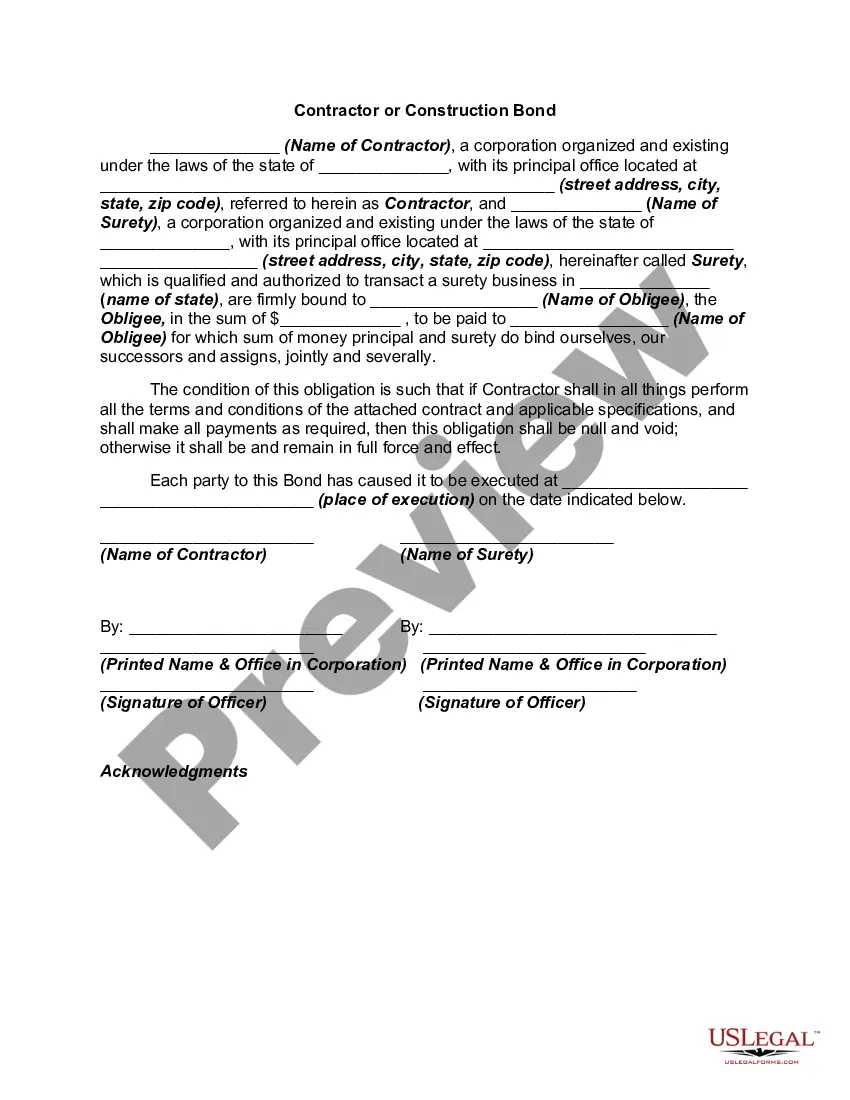
A construction bond is a type of surety bond used by investors in construction projects. The bond protects against disruptions or financial loss due to a contractor's failure to complete a project or failure to meet project specifications.The three main types of construction bonds are bid, performance, and payment.
A surety bond is a promise to be liable for the debt, default, or failure of another. It is a three-party contract by which one party (the surety) guarantees the performance or obligations of a second party (the principal) to a third party (the obligee).
When it comes to surety bonds, you will not need to pay month-to-month. In fact, when you get a quote for a surety bond, the quote is a one-time payment quote. This means you will only need to pay it one time (not every month).Most bonds are quoted at a 1-year term, but some are quoted at a 2-year or 3-year term.
A surety bond protects the obligee (the party to whom the bond is paid to in the event of a default) against losses, up to the limit of the bond, that result from the principal's (the party with the guaranteed obligation) failure to perform its obligation.
On average, the cost for a surety bond falls somewhere between 1% and 15% of the bond amount. That means you may be charged between $100 and $1,500 to buy a $10,000 bond policy. Most premium amounts are based on your application and credit health, but there are some bond policies that are written freely.