Illinois Essential Legal Life Documents for Baby Boomers
What is this form package?
The Illinois Essential Legal Life Documents for Baby Boomers package provides vital legal documents tailored for individuals entering a later stage of life. This package aims to address common legal issues faced by Baby Boomers, ensuring that their wellness and financial planning needs are met. Compared to other packages, this one includes state-specific forms to help you prepare for future healthcare decisions, financial management, and end-of-life planning with clarity and confidence.
What’s included in this form package
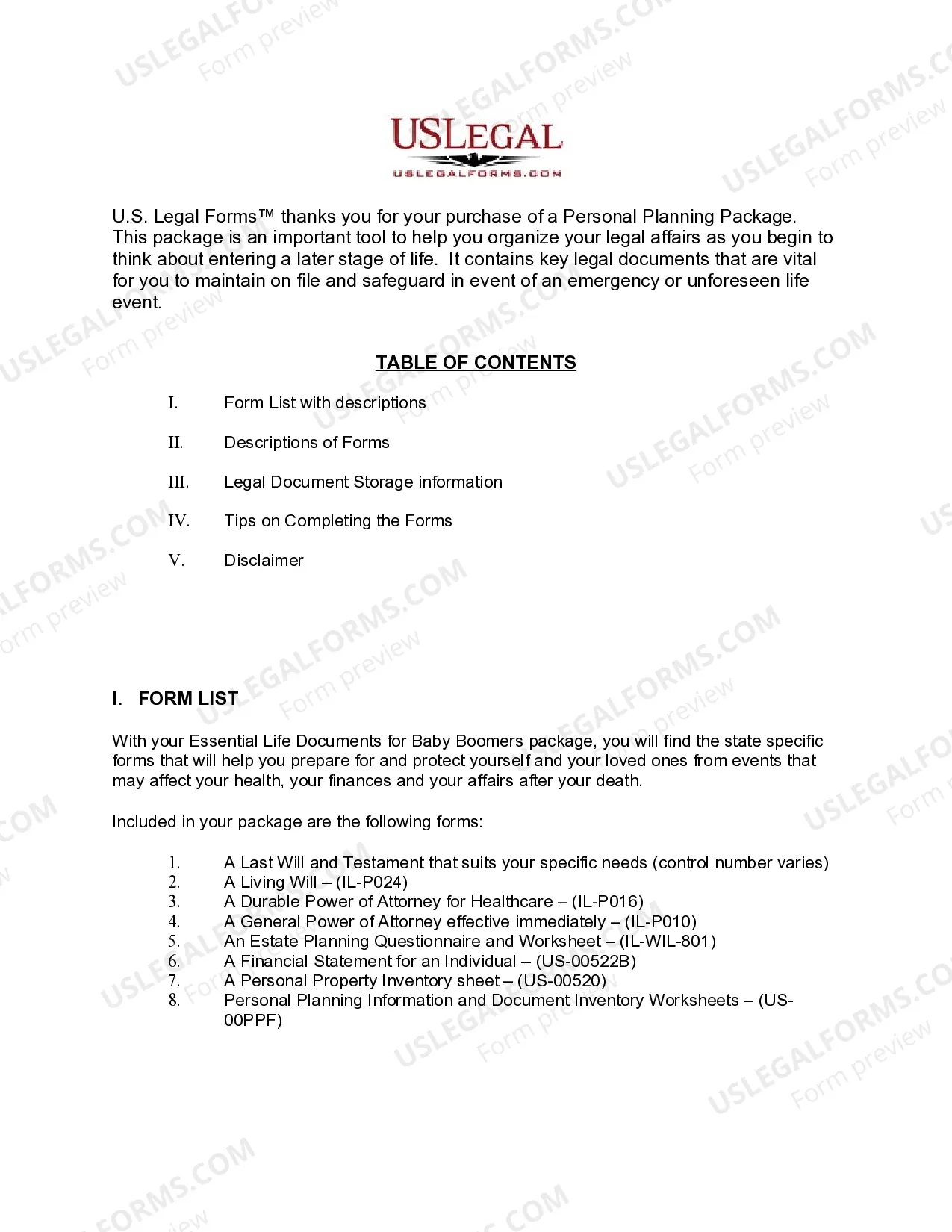
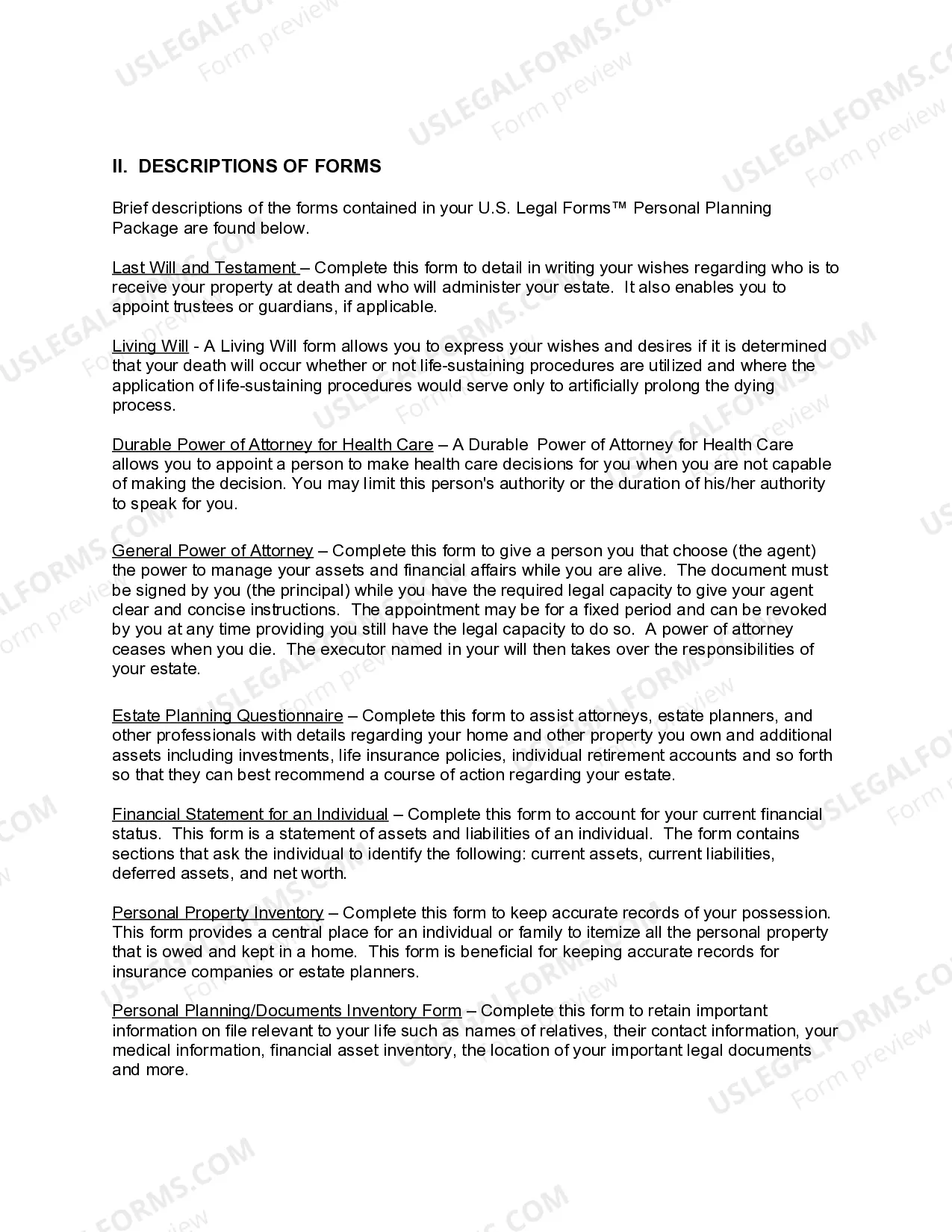
- Statutory General Power of Attorney with Durable Provisions - Short Form Power of Attorney for Property
- Statutory Durable Power of Attorney for Health Care
- Statutory Equivalent of Living Will or Declaration
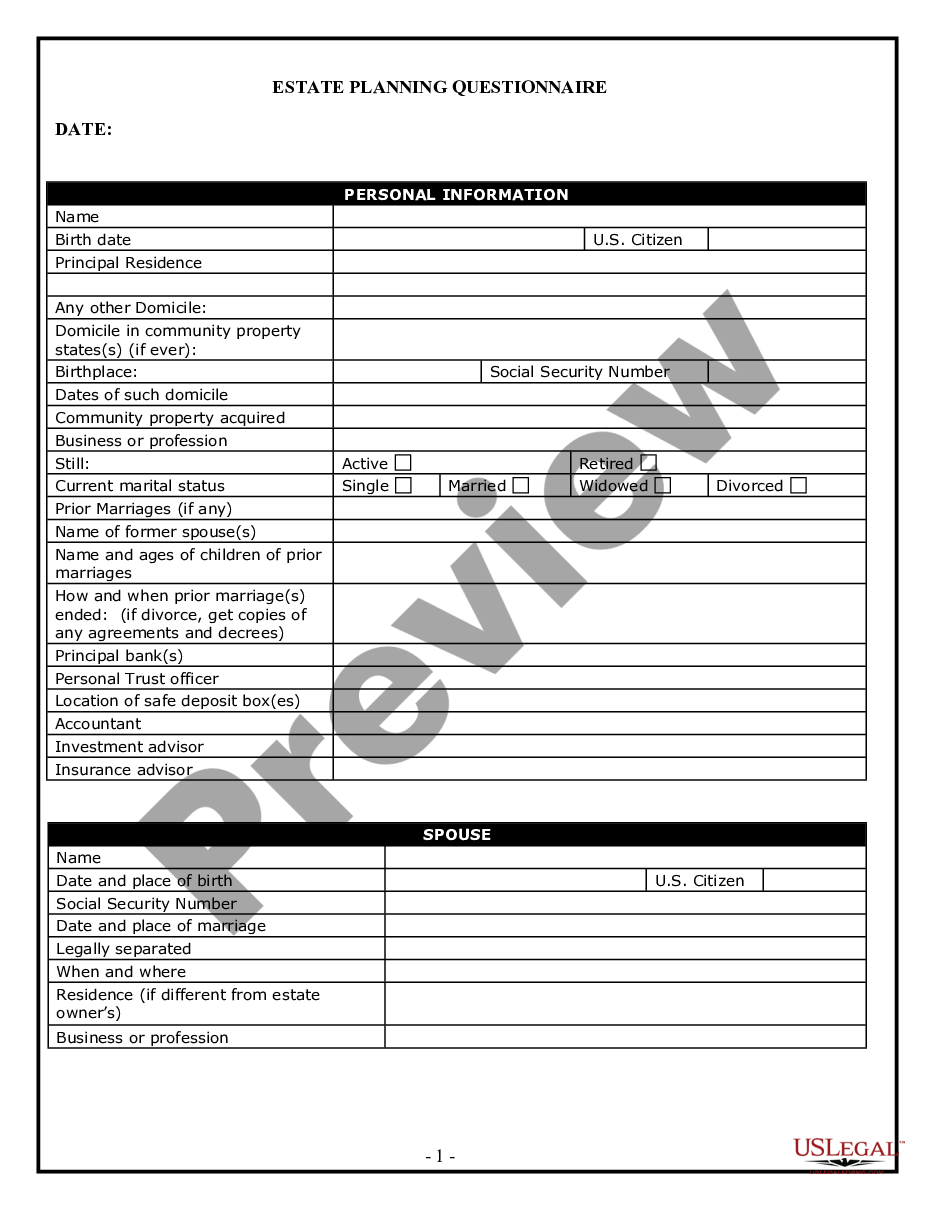
- Estate Planning Questionnaire and Worksheets
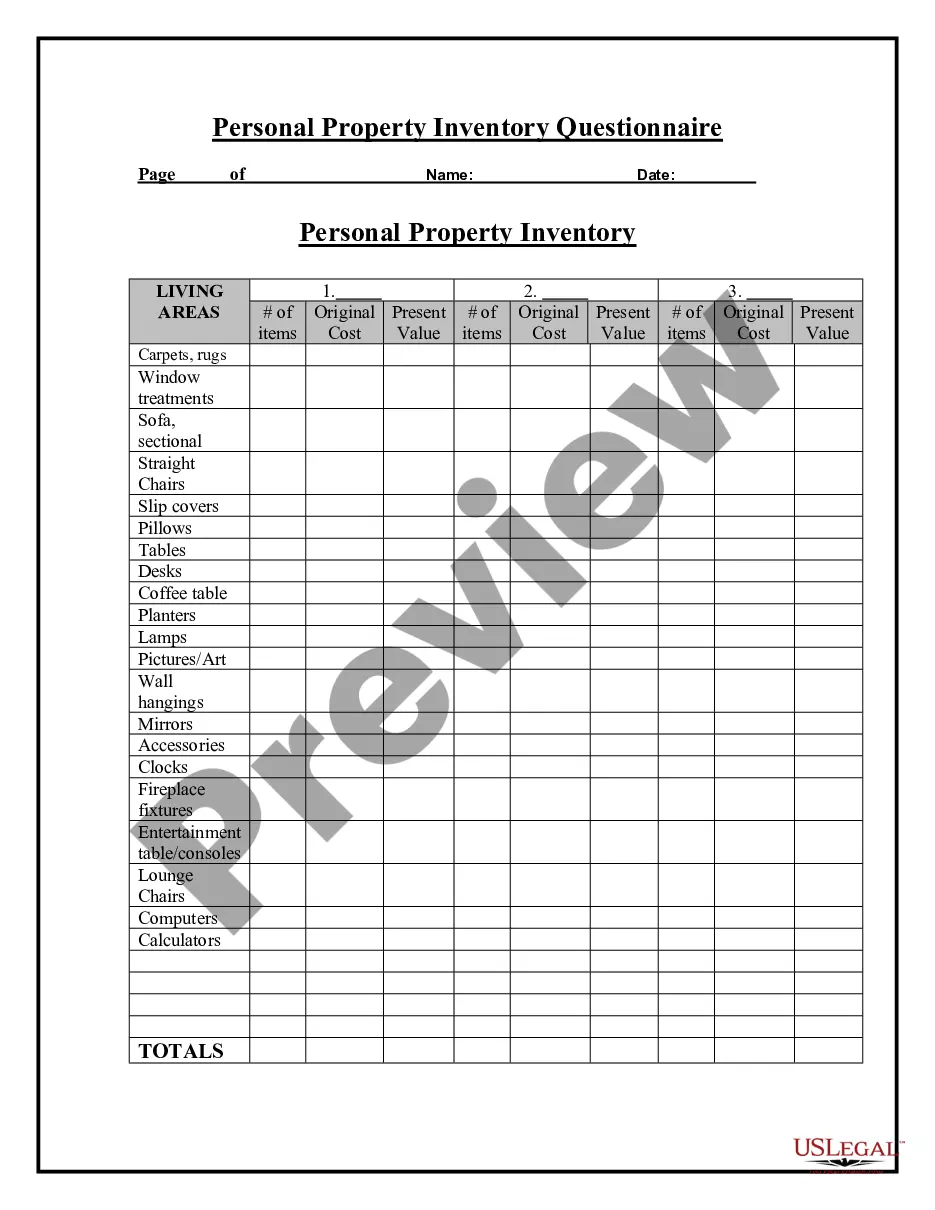
- Personal Property Inventory
- Financial Statement Form - Individual
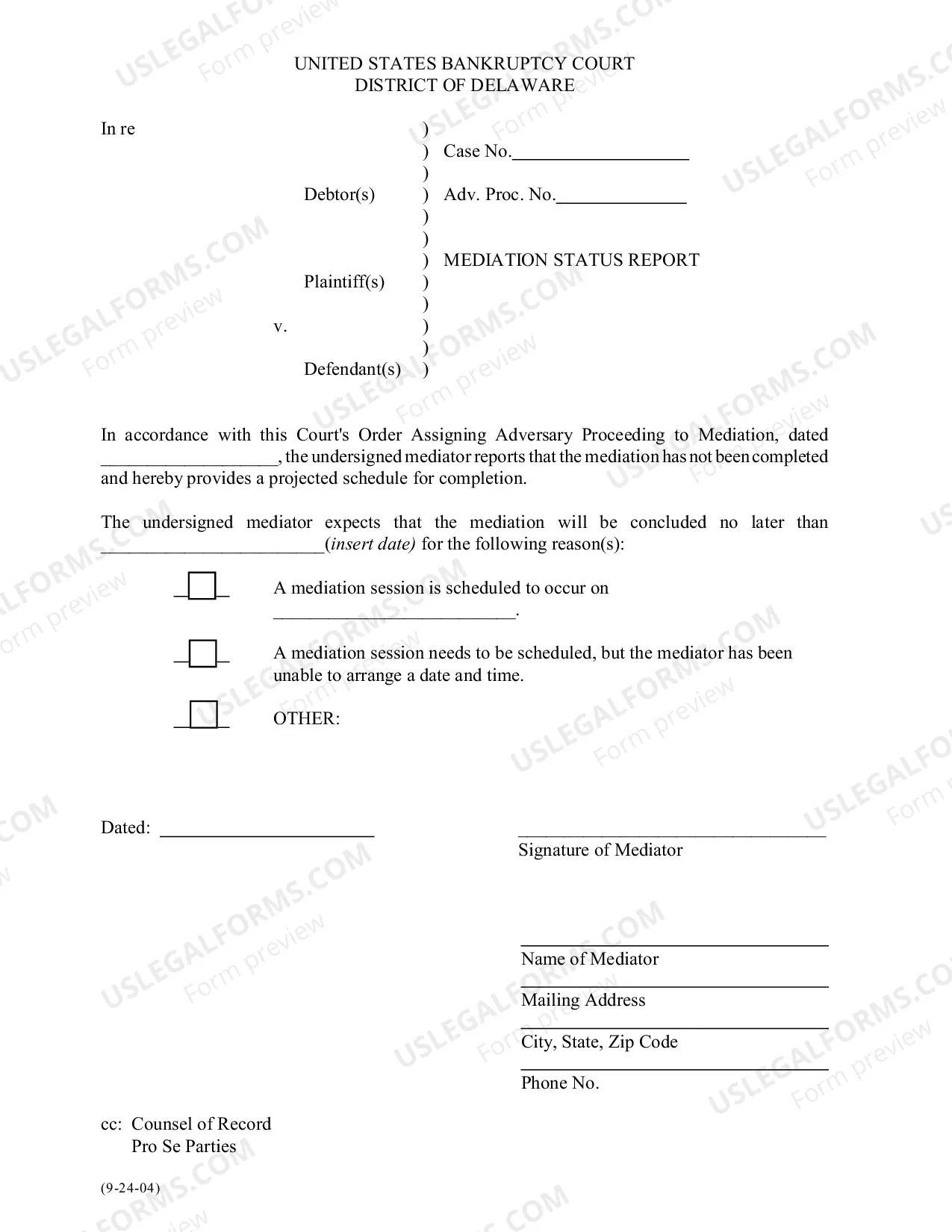
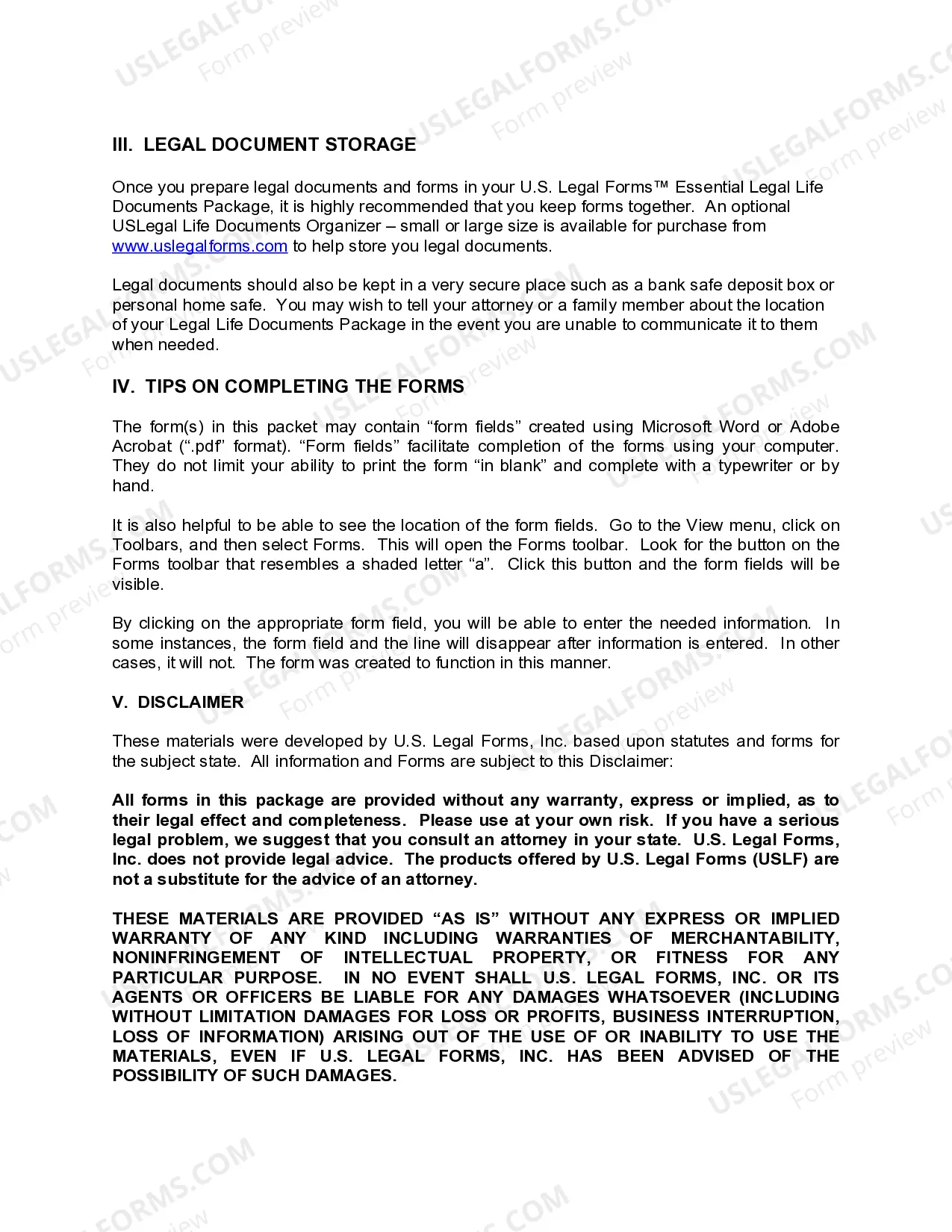
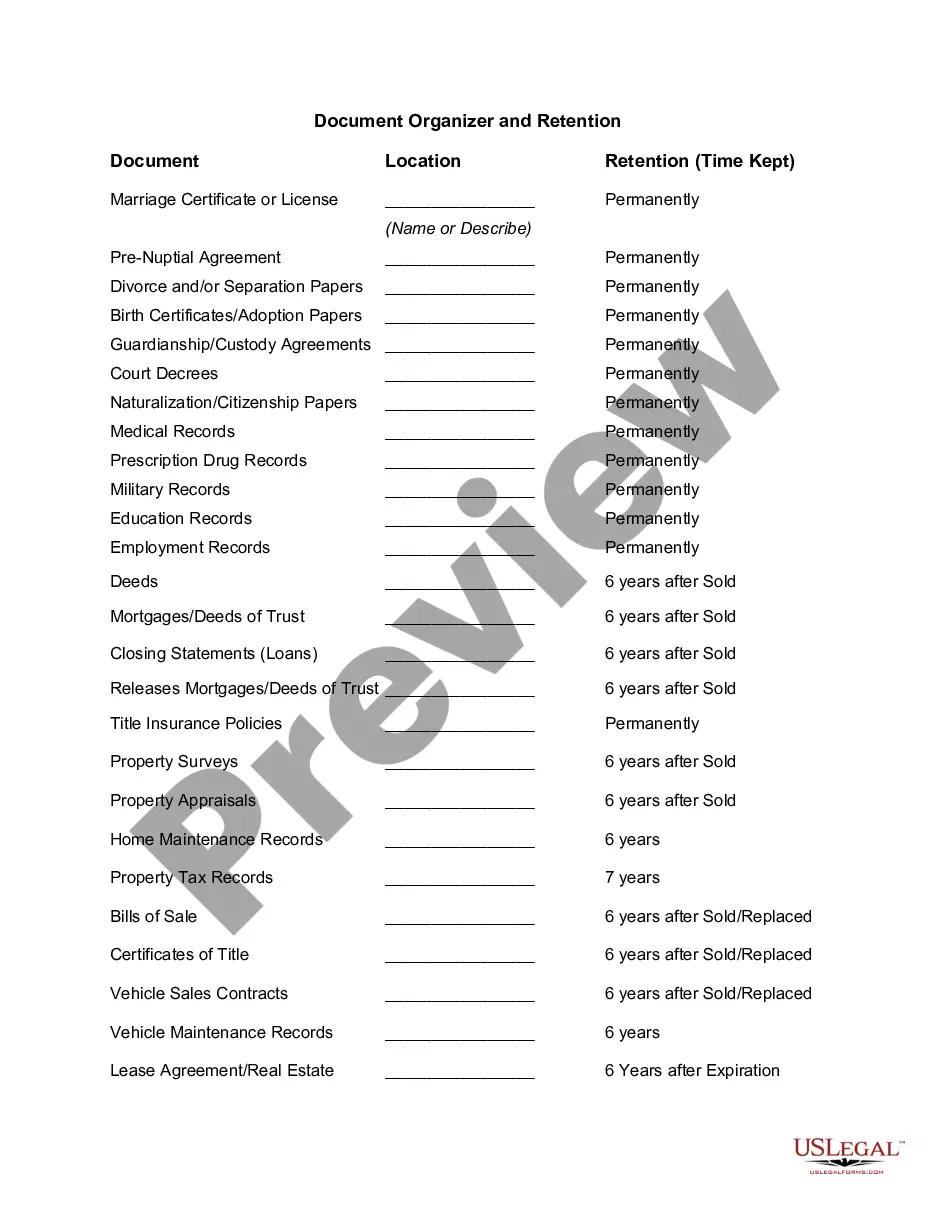
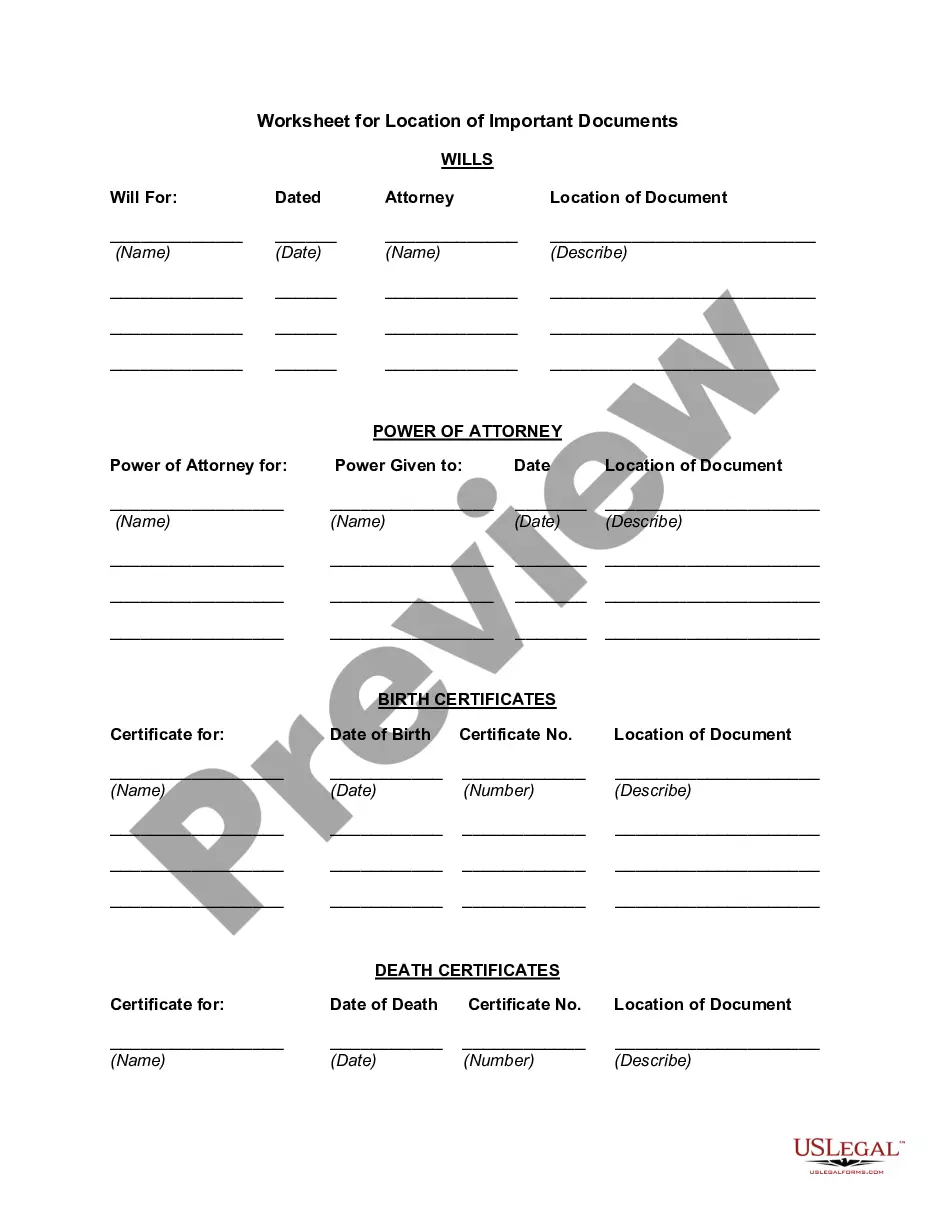
- Personal Planning Information and Document Inventory Worksheets - A Legal Life Document


Common use cases
This form package is useful when you need to:
- Create a will to outline your end-of-life wishes.
- Establish a living will that specifies your healthcare preferences in case of incapacitation.
- Appoint a trusted individual to make healthcare decisions on your behalf.
- Grant someone the authority to manage your finances while you are still alive.
- Organize your personal and financial information for planning purposes.
Intended users of this form package
- Baby Boomers looking to establish essential legal documents.
- Individuals planning for future healthcare and financial decisions.
- Those seeking to organize their estate to ease the burden on their loved ones.
- Anyone wishing to ensure their end-of-life wishes are respected.
Steps to complete these forms
- Review the included forms carefully to understand their purpose.
- Identify the parties involved and gather necessary information.
- Enter required details into the provided fields for each form.
- Ensure all documents are signed and dated as per legal requirements.
- Store completed forms in a secure location, such as a safe deposit box.
Notarization details for included forms
Some forms in this package require notarization to be legally valid. US Legal Forms provides secure online notarization powered by Notarize, allowing you to complete the process through a verified video call, available 24/7.
Get your form ready online
Our built-in tools help you complete, sign, share, and store your documents in one place.
Make edits, fill in missing information, and update formatting in US Legal Forms—just like you would in MS Word.
Download a copy, print it, send it by email, or mail it via USPS—whatever works best for your next step.
Sign and collect signatures with our SignNow integration. Send to multiple recipients, set reminders, and more. Go Premium to unlock E-Sign.
If this form requires notarization, complete it online through a secure video call—no need to meet a notary in person or wait for an appointment.
We protect your documents and personal data by following strict security and privacy standards.

Make edits, fill in missing information, and update formatting in US Legal Forms—just like you would in MS Word.

Download a copy, print it, send it by email, or mail it via USPS—whatever works best for your next step.

Sign and collect signatures with our SignNow integration. Send to multiple recipients, set reminders, and more. Go Premium to unlock E-Sign.

If this form requires notarization, complete it online through a secure video call—no need to meet a notary in person or wait for an appointment.

We protect your documents and personal data by following strict security and privacy standards.
Avoid these common issues
- Failing to sign and date the documents, rendering them invalid.
- Not keeping a copy of the documents in a secure yet accessible location.
- Neglecting to update documents after major life events, such as marriage or divorce.
- Choosing not to store health care documents where trusted individuals can access them when needed.
Advantages of online completion
- Easy access to downloadable forms that can be completed and printed from home.
- Edit and customize forms to suit your individual needs quickly and efficiently.
- Reliable resources prepared by licensed attorneys, ensuring legal adequacy.
- Cost-effective, with savings of up to 40% compared to purchasing forms individually.
Main things to remember
- This package offers state-specific legal documents for Baby Boomers in Illinois.
- Real-world scenarios include estate planning and healthcare decision-making.
- Aimed at individuals seeking clarity and control over their legal affairs.
- Completing the forms is straightforward and can typically be done online.
Looking for another form?
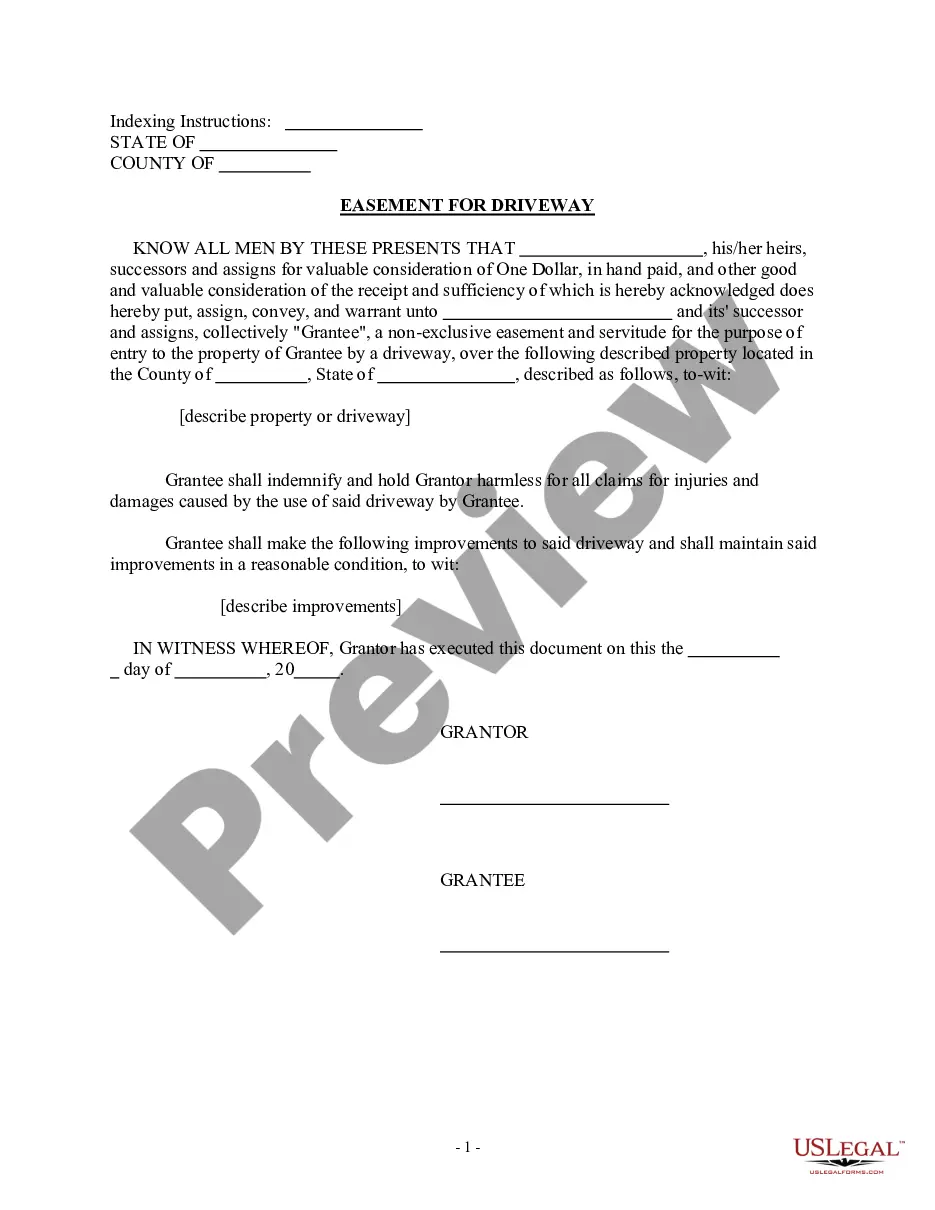




Form popularity
FAQ
But do you really need a trust? Illinois does not use the Uniform Probate Code, which simplifies the probate process, so it may be a good idea for you to make a living trust to avoid Illinois's complex probate process. Illinois has a simplified probate process for small estates (under $100,000, excluding real estate).
Many states allow you to make your will "self-proving," which allows the probate court to accept the will without contacting your witnesses. However, Illinois allows your will to be self-proved without a self-proving affidavit, as long as you sign and witness it correctly.
Figure out which type of trust you need. Single people only have the option of a single trust. Take stock of your property. Pick a trustee. Create a trust document. Sign the trust document in the presence of a notary. Lastly, you'll need to fund your trust by moving your property into it.
Generally speaking, beneficiaries have a right to see trust documents which set out the terms of the trusts, the identity of the trustees and the assets within the trust as well as the trust deed, any deeds of appointment/retirement and trust accounts.
A trust is a legal entity that you transfer ownership of your assets to, perhaps in order to decrease the value of your estate or to simplify passing on assets to your intended beneficiaries after you die. An estate planning attorney may charge at least $1,000 to create a trust for you.
It's very common for a lawyer to charge a flat fee to write a will and other basic estate planning documents. The low end for a simple lawyer-drafted will is around $300. A price of closer to $1,000 is more common, and it's not unusual to find a $1,200 price tag. Lawyers like flat fees for several reasons.
Does a Beneficiary Have the Right to See the Trust? The California Probate Law section 16061.7 provides for the beneficiaries right to see the trust. Trustees should furnish beneficiaries and heirs with copies of the trust document.
Of the trust's existence, the beneficiary's right to request a copy of the trust agreement and right to an account (within 90 days of the trust becoming irrevocable or a change in trusteeship) when a trust becomes irrevocable (within 90 days of the event) appointment of a new trustee (within 90 days of acceptance)
Basic revocable living Trusts may be included in a flat-fee estate planning package costing between $2,500 and $6,000. Revocable living Trusts help you bypass the costly and public probate process and can evolve into testamentary Trusts that allow you to control your assets long after you have departed this world.