Construction Contract for Subcontractor
About this form
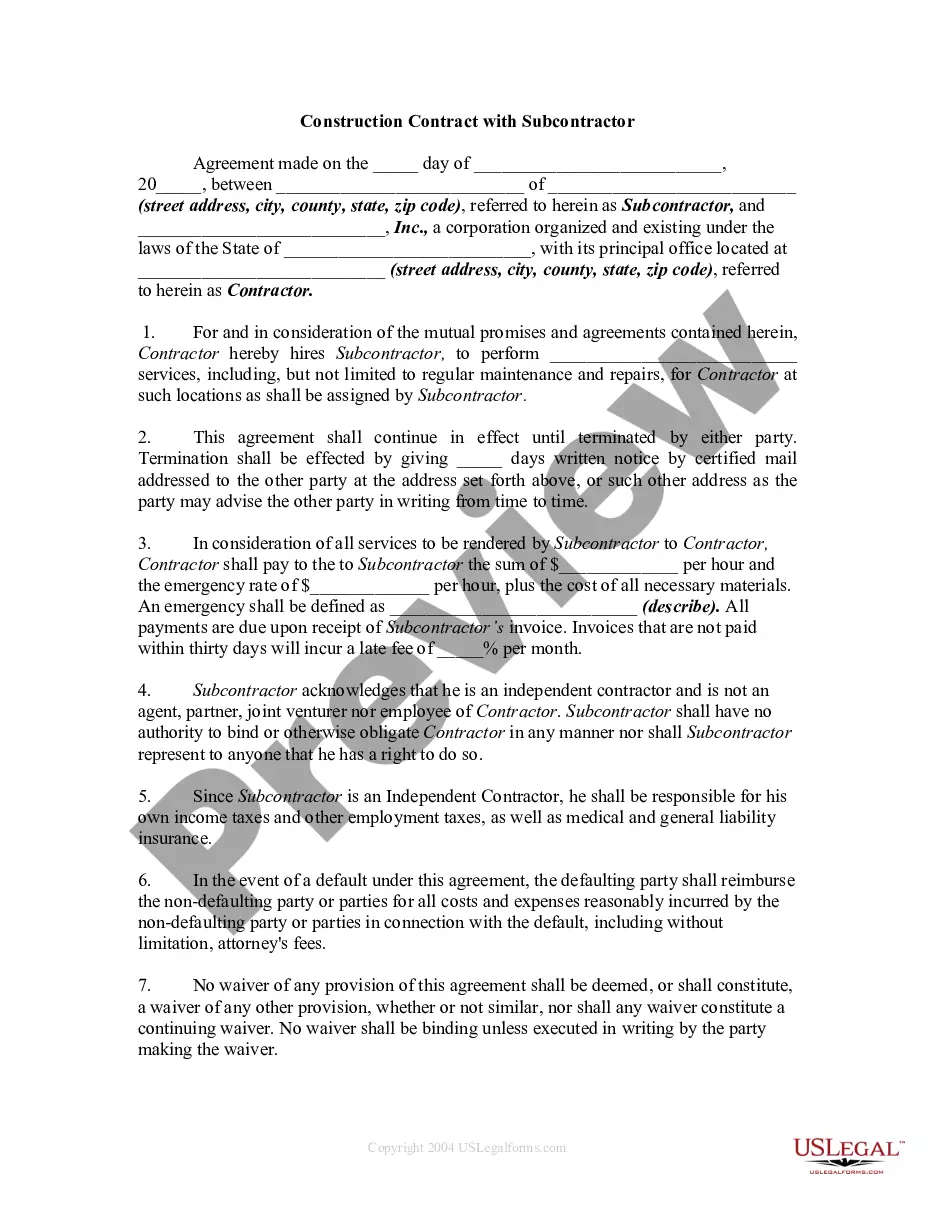
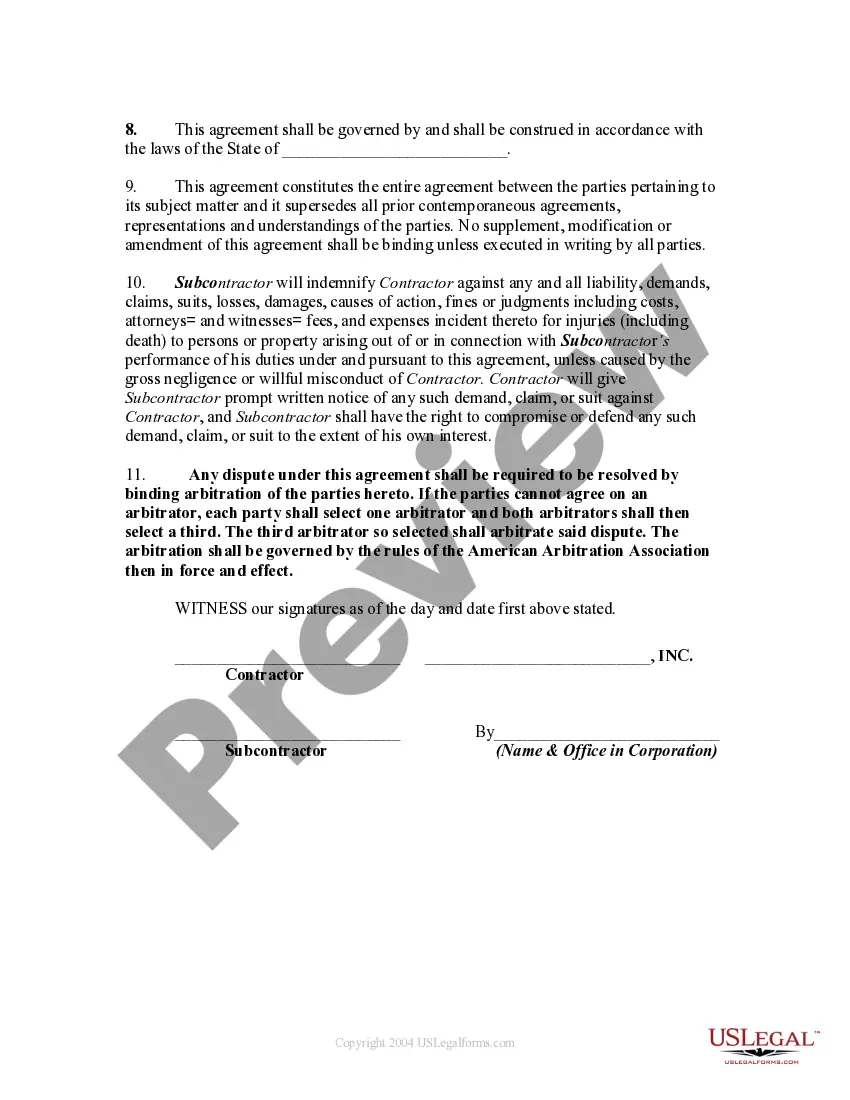
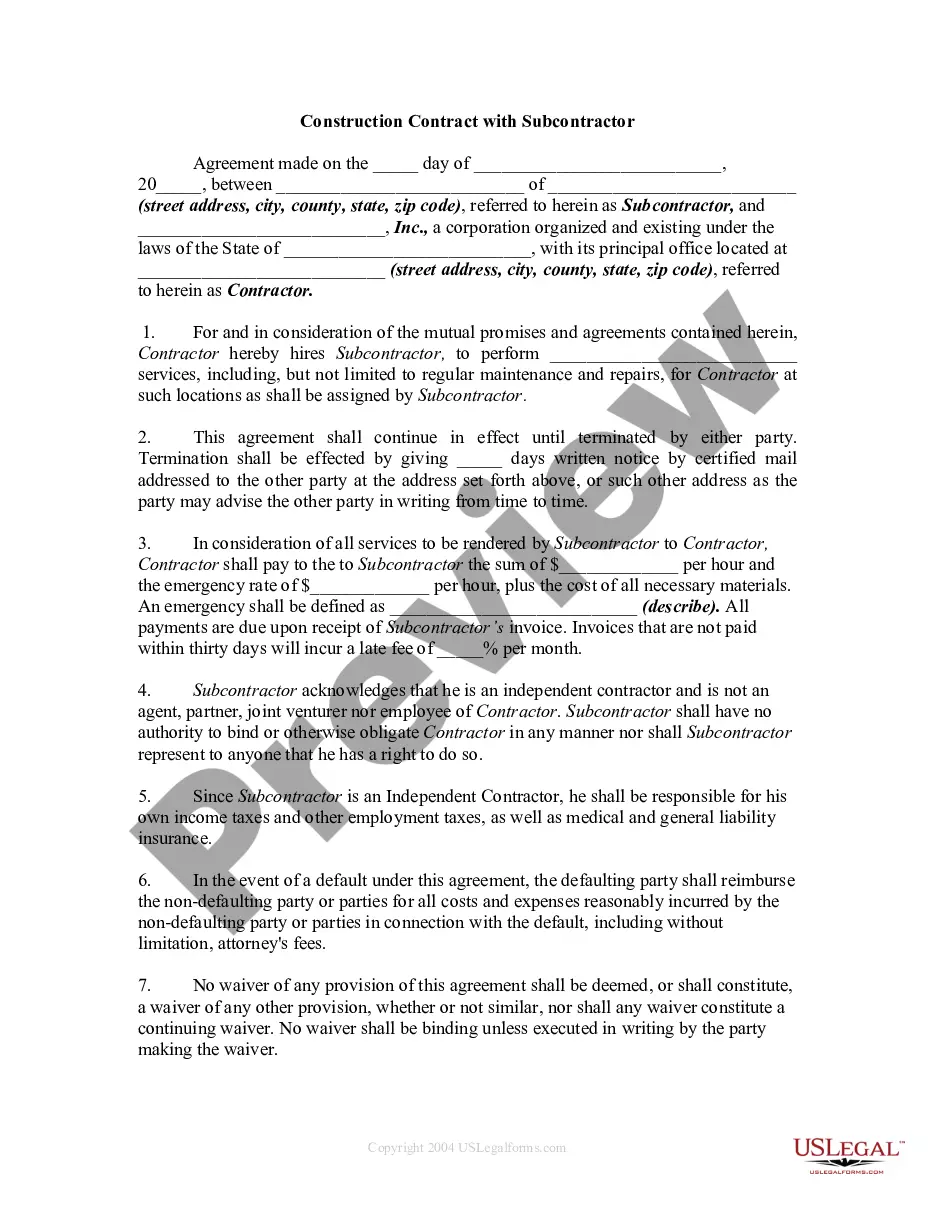
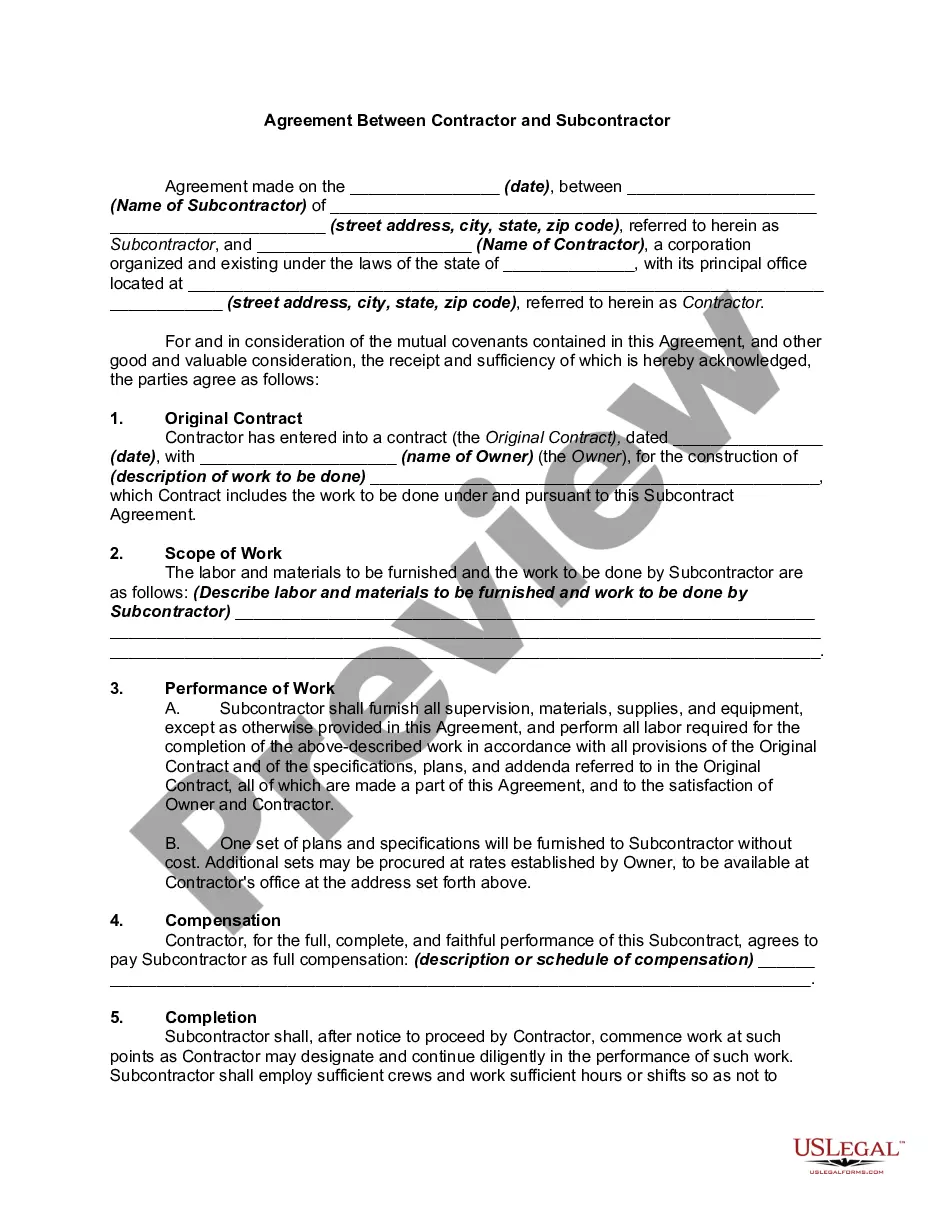
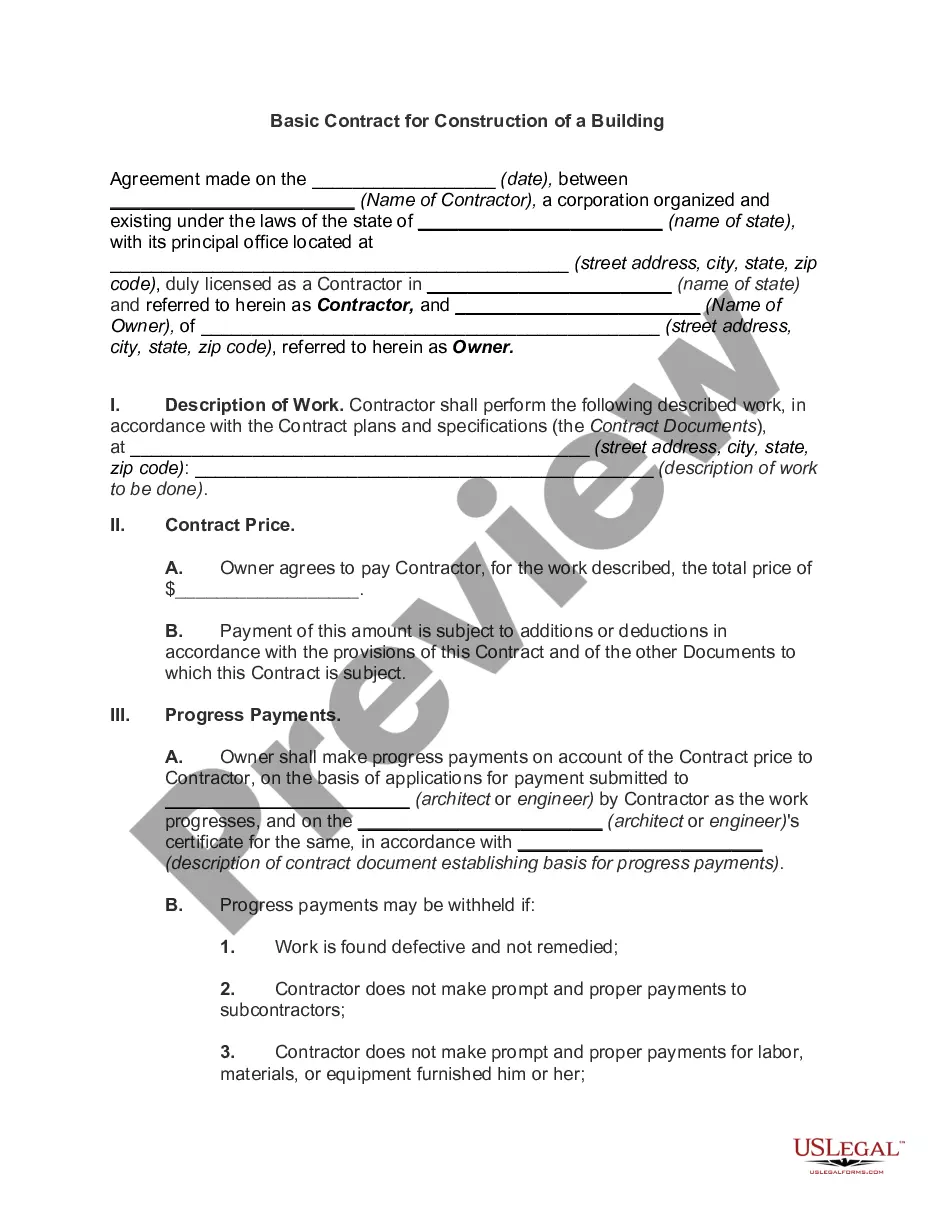
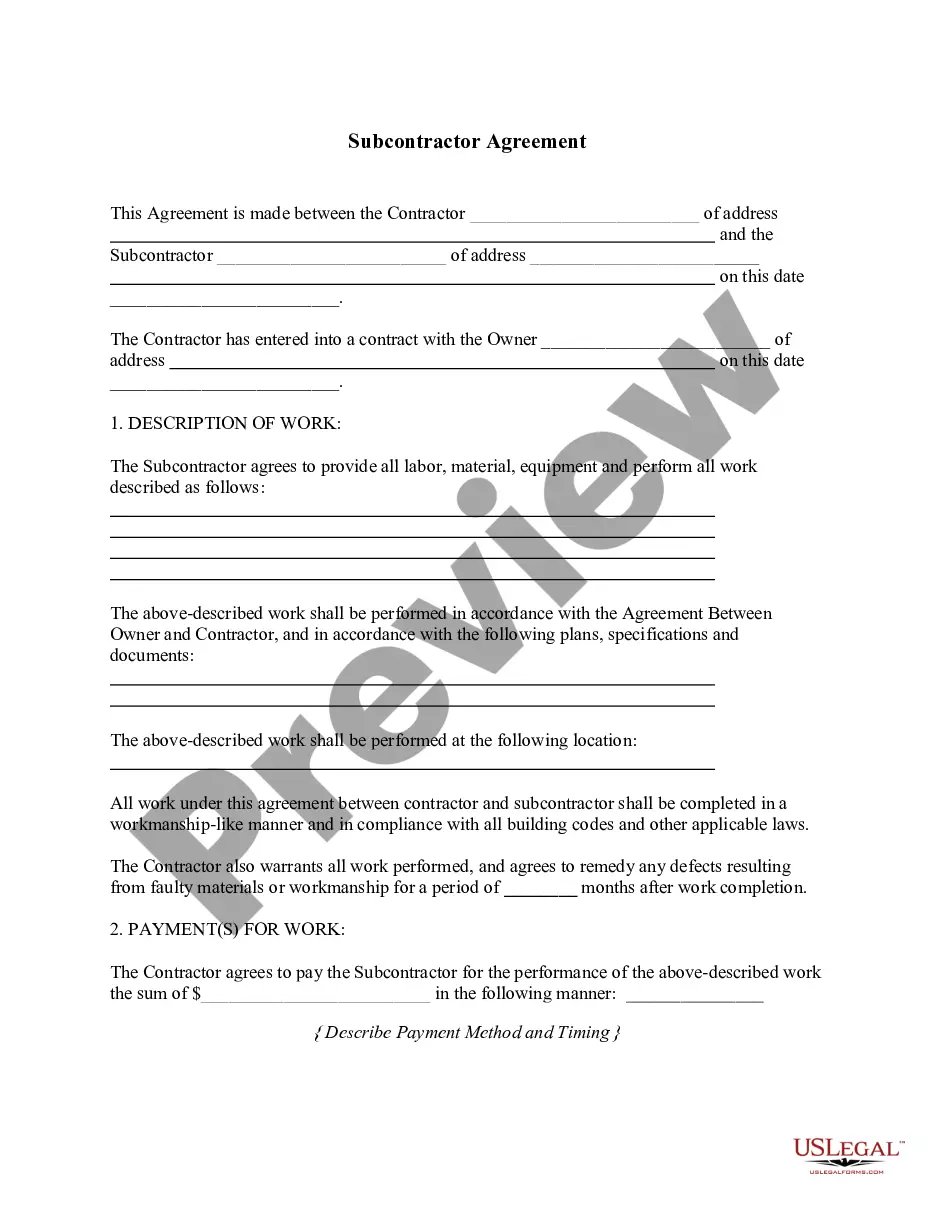
The Construction Contract for Subcontractor is a legal agreement between a contractor and a subcontractor for specific construction and maintenance services. This form details the responsibilities, payment terms, and legal relationship between the parties. Unlike employment agreements, this contract establishes the subcontractor as an independent entity, ensuring clear boundaries in the working relationship.
Key components of this form
- Identification of parties: Names and addresses of the subcontractor and contractor.
- Scope of work: Description of services to be performed by the subcontractor.
- Payment details: Specifies hourly rates and payment terms, including fees for late payments.
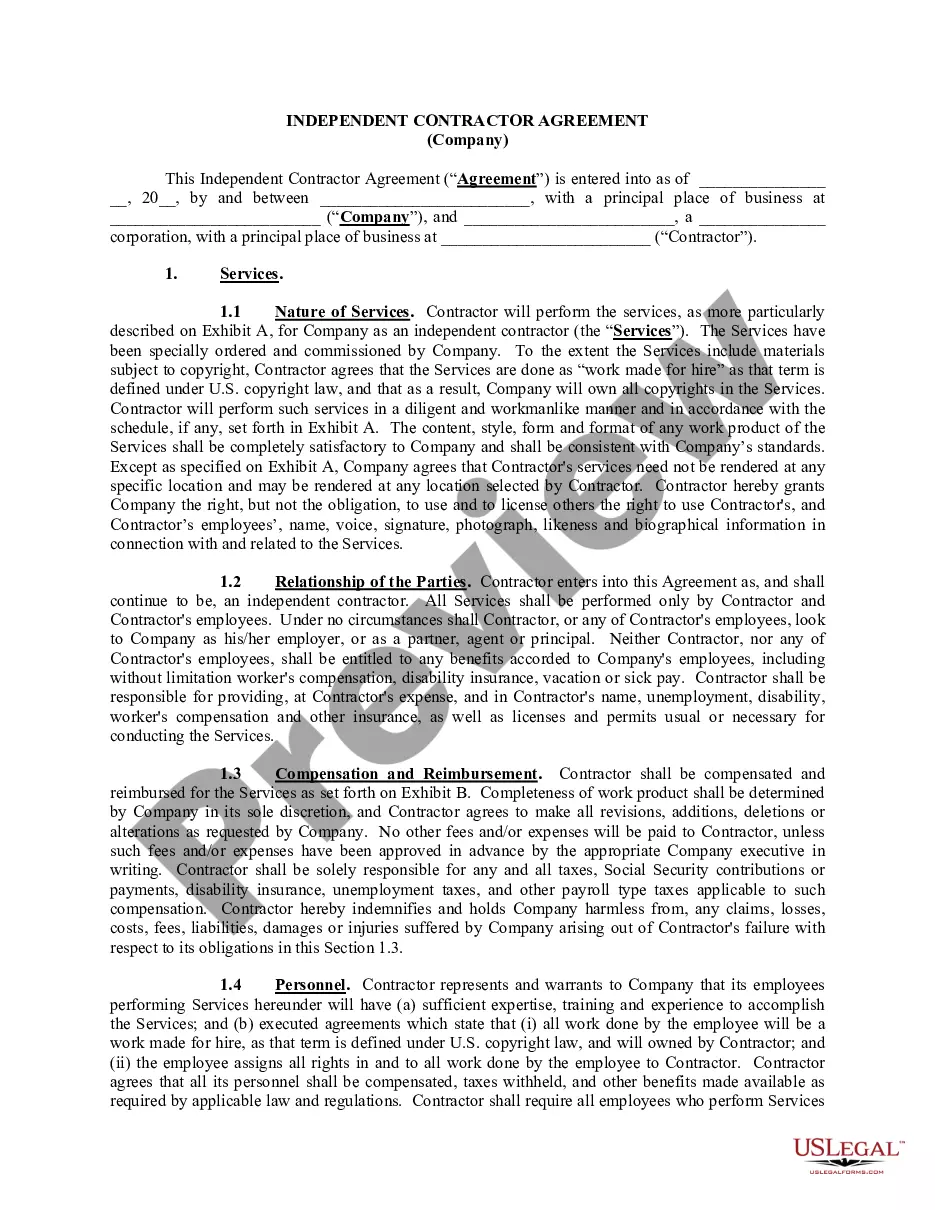
- Independent contractor status: Clarifies the subcontractor's legal status as independent, not an employee.
- Termination clause: Outlines the procedure for ending the contract.
- Indemnification and liability: Addresses responsibilities for claims and damages.
- Dispute resolution: Requires binding arbitration for resolving conflicts.
When this form is needed
This form is essential when a contractor needs to hire a subcontractor for specific tasks within a construction project. Use this contract when entering into an agreement to ensure clear expectations regarding services, payment, and legal obligations. It is particularly useful for projects requiring specialized skills or when managing multiple subcontractors to streamline operations.
Intended users of this form
This contract is suitable for:
- Contractors looking to hire subcontractors for construction or maintenance projects.
- Subcontractors who require clear terms regarding their rights and obligations.
- Business owners seeking to formalize agreements with independent contractors.
How to prepare this document
- Identify the parties: Fill in the names and addresses of both the subcontractor and contractor.
- Describe the services: Clearly specify the construction and maintenance services the subcontractor will provide.
- Set payment terms: Enter the agreed hourly rates and any additional fees for emergency services.
- Outline termination procedures: Specify the notice period required for terminating the contract.
- Include signatures: Ensure both parties sign and date the document to make it effective.
Does this document require notarization?
This form does not typically require notarization unless specified by local law. It is advisable to check your specific state requirements to ensure compliance.
Get your form ready online
Our built-in tools help you complete, sign, share, and store your documents in one place.
Make edits, fill in missing information, and update formatting in US Legal Forms—just like you would in MS Word.
Download a copy, print it, send it by email, or mail it via USPS—whatever works best for your next step.
Sign and collect signatures with our SignNow integration. Send to multiple recipients, set reminders, and more. Go Premium to unlock E-Sign.
If this form requires notarization, complete it online through a secure video call—no need to meet a notary in person or wait for an appointment.
We protect your documents and personal data by following strict security and privacy standards.

Make edits, fill in missing information, and update formatting in US Legal Forms—just like you would in MS Word.

Download a copy, print it, send it by email, or mail it via USPS—whatever works best for your next step.

Sign and collect signatures with our SignNow integration. Send to multiple recipients, set reminders, and more. Go Premium to unlock E-Sign.

If this form requires notarization, complete it online through a secure video call—no need to meet a notary in person or wait for an appointment.

We protect your documents and personal data by following strict security and privacy standards.
Common mistakes
- Failing to detail the scope of work, leading to misunderstandings.
- Not specifying payment terms, which can result in delayed compensation.
- Omitting signatures, which renders the agreement invalid.
- Not including a termination clause, making it difficult to end the agreement if necessary.
Benefits of using this form online
- Convenience: Easily download and complete the form at your convenience.
- Editability: Modify the template to fit specific project needs and requirements.
- Reliability: Trusted format developed by licensed attorneys ensures legal validity.
- Time-saving: Quickly create legally binding agreements without needing extensive legal knowledge.
Looking for another form?


Form popularity
FAQ
Subcontracting is the practice of assigning, or outsourcing, part of the obligations and tasks under a contract to another party known as a subcontractor. Subcontracting is especially prevalent in areas where complex projects are the norm, such as construction and information technology.
A subcontractor has a contract with the contractor for the services provided - an employee of the contractor cannot also be a subcontractor.
Define the needs of the project. Finalize the provisions of the agreement, such as the due dates. Clarify the terms for payment. Write a draft of the contract and send it to the subcontractor for her review. Decide on a method to handle disputes, should one arise between you and the subcontractor.
Define the needs of the project. Finalize the provisions of the agreement, such as the due dates. Clarify the terms for payment. Write a draft of the contract and send it to the subcontractor for her review. Decide on a method to handle disputes, should one arise between you and the subcontractor.
A subcontractor agreement is a contract between contractors or project managers and subcontractors. This solidifies any agreement between the two parties and assures work. Subcontractors should read the subcontractor agreement and assure specifics to protect themselves from unfair risk.
A subcontractor will carry out duties on behalf of a contractor - who is responsible for their health, safety, and actions - and might be an individual or an organisation. However, the employees of a contractor are not considered subcontractors, they must be separate altogether.
Licensing. Scope of Work and Payment. Timing. Defense and Indemnification.