Illinois Letter from Landlord to Tenant where Tenant Complaint was caused by the deliberate or negligent act of Tenant or Tenant's guest
What is this form?
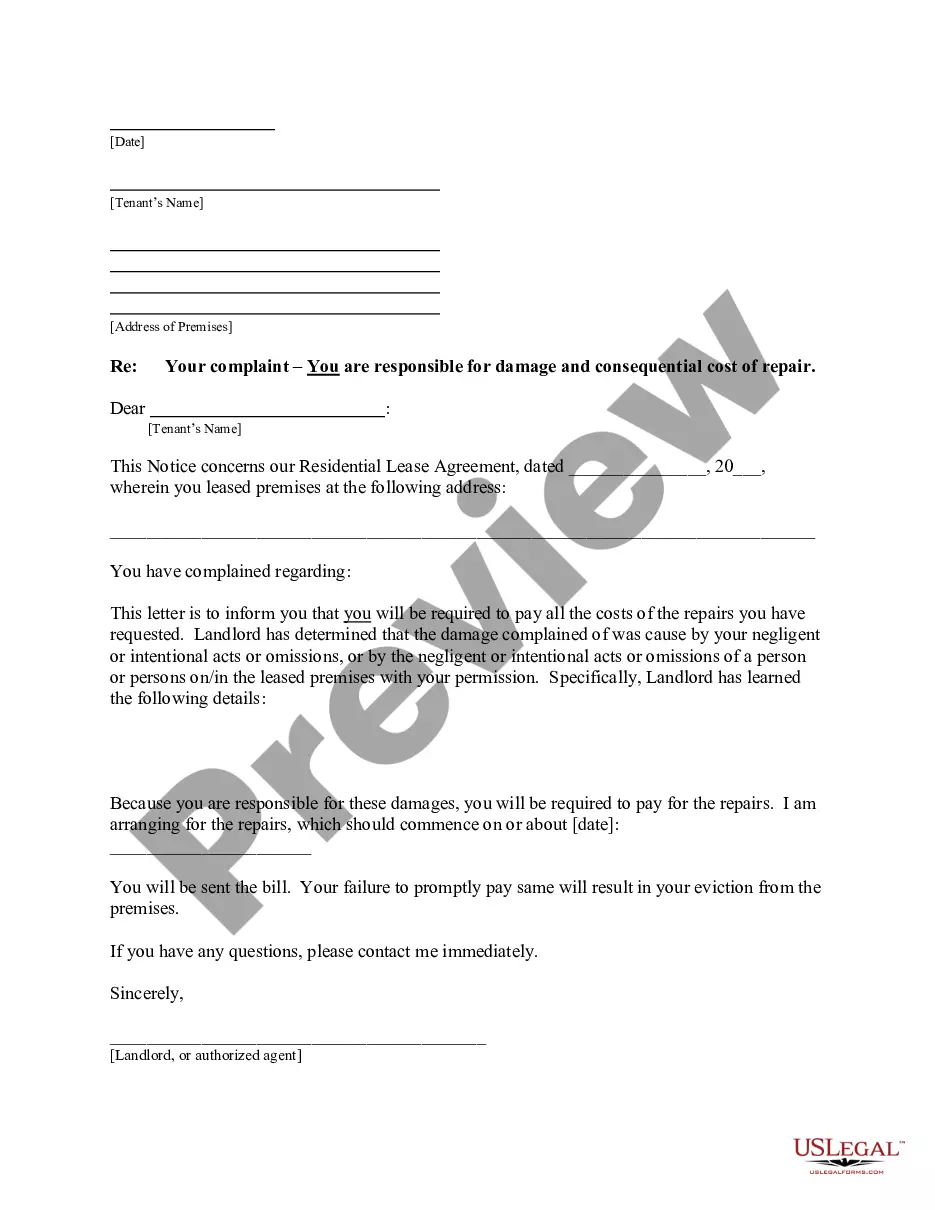
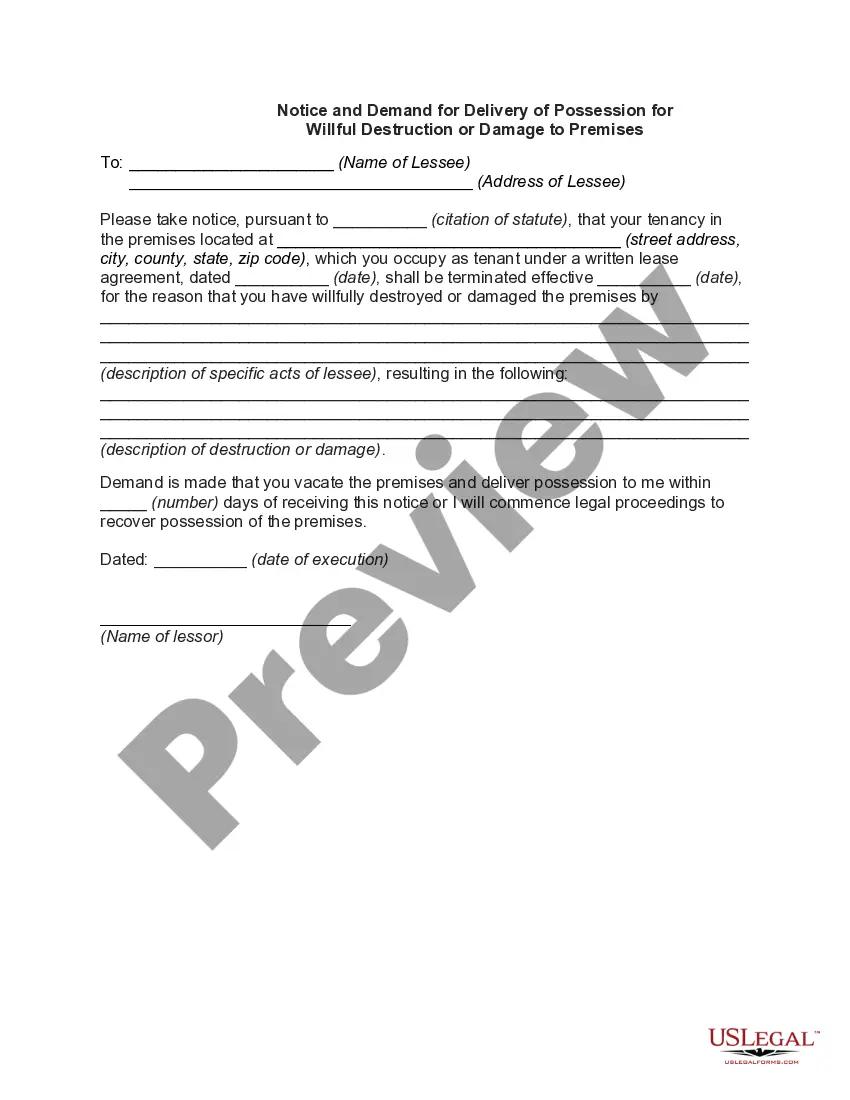
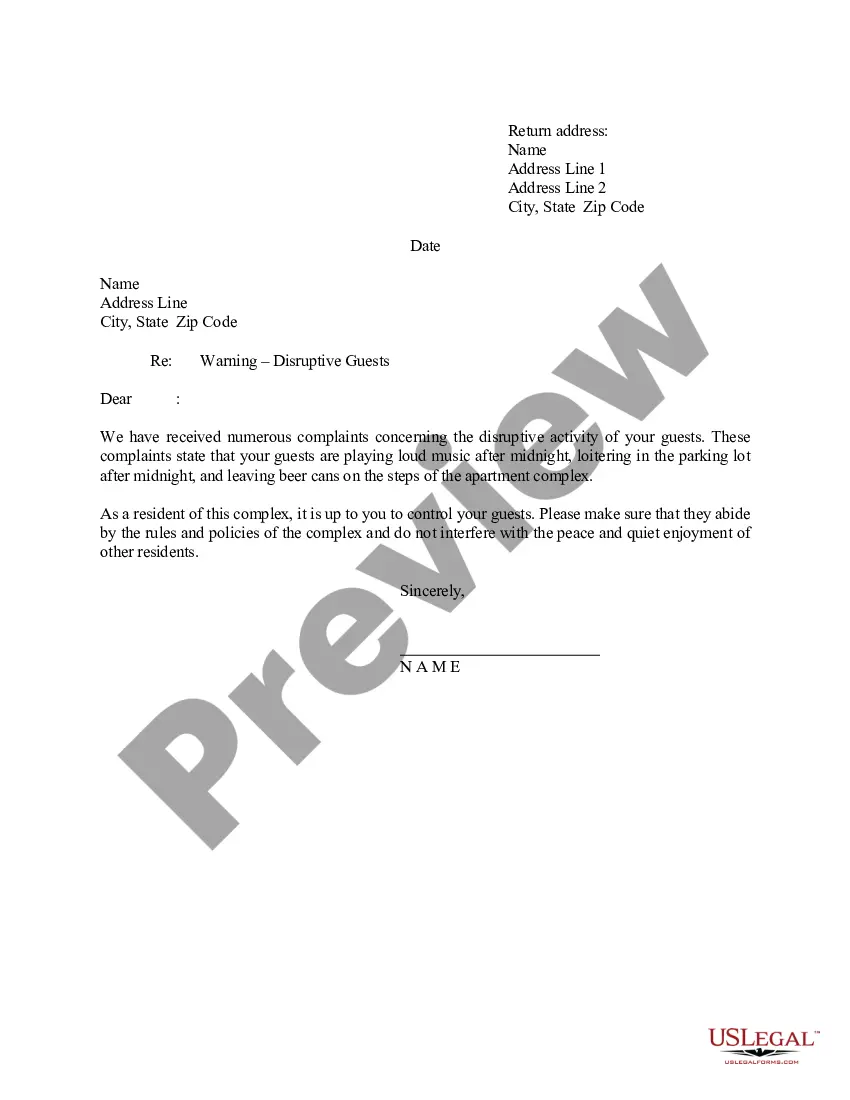
This form is a Letter from Landlord to Tenant where Tenant Complaint was caused by the deliberate or negligent act of Tenant or Tenant's guest. It serves to communicate to the tenant that the landlord has determined the complaint regarding repairs is due to the tenant's actions or those of their guests. This letter is essential for addressing issues regarding tenant responsibility for damages and clarifying the landlord's position on repair costs.
What’s included in this form
- Identification of the landlord and tenant.
- Clear statement regarding the nature of the complaint and determination of fault.
- Instructions for the tenant to contact the landlord with questions.
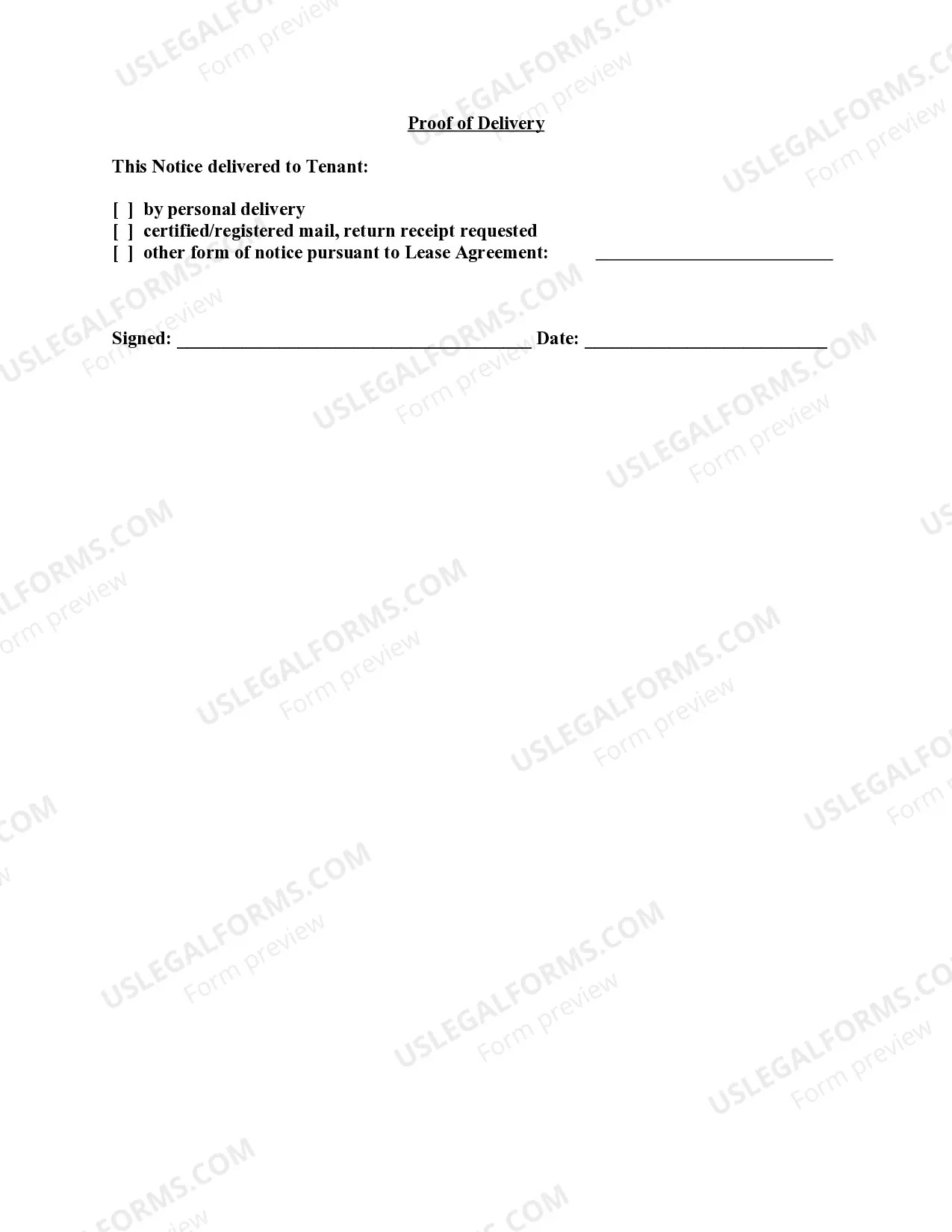
- Proof of delivery method to ensure receipt of the letter.


When to use this document
This letter is used when a tenant requests repairs for damage that the landlord believes was caused by the tenant's own negligent or intentional actions, or those of their guests. It clarifies the landlord's position and addresses any misunderstandings about repair costs and responsibilities.
Intended users of this form
- Landlords who have received repair requests from tenants.
- Property managers acting on behalf of landlords.
- Tenants who need to understand their liability in repair situations.
Steps to complete this form
- Identify both parties: Fill in the names and addresses of the landlord and tenant.
- Specify the nature of the complaint: Clearly describe the damage and who is believed to be responsible.
- Include delivery details: Choose the method of delivery, either personal or via certified mail.
- Sign the letter: The landlord or authorized agent must provide their signature.
- Deliver the letter: Ensure the tenant receives the notice as specified.
Notarization requirements for this form
This form does not typically require notarization unless specified by local law. Ensure to check your jurisdiction's requirements for any specific stipulations related to notarization.
Get your form ready online
Our built-in tools help you complete, sign, share, and store your documents in one place.
Make edits, fill in missing information, and update formatting in US Legal Forms—just like you would in MS Word.
Download a copy, print it, send it by email, or mail it via USPS—whatever works best for your next step.
Sign and collect signatures with our SignNow integration. Send to multiple recipients, set reminders, and more. Go Premium to unlock E-Sign.
If this form requires notarization, complete it online through a secure video call—no need to meet a notary in person or wait for an appointment.
We protect your documents and personal data by following strict security and privacy standards.

Make edits, fill in missing information, and update formatting in US Legal Forms—just like you would in MS Word.

Download a copy, print it, send it by email, or mail it via USPS—whatever works best for your next step.

Sign and collect signatures with our SignNow integration. Send to multiple recipients, set reminders, and more. Go Premium to unlock E-Sign.

If this form requires notarization, complete it online through a secure video call—no need to meet a notary in person or wait for an appointment.

We protect your documents and personal data by following strict security and privacy standards.
Common mistakes to avoid
- Failing to clearly specify the damage and responsible parties.
- Not providing adequate proof of delivery.
- Missing tenant's or landlord's signatures.
- Using vague language that does not clearly state the landlordâs determination.
Advantages of online completion
- Convenience of instant downloading and access to the form.
- Editability allows customization for specific situations.
- Reliability ensured by templates drafted by licensed attorneys.
Key takeaways
- The letter communicates the landlord's determination regarding tenant responsibility for damages.
- It is essential for clarifying the expectation of repairs and costs.
- Proper completion and delivery of the letter are critical to its effectiveness.
Looking for another form?
Form popularity
FAQ
State that you will be making a complaint. Explain why you are making a complaint and make sure to add your account of the event and other supporting facts. Let the management know what steps you wish to be made to address your complaint. End on a positive tone.
Explain that you are making a complaint. Relate what the complaint is actually about and make sure to include the specific details about the complaint, especially an account of the event. Inform the management of what you wish to be done regarding the complaint that you are making. End on a positive tone.
Introduce the problem clearly. Begin your letter by stating specifically why you are writing. Provide a brief description of the specific problem, then detail any efforts you have made prior to the letter to notify your landlord of the problem or to fix the problem yourself.
Tell the Agent why you are unhappy, setting out the act or omission you believe has occurred. Let the Agent know what you would like them to do to resolve your complaint. Follow up any conversations in writing, making a note of the date and time and who you spoke to.
Keep a record of what you say and how they reply. Get proof the best option is to take a photo or video of the object of complaint in case they claim something else happened. You can always try to reach a compromise.
Sample Noise Complaint Letter Dear Landlord/Manager's Name, I am writing to formally request your help in dealing with an ongoing issue with my neighbor. I have lived in your apartment number or address for the last three years and have greatly enjoyed my experience in this building.
Be professional. Use professional letterhead and be sure to sign in ink. Express your dissatisfaction clearly, with facts, dates, and details (including copies of receipts and so on) to help substantiate your claim. Be sincere. Be prompt. Don't expect compensation every time.
Be clear and concise. State exactly what you want done and how long you're willing to wait for a response. Don't write an angry, sarcastic, or threatening letter. Include copies of relevant documents, like receipts, work orders, and warranties. Include your name and contact information.