Letter - Warning To Renter Regarding Disruptive Guests
Overview of this form
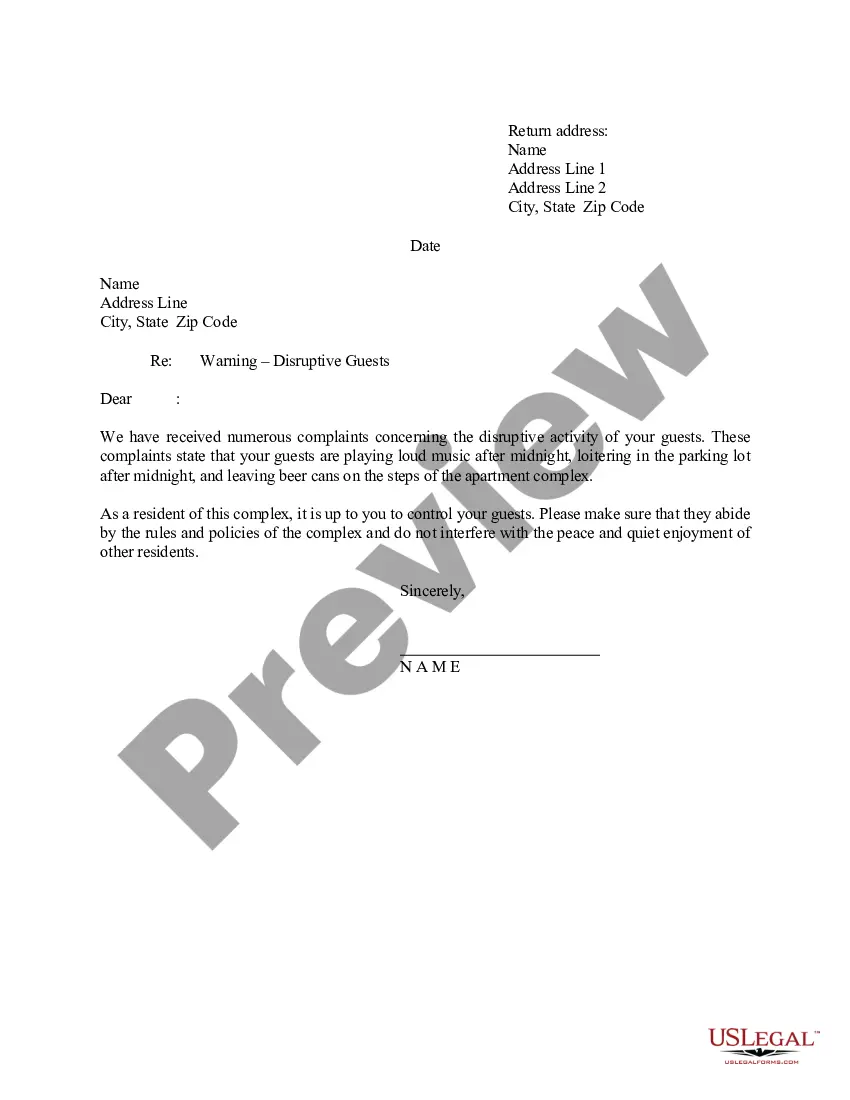
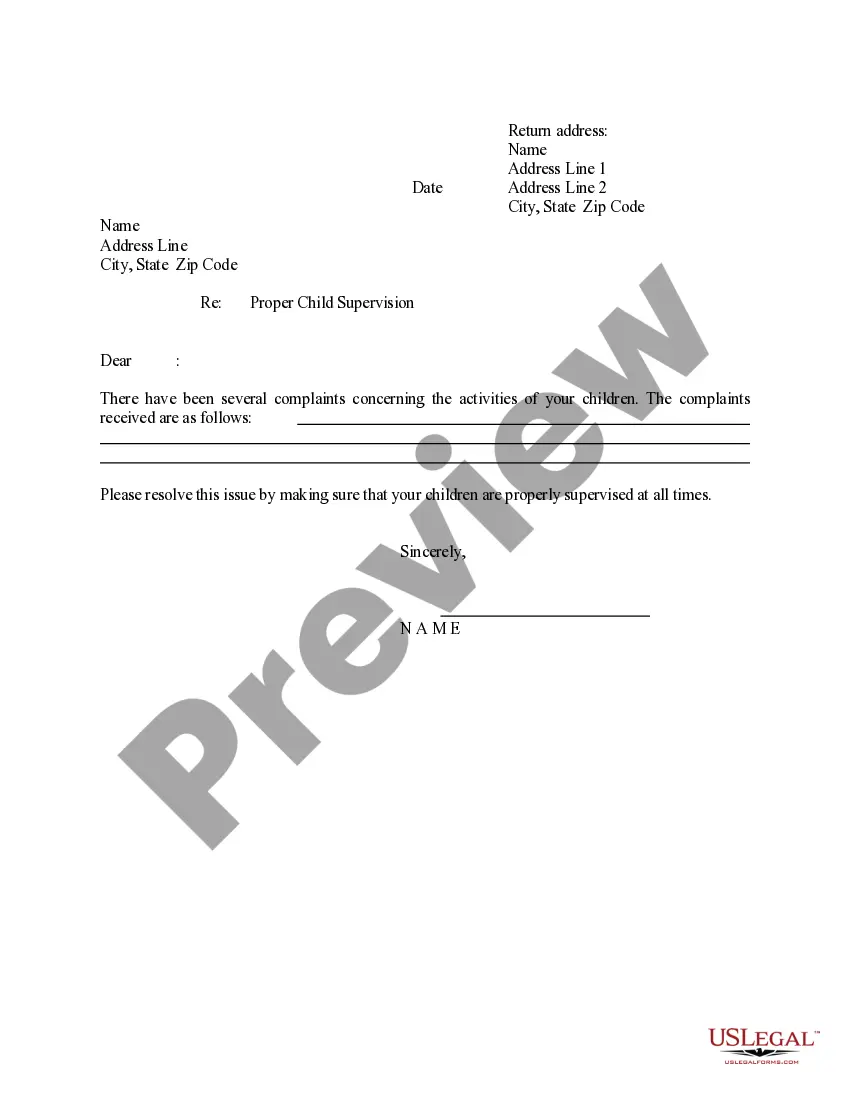
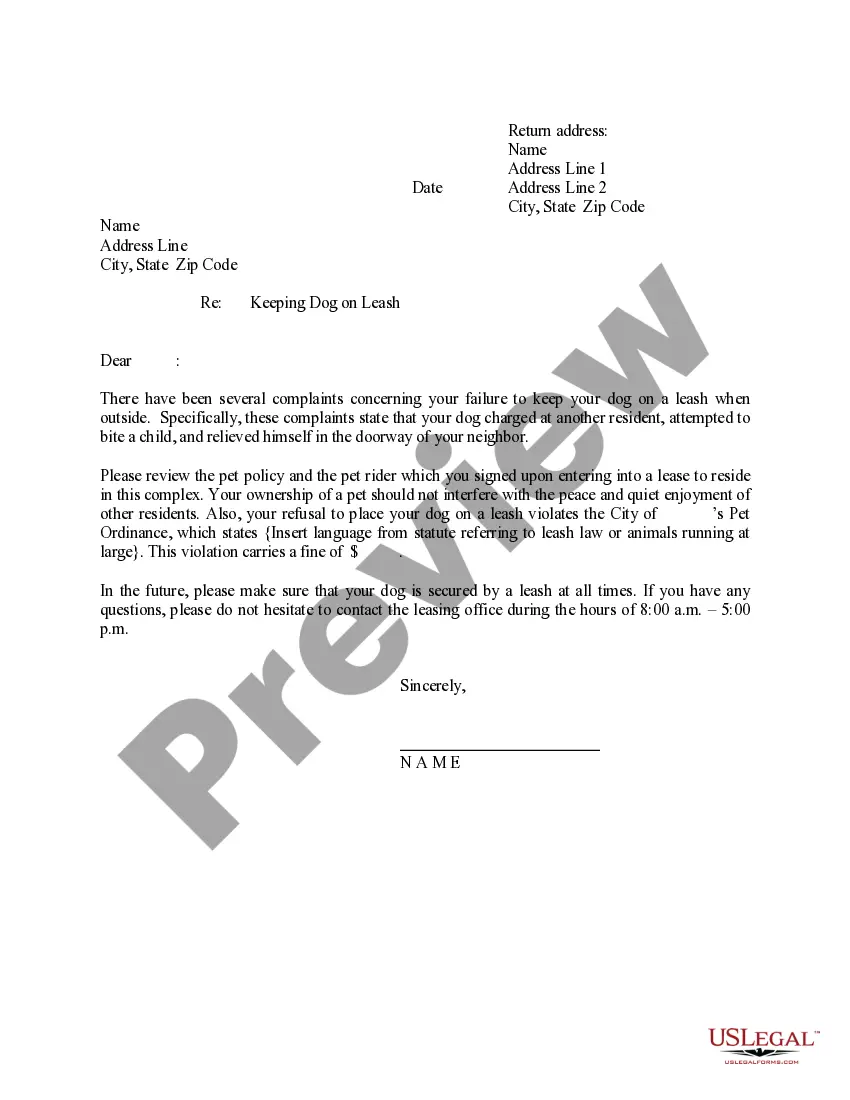
This is a Letter - Warning To Renter Regarding Disruptive Guests, used by landlords to address issues caused by guests of tenants. This form serves as an official notice to renters about disruptive behavior from their invited guests, emphasizing accountability and the importance of maintaining a respectful living environment. Unlike informal communications, this letter serves as a documented warning that may be needed for future reference, such as lease enforcement or potential eviction processes.
Main sections of this form
- Return address: Includes the landlord's name and address.
- Date: The date the letter is issued.
- Recipient's address: Information about the renter to whom the letter is sent.
- Subject line: Clearly states the purpose of the letter regarding disruptive guests.
- Message body: Details the disruptive behavior and its impact on the community or property.
- Conclusion: Summarizes the expectation of improved conduct.
When this form is needed
This form should be used when a landlord notices disruptive behavior caused by a renter's guests. Examples include loud parties, frequent disturbances, or any actions that violate community guidelines. This formal warning is essential for maintaining a peaceful atmosphere and can be a crucial step in corrective action before taking further legal measures like eviction.
Intended users of this form
Eligible users of this form include:
- Landlords or property managers dealing with disruptive guests of renters.
- Residential tenants who need to formally address issues with their cohabitants.
- Property owners needing to document disturbances for future legal actions.
How to prepare this document
- Identify the sender: Enter the name and address of the landlord.
- Add the date: Specify the date of issuance for the letter.
- Provide the recipient's details: Fill in the renter's name and address.
- State the reason: Clearly describe the disruptive behavior in the letter's body.
- Sign the letter: The landlord or property manager should sign to give it validity.
Notarization requirements for this form
In most cases, this form does not require notarization. However, some jurisdictions or signing circumstances might. US Legal Forms offers online notarization powered by Notarize, accessible 24/7 for a quick, remote process.
Get your form ready online
Our built-in tools help you complete, sign, share, and store your documents in one place.
Make edits, fill in missing information, and update formatting in US Legal Forms—just like you would in MS Word.
Download a copy, print it, send it by email, or mail it via USPS—whatever works best for your next step.
Sign and collect signatures with our SignNow integration. Send to multiple recipients, set reminders, and more. Go Premium to unlock E-Sign.
If this form requires notarization, complete it online through a secure video call—no need to meet a notary in person or wait for an appointment.
We protect your documents and personal data by following strict security and privacy standards.

Make edits, fill in missing information, and update formatting in US Legal Forms—just like you would in MS Word.

Download a copy, print it, send it by email, or mail it via USPS—whatever works best for your next step.

Sign and collect signatures with our SignNow integration. Send to multiple recipients, set reminders, and more. Go Premium to unlock E-Sign.

If this form requires notarization, complete it online through a secure video call—no need to meet a notary in person or wait for an appointment.

We protect your documents and personal data by following strict security and privacy standards.
Avoid these common issues
- Failing to document specific incidents of disruption, making it harder to enforce the lease.
- Not including a clear description of the behavior that prompted the warning.
- Neglecting to keep a copy of the letter for personal records.
Benefits of using this form online
- Convenience: Easily downloadable for immediate use without the need for legal consultation.
- Editability: Allows customization to fit the specific details of the rental situation.
- Reliability: Ensures that the letter is drafted according to standard legal practices, providing peace of mind.
Legal use & context
Sending a warning letter is a standard practice that allows landlords to address issues with tenants formally. This document affirms the landlord's attempts to resolve conflicts amicably while preserving the right to pursue further action if necessary.
Main things to remember
- A Letter - Warning To Renter Regarding Disruptive Guests is an important tool for landlords.
- This form addresses tenant issues firmly and formally, promoting a peaceful living environment.
- Filling out this letter correctly can prevent future escalations and support legal actions if needed.
Looking for another form?
Form popularity
FAQ
Reference local laws. Most localities have ordinances against loud activity for a set period of time every night. Post the hours in a common area. Create penalties. Get everyone's side of the story. Set firm expectations. Keep your cool. Keep record of all interactions. Protect your tenants' right to quiet enjoyment.
Tell Them The Problem & Consequences. Explain the reason that you want the tenant to go. Offer Them a Way Out. Let the tenant know that you are willing to give them a lump sum of cash in agreement for leaving the property. The Release.
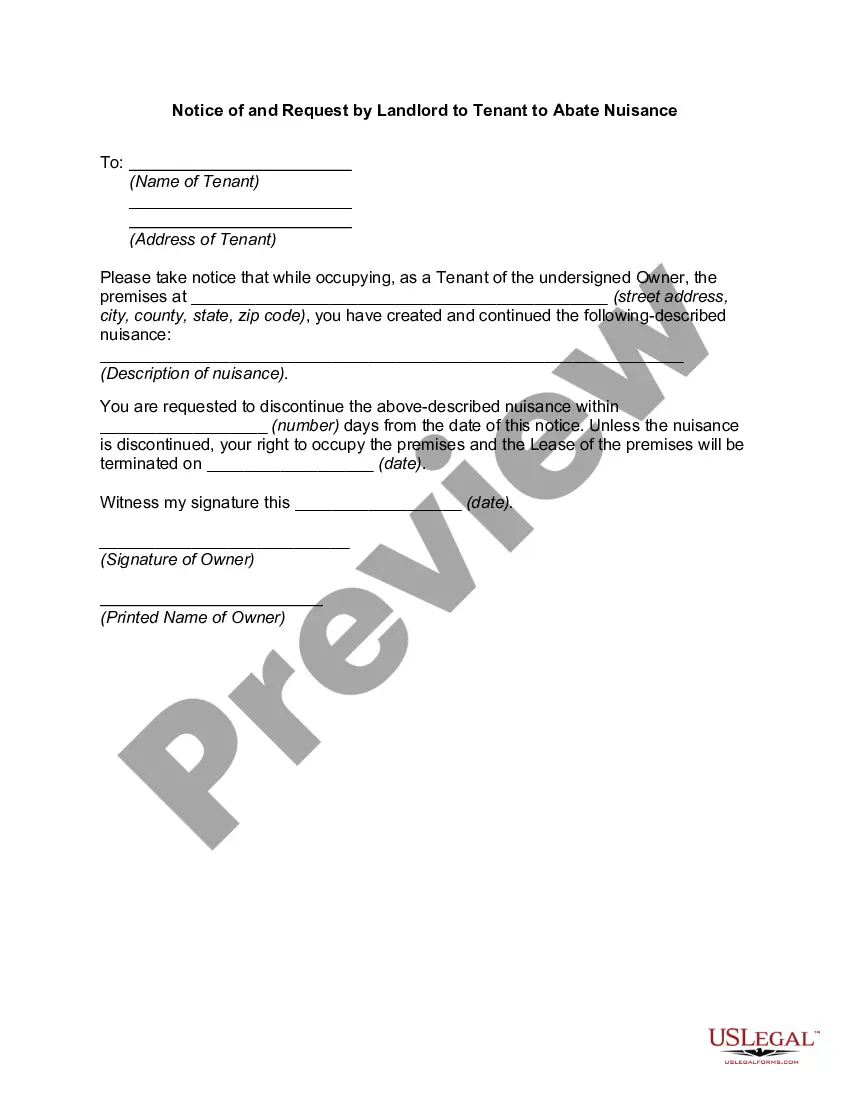
The rental property address, including unit number (if applicable) The names of all tenants on the lease agreement. The date the lease violation notice was written. The specific reason for the notice. The time and date the violation occurred (if applicable)
Whilst landlords aren't actually responsible for the noise their tenants make, it's always a good idea to try and 'keep the peace'.Limit noise at inconvenient hours. Look after any pets properly and clean up after them.
Investigate complaints. Talk to the tenant being noisy. Offer options and solutions. Start the eviction process, if necessary.
Begin the letter with the date on which you mail or deliver the letter in person. Include your name, address and phone number, followed by the tenant's name and address. You can also insert a subject line that summarizes the reason for the letter to vacate. Start with a salutation, followed by your tenant's name.
The date that the tenant warning letter was written. The name and the basic personal information of the tenant. The name of the landlord or the owner of the property. The reason why a tenant warning letter has been written. The incident or situation that the tenant is involved in.
Addresses. Date. Tenant names. Status and date of the lease. Why the eviction notice is served (clear and concise explanation) Date tenant must vacate the property. Proof of service or delivery of notice.