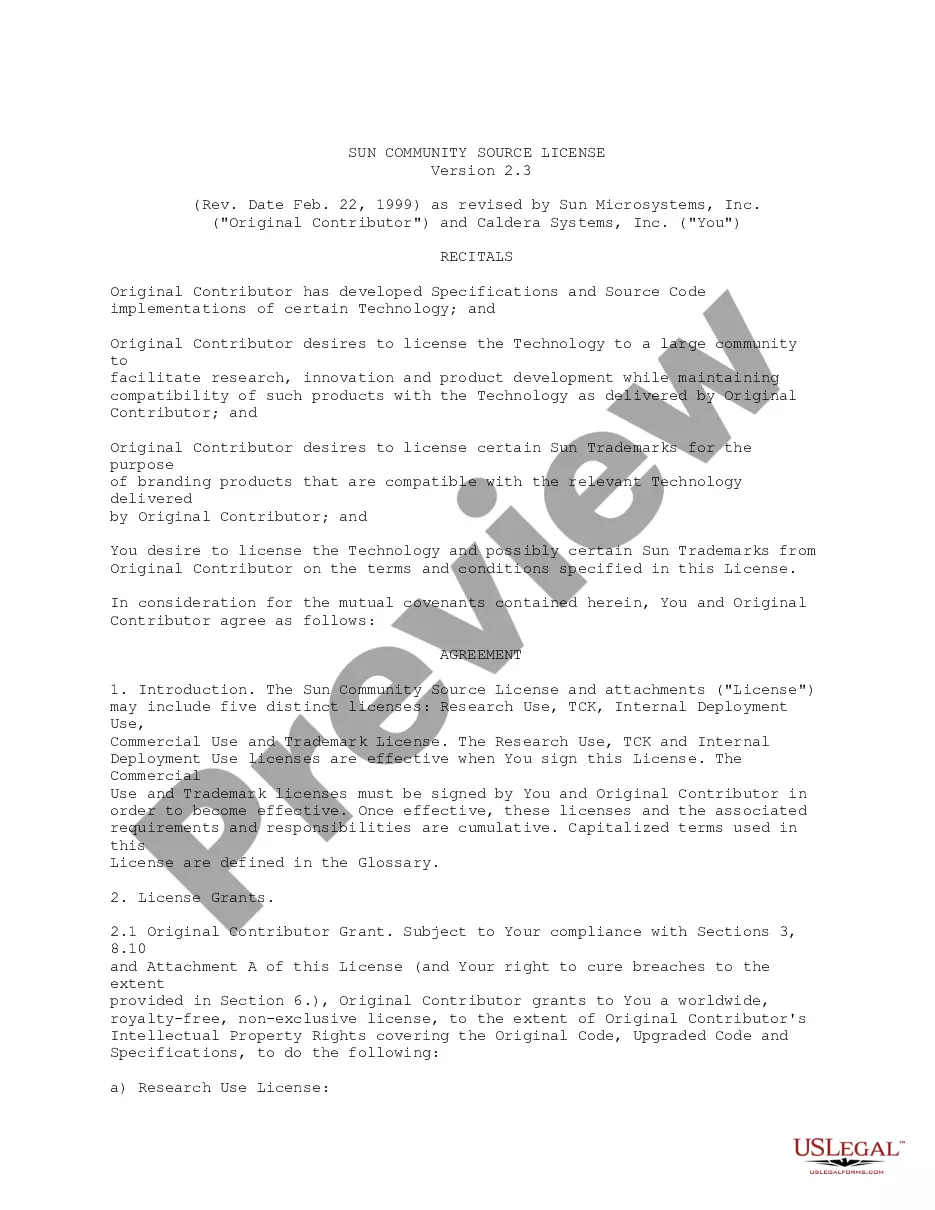
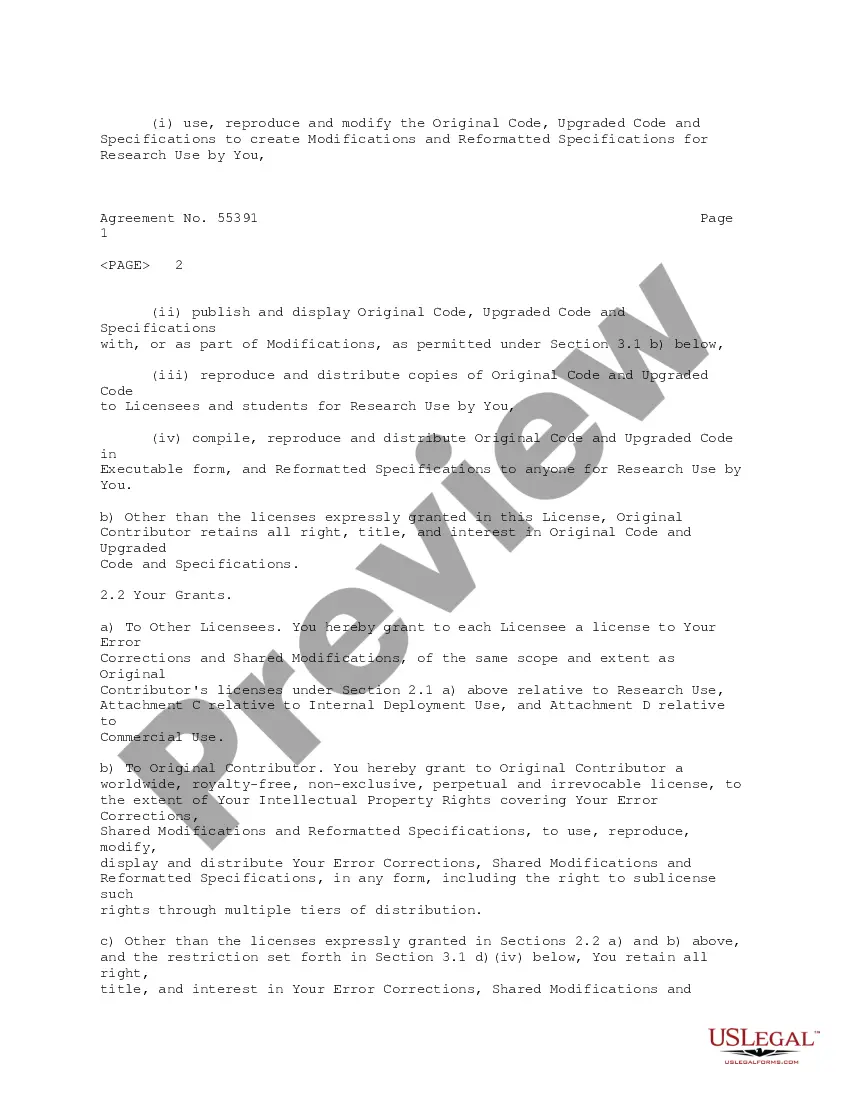
Technology License Agreement regarding the development and specifications and source code implementations
What this document covers
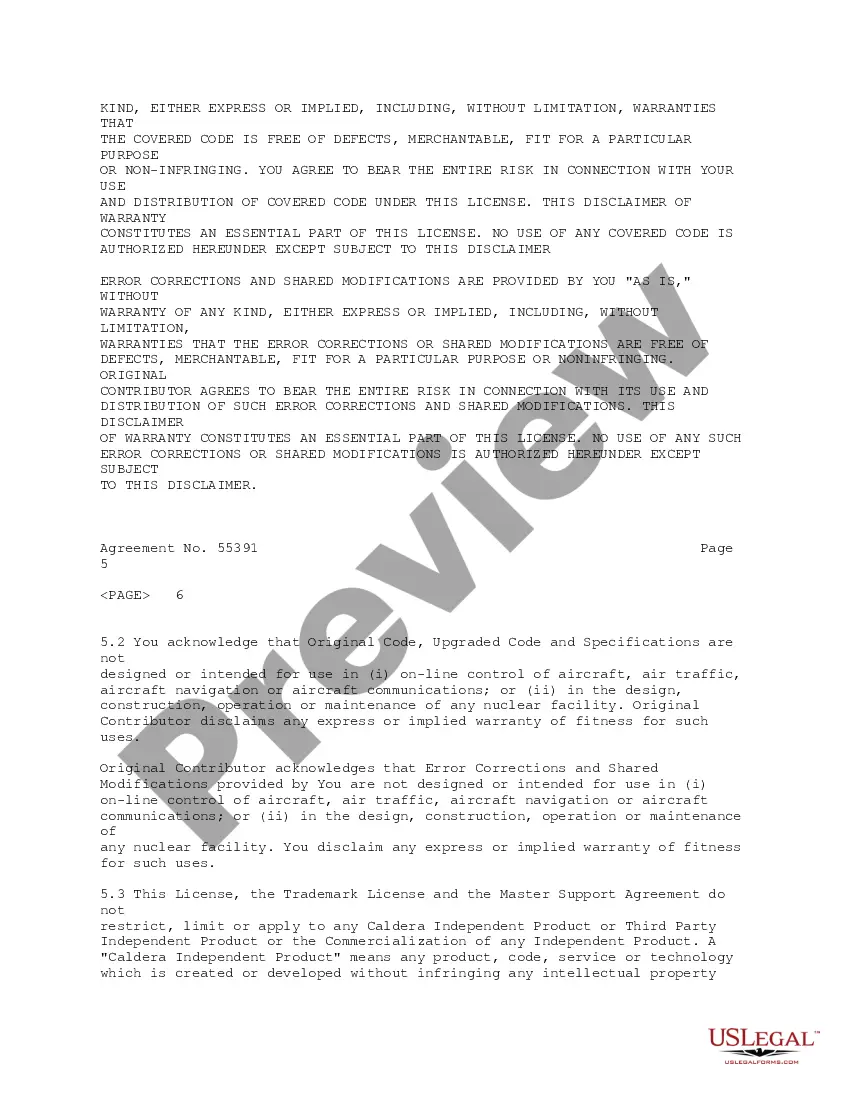
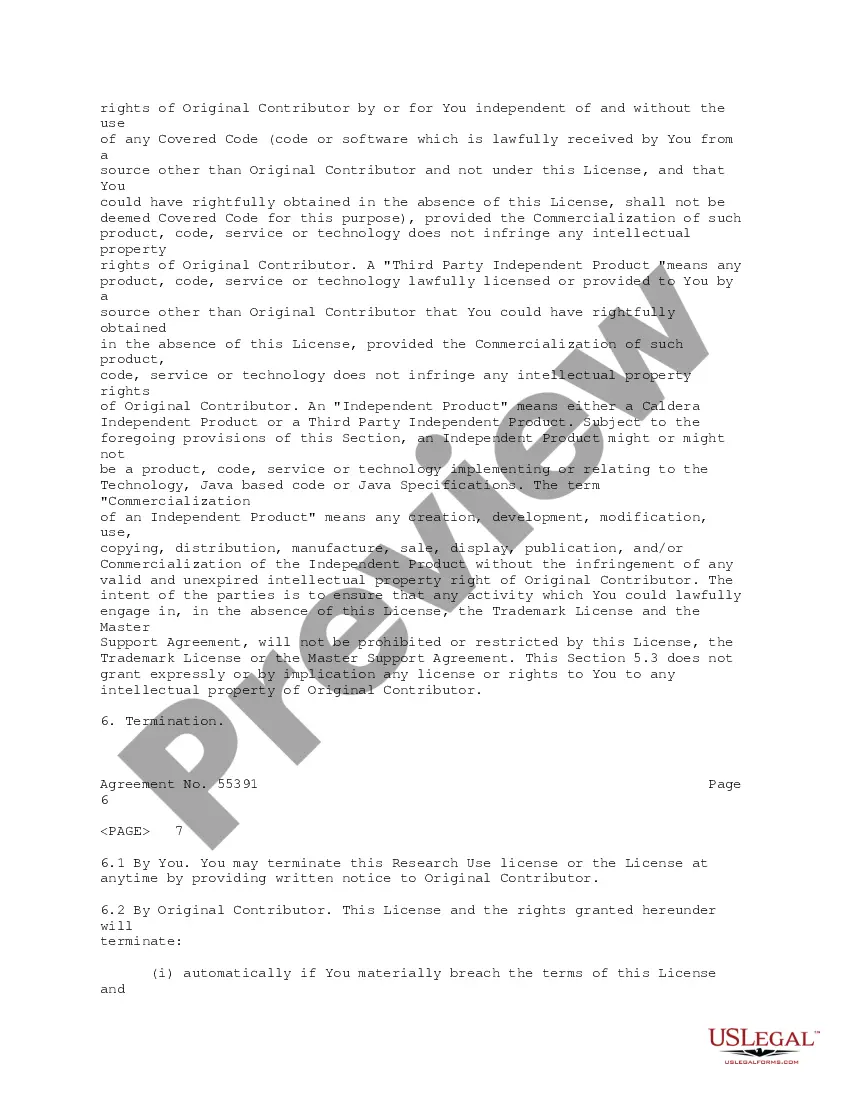
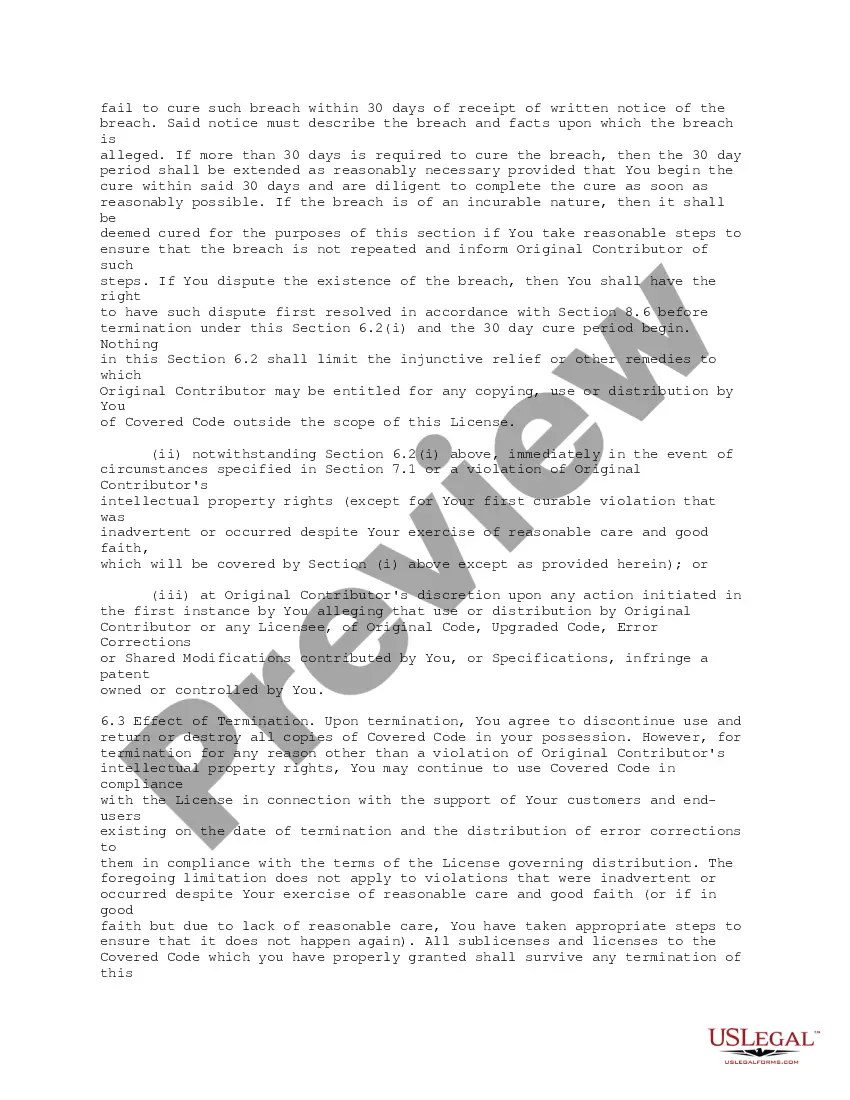
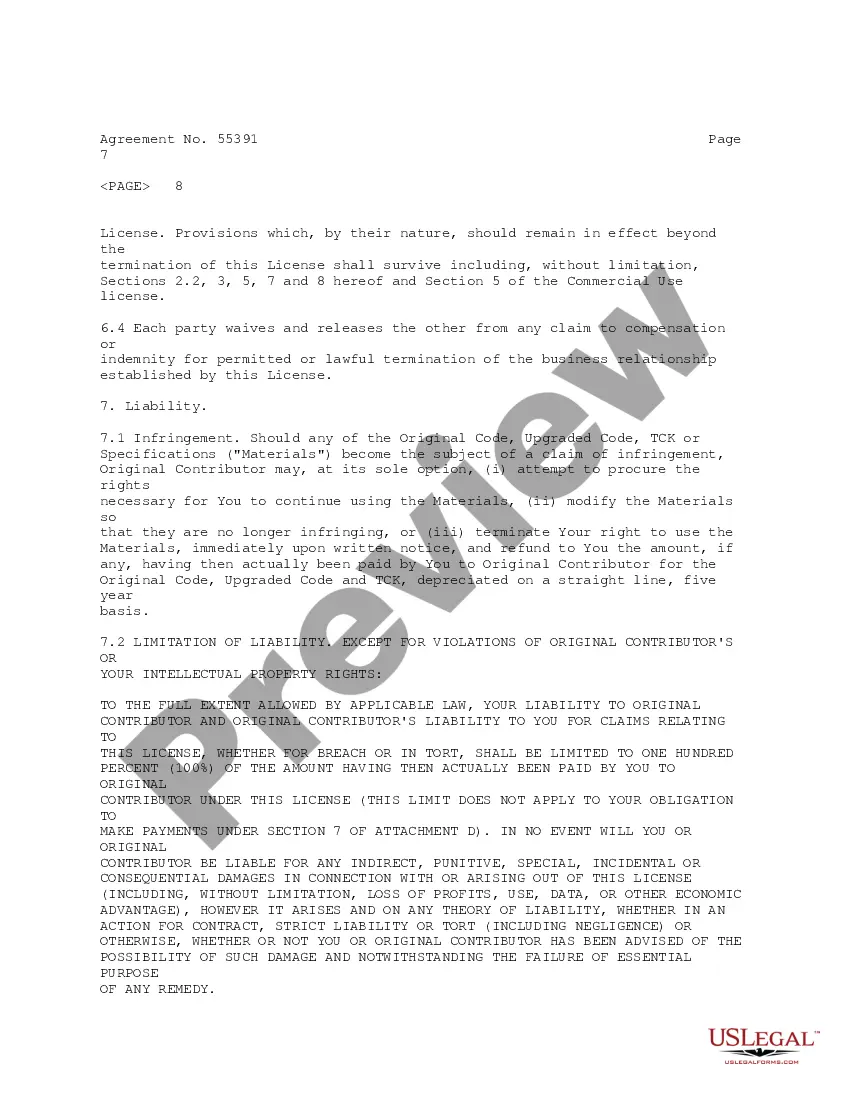
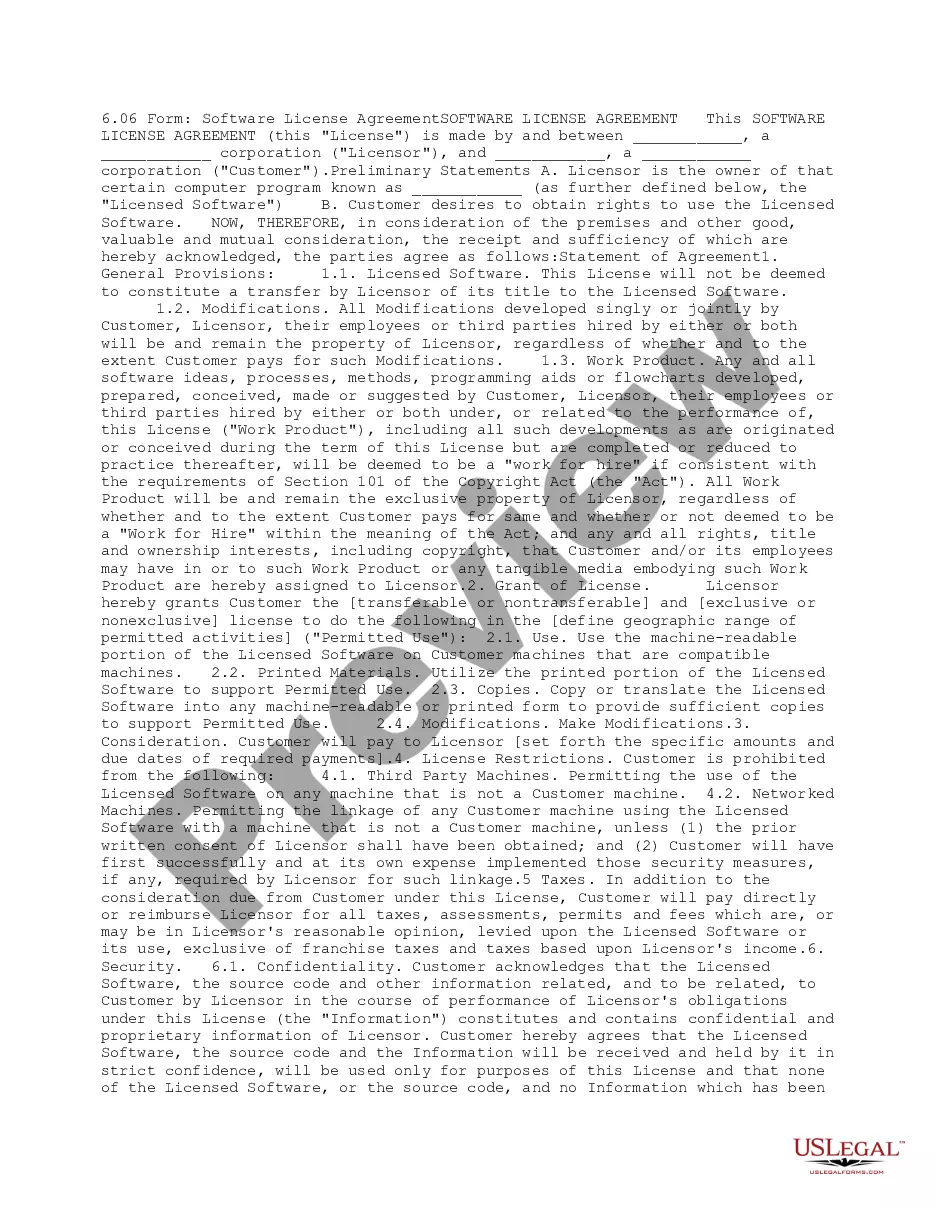
The Technology License Agreement is a legal document that outlines the terms under which technology developed by Sun Microsystems, Inc. can be used, modified, and distributed by others, specifically Caldera Systems, Inc. This agreement is crucial for individuals or entities looking to participate in community-driven development and innovation, ensuring mutual understanding of rights and responsibilities related to the technology and its underlying code.
Key parts of this document
- Introduction: Defines the scope and purpose of the license agreements included.
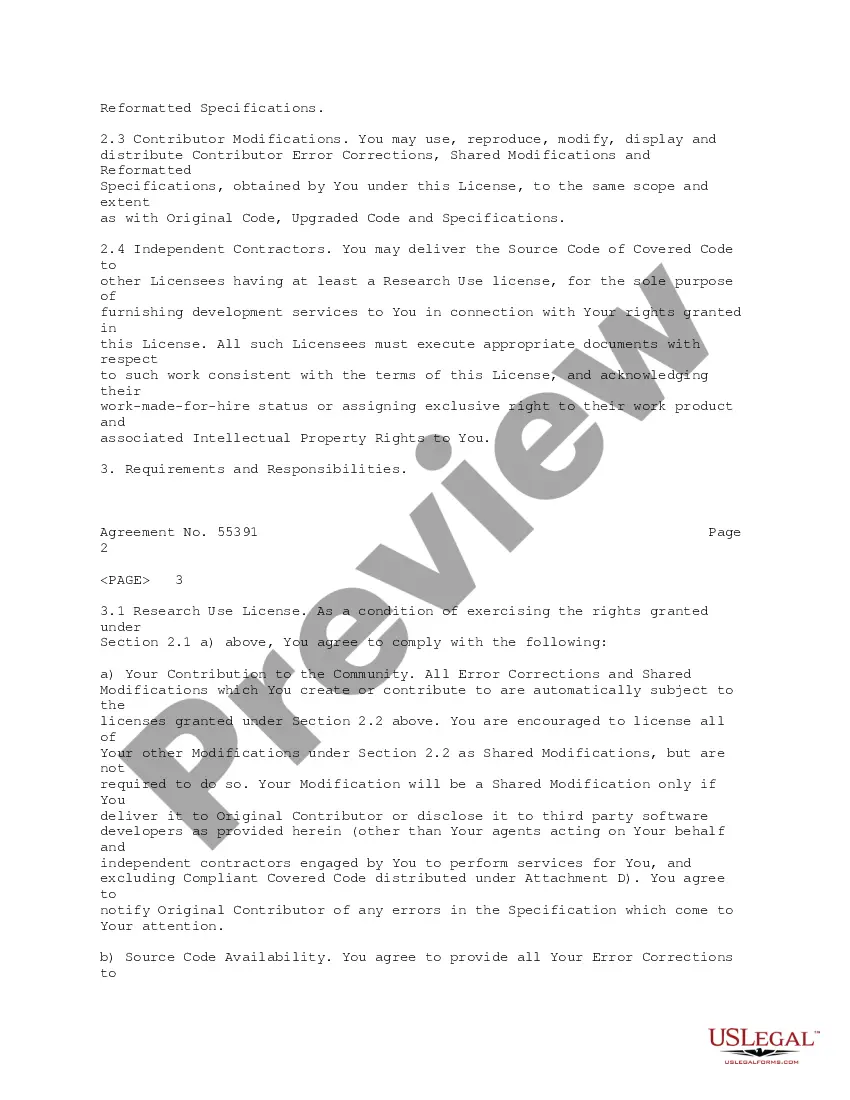
- License Grants: Details the rights granted to users regarding the original code, upgraded code, and specifications.
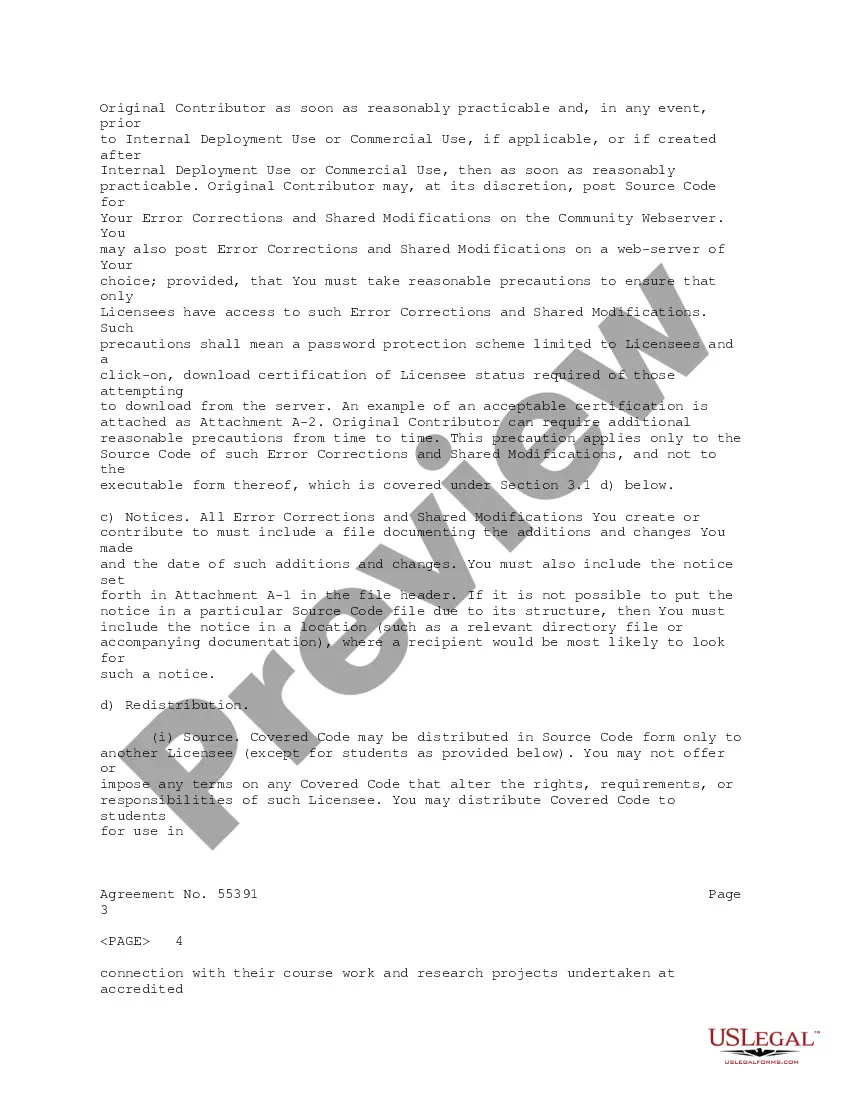
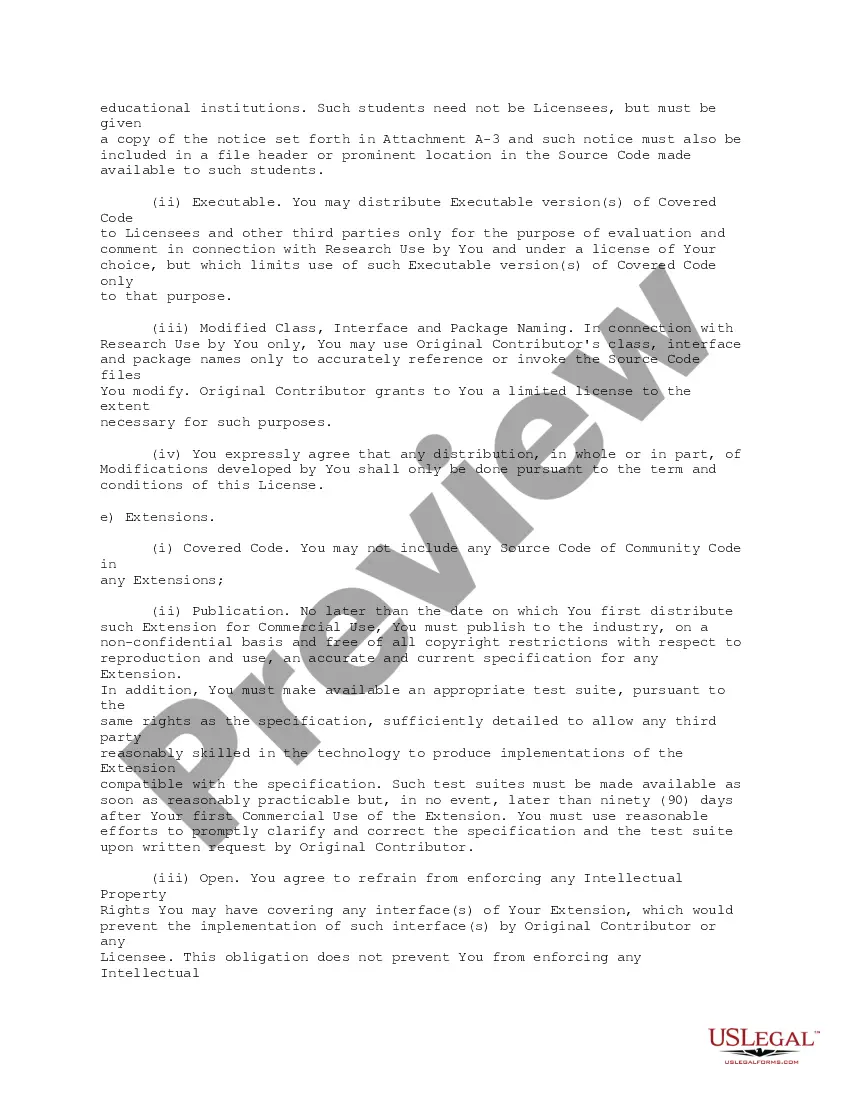
- Requirements and Responsibilities: Outlines obligations like error corrections, modification sharing, and proper documentation.
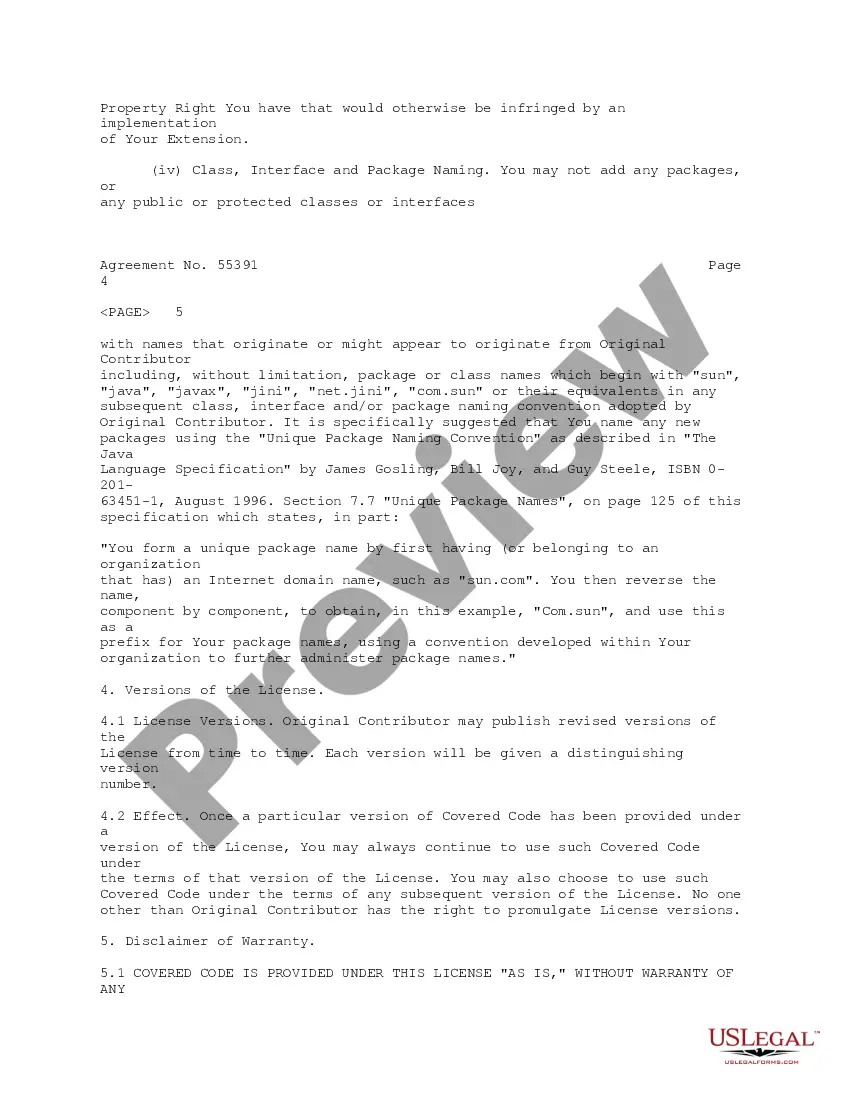
- Termination: Specifies conditions under which the agreement can be terminated by either party.
- Indemnity and Liability: Addresses liability limitations and indemnification responsibilities.
- Governing Law: States the legal jurisdiction applicable to the agreement.

When to use this form
This form is essential for organizations and individuals who wish to develop, share, or monetize technology created under the Sun Community Source License. It is particularly important when engaging in collaborative projects that require clarity on the use and distribution of technological innovations, ensuring that contributions are legally protected and appropriately credited.
Who can use this document
Recommended Users:
- Developers looking to use Sun Microsystems' technology in their projects.
- Companies working on community-based technological developments.
- Educational institutions conducting research or teaching using this technology.
- Organizations interested in branding products compatible with the licensed technology.
Instructions for completing this form
Steps to Complete the Agreement:
- Identify and enter the names of the parties involved: Sun Microsystems, Inc. and Caldera Systems, Inc.
- Specify the technology being licensed and any related rights.
- Review and agree on the terms related to licensing, usage, and responsibilities.
- Include appropriate documentation regarding any modifications or contributions made.
- Sign and date the agreement, ensuring all parties acknowledge their responsibilities.
Does this form need to be notarized?
This form does not typically require notarization unless specified by local law. Ensure to check your jurisdiction's regulations to confirm.
Get your form ready online
Our built-in tools help you complete, sign, share, and store your documents in one place.
Make edits, fill in missing information, and update formatting in US Legal Forms—just like you would in MS Word.
Download a copy, print it, send it by email, or mail it via USPS—whatever works best for your next step.
Sign and collect signatures with our SignNow integration. Send to multiple recipients, set reminders, and more. Go Premium to unlock E-Sign.
If this form requires notarization, complete it online through a secure video call—no need to meet a notary in person or wait for an appointment.
We protect your documents and personal data by following strict security and privacy standards.

Make edits, fill in missing information, and update formatting in US Legal Forms—just like you would in MS Word.

Download a copy, print it, send it by email, or mail it via USPS—whatever works best for your next step.

Sign and collect signatures with our SignNow integration. Send to multiple recipients, set reminders, and more. Go Premium to unlock E-Sign.

If this form requires notarization, complete it online through a secure video call—no need to meet a notary in person or wait for an appointment.

We protect your documents and personal data by following strict security and privacy standards.
Typical mistakes to avoid
Common Mistakes to Avoid:
- Failing to properly document modifications and error corrections.
- Neglecting to inform original contributors about contributions to the code base.
- Using the technology in ways not clearly defined in the agreement.
Why complete this form online
Benefits of Using This Form Online:
- Easy access to legal documents that can be tailored to your specific needs.
- Convenience of downloading and using forms anytime, without requiring an in-person visit.
- Reduced costs compared to hiring a lawyer to draft the agreement from scratch.
Legal Use & Context:
- The agreement must comply with the laws governing technology licensing and intellectual property.
- All parties must uphold their responsibilities to make the license enforceable.
- Adhering to the terms of the agreement ensures protection against liability and infringement claims.
Main things to remember
Key Takeaways:
- The Technology License Agreement clarifies rights and responsibilities for using developed technology.
- It is essential for innovators and developers engaged in community-based technology solutions.
- Understanding the terms is critical to ensuring compliance and protecting intellectual property.
Looking for another form?

Form popularity
FAQ
What is a Licensing Agreement? A licensing agreement is a contract between two parties (the licensor and licensee) in which the licensor grants the licensee the right to use the brand name, trademark, patented technology, or ability to produce and sell goods owned by the licensor.
A software license agreement typically has broad-form confidentiality provisions that also provide that certain items fall into the bucket of one or the other party (e.g., the software for a licensor, certain data for a licensee, etc.).
An agreement granting a company a license to commercialize products incorporating the licensor's patented and unpatented technology, including know-how and trade secrets.Each patent and know-how license agreement must be tailored to suit each transaction's particular circumstances.
In a typical licensing agreement, the licensor agrees to provide the licensee with intellectual property rights such as the licensor's technology, brand name, or product creation know-how.
A software license agreement gives a licensee a non-exclusive, non-transferable right to use software. A software license agreement defines how that software can be used and what happens in the event of breach.
A technology license agreement is an arrangement that involves an owner (licensor) of some technological intellectual property who accepts compensation (consideration) to let someone else (licensee) use, change, or resell the property.
Technology licensing agreements are contracts or arrangements that involve an owner of a technology-based intellectual property, also known as a licensor, who will accept compensation in exchange for allowing an outside party, known as the licensee, resell the property, make alterations to it, or simply use it.
An example of a licensing agreement is a contract between the copyright holders of software and another company, allowing the latter to use the computer software for their daily business operations.