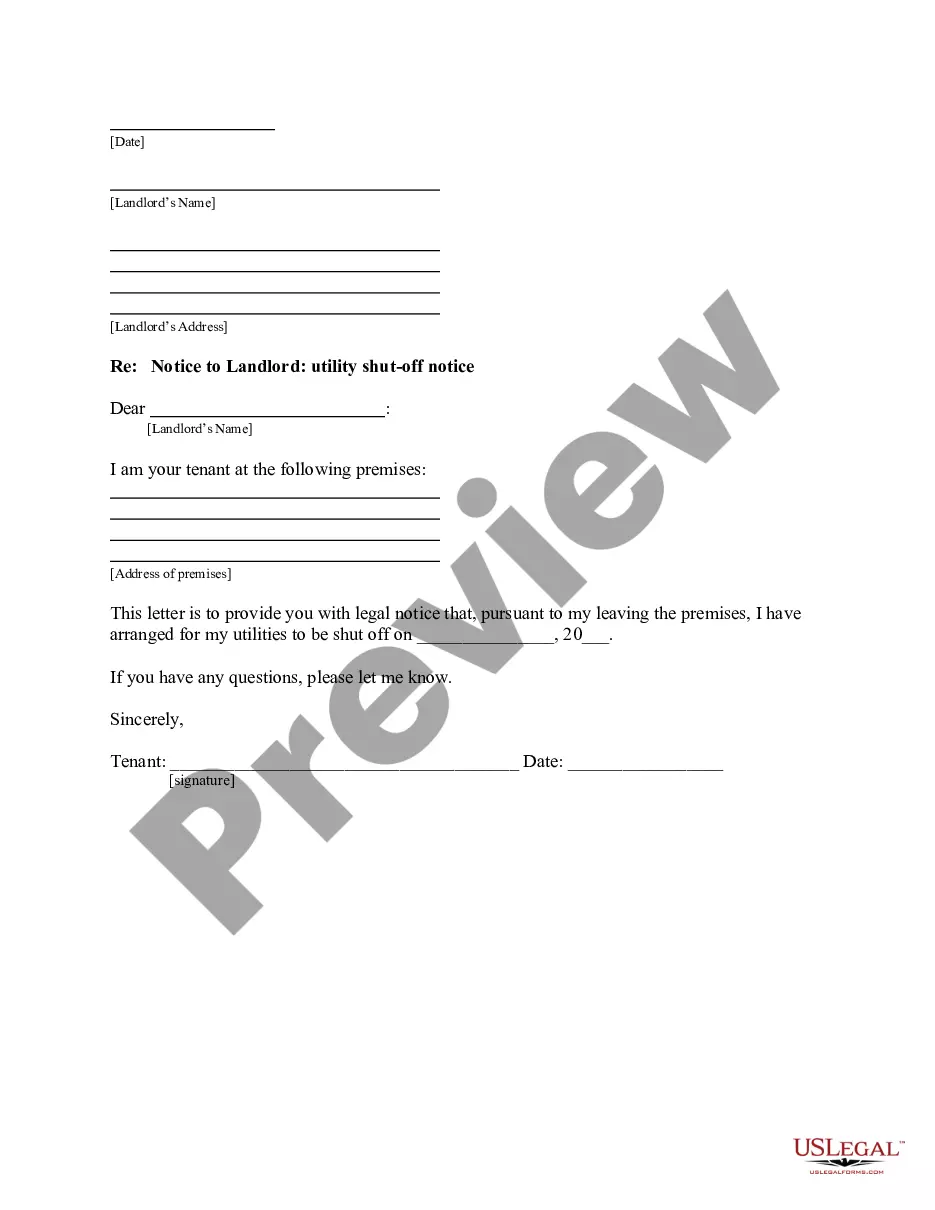
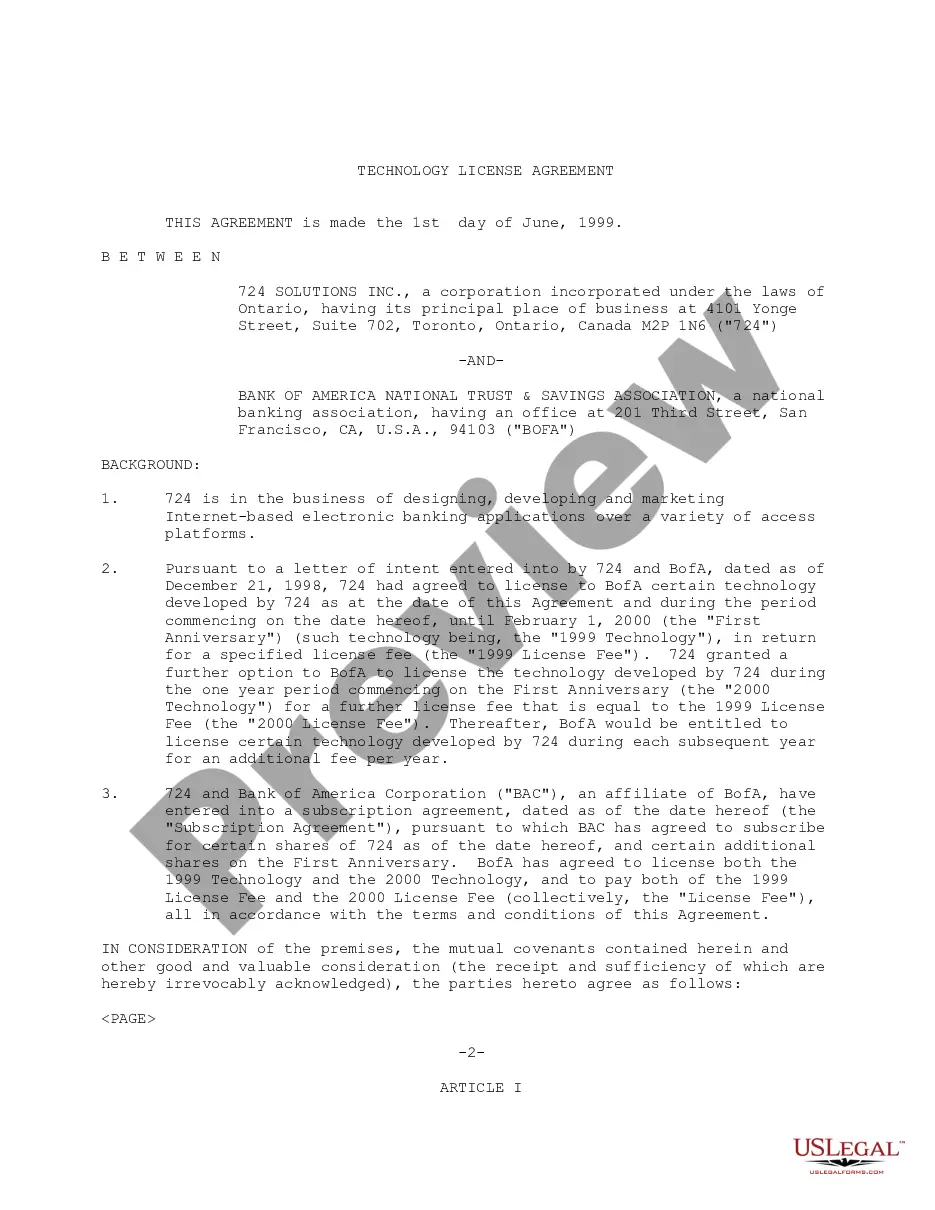
Technology License Agreement regarding designing, developing and marketing Internet based electronic banking applications
About this form
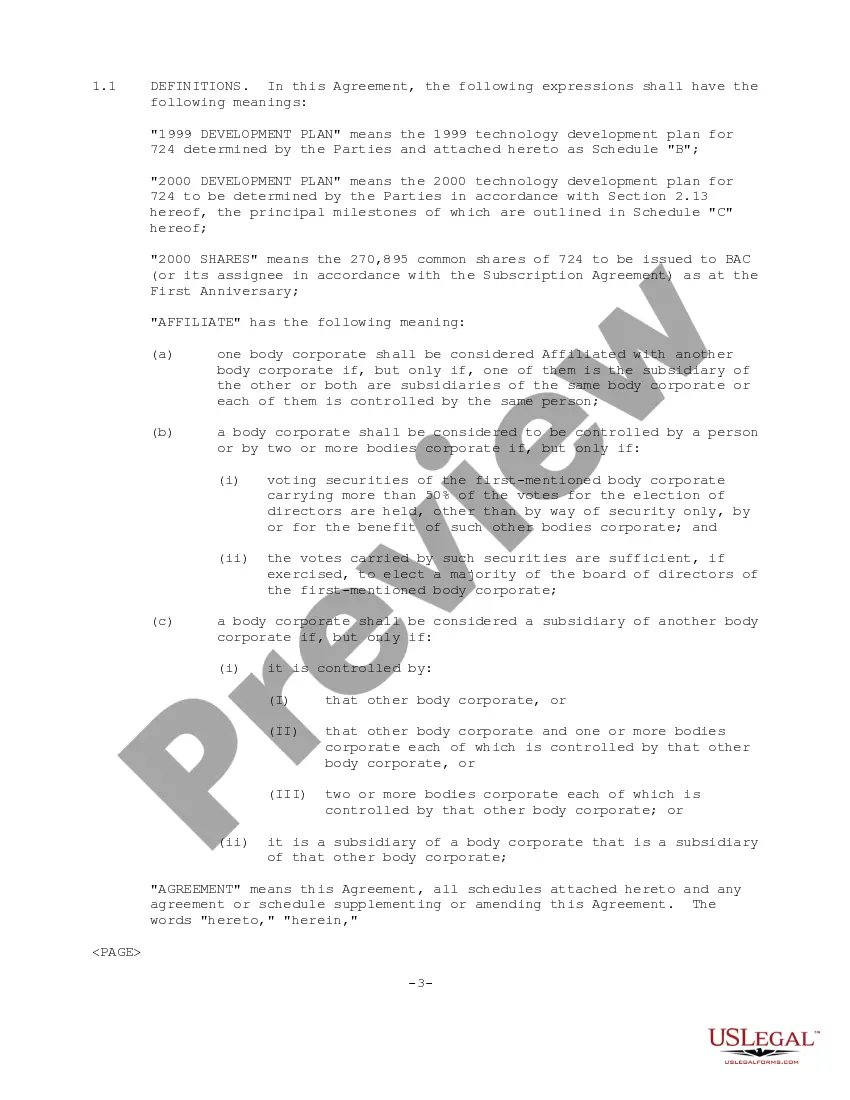
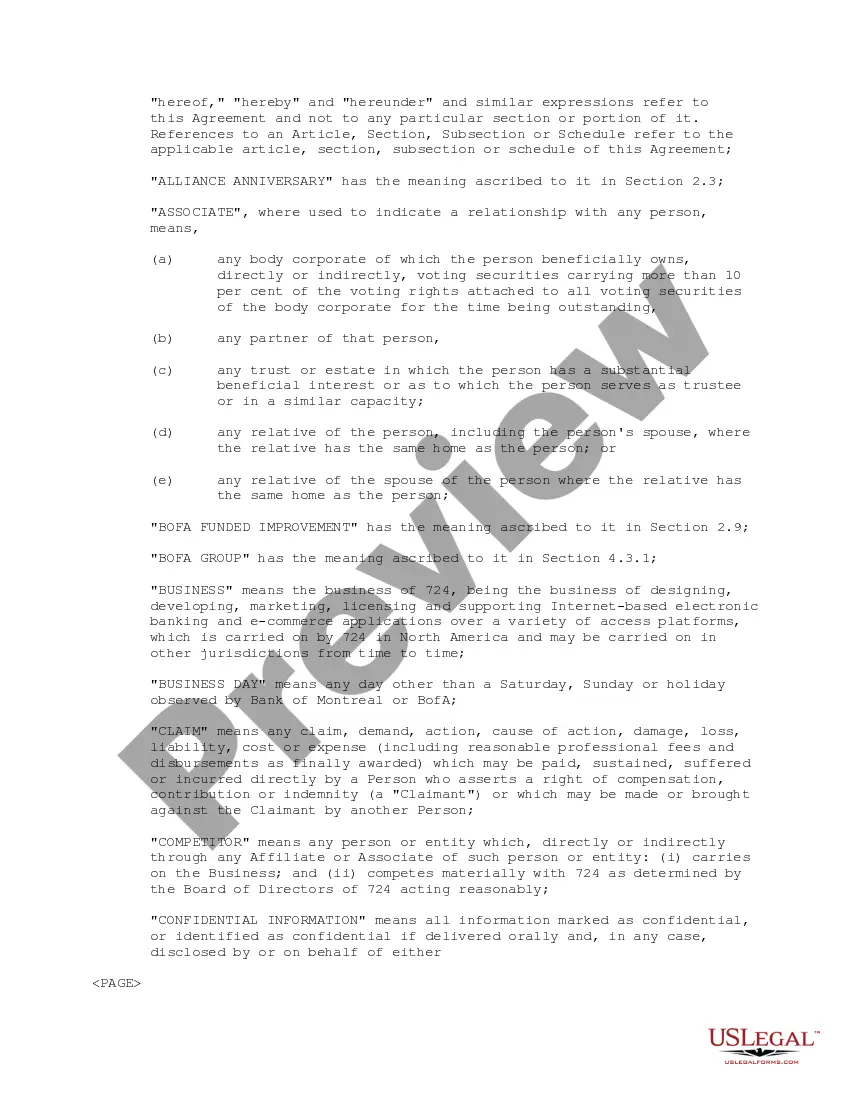
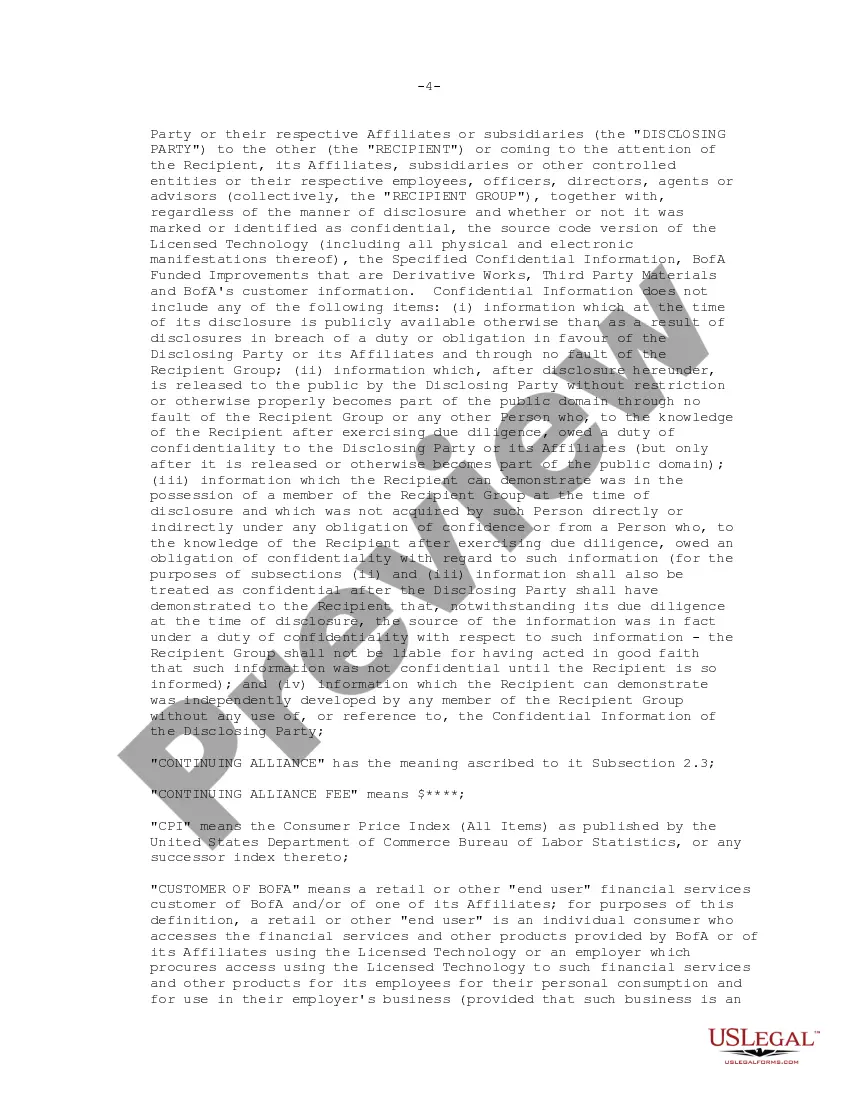
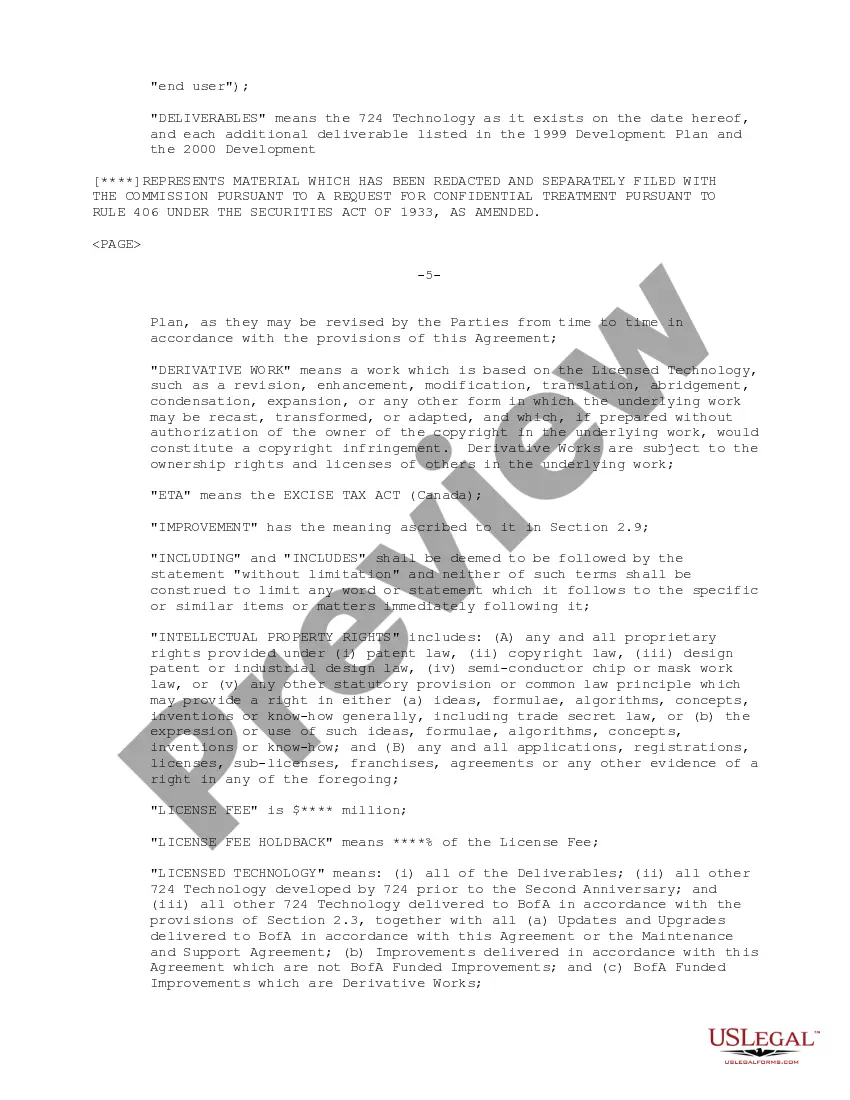
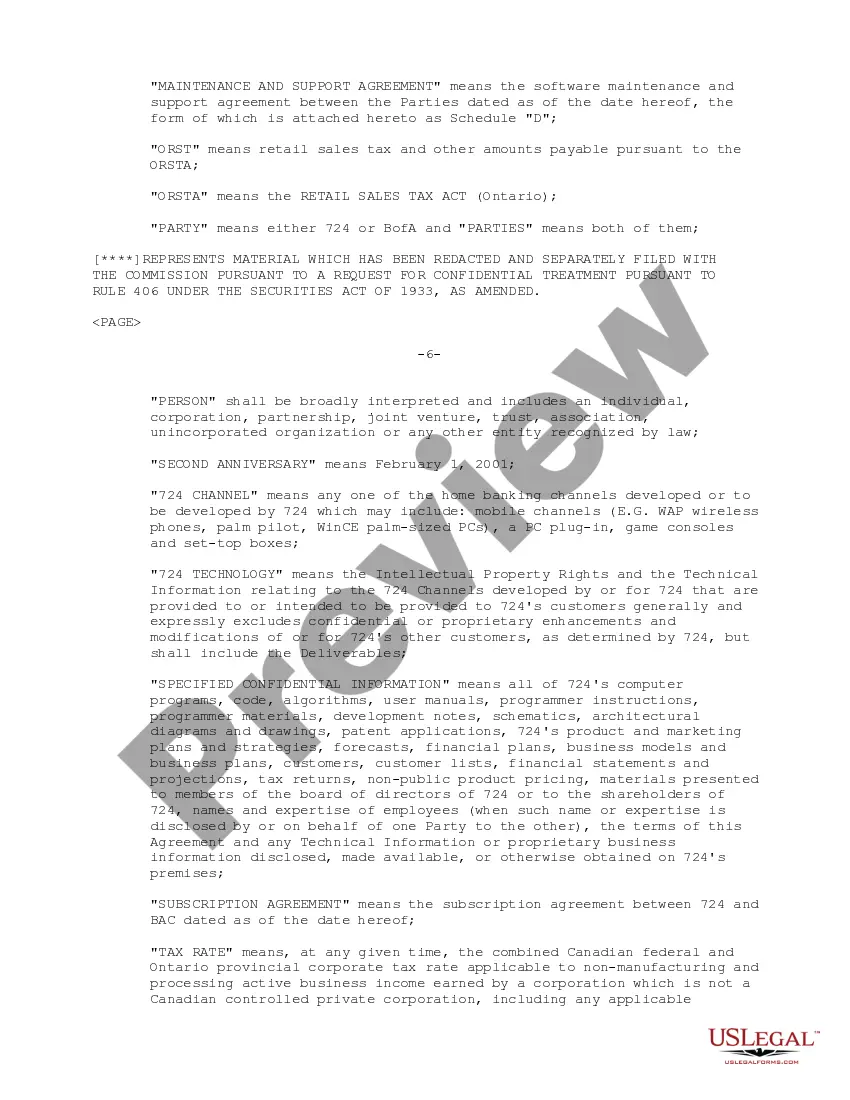
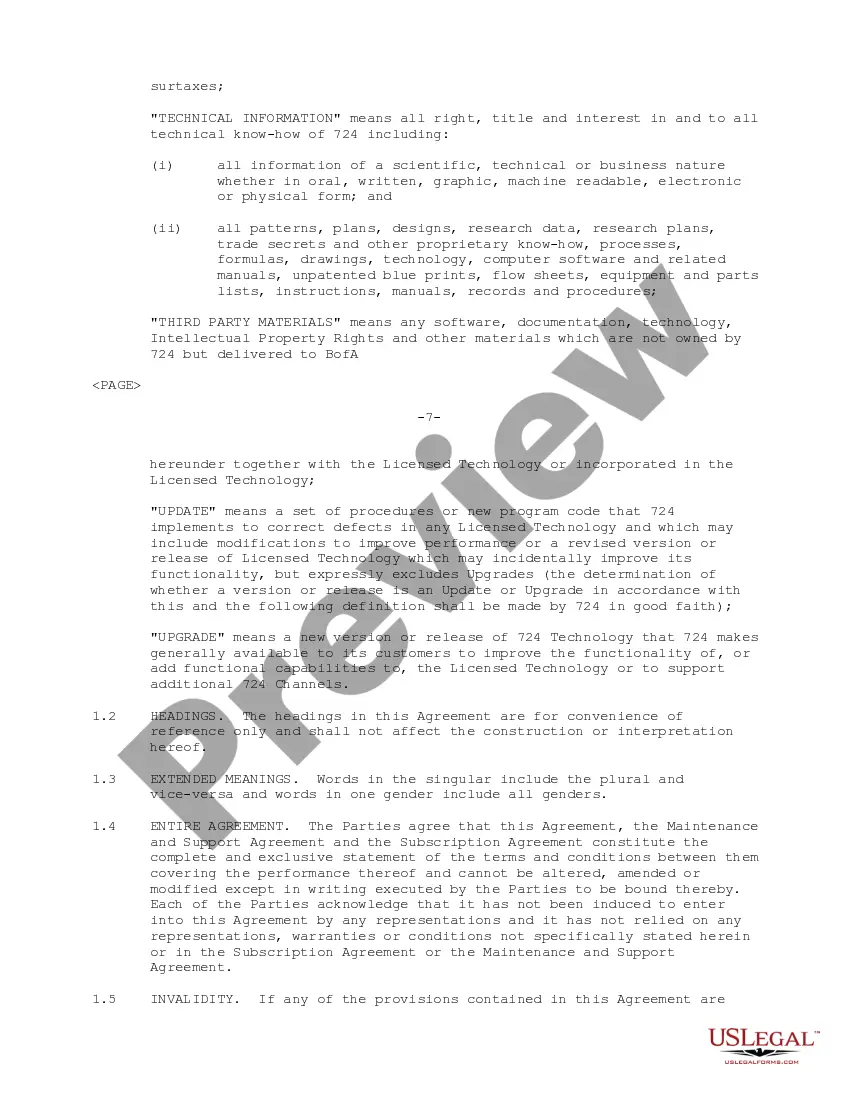
A Technology License Agreement is a legal document that outlines the terms under which one party (the licensor) grants another party (the licensee) permission to use specific technology. In this case, the agreement specifically pertains to the designing, developing, and marketing of Internet-based electronic banking applications. This form ensures that both parties understand their rights and obligations regarding the use and development of the technology, differentiating it from general technology transfer agreements by focusing on the financial and operational aspects within the context of electronic banking.
Main sections of this form
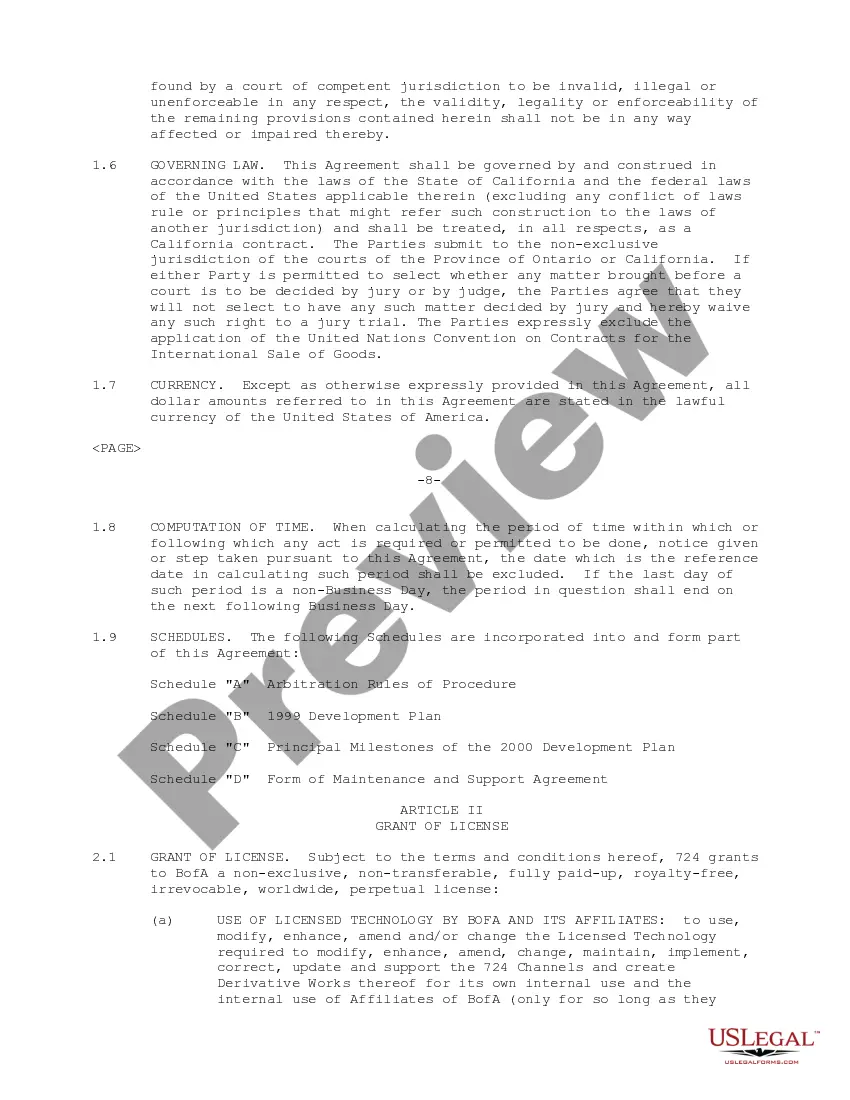
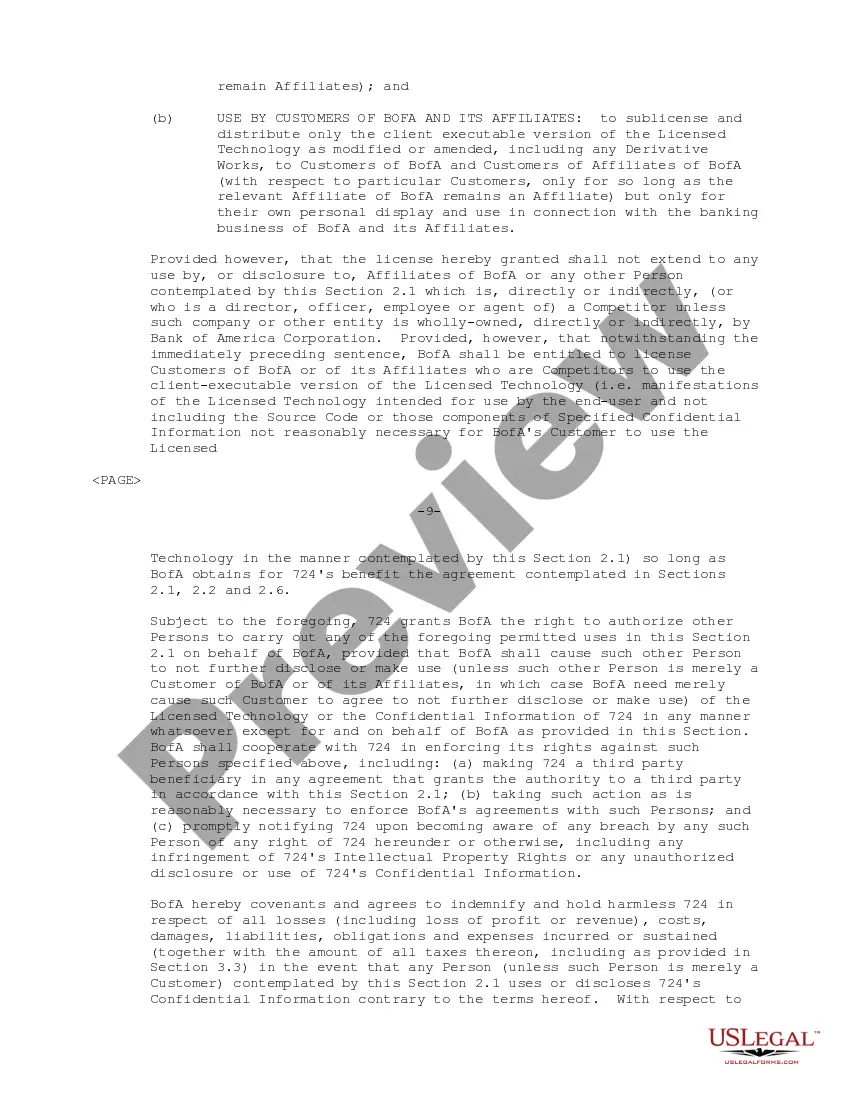
- Parties involved: Identification of 724 Solutions, Inc. as the licensor and Bank of America as the licensee.
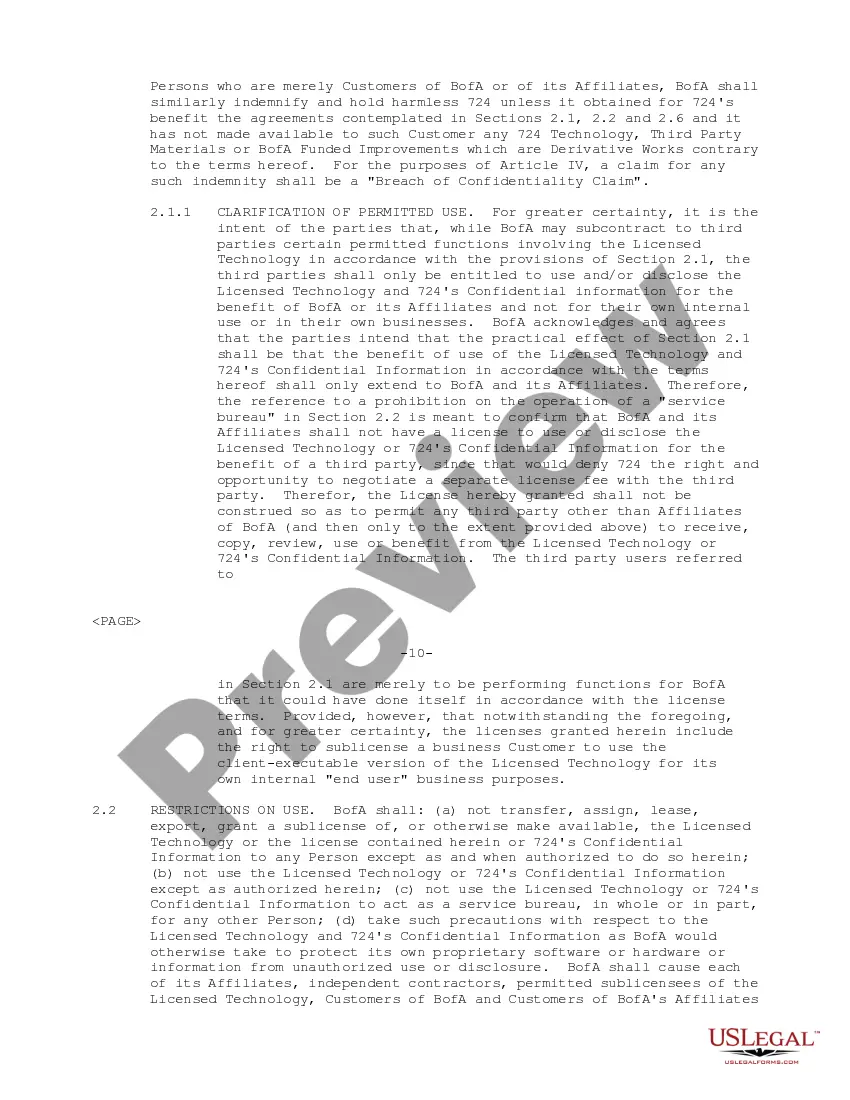
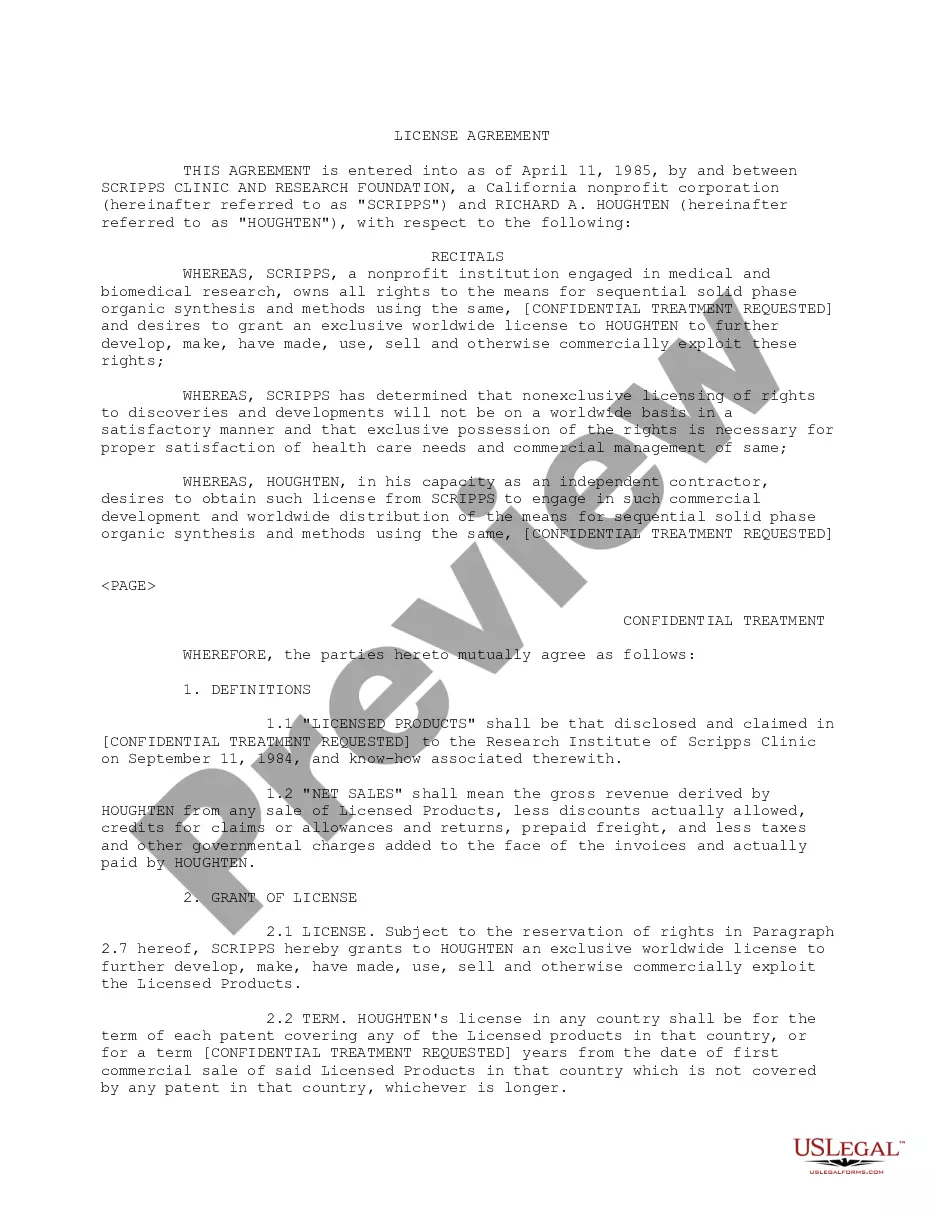
- License terms: Outlines the scope, limitations, and duration of the license granted.
- Payment details: Specifies the license fees and payment schedules.
- Confidentiality provisions: Sets forth obligations to protect proprietary information exchanged between the parties.
- Dispute resolution: Lays out procedures for arbitration in case of disagreements.


When this form is needed
This form should be used when two parties wish to formalize an agreement regarding the use, development, and marketing of a specific technology related to electronic banking. It is particularly valuable when the technology involves proprietary methods or software that one party wants to license to another for commercial use or further development.
Who can use this document
- Businesses developing electronic banking technologies that seek to license their products.
- Financial institutions looking to utilize innovative banking applications.
- Legal teams responsible for drafting or reviewing technology licensing agreements.
How to prepare this document
- Identify the parties: Enter the legal names and addresses of 724 Solutions, Inc. and Bank of America National Trust and Savings Association.
- Specify the technology: Clearly describe the technology being licensed, including development goals and marketing strategies.
- Enter financial terms: Detail the license fees, payment schedule, and any conditions associated with these payments.
- Outline confidentiality obligations: Specify what information must remain confidential and the obligations of both parties regarding this information.
- Review and sign: Both parties should review the agreement and sign it to indicate acceptance of the terms.
Notarization requirements for this form
In most cases, this form does not require notarization. However, some jurisdictions or signing circumstances might. US Legal Forms offers online notarization powered by Notarize, accessible 24/7 for a quick, remote process.
Get your form ready online
Our built-in tools help you complete, sign, share, and store your documents in one place.
Make edits, fill in missing information, and update formatting in US Legal Forms—just like you would in MS Word.
Download a copy, print it, send it by email, or mail it via USPS—whatever works best for your next step.
Sign and collect signatures with our SignNow integration. Send to multiple recipients, set reminders, and more. Go Premium to unlock E-Sign.
If this form requires notarization, complete it online through a secure video call—no need to meet a notary in person or wait for an appointment.
We protect your documents and personal data by following strict security and privacy standards.

Make edits, fill in missing information, and update formatting in US Legal Forms—just like you would in MS Word.

Download a copy, print it, send it by email, or mail it via USPS—whatever works best for your next step.

Sign and collect signatures with our SignNow integration. Send to multiple recipients, set reminders, and more. Go Premium to unlock E-Sign.

If this form requires notarization, complete it online through a secure video call—no need to meet a notary in person or wait for an appointment.

We protect your documents and personal data by following strict security and privacy standards.
Mistakes to watch out for
- Failing to clearly define the scope of the licensed technology.
- Not specifying the payment terms, which can lead to disputes later on.
- Ignoring confidentiality clauses, risking the exposure of proprietary information.
- Not having both parties properly sign the agreement, which may lead to enforceability issues.
Advantages of online completion
- Convenience: Easily accessible and downloadable for immediate use.
- Editability: Fill in the form electronically to tailor it to specific needs.
- Reliability: Form is prepared by licensed attorneys, ensuring it meets legal standards.
Looking for another form?
Form popularity
FAQ
Patent Licensing. Patents cover science and innovation. Trademark Licensing. Trademarks are signifiers of commercial source, namely, brand names and logos or slogans. Copyright Licensing. Trade Secret Licensing. Exclusive. Non-exclusive. Sole. Perpetual.
Usually, you would initially contact the professor responsible for the research. The professor typically will involve the university's technology licensing office (TLO) at some point in the process. The TLO has decision making authority for licensing the university's technology.
Public domain. This is the most permissive type of software license. Permissive. Permissive licenses are also known as Apache style or BSD style. They contain minimal requirements about how the software can be modified or redistributed. LGPL. Copyleft. Proprietary.
The 3 P's of collegiate licensing are protection, promotion, and profit.
Example: An example would include Walt Disney granting McDonalds a license for McDonalds to co-brand its McDonalds Happy Meals with a Disney trademarked character; (b) A license where a technology company, as licensor, grants a license to an individual or company, as licensee, to use a particular technology.
Plan on 1-1/2 to 2 years, if at all. Firstly, licensing deals fall through all the time, even just weeks after the agreement is inked. This is because the company wants to sign an agreement before they invest time and money in actual product developmentwhen things usually fall apart.
Examples of licenses include a company using the design of a popular character, e.g. Mickey Mouse, on their products. Another example would be a clothing manufacturer like Life is Good licensing its designs and brand in a certain country to a local company.
Licensing generally involves allowing another company to use patents, trademarks, copyrights, designs, and other intellectual in exchange for a percentage of revenue or a fee. It's a fast way to generate income and grow a business, as there is no manufacturing or sales involved.