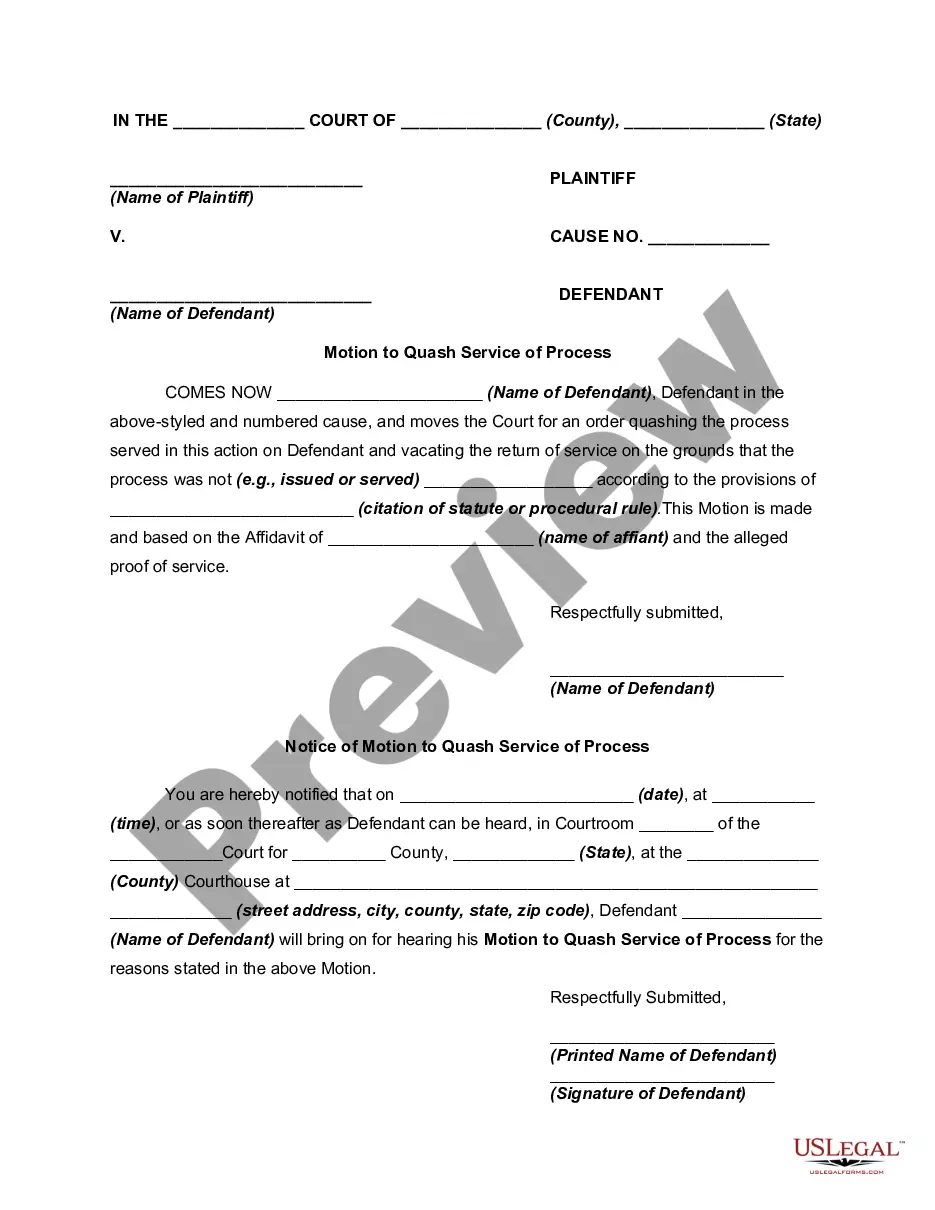
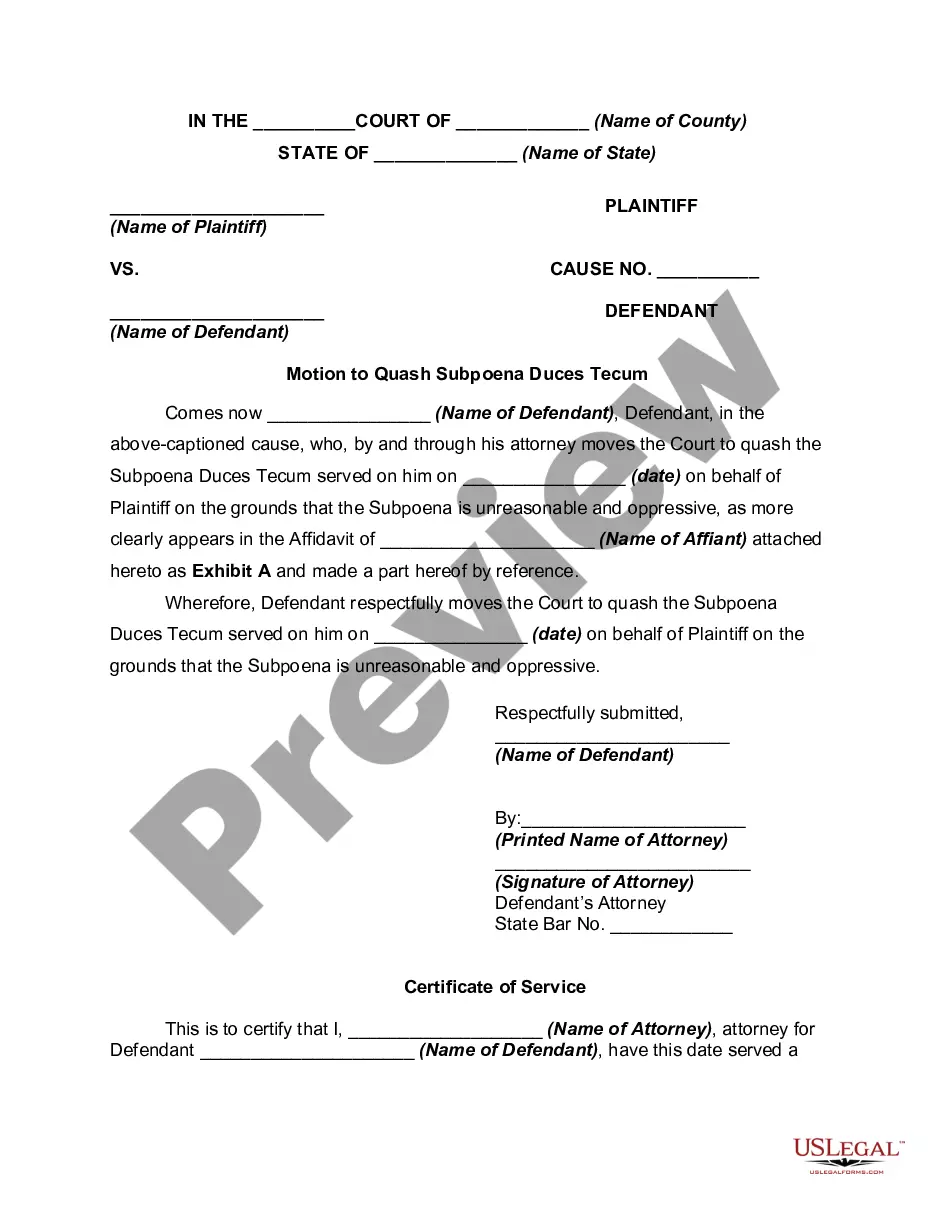
Mississippi Motion to Quash Subpoena for Documents
Overview of this form
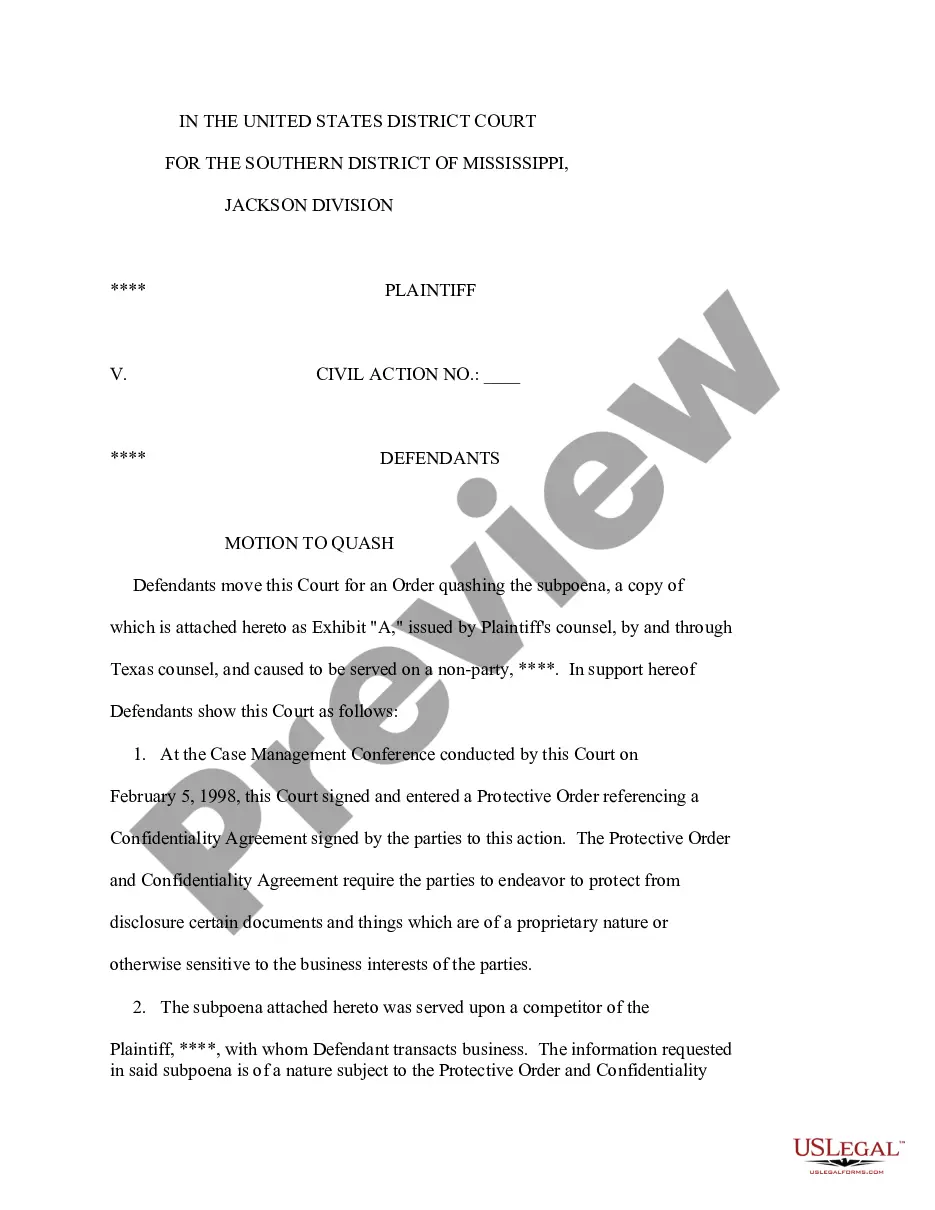
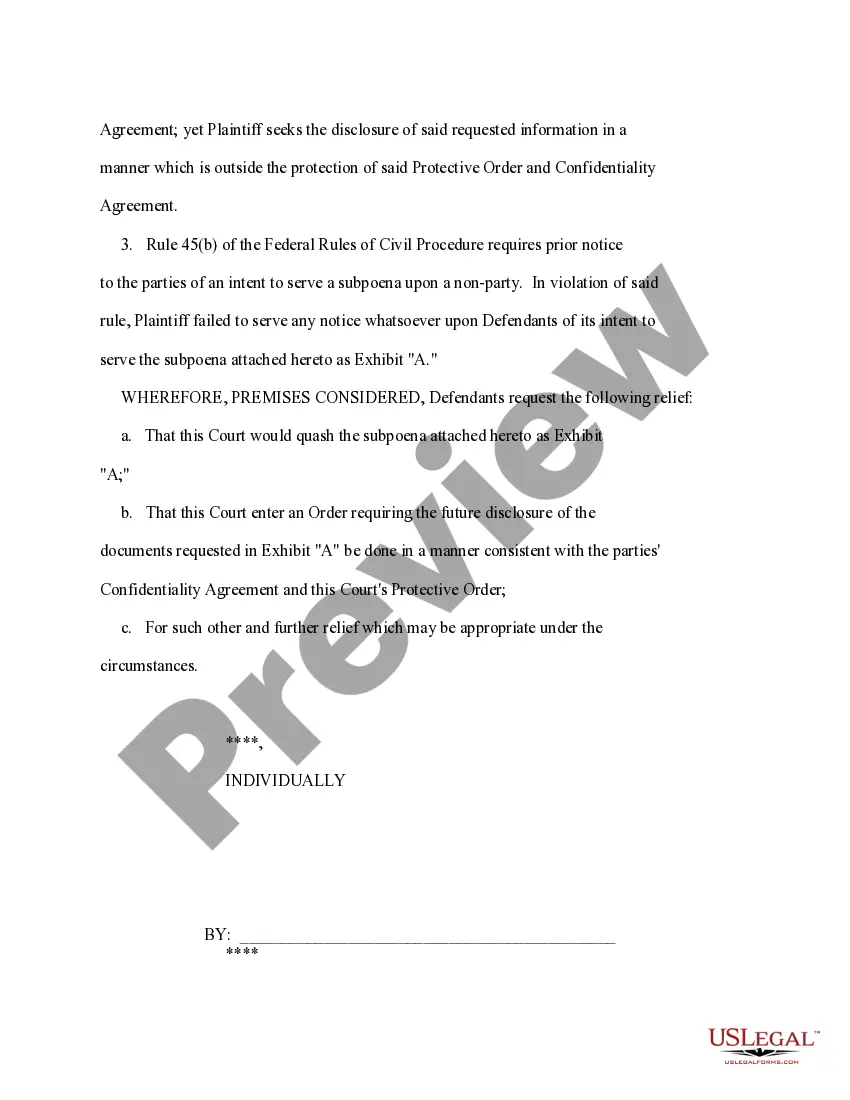
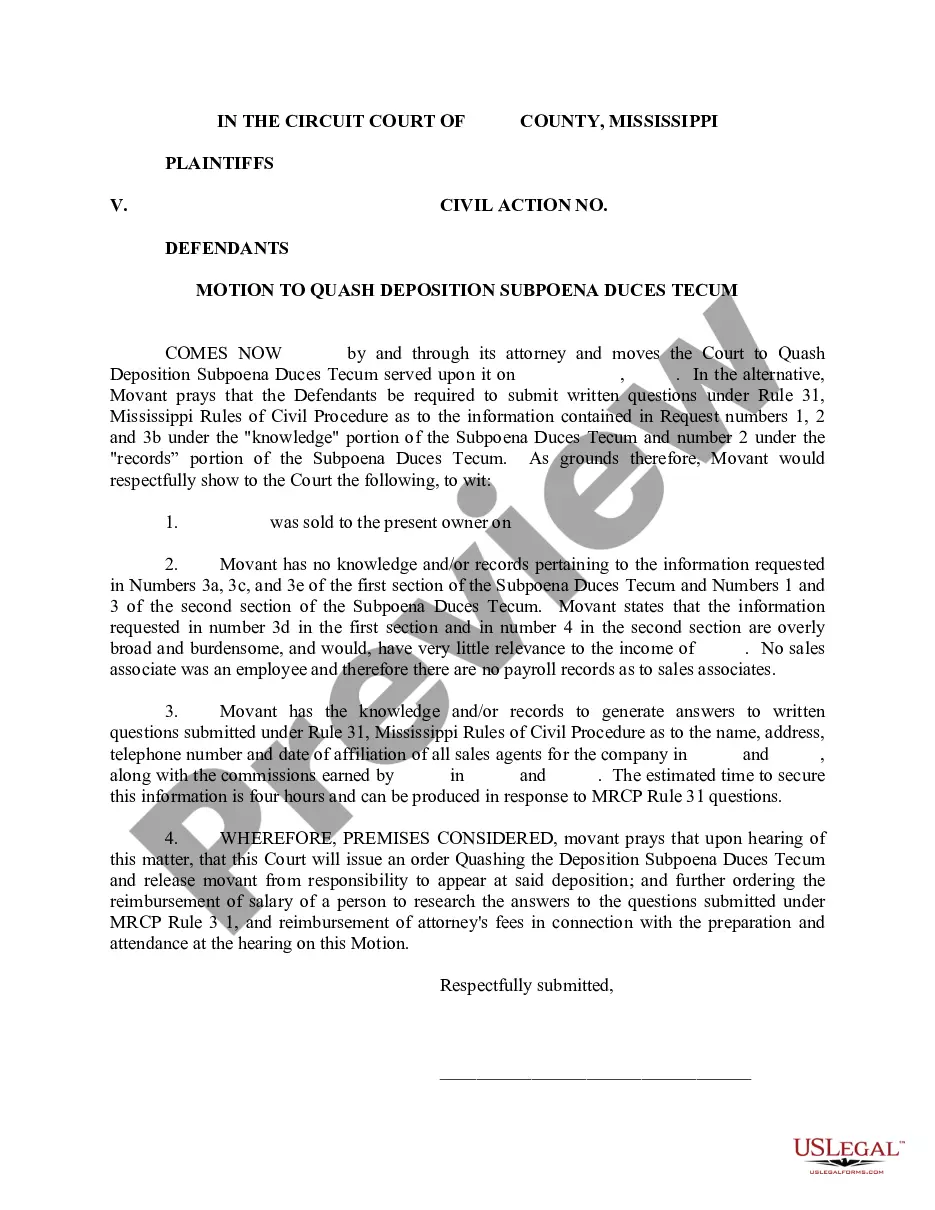
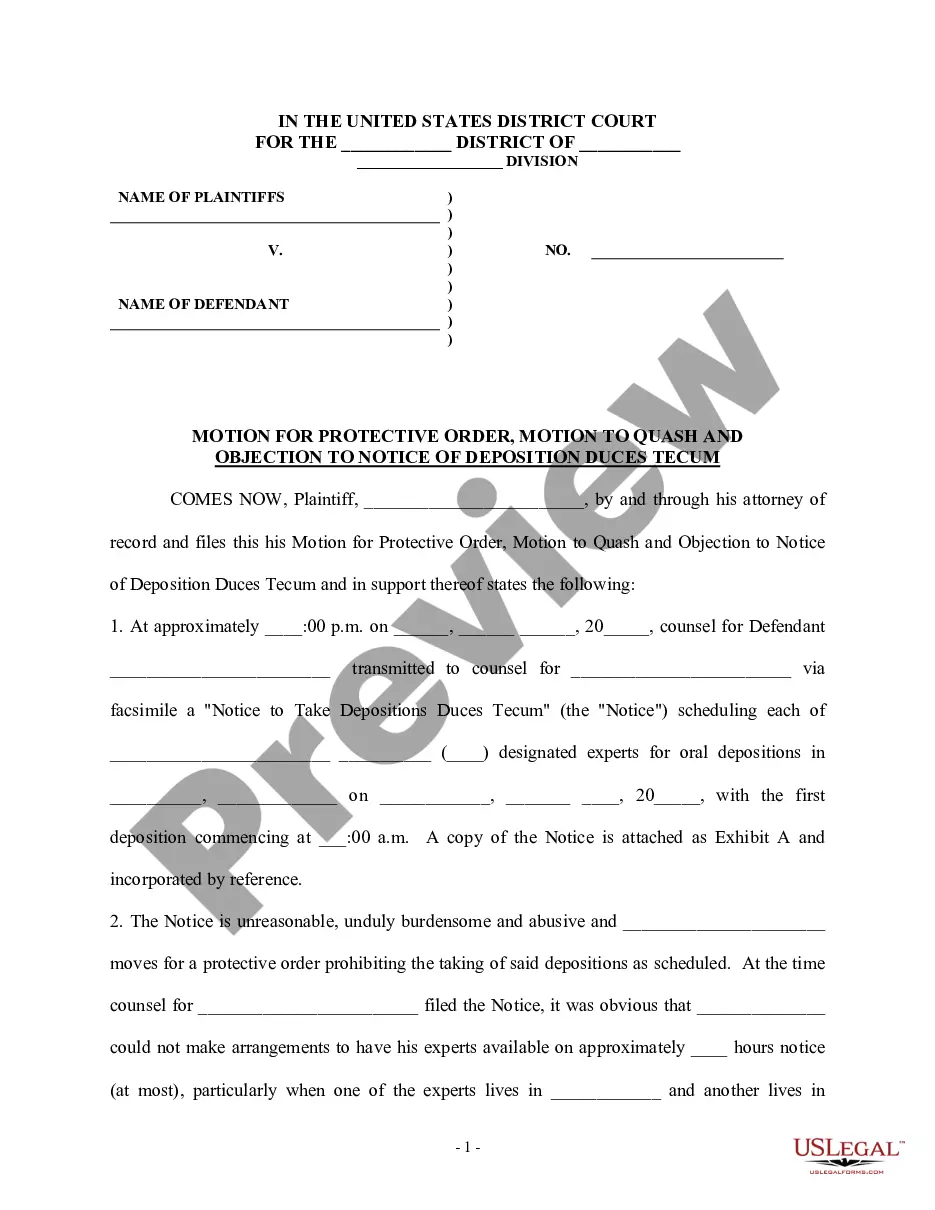
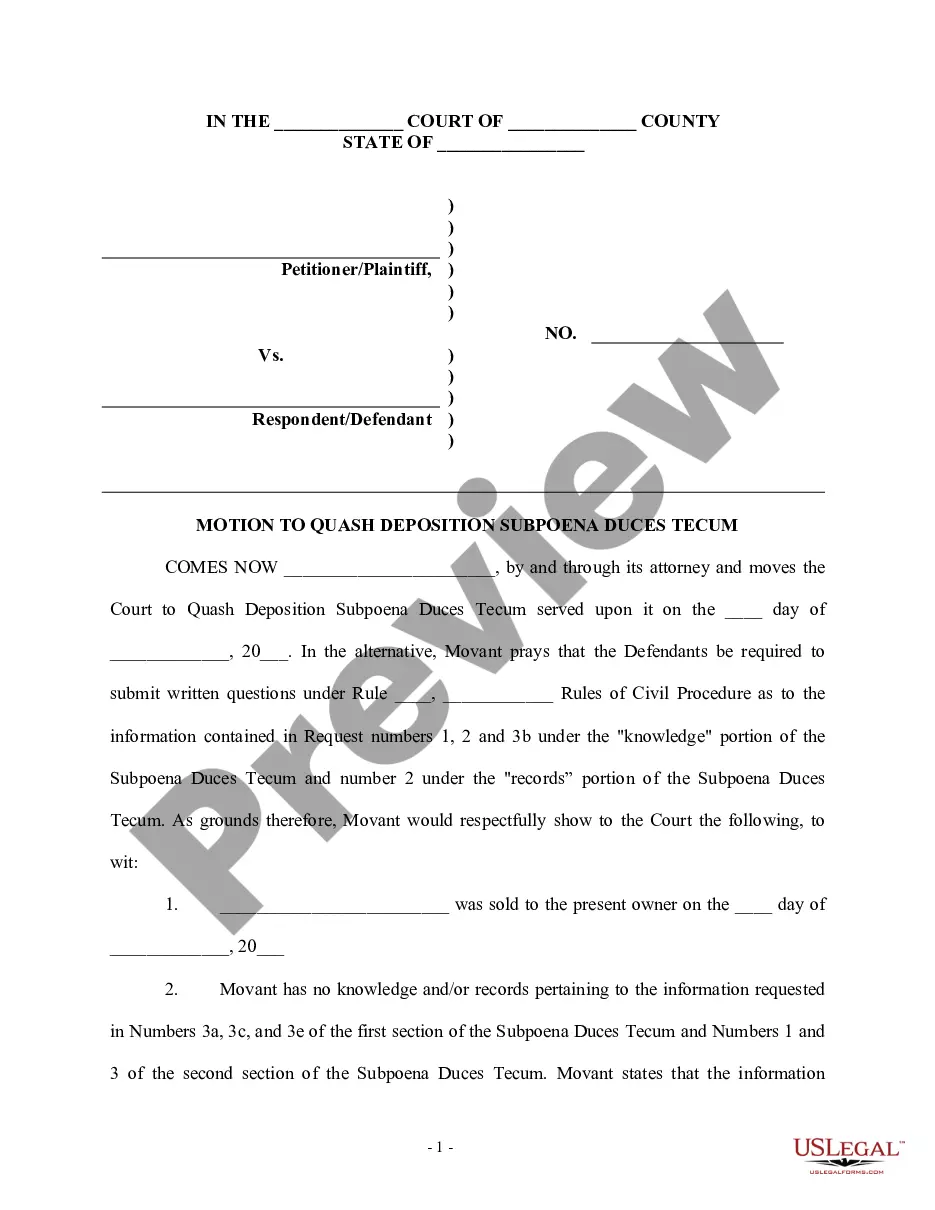
The Motion to Quash Subpoena for Documents is a formal request made to the court to invalidate a subpoena that requires the production of documents. This document is utilized when a party believes that complying with the subpoena would violate confidentiality agreements, legal protections, or proper notice procedures. It serves a vital function in protecting sensitive information from disclosure while ensuring that parties adhere to the judicial process. Unlike a standard subpoena response, this motion specifically seeks to prevent enforcement of the subpoena itself.
Key components of this form
- Identification of the court and parties involved.
- Detailed rationale for quashing the subpoena.
- Reference to relevant rules and agreements, such as the Protective Order.
- Request for specific relief from the court.
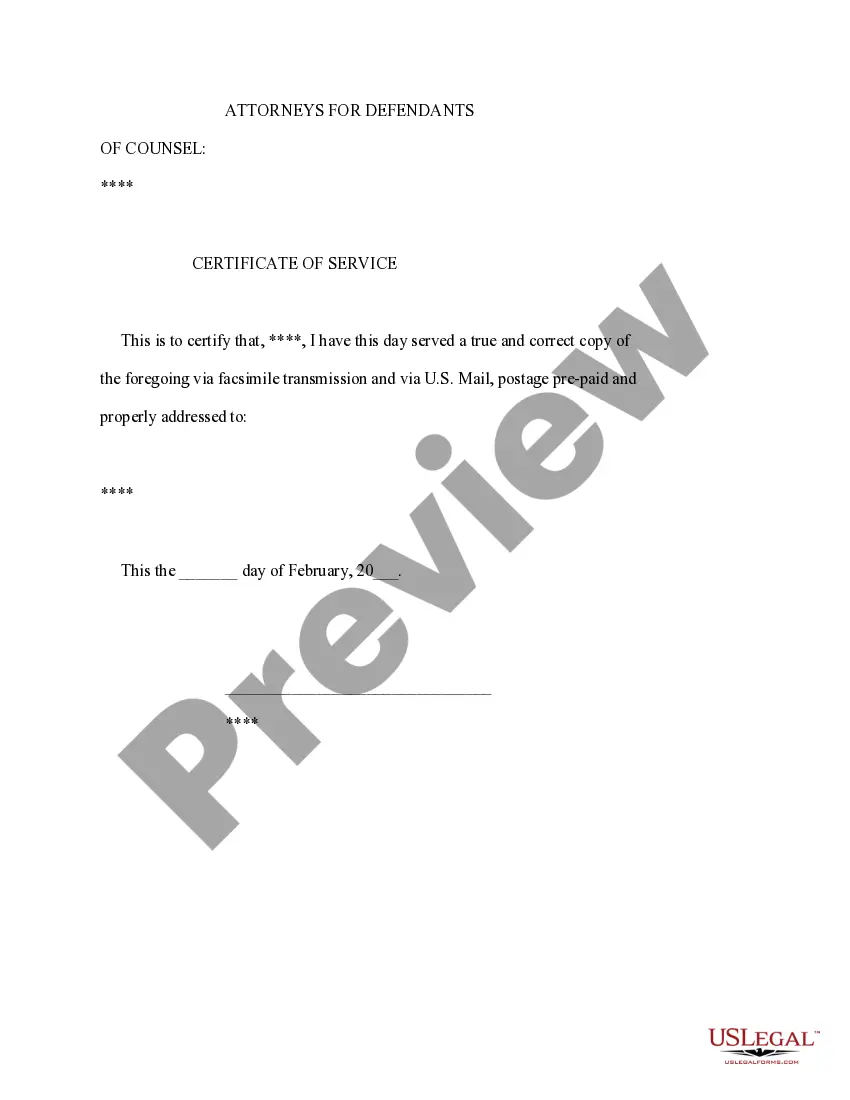
- Certification of service confirming notice was given to involved parties.
When this form is needed
This form should be used when a party has been served with a subpoena that they believe violates confidentiality agreements or the rules governing subpoenas. For instance, if sensitive business information from a third-party competitor is requested, and the party has not been properly notified about the subpoena, a Motion to Quash may be appropriate. It is also relevant when the information sought is protected under a court order or applicable law.
Who this form is for
- Defendants in a civil action facing a subpoena for documents.
- Parties involved in litigation who seek to protect confidential information.
- Legal representatives or attorneys filing on behalf of their clients.
Completing this form step by step
- Identify the Court where the action is pending, including the division.
- Fill in the names of the parties involved in the case.
- Explain the reasons for the motion in clear, specific terms, referencing relevant agreements and legal provisions.
- Indicate the specific relief requested from the Court, including the quashing of the subpoena.
- Sign and date the motion, including your title or designation.
Notarization guidance
This form does not typically require notarization unless specified by local law. However, it is essential to check local regulations to ensure compliance.
Get your form ready online
Our built-in tools help you complete, sign, share, and store your documents in one place.
Make edits, fill in missing information, and update formatting in US Legal Forms—just like you would in MS Word.
Download a copy, print it, send it by email, or mail it via USPS—whatever works best for your next step.
Sign and collect signatures with our SignNow integration. Send to multiple recipients, set reminders, and more. Go Premium to unlock E-Sign.
If this form requires notarization, complete it online through a secure video call—no need to meet a notary in person or wait for an appointment.
We protect your documents and personal data by following strict security and privacy standards.

Make edits, fill in missing information, and update formatting in US Legal Forms—just like you would in MS Word.

Download a copy, print it, send it by email, or mail it via USPS—whatever works best for your next step.

Sign and collect signatures with our SignNow integration. Send to multiple recipients, set reminders, and more. Go Premium to unlock E-Sign.

If this form requires notarization, complete it online through a secure video call—no need to meet a notary in person or wait for an appointment.

We protect your documents and personal data by following strict security and privacy standards.
Common mistakes to avoid
- Failing to cite relevant legal grounds for the motion.
- Not providing sufficient detail about the confidentiality agreements.
- Neglecting to notify relevant parties as required by legal rules.
Benefits of completing this form online
- Easy to download and customize to your needs.
- Access to templates created by licensed attorneys for reliability.
- Time-saving compared to drafting from scratch or finding a lawyer.
- The motion should be based on valid legal grounds to avoid dismissal for lack of merit.
- Understanding of confidentiality agreements is crucial for justifying the motion.
- Ensure adherence to procedural rules outlined in the Federal Rules of Civil Procedure, particularly Rule 45 regarding subpoenas.
Quick recap
- A Motion to Quash Subpoena for Documents helps protect against unlawful disclosures.
- Ensure you include all relevant supporting documents and arguments in your motion.
- Be aware of and comply with jurisdiction-specific rules regarding subpoenas and motions.
Looking for another form?




Form popularity
FAQ
Any employee whose employment records are sought by a subpoena duces tecum may bring a motion to quash. Note that non-party employees may object to a subpoena by serving written objections. 3. Any non-party who has been served with a business records subpoena may bring a motion to quash.
If the accused has been arrested, with or without warrant, he may file MOTION TO QUASH the arrest or to RECALL the same, on the ground that the same has been illegally made or that there is no probable cause. 4.
If you want to take the risk, save the money you would have spent on a motion to quash (lawyers often charge from $2,000 to more than $3,000) and instead use it to settle the case if: a) you are served a summons and complaint, or b) you are actually targeted in an individual lawsuit against you.
Failure to respond to a subpoena is punishable as contempt by either the court or agency issuing the subpoena. Punishment may include monetary sanctions (even imprisonment although extremely unlikely).
Providing objections suspends your obligation to comply with the subpoena until or unless a court orders compliance, or you reach an agreement with the party that served you with the subpoena. If you do not wish to comply with the subpoena, you may file a motion to quash it before the date set forth on the subpoena.
A motion to quash a subpoena duces tecum should be filed within ten (10) days after receiving the subpoena or before the time stated for compliance if that time is fewer than ten days.
Contact the lawyer who subpoenaed you and ask him/her to let you off the hook or alternatively postpone the trial. If you have a good excuse and the lawyer will not relent, get an attorney you know to contact the judge to get the case postponed.
3. Any non-party who has been served with a business records subpoena may bring a motion to quash. Note, however, that some case law holds that a non-party may simply serve written objections and is not required to bring a motion to quash. The discovery rules do not discriminate against nonparty deponents.