California Last Will and Testament for a Domestic Partner with No Children
Understanding this form
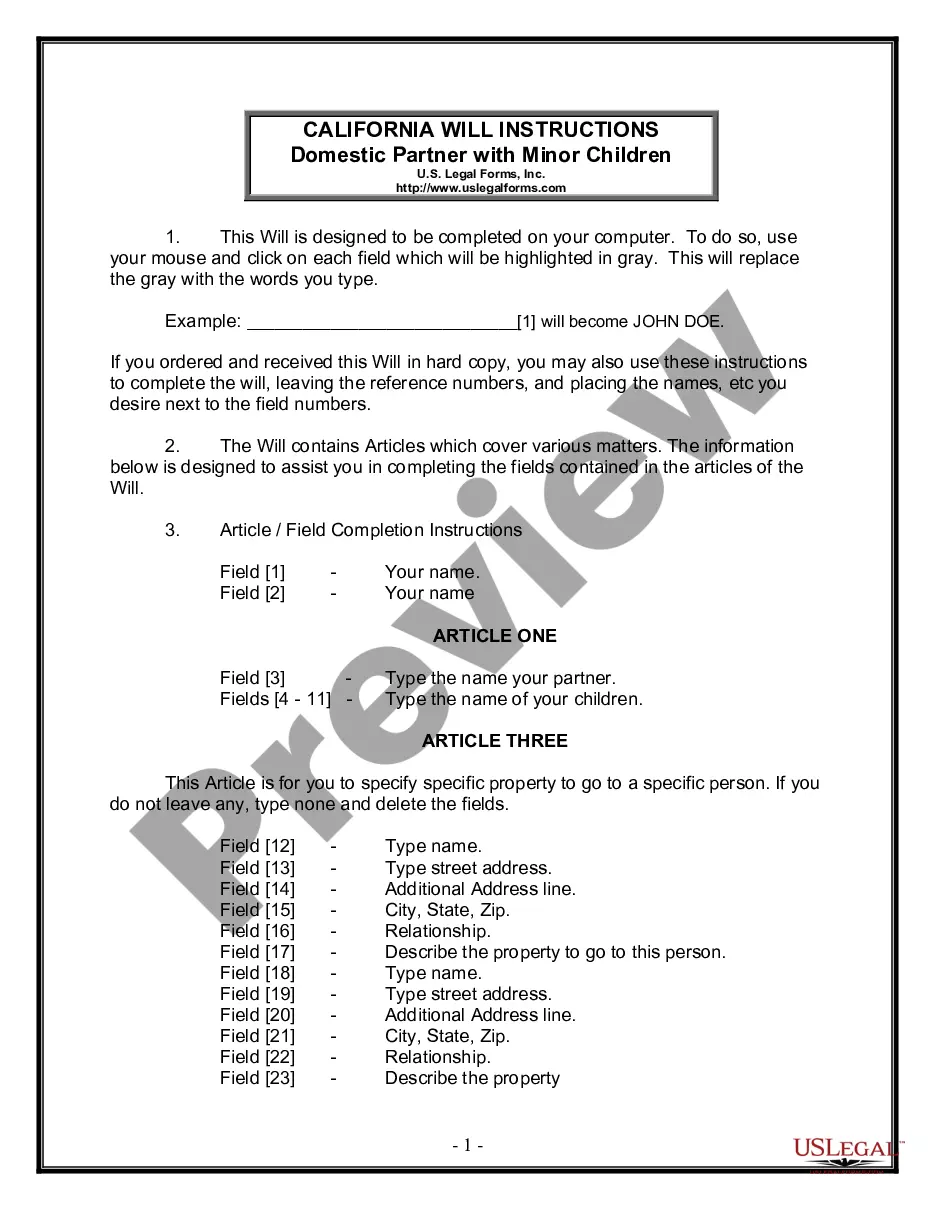
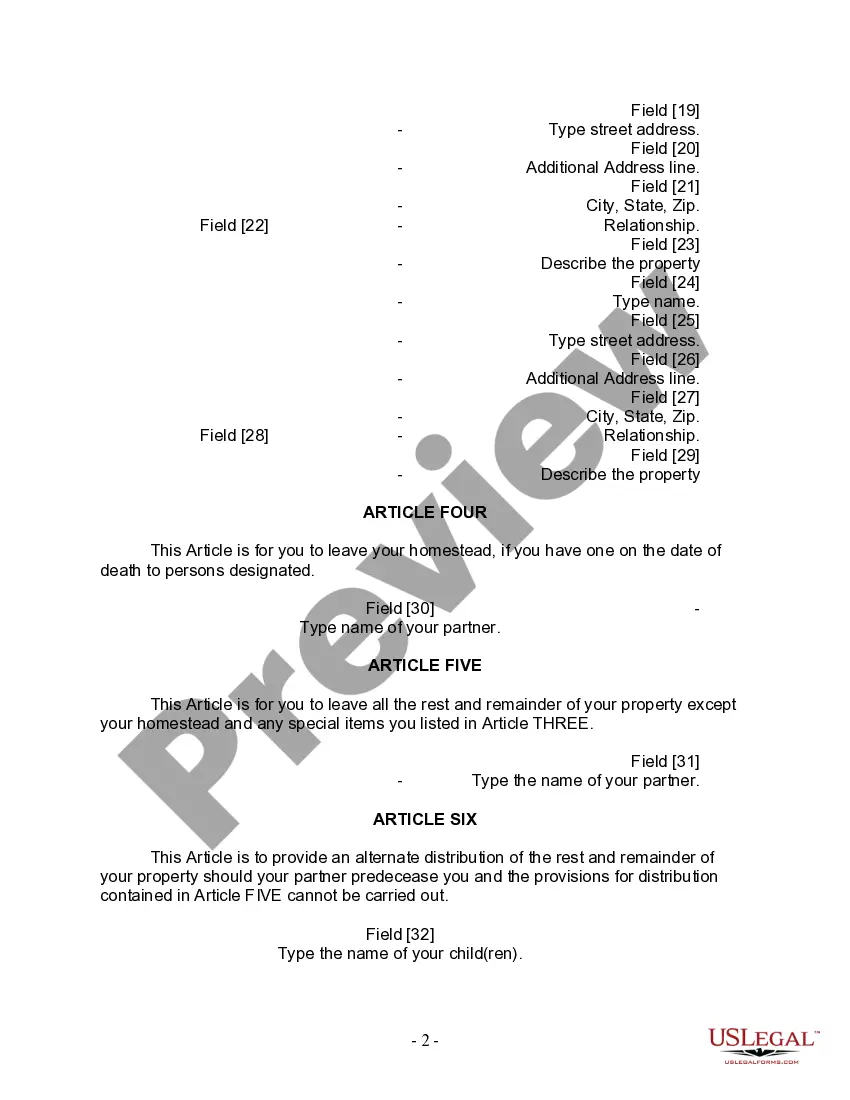
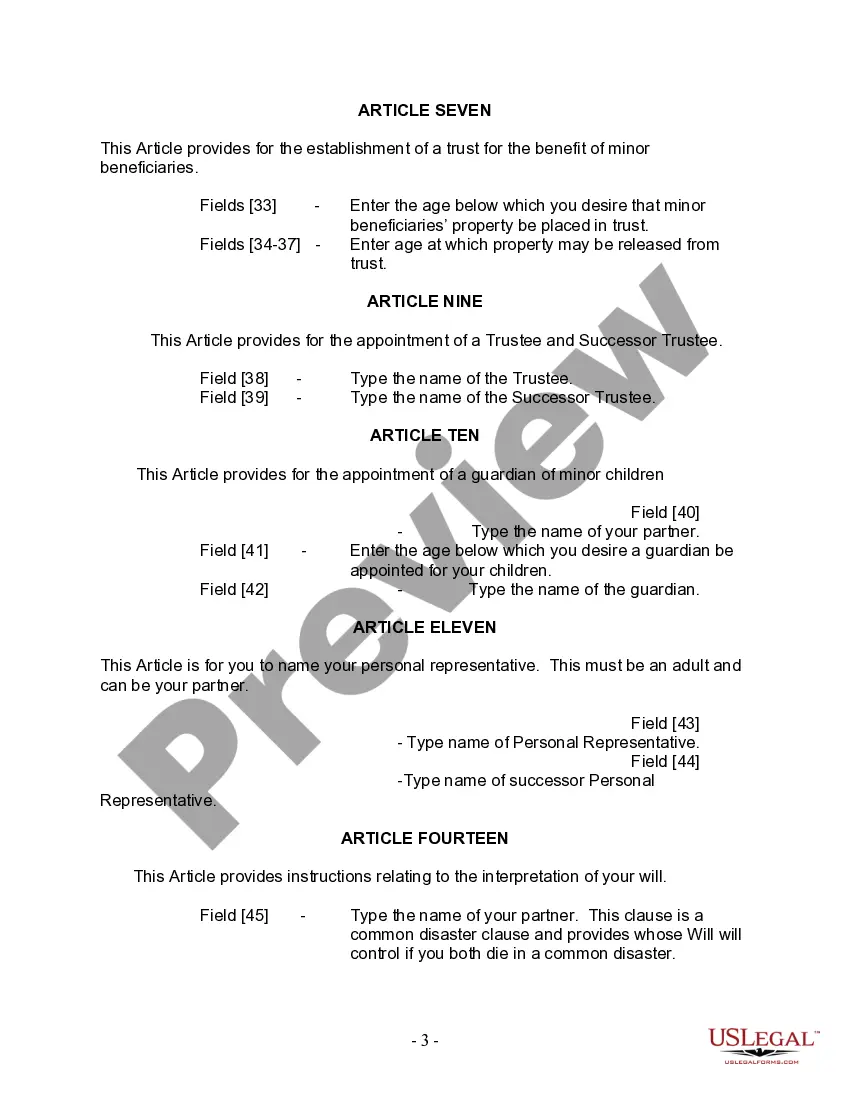
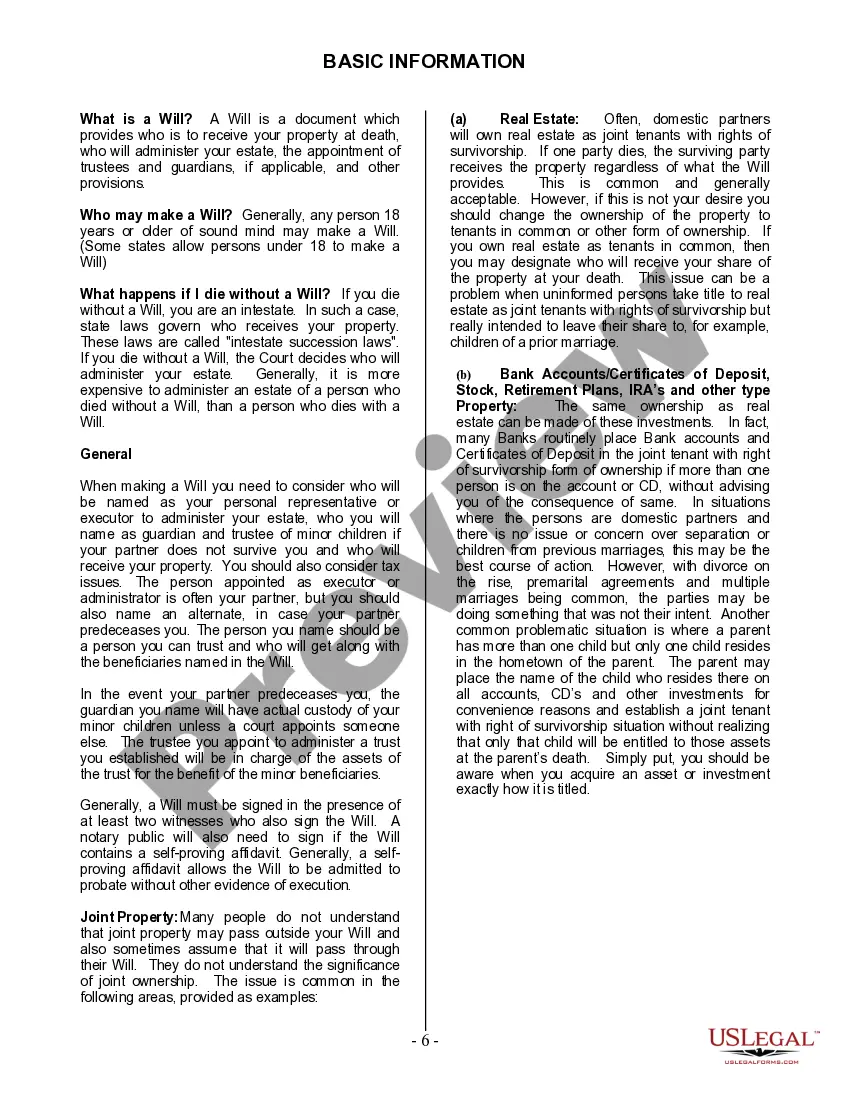
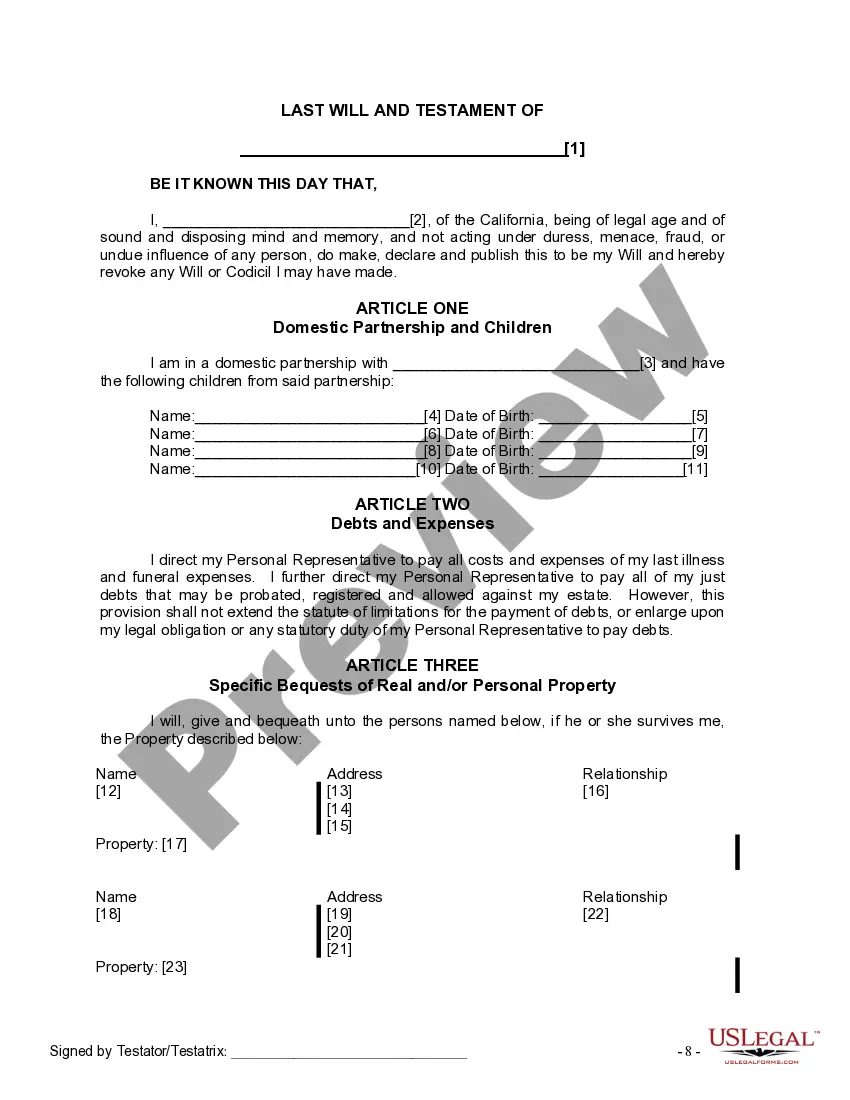
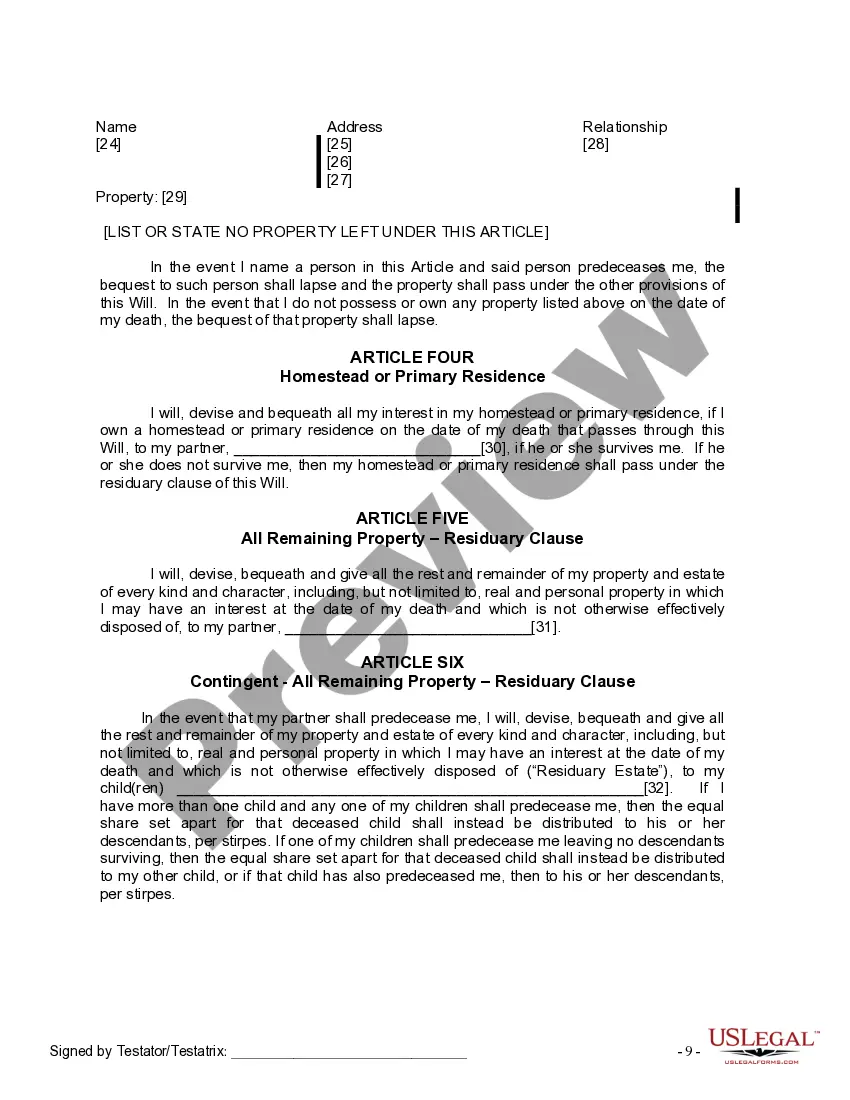
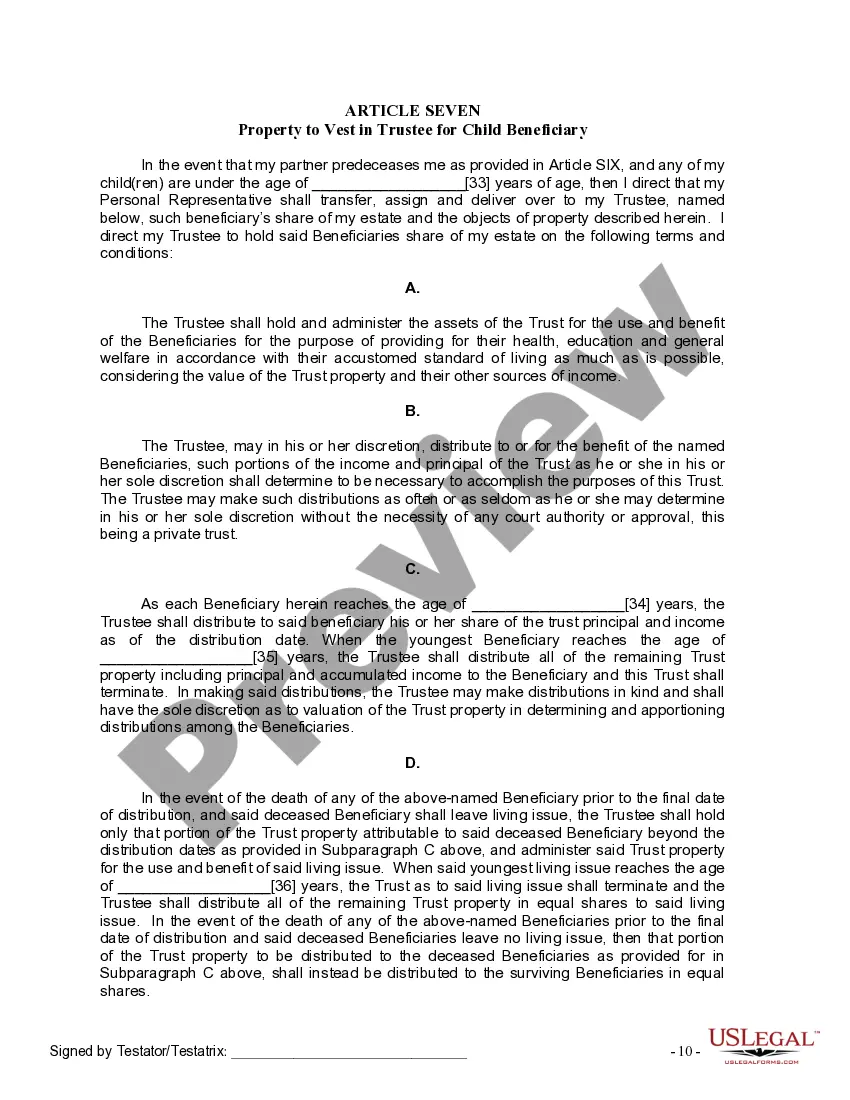
The Last Will and Testament for a Domestic Partner with No Children is a legal document that specifies how your assets will be distributed upon your death. This type of will allows a domestic partner to appoint an executor, designate beneficiaries for property, and address specific wishes regarding personal belongings. Unlike other wills, this form is specifically tailored for domestic partners without children, ensuring that your partner is prioritized in your estate planning.
Key parts of this document
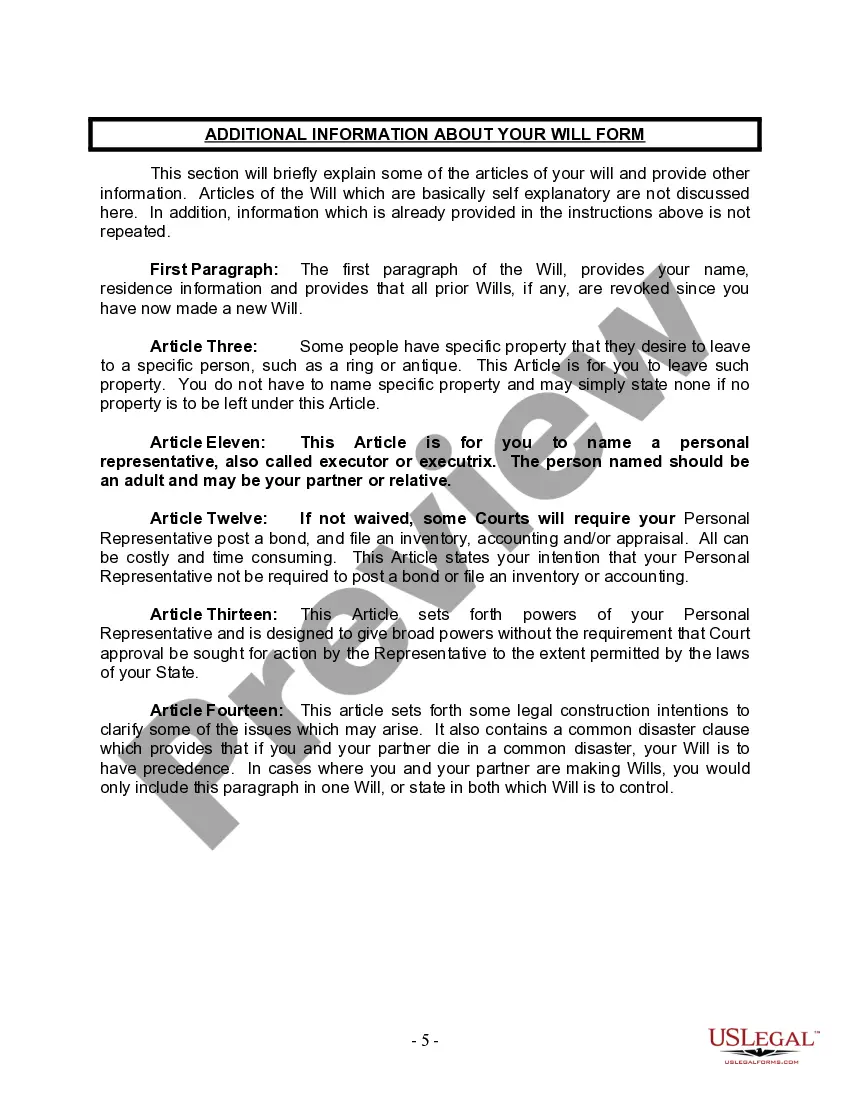
- Executor designation: Appoint a personal representative to manage your estate.
- Property distribution: Specify who will receive your property, including real estate and personal belongings.
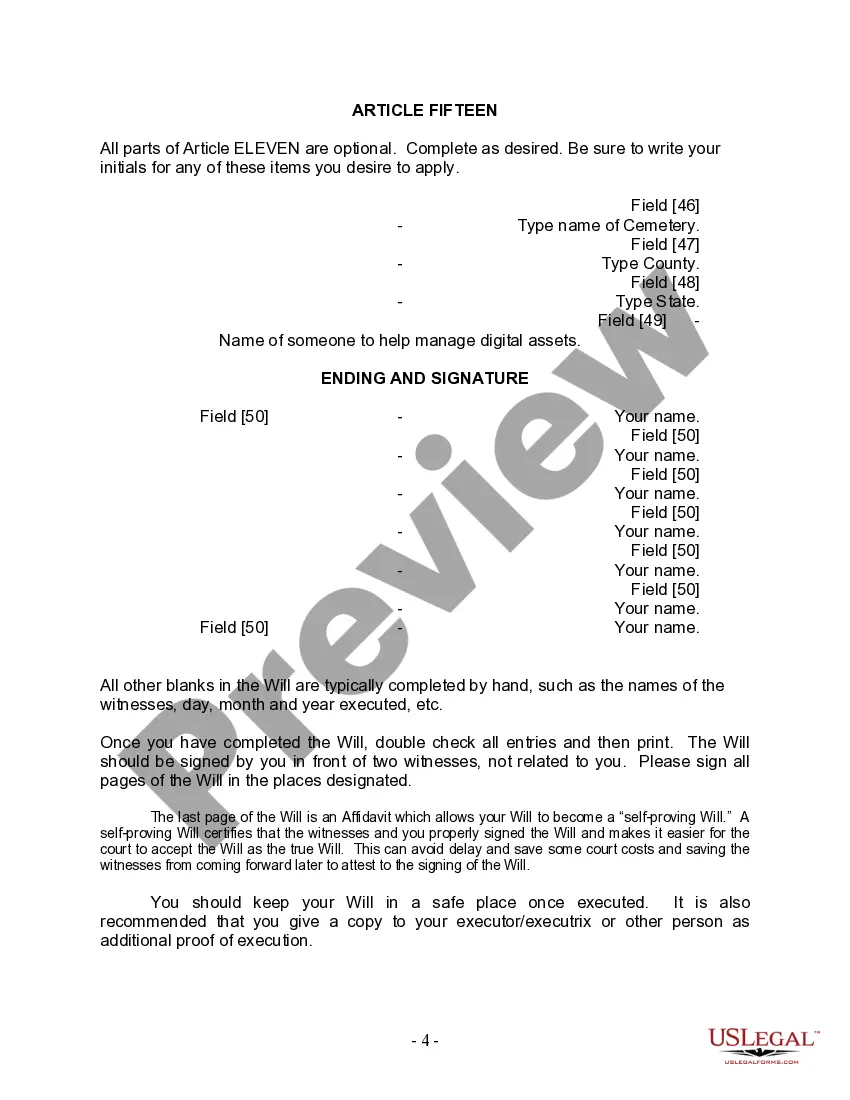
- Self-proving affidavit: Includes provisions for making the will self-proving in states that allow it, potentially simplifying probate.
- Witness and notarization requirements: Details on how to properly execute the will with witnesses and notary, ensuring its validity.
- Alternate beneficiaries: Options for designating beneficiaries in the event your partner predeceases you.



Situations where this form applies
This form is needed when a domestic partner wishes to outline their final wishes regarding asset distribution and other matters after death. It is particularly useful if you want to ensure that your partner is the primary heir and to provide clear instructions for your property and personal items. Using this will can help avoid disputes among family members and ensure that your partner's interests are adequately protected.
Who should use this form
- Individuals in a domestic partnership who have no children.
- Those looking to create a clear plan for asset distribution upon their death.
- Anyone wishing to designate a personal representative or executor.
- Partners who want to ensure their wishes are legally documented to avoid potential disputes.
How to complete this form
- Enter your full name and residence at the beginning of the form.
- Specify your domestic partner's name and any specific property you wish to bequeath.
- Designate a personal representative who will execute the will's provisions.
- Identify any alternate beneficiaries in case your primary beneficiary does not survive you.
- Ensure to have the signed will witnessed by two individuals who are not related to you or beneficiaries.
Does this form need to be notarized?
This form does not typically require notarization unless specified by local law. However, including a notary can simplify the probate process and enhance the validity of the document.
Get your form ready online
Our built-in tools help you complete, sign, share, and store your documents in one place.
Make edits, fill in missing information, and update formatting in US Legal Forms—just like you would in MS Word.
Download a copy, print it, send it by email, or mail it via USPS—whatever works best for your next step.
Sign and collect signatures with our SignNow integration. Send to multiple recipients, set reminders, and more. Go Premium to unlock E-Sign.
If this form requires notarization, complete it online through a secure video call—no need to meet a notary in person or wait for an appointment.
We protect your documents and personal data by following strict security and privacy standards.

Make edits, fill in missing information, and update formatting in US Legal Forms—just like you would in MS Word.

Download a copy, print it, send it by email, or mail it via USPS—whatever works best for your next step.

Sign and collect signatures with our SignNow integration. Send to multiple recipients, set reminders, and more. Go Premium to unlock E-Sign.

If this form requires notarization, complete it online through a secure video call—no need to meet a notary in person or wait for an appointment.

We protect your documents and personal data by following strict security and privacy standards.
Mistakes to watch out for
- Not signing the will in front of the required number of witnesses.
- Failing to update the will after significant life changes.
- Neglecting to specify alternate beneficiaries.
- Overlooking the need for a notary when applicable.
Why use this form online
- Convenience: Complete the form at your own pace, from anywhere with internet access.
- Editability: Easily make changes and updates as needed without starting from scratch.
- Reliability: Access professionally drafted templates reviewed by licensed attorneys.
Looking for another form?

Form popularity
FAQ
In California, there are specific laws regarding community property and inheritance. If you inherit property as an individual, you do not automatically have to share it with your spouse. However, it is beneficial to outline your wishes in a California Last Will and Testament for a Domestic Partner with No Children.
When your domestic partner passes away, several factors determine what happens next, including the existence of a will. If there is no will, California law designates how property is distributed. It is advisable to create a California Last Will and Testament for a Domestic Partner with No Children to specify your desires clearly.
Yes, a domestic partnership does affect inheritance under California law. Domestic partners can inherit property and assets just as spouses do if there are no children. To maximize your inheritance rights, it is wise to create a California Last Will and Testament for a Domestic Partner with No Children.
Domestic partners in California are entitled to many of the same rights as married couples. This includes rights related to property, inheritance, and health care decisions. It’s crucial to outline these rights in your estate planning, particularly through a California Last Will and Testament for a Domestic Partner with No Children.
Inheritance law for a spouse in California offers considerable protection and rights. If there is no will, a spouse may inherit a portion of community and separate property based on the family situation. To ensure that your wishes are honored, drafting a California Last Will and Testament for a Domestic Partner with No Children can provide clarity and security in the distribution of assets.
In California, a spouse does not automatically inherit everything if there are surviving children from the marriage or previous relationships. The distribution will depend on various factors in the estate plan and applicable laws. Particularly for domestic partners with no children, a well-crafted California Last Will and Testament for a Domestic Partner with No Children can direct the distribution of assets to ensure their partner receives what they intend.
The order of inheritance in California is determined by the relationship to the deceased. Typically, a surviving spouse or domestic partner inherits first, followed by children, parents, and siblings. If there are no direct heirs, the state may distribute the assets according to established guidelines. For domestic partners, having a California Last Will and Testament can ensure your wishes are respected and properly implemented.
Yes, domestic partners in California have inheritance rights similar to those of married couples. Under state law, domestic partners can inherit from one another, provided proper estate planning is in place, such as a California Last Will and Testament for a Domestic Partner with No Children. It is important to draft legal documents that explicitly outline these rights to avoid any disputes or complications.
In California, a surviving spouse is entitled to a significant portion of the deceased spouse’s estate. This includes community property, which generally means everything acquired during the marriage. Additionally, a surviving spouse may inherit a share of the separate property, depending on the presence of other heirs. Understanding the specifics of a California Last Will and Testament for a Domestic Partner with No Children can clarify entitlements.
Yes, in California, a spouse or domestic partner automatically inherits if there is no will, but there are nuances to consider. The distribution often depends on whether there are children involved. For those without children, the surviving partner typically receives the full estate. To ensure your intentions are honored, consider drafting a California Last Will and Testament for a Domestic Partner with No Children.