California Last Will and Testament for Domestic Partner with Adult Children
About this form
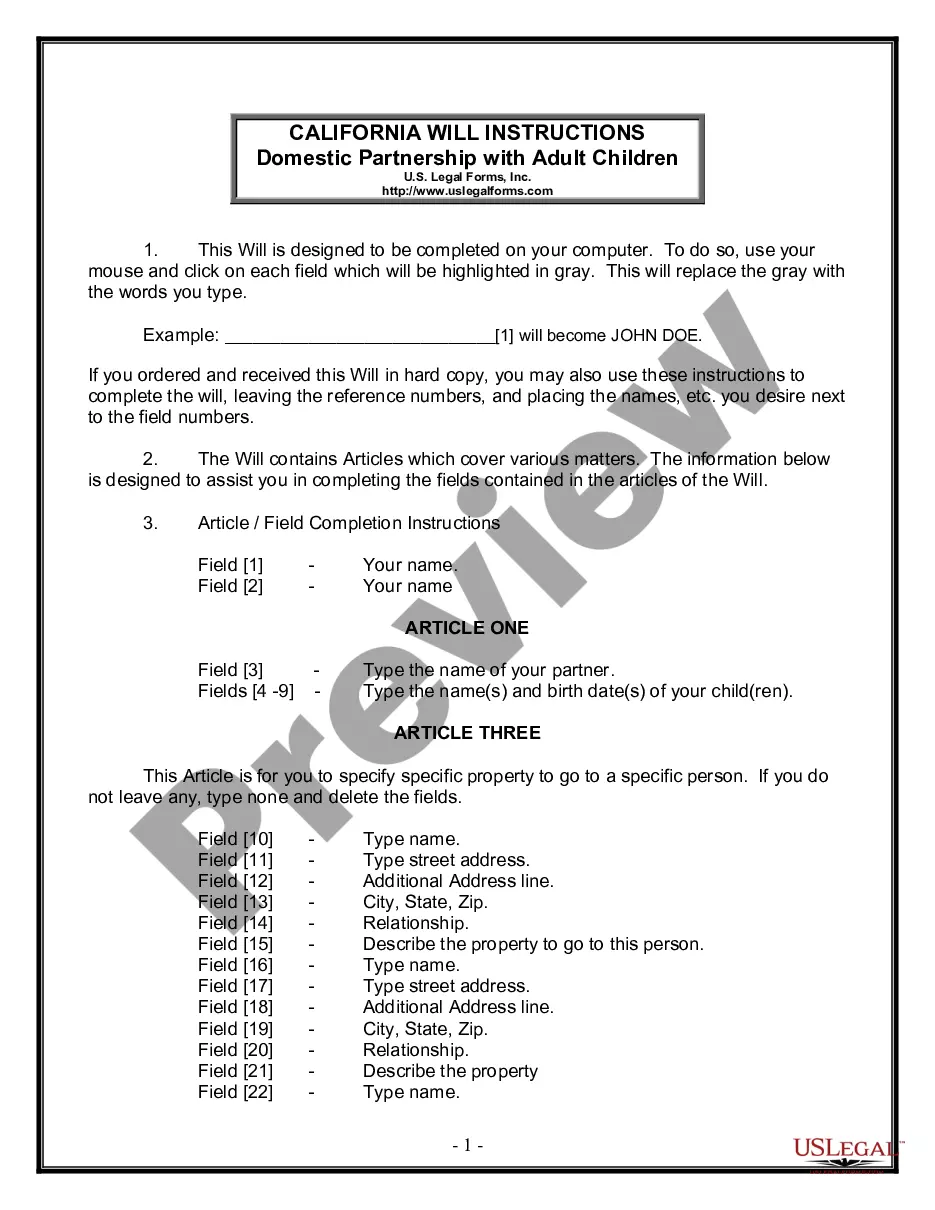
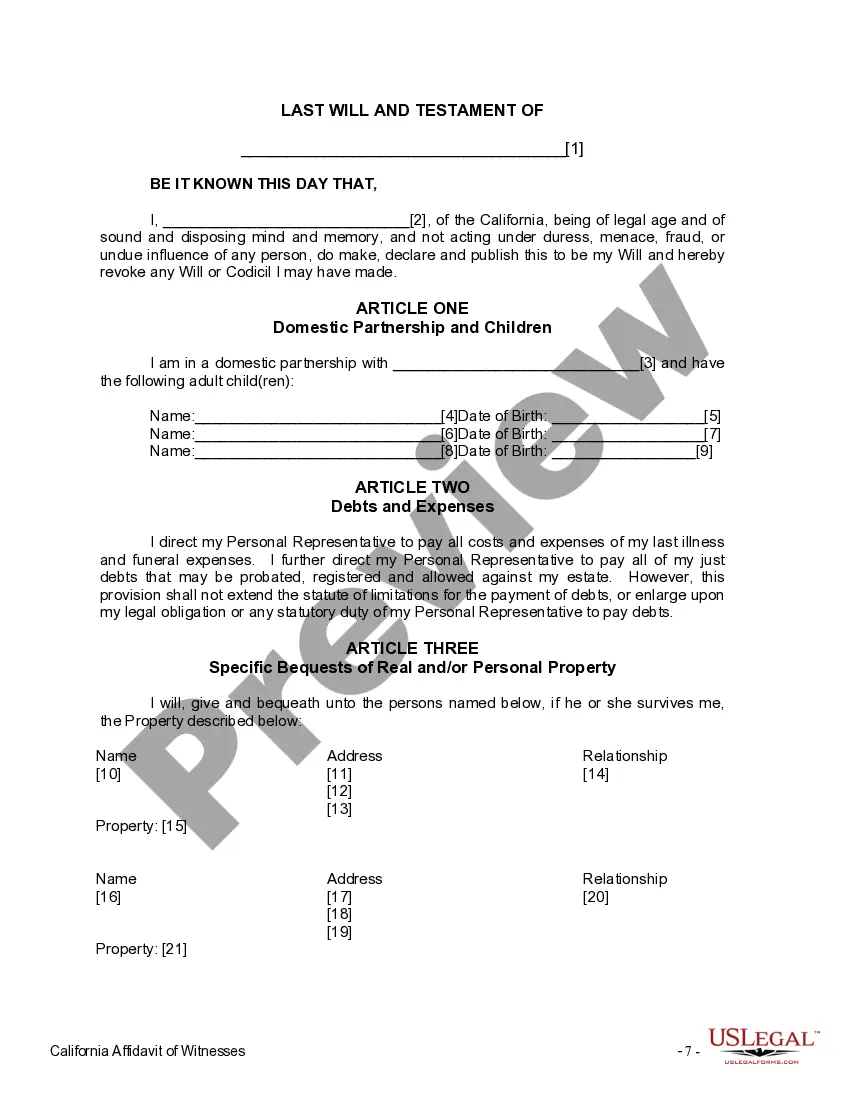
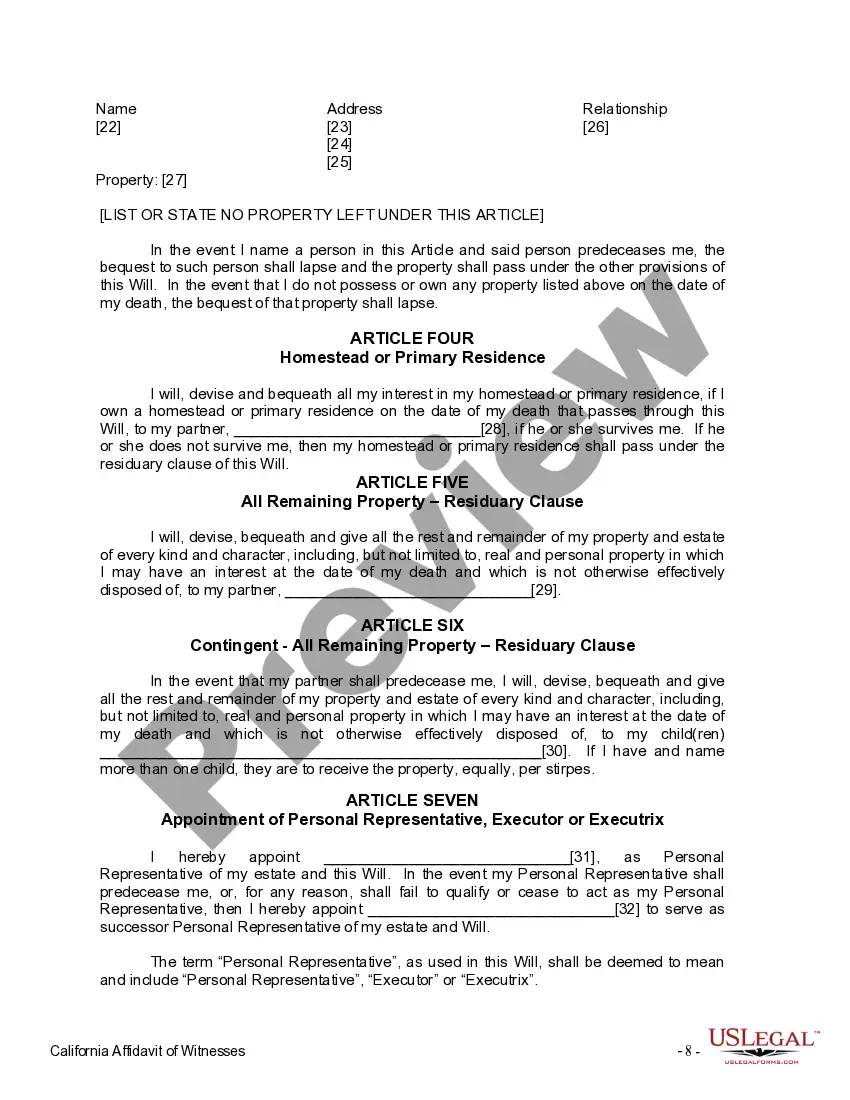
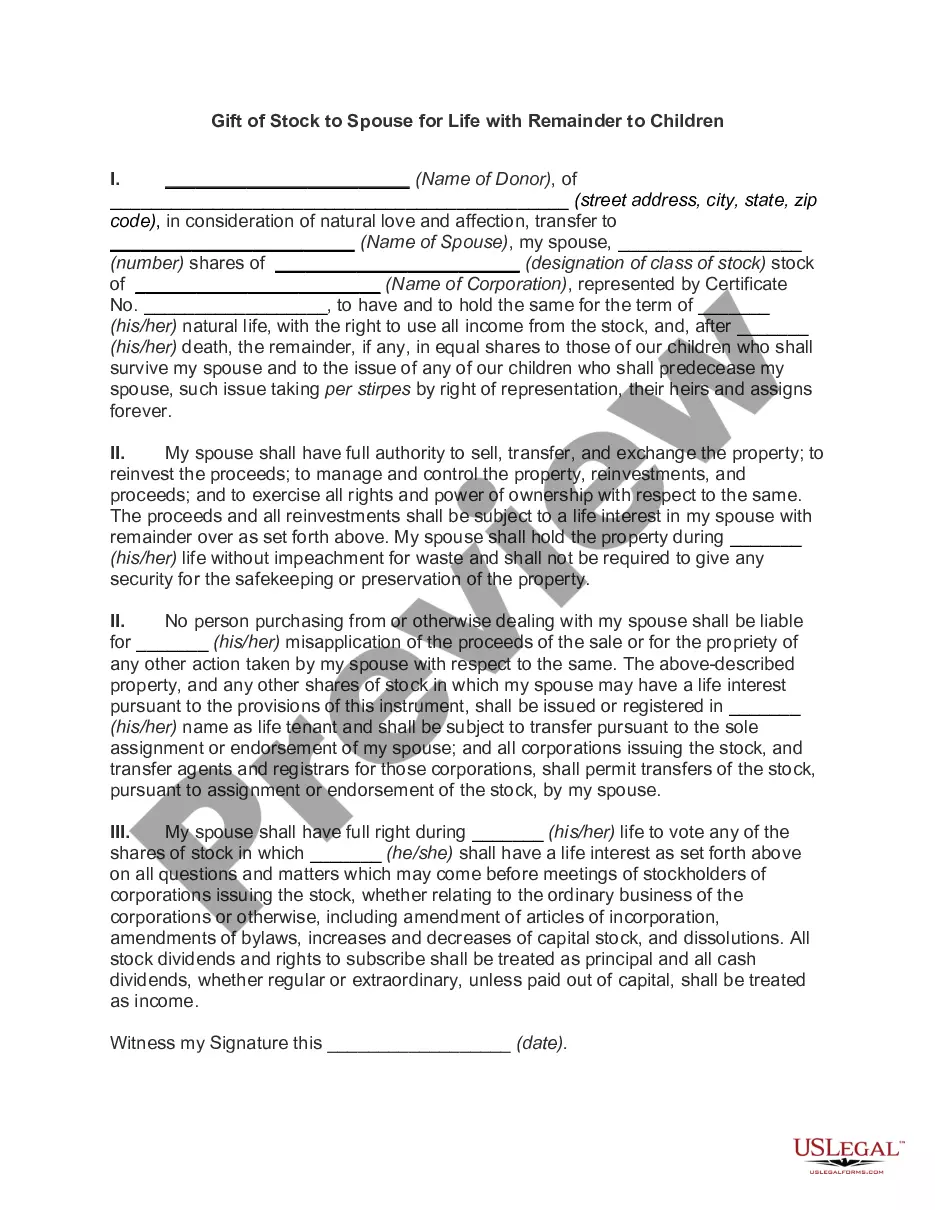
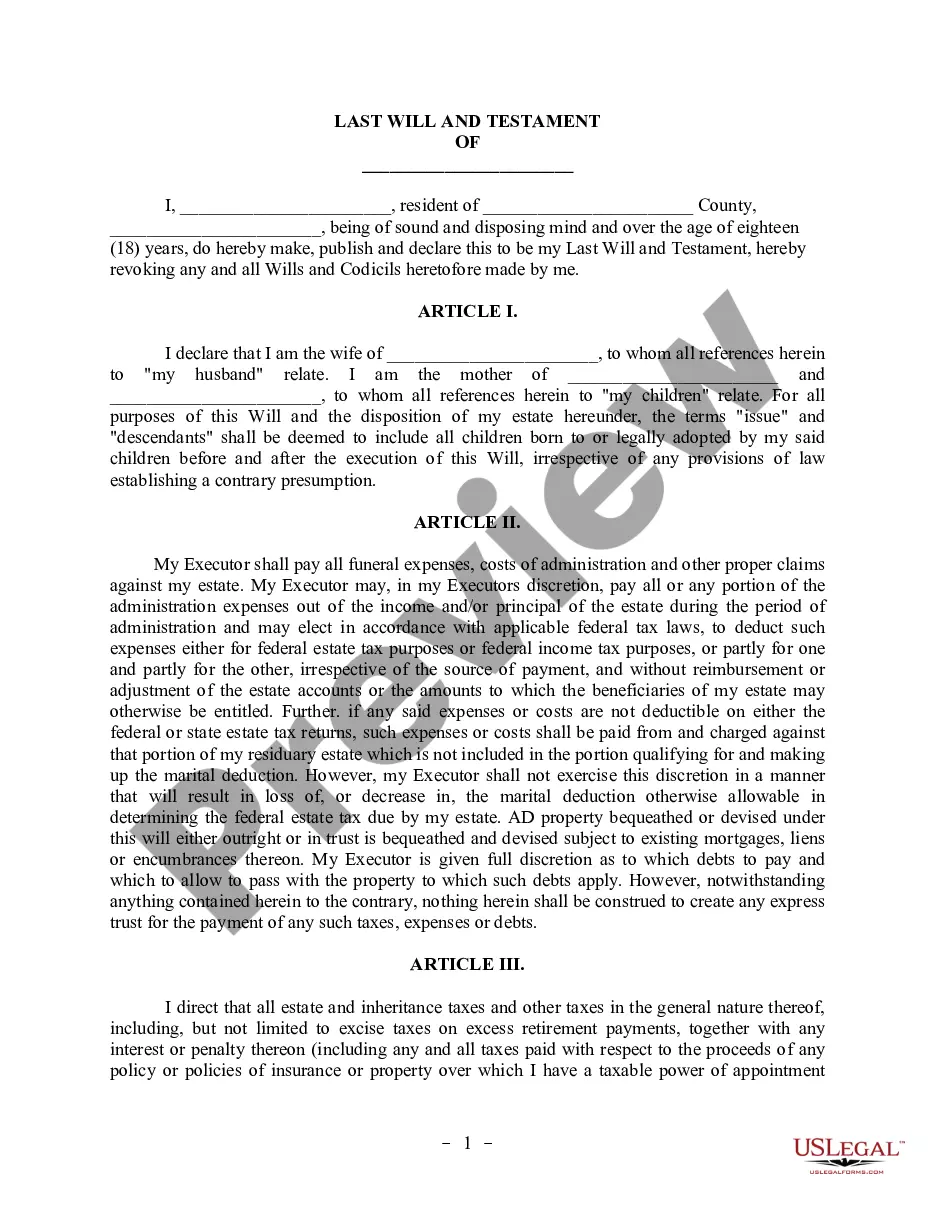
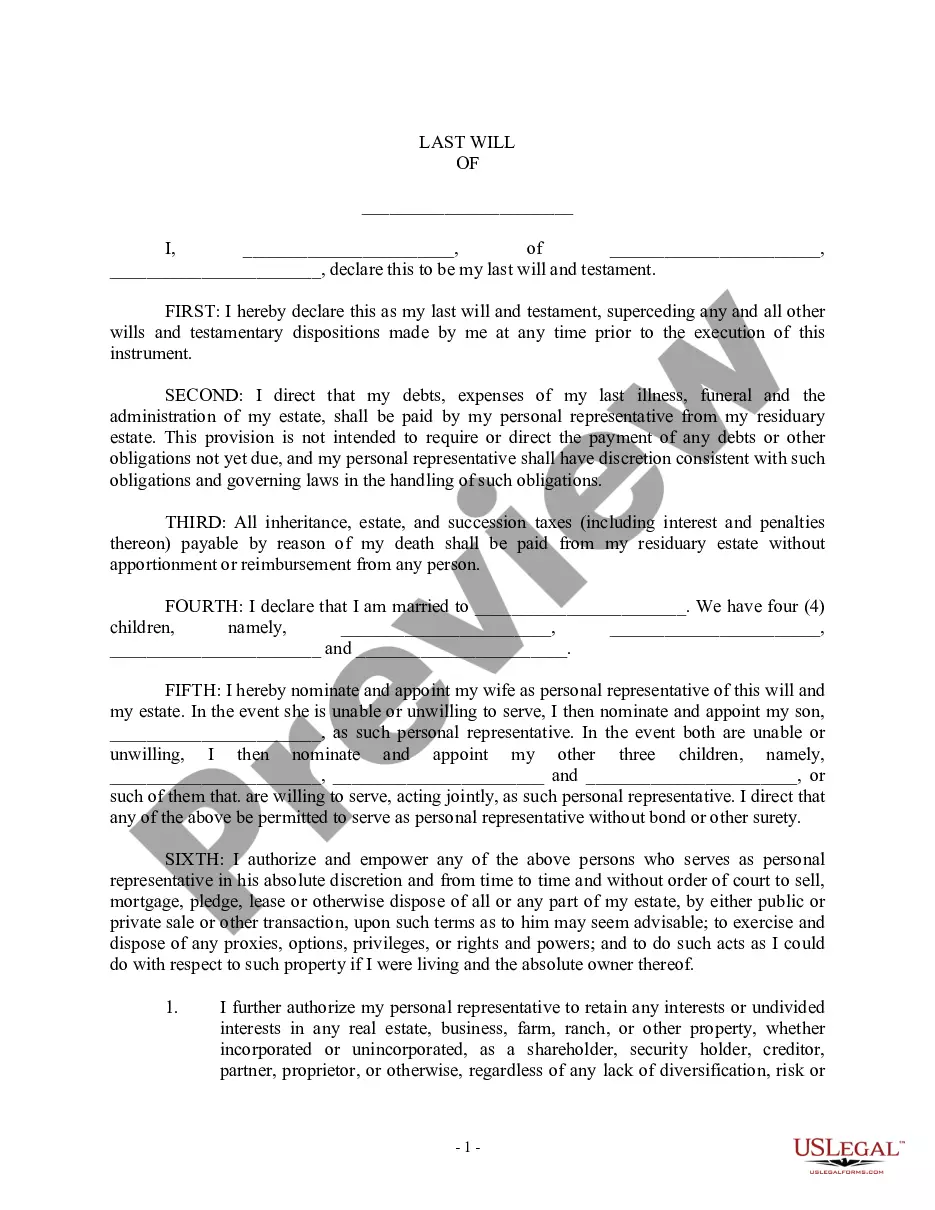
The Last Will and Testament for Domestic Partner with Adult Children is a legal document that outlines how an individual wishes to distribute their assets after their death. This form specifically caters to individuals in domestic partnerships who have adult children, ensuring that both the partner and the children are considered in the distribution of the estate. Unlike standard wills, this form includes specific provisions for domestic partners and acknowledges adult children in its clauses.
Key parts of this document
- Identification of the testator and revocation of previous wills.
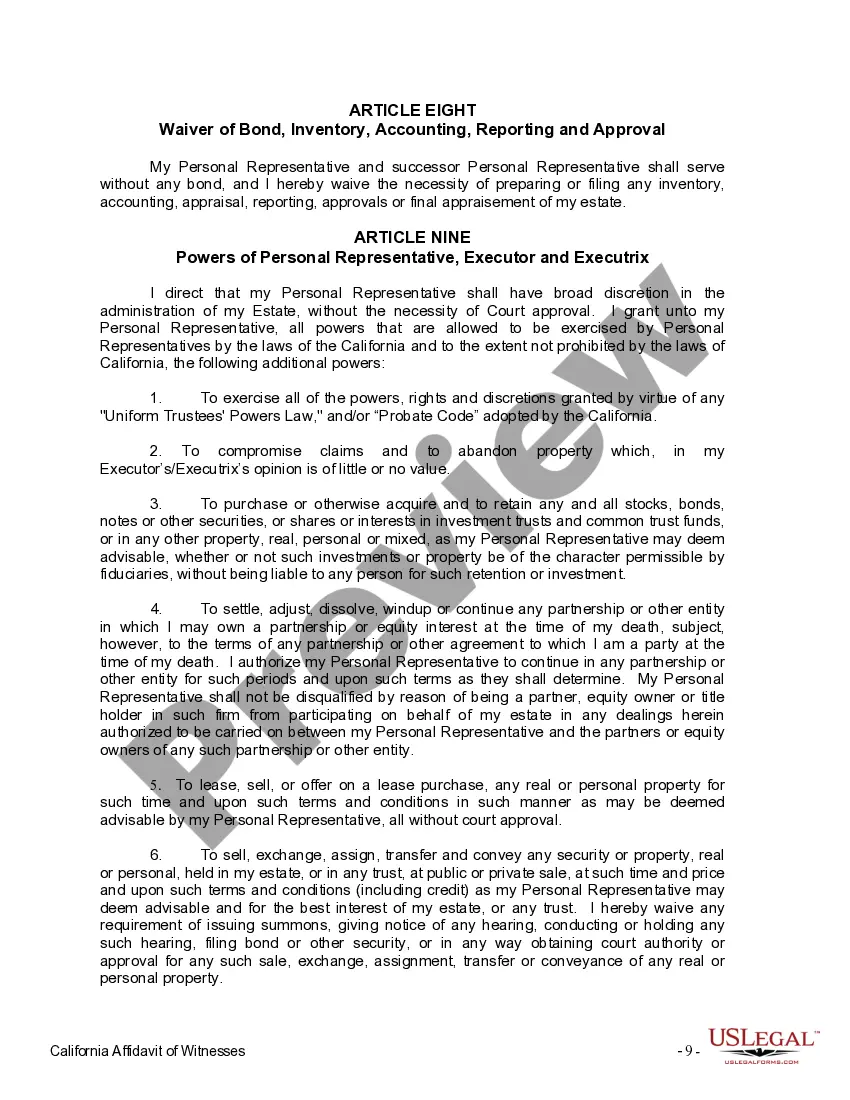
- Appointment of a personal representative or executor to manage the estate.
- Provisions for debts and expenses related to the testator's death.
- Specific bequests of property to named beneficiaries.
- Distribution of remaining property to the domestic partner or children.
- Witness requirements for signing the will.


Situations where this form applies
This form should be used when an individual wishes to create a legally binding document that outlines their wishes regarding asset distribution after death. It is particularly suitable for those in domestic partnerships who have adult children and want to ensure that both parties are recognized in the will. Use this form to clarify your intentions, minimize disputes, and ensure that your estate is managed according to your wishes.
Intended users of this form
- Individuals in a domestic partnership.
- Those with adult children who wish to include them in their estate planning.
- Anyone seeking to clearly outline their asset distribution wishes posthumously.
- Individuals looking to ensure that their partner is designated as a primary beneficiary.
Steps to complete this form
- Identify yourself as the testator and provide basic information to set the context of the will.
- List your domestic partner and adult children, providing their names and birth dates.
- Outline any debts and expenses that need to be paid from your estate after your passing.
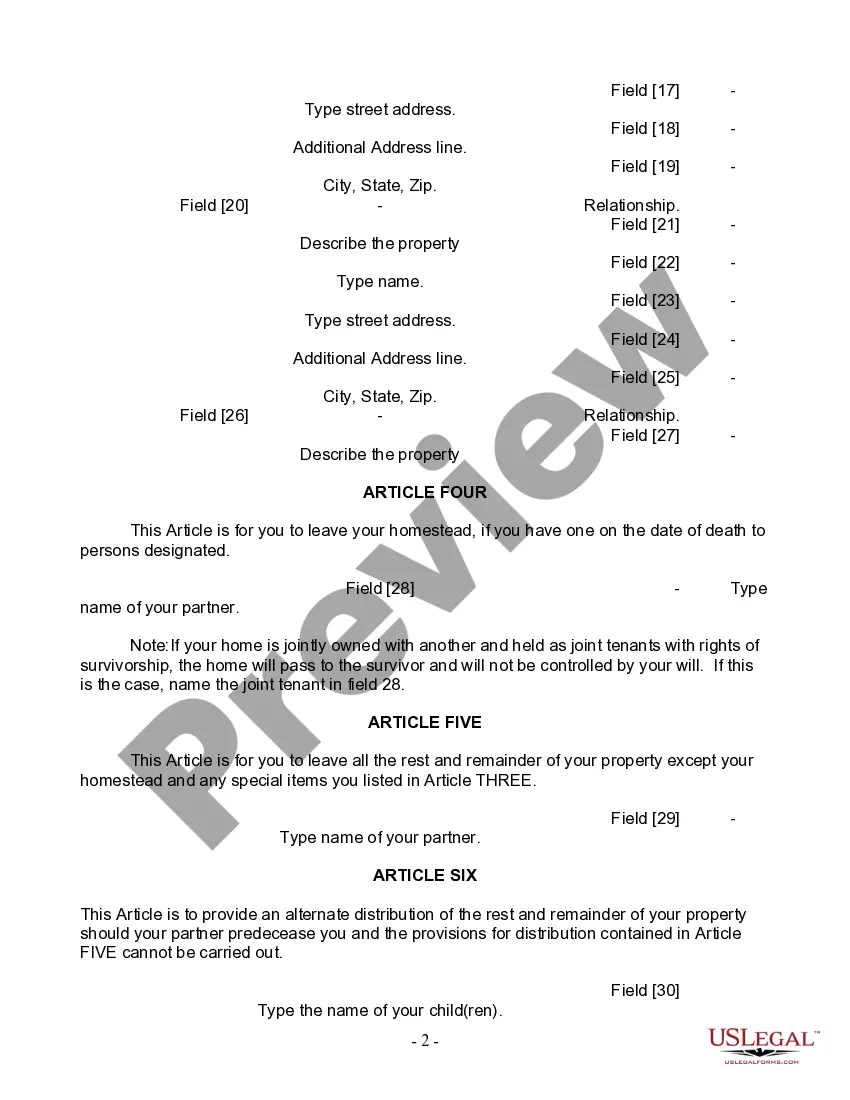
- Specify any specific bequests of property to named beneficiaries and include details of those properties.
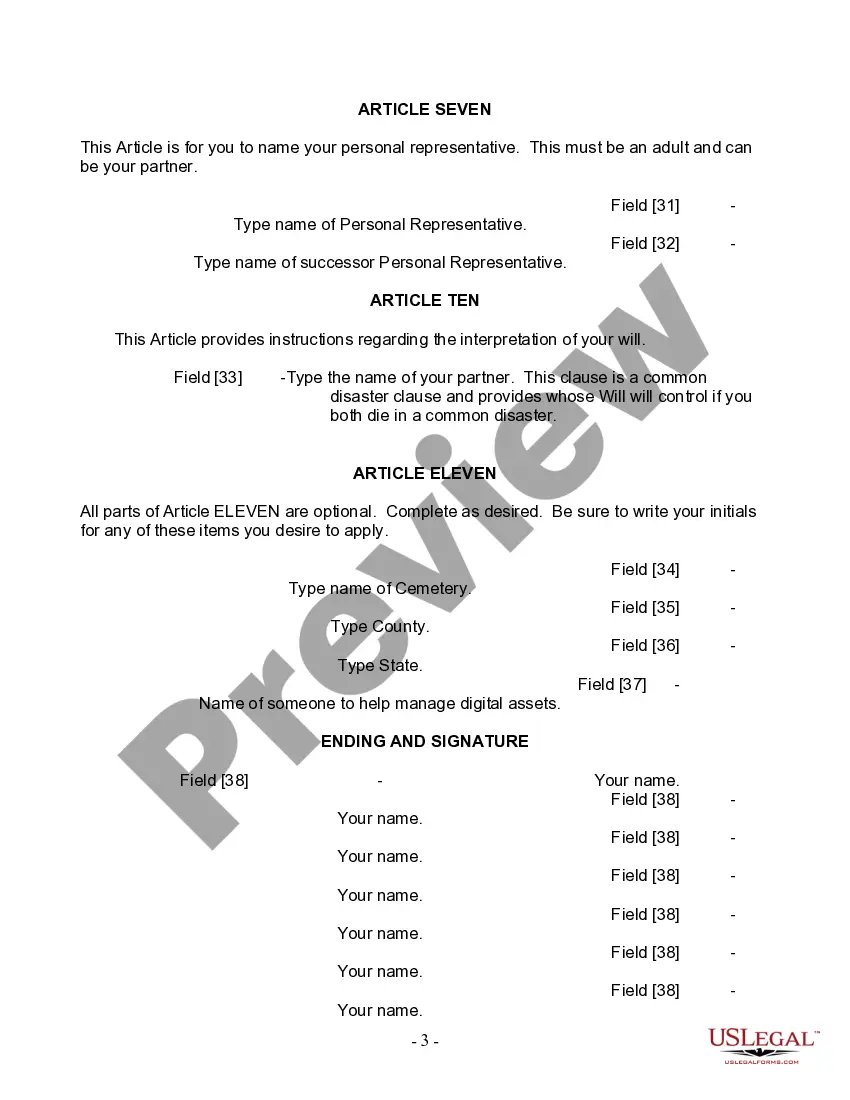
- Designate your personal representative who will oversee the execution of your will.
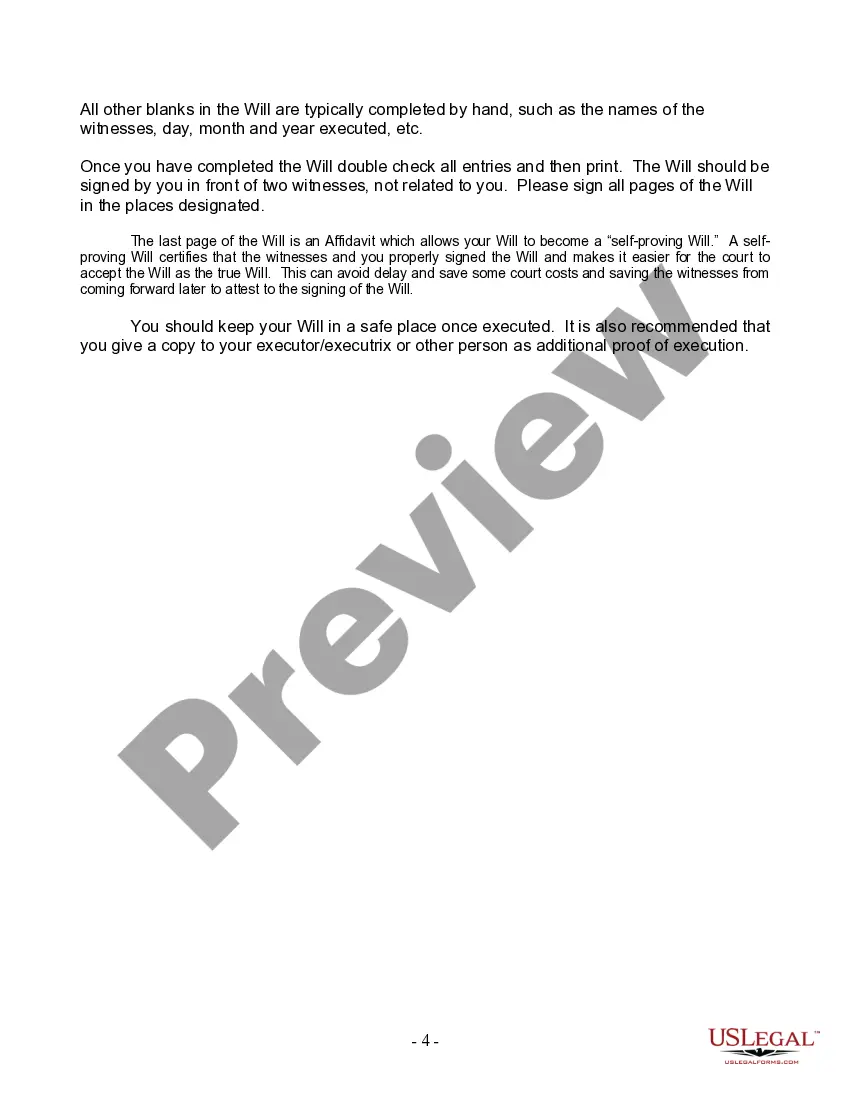
- Have the document signed in the presence of two witnesses and ensure that it is notarized if required.
Does this form need to be notarized?
Yes, this form must be notarized to be legally valid in California if it is accompanied by a self-proving affidavit. This serves to streamline the probate process. US Legal Forms offers integrated online notarization, providing secure video calls and legal equivalence without the need for travel.
Get your form ready online
Our built-in tools help you complete, sign, share, and store your documents in one place.
Make edits, fill in missing information, and update formatting in US Legal Forms—just like you would in MS Word.
Download a copy, print it, send it by email, or mail it via USPS—whatever works best for your next step.
Sign and collect signatures with our SignNow integration. Send to multiple recipients, set reminders, and more. Go Premium to unlock E-Sign.
If this form requires notarization, complete it online through a secure video call—no need to meet a notary in person or wait for an appointment.
We protect your documents and personal data by following strict security and privacy standards.

Make edits, fill in missing information, and update formatting in US Legal Forms—just like you would in MS Word.

Download a copy, print it, send it by email, or mail it via USPS—whatever works best for your next step.

Sign and collect signatures with our SignNow integration. Send to multiple recipients, set reminders, and more. Go Premium to unlock E-Sign.

If this form requires notarization, complete it online through a secure video call—no need to meet a notary in person or wait for an appointment.

We protect your documents and personal data by following strict security and privacy standards.
Avoid these common issues
- Failing to sign the will in front of the required number of witnesses.
- Not updating the will after major life changes, such as marriage, divorce, or the birth of children.
- Using vague language that could lead to misunderstandings about asset distribution.
- Neglecting to clearly state provisions for debts and taxes that need to be settled before distribution.
Benefits of using this form online
- Convenient access from any device, allowing for quick updates as needed.
- Editable templates ensure you can customize the will according to your specific needs.
- Drafted by licensed attorneys, ensuring compliance with legal standards.
- Time-saving; you can complete the form at your own pace without needing to meet in person.
Key takeaways
- This Last Will and Testament is tailored for domestic partners with adult children.
- It allows for clear instructions on property distribution and the appointment of an executor.
- Complete the form digitally or in hard copy and ensure signatures are properly witnessed and notarized.
Looking for another form?
Form popularity
FAQ
One of the most significant mistakes individuals make with wills is failing to keep them updated. Life changes such as marriage, divorce, or the birth of a child can affect your estate planning needs. Not addressing these changes can lead to disputes and confusion regarding your California Last Will and Testament for Domestic Partner with Adult Children. Regularly reviewing your will can help avoid complications and ensure it reflects your current wishes.
Several factors can render a will invalid in California. If the will was not signed by the testator or lacks the necessary witnesses, it may be deemed invalid. Additional issues such as the testator being under duress or mentally incapacitated during creation can also invalidate the will. To avoid these issues, consider using US Legal Forms for guidance while preparing your California Last Will and Testament for Domestic Partner with Adult Children.
Marriage does indeed have implications for a will in California. If you marry after drafting your will, your spouse typically has a right to a portion of your estate, regardless of what the will specifies. Thus, it’s important to update your California Last Will and Testament for Domestic Partner with Adult Children after any significant life changes, including marriage, to ensure your wishes are accurately reflected.
Yes, your husband's adult children have the legal right to contest his will under certain conditions. They may argue that the will is invalid based on claims such as lack of capacity or undue influence. This could complicate the distribution of assets specified in the California Last Will and Testament for Domestic Partner with Adult Children, so it's wise to draft your will with care and possibly seek professional advice.
A last will and testament is considered legal in California when it adheres to the state's requirements. Primarily, it must be created by someone who is mentally competent and at least 18 years old. Furthermore, proper execution, which includes the necessary signatures and witnesses, solidifies its legitimacy. This legal framework protects the intentions behind a California Last Will and Testament for Domestic Partner with Adult Children.
To ensure your will is valid in California, it must meet specific requirements. The person creating the will, known as the testator, must be at least 18 years old. The will must also be in writing, signed by the testator, and either witnessed by two individuals or notarized. These steps are essential for your California Last Will and Testament for Domestic Partner with Adult Children to be enforceable.
In California, certain circumstances can void a will. If the will was created under duress, undue influence, or fraud, it may not be legally valid. Additionally, if the person who created the will lacked the mental capacity to understand their actions, this can also void the California Last Will and Testament for Domestic Partner with Adult Children. It's crucial to draft your will properly to avoid these pitfalls.
To prove domestic partnership in California, you must file a Declaration of Domestic Partnership with the California Secretary of State. This document confirms your intent to establish a domestic partnership with your partner. It is also helpful to gather supporting documents, such as joint financial accounts or shared property titles, to strengthen your situation, especially when handling matters related to a California Last Will and Testament for Domestic Partner with Adult Children. Consider using the resources available at US Legal Forms to navigate the domestic partnership process seamlessly.
A domestic partnership in California remains in effect as long as both partners agree to remain together. If either partner wishes to end the partnership, they may need to file for termination. It's essential to understand that decisions regarding estate planning, including a California Last Will and Testament for Domestic Partner with Adult Children, should be revisited as life circumstances change.
To obtain a declaration of domestic partnership in California, both partners must complete a registration form and submit it to the state. This straightforward process often requires providing proof of sharing a domestic life and meeting age or capacity requirements. Upon registration, both partners will have legal recognition and rights, including those related to your California Last Will and Testament for Domestic Partner with Adult Children.