Wisconsin Small Estate Heirship Affidavit Package for Estates Not More Than $50,000
What this form package covers
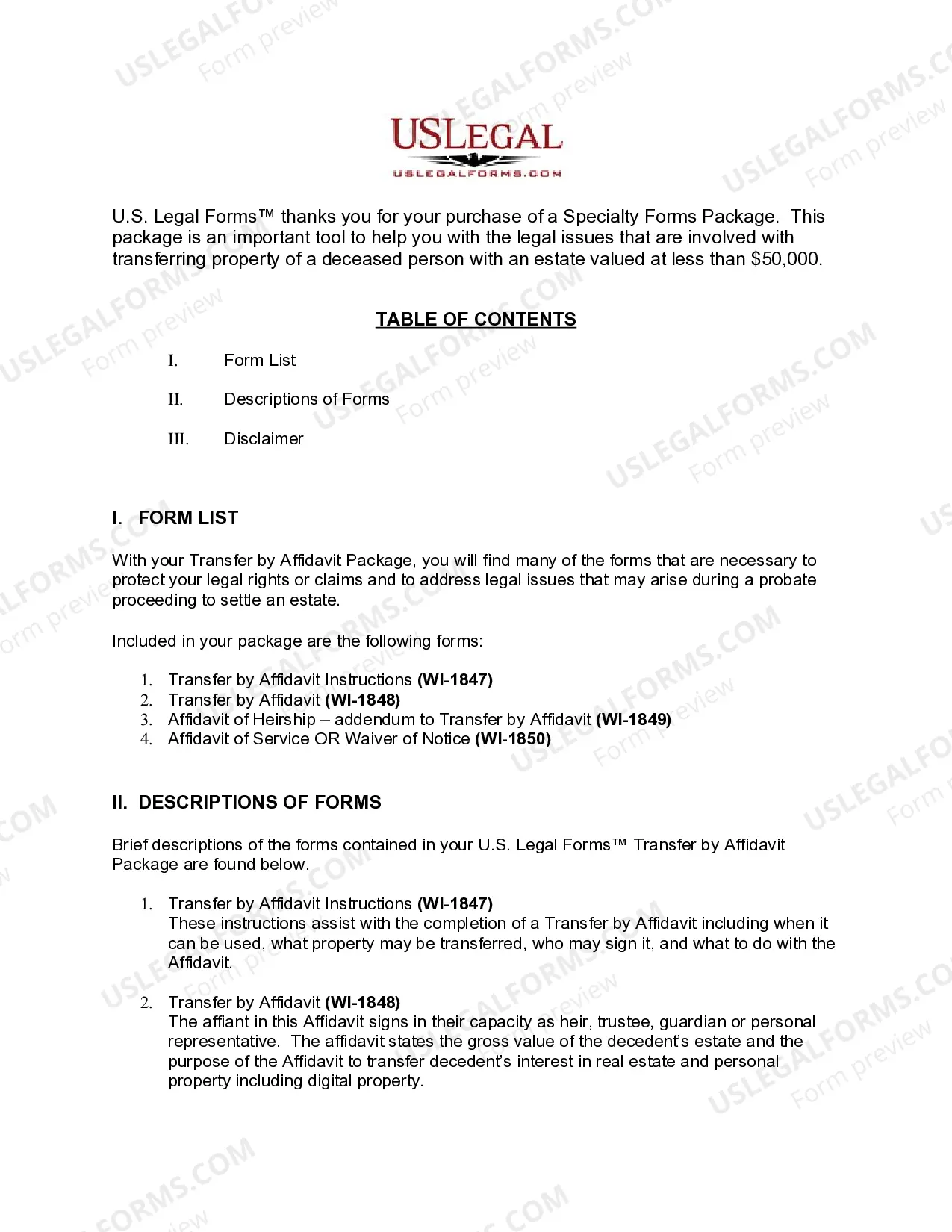
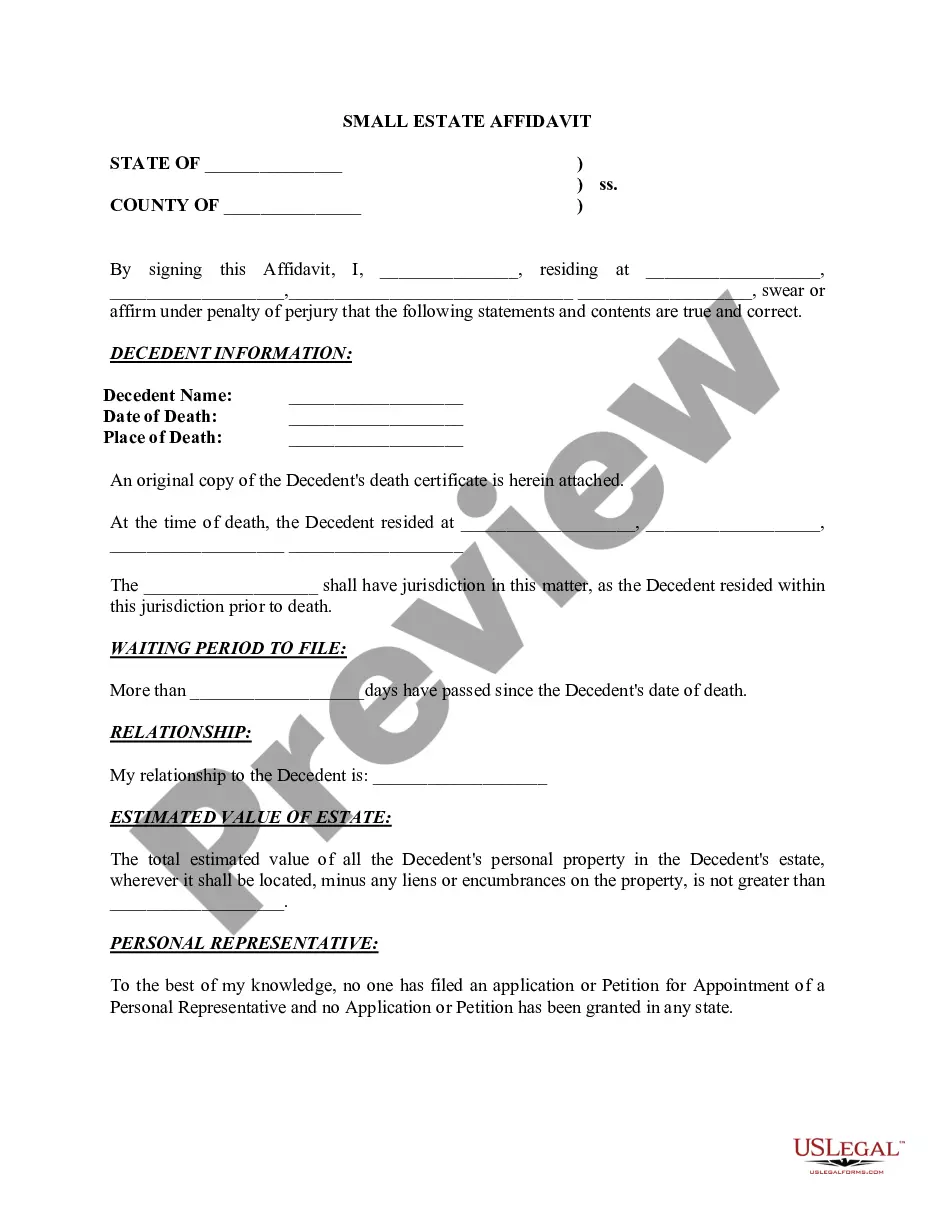
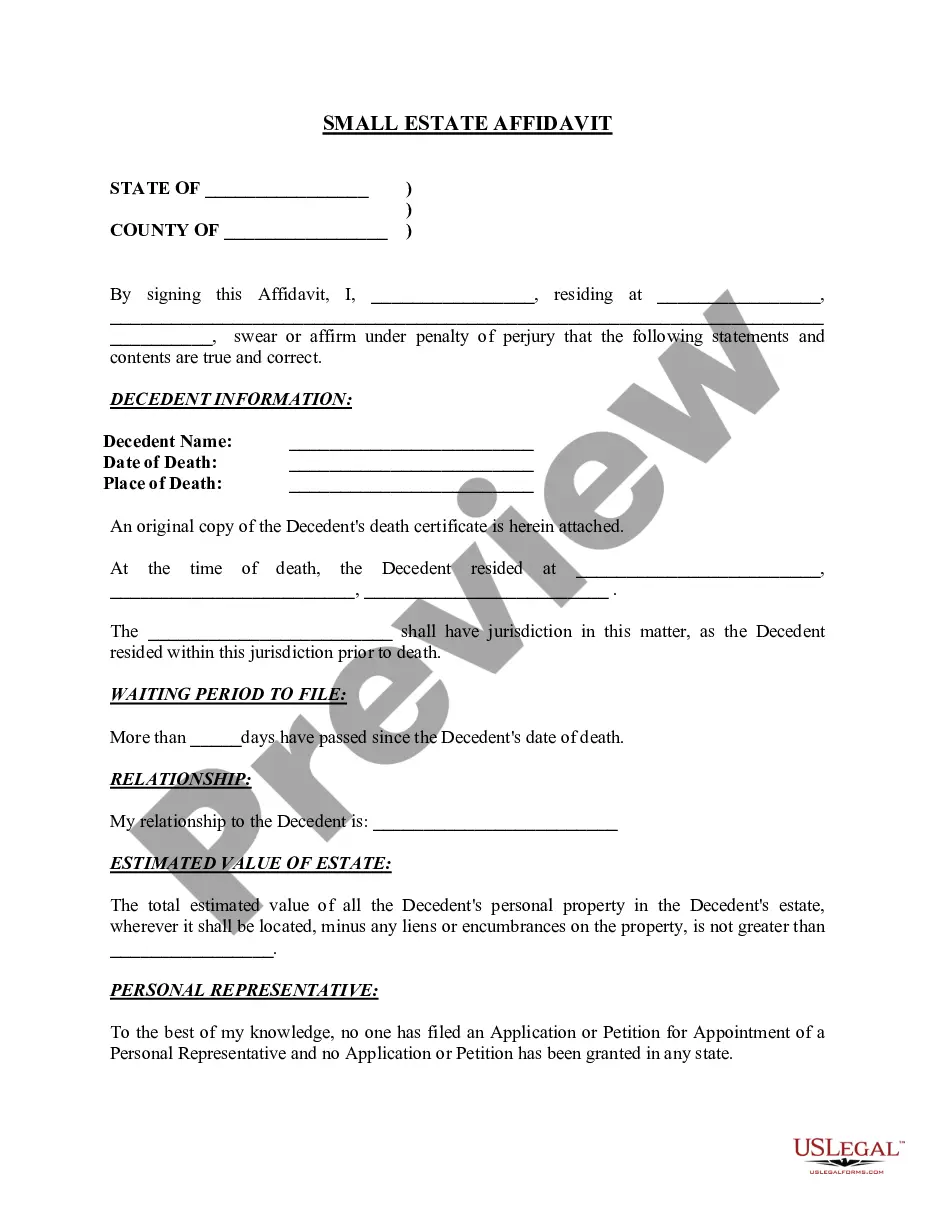
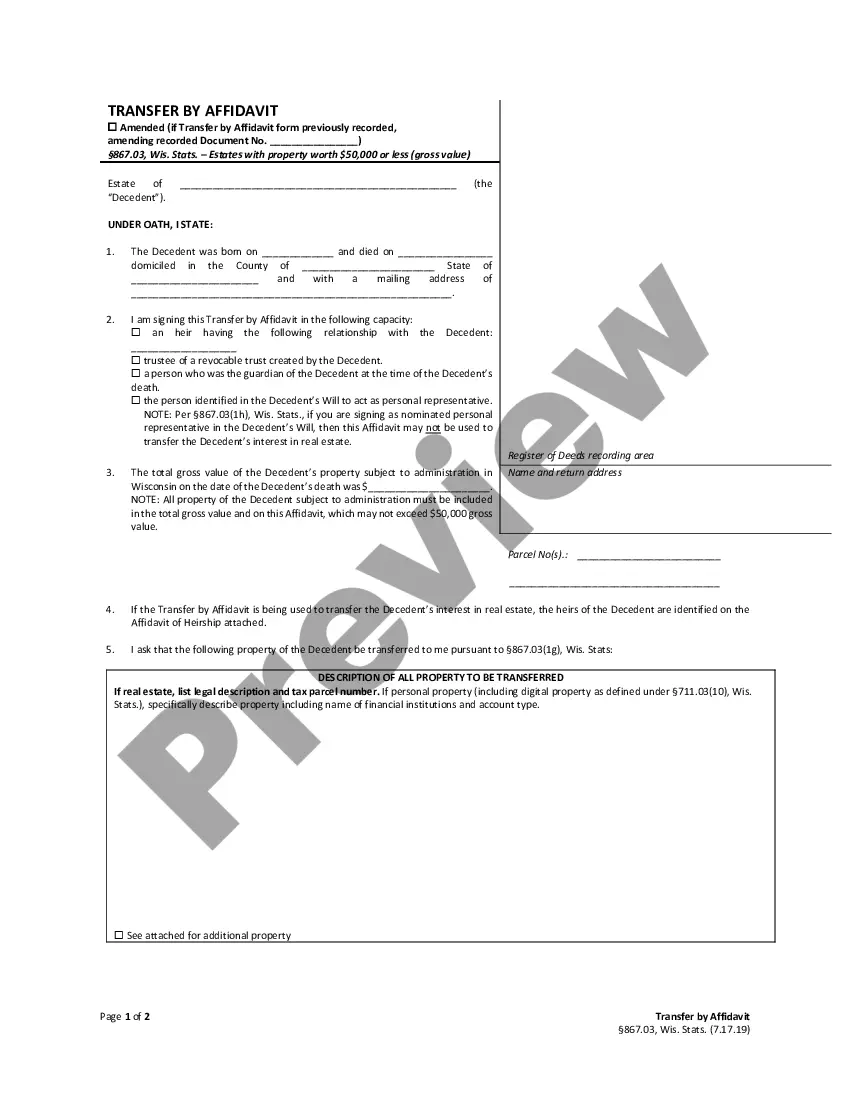
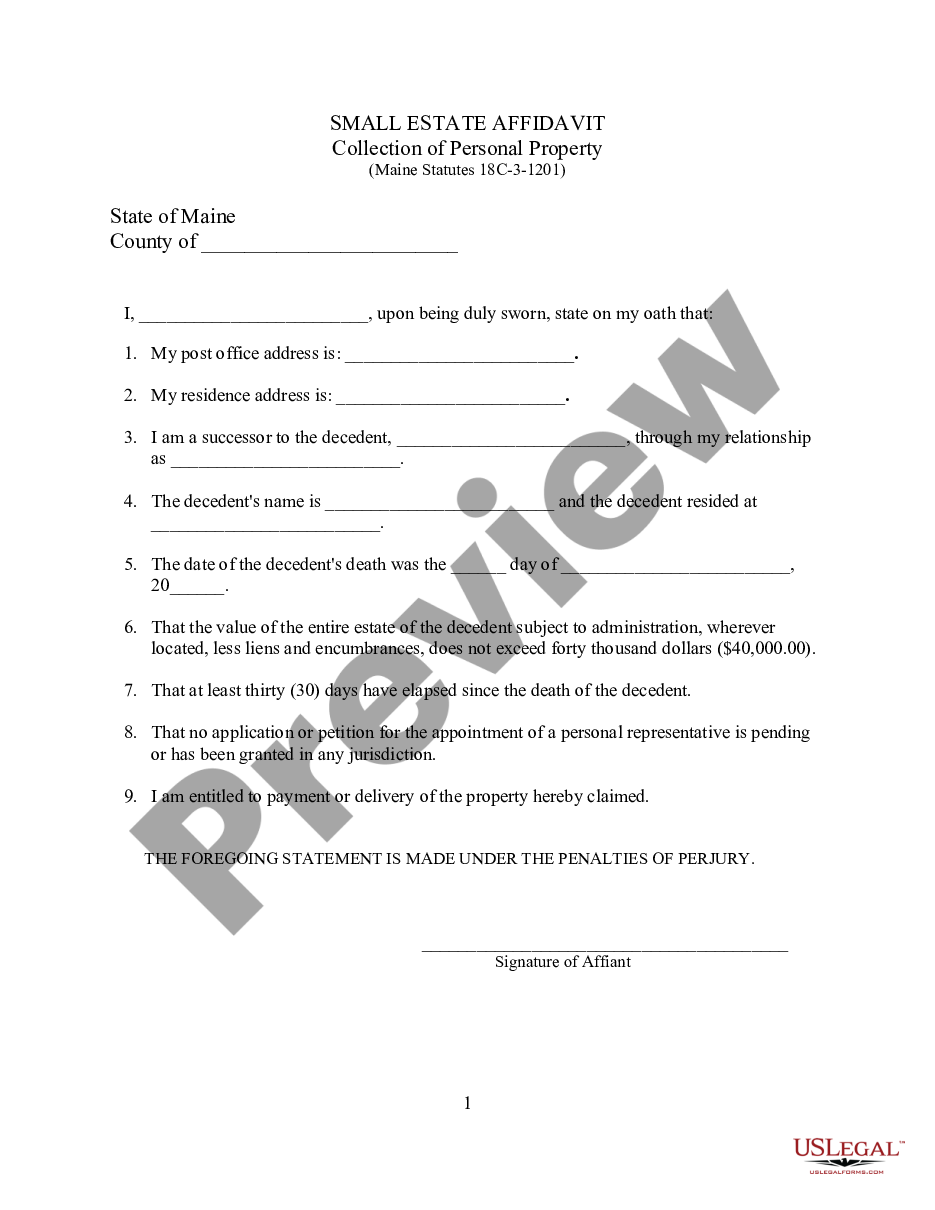
The Wisconsin Small Estate Heirship Affidavit Package for estates not more than $50,000 contains the necessary forms to facilitate the transfer of property after a person's death when the total value of their estate is under $50,000. This package allows individuals entitled to inherit to request court approval for collecting the decedent's assets without going through a full probate process, making it simpler and quicker compared to traditional methods. Unlike broader probate packages, this specialized kit specifically addresses small estates, streamlining the legal process for heirs.
What’s included in this form package


Common use cases
This form package is necessary when the decedent's estate is valued at $50,000 or less, and the heirs wish to proceed without a formal probate process. You may need this package if:
- The decedent had minimal assets that need to be distributed among heirs.
- You are a family member or guardian of the decedent and need to access the estate's funds and properties.
- The estate's affairs need to be settled quickly, and you want to avoid the time and expense of traditional probate.
Who can use this document
- Heirs of a decedent who have a stake in the estate.
- Trustees of a revocable trust created by the decedent.
- Personal representatives named in the will who are not claiming real property.
- Guardians of the decedent at the time of death.
Steps to complete these forms
- Review the included forms thoroughly to understand the requirements.
- Identify the decedentâs assets, detailing their value and nature in the provided sections.
- Fill out the affidavit, ensuring all requested information about the decedent and the property is accurate.
- Submit the completed affidavit to the appropriate court or entity for approval.
- If necessary, record a certified copy of the affidavit with the Register of Deeds if it concerns real property.
Notarization details for included forms
Forms in this package typically do not require notarization unless required by local law. However, itâs important to review each form carefully to ensure compliance with any specific requirements regarding notarization for your particular situation.
Get your form ready online
Our built-in tools help you complete, sign, share, and store your documents in one place.
Make edits, fill in missing information, and update formatting in US Legal Forms—just like you would in MS Word.
Download a copy, print it, send it by email, or mail it via USPS—whatever works best for your next step.
Sign and collect signatures with our SignNow integration. Send to multiple recipients, set reminders, and more. Go Premium to unlock E-Sign.
If this form requires notarization, complete it online through a secure video call—no need to meet a notary in person or wait for an appointment.
We protect your documents and personal data by following strict security and privacy standards.

Make edits, fill in missing information, and update formatting in US Legal Forms—just like you would in MS Word.

Download a copy, print it, send it by email, or mail it via USPS—whatever works best for your next step.

Sign and collect signatures with our SignNow integration. Send to multiple recipients, set reminders, and more. Go Premium to unlock E-Sign.

If this form requires notarization, complete it online through a secure video call—no need to meet a notary in person or wait for an appointment.

We protect your documents and personal data by following strict security and privacy standards.
Mistakes to watch out for
- Failing to provide an accurate description of the assets to be transferred.
- Not including required signatures or dates on the affidavit.
- Overlooking local recording requirements for real estate transfers.
- Assuming that all debts have been settled before filing the affidavit.
Benefits of using this package online
- Convenience: Access and download the package from anywhere at any time.
- Editability: Customize forms to fit your specific situation without the need for a legal appointment.
- Reliability: Forms are drafted by licensed attorneys, ensuring they meet current legal standards in Wisconsin.
Looking for another form?

Form popularity
FAQ
Guadalupe County Small Estate Affidavit Checklist Individuals then fill out a form without reading the statute and without understanding Texas intestacy law. They pay a $261 filing fee and expect approval.
When you use a small estate affidavit , you have to pay the decedent's bills before paying money to anyone else. For example, the decedent might have owed money to a credit card company when they died. If you use the small estate affidavit, you must give money from the estate to pay the credit card company.
In Wisconsin, the estate executor is known as a "personal representative". Subject to approval of the court, executor fees are set at 2% of the net value of the estate assets, or a rate agreed with the decedent or the majority interest of the heirs.
In Michigan you can use an Affidavit if the estate does not include real property and the value of the entire estate, less liens and encumbrances, is less than $15,000. There is a 28-day waiting period.
In most states, however, there is the option to use a small estate affidavit when the assets of the estate are under a certain dollar amount, which varies by state. An attorney is not required to file a small estate affidavit, although it may be helpful to consult with one prior to filing the small estate affidavit.
The Illinois small estate affidavit provides a streamlined way for an heir-at-law of a decedent to gather and distribute the assets of the estate of a person who died, provided that no other petition to open an estate in probate court has been filed and that the assets of the person who died do not exceed $100,000.
To be able to file a small estate affidavit in Texas for a loved one, when no will was executed, you must be a person who would inherit under Texas intestacy law (this is generally the spouse and children, or other close relatives if there are no spouse or children).
In Wisconsin, you can make a living trust to avoid probate for virtually any asset you own -- real estate, bank accounts, vehicles, and so on. You need to create a trust document (it's similar to a will), naming someone to take over as trustee after your death (called a successor trustee).