Self-Rating the Appraisal Interview
Understanding this form
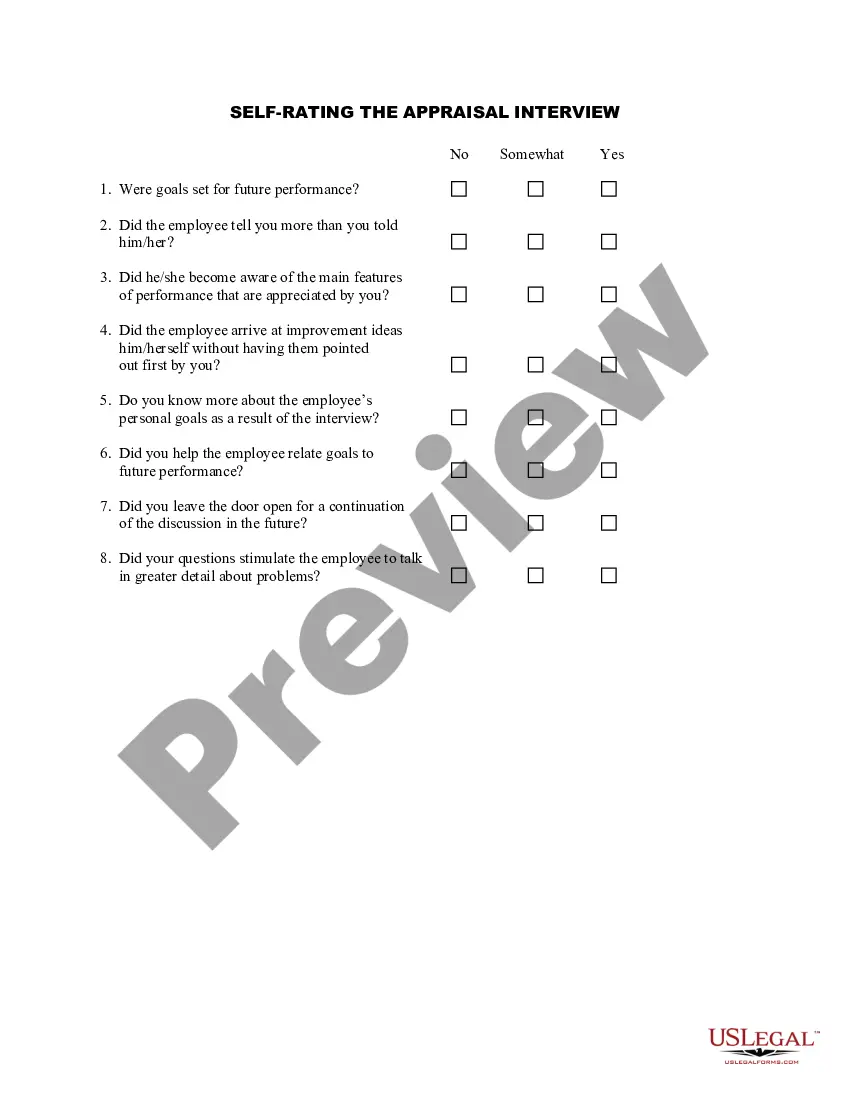
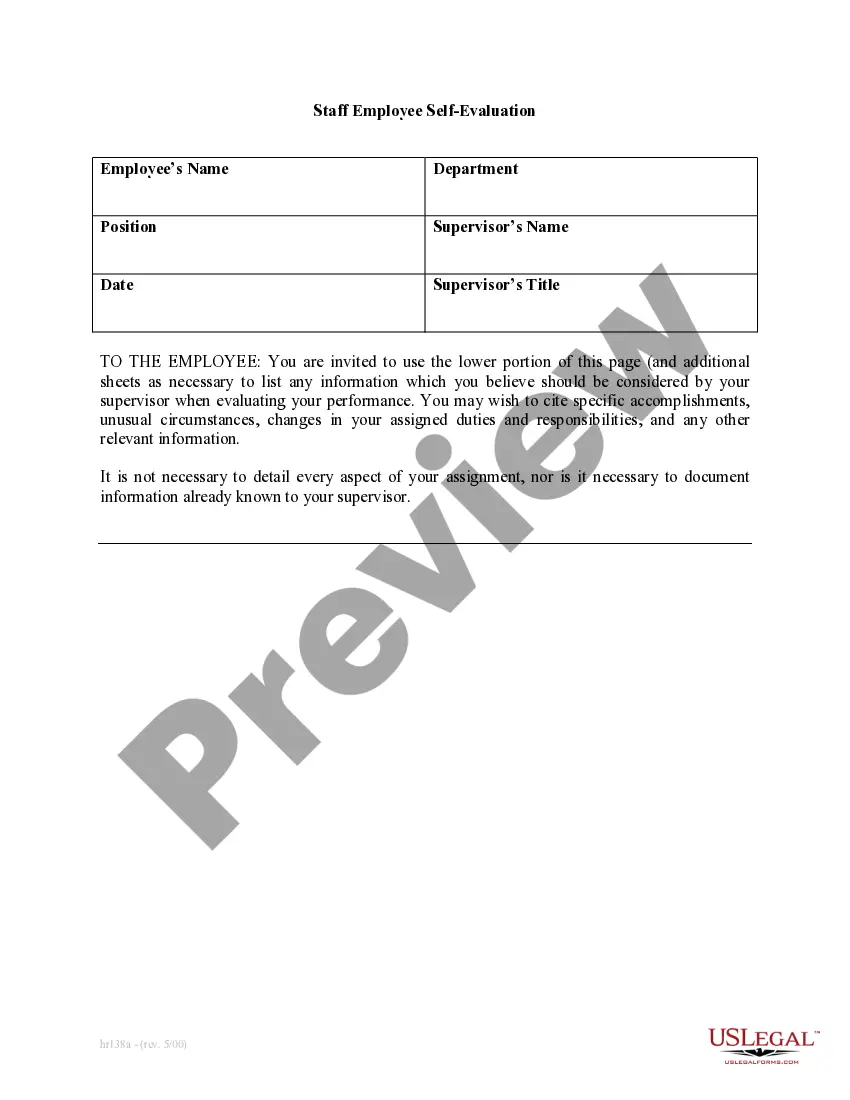
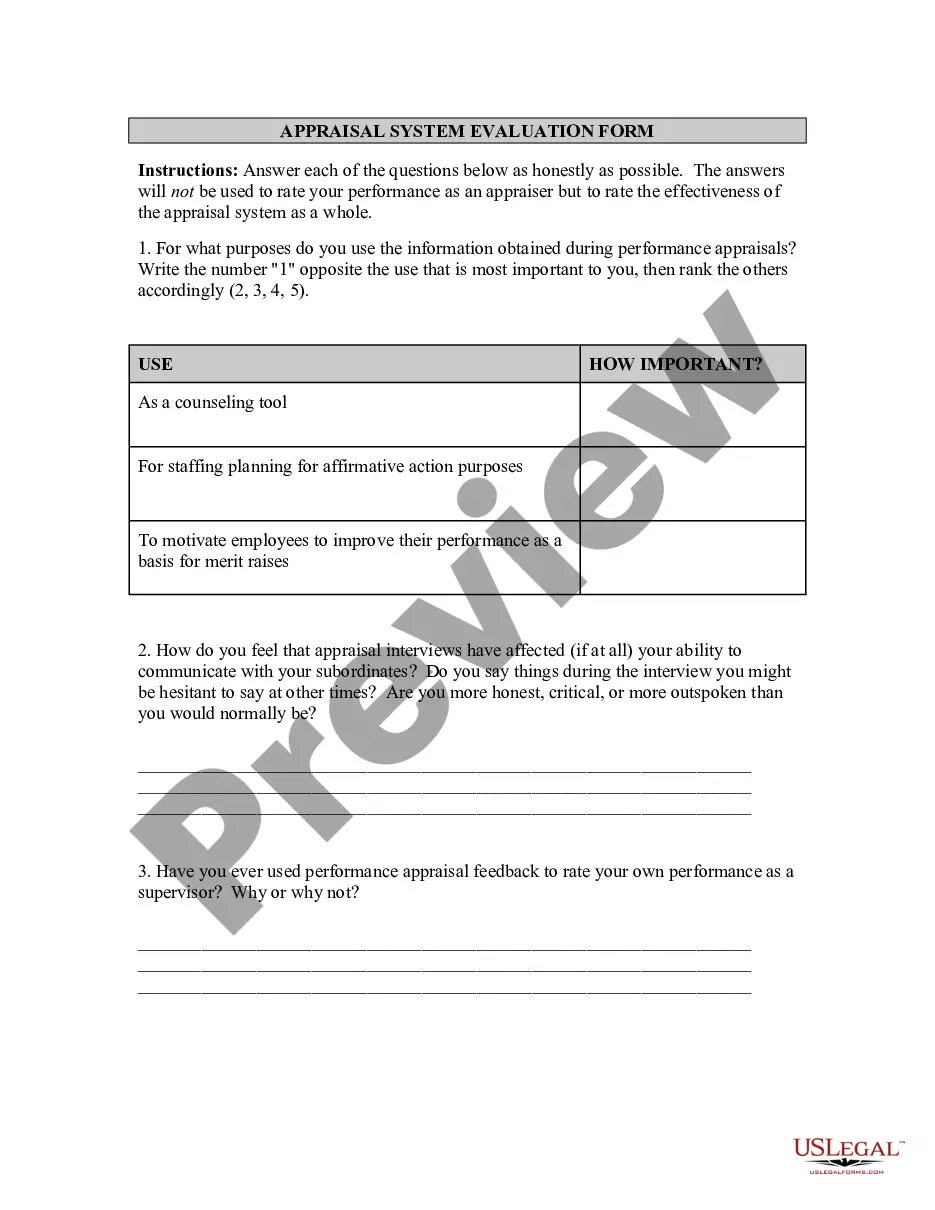
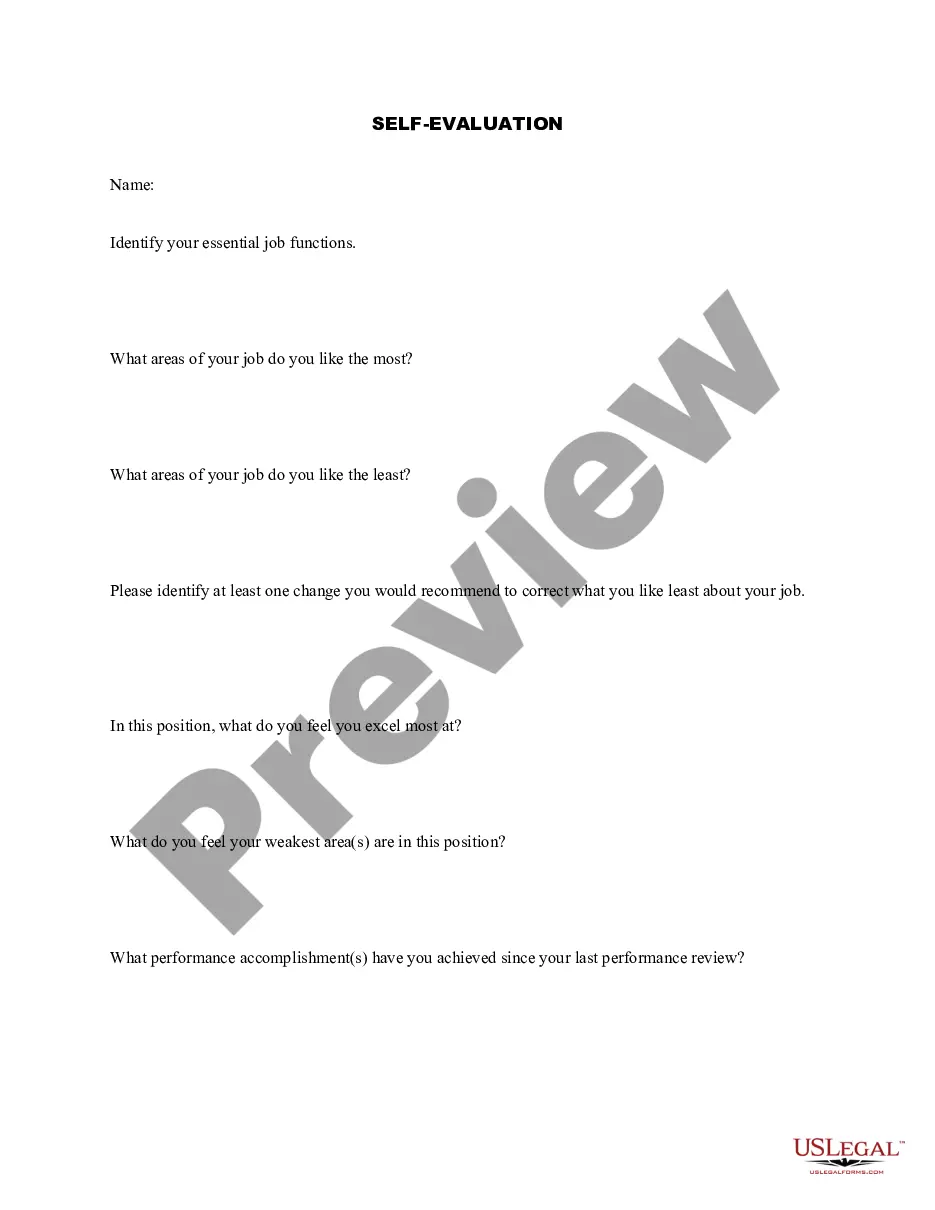
The Self-Rating the Appraisal Interview form is a crucial document utilized by employers following an appraisal interview. Its primary purpose is to enable employers to evaluate the effectiveness of the appraisal process, assess how well they communicated with the employee, and gather feedback regarding employee engagement in the discussion. This form assists in identifying areas for improvement, ensuring that both parties' future performance goals align.
Key parts of this document
- Questions assessing whether goals were set for future performance.
- Fields for feedback on employee participation and communication during the interview.
- Sections dedicated to evaluating employee insights and whether they arrived at improvement ideas independently.
- Open-ended questions allowing employers to comment on how the interview ended and its effectiveness.
- Checklists for quick responses on specific aspects of the interview process.
Common use cases
This form should be used immediately after conducting an appraisal interview. It provides a structured way for employers to rate the discussion and ensure effective communication. Utilizing this form can help refine future appraisal processes and promote better employee engagement and performance alignment.
Who can use this document
- Employers conducting performance appraisals.
- HR professionals involved in talent management and evaluation processes.
- Managers seeking to enhance their communication and appraisal skills.
- Business owners aiming to strengthen employee relations and performance tracking.
Instructions for completing this form
- Begin by reviewing the goals set during the appraisal interview.
- Rate the communication effectiveness during the interview using the provided checklist.
- Document any areas where the employee showed proactive ideas for improvement.
- Summarize key takeaways from the interview, including whether the employee understood future performance expectations.
- Ensure to leave space for additional comments or feedback to encourage open dialogue.
Notarization guidance
In most cases, this form does not require notarization. However, some jurisdictions or signing circumstances might. US Legal Forms offers online notarization powered by Notarize, accessible 24/7 for a quick, remote process.
Get your form ready online
Our built-in tools help you complete, sign, share, and store your documents in one place.
Make edits, fill in missing information, and update formatting in US Legal Forms—just like you would in MS Word.
Download a copy, print it, send it by email, or mail it via USPS—whatever works best for your next step.
Sign and collect signatures with our SignNow integration. Send to multiple recipients, set reminders, and more. Go Premium to unlock E-Sign.
If this form requires notarization, complete it online through a secure video call—no need to meet a notary in person or wait for an appointment.
We protect your documents and personal data by following strict security and privacy standards.

Make edits, fill in missing information, and update formatting in US Legal Forms—just like you would in MS Word.

Download a copy, print it, send it by email, or mail it via USPS—whatever works best for your next step.

Sign and collect signatures with our SignNow integration. Send to multiple recipients, set reminders, and more. Go Premium to unlock E-Sign.

If this form requires notarization, complete it online through a secure video call—no need to meet a notary in person or wait for an appointment.

We protect your documents and personal data by following strict security and privacy standards.
Avoid these common issues
- Failing to document specific examples during the evaluation.
- Overlooking the importance of follow-up questions that encourage employee engagement.
- Poorly rated sections that do not reflect actual interview performance.
- Not leaving room for employee perspectives or feedback.
Benefits of completing this form online
- Easily editable to accommodate specific needs and changes.
- Allows for quick completion and submission.
- Accessible from any device, ensuring convenience for employers.
- Provides a reliable framework for consistent evaluation of appraisal processes.
Key takeaways
- The Self-Rating the Appraisal Interview form helps improve the performance evaluation process.
- It serves as a tool for constructive feedback and ongoing employee development.
- Proper completion enhances the effectiveness of future appraisal discussions.
Looking for another form?
Form popularity
FAQ
Assess achievement of objectives. You will likely have set yourself goals to achieve this year, in collaboration with your manager. Describe your accomplishments. Identify areas for improvement. Suggest areas for professional development.
Be Prepared to Rate Yourself Don't wait until your boss hands you the self-evaluation template. Start thinking ahead of time about your job, your accomplishments and your missteps and you won't go blank when you see "rate yourself on a scale of 1 to 10 with 10 being the highest." Reread your job description.
Check Your Attitude. "Attitude is very important," says employment consultant Rick Waters. Be Reflective. Assess Your Performance Against the Job Specifications. Keep a File. Find out the Supervisor's Expectations. Get Feedback From Others. Be a Team Player. Plan Ahead.
Use numbers to your advantage. Include figures that add value to your work, if possible. Mention results. Take the company's objectives into account. Record your achievements in real-time. Take your time.
Collaboration and teamwork. Positive option: "I believe that my skills and my ability to work in a team have been valuable during this period. Motivation. Leadership. Problem-solving. Decision-making skills. Working under pressure. Communication. Adaptability.
5 Narrow your accomplishments list down. 6 Don't forget to align your review with your manager's or team's goals. 7 Stay positive when describing your challenges. 8 Keep the focus on you. 9 Don't forget to ask for growth opportunities.
I always keep my managers and co-workers well informed of my work progress. Clear communication of projects keeps everyone around me aware of what I am working on. I clearly document all my assignments and projects so that others can easily understand and maybe use the same information and finding in future projects.
Be proud. One major goal of the self-evaluation is to highlight your accomplishments and recollect milestones in your professional development. Be honest and critical. Continuously strive for growth. Track your accomplishments. Be professional.
Talk about your achievements. Talk about a raise. Ask about the development of the business. Set clear goals. Give feedback to your manager. Ask how you can help. Suggest tools you need to do your job. Ask for clarification.