Washington Contractors Forms Package

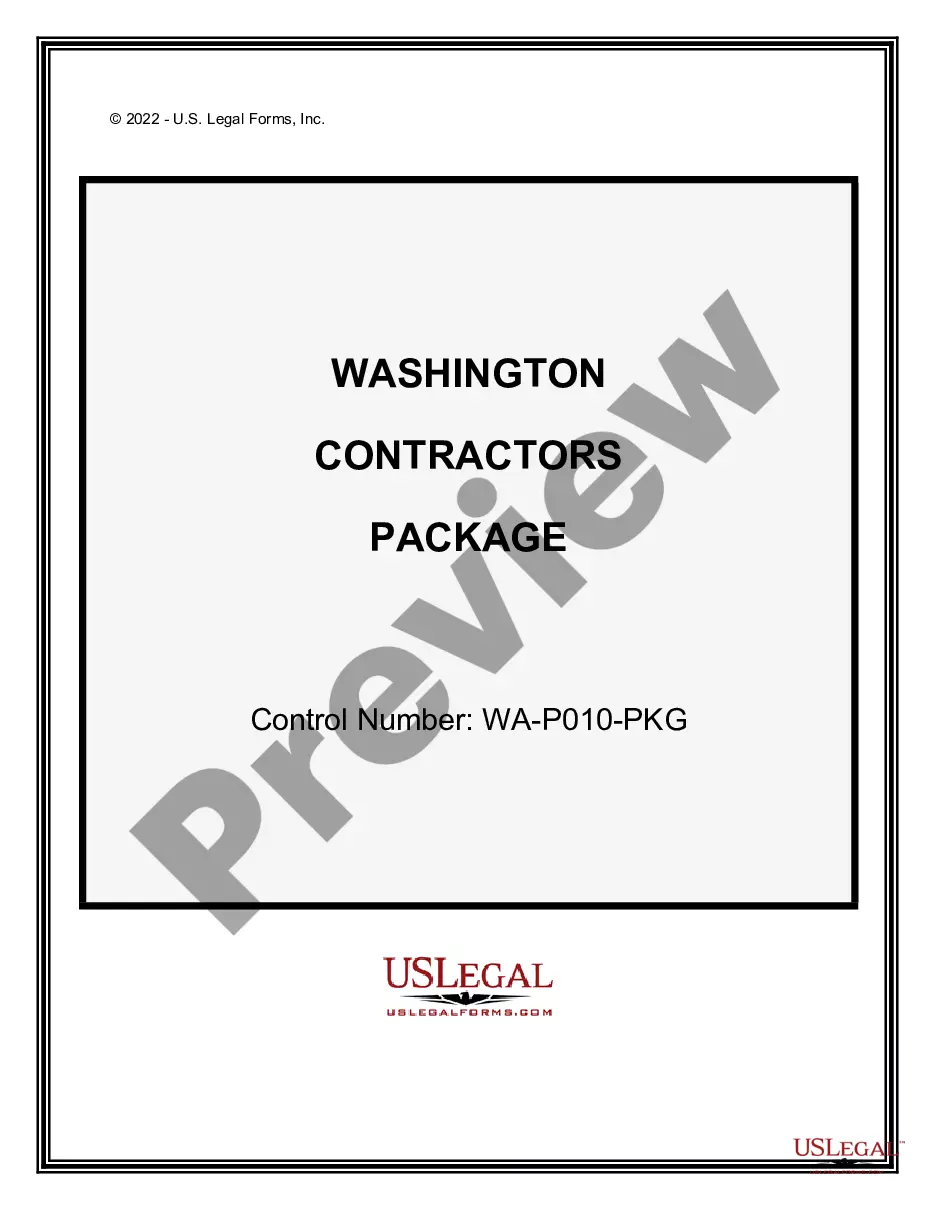
What is this form package?
The Washington Contractors Forms Package provides essential legal documents crafted specifically for contractors, owners, suppliers, and subcontractors to assert their legal rights or claims regarding construction projects. This package is tailored for projects that involve contracts of $1,000.00 or more and includes forms that comply with Washington state laws, offering an efficient solution to various contractual situations in the construction field.
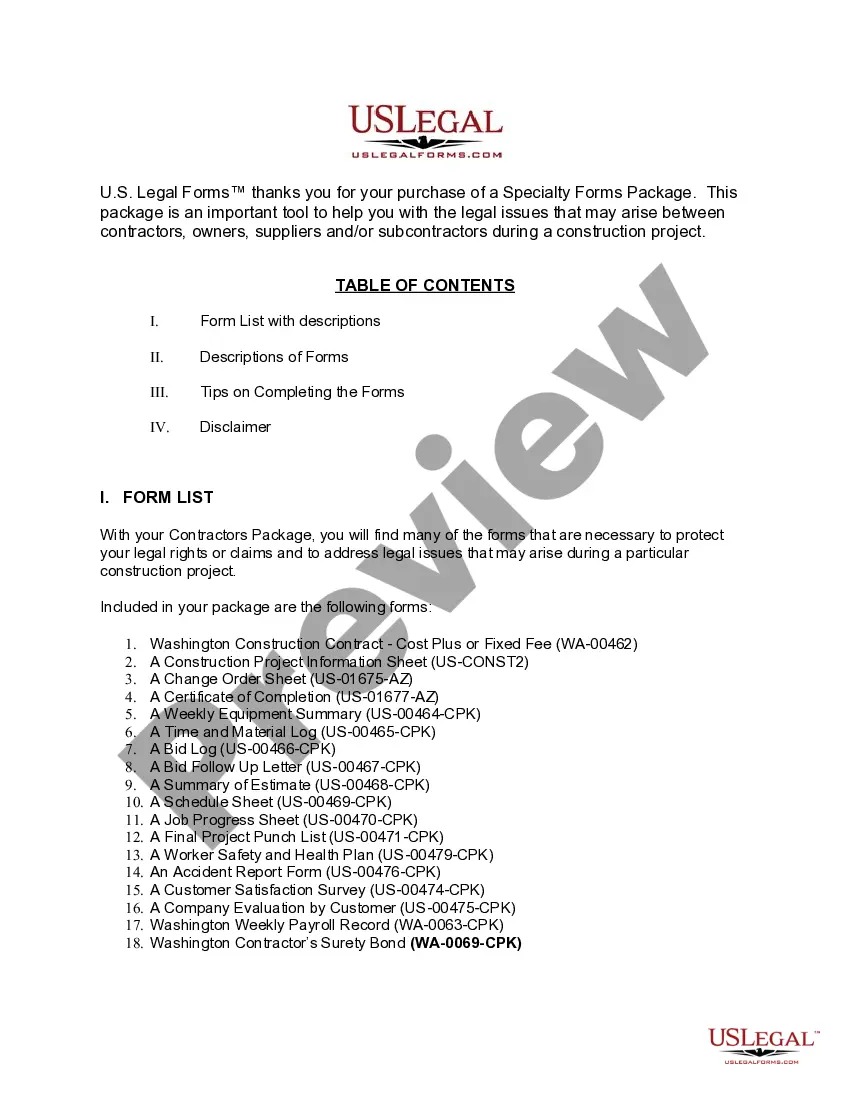
Documents contained in this package
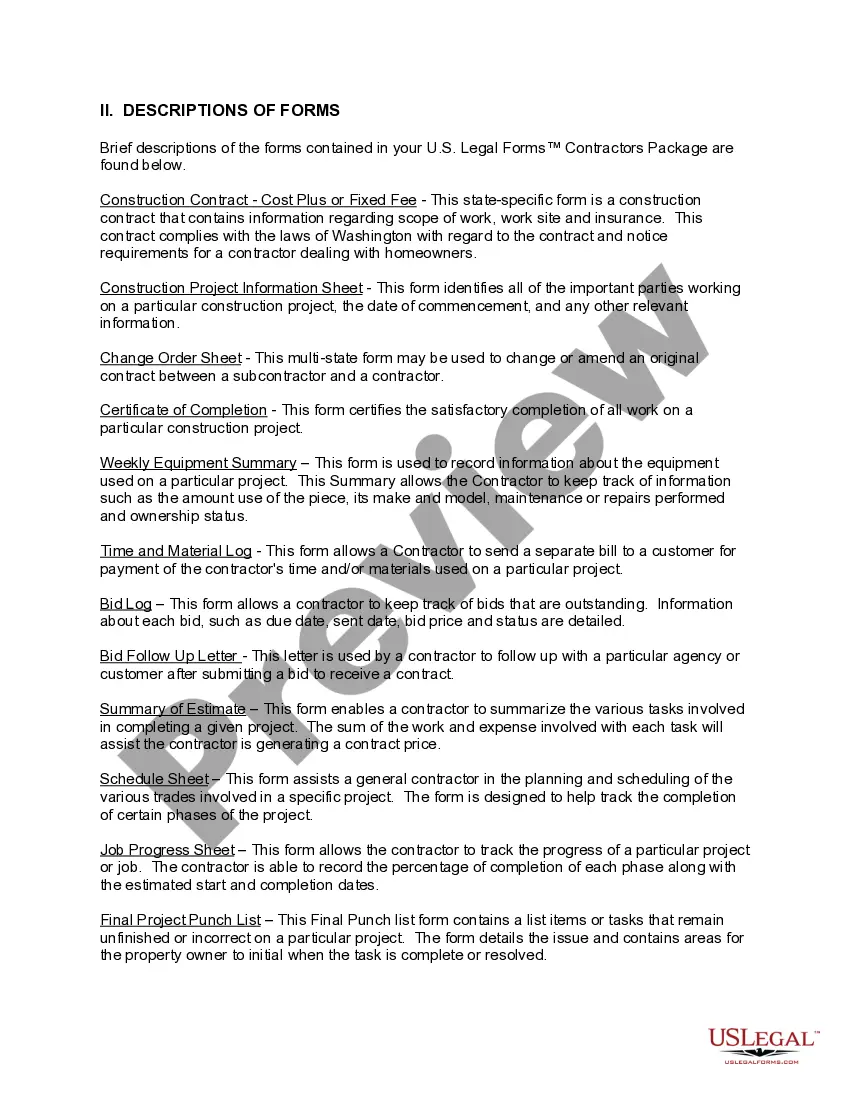
- Construction Contract Cost Plus or Fixed Fee
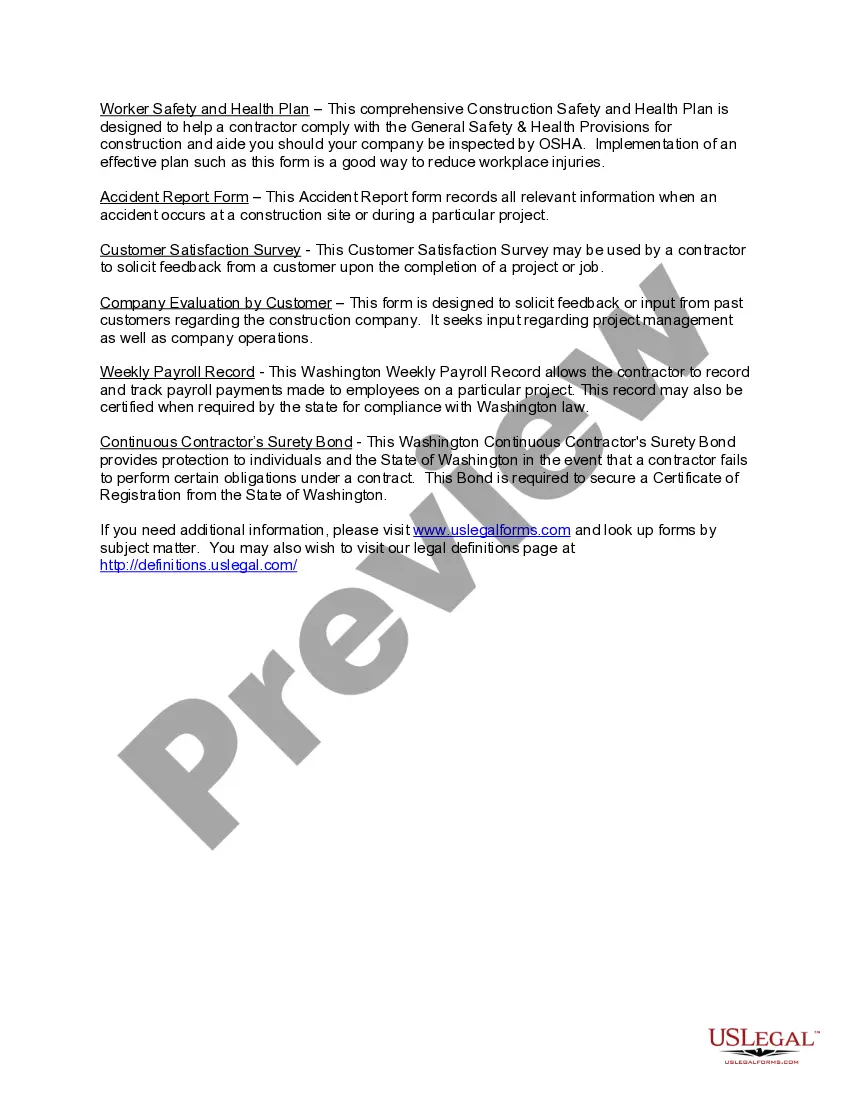
- Washington Weekly Payroll Record
- Washington Continuous Contractor's Surety Bond
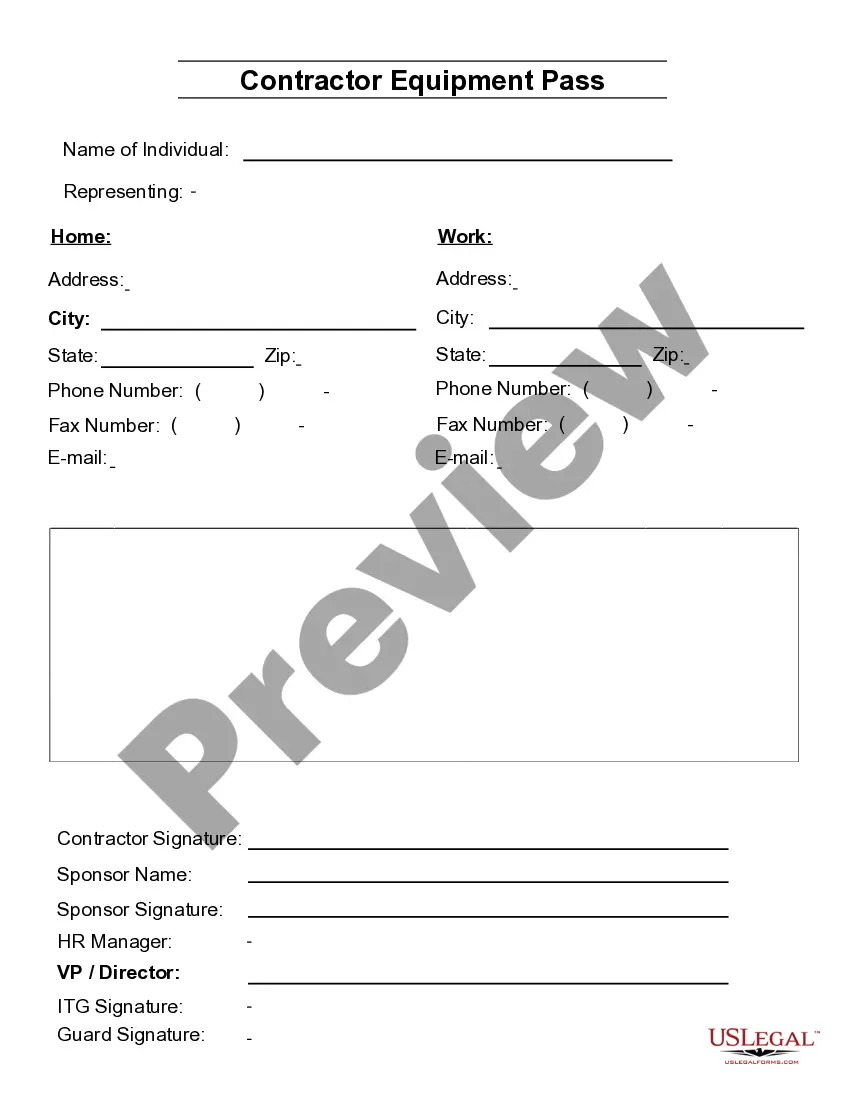
- Contractor's Weekly Equipment Summary
- Contractor's Time and Materials Log
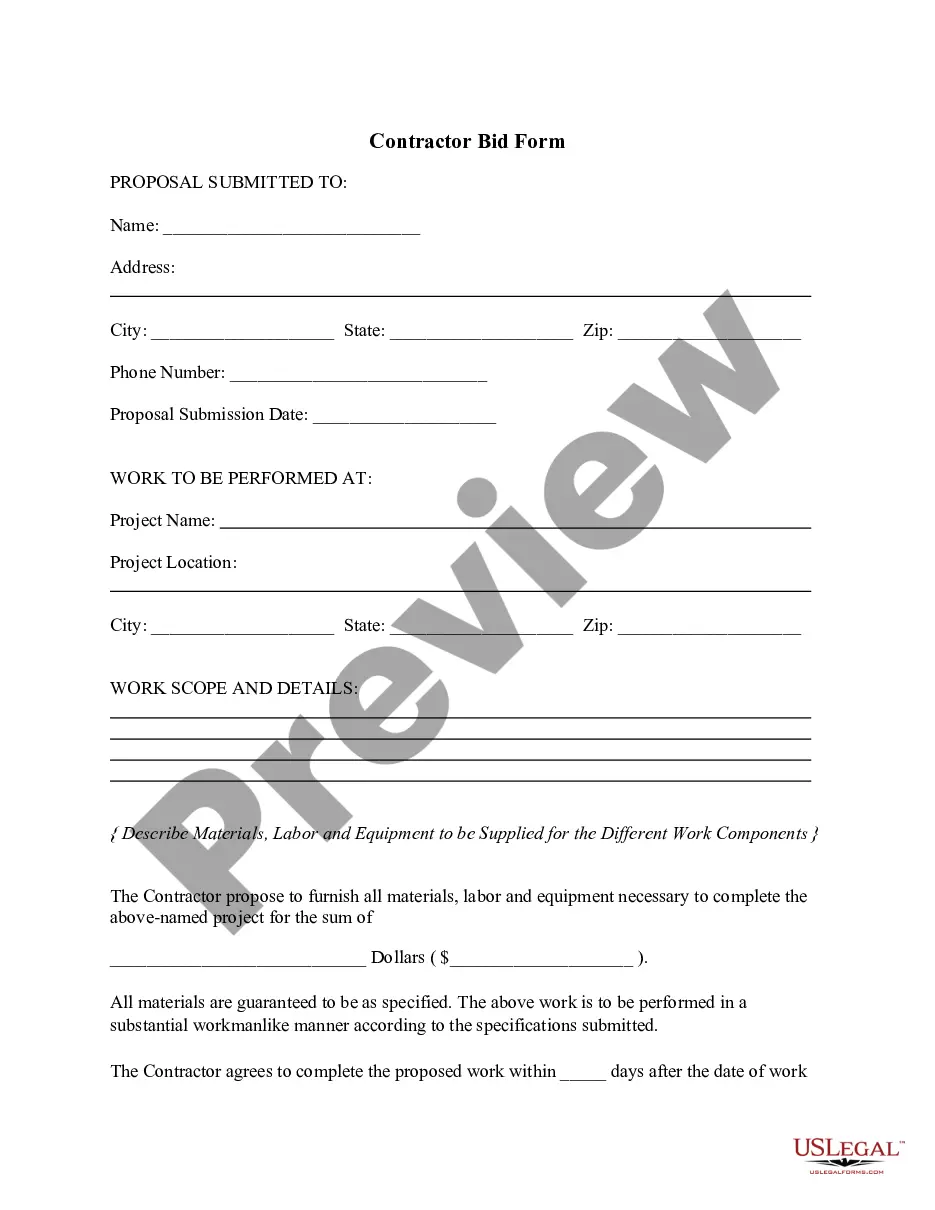
- Contractor's Bid Log
- Contractor's Bid Follow Up Letter
- Contractor's Summary of an Estimate
- Contractor's Schedule Sheet
- Contractor's Job Progress Sheet
- Contractor's Final Punch List
- Customer Satisfaction Survey
- Construction Company Evaluation by a Customer
- Construction Accident Report
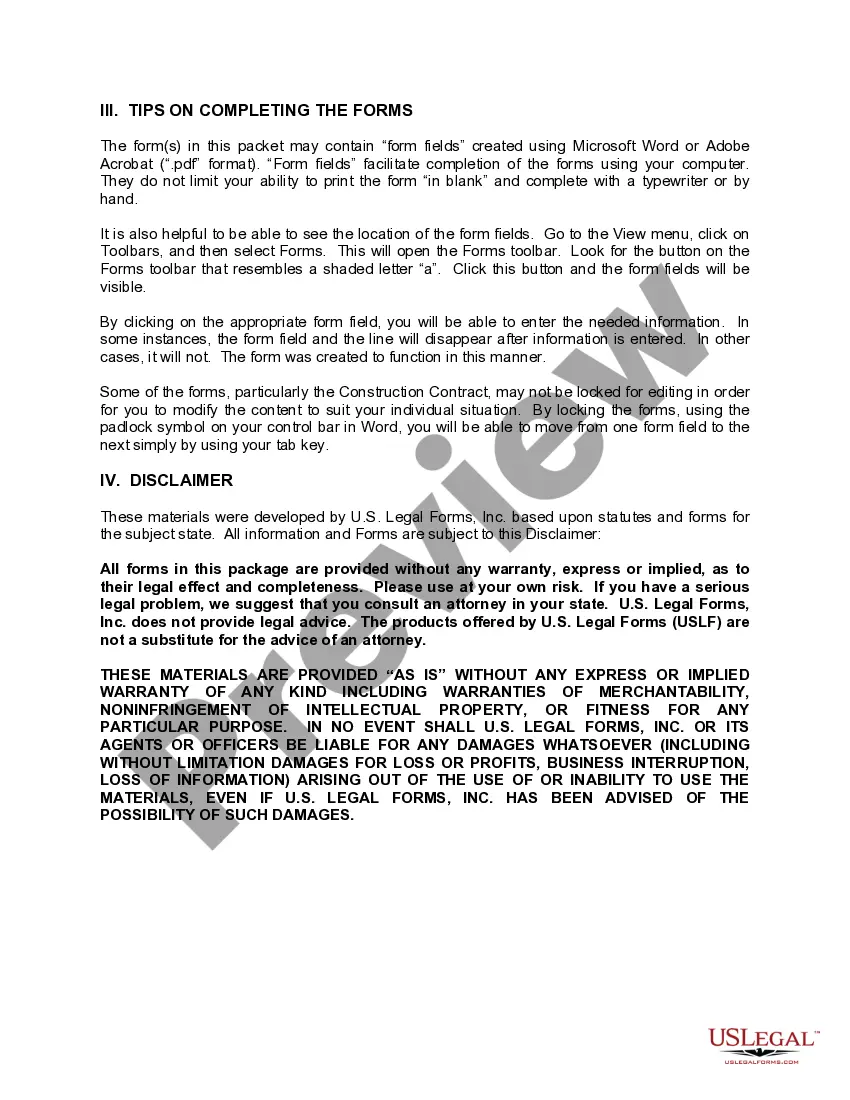
- Construction Safety and Health Plan
- Change Order for Construction or Repairs by Contractor
- Certification of Completion by Contractor
- Construction Project Information Sheet
When this form package is needed
This form package is crucial in various scenarios, including:
- Entering into construction contracts with clarity and legal backing.
- Documenting project details and changes effectively.
- Maintaining proper records of equipment, payroll, and job progress.
- Ensuring safety and health standards are met on construction sites.
- Gathering feedback from clients to improve service delivery.
Who this form package is for
- General contractors managing construction projects.
- Subcontractors providing specialized services on projects.
- Suppliers of materials and equipment for construction.
- Project owners who need to protect their rights and investments.
How to complete these forms
- Review the included forms in detail to understand their purpose.
- Identify the parties involved, including contractors, subcontractors, and owners.
- Enter accurate details such as dates, project information, and financial figures.
- Ensure all necessary signatures are obtained from relevant parties.
- Keep copies of completed forms for your records and compliance.
Notarization requirements for forms in this package
Notarization is generally not required for forms in this package. However, specific circumstances or local laws may require it. You can complete notarization remotely through US Legal Forms, powered by Notarize, with 24/7 availability.
Get your form ready online
Our built-in tools help you complete, sign, share, and store your documents in one place.
Make edits, fill in missing information, and update formatting in US Legal Forms—just like you would in MS Word.
Download a copy, print it, send it by email, or mail it via USPS—whatever works best for your next step.
Sign and collect signatures with our SignNow integration. Send to multiple recipients, set reminders, and more. Go Premium to unlock E-Sign.
If this form requires notarization, complete it online through a secure video call—no need to meet a notary in person or wait for an appointment.
We protect your documents and personal data by following strict security and privacy standards.

Make edits, fill in missing information, and update formatting in US Legal Forms—just like you would in MS Word.

Download a copy, print it, send it by email, or mail it via USPS—whatever works best for your next step.

Sign and collect signatures with our SignNow integration. Send to multiple recipients, set reminders, and more. Go Premium to unlock E-Sign.

If this form requires notarization, complete it online through a secure video call—no need to meet a notary in person or wait for an appointment.

We protect your documents and personal data by following strict security and privacy standards.
Mistakes to watch out for
- Failing to complete all required fields on forms, leading to potential disputes.
- Not reviewing the terms of the Construction Contract before signing.
- Neglecting to document changes via the Change Order Sheet.
- Overlooking safety regulations and not using the Worker Safety and Health Plan.
Benefits of completing this package online
- Convenient access to legal documents that can be downloaded instantly.
- Edit and customize forms easily to fit your specific project needs.
- Reliable and professionally drafted to ensure compliance with state laws.
- Cost-effective, saving you time and money compared to hiring an attorney.
Legal use & context
The forms included in this package are designed to be legally enforceable in Washington state. However, users should be aware that legal effectiveness may vary depending on the context and proper completion of the forms.
Summary of main points
- The Washington Contractors Forms Package provides vital documents for construction-related legal matters.
- Use these forms to assert rights, document changes, and comply with state regulations.
- Be proactive in ensuring completeness and accuracy to avoid common pitfalls.
- Online access to forms streamlines the process and reduces costs.
Looking for another form?

Form popularity
FAQ
Residential contractors build and renovate homes or manage such projects from start to finish. The residential contractor typically secures permits, supervises labor and enlists specialized subcontractors such as plumbers and electricians.
The Agreement. The agreement is the most fundamental document in a construction contract bundle. General Conditions. Special Conditions. Scope of Work. Drawings. Specifications. Bill of Quantities. Construction Schedule.
Even without a lien, a contractor can often sue a homeowner for simple breach of contract.To prevail on your lawsuit, you'll need to establish that the homeowner violated the terms of the contract, even though you performed the work.
You shouldn't pay more than 10 percent of the estimated contract price upfront, according to the Contractors State License Board.
Generally speaking, a general contractor is someone who manages a team of subcontractors to help do various types of construction projects in your home. A custom home builder, however, is specialized in building custom homes and is able to complete this specific type of project start to finish on their own.
Avoid companies that require an upfront deposit of more than 10 percent. Try to include language in the contract that holds back a percentage of the total price, called a retainage, until you're sure the work was done well. A 10 percent retainage is common for residential remodeling work.
Bidding Documents. Construction Contractor Agreement. Architectural Drawings. Specifications. Bill of Quantities. Schedule. Work Orders. Subcontractor Application.
A: It's not uncommon for contractors to ask for a down payment up front to secure your spot on their schedule or purchase some of the job materials in advance. Asking for more than half of the project cost up front, though, is a big red flag.I recommend tying payments to progress made during the job.
The Construction Documents contain contract forms, conditions of the contract, specifications, and drawings. Bidding requirements are also produced during this phase. Stringent contractor qualifications are delineated, ensuring that only contractors with a proven track record will be prequalified to bid.