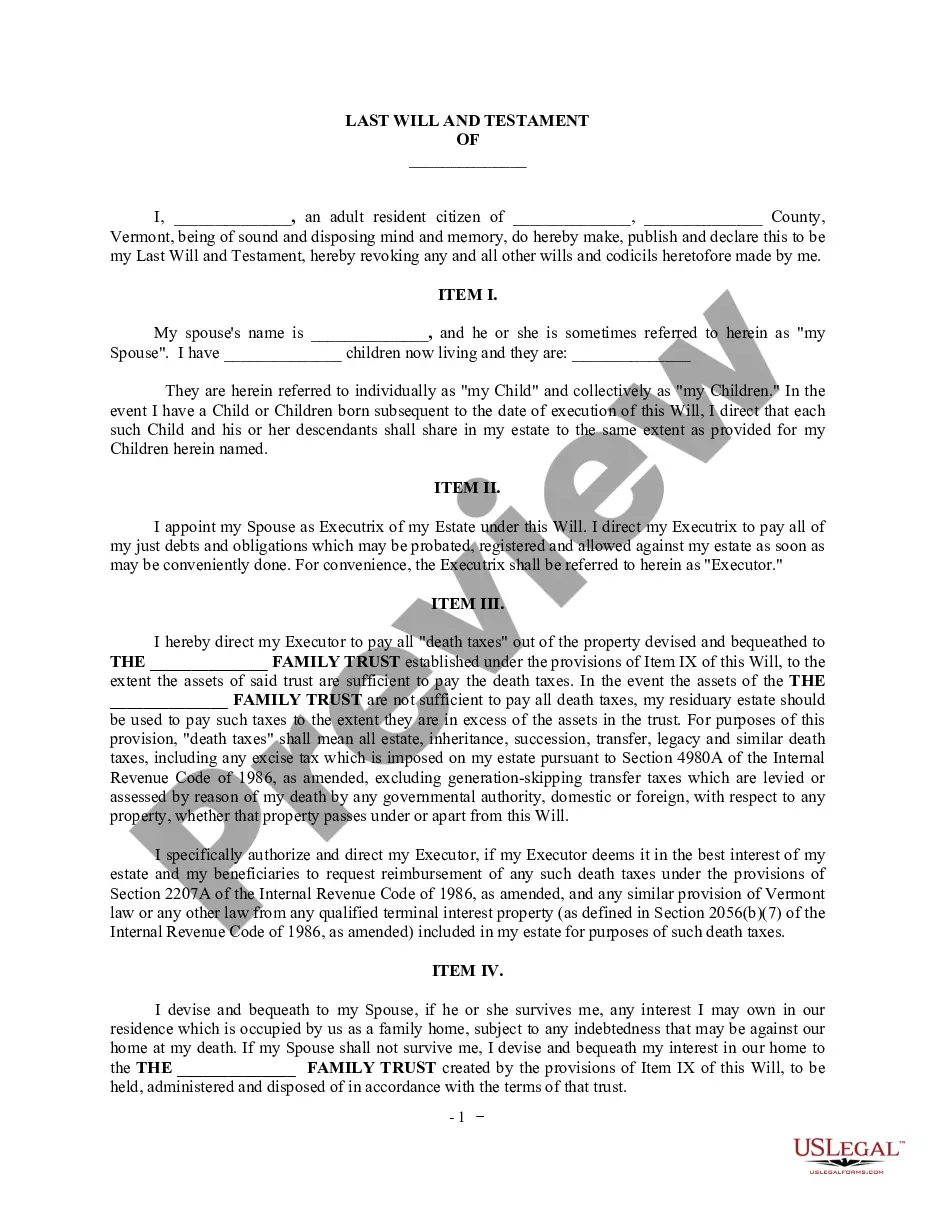
Vermont Last Will and Testament with All Property to Trust called a Pour Over Will
Overview of this form
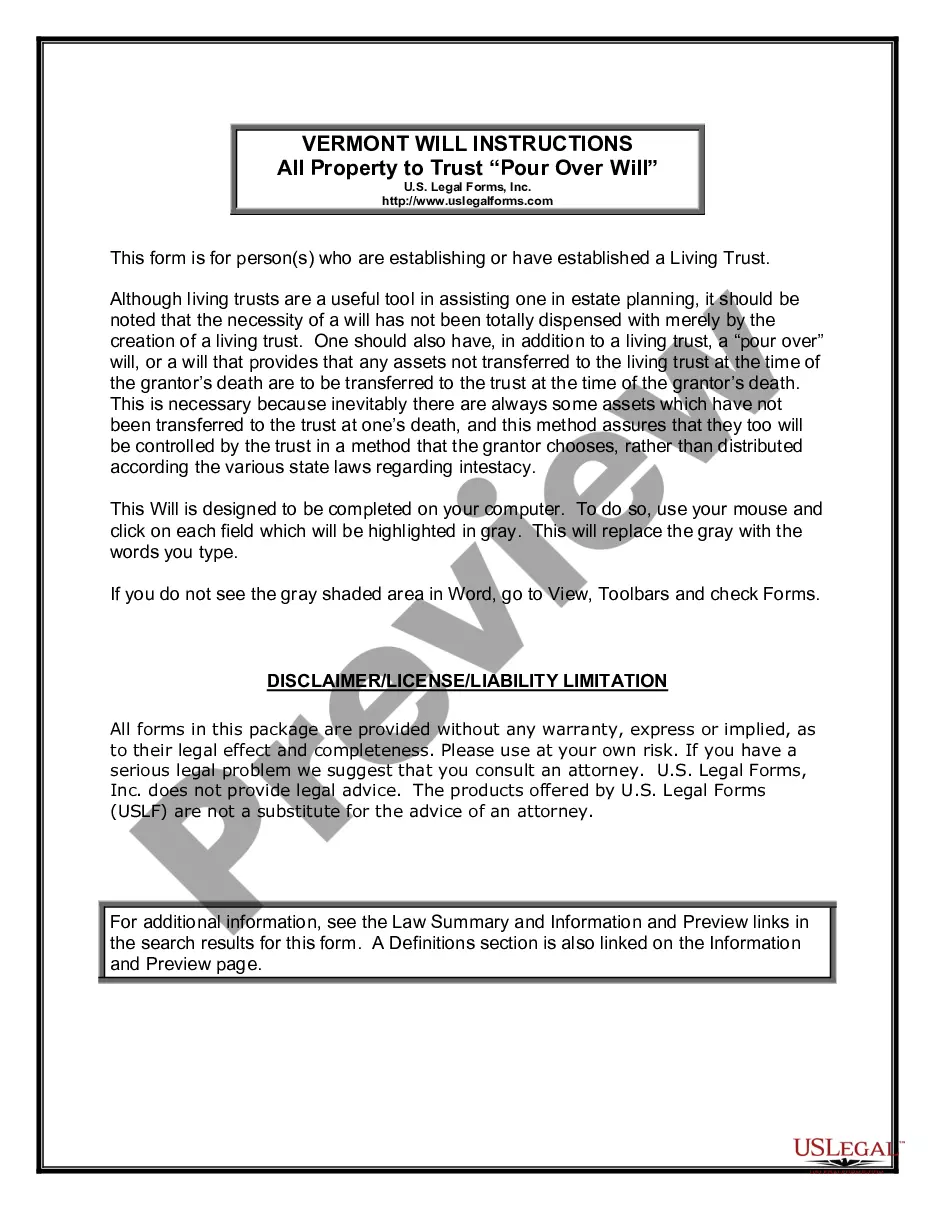
The Last Will and Testament, specifically the Pour Over Will, is a legal document that ensures any assets not already placed in your living trust are transferred to it upon your death. This will works in conjunction with a living trust, allowing for effective estate planning by simplifying the transfer of assets and minimizing the risk of intestacy. Unlike a traditional will, which distributes assets directly to beneficiaries, a Pour Over Will is specifically designed for those who have established or are establishing a living trust, making it a vital part of a comprehensive estate plan.
What’s included in this form
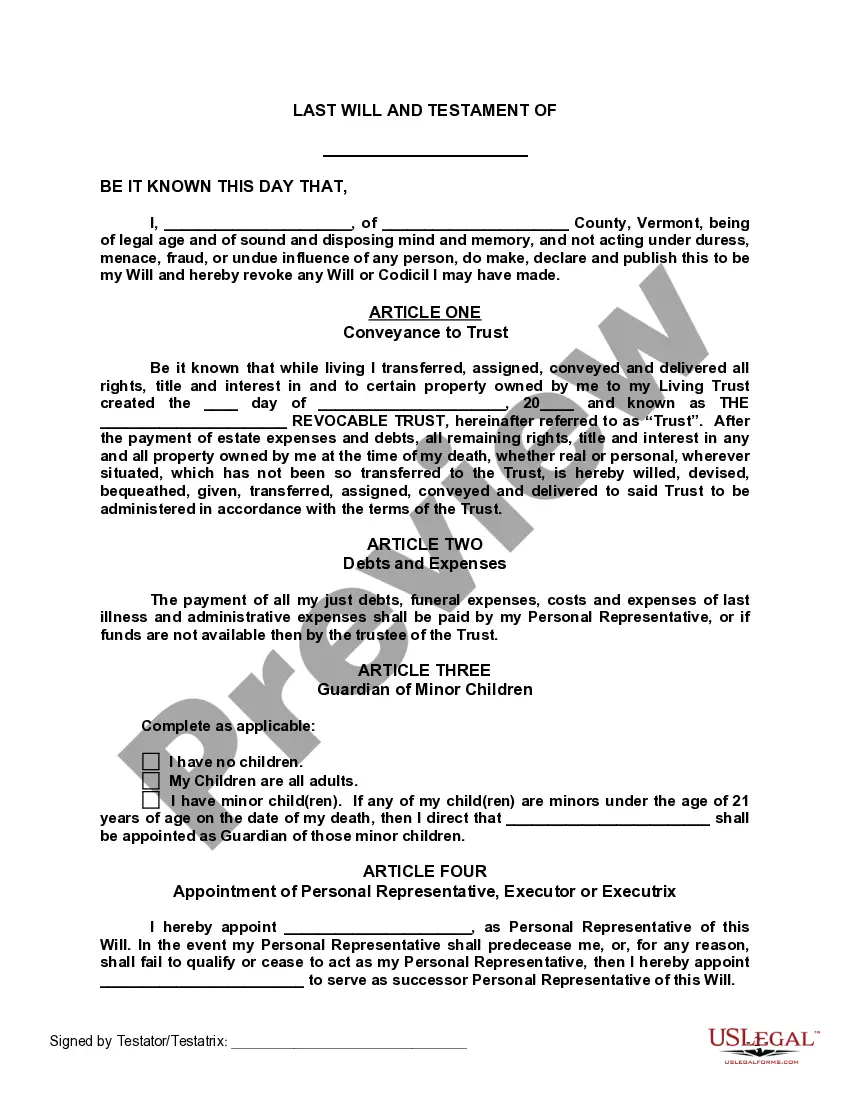
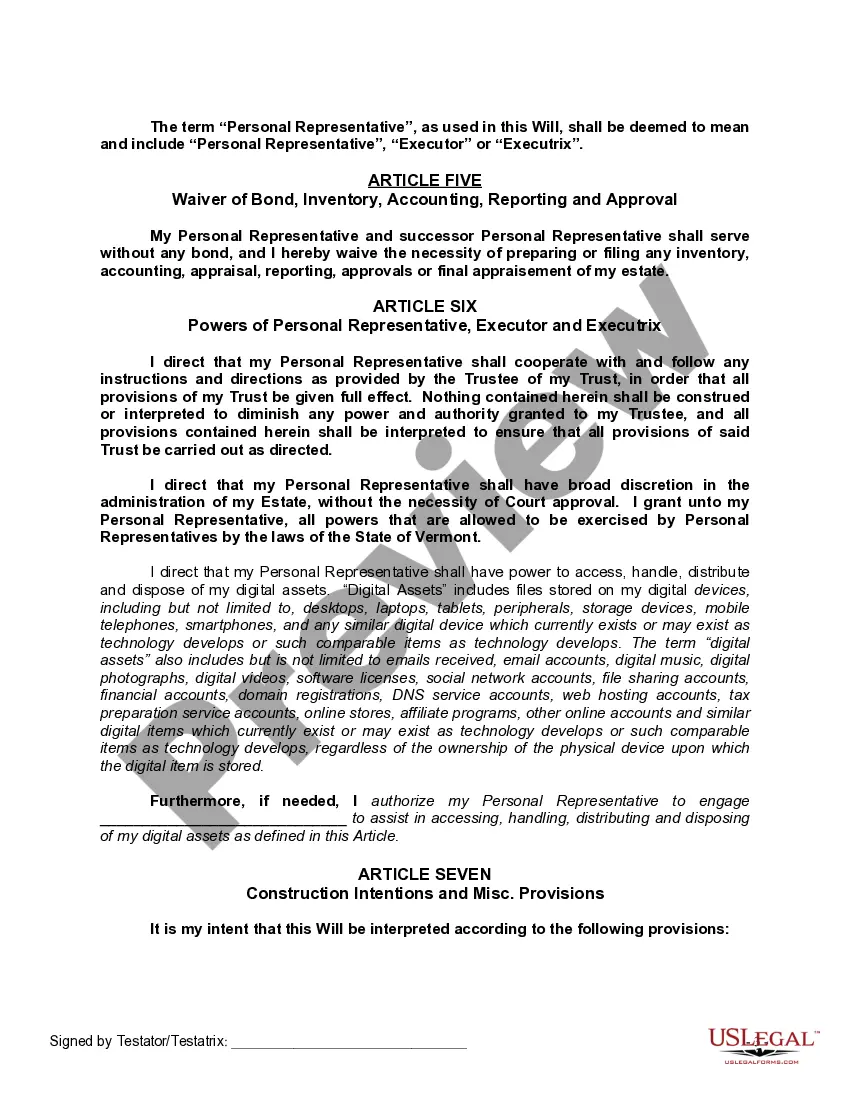
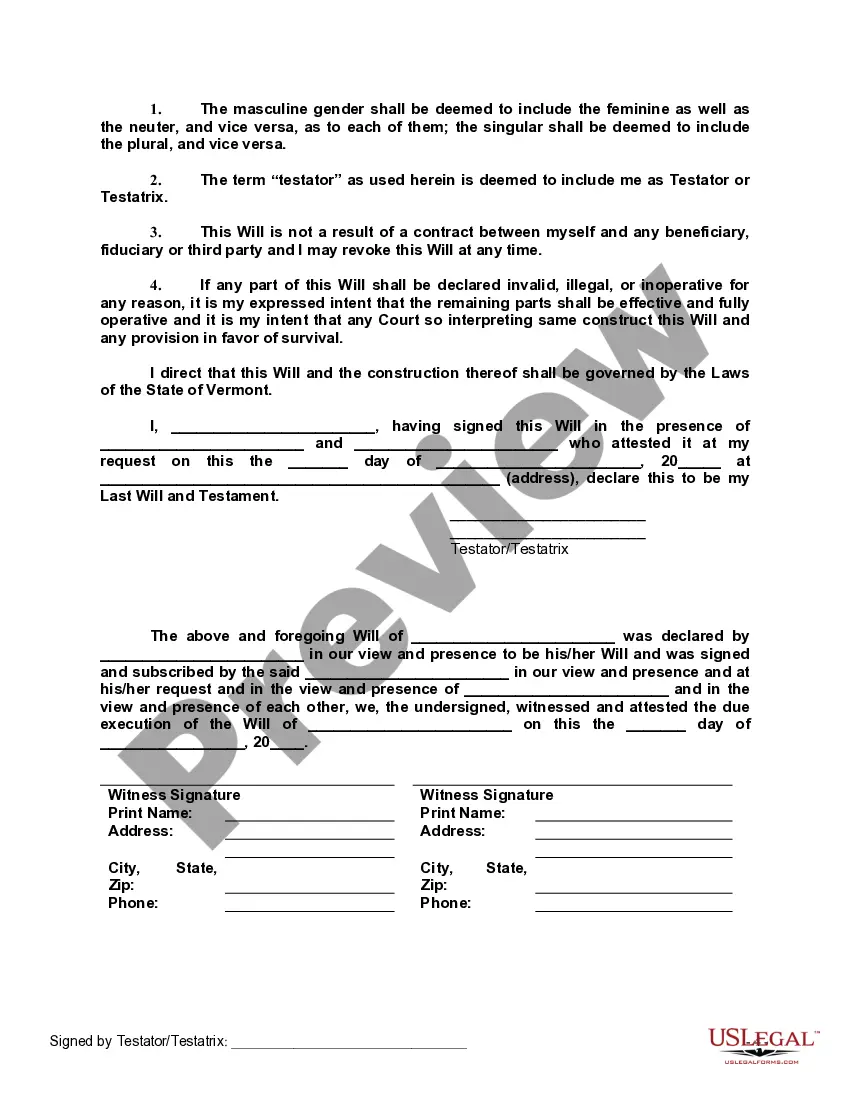
- Conveyance to Trust: Directs that any property not already transferred to the trust will pour over into it after your death.
- Debts and Expenses: Ensures that all debts and funeral expenses are paid prior to distributing assets.
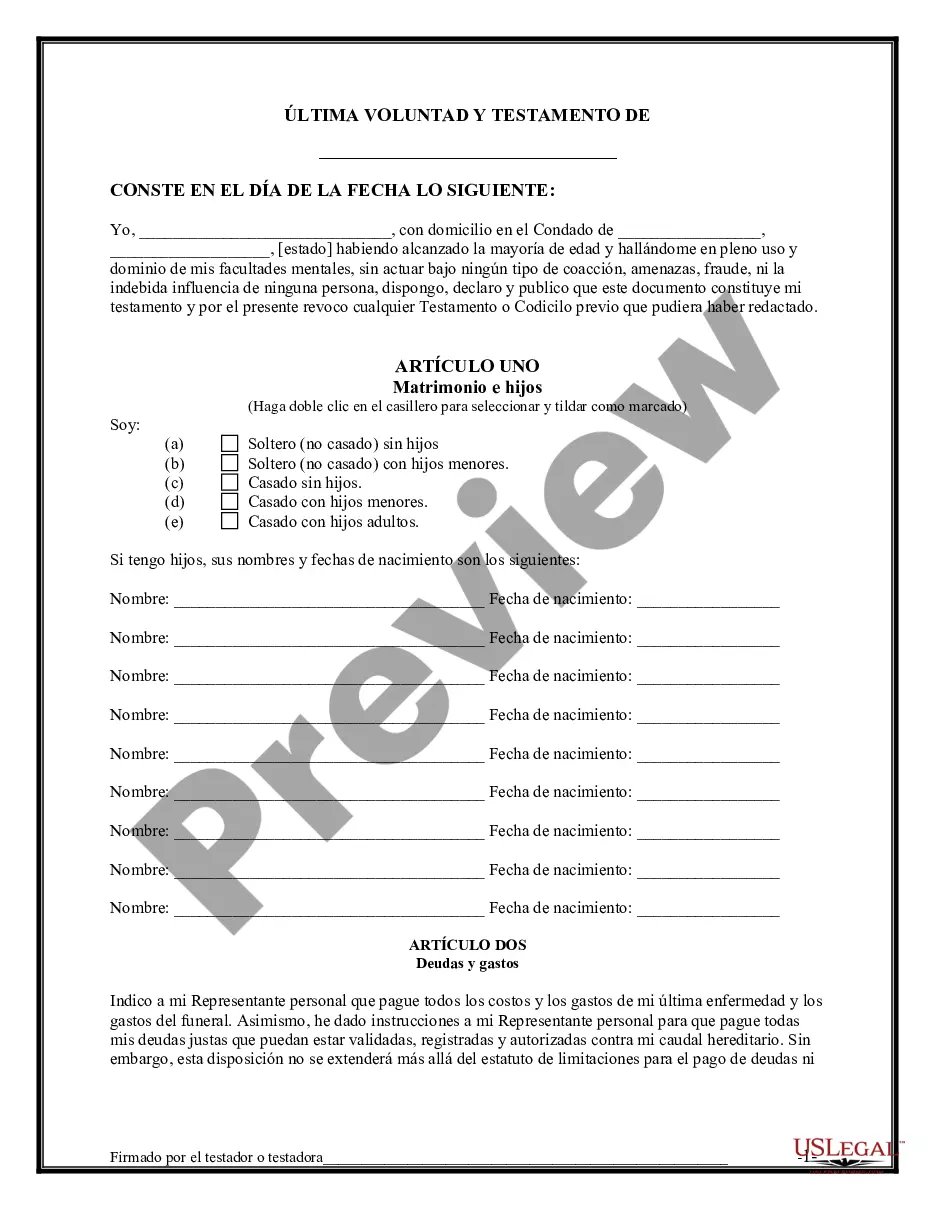
- Guardian of Minor Children: Designates a guardian for any minor children, if applicable.
- Appointment of Personal Representative: Names a personal representative to manage the estate according to the will's instructions.
- Waiver of Bond: Allows the personal representative to proceed without a bond, streamlining the administrative process.



When this form is needed
This form is essential for individuals who have created a living trust but want to ensure that any assets unintentionally left out are still directed into the trust upon their death. It is particularly useful in scenarios where there may be real estate, bank accounts, or personal property that have not yet been transferred to the trust. Additionally, it safeguards your intent regarding asset distribution and helps avoid complications associated with intestacy laws.
Who should use this form
- Individuals who have established a living trust.
- Those planning their estates and want to ensure all assets are managed according to their wishes.
- Anyone with minor children needing to designate guardianship.
- Individuals looking to simplify their estate settlement process.
Completing this form step by step
- Identify yourself as the testator and enter your name and county.
- Specify the name of your living trust and the date it was created.
- Select a guardian for any minor children you may have, if applicable.
- Designate your personal representative who will oversee your estate.
- Ensure all areas highlighted for input on the form are completed accurately.
Is notarization required?
Notarization is required for this form to take effect. Our online notarization service, powered by Notarize, lets you verify and sign documents remotely through an encrypted video session, available 24/7.
Get your form ready online
Our built-in tools help you complete, sign, share, and store your documents in one place.
Make edits, fill in missing information, and update formatting in US Legal Forms—just like you would in MS Word.
Download a copy, print it, send it by email, or mail it via USPS—whatever works best for your next step.
Sign and collect signatures with our SignNow integration. Send to multiple recipients, set reminders, and more. Go Premium to unlock E-Sign.
If this form requires notarization, complete it online through a secure video call—no need to meet a notary in person or wait for an appointment.
We protect your documents and personal data by following strict security and privacy standards.

Make edits, fill in missing information, and update formatting in US Legal Forms—just like you would in MS Word.

Download a copy, print it, send it by email, or mail it via USPS—whatever works best for your next step.

Sign and collect signatures with our SignNow integration. Send to multiple recipients, set reminders, and more. Go Premium to unlock E-Sign.

If this form requires notarization, complete it online through a secure video call—no need to meet a notary in person or wait for an appointment.

We protect your documents and personal data by following strict security and privacy standards.
Common mistakes to avoid
- Not updating the will after significant life changes such as marriage, divorce, or birth of children.
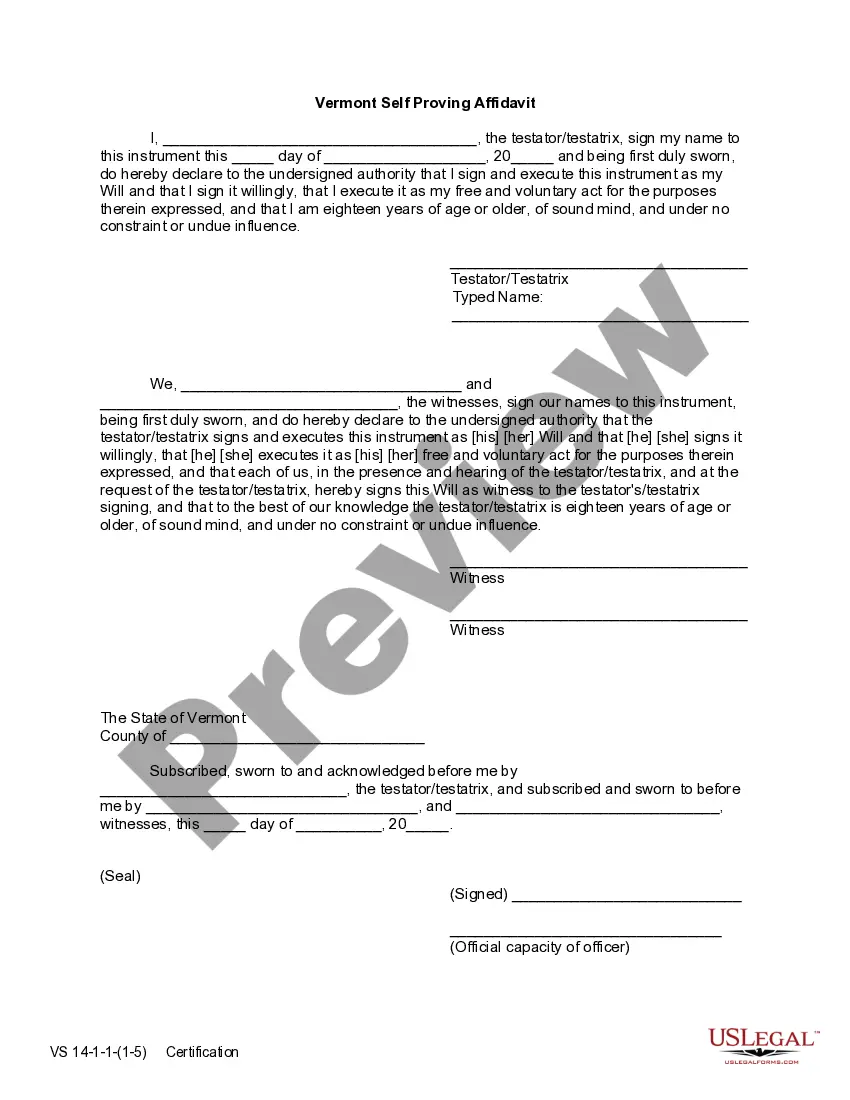
- Failing to sign the will in the presence of witnesses, which may invalidate the document.
- Leaving assets out of the trust before death, which undermines the pour-over function.
Why use this form online
- Convenience of easily filling out and editing the form from your own computer.
- Access to instructional guidance throughout the process for accuracy.
- Immediate availability of the form for download, allowing for quick responses to legal needs.
Looking for another form?
Form popularity
FAQ
Pour-over wills act as a backstop against issues that could frustrate the smooth operation of a living trust. They ensure any assets a grantor neglects to add to a trust, whether by accident or on purpose, will end up in the trust after execution of the will.
In most situations, a will template is an easy and inexpensive way to make sure your wishes are known and carried out. Most people can get everything they need by using a will template, with little cost or hassle.
Bank accounts. Brokerage or investment accounts. Retirement accounts and pension plans. A life insurance policy.
Create the initial document. Start by titling the document Last Will and Testament" and including your full legal name and address. Designate an executor. Appoint a guardian. Name the beneficiaries. Designate the assets. Ask witnesses to sign your will. Store your will in a safe place.
The Free Last Will and Testament Template for Word is compatible with Word 2003 or later versions.
Pour-over wills are subject to probate since the assets have not yet been transferred into the trust. Some states also require your assets to go through the probate process any time your assets or property are over a certain value.Even though pour-over wills don't avoid probate, there is still a measure of privacy.
After reading about the benefits of a revocable living trust, you may wonder, Why do I need a pour-over will if I have a living trust? A pour-over will is necessary in the event that you do not fully or properly fund your trust.Your trust agreement can only control the assets that the trust owns.
After reading about the benefits of a revocable living trust, you may wonder, Why do I need a pour-over will if I have a living trust? A pour-over will is necessary in the event that you do not fully or properly fund your trust.Your trust agreement can only control the assets that the trust owns.
When people make revocable living trusts to avoid probate, it's common for them to also make what's called a "pour-over will." The will directs that if any property passes through the will at the person's death, it should be transferred to (poured into) the trust, and then distributed to the beneficiaries of the trust.