Counter Offer Letter - Conditional Acceptance Where Subject Matter does not Involve the Sale of Goods
Overview of this form
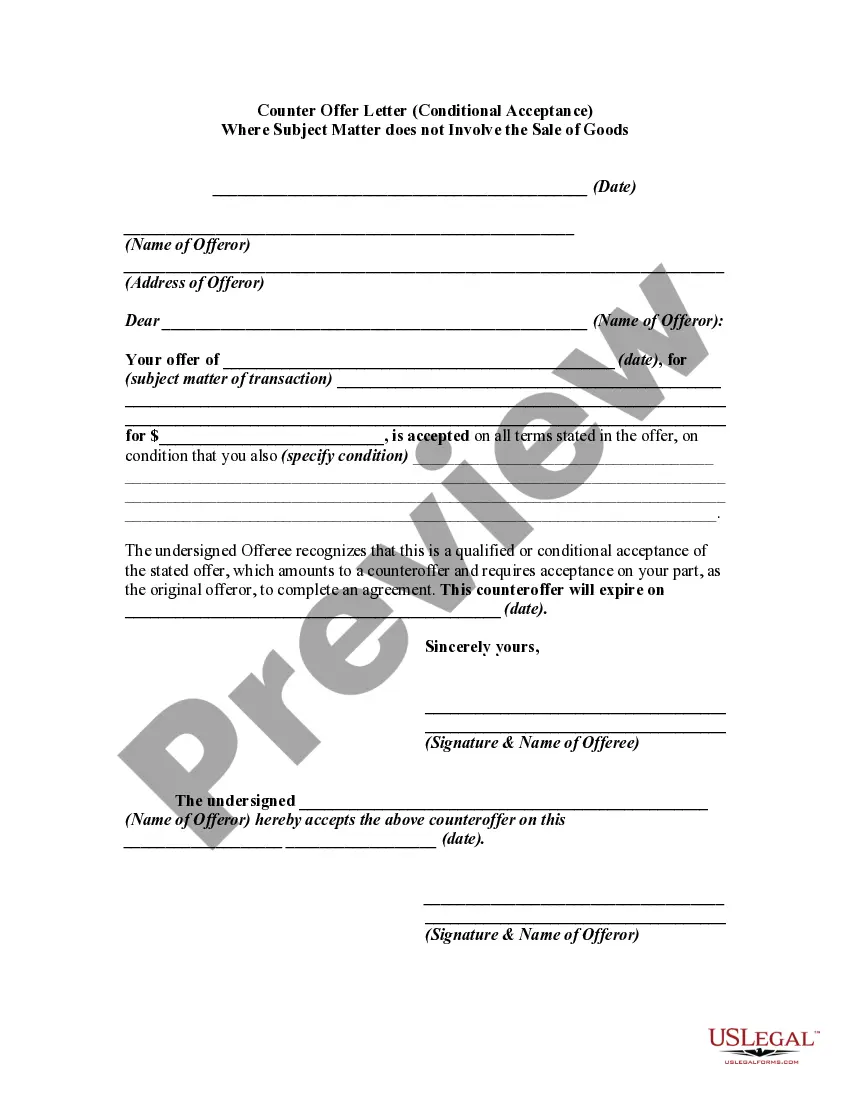
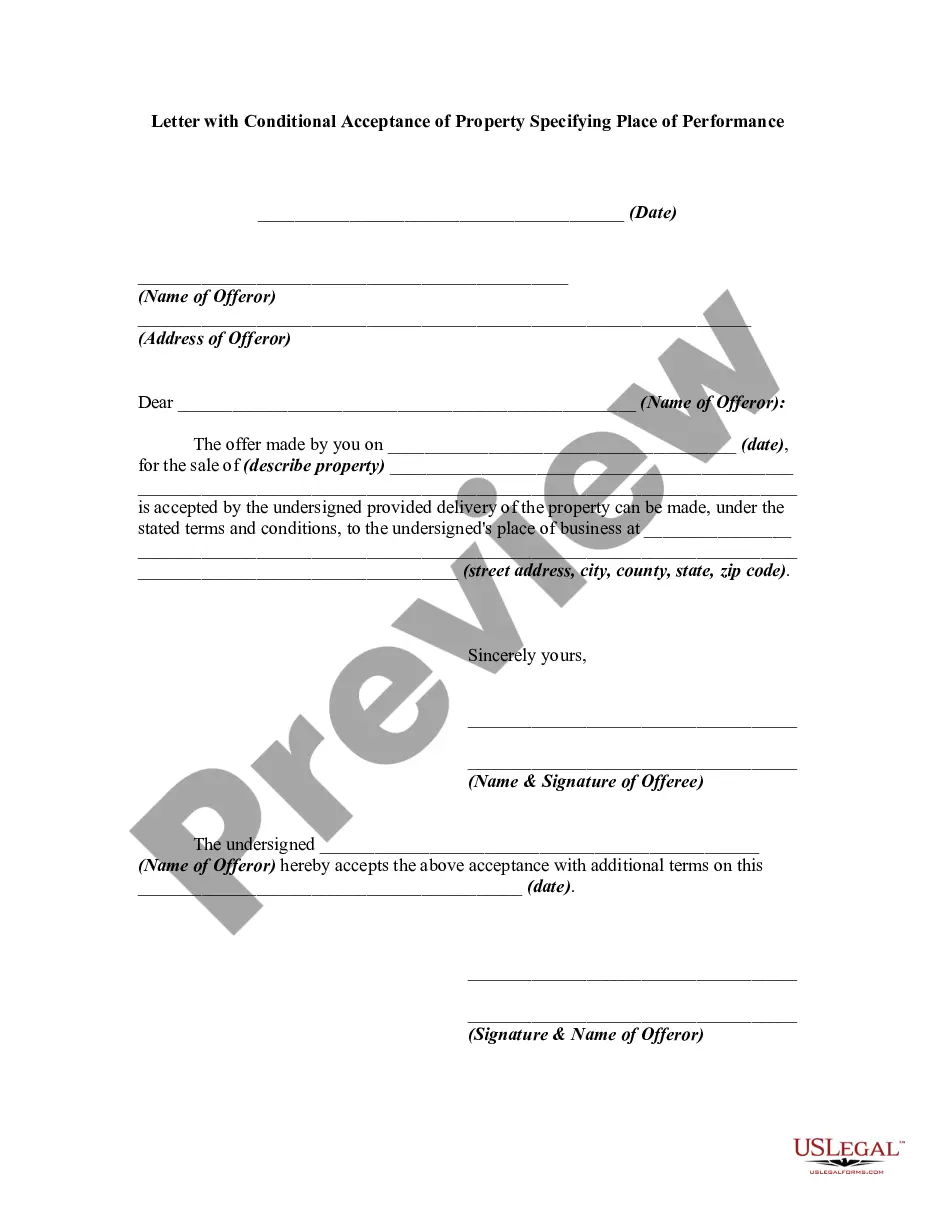
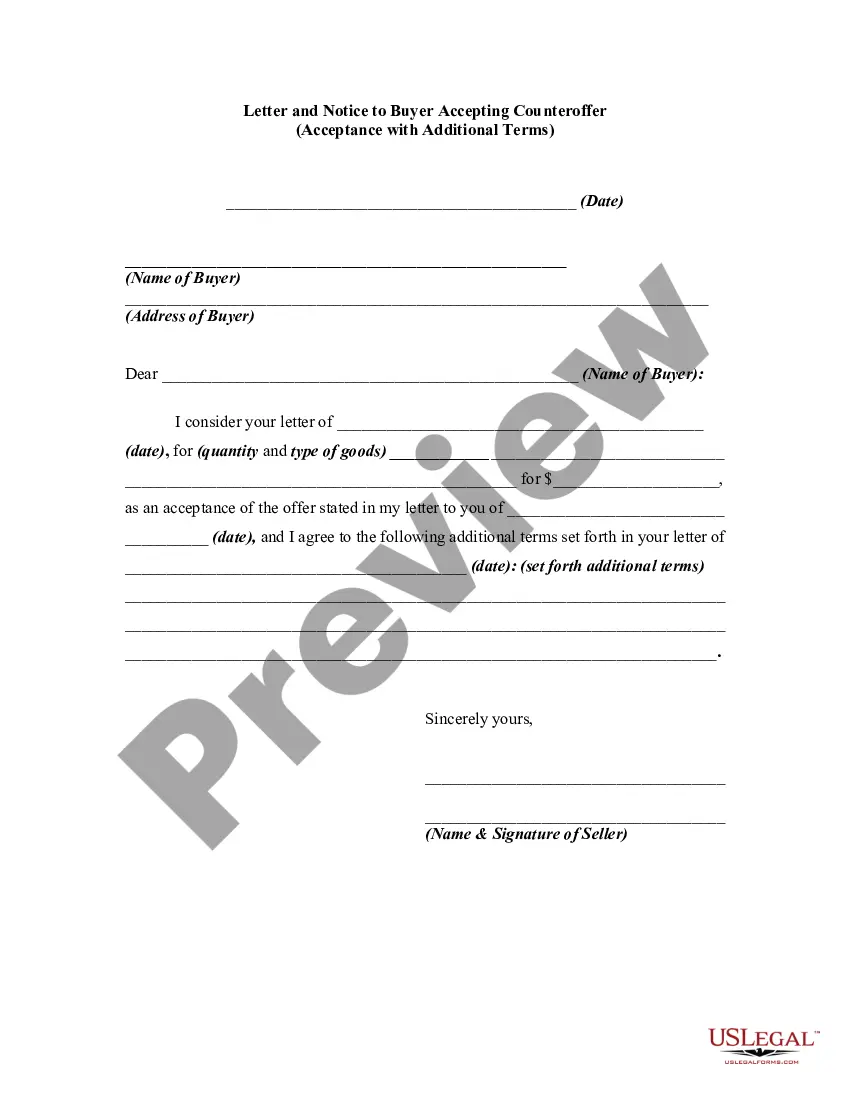
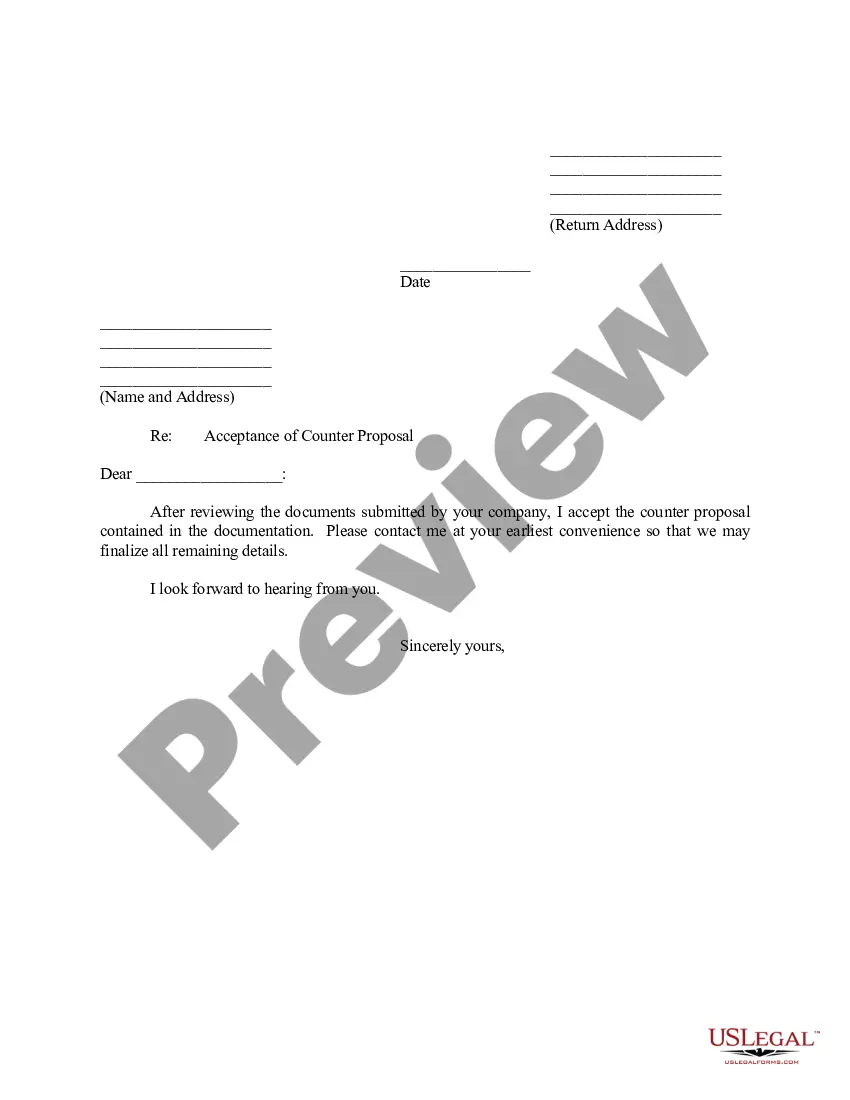
The Counter Offer Letter - Conditional Acceptance Where Subject Matter does not Involve the Sale of Goods is a legal document used to propose new terms in response to an original offer during contract negotiations. Unlike the initial offer, a counter offer creates a new agreement that rejects the original one unless accepted. This form is essential for ensuring all conditions are clearly stipulating a new path for negotiation, setting it apart from standard acceptance letters.
Key components of this form
- Date of the counter offer.
- Name and address of the original offeror.
- Description of the original offer and subject matter of the transaction.
- Details of any conditions attached to the acceptance of the offer.
- Expiration date of the counter offer.
- Signatures of both parties to finalize the agreement.
Common use cases
This form is useful during contract negotiations when one party wishes to accept an offer while imposing specific conditions. It typically arises in scenarios involving real estate transactions, service agreements, or any business arrangements where terms need to be modified. Use this form to clarify the acceptance on new terms and enhance negotiation transparency.
Who can use this document
Consider this form if you are:
- An individual or business that has received an offer and wishes to counter it.
- A party involved in negotiations that require a clear understanding of new terms.
- Seeking to protect your interests by formally stating conditions for acceptance.
Steps to complete this form
- Identify and enter the date of the counter offer.
- Fill in the name and address of the original offeror.
- Clearly describe the subject matter of the original offer and any agreed terms.
- Specify any conditions that are required for the acceptance of the counter offer.
- Set the expiration date for the counter offer.
- Both parties should sign and date the document to formalize the counter offer.
Is notarization required?
Notarization is generally not required for this form. However, certain states or situations might demand it. You can complete notarization online through US Legal Forms, powered by Notarize, using a verified video call available anytime.
Get your form ready online
Our built-in tools help you complete, sign, share, and store your documents in one place.
Make edits, fill in missing information, and update formatting in US Legal Forms—just like you would in MS Word.
Download a copy, print it, send it by email, or mail it via USPS—whatever works best for your next step.
Sign and collect signatures with our SignNow integration. Send to multiple recipients, set reminders, and more. Go Premium to unlock E-Sign.
If this form requires notarization, complete it online through a secure video call—no need to meet a notary in person or wait for an appointment.
We protect your documents and personal data by following strict security and privacy standards.

Make edits, fill in missing information, and update formatting in US Legal Forms—just like you would in MS Word.

Download a copy, print it, send it by email, or mail it via USPS—whatever works best for your next step.

Sign and collect signatures with our SignNow integration. Send to multiple recipients, set reminders, and more. Go Premium to unlock E-Sign.

If this form requires notarization, complete it online through a secure video call—no need to meet a notary in person or wait for an appointment.

We protect your documents and personal data by following strict security and privacy standards.
Mistakes to watch out for
- Failing to specify conditions which leads to ambiguity.
- Not including an expiration date for the counter offer.
- Missing signatures, which can invalidate the counter offer.
Why complete this form online
- Convenient access to customize the form from any location.
- Editable templates allow for easy specification of unique conditions.
- Reliability of formats that are regularly updated by licensed attorneys.
Looking for another form?

Form popularity
FAQ
A counteroffer is a response given to an initial offer. A counteroffer means the original offer was rejected and replaced with another one. The counteroffer gives the original offerer three options: accept the counteroffer, reject it, or make another offer.
A counteroffer is the response given to an offer, meaning the original offer was rejected and replaced with another one. Counteroffers give the original offerer three options: accept it, reject it, or make another offer and continue negotiations.
Conditional Acceptance is an agreement to pay a draft on the occurrence or nonoccur-rence of a particular event.This type of acceptance operates as a counteroffer. A counteroffer must be accepted by the original offeror before a contract can be established between the parties.
Offers at common law required three elements: communication, commitment and definite terms.
A counteroffer isn't an acceptance because it materially changes the terms of the proposed contract. Legally, a counteroffer is considered a rejection of the original offer and the proposal of a new offer in its place.
What does conditionally accepted mean? Conditional acceptance means that there are still terms that need to be met before your acceptance can be finalized. For example, maybe you're a high school or college student and you've applied and submitted your official transcript for your midterm grades.
Including: names, description of goods or services, quantity, price, and important delivery terms. Offer must be communicated to the offeree. Requirements - communication by the offeror and receipt by the offeree (did the offeree know about the offer when she accepted?)
(1) The offer must be Communicated Communication or expression of the willingness by the offerer to enter into a contract or abstain from doing so is essential for a valid offer. Mere desire or willingness to do or not to do something is not enough and will not constitute for an offer.
A counter offer is an offeree's new offer that varies the terms of the original offer and therefore, constitutes a rejection of the original offer.An acceptance, which is upon condition or with a limitation, is a counteroffer and requires acceptance by the original offeror before a contractual relationship can exist.