Blind Trust Agreement
Overview of this form
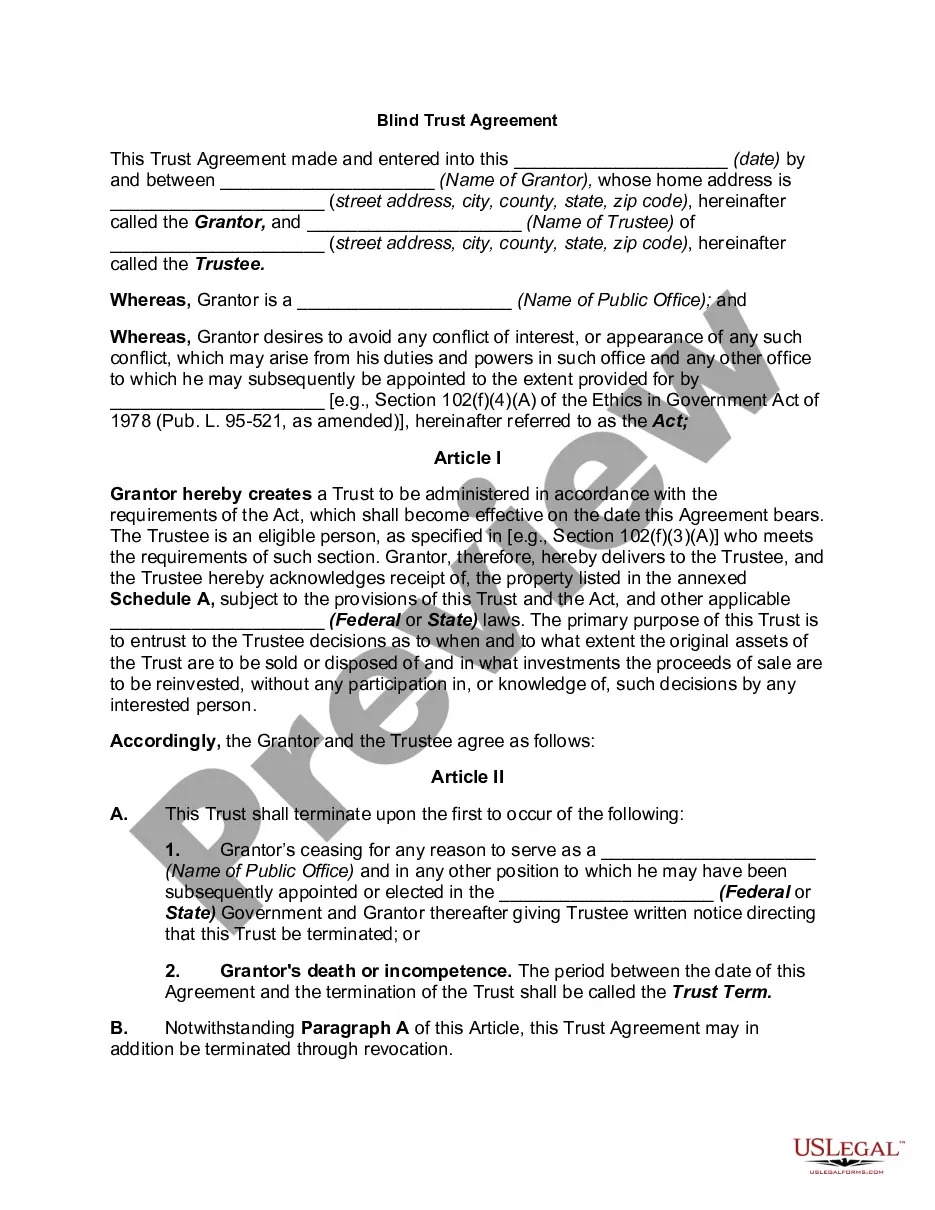
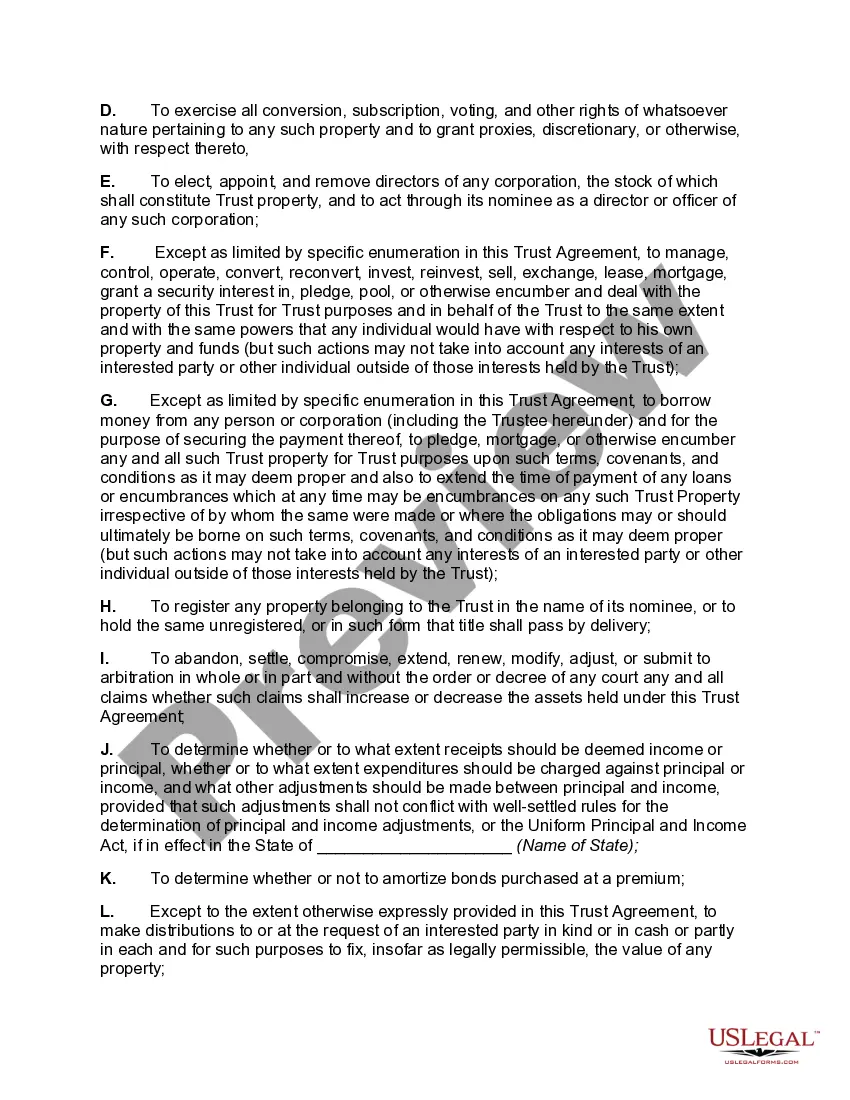
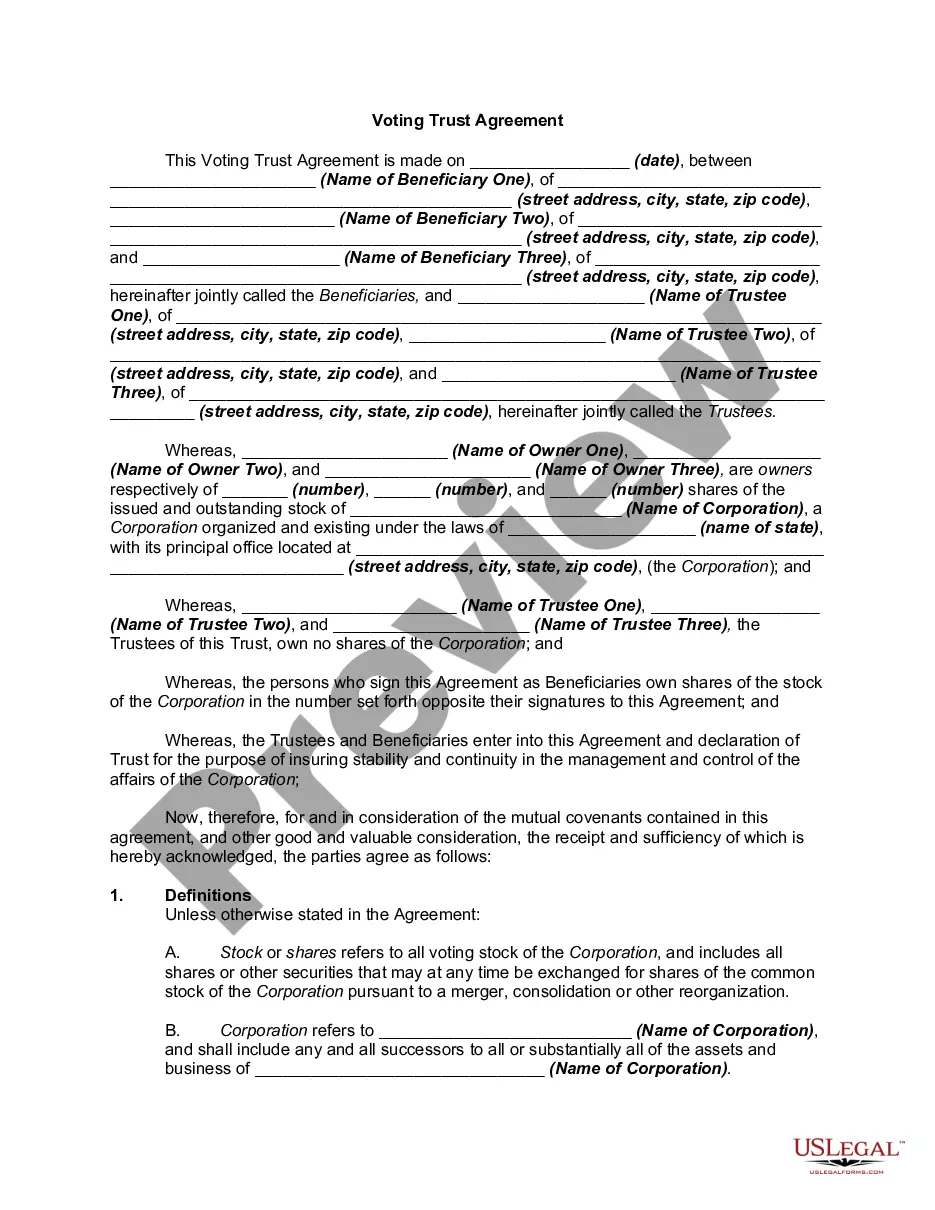
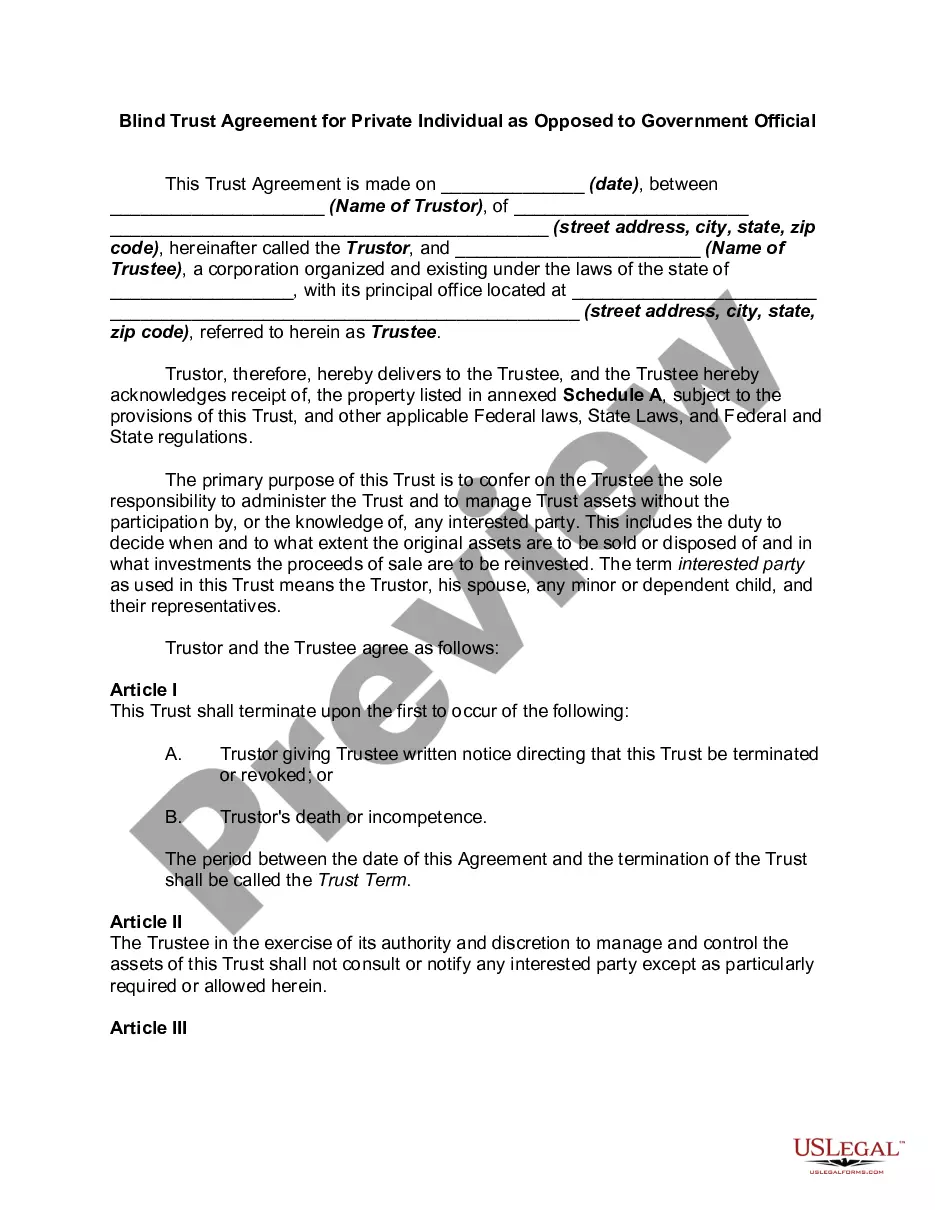
The Blind Trust Agreement is a legal document that allows individuals, particularly those in public office, to place their assets in a trust managed by a trustee. This arrangement is designed to prevent conflicts of interest by ensuring that the grantor has no knowledge or control over how their assets are managed while they hold public office. The blind trust differs from other trust agreements in that it restricts communication about trust assets between the grantor and the trustee, maintaining a clear distance to avoid any potential conflicts.
Main sections of this form
- Details of the grantor and trustee, including their names and addresses.
- Establishment of the trust and its primary purpose, as defined by relevant laws.
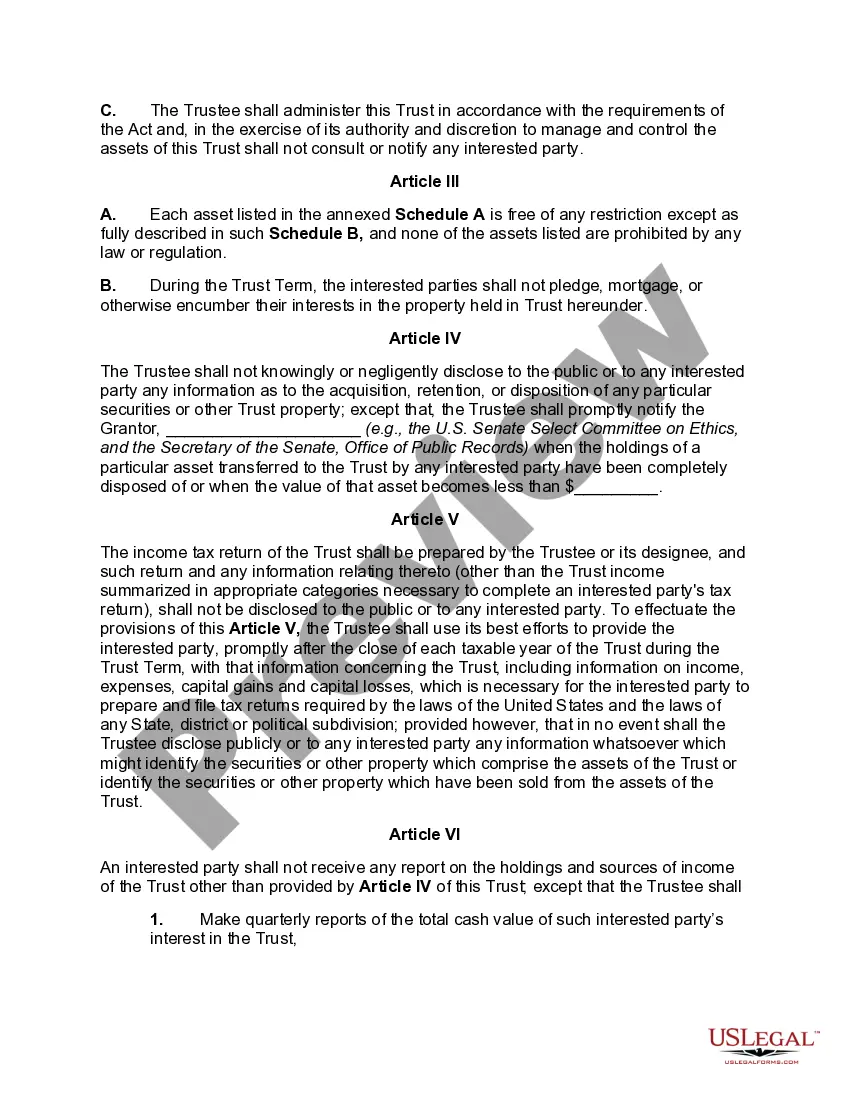
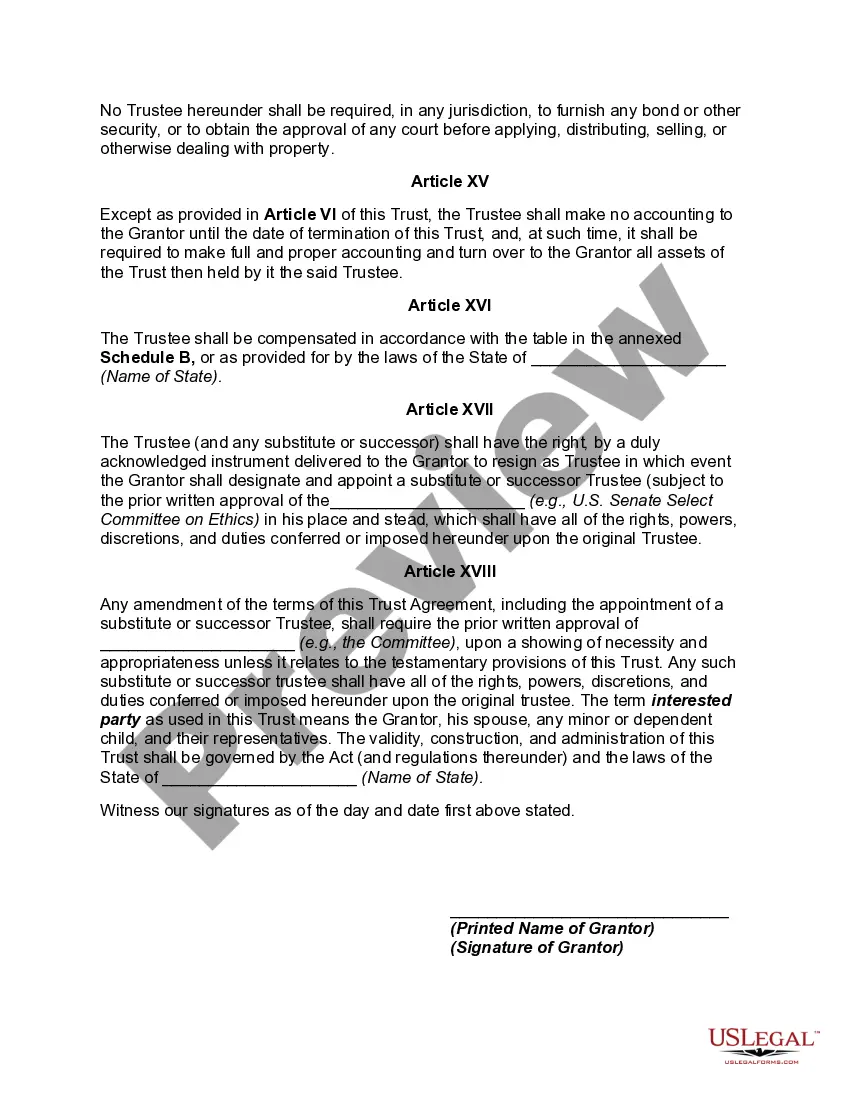
- Conditions for trust termination, including death or resignation from public office.
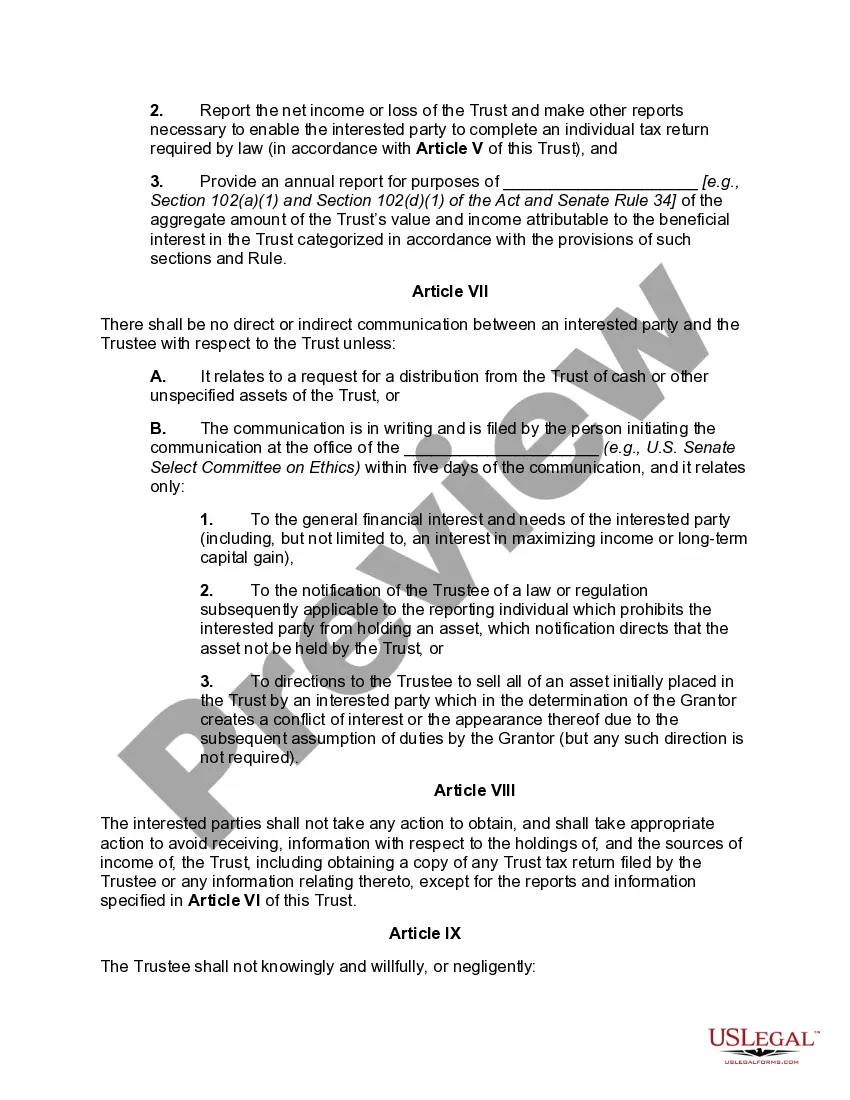
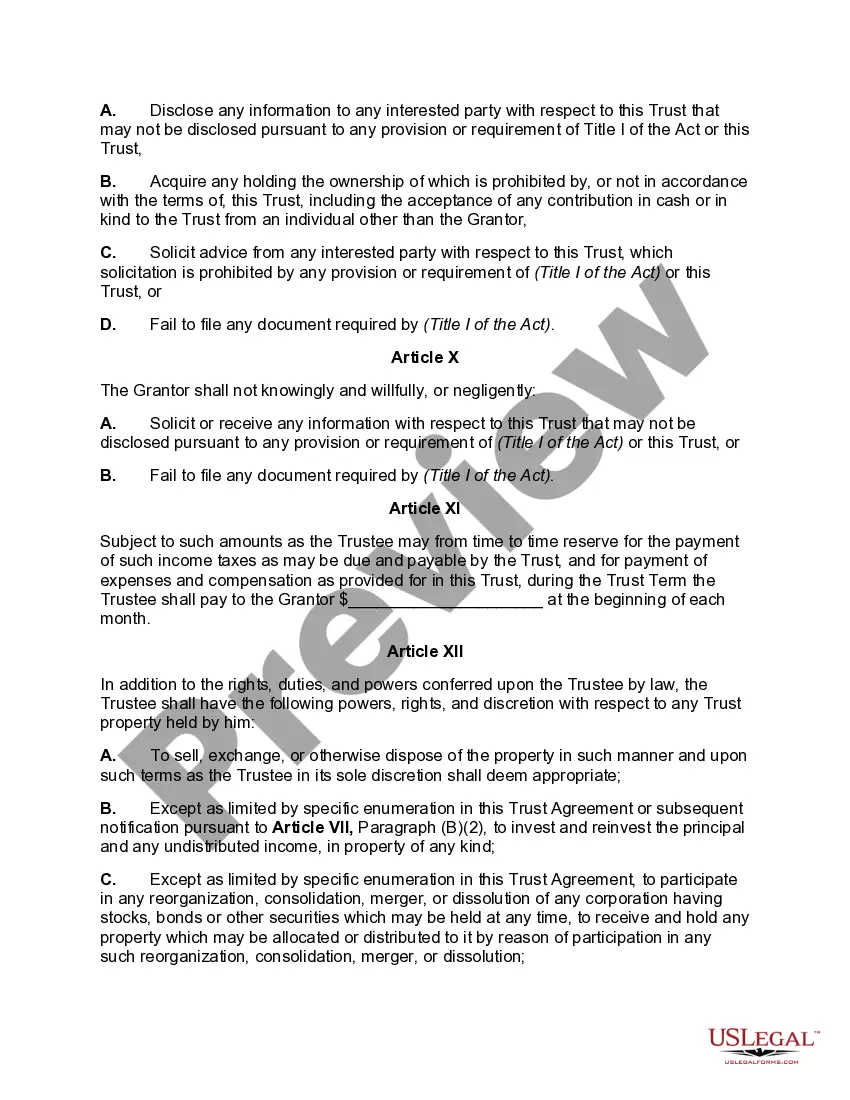
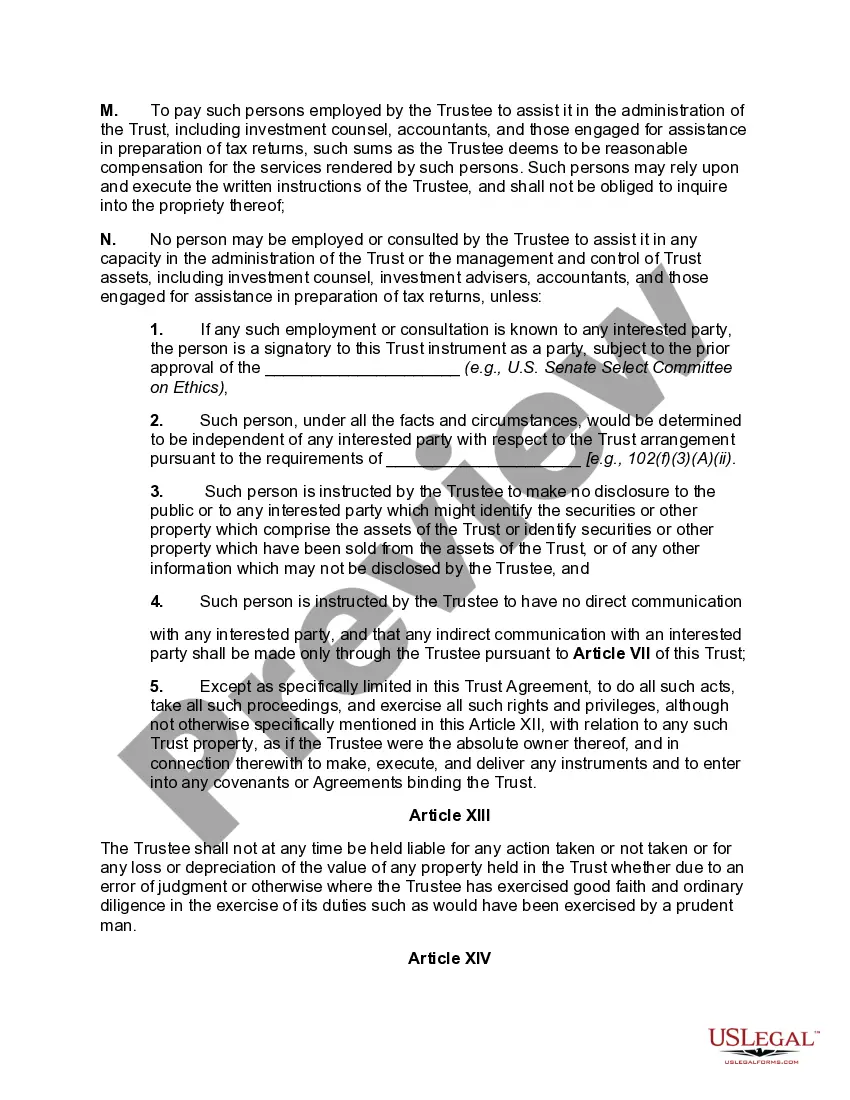
- Provisions regarding the management and confidentiality of trust assets.
- Trustee's powers regarding buying, selling, and managing trust property.
When this form is needed
This form is often used by public officials who wish to eliminate any potential conflicts of interest that may arise from their personal investments or assets while serving in their official capacity. It is typically employed when a public officeholder is required by law to divest from certain assets or when they seek to maintain transparency and integrity in their financial dealings to uphold public trust.
Who can use this document
- Public officials such as elected representatives and judges.
- Individuals seeking to avoid conflicts of interest in financial affairs.
- Persons wanting to maintain confidentiality about their assets while in public service.
Steps to complete this form
- Identify the parties involved, including the grantor and trustee, and enter their full names and addresses.
- Specify the property to be placed in the trust in the designated areas.
- Enter the date the agreement is being signed.
- Define the terms of the trust, including the purpose and conditions for termination.
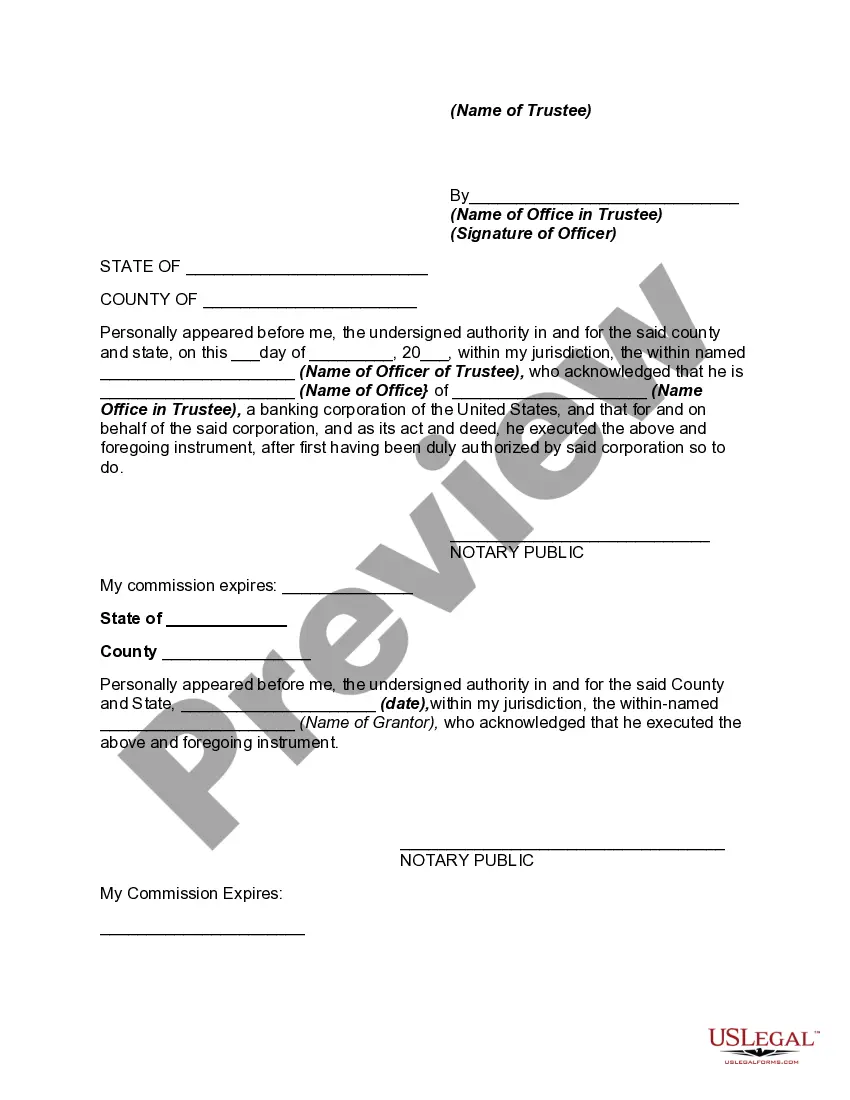
- Have the document notarized and ensure all signatures are obtained to make the agreement legally valid.
Does this form need to be notarized?
Yes, this form must be notarized to be legally valid. US Legal Forms provides integrated online notarization to simplify the process. You can complete your notarization through a secure video call with a licensed notary available 24/7, ensuring legal equivalence without the need to travel.
Get your form ready online
Our built-in tools help you complete, sign, share, and store your documents in one place.
Make edits, fill in missing information, and update formatting in US Legal Forms—just like you would in MS Word.
Download a copy, print it, send it by email, or mail it via USPS—whatever works best for your next step.
Sign and collect signatures with our SignNow integration. Send to multiple recipients, set reminders, and more. Go Premium to unlock E-Sign.
If this form requires notarization, complete it online through a secure video call—no need to meet a notary in person or wait for an appointment.
We protect your documents and personal data by following strict security and privacy standards.

Make edits, fill in missing information, and update formatting in US Legal Forms—just like you would in MS Word.

Download a copy, print it, send it by email, or mail it via USPS—whatever works best for your next step.

Sign and collect signatures with our SignNow integration. Send to multiple recipients, set reminders, and more. Go Premium to unlock E-Sign.

If this form requires notarization, complete it online through a secure video call—no need to meet a notary in person or wait for an appointment.

We protect your documents and personal data by following strict security and privacy standards.
Common mistakes to avoid
- Failing to clearly identify all assets and properties being transferred to the trust.
- Not fully understanding the legal implications of the trust provisions.
- Neglecting to keep the trust's terms up to date with changing laws and personal circumstances.
Why complete this form online
- Convenient access to a customizable template tailored to meet legal requirements.
- Editable format allows for quick updates and changes before finalization.
- Secure storage of sensitive information while handling trust establishment matters.
Legal use & context
- The agreement must comply with applicable laws, such as the Ethics in Government Act of 1978.
- Trust provisions are designed to ensure non-disclosure of information regarding the trust's assets to avoid conflicts of interest.
- Trustees must adhere strictly to the terms set forth in the agreement to maintain compliance and avoid legal issues.
Main things to remember
- A Blind Trust Agreement is vital for public officials to prevent conflicts of interest.
- It requires careful drafting to ensure compliance with legal requirements.
- Notarization is necessary for the form to be legally enforceable.
- Understanding the responsibilities of the grantor and trustee is crucial for effective trust management.
Looking for another form?


Form popularity
FAQ
As of 2019, attorney fees can range from $1,000 to $2,500 to set up a trust, depending upon the complexity of the document and where you live. You can also hire an online service provider to set up your trust. As of 2019, you can expect to pay about $300 for an online trust.
Establishing a blind trust basically involves drawing up a document that the grantor signs to give full power of attorney over the trust assets to an independent, third-party trustee (In contrast, with a regular, revocable living trust, the trust settlor can designate himself or herself as the trustee and continue to
Gather the documentation for the assets that you want put into the blind trust. Appoint a trustee. Create the trust agreement. Sign the trust and have it notarized, taking care to follow any recording laws that your state has. Officially transfer the relevant assets into the trust.
The key difference between a blind trust and other types of living trusts is that neither the trustor nor his or her beneficiaries have the authority to manage any aspect of the trust or the assets held in it after the blind trust has been finalized.
An OGE-qualified blind trust may not reveal its assets either to the grantor or to the public.The trust pays out income from the trust without revealing the source, and the owner must then declare that income and pay the appropriate taxes on it.
Depending on the complexity of your trust agreement, you might pay a professional between $1,000 and $10,000 to set up a trust. You'll also pay yearly management fees, as much as 3 percent of trust assets.