Liquidating Trust Agreement
Understanding this form
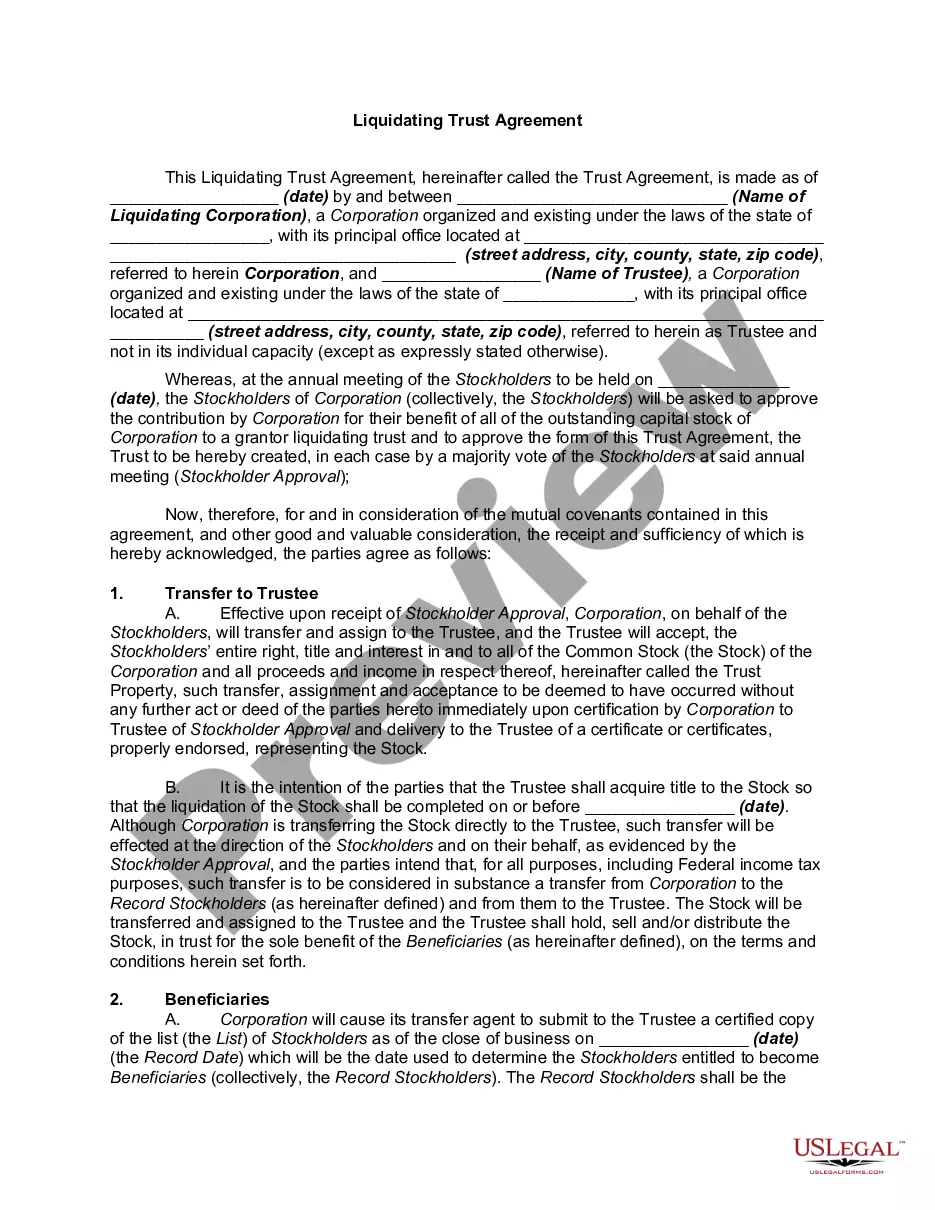
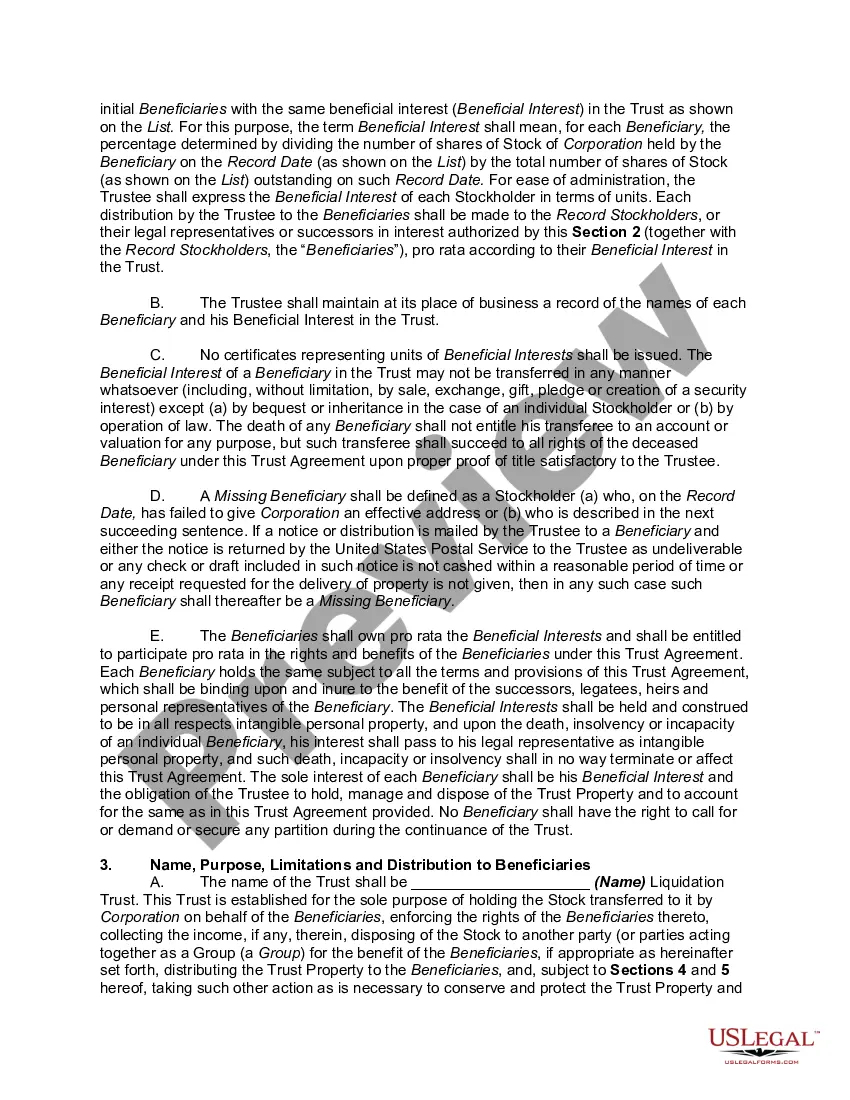
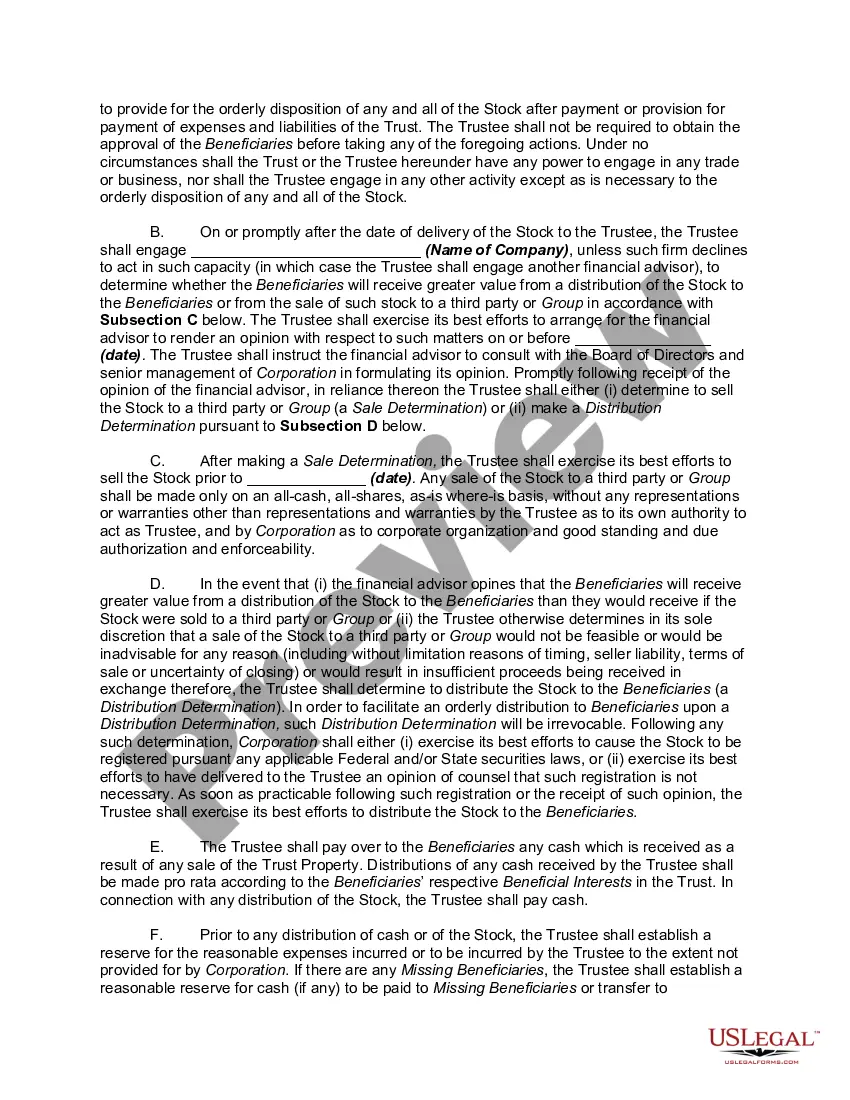
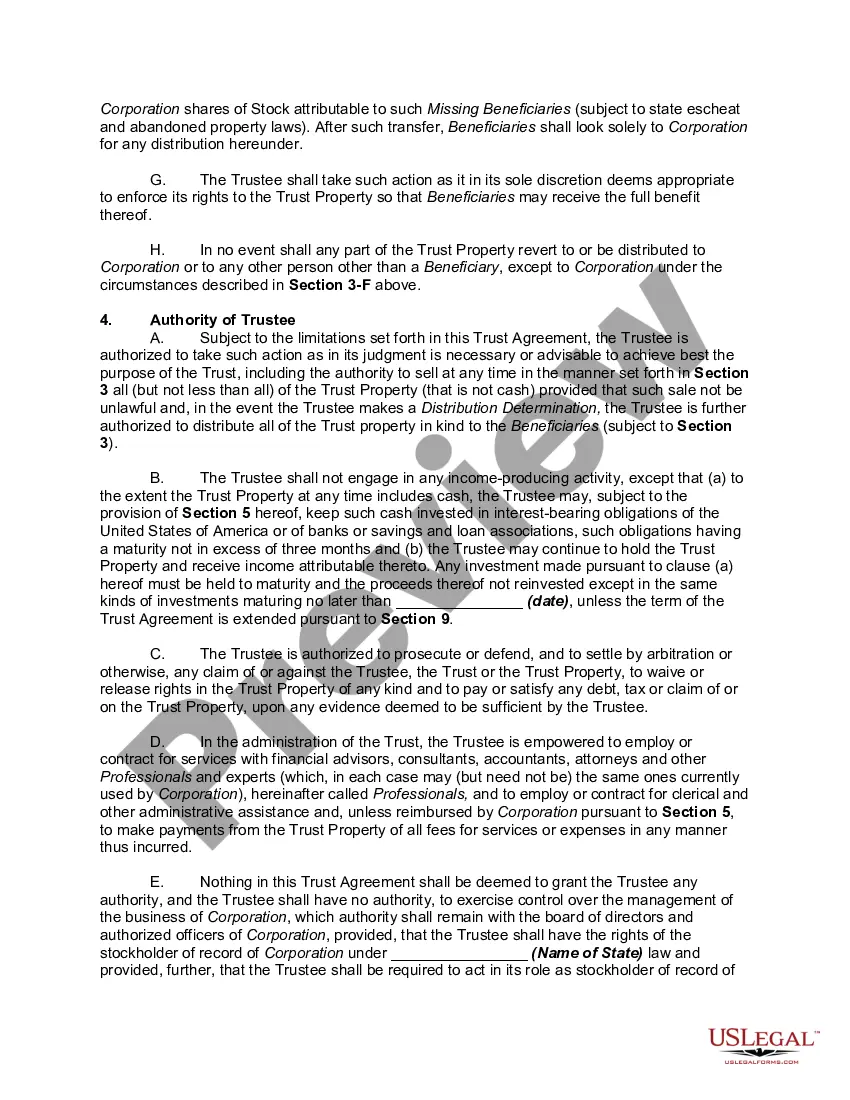
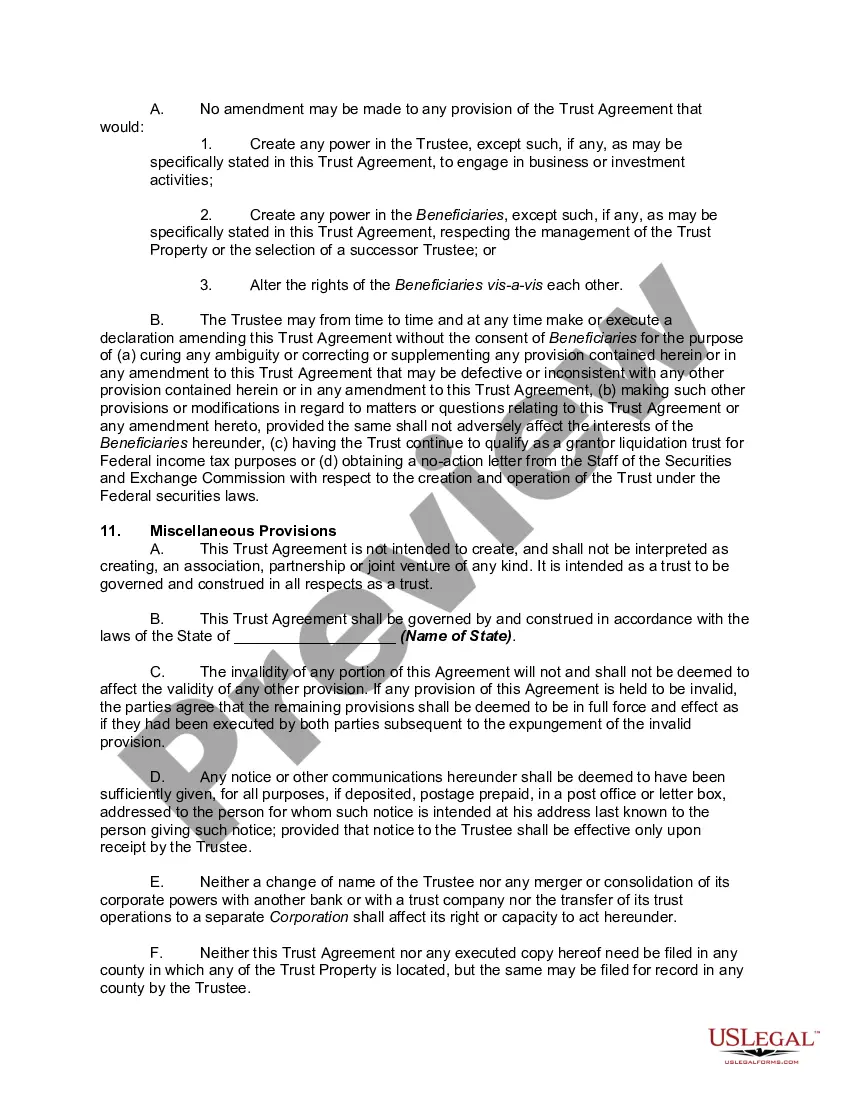
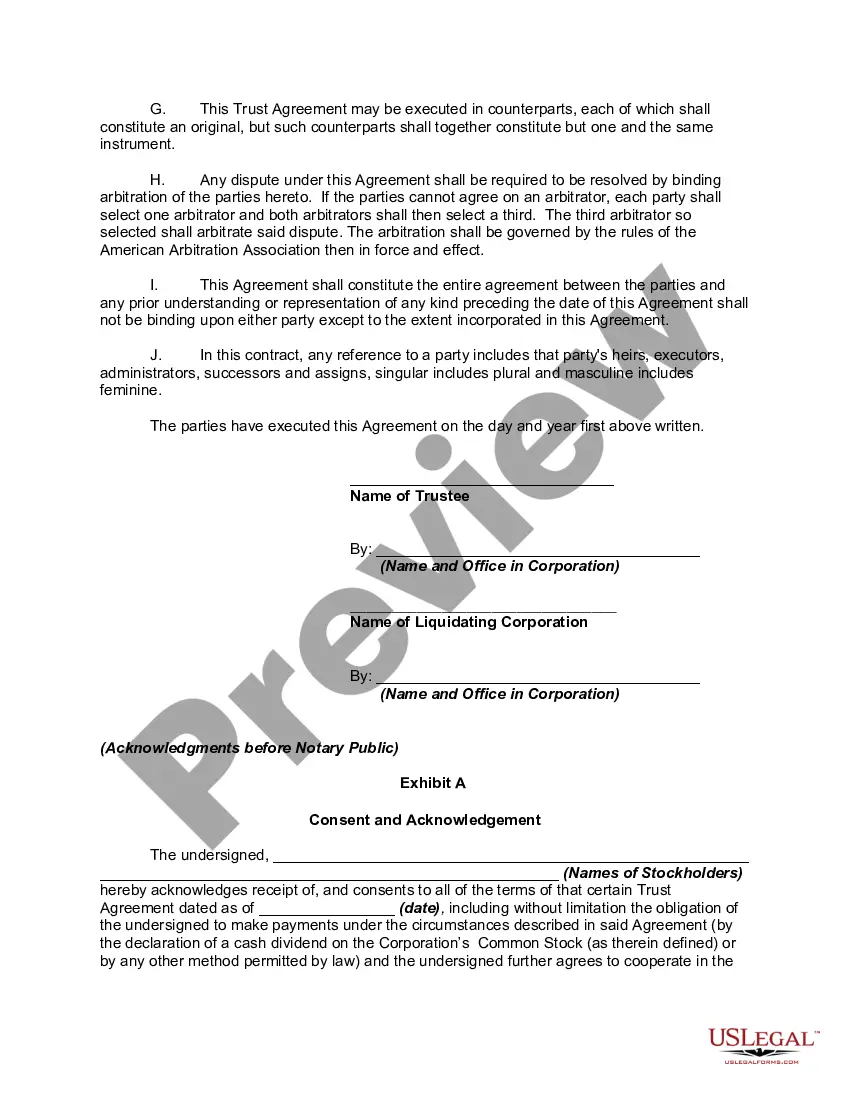
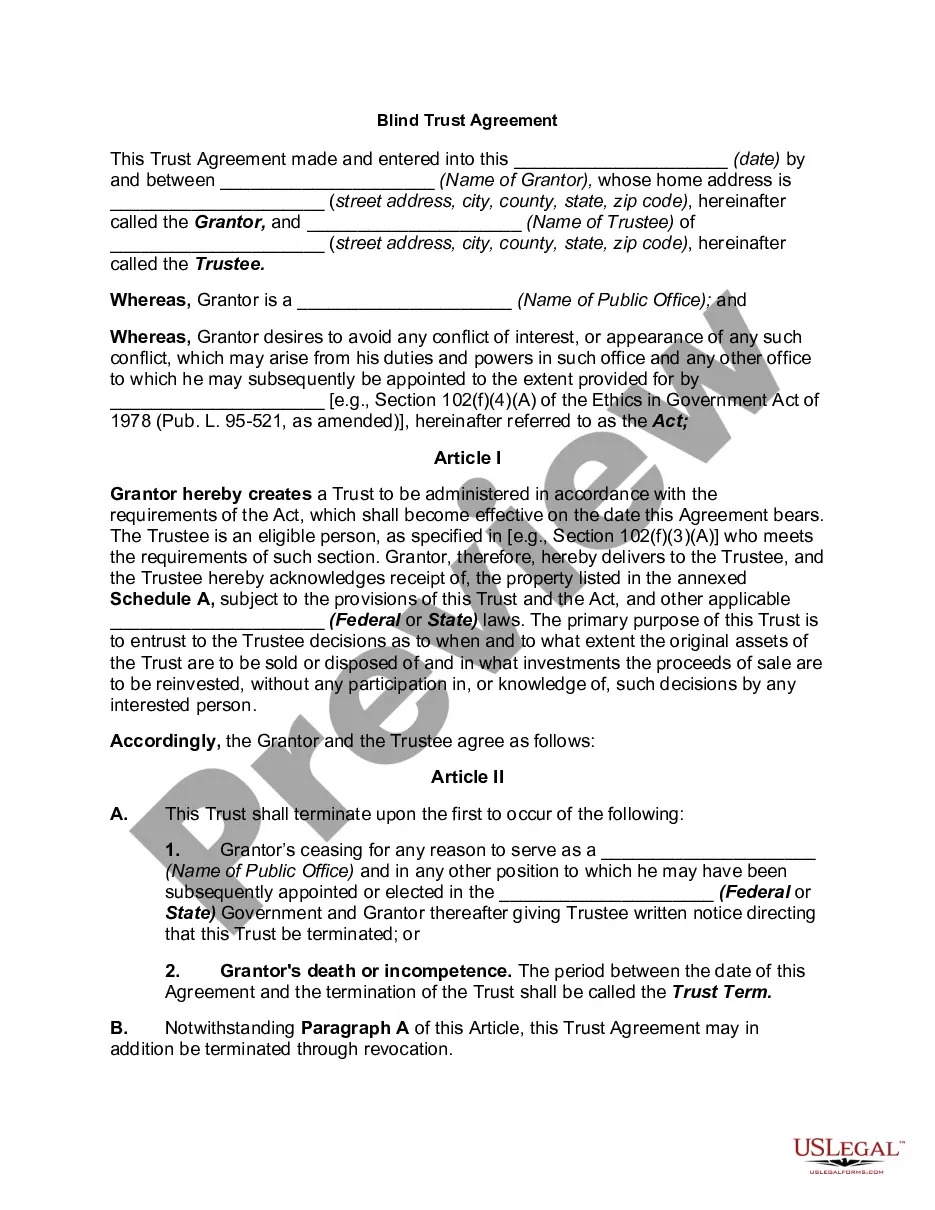
A Liquidating Trust Agreement is a legal document used to create a trust for the liquidation of business assets for the benefit of creditors or shareholders, typically when a business is insolvent or ceases operation. This form outlines the transfer of assets to a trustee who will manage the sale and distribution of those assets. Unlike other types of trusts, a liquidating trust focuses on converting assets into cash efficiently while ensuring compliance with tax regulations as an ordinary trust rather than a corporation.
Main sections of this form
- Identification of the corporation and trustee, including names and addresses.
- Transfer of stock to the trustee upon approval by stockholders.
- Definition of beneficiaries and their beneficial interests in the trust.
- Process for the sale of trust property and distribution of proceeds to beneficiaries.
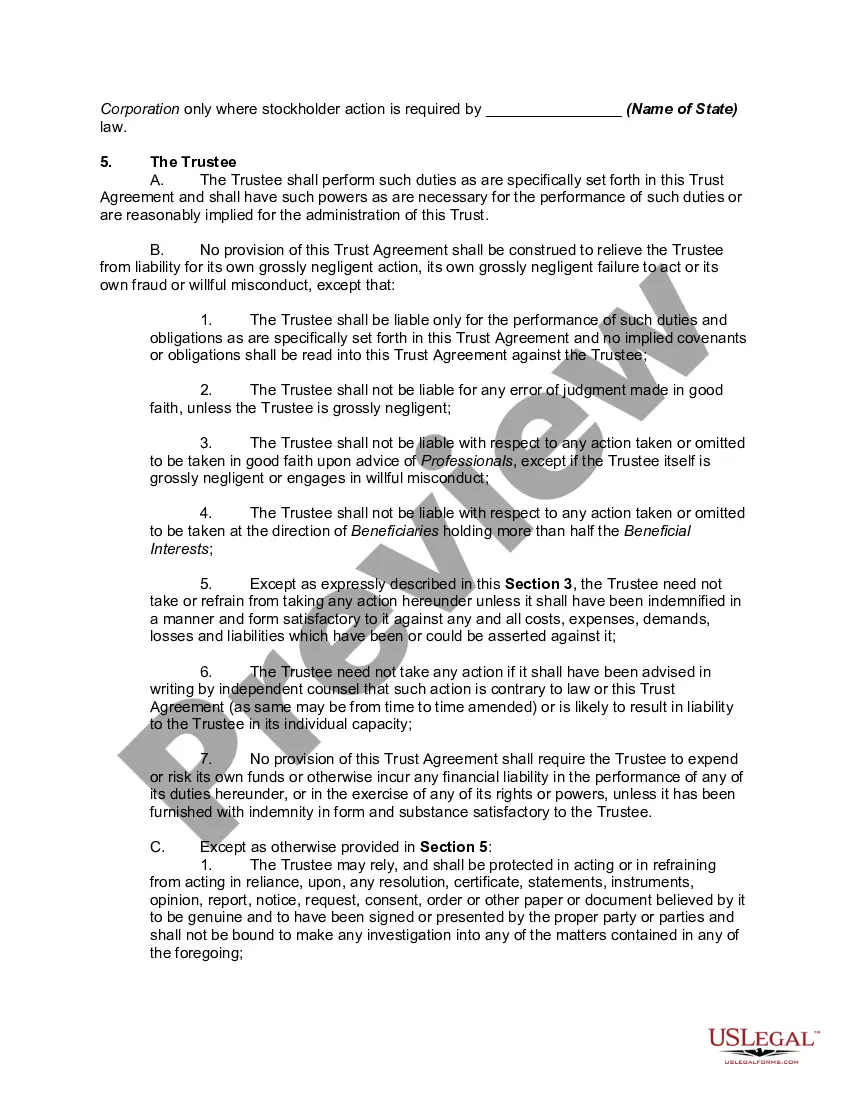
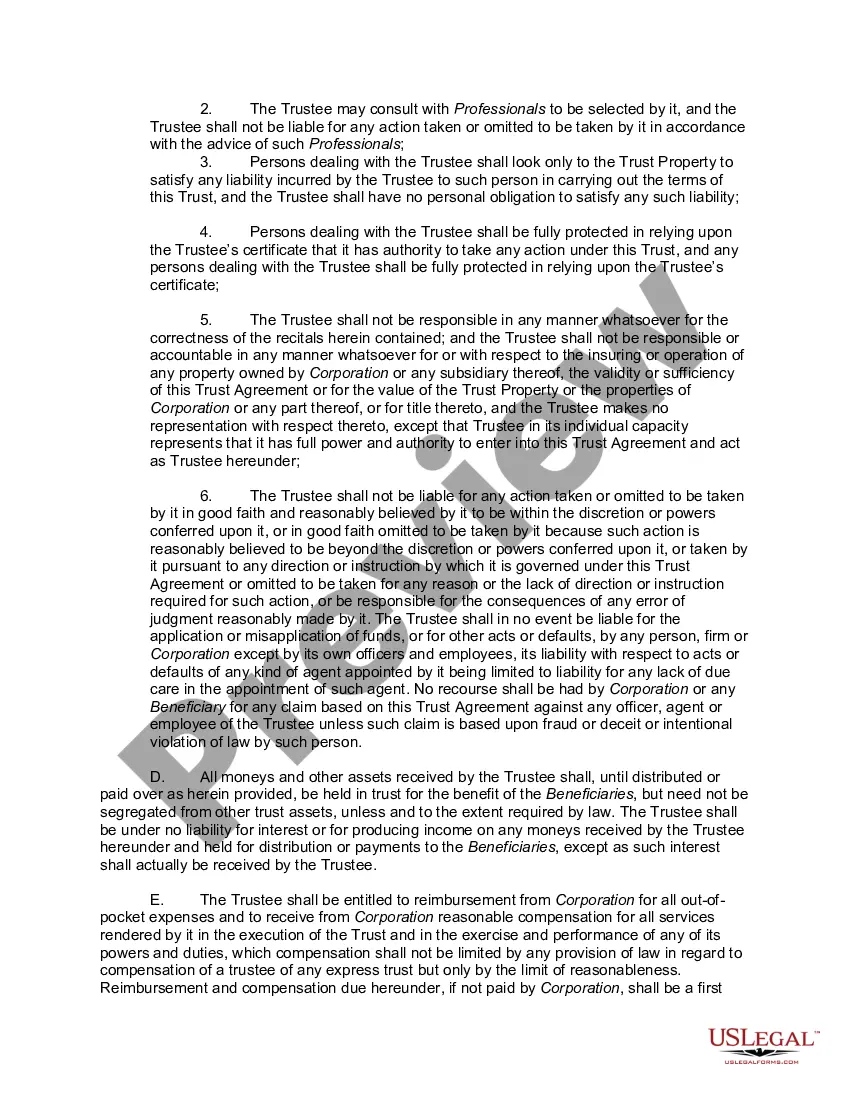
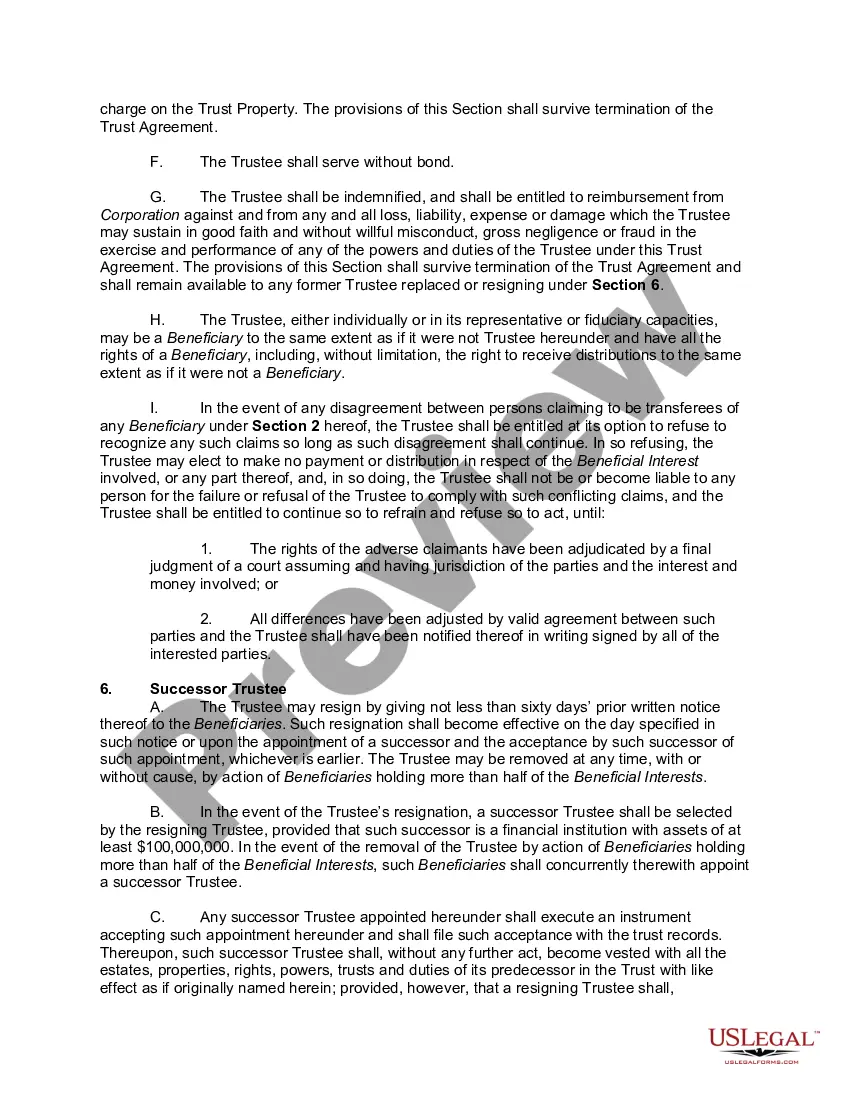
- Trustee's authority and obligations, including liability limitations.
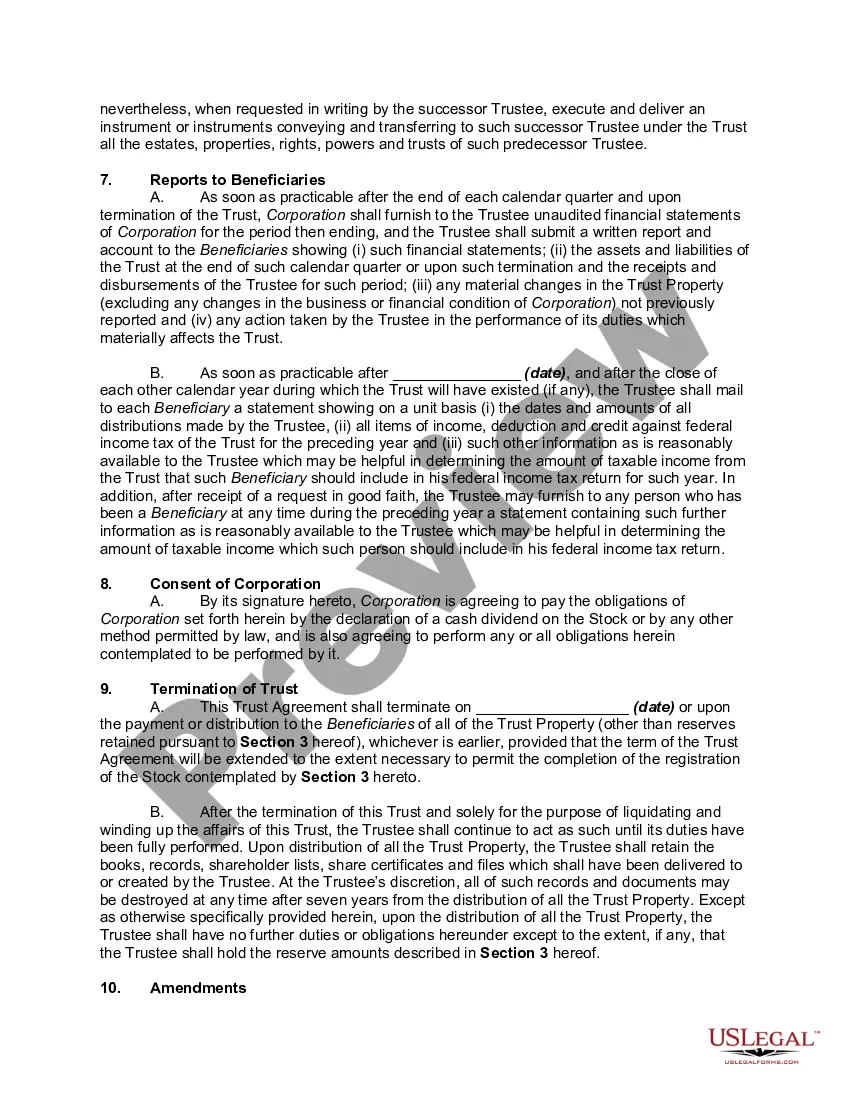
- Amendment procedures and termination conditions of the trust.

Common use cases
This form is particularly needed when a business is closing down and needs to liquidate its assets either due to insolvency or the death of its owner, with no willing successors. It acts as a safeguard to ensure that the liquidating process is orderly and legally compliant, protecting the interests of creditors and shareholders alike.
Intended users of this form
This Liquidating Trust Agreement is intended for:
- Corporations facing insolvency that need to liquidate their assets.
- Shareholders of a corporation in the process of dissolution.
- Trustees appointed to manage the liquidation process for a corporation.
- Legal advisors preparing for a trust to ensure compliance with state laws.
Instructions for completing this form
- Identify the parties involved, including the corporation and the trustee.
- Enter the date of the agreement and the meeting at which stockholder approval was obtained.
- Provide details about the stock being transferred, including the number of shares.
- List the names of beneficiaries and their corresponding beneficial interests.
- Include provisions for the trustee's authority and actions regarding asset liquidation.
Is notarization required?
This form does not typically require notarization unless specified by local law. Always check your local regulations to ensure compliance.
Get your form ready online
Our built-in tools help you complete, sign, share, and store your documents in one place.
Make edits, fill in missing information, and update formatting in US Legal Forms—just like you would in MS Word.
Download a copy, print it, send it by email, or mail it via USPS—whatever works best for your next step.
Sign and collect signatures with our SignNow integration. Send to multiple recipients, set reminders, and more. Go Premium to unlock E-Sign.
If this form requires notarization, complete it online through a secure video call—no need to meet a notary in person or wait for an appointment.
We protect your documents and personal data by following strict security and privacy standards.

Make edits, fill in missing information, and update formatting in US Legal Forms—just like you would in MS Word.

Download a copy, print it, send it by email, or mail it via USPS—whatever works best for your next step.

Sign and collect signatures with our SignNow integration. Send to multiple recipients, set reminders, and more. Go Premium to unlock E-Sign.

If this form requires notarization, complete it online through a secure video call—no need to meet a notary in person or wait for an appointment.

We protect your documents and personal data by following strict security and privacy standards.
Common mistakes
- Failing to obtain the required stockholder approval before transferring assets.
- Not specifying the distribution method for proceeds from asset sales.
- Overlooking state-specific requirements that affect the trust structure.
- Neglecting to clearly define the roles and responsibilities of the trustee.
Benefits of completing this form online
- Convenient download and editing options to fit specific needs.
- Access to templates created by licensed attorneys ensuring legal compliance.
- Time-saving process compared to traditional legal drafting.
- Ability to quickly update and customize the form as needed.
Legal use & context
- This agreement serves as a binding document to protect the interests of all parties involved during the liquidation process.
- Proper use of this form can help prevent disputes among beneficiaries and creditors.
- It is enforceable under the state laws governing trusts and corporations.
Quick recap
- A Liquidating Trust Agreement is essential for managing the liquidation of business assets.
- Clear definitions and procedures within the agreement protect stakeholders' interests.
- Consult legal professionals to ensure compliance with local laws during completion.
Looking for another form?
Form popularity
FAQ
Liquidating trusts can help bankrupt or distressed companies settle certain debts in an efficient and organized manner.The purpose of a liquidating trust is to: Collect and hold assets and claims of the debtor as specified in the bankruptcy plan. Liquidate the trust assets. Resolve disputed claims.
When a trust dissolves, all income and assets moving to its beneficiaries, it becomes an empty vessel. That's why no income tax return is required it no longer has any income. That income is charged to the beneficiaries instead, and they must report it on their own personal tax returns.
The IRS treats property in an irrevocable trust as being completely separate from the estate of the decedent. As a result, anything you inherit from the trust won't be subject to estate or gift taxes.
In some states, a grantor can liquidate an irrevocable trust by creating a new one and having the trustee transfer the assets to the new entity. A grantor may be able to do this to change some terms, like methods of distributing assets, so long as beneficiaries receive essentially the same distributions.