Revocable Trust Agreement with Corporate Trustee
Understanding this form
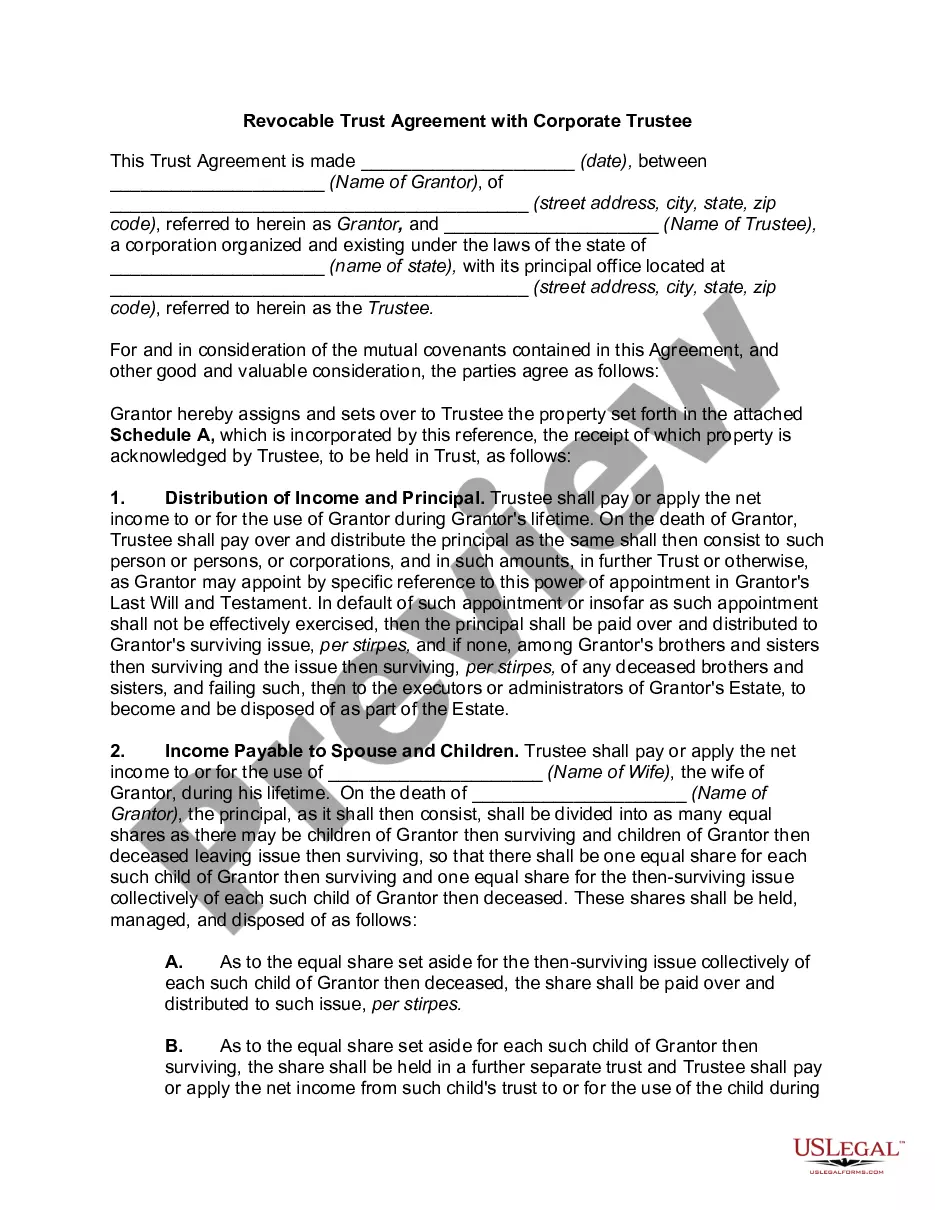
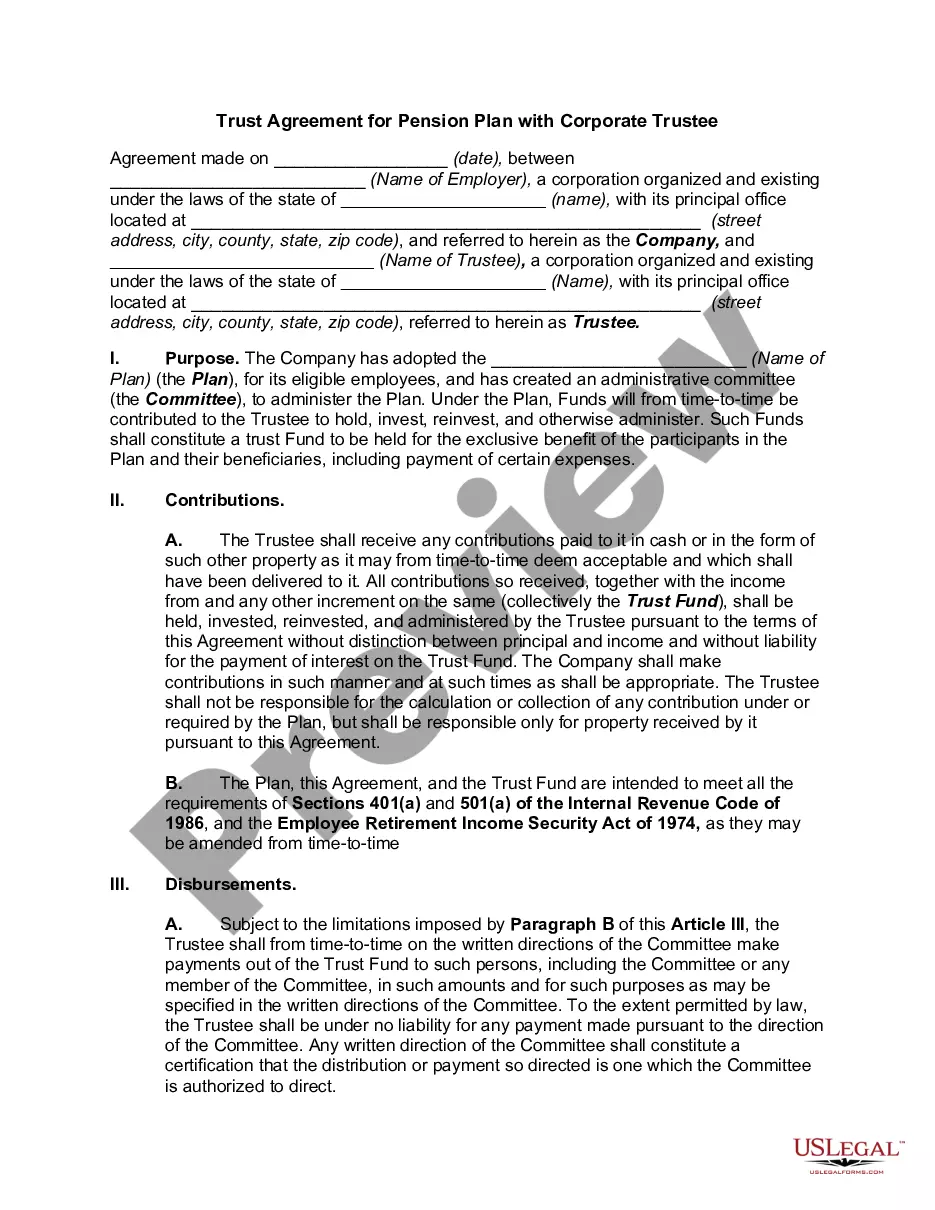
The Revocable Trust Agreement with Corporate Trustee is a legal document that establishes a trust, allowing the grantor to maintain control over their assets during their lifetime while designating a corporate trustee to manage those assets. This type of trust can be modified or revoked by the grantor, making it a flexible estate planning tool. Unlike a will, a revocable trust allows for the direct transfer of assets to beneficiaries without going through probate, potentially streamlining the inheritance process.
What’s included in this form
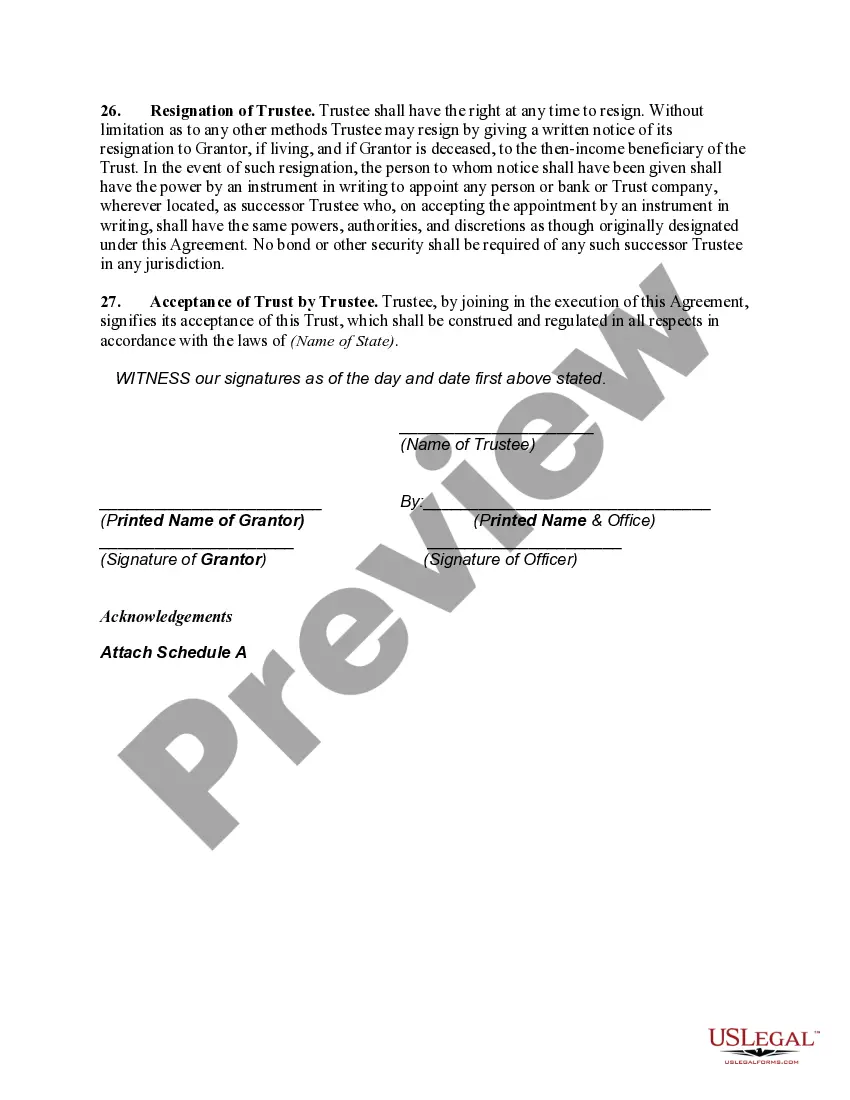
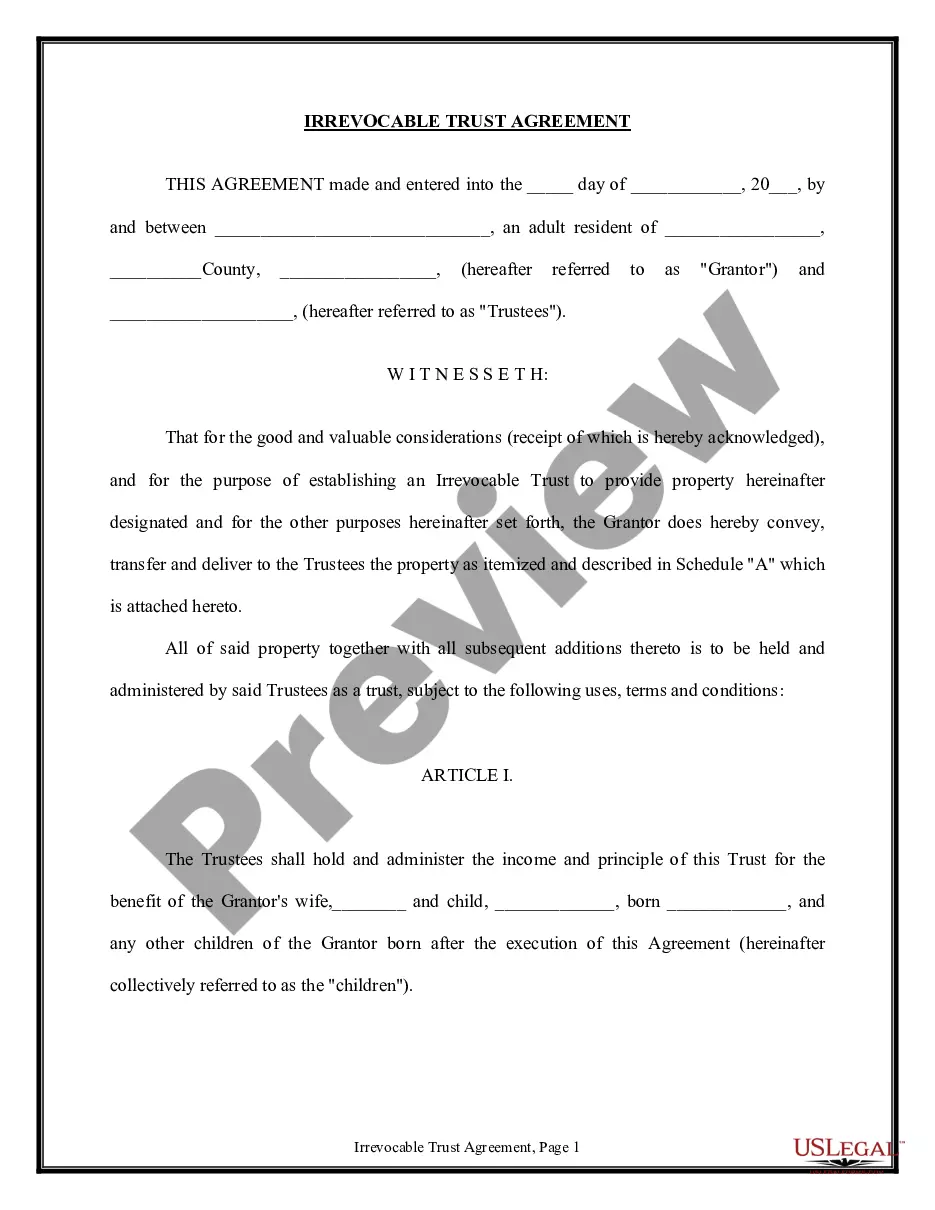
- Names and addresses of the grantor and corporate trustee.
- Details of the property assigned to the trust, included in Schedule A.
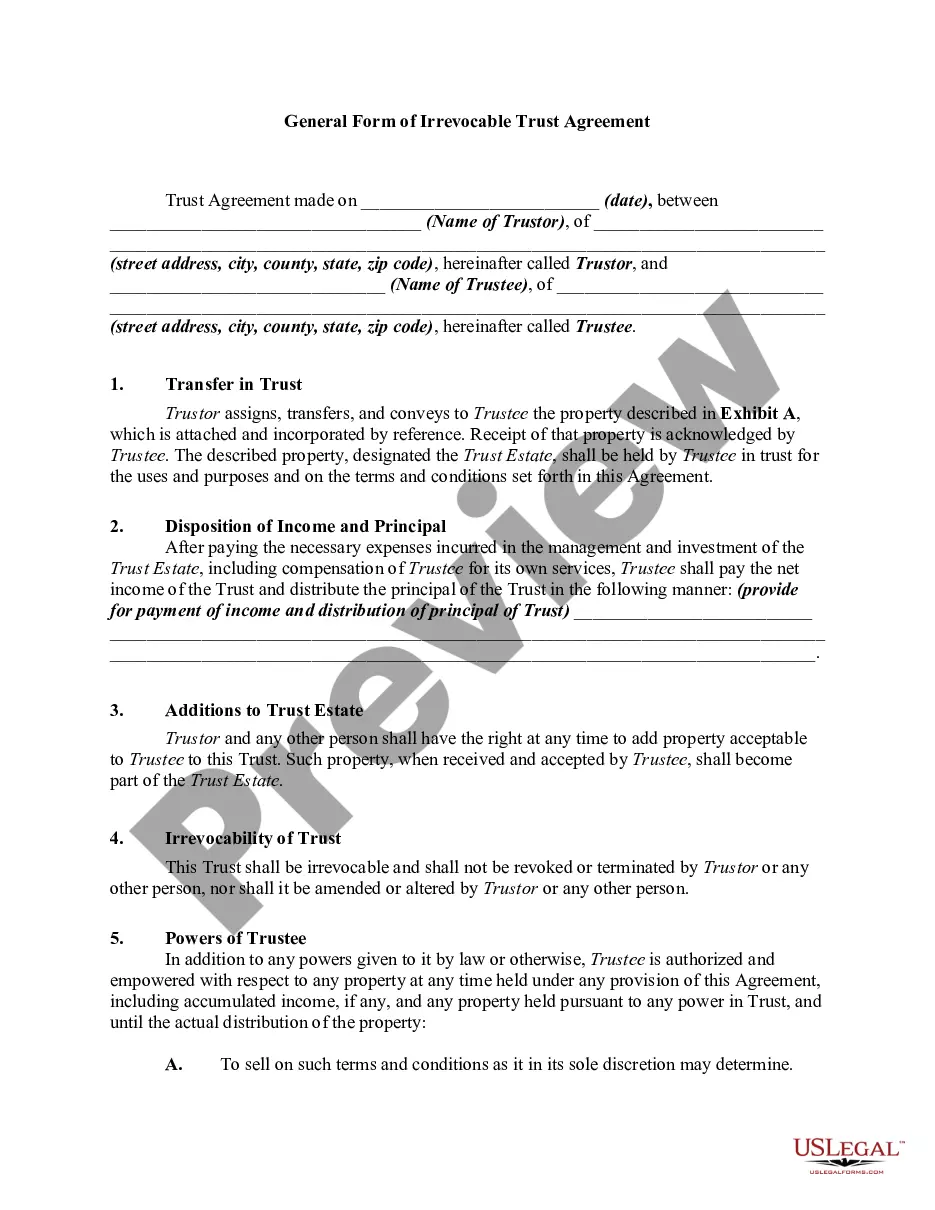
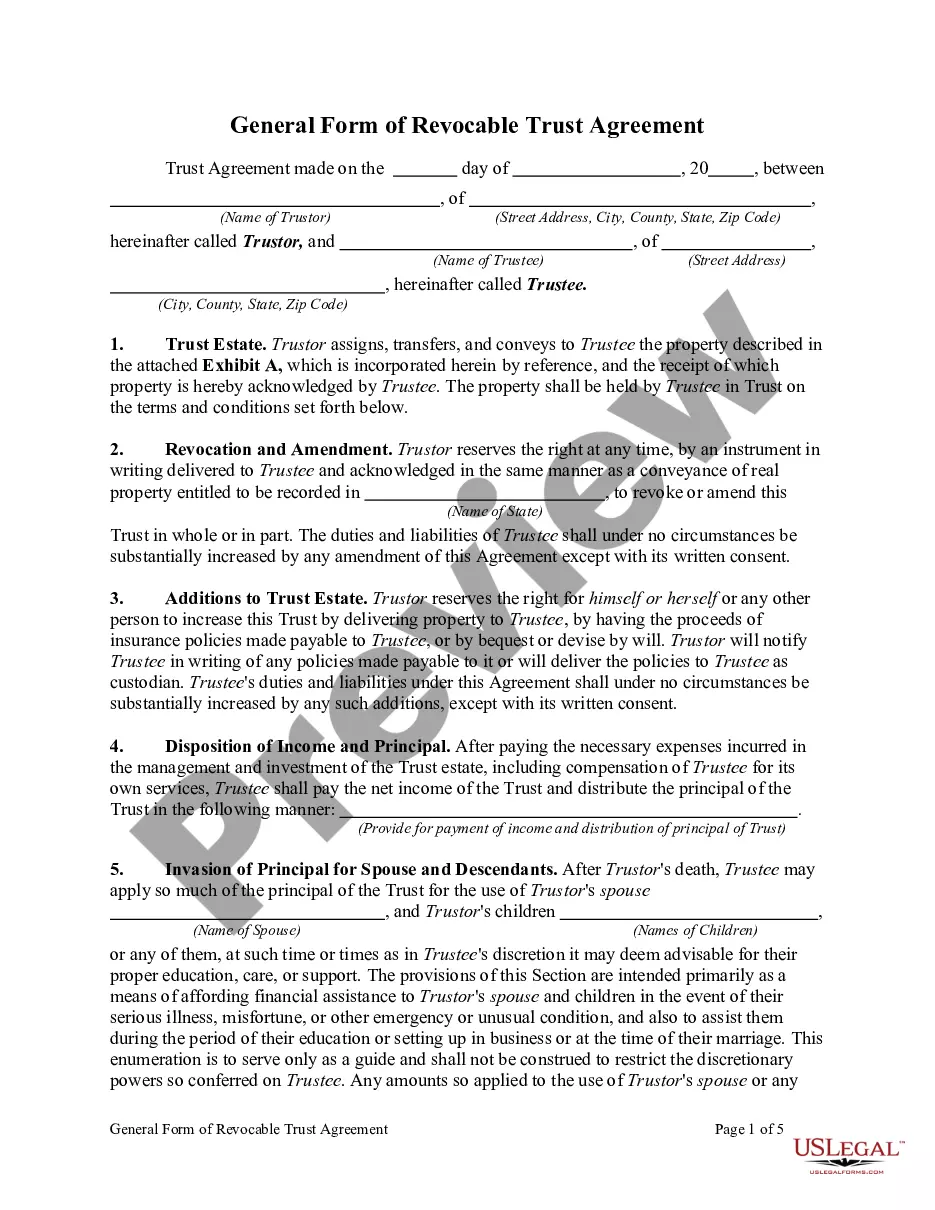
- Instructions for distributing income and principal to beneficiaries.
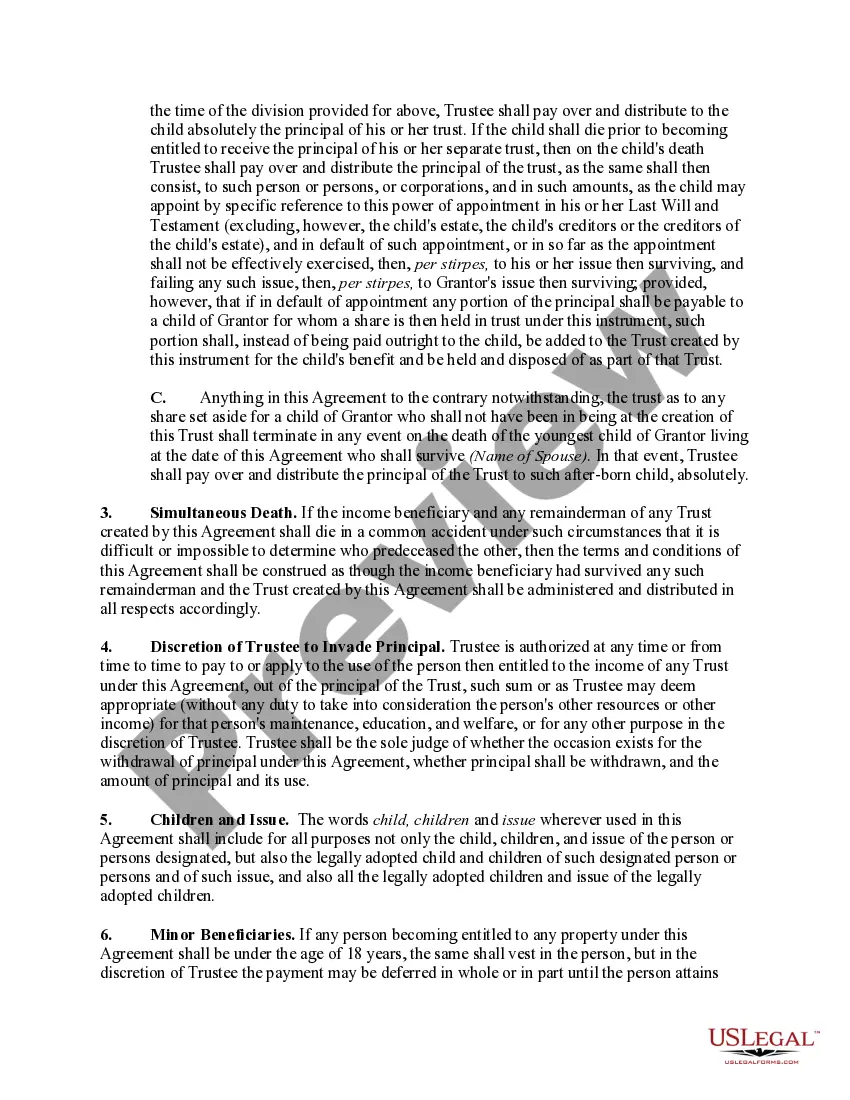
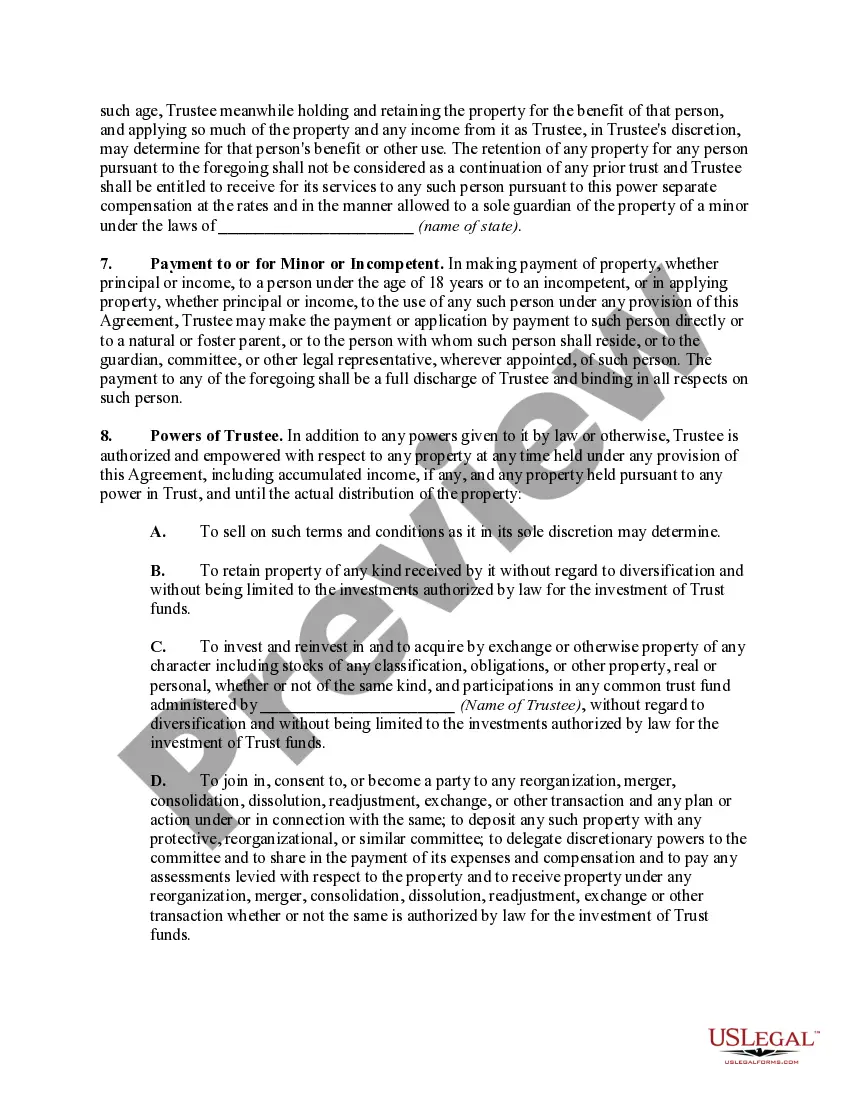
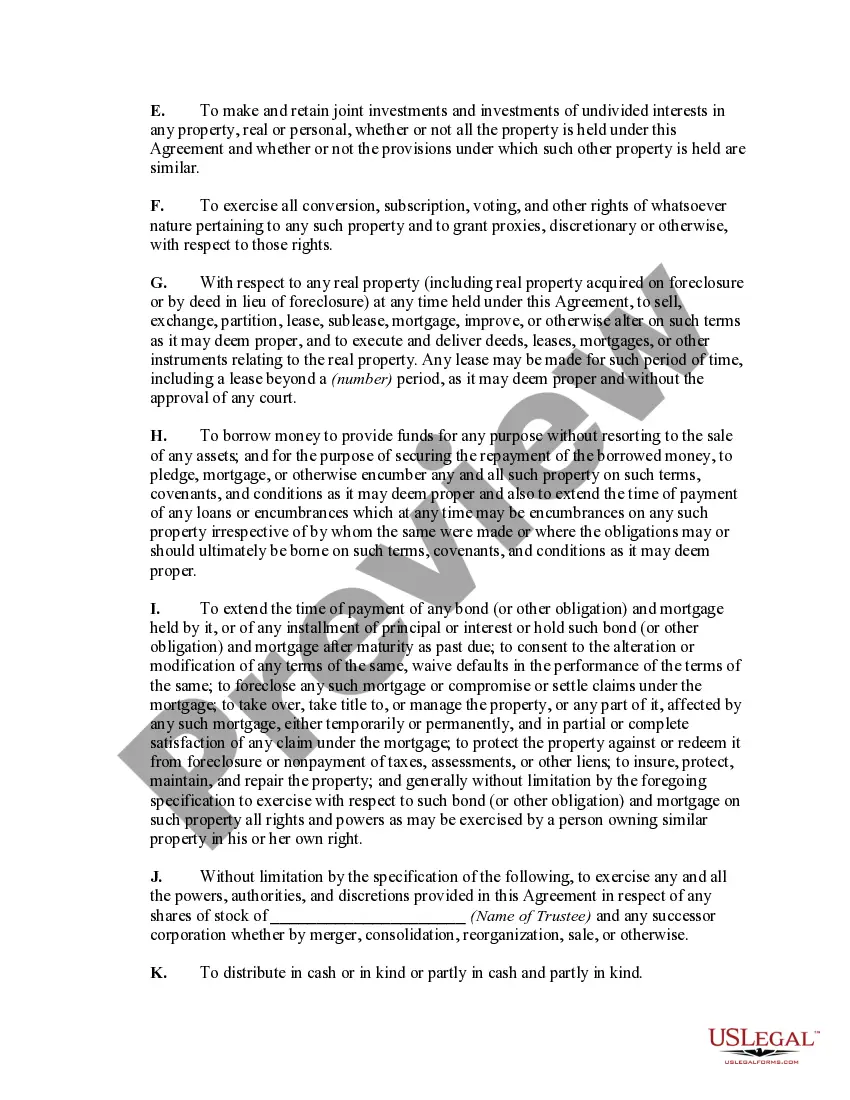
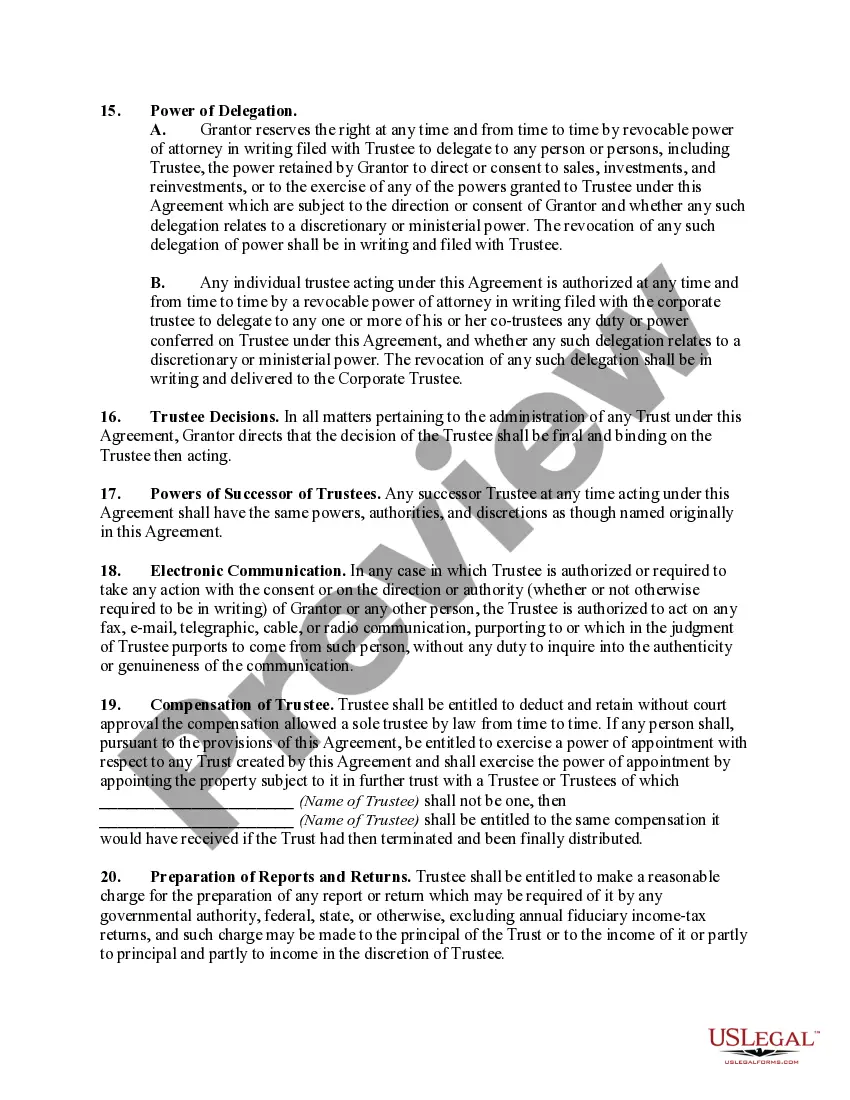
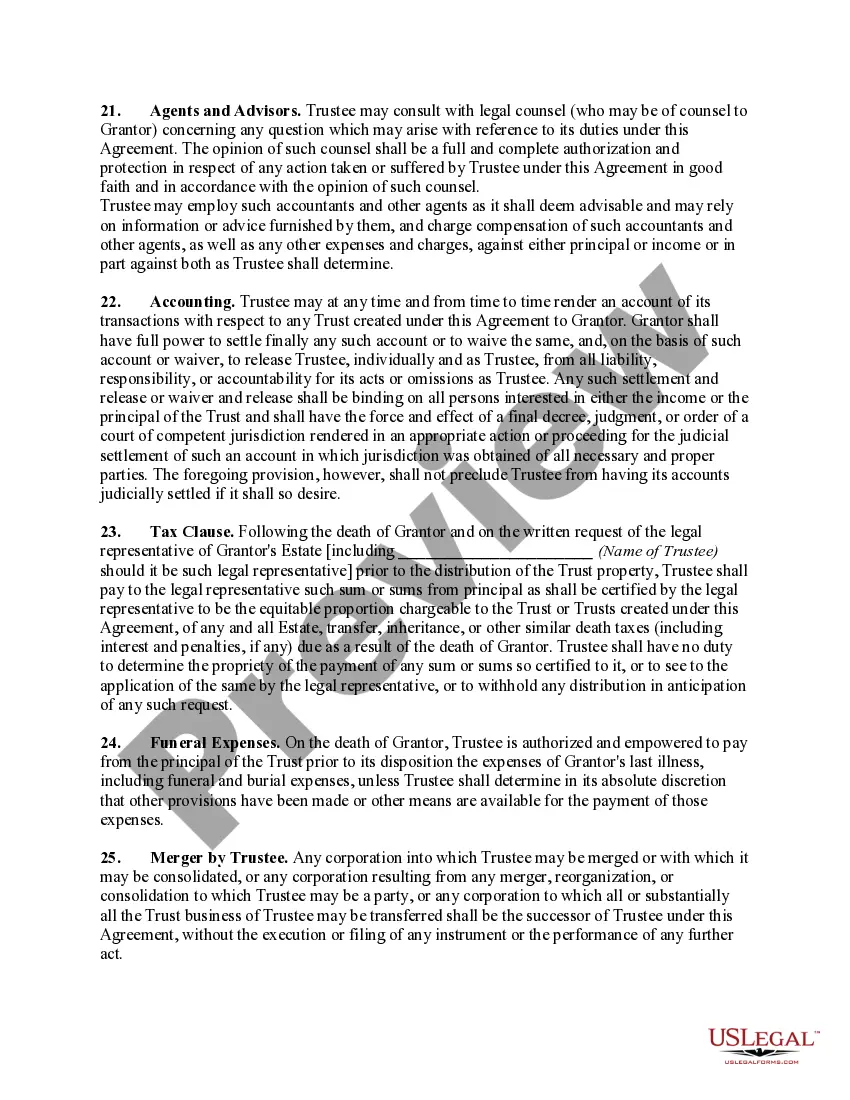
- Applicability of powers given to the trustee for managing and investing the trust assets.
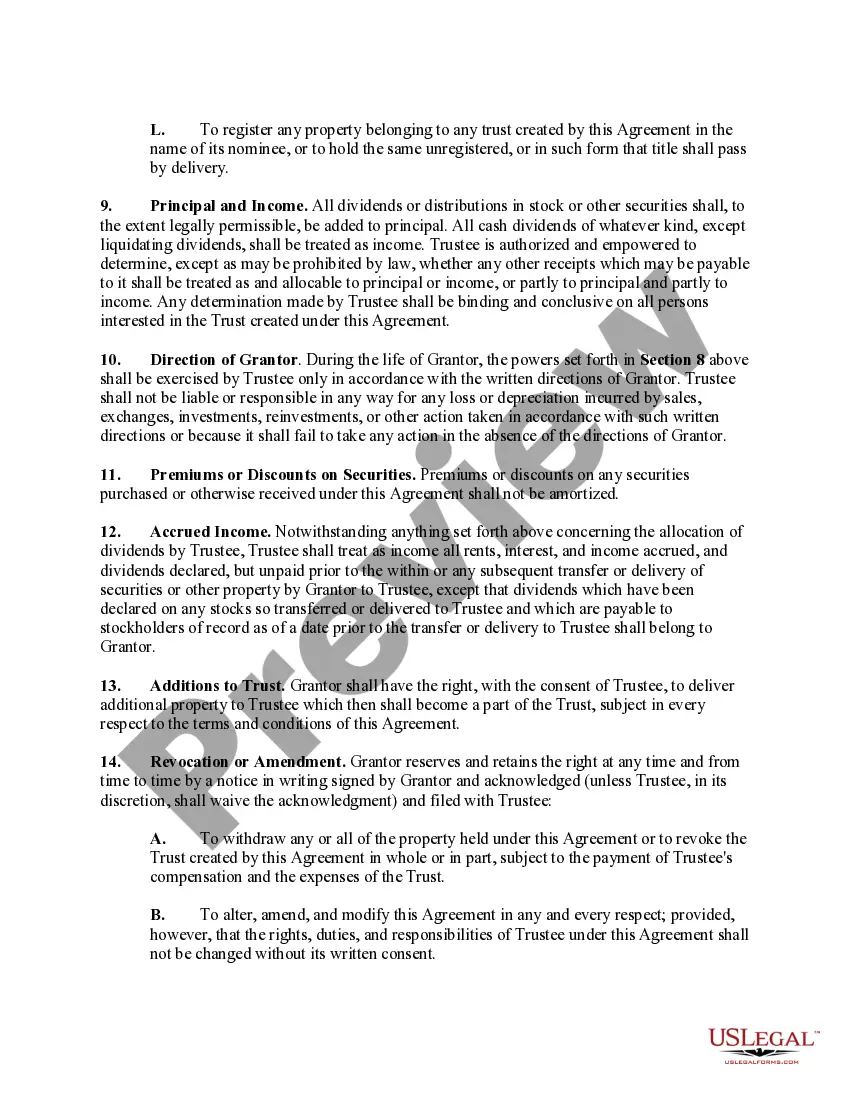
- Provisions for amending or revoking the trust by the grantor.
When to use this form
This form is useful when you want to create a revocable trust that can adapt to your changing needs while providing a clear structure for asset management and distribution. It is beneficial for individuals who wish to avoid probate, manage assets during their lifetime, or provide for specific distributions to family members or organizations after their death.
Who this form is for
- Individuals planning their estate and seeking to avoid probate.
- Parents wanting to provide for their children through a trust.
- Anyone who wants to maintain control over their assets while establishing guidelines for after their death.
- Those wishing to designate a corporate trustee for professional management of their trust.
How to complete this form
- Identify the parties involved by entering the names and addresses of the grantor and trustee.
- Specify the assets being transferred into the trust in the attached Schedule A.
- Detail the instructions for income and principal distribution to beneficiaries.
- Enter any specific conditions or instructions regarding the management of the trust by the trustee.
- Include signatures of both the grantor and an authorized officer of the corporate trustee to finalize the document.
Notarization guidance
To make this form legally binding, it must be notarized. Our online notarization service, powered by Notarize, lets you verify and sign documents remotely through an encrypted video session.
Get your form ready online
Our built-in tools help you complete, sign, share, and store your documents in one place.
Make edits, fill in missing information, and update formatting in US Legal Forms—just like you would in MS Word.
Download a copy, print it, send it by email, or mail it via USPS—whatever works best for your next step.
Sign and collect signatures with our SignNow integration. Send to multiple recipients, set reminders, and more. Go Premium to unlock E-Sign.
If this form requires notarization, complete it online through a secure video call—no need to meet a notary in person or wait for an appointment.
We protect your documents and personal data by following strict security and privacy standards.

Make edits, fill in missing information, and update formatting in US Legal Forms—just like you would in MS Word.

Download a copy, print it, send it by email, or mail it via USPS—whatever works best for your next step.

Sign and collect signatures with our SignNow integration. Send to multiple recipients, set reminders, and more. Go Premium to unlock E-Sign.

If this form requires notarization, complete it online through a secure video call—no need to meet a notary in person or wait for an appointment.

We protect your documents and personal data by following strict security and privacy standards.
Mistakes to watch out for
- Not fully detailing the assets in Schedule A.
- Leaving out the signatures from both parties.
- Failing to add specific distribution instructions for beneficiaries.
- Not reviewing the form for compliance with state laws.
Benefits of using this form online
- Convenience of downloading and filling out the form at your own pace.
- Editability to customize the trust details as needed.
- Reliability, with templates drafted by licensed attorneys.
Summary of main points
- A revocable trust allows modifications by the grantor while living.
- It can facilitate asset management through a corporate trustee.
- The form is designed to simplify the distribution of assets after death.
- Consultation with a legal expert is advised for compliance with state laws.
Looking for another form?
Form popularity
FAQ
The simple answer is yes, a Trustee can also be a Trust beneficiary.Nearly every revocable, living Trust created in California starts with the settlor naming themselves as Trustee and beneficiary.
Create an amendment to your trust. Type the amendment so that it specifically states the trustee that you wish to add. Indicate whether you wish to remove an existing trustee, in addition to naming a new one. Specify that the trustee you are adding is a co-trustee, rather than a successor trustee.
Generally speaking, a living trust's grantor (the person who created the revocable living document) may appoint or remove trustees during their lifetime without hiring an attorney. The grantor can accomplish this by either creating an amendment to it or by revoking the original document and creating a new trust.
Generally, no. Most living or revocable trusts become irrevocable upon the death of the trust's maker or makers.A successor trustee may not modify or add or remove beneficiaries from an irrevocable trust.
Yes, a corporate trustee can be the beneficiary of the trust - as long as you include the trustee's name and their capacity.The Cleardocs Discretionary Trust deed is only suitable if you wish to name individuals, companies or incorporated associations as beneficiaries.
On an appointment of a new trustee the number of trustees may be increased. The Official Trustee may, with his consent and by the order of the court, be appointed under this section, in any case in which only one trustee is to be appointed and such trustee is to be the sole trustee.
A trust is a legal document that governs how the grantor's assets pass to the named beneficiaries upon the grantor's death.However, there is no requirement for a trust to have only one trustee. When a grantor names multiple trustees, or co-trustees, they are responsible for co-managing the trust's assets.
The simple answer is yes, a Trustee can also be a Trust beneficiary. In fact, a majority of Trusts have a Trustee who is also a Trust beneficiary. Being a Trustee and beneficiary can be problematic, however, because the Trustee must still comply with the duties and responsibilities of a Trustee.
2 attorney answers Just the grantors. They are usually also the trustees. If they are not the trustees still no need to sign. However, that is why you want successor trustees listed in case trustee does not or cannot serve.