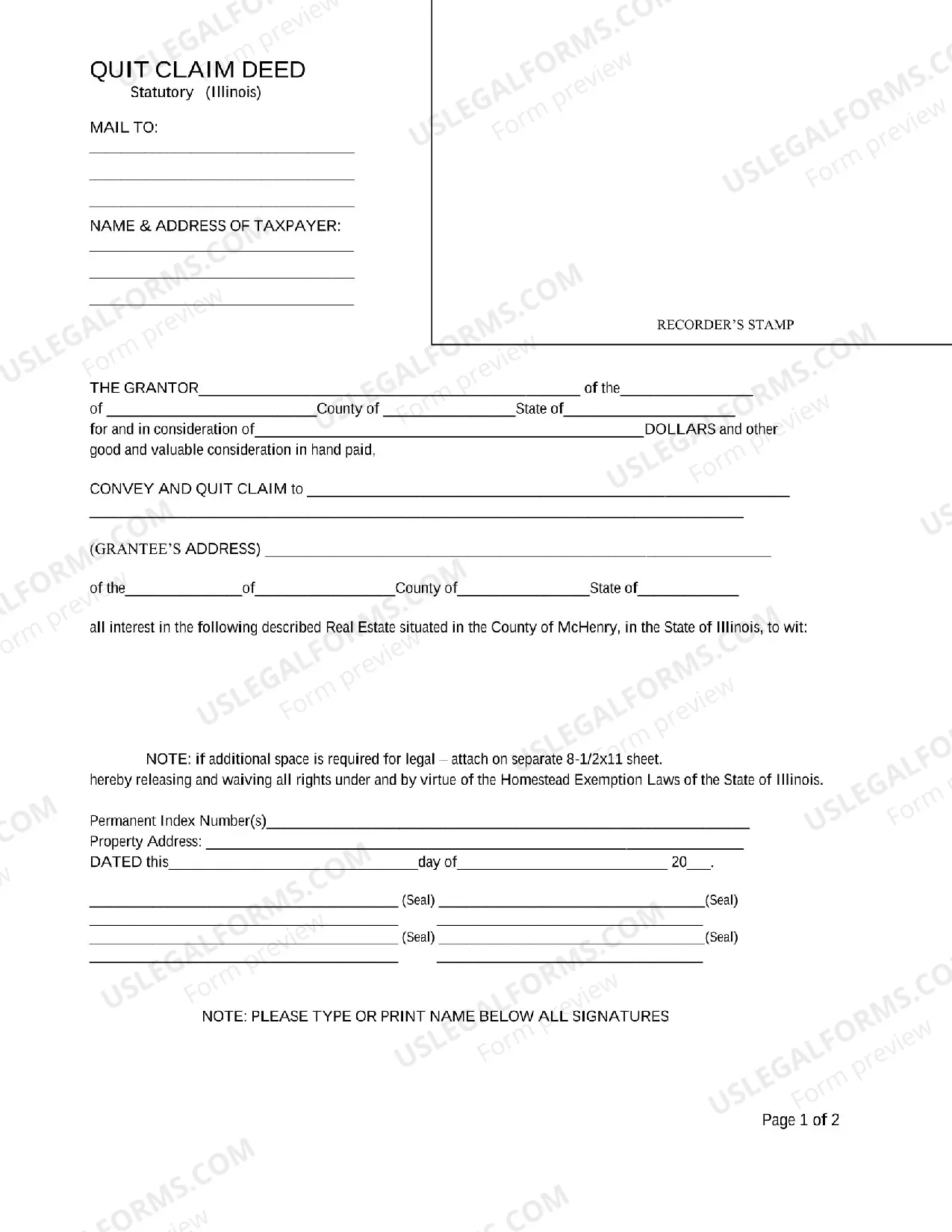
Trust Agreement for Pension Plan with Corporate Trustee
What this document covers
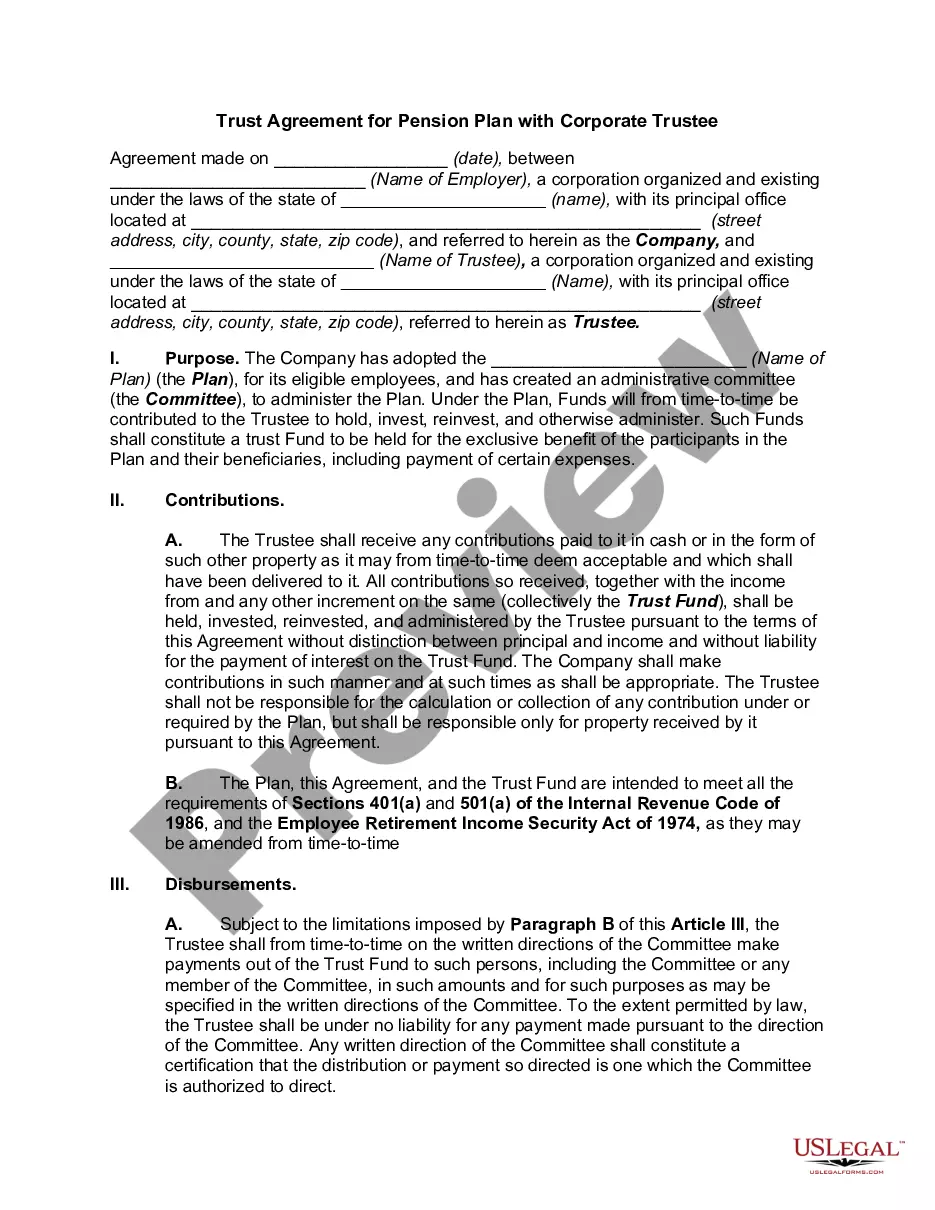
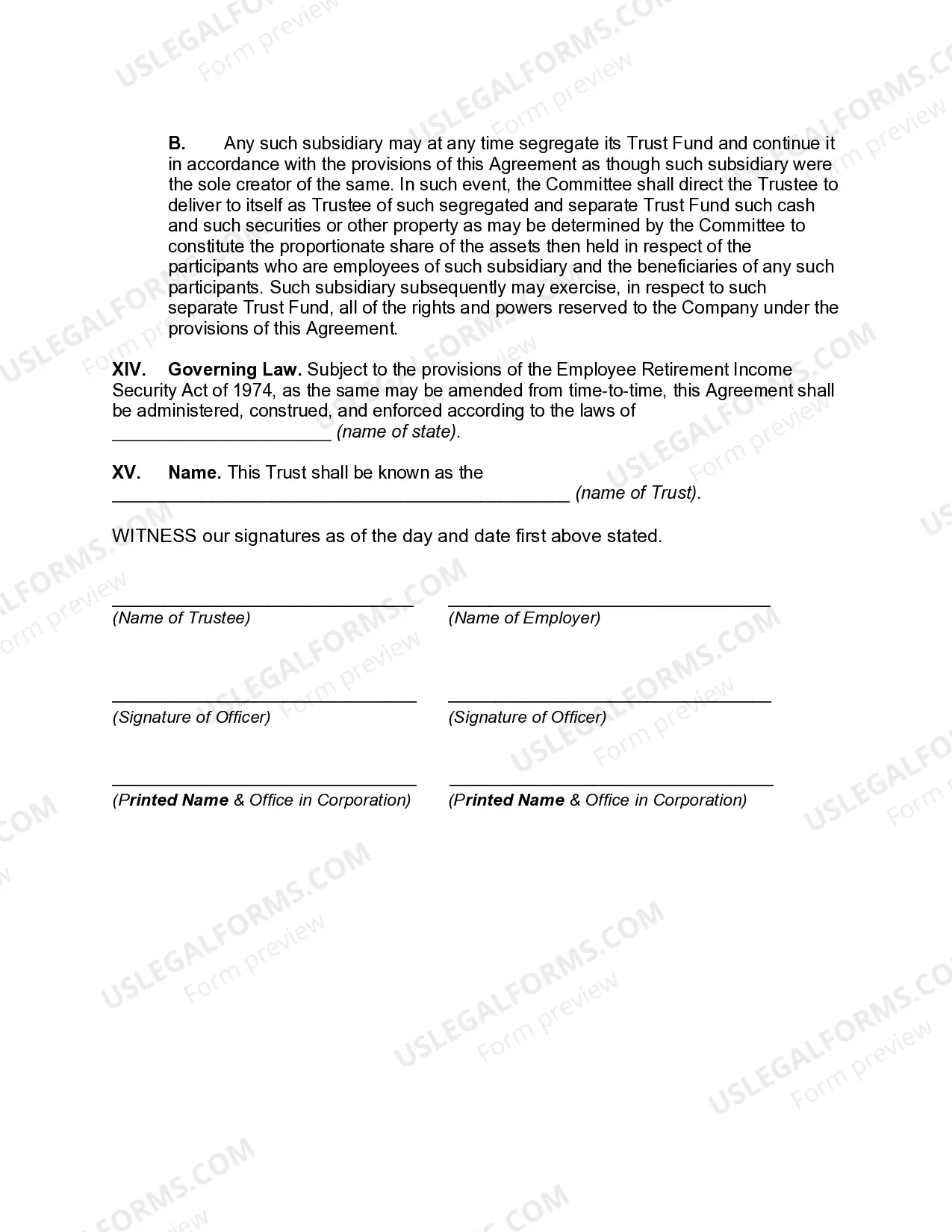
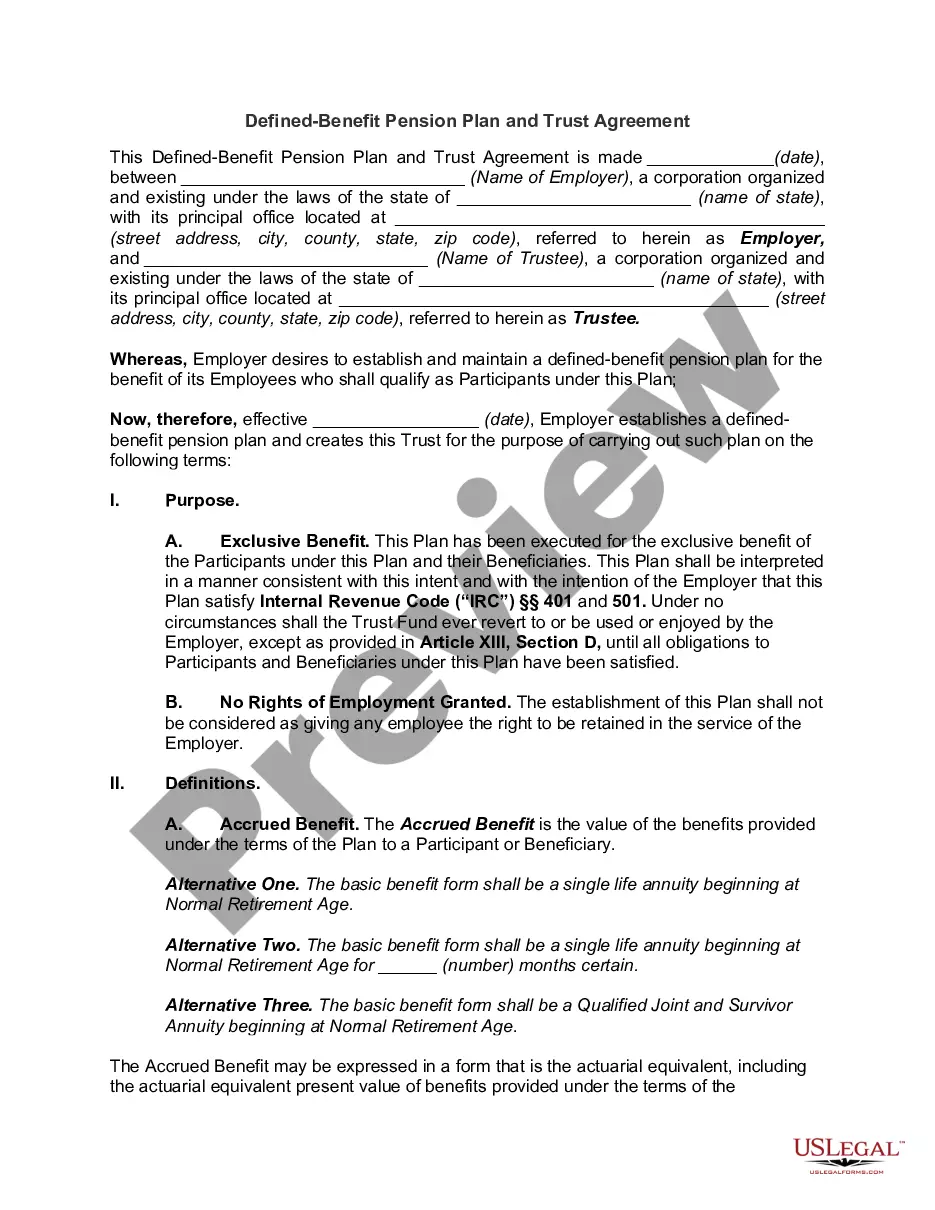
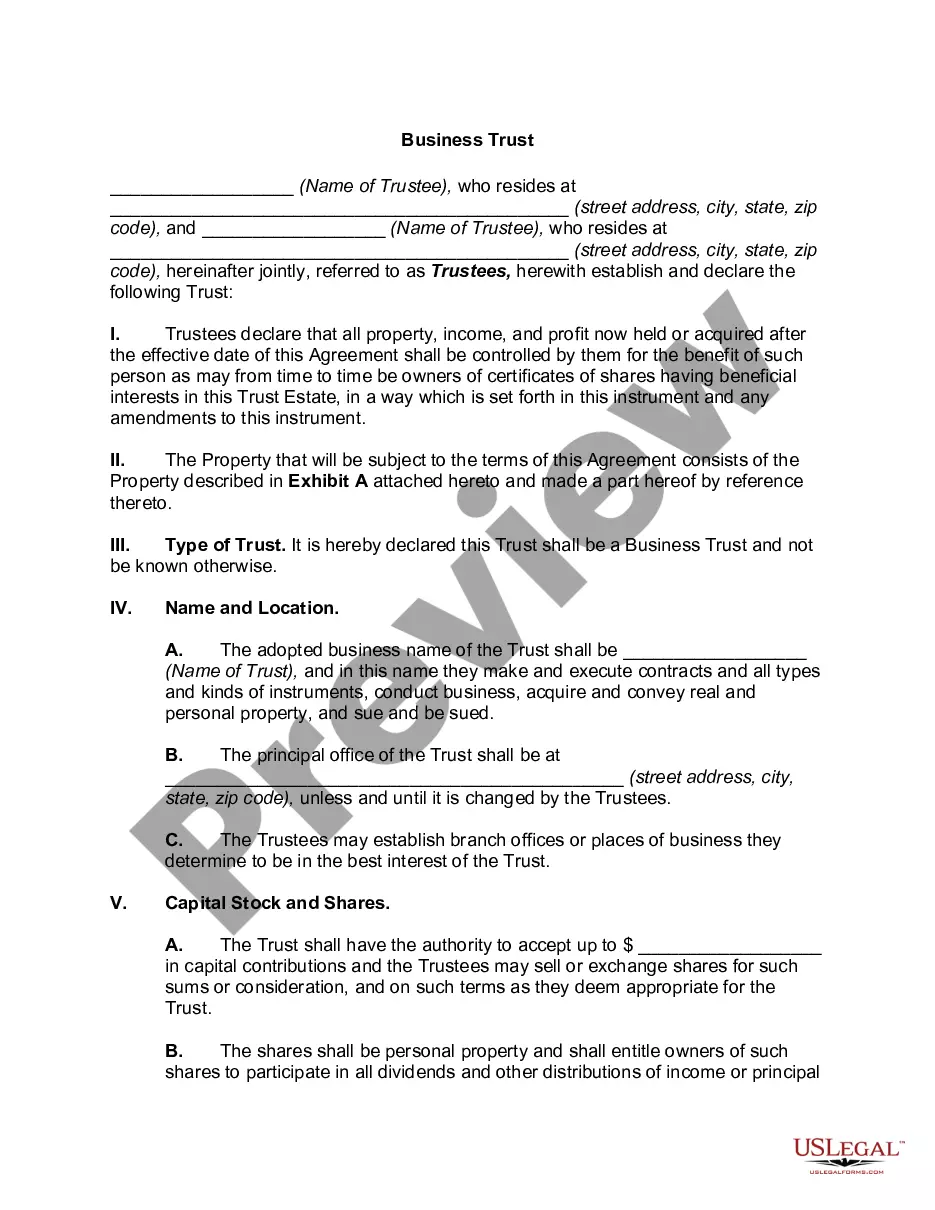
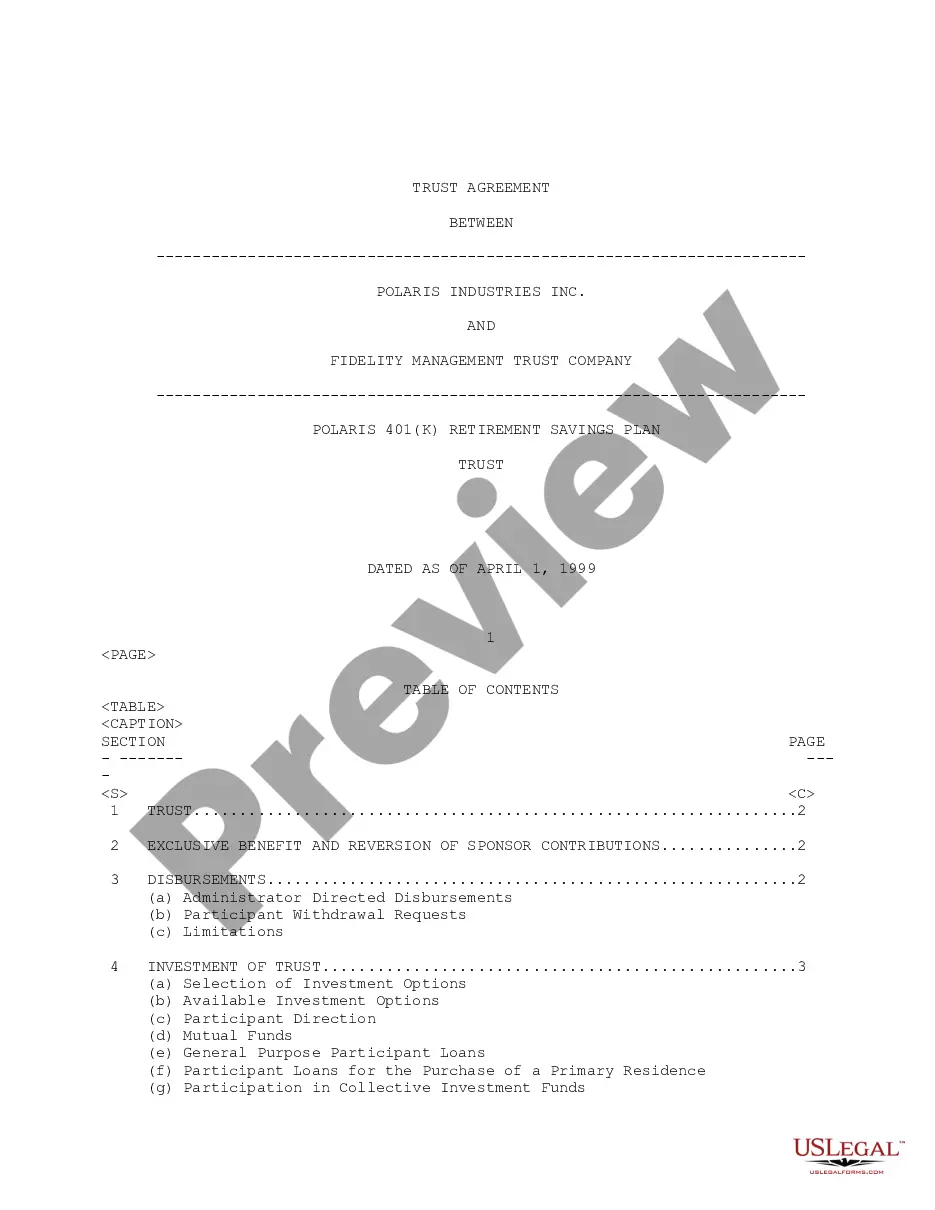
The Trust Agreement for Pension Plan with Corporate Trustee is a legal document that establishes a trust for managing pension plan contributions and benefits. It outlines the relationship between the employer (the Company) and the corporate trustee, who is responsible for holding and administering the trust fund on behalf of eligible employees and their beneficiaries. This form is essential for creating a structured and compliant pension plan that adheres to applicable laws, ensuring protection and appropriate management of employees' retirement benefits. Unlike other financial agreements, this form is specifically tailored for pension plans and includes necessary provisions to meet federal regulations.
Main sections of this form
- Identifying the parties involved (Company and Trustee).
- Purpose of the trust fund for pension plan management.
- Details on contributions made to the trust fund.
- Guidelines for disbursements to plan participants and their beneficiaries.
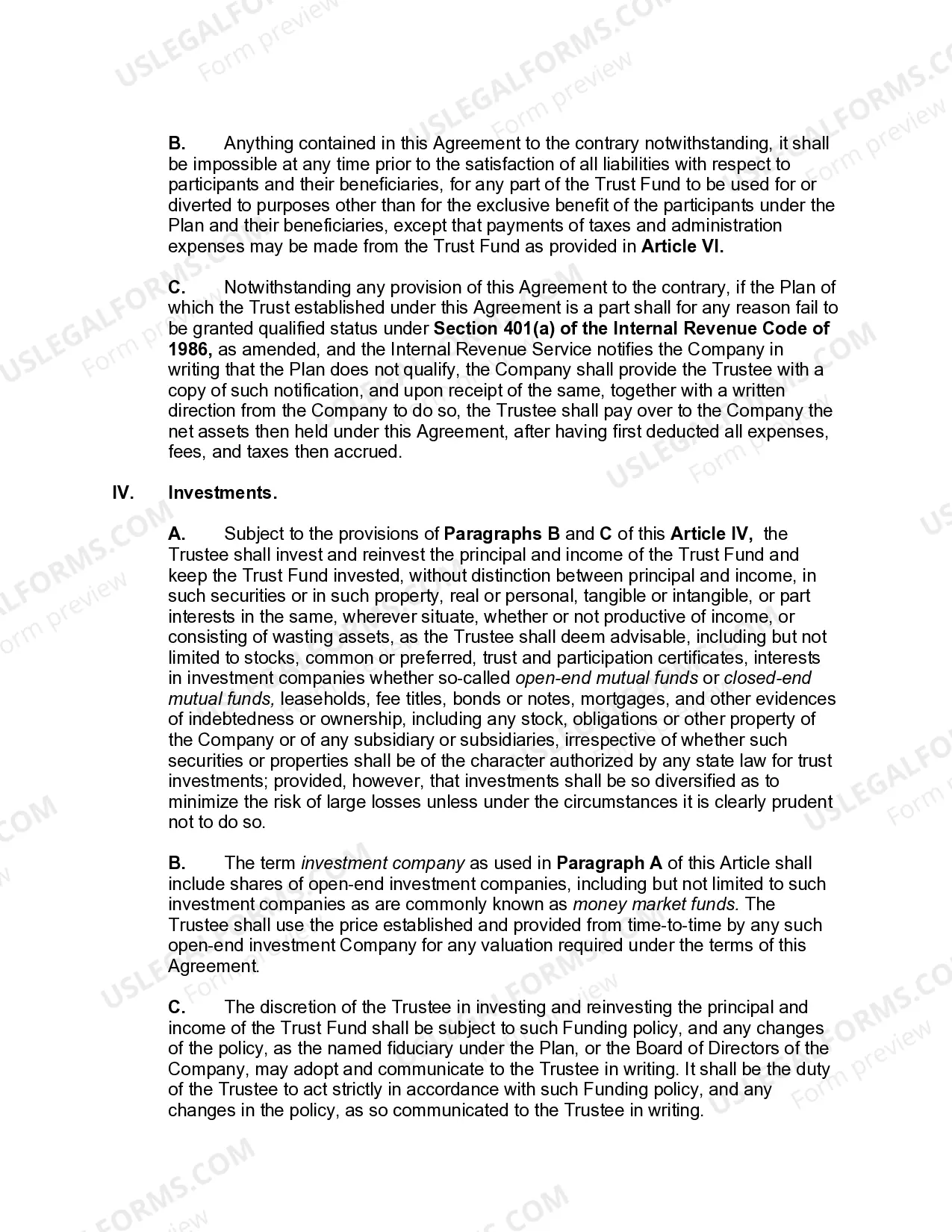
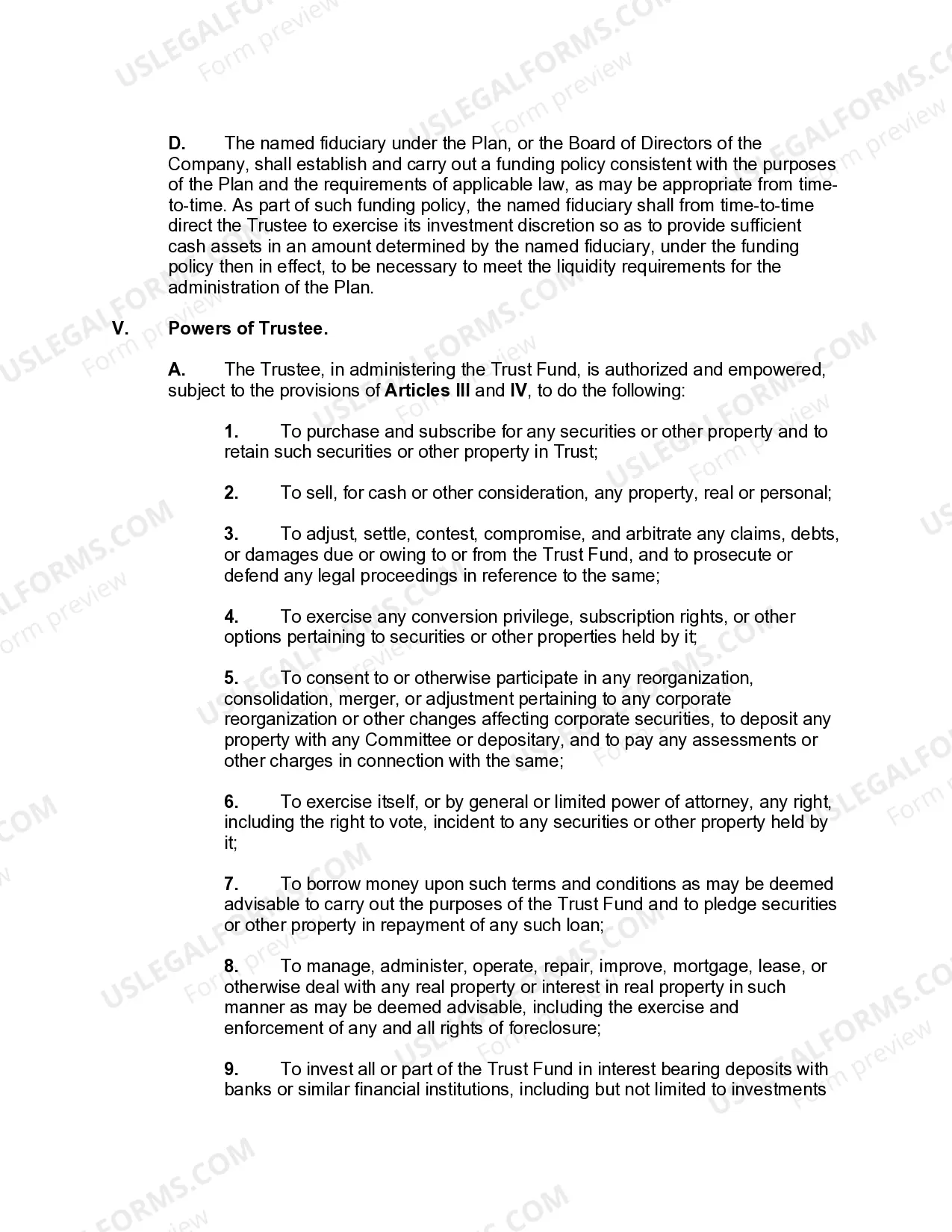
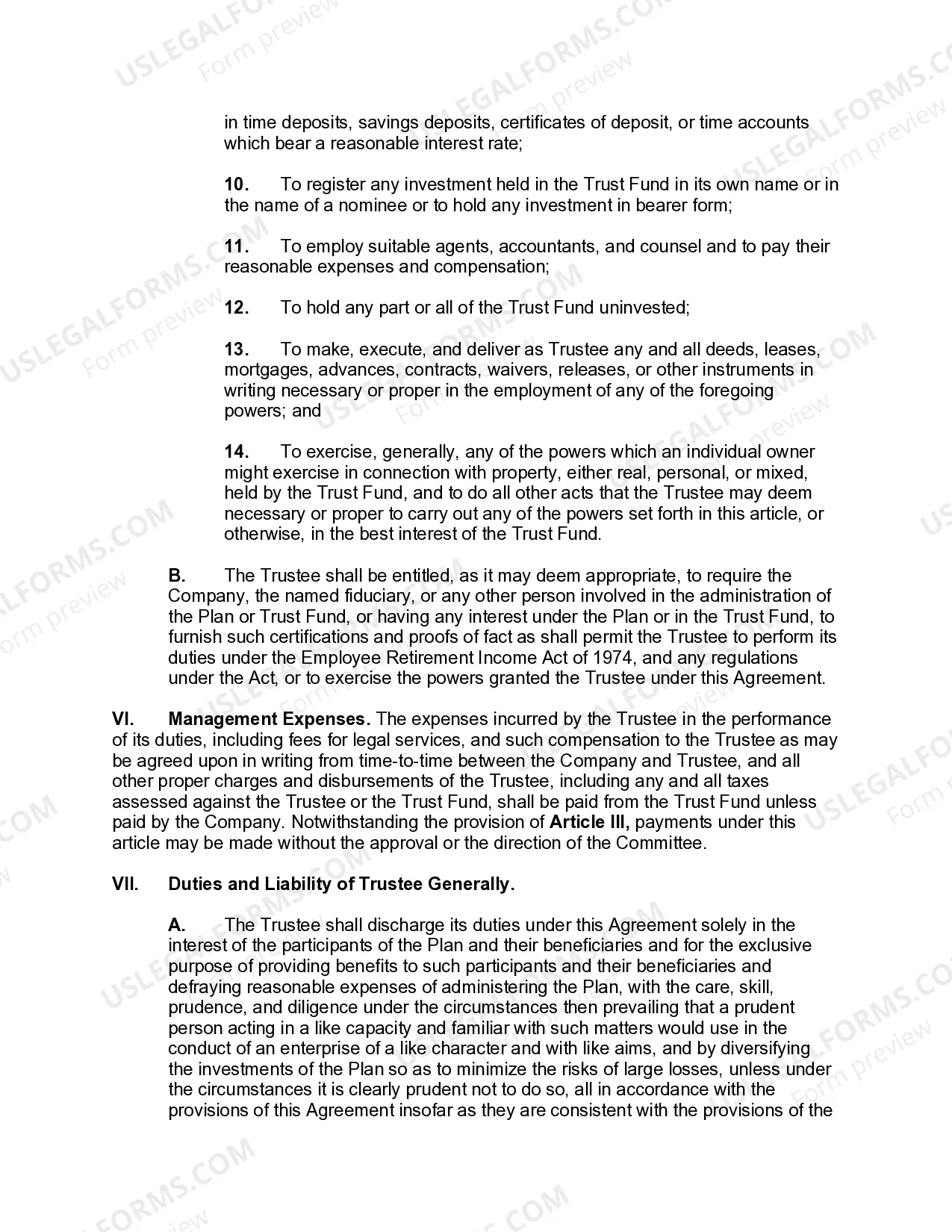
- Investment powers and responsibilities of the Trustee.
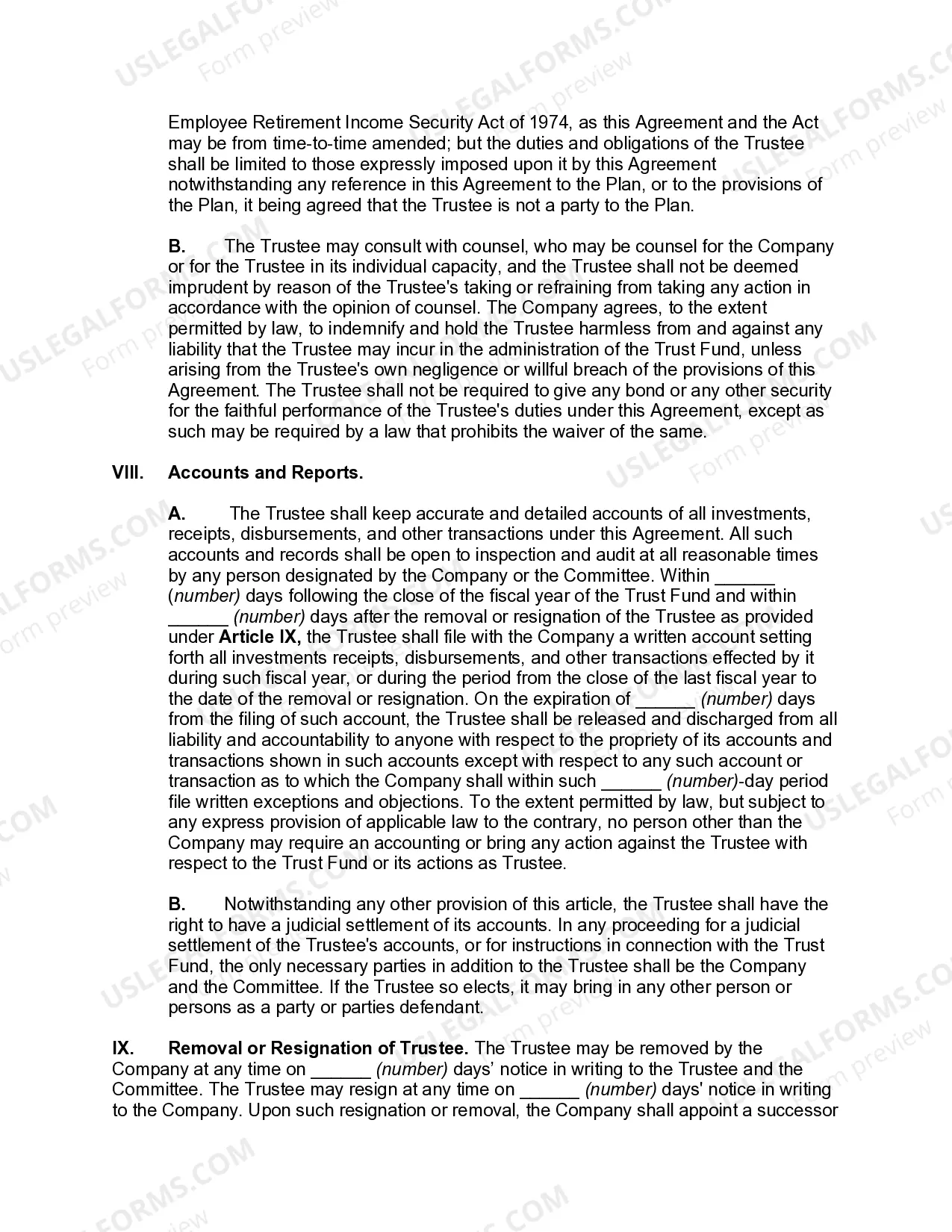
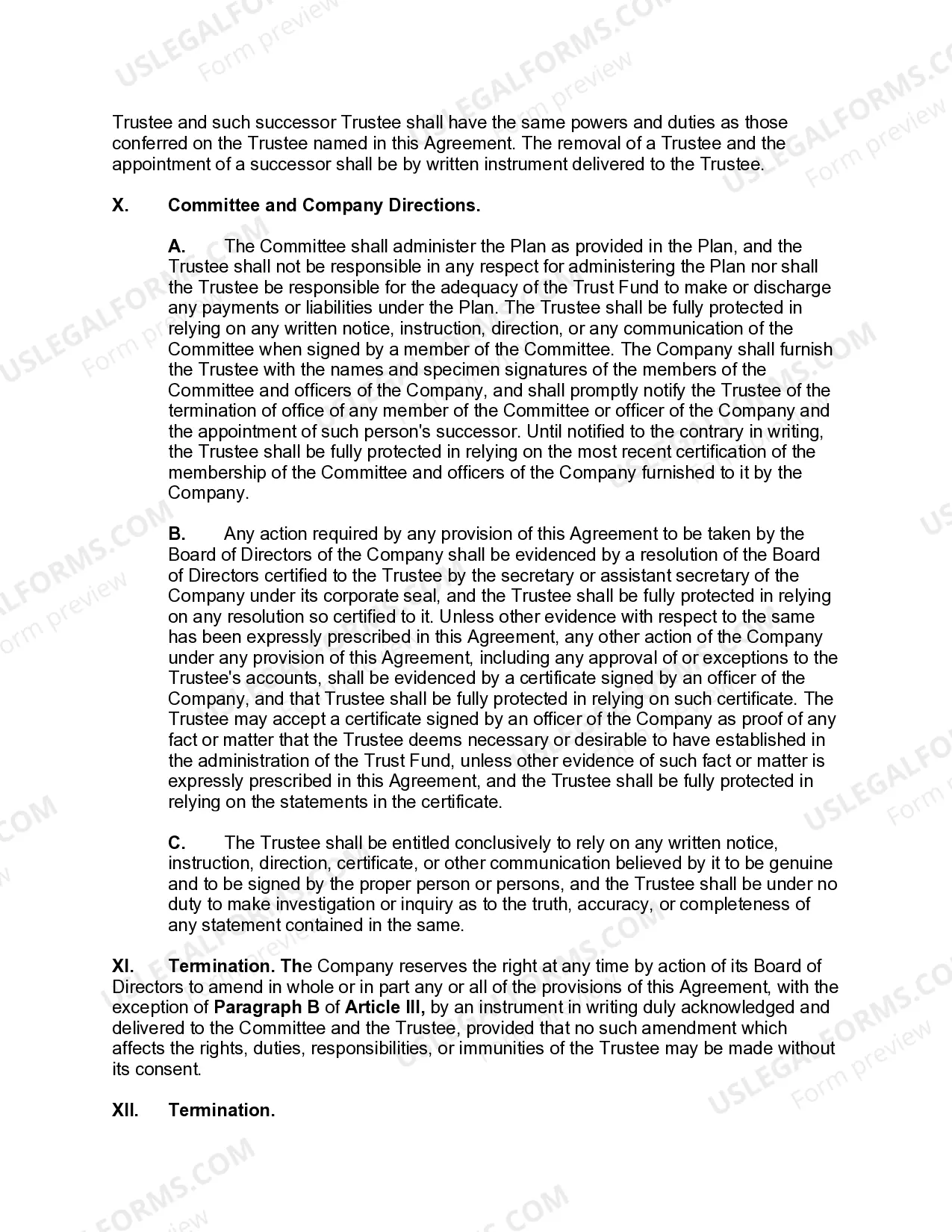
- Procedures for the removal or resignation of the Trustee.
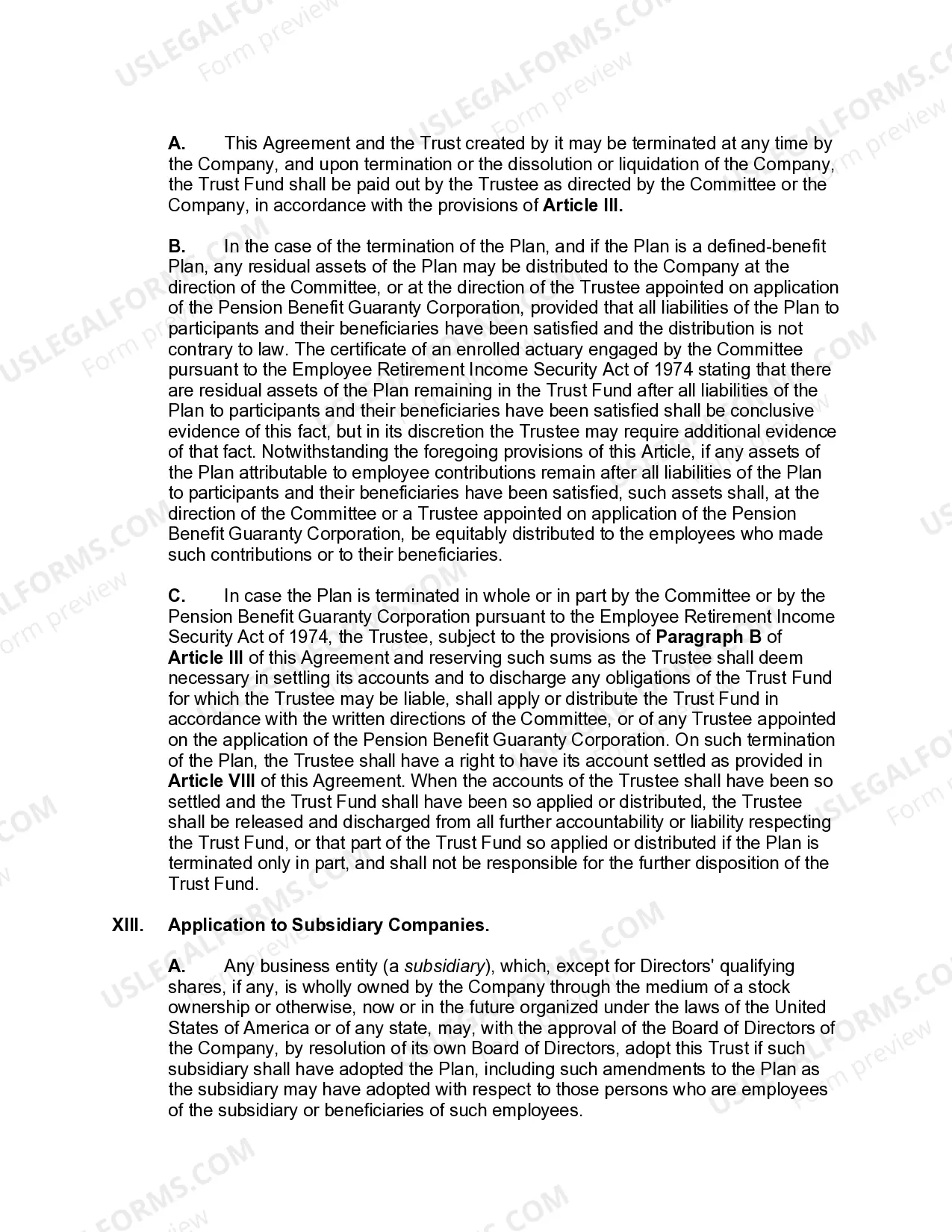
- Provisions for terminating the trust and handling residual assets.
Common use cases
This form should be used when an employer wishes to create a trust for the pension plan to manage contributions and distribute benefits to employees. It is typically utilized during the establishment of a new pension plan or when modifying an existing one to ensure compliance with federal laws governing retirement plans. Organizations that are integrating a corporate trustee into their pension plan management should also use this form to formalize the arrangement.
Who can use this document
- Employers who are establishing or modifying a pension plan.
- Corporate trustees chosen to manage pension fund assets.
- Members of the administrative committee responsible for the pension plan.
- Legal representatives advising on pension fund compliance with regulations.
How to complete this form
- Identify the parties by entering the names of the employer and trustee, along with their respective addresses and the state of incorporation.
- Clearly state the purpose of the trust and the name of the pension plan.
- Specify the conditions regarding contributions to the trust fund, including amounts and frequency.
- Detail the investment options and powers granted to the Trustee.
- Provide the necessary dates for agreement execution and include signatures of authorized officers from both parties.
Notarization guidance
This form does not typically require notarization unless specified by local law. However, it is recommended to consult legal counsel to ensure compliance with any specific state regulations that may apply.
Get your form ready online
Our built-in tools help you complete, sign, share, and store your documents in one place.
Make edits, fill in missing information, and update formatting in US Legal Forms—just like you would in MS Word.
Download a copy, print it, send it by email, or mail it via USPS—whatever works best for your next step.
Sign and collect signatures with our SignNow integration. Send to multiple recipients, set reminders, and more. Go Premium to unlock E-Sign.
If this form requires notarization, complete it online through a secure video call—no need to meet a notary in person or wait for an appointment.
We protect your documents and personal data by following strict security and privacy standards.

Make edits, fill in missing information, and update formatting in US Legal Forms—just like you would in MS Word.

Download a copy, print it, send it by email, or mail it via USPS—whatever works best for your next step.

Sign and collect signatures with our SignNow integration. Send to multiple recipients, set reminders, and more. Go Premium to unlock E-Sign.

If this form requires notarization, complete it online through a secure video call—no need to meet a notary in person or wait for an appointment.

We protect your documents and personal data by following strict security and privacy standards.
Mistakes to watch out for
- Failing to accurately identify the Company and Trustee, which can lead to legal issues.
- Omitting necessary provisions that ensure compliance with the Employee Retirement Income Security Act of 1974.
- Not specifying terms of disbursement for beneficiaries, which can cause delays or disputes later.
- Using outdated forms or versions that do not reflect current regulations.
Advantages of online completion
- Convenient access to the form anytime and anywhere.
- Editability allows users to customize fields as per their requirements.
- Downloadable versions provide secure storage for record-keeping.
- Accuracy checks ensure that legal requirements are automatically met, reducing the risk of errors.
Looking for another form?
Form popularity
FAQ
As a trustee, you must use the money or assets in the trust only for the beneficiary's benefit.You won't be able to benefit from the trust yourself (unless the trust agreement says you can). If the trust is a 'discretionary trust', the trustees will have more freedom to make decisions.
A trustee of a qualified retirement plan is the entity or group of individuals who hold the assets of the plan in trust. Trustees are either designated in the plan document or appointed by another fiduciary, typically the employer who sponsors the plan.
Trustee: a person or persons designated by a trust document to hold and manage the property in the trust. Beneficiary: a person or entity for whom the trust was established, most often the trustor, a child or other relative of the trustor, or a charitable organization.
A trust agreement is a document that allows you (the trustor) to legally transfer the ownership of specific assets to another person (trustee) to be held for the trustor's beneficiaries.
A trustee is the person or entity entrusted to make investment decisions in the best interests of plan participants. A trustee is assigned by another fiduciary, such as the employer who sponsors the qualified retirement plan, and should be named in the plan documents. Additional restrictions apply for a trustee.
Schemes have always paid professional (independent) trustees and, as the two charts below show, schemes are continuing to pay other trustees, in particular pensioner members, so that overall 93% of schemes are paying at least one trustee for their services, compared with only 71% in 2007.
The trustee acts as the legal owner of trust assets, and is responsible for handling any of the assets held in trust, tax filings for the trust, and distributing the assets according to the terms of the trust. Both roles involve duties that are legally required.
A trustee typically cannot take any funds from the trust for him/her/itself although they may receive a stipend in the form of a trustee fee for the time and efforts associated with managing the trust.
A trustee is a person or company, acting separately from an employer, who holds assets for the beneficiaries of the pension scheme. Trustees are responsible for ensuring that the pension scheme is run properly and that members' benefits are secure.