Declaration of Trust
What this document covers
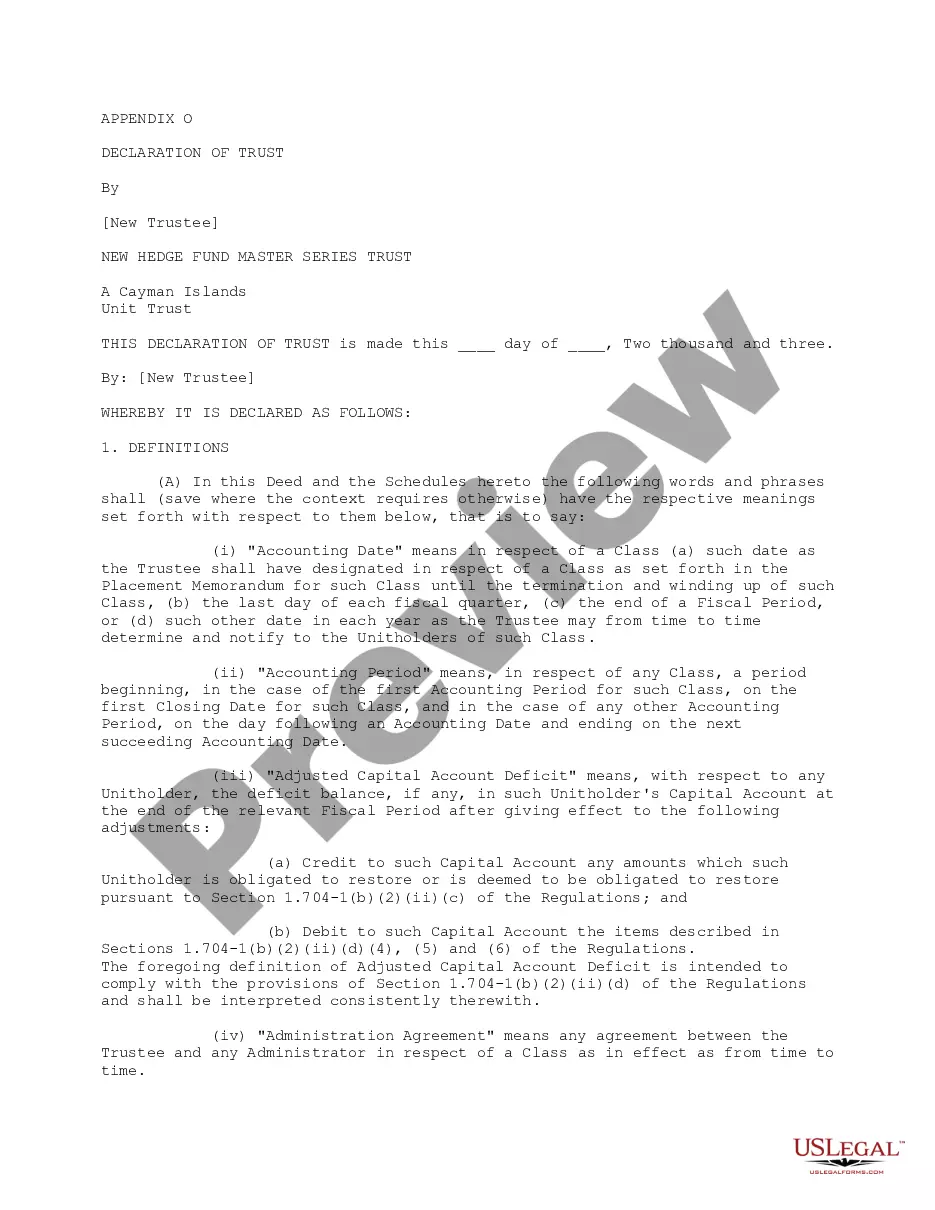
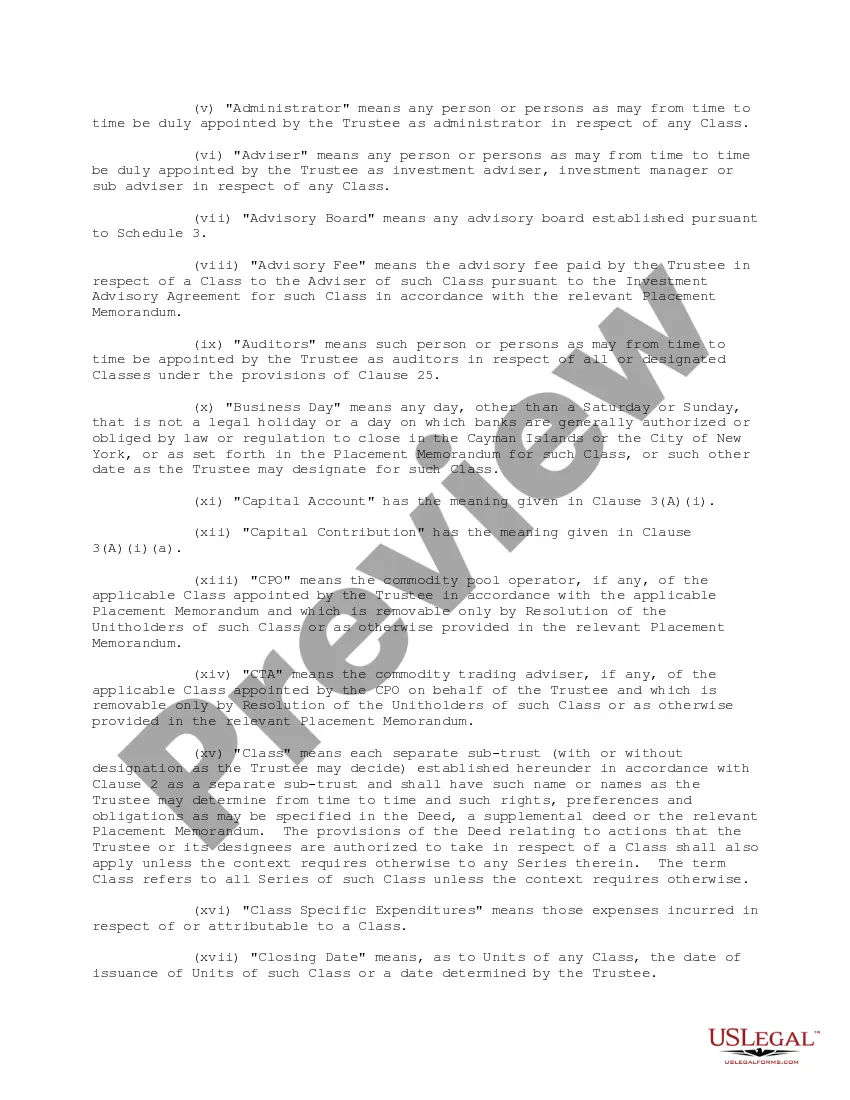
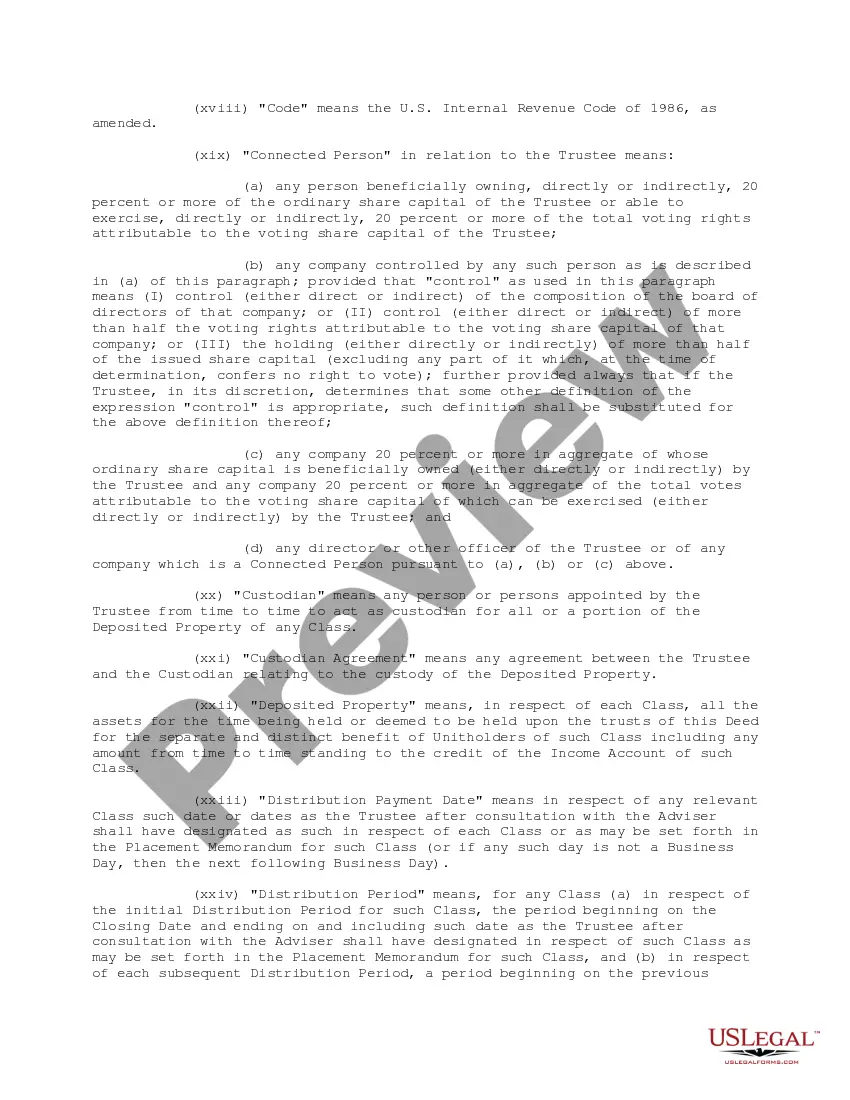
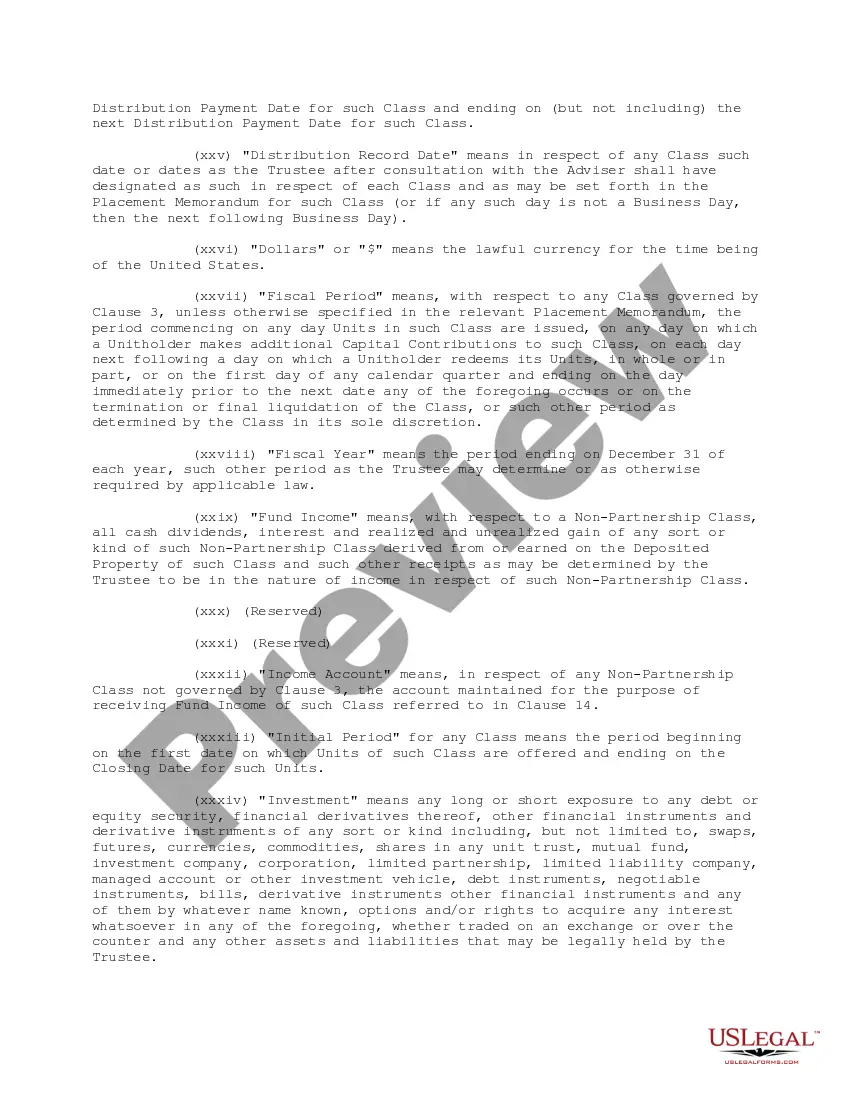
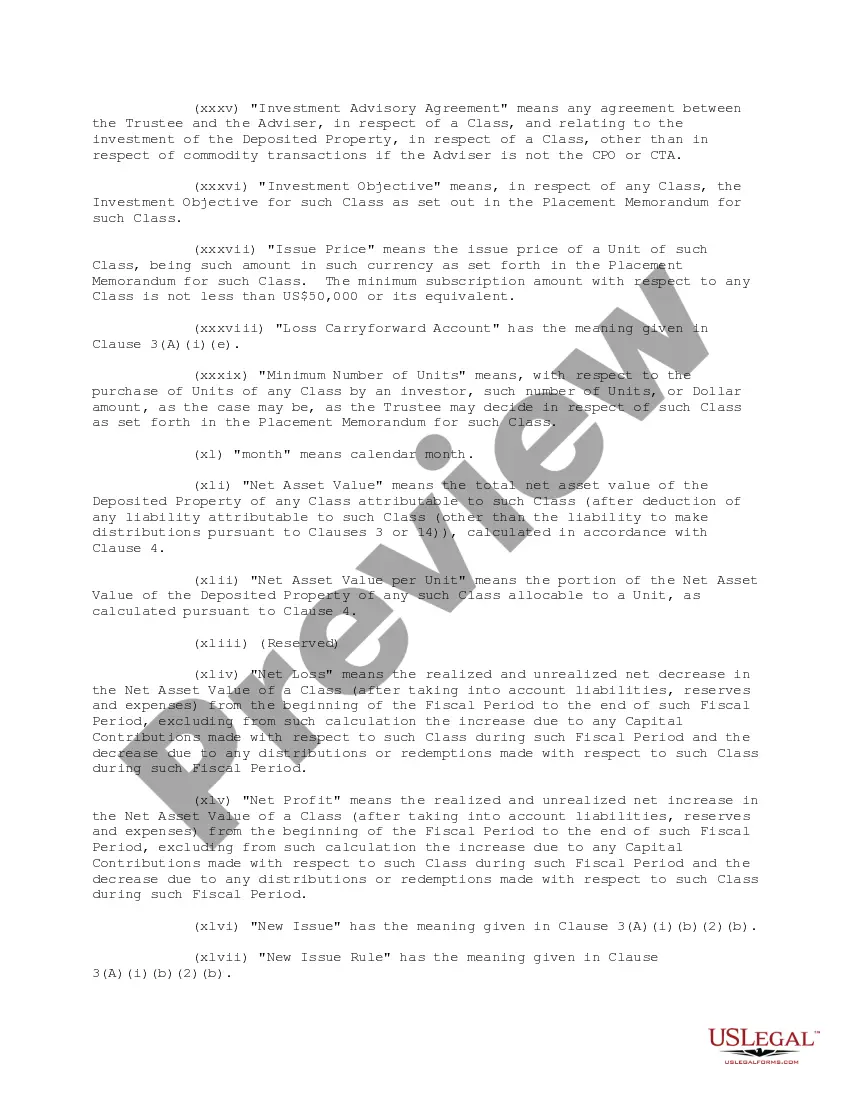
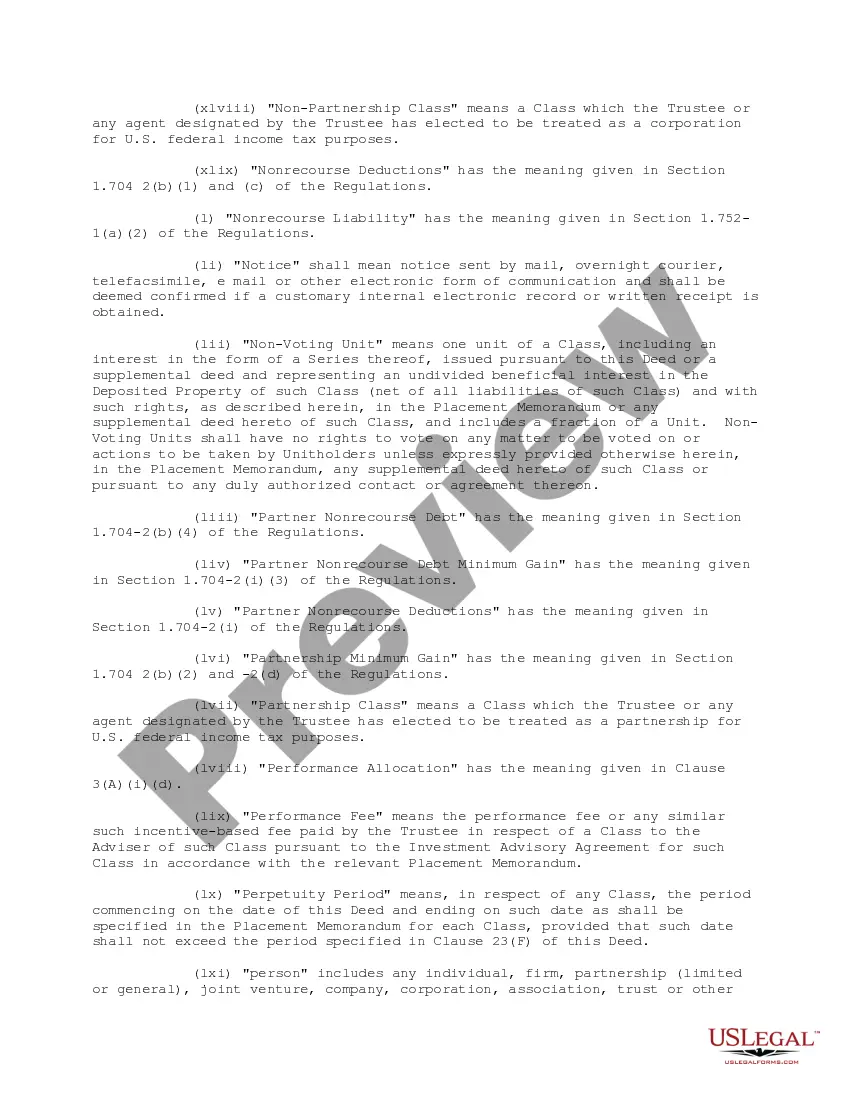
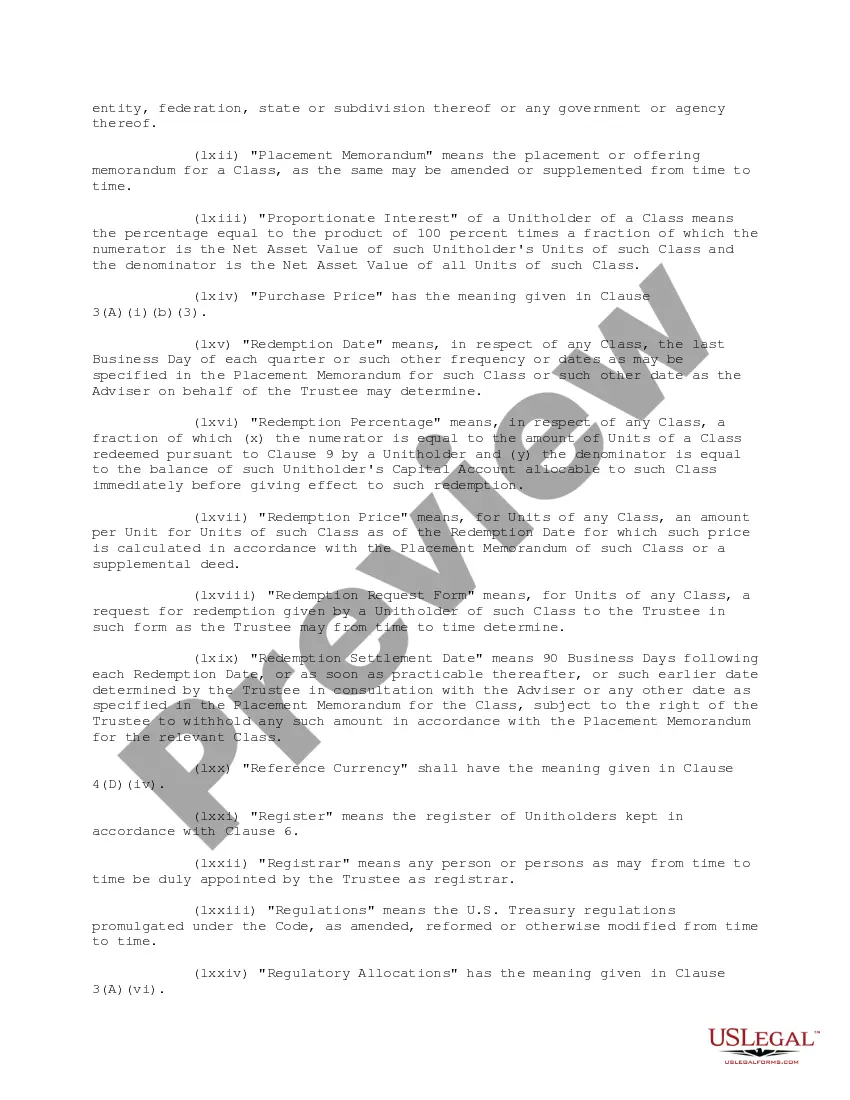
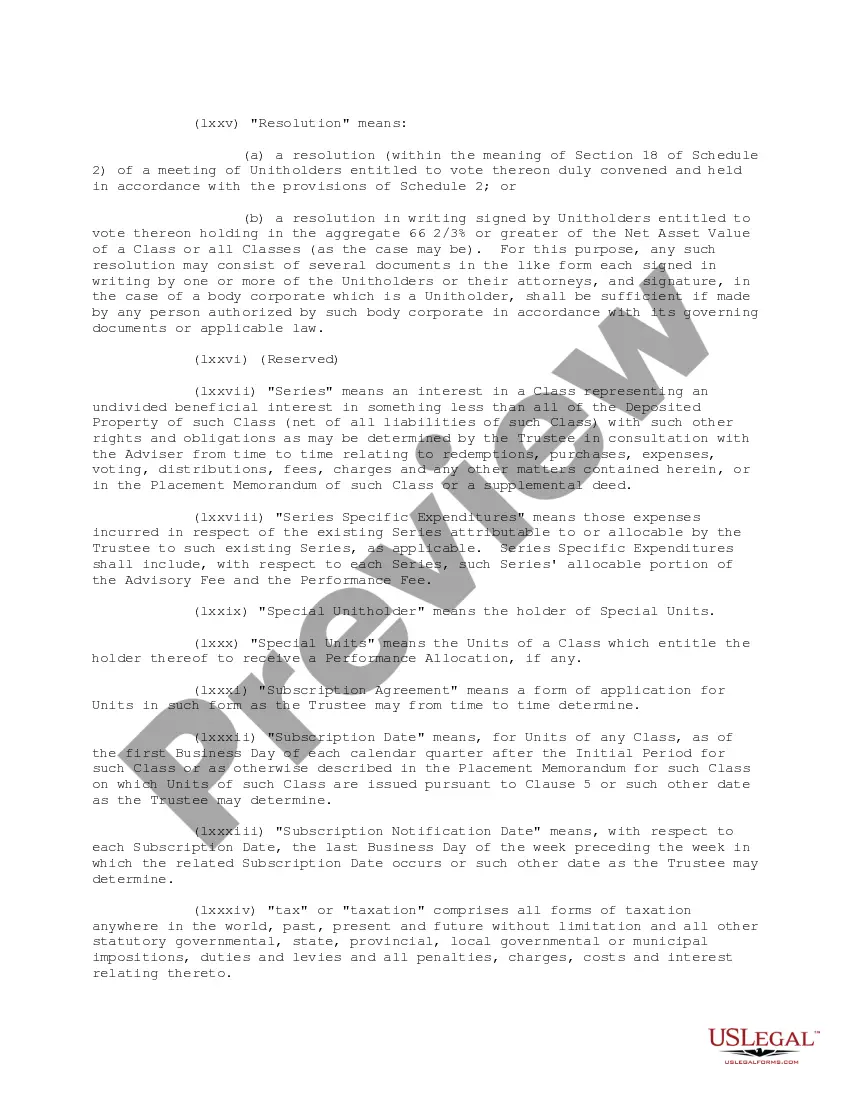
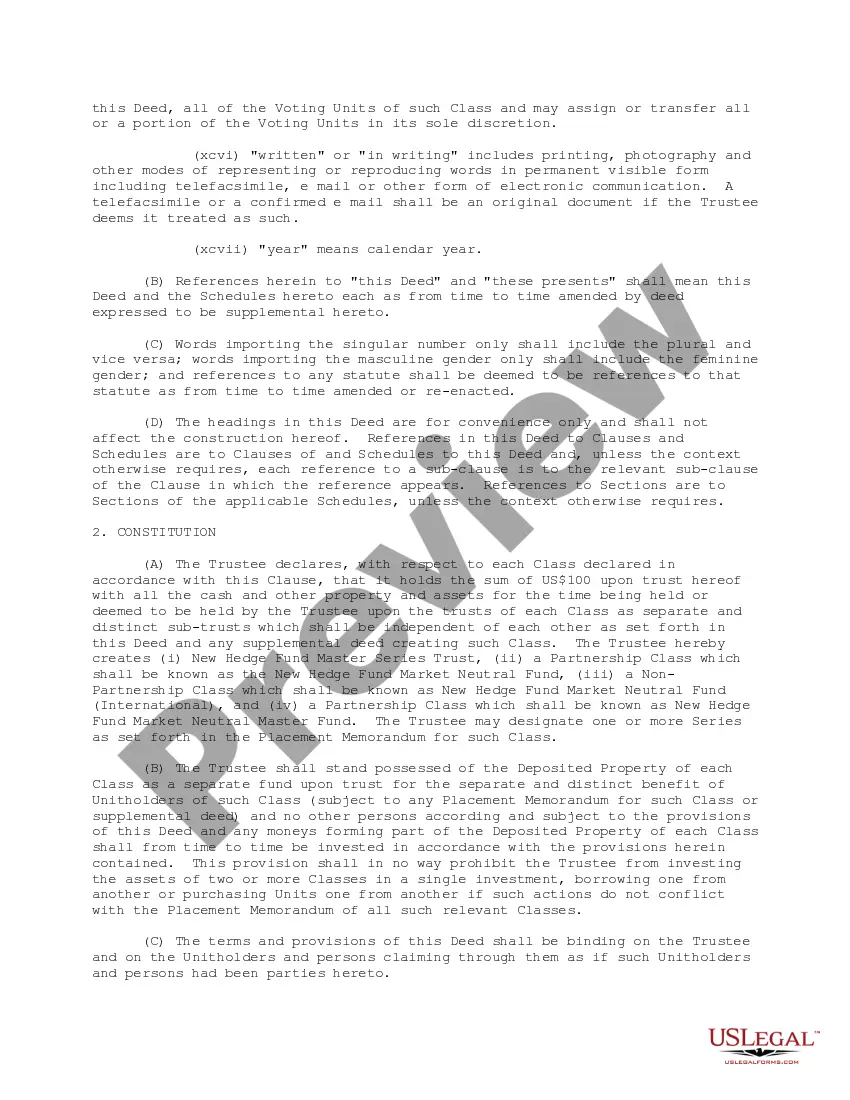
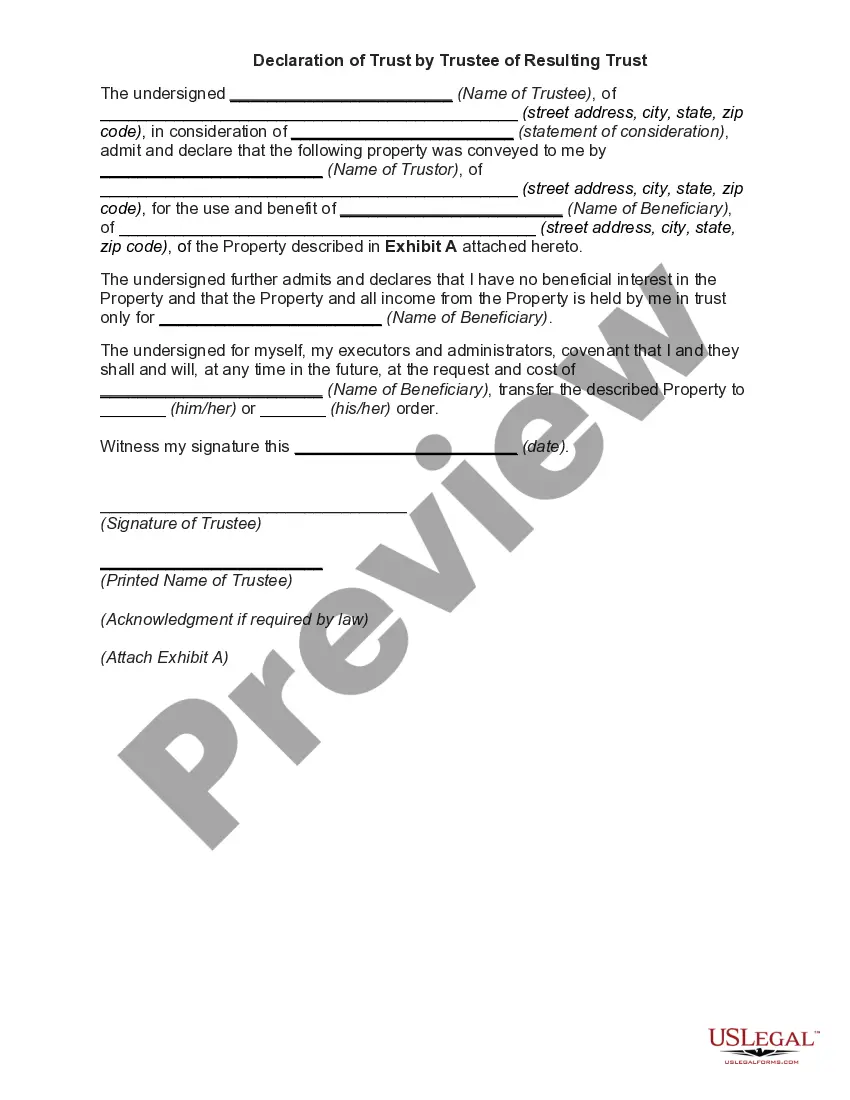
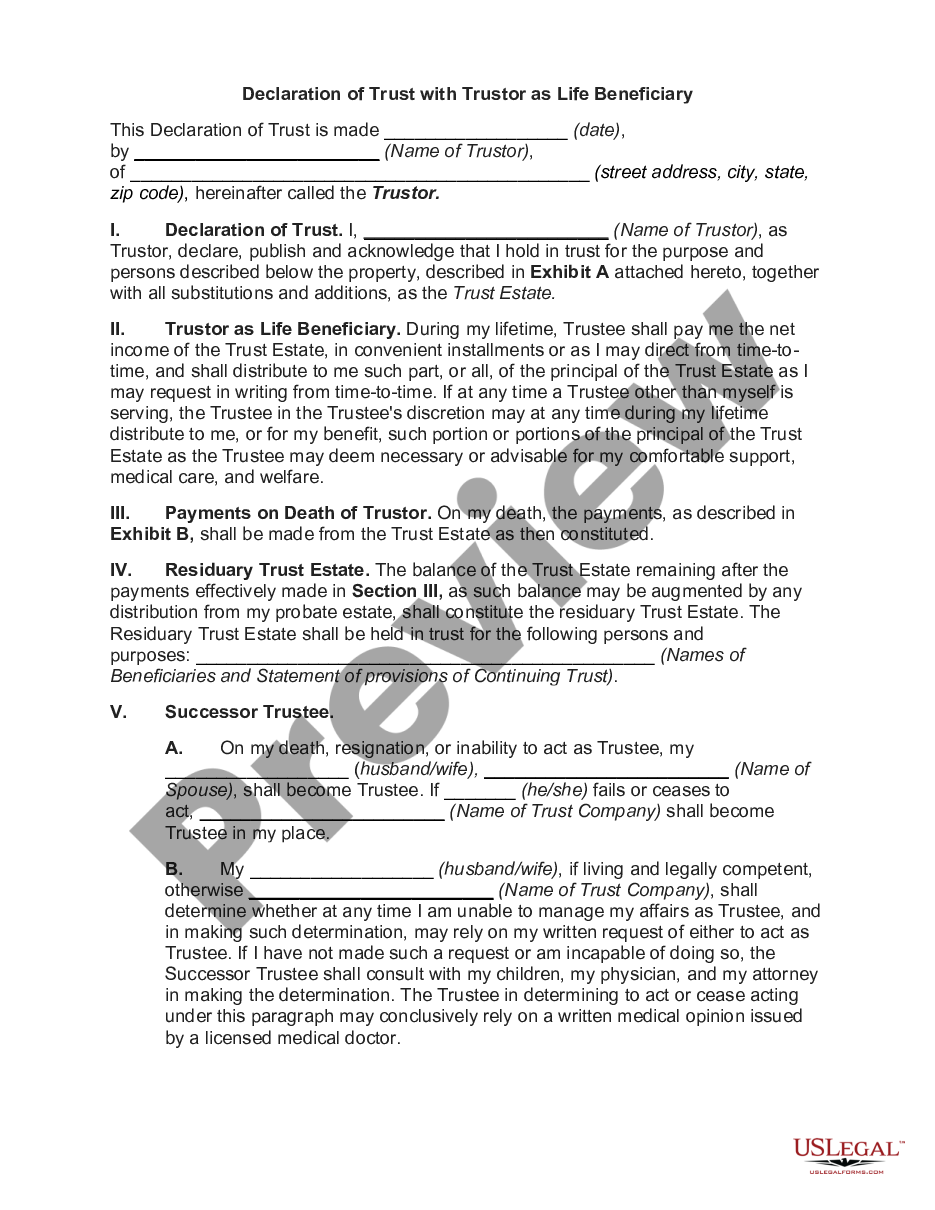
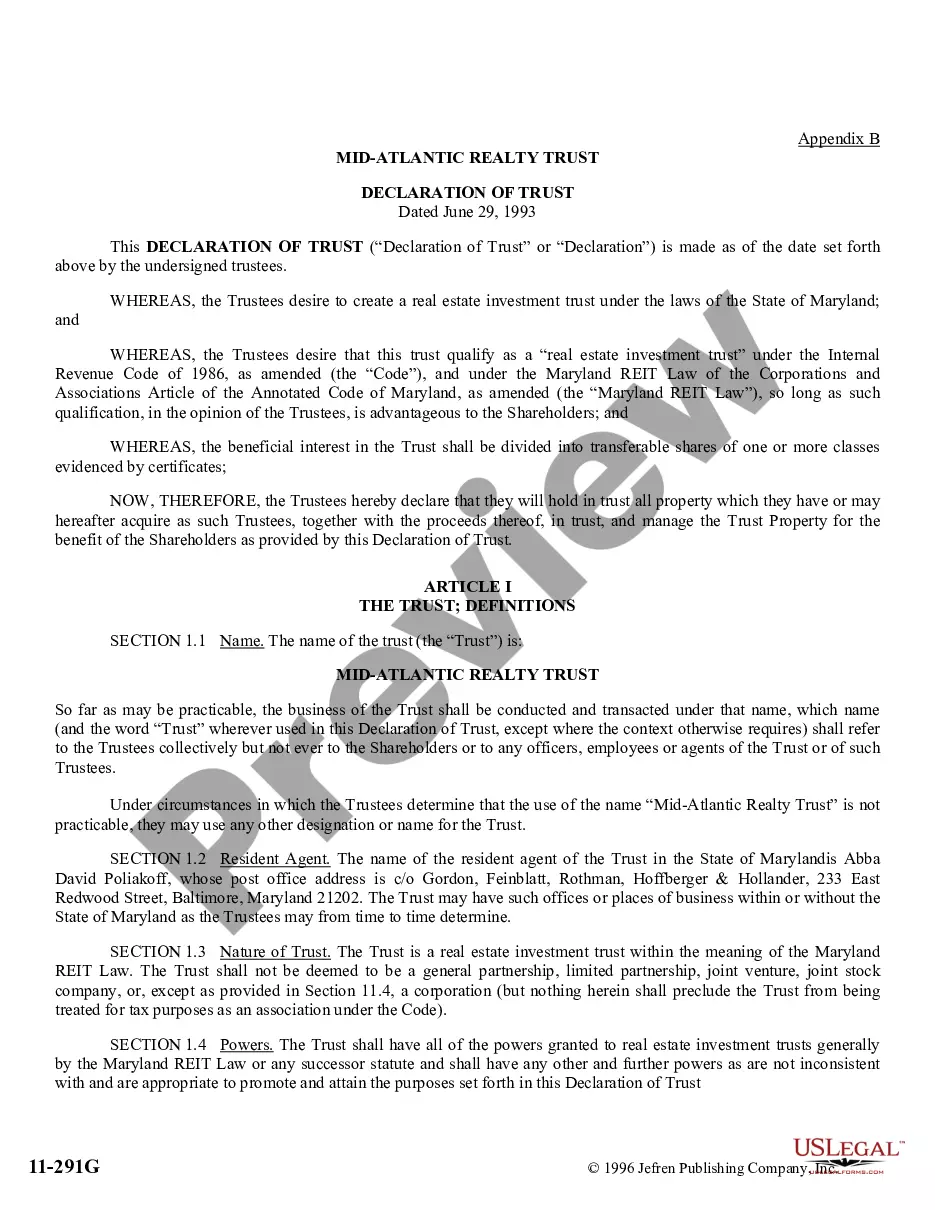
The Declaration of Trust is a legal document that establishes a trust agreement, defining the fiduciary relationship between the trustee and the beneficiaries. This form is crucial for managing assets and investments held in trust, particularly in complex financial structures like hedge funds. Unlike simpler agreements, this extensive document covers detailed provisions and definitions essential for its proper governance.
What’s included in this form
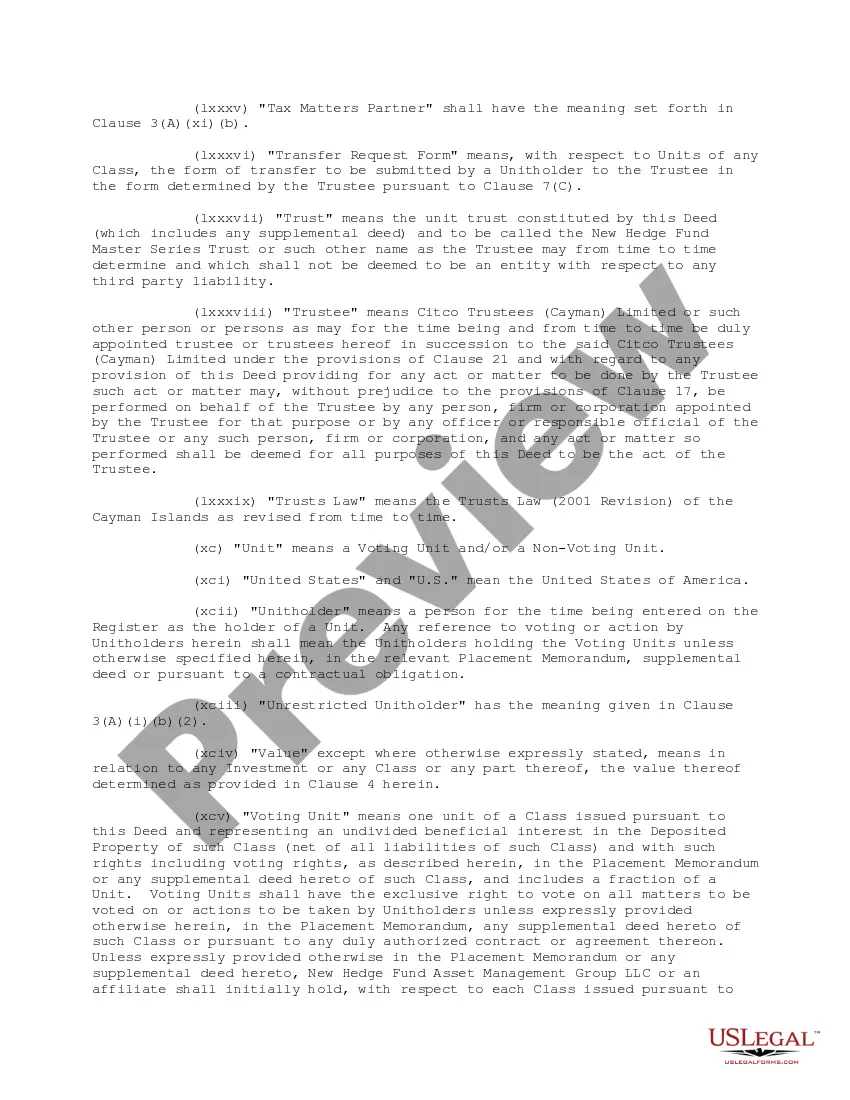
- Definitions: Detailed explanations of terms used throughout the Declaration.
- Constitution: Outlines the establishment and structure of the trust.
- Capital Accounts: Provisions for tracking contributions and distributions to unitholders.
- Redemption and Transfer: Clauses governing the redemption of units and transfer rights.
- Acknowledgements: Requirements for meetings and resolutions involving unitholders.

When to use this form
This Declaration of Trust should be used when establishing a trust for managing pooled investments in a structured financial setting, such as for hedge funds. It is essential for situations where there are multiple investors (unitholders) and detailed governance rules are necessary to maintain trust integrity and compliance with various regulatory frameworks.
Intended users of this form
- Individuals or entities planning to establish a trust to manage pooled investments.
- Trustees who require a comprehensive understanding of their roles and responsibilities.
- Financial advisors and hedge fund managers involved with trusts.
- Investors looking to understand the legal frameworks that govern their interests in the trust.
Completing this form step by step
- Identify the parties involved: Include the names of the trustee, beneficiaries, and any appointments.
- Define the trust's purpose: Clearly state the objectives of the trust and its intended management structure.
- Establish capital accounts: Specify how contributions will be managed and tracked for each unitholder.
- Outline redemption and transfer rights: Include rules governing how unitholders can redeem their interests or transfer assets.
- Sign the document: Ensure that all parties sign in the appropriate places and understand their commitments.
Notarization requirements for this form
This form does not typically require notarization unless specified by local law, which can vary by state. It's advisable to check local requirements to confirm.
Get your form ready online
Our built-in tools help you complete, sign, share, and store your documents in one place.
Make edits, fill in missing information, and update formatting in US Legal Forms—just like you would in MS Word.
Download a copy, print it, send it by email, or mail it via USPS—whatever works best for your next step.
Sign and collect signatures with our SignNow integration. Send to multiple recipients, set reminders, and more. Go Premium to unlock E-Sign.
If this form requires notarization, complete it online through a secure video call—no need to meet a notary in person or wait for an appointment.
We protect your documents and personal data by following strict security and privacy standards.

Make edits, fill in missing information, and update formatting in US Legal Forms—just like you would in MS Word.

Download a copy, print it, send it by email, or mail it via USPS—whatever works best for your next step.

Sign and collect signatures with our SignNow integration. Send to multiple recipients, set reminders, and more. Go Premium to unlock E-Sign.

If this form requires notarization, complete it online through a secure video call—no need to meet a notary in person or wait for an appointment.

We protect your documents and personal data by following strict security and privacy standards.
Common mistakes
- Failing to clearly define the roles and responsibilities of the trustee.
- Omitting important details about capital contributions and distributions.
- Not understanding local regulations that may affect trust operations.
- Forgetting to obtain necessary approvals from unitholders for amendments.
- Inadequate documentation of decisions or actions taken by the trustee.
Benefits of using this form online
- Convenient access to a legally vetted template that ensures compliance with legal standards.
- Editability allows customization to suit specific trust needs without starting from scratch.
- Reliable information that is regularly updated to reflect current regulations and practices.
- Streamlined process that reduces the time and effort typically required to draft legal documents.
Looking for another form?
Form popularity
FAQ
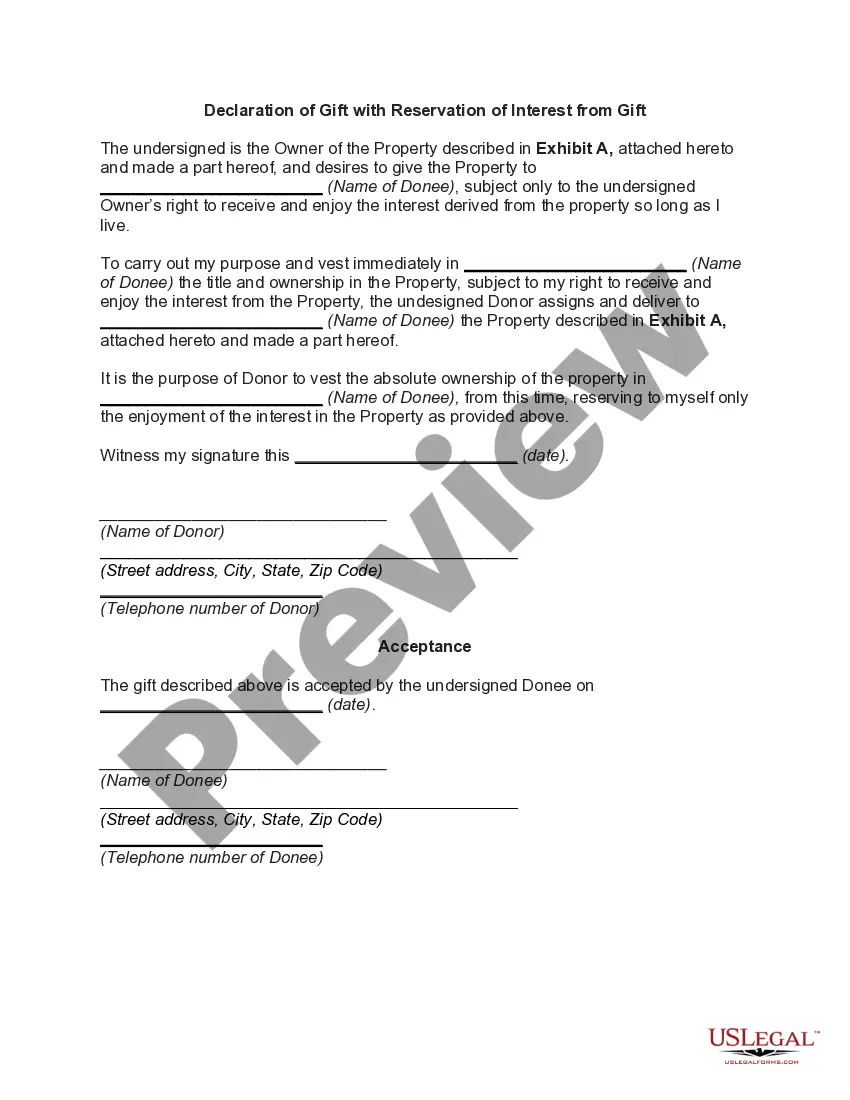
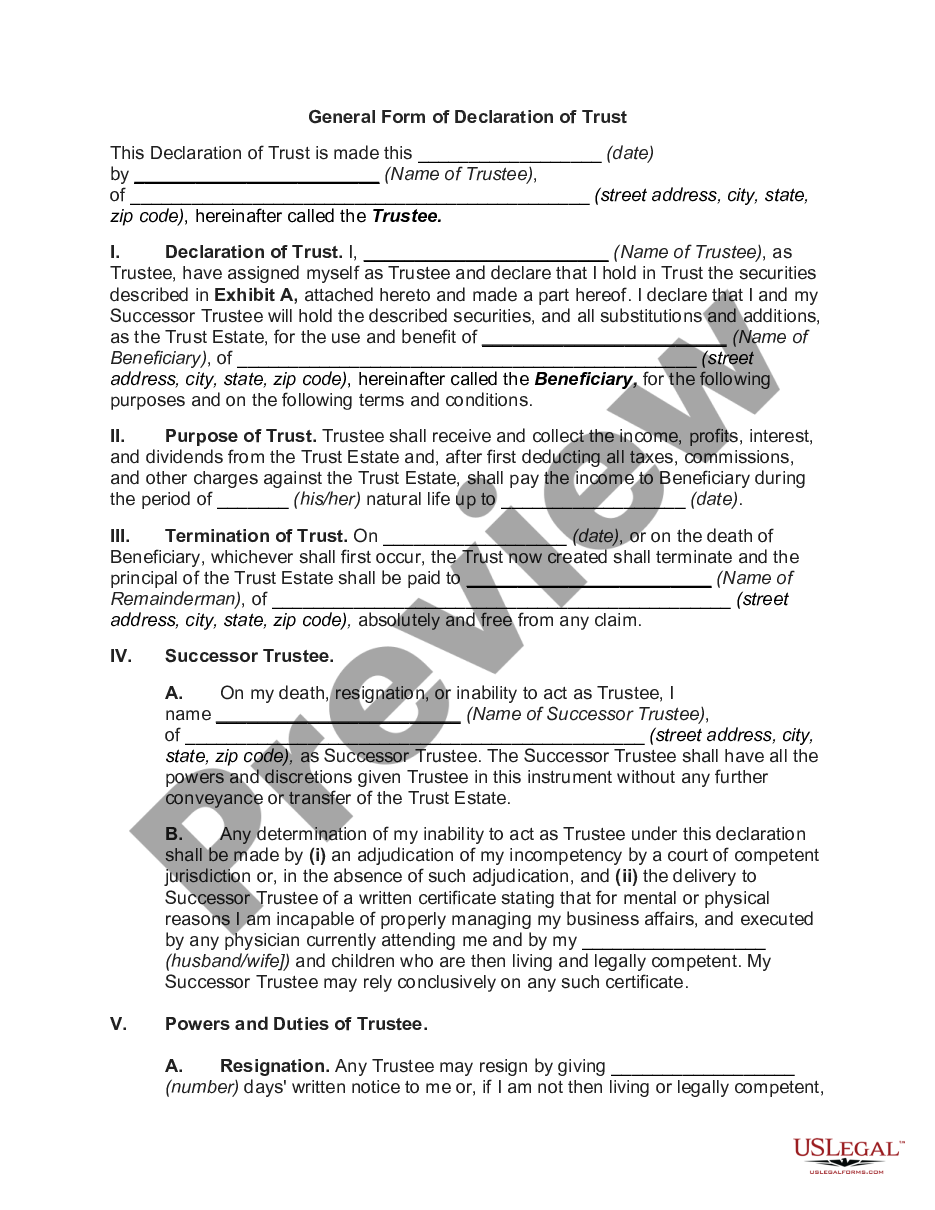
A document in which a person declares that he holds (or two or more persons declare that they hold) assets on trust for the benefit of one or more beneficiaries.
What's included in a Declaration of Trust will depend on your individual circumstances. It can include: How much each person contributes to the deposit, and how much will be repaid to them. What percentage of the property each person will own, and how the money will be split if the property is sold.
A declaration of trust is usually a statement by the legal owner of property that s/he holds the beneficial interest for someone else.The donor/trustee does not need to register the trust with the Land Registry, nor does the document require delivery or a witness to signatures.
Can I make a declaration of trust myself? Some owners are put off using solicitors duke to the deed of trust cost. Individuals can write out their own, and use someone else as a witness. However, this may have errors or not be a legally binding document.
List Your Assets and Decide Which You'll Include in the Trust. Gather the Paperwork. Decide Whether You Will Be the Sole Grantor. Choose Beneficiaries. Choose a Successor Trustee. Choose Someone to Manage Property for Minor Children. Prepare the Trust Document. Sign and Notarize.
While you can use a free online template for a declaration of trust, it is recommended that you get advice from a solicitor, who can also draft the deed. A declaration of trust is a legally binding document, so getting the wording right is very important, and it can be costly to change.
Pick a type of living trust. If you're married, you'll first need to decide whether you want a single or joint trust. Take stock of your property. Choose a trustee. Draw up the trust document. Sign the trust. Transfer your property to the trust.
What's included in a Declaration of Trust will depend on your individual circumstances. It can include: How much each person contributes to the deposit, and how much will be repaid to them. What percentage of the property each person will own, and how the money will be split if the property is sold.
A declaration of trust under U.S. law is a document or an oral statement appointing a trustee to oversee assets being held for the benefit of one or more other individuals. These assets are held in a trust.The declaration of trust is sometimes referred to as a nominee declaration.