Virginia Small Estate Heirship Affidavit for Estates Not More Than 50,000
About this form
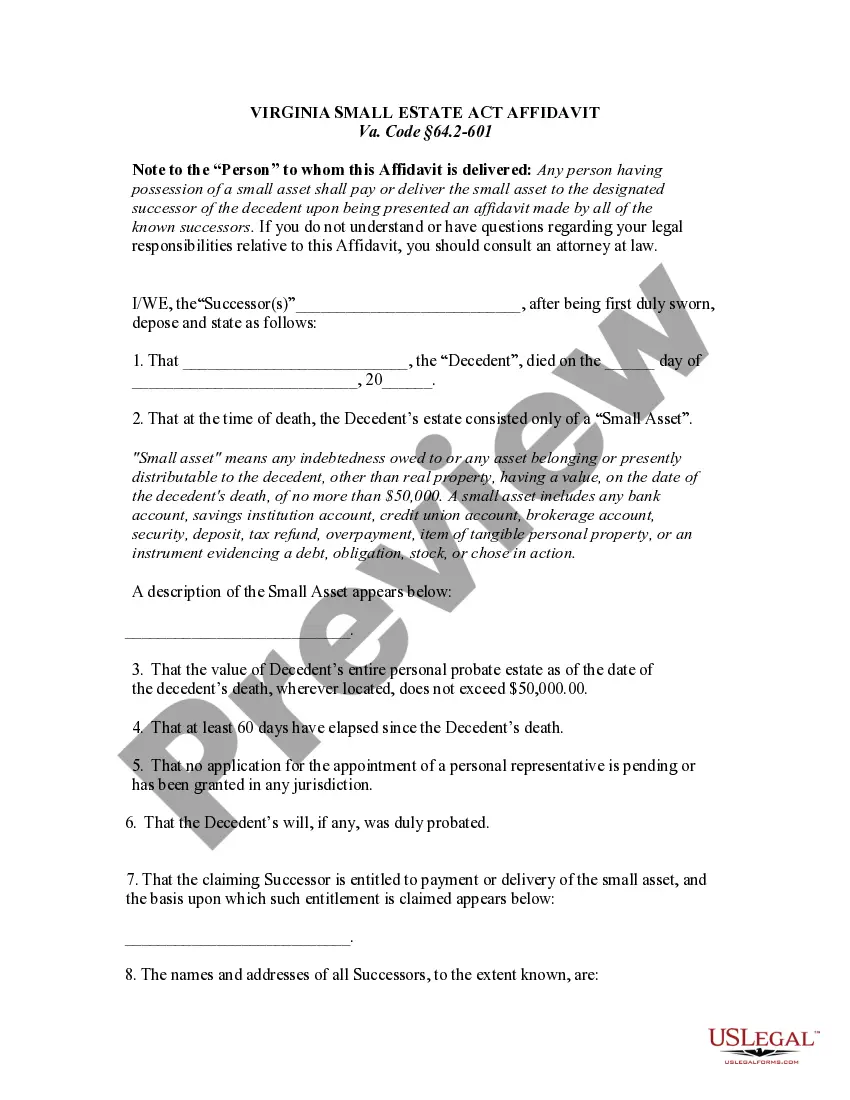
The Small Estate Heirship Affidavit is a legal document used in Virginia for settling estates valued at not more than $50,000. It allows heirs to collect debts or assets owed to the deceased following their passing, as long as 60 days have elapsed since the death. This affidavit streamlines the process of transferring assets without the need for formal probate, making it distinct from more extensive estate documents.
Form components explained
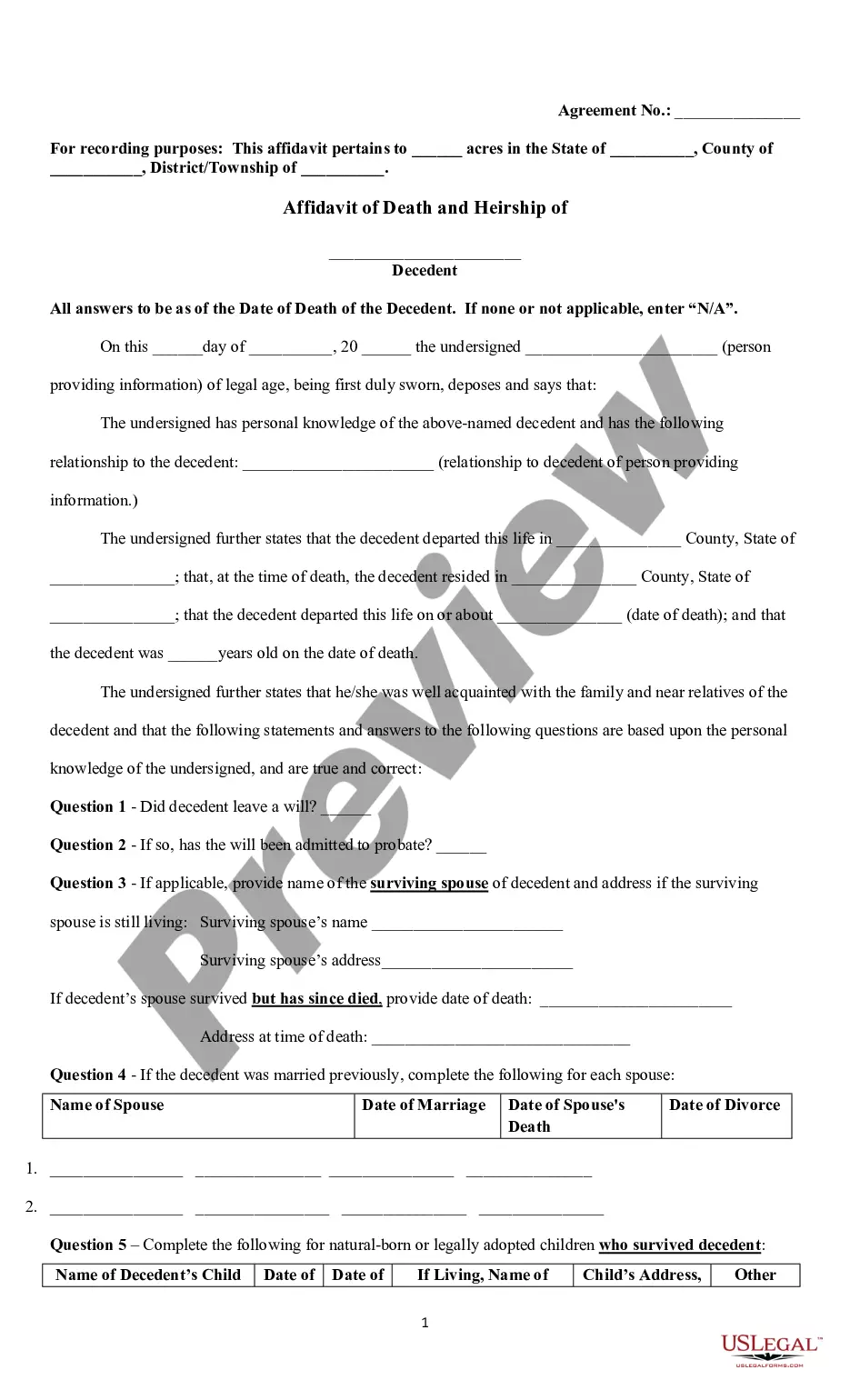
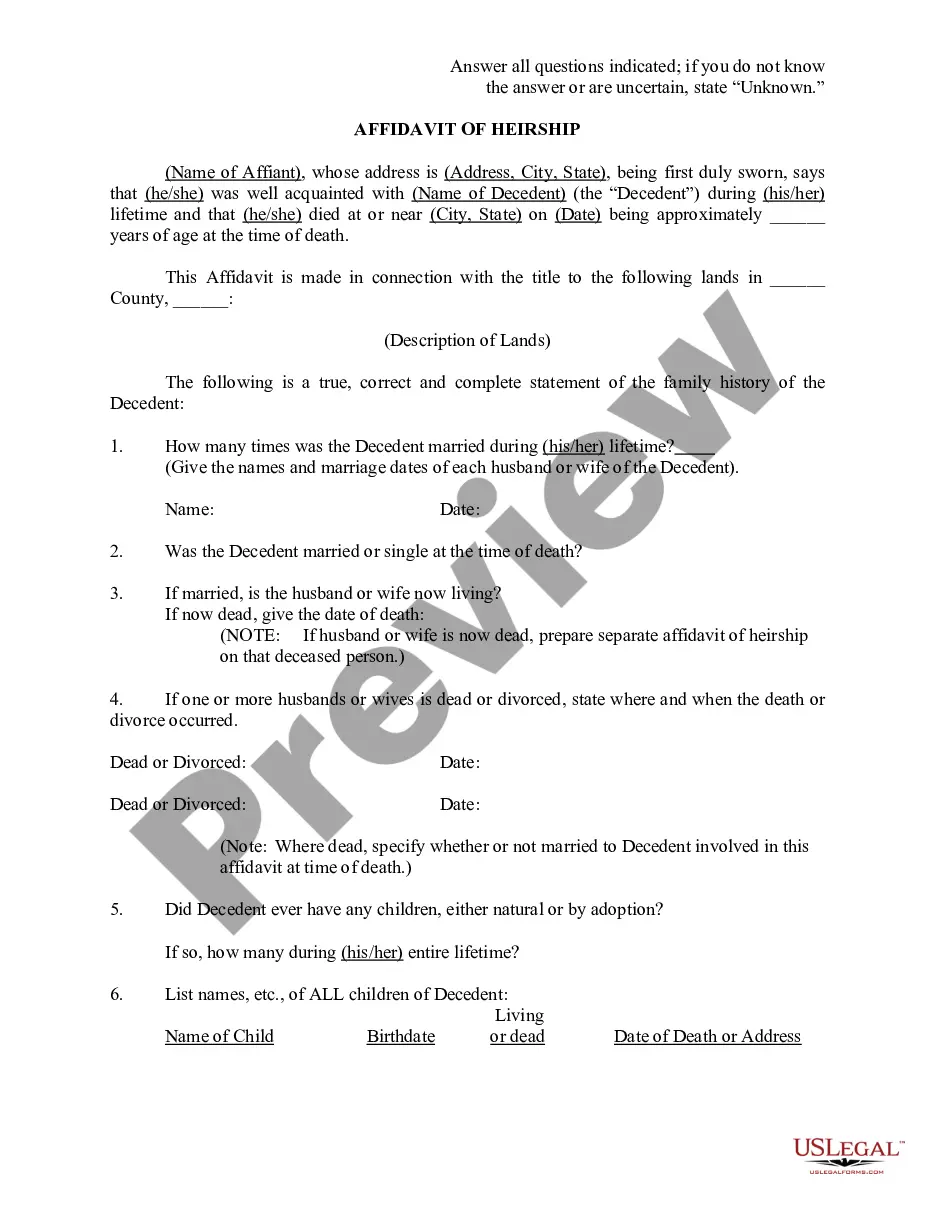
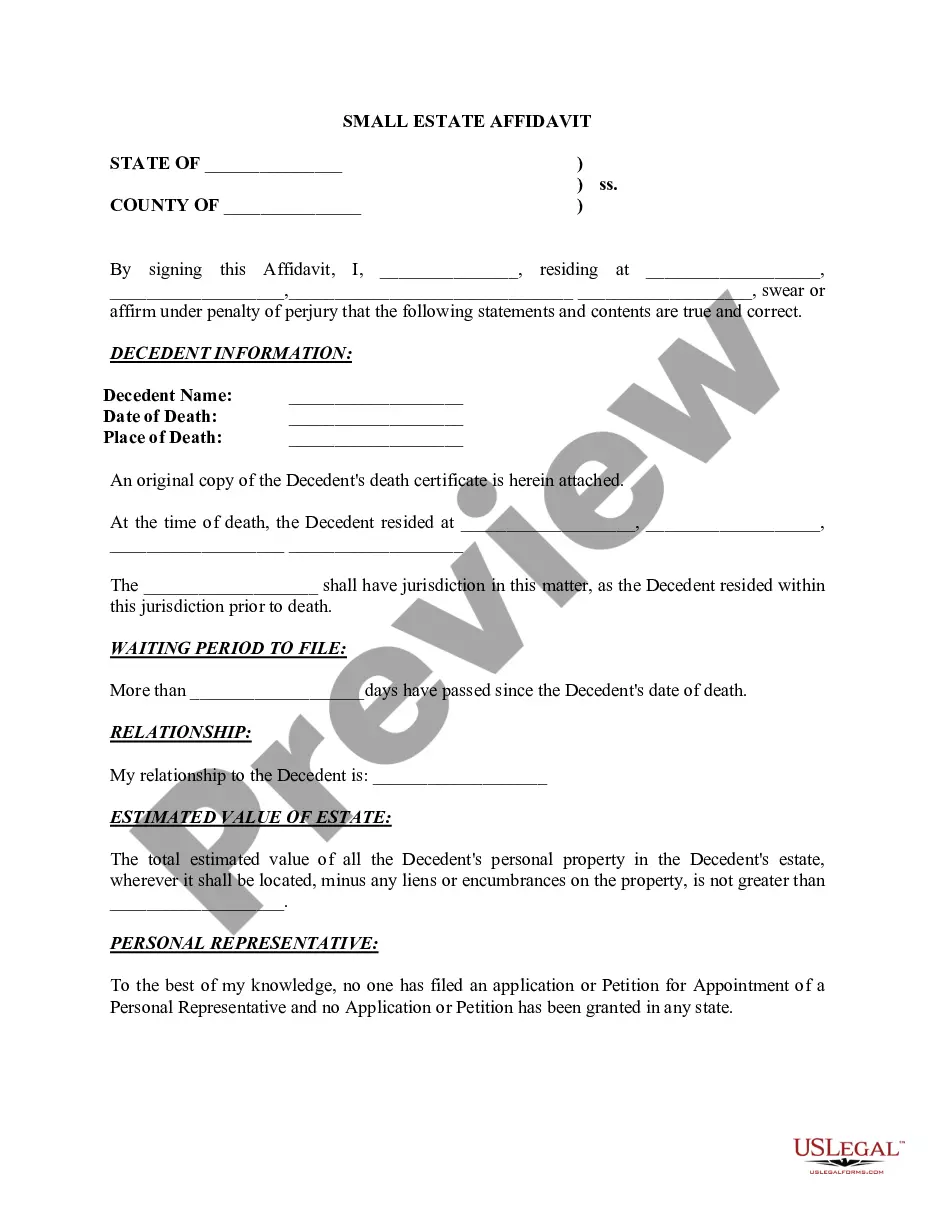
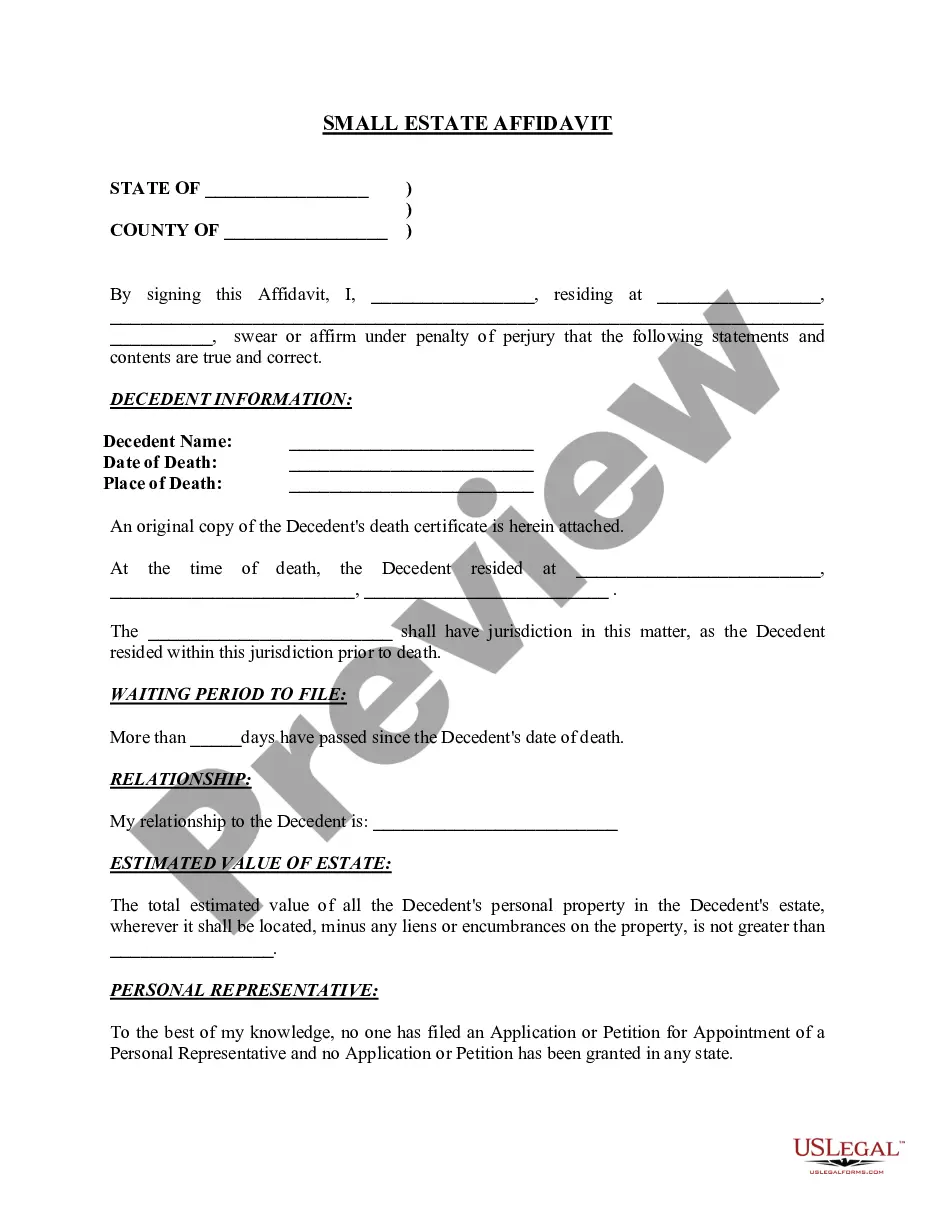
- Identification of the decedent and date of death.
- Details of the small asset, including its description and value.
- Confirmation that no probate proceedings are underway.
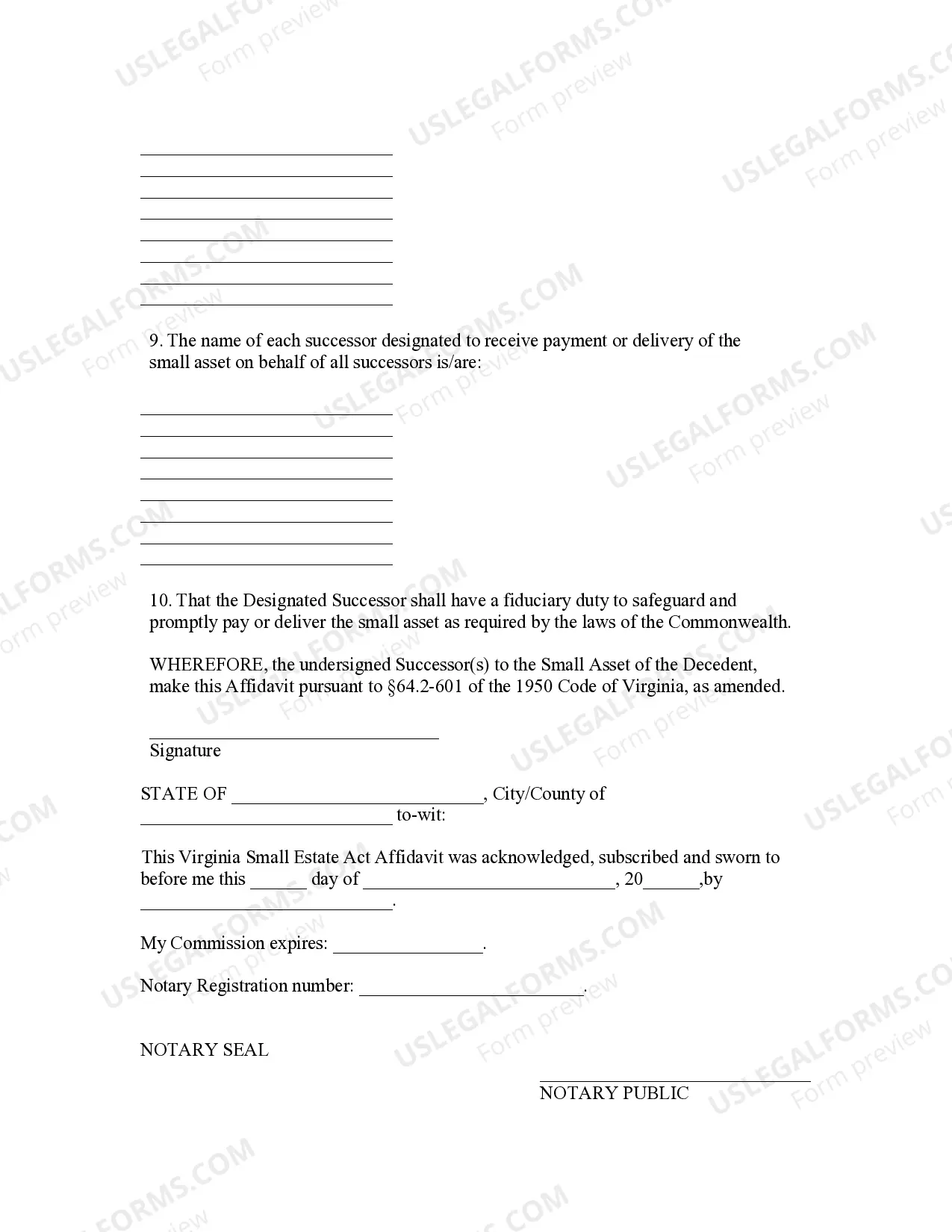
- List of all successors and the designated successor for the asset.
- Signature of the successors, along with a notary acknowledgment.
When to use this form
This form is useful in situations where a decedent's estate is small enough to qualify under Virginia law, specifically valued under $50,000. It is typically used by family members or close relatives who are designated to manage the estate's assets, collect outstanding debts, or handle personal property without going through formal probate court proceedings.
Who this form is for
This form is suitable for:
- Heirs or beneficiaries of an estate with total assets valued at $50,000 or less.
- Individuals who are responsible for managing a small estate after the death of a family member or friend.
- Successors designated by the decedent's will or those entitled to inherit under state intestacy laws.
How to prepare this document
- Identify the decedent by entering their full name and date of death.
- Document the small asset's description, ensuring it falls within the valuation limit.
- Confirm the necessary time has passed since the decedent's death (at least 60 days).
- List all known successors and specify the one designated to receive the asset.
- Sign the affidavit in the presence of a notary public to validate its contents.
Notarization guidance
In most cases, this form does not require notarization. However, some jurisdictions or signing circumstances might. US Legal Forms offers online notarization powered by Notarize, accessible 24/7 for a quick, remote process.
Get your form ready online
Our built-in tools help you complete, sign, share, and store your documents in one place.
Make edits, fill in missing information, and update formatting in US Legal Forms—just like you would in MS Word.
Download a copy, print it, send it by email, or mail it via USPS—whatever works best for your next step.
Sign and collect signatures with our SignNow integration. Send to multiple recipients, set reminders, and more. Go Premium to unlock E-Sign.
If this form requires notarization, complete it online through a secure video call—no need to meet a notary in person or wait for an appointment.
We protect your documents and personal data by following strict security and privacy standards.

Make edits, fill in missing information, and update formatting in US Legal Forms—just like you would in MS Word.

Download a copy, print it, send it by email, or mail it via USPS—whatever works best for your next step.

Sign and collect signatures with our SignNow integration. Send to multiple recipients, set reminders, and more. Go Premium to unlock E-Sign.

If this form requires notarization, complete it online through a secure video call—no need to meet a notary in person or wait for an appointment.

We protect your documents and personal data by following strict security and privacy standards.
Avoid these common issues
- Failing to wait the required 60 days after the decedent's death before filing.
- Not providing sufficient identification details for the small asset.
- Omitting any known successors or failing to clearly identify the designated successor.
- Neglecting to have the affidavit notarized, which is crucial for legal validity.
Benefits of using this form online
- Convenient download and completion from home, saving time and effort.
- Editability allows for easy updates to the form as needed.
- Reliability of language drafted by licensed attorneys ensures legal compliance.
Main things to remember
- The Small Estate Heirship Affidavit is crucial for collecting small debts from estates under $50,000 in Virginia.
- Ensure all successors are included and that the affidavit is properly notarized.
- Complete the form accurately to avoid common mistakes and delays in accessing estate assets.
Looking for another form?
Form popularity
FAQ
The Virginia small estate affidavit may be used when a decedent has $50,000 or less in probatable assets. It provides a quicker way to settle an estate by a successor when the estate is small. This form may not be used until at least 60 days have passed since the date of death of the decedent.
A person can expect for the probate process in Virginia to take anywhere from six months up to a year or more. Generally, there is a creditor period, so an estate cannot be completely distributed and closed prior to the expiration of the six-month period.
The threshold for Probate can range from £5,000 to A£50,000, depending on which banks and financial institutions are holding the deceased person's assets.
How much money can someone leave before probate is required? The probate threshold in England and Wales can be anywhere between £5,000 and A£50,000. This is because every bank and financial organisation has their own rules on how much money they can release before seeing a grant of probate.
Every financial institution will have a different threshold as to the amount they will transfer without a Grant of Probate. To provide you some guidance, a balance of somewhere in the vicinity of $20,000.00 $50,000.00 will not require a Grant of Probate.
Generally, an executor has 12 months from the date of death to distribute the estate. This is known as 'the executor's year'. However, for various reasons the executor may have been delayed and has not distributed the estate within this time frame.
Some banks and building societies will release quite large amounts without the need for probate or letters of administration.If the organisation refuses to release money without probate or letters of administration, you must apply for probate or letters of administration even if it is not otherwise needed.
Probate is required when an estate's assets are solely in the deceased's name. In most cases, if the deceased owned property that had no other names attached, an estate must go through probate in order to transfer the property into the name(s) of any beneficiaries.
Assets of an estate when the total value of the entire personal probate estate as of the decedent's death does not exceed, under current law, $50,000, if certain requirements are met, including an affidavit stating certain facts.