General Form of Trust Agreement for Minor Qualifying for Annual Gift Tax Exclusion
Understanding this form
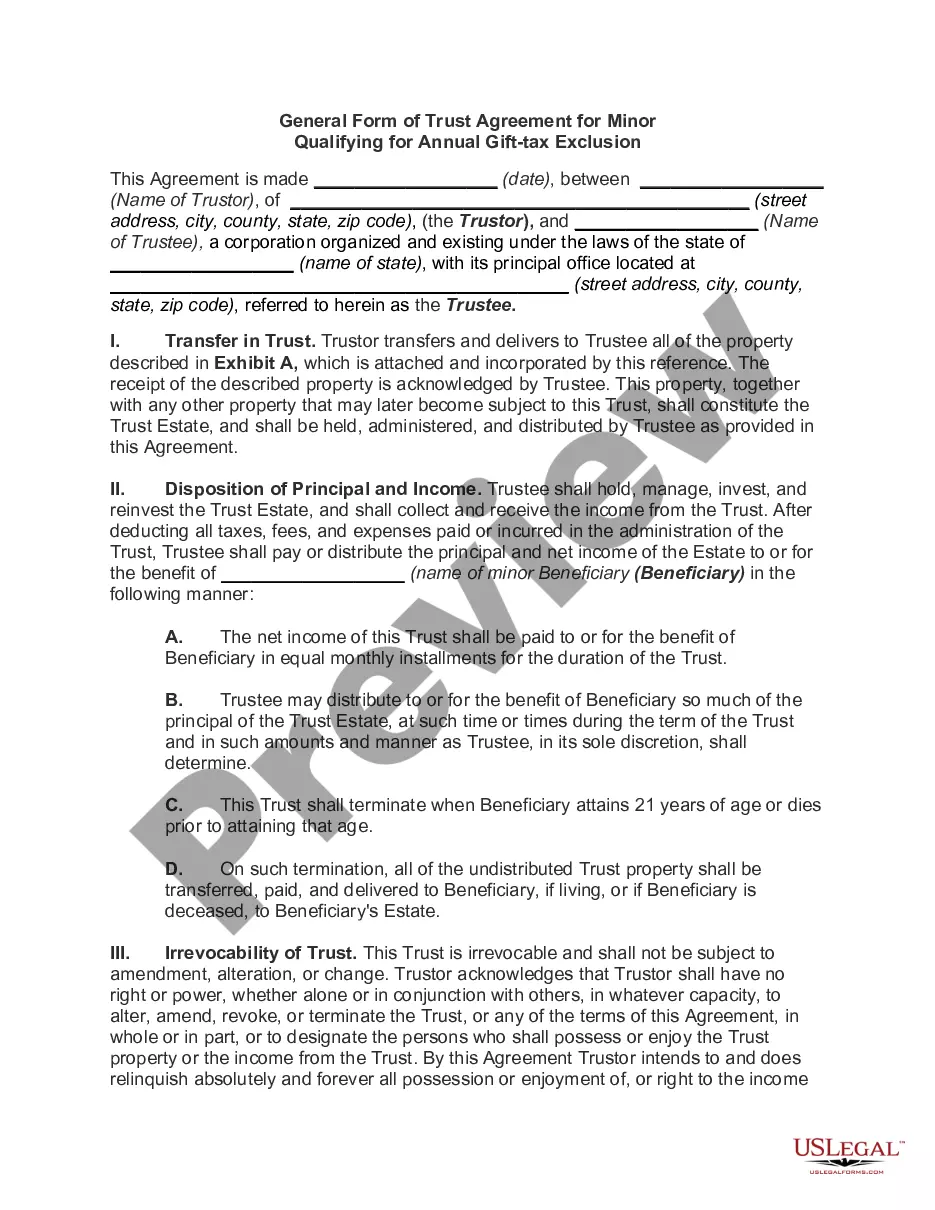
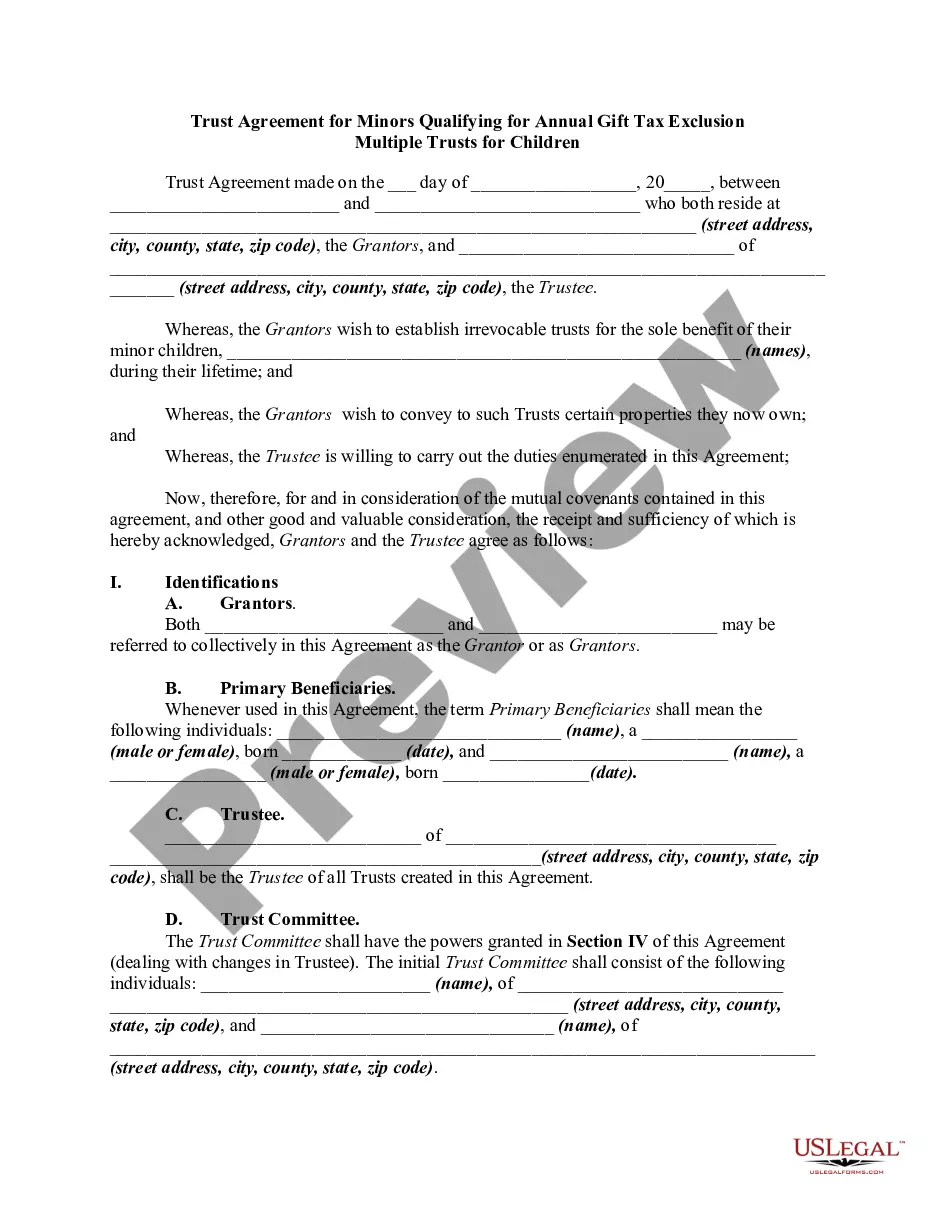
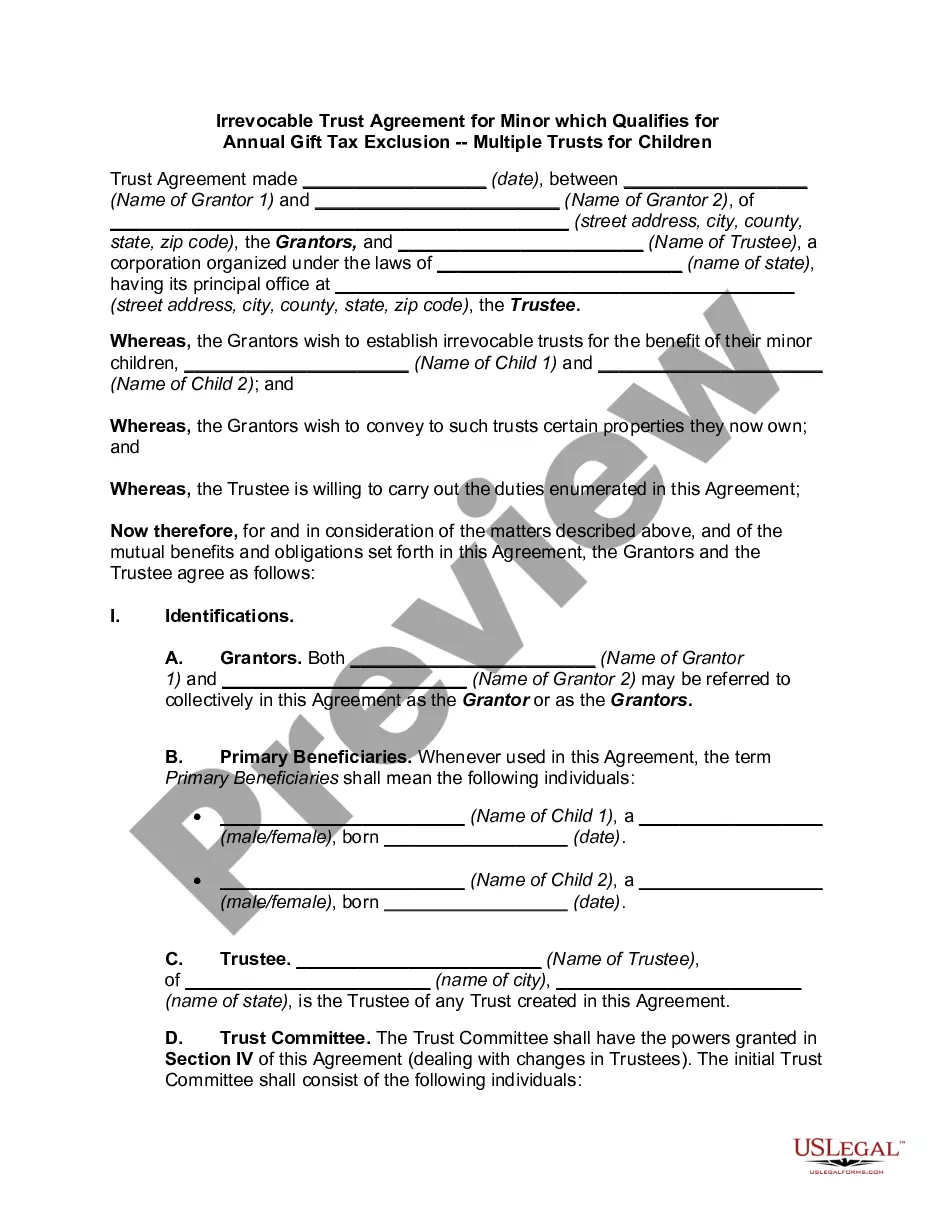
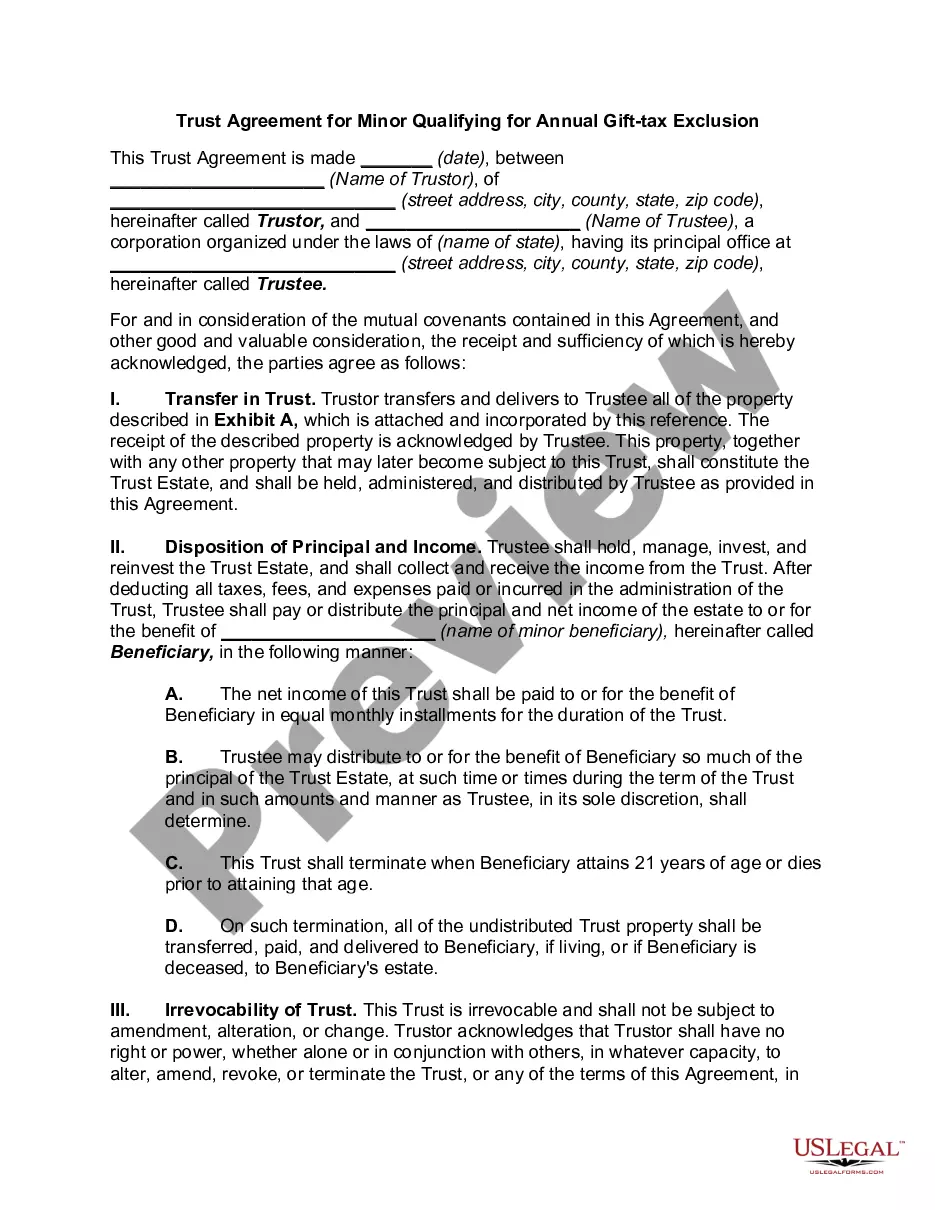
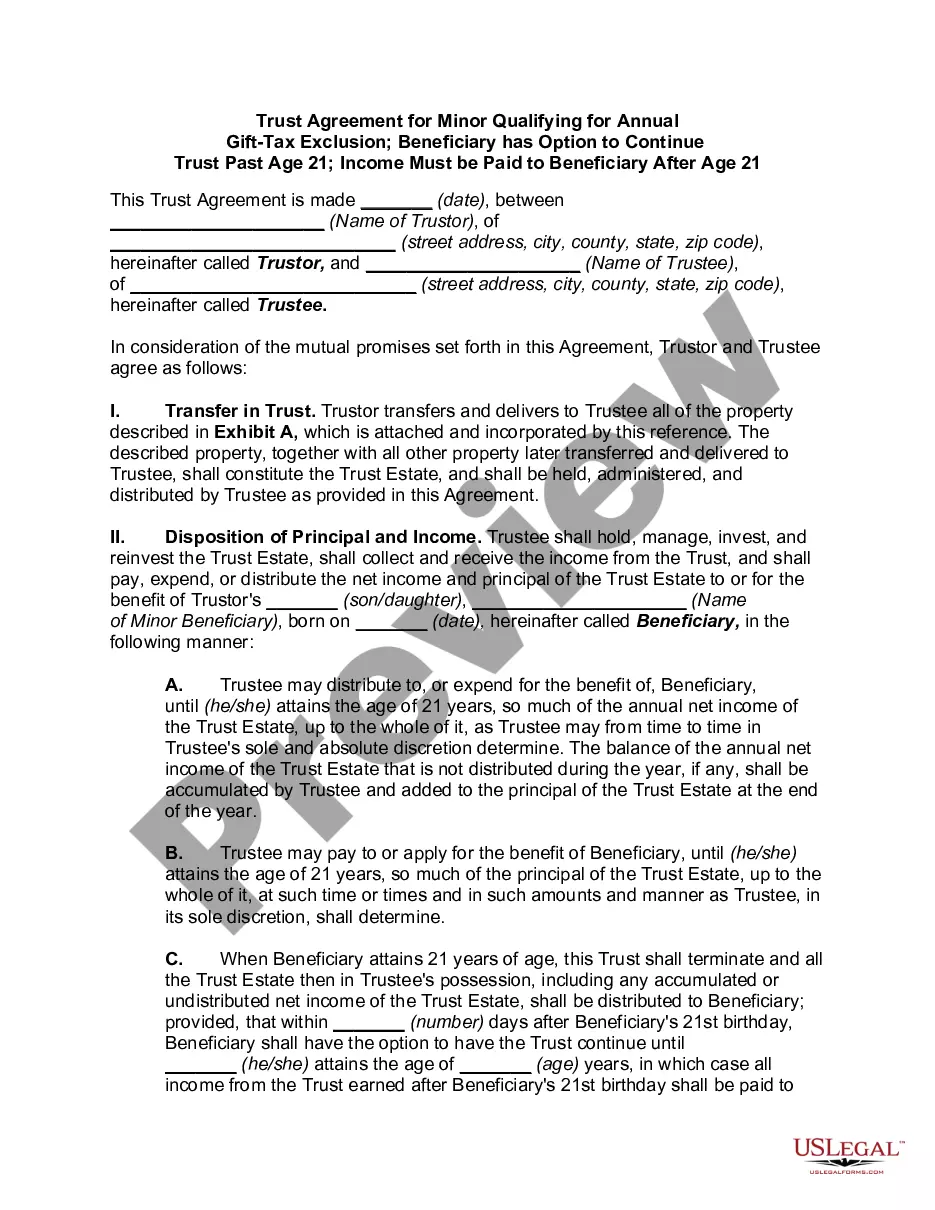
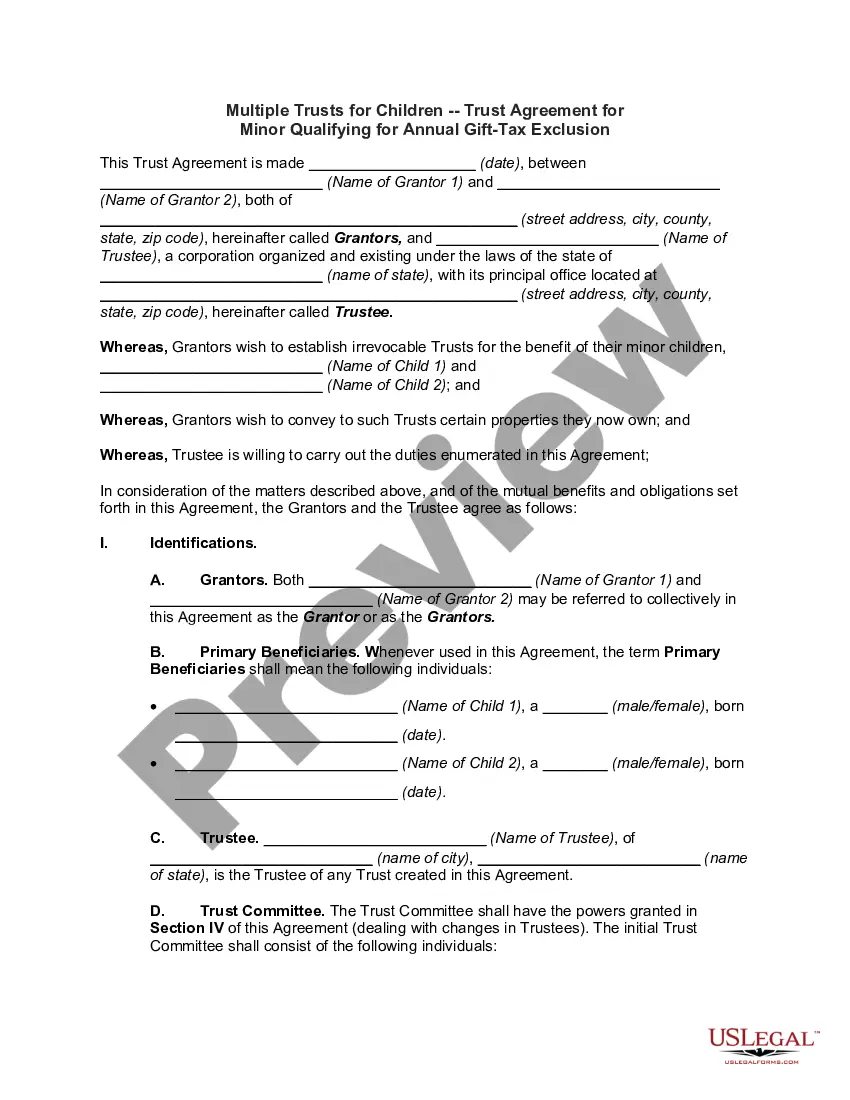
The General Form of Trust Agreement for Minor Qualifying for Annual Gift Tax Exclusion is a legal document that establishes a trust specifically for the benefit of a minor. This form allows the trustor to set aside assets to be managed by a trustee, ensuring that the minor can benefit from the assets without incurring gift taxes. Unlike other trust agreements, this form highlights provisions that qualify for annual gift tax exclusions, making it beneficial for those looking to transfer wealth effectively while minimizing tax liabilities.
Key parts of this document
- Transfer in Trust: Outlines the initial transfer of property to the trust.
- Disposition of Principal and Income: Specifies how the trust income and principal will be distributed to the minor beneficiary.
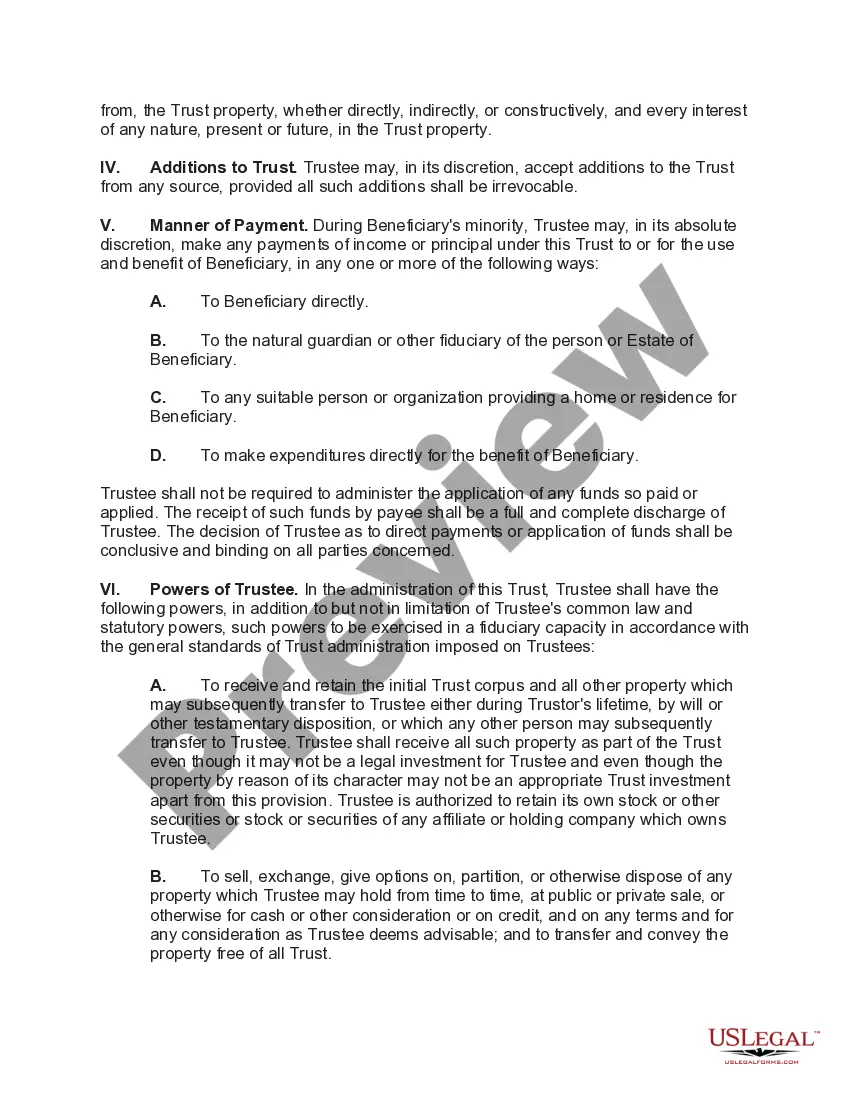
- Irrevocability of Trust: States that the trust cannot be altered or revoked once created.
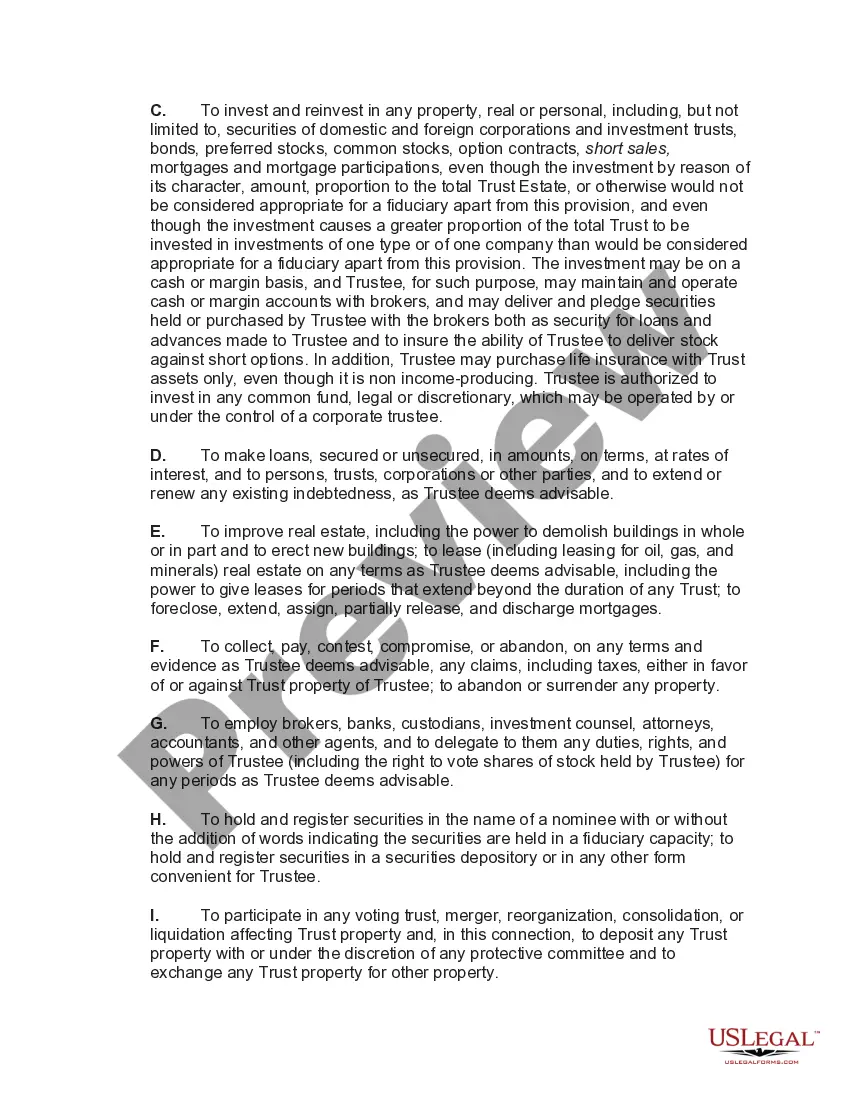
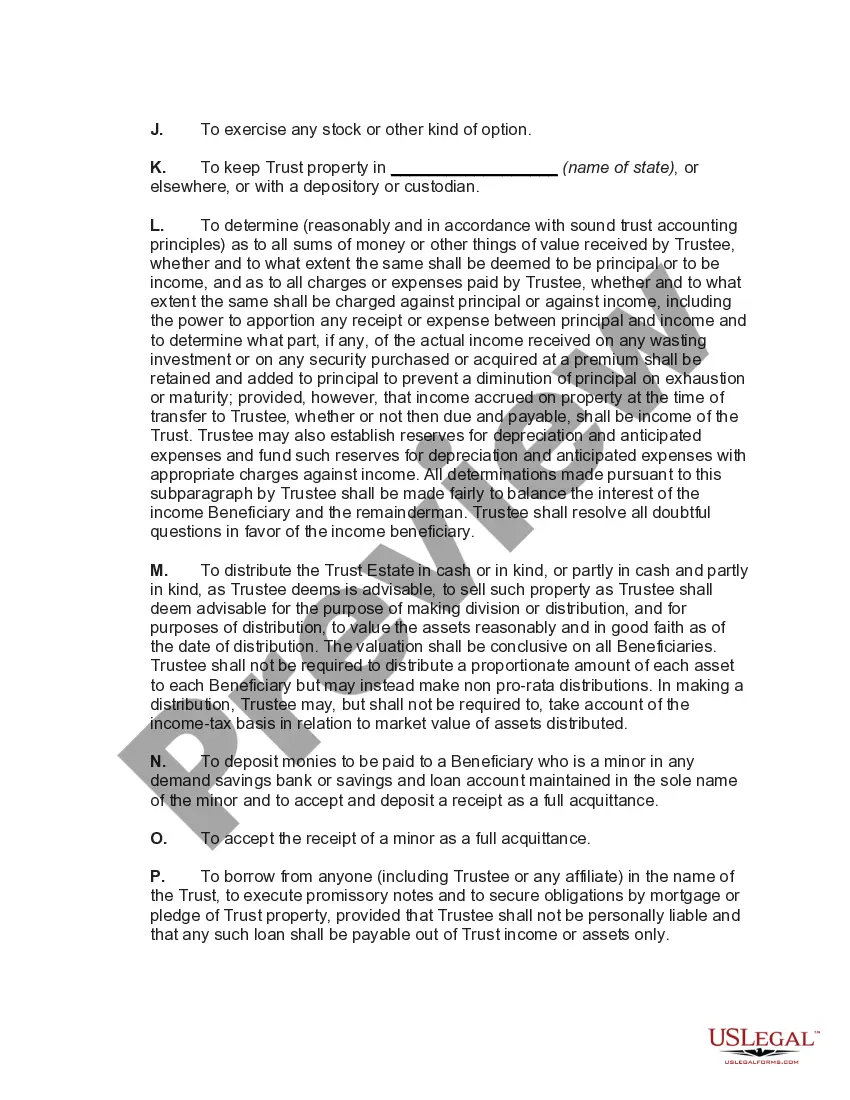
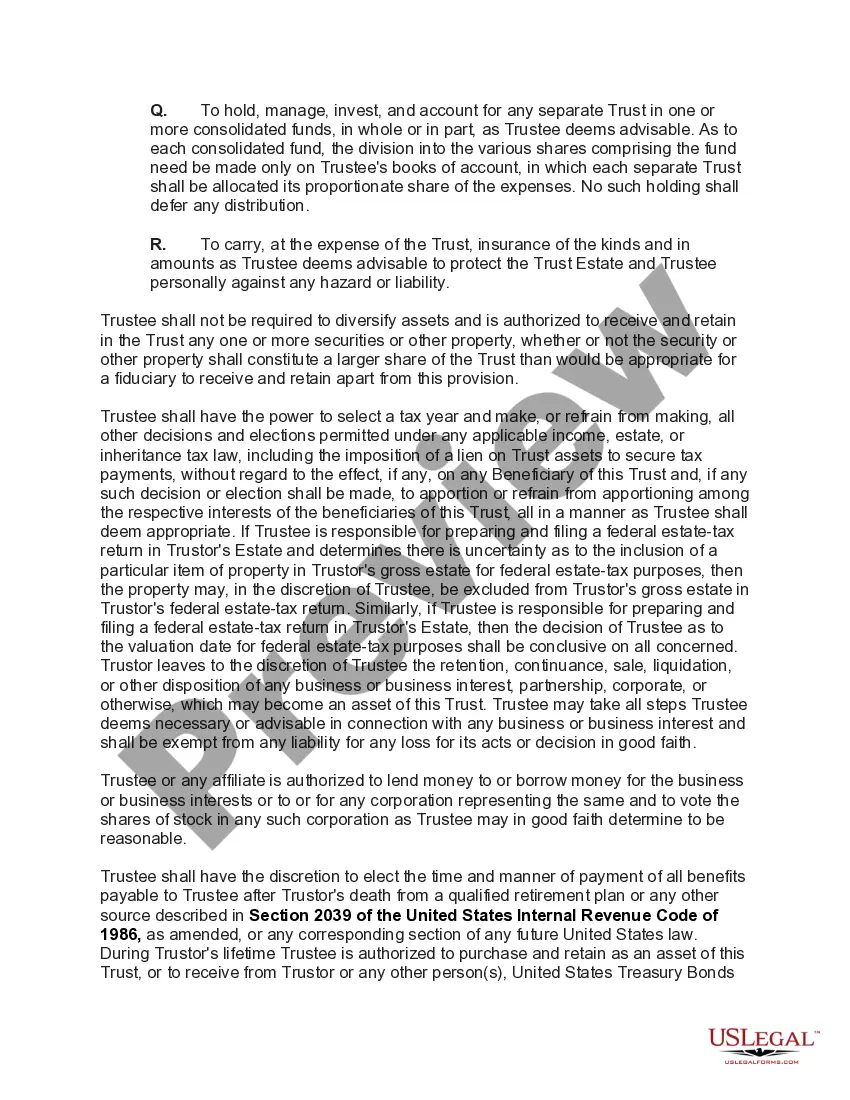
- Powers of Trustee: Defines the trustee's powers in managing the trust assets.
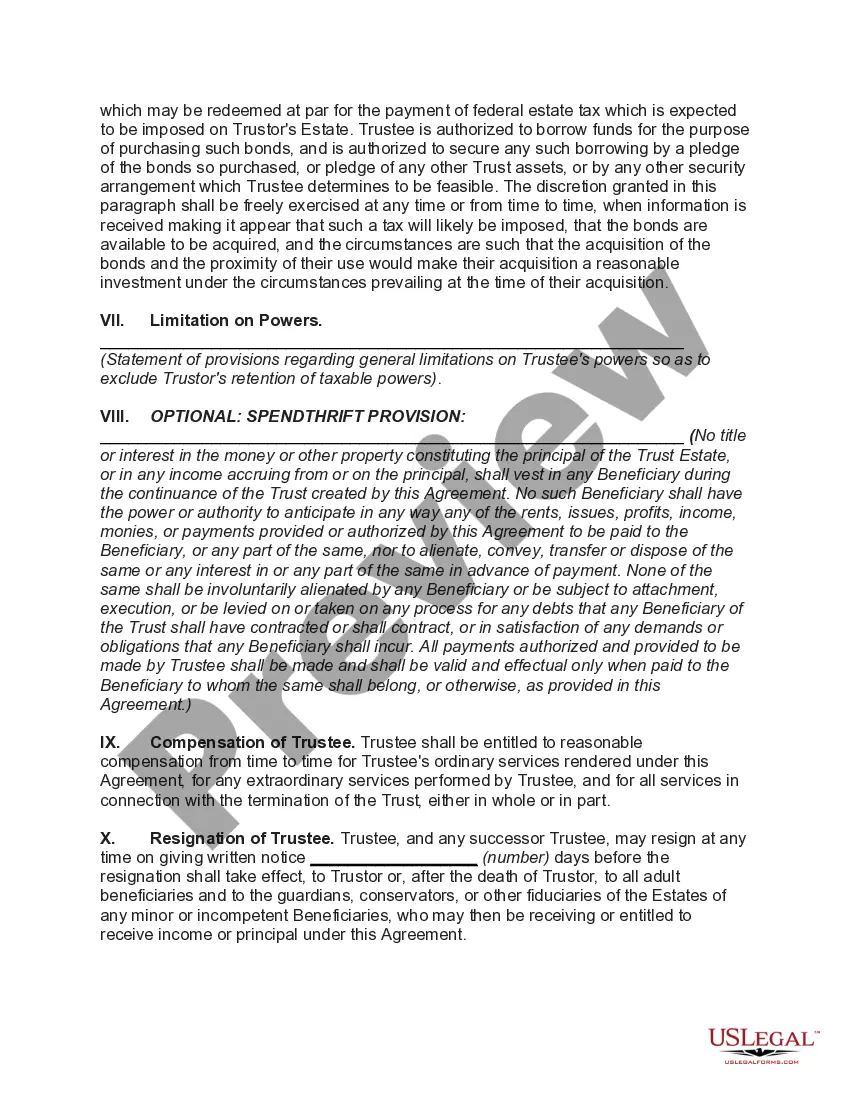
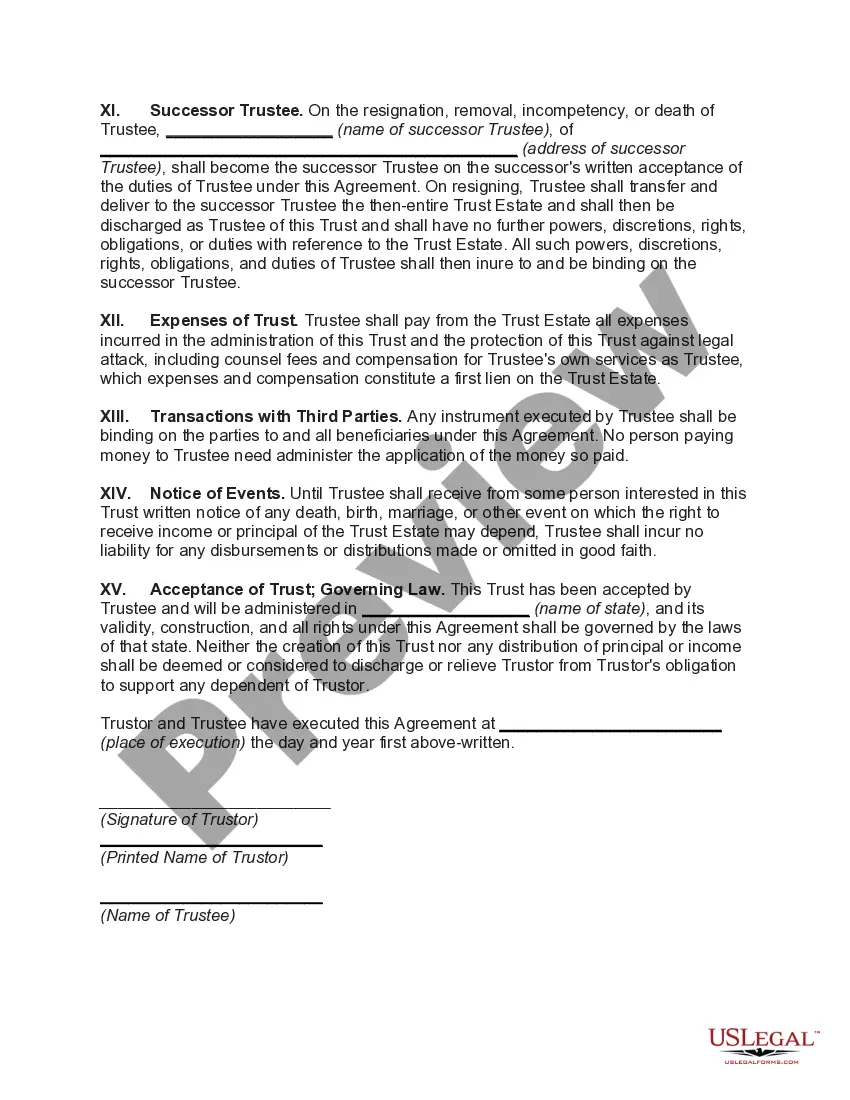
- Compensation of Trustee: Details how the trustee will be compensated for their services.
When to use this form
This form is useful in scenarios where a parent or guardian wishes to create a trust for a minor to ensure that assets are managed and preserved until the minor reaches maturity. It is especially advantageous when intending to gift money or property to a minor without incurring significant tax liabilities. Individuals may also use this trust as part of their estate planning strategy to efficiently pass down wealth to younger generations.
Who this form is for
- Parents or guardians wishing to establish a trust for a minor child.
- Individuals looking to take advantage of annual gift tax exclusions.
- Financial planners and advisors assisting clients with estate planning.
Completing this form step by step
- Identify the parties: Fill in the names and addresses of the trustor and trustee.
- Specify the property: Clearly detail the assets being transferred into the trust.
- Designate the beneficiary: Provide the name of the minor beneficiary who will benefit from the trust.
- Include provisions: Outline how the trust income and principal will be managed and distributed.
- Sign and date the agreement: Ensure all parties sign the document to make it legally binding.
Notarization guidance
Notarization is not commonly needed for this form. However, certain documents or local rules may make it necessary. Our notarization service, powered by Notarize, allows you to finalize it securely online anytime, day or night.
Get your form ready online
Our built-in tools help you complete, sign, share, and store your documents in one place.
Make edits, fill in missing information, and update formatting in US Legal Forms—just like you would in MS Word.
Download a copy, print it, send it by email, or mail it via USPS—whatever works best for your next step.
Sign and collect signatures with our SignNow integration. Send to multiple recipients, set reminders, and more. Go Premium to unlock E-Sign.
If this form requires notarization, complete it online through a secure video call—no need to meet a notary in person or wait for an appointment.
We protect your documents and personal data by following strict security and privacy standards.

Make edits, fill in missing information, and update formatting in US Legal Forms—just like you would in MS Word.

Download a copy, print it, send it by email, or mail it via USPS—whatever works best for your next step.

Sign and collect signatures with our SignNow integration. Send to multiple recipients, set reminders, and more. Go Premium to unlock E-Sign.

If this form requires notarization, complete it online through a secure video call—no need to meet a notary in person or wait for an appointment.

We protect your documents and personal data by following strict security and privacy standards.
Common mistakes
- Failing to include all necessary signatures from trustor and trustee.
- Not clearly identifying all property being placed into the trust.
- Overlooking local laws and requirements related to trust creation.
Why complete this form online
- Convenient access from anywhere, allowing users to create their trust at their own pace.
- Editability ensures that users can customize the document to meet their specific needs.
- Reliable templates drafted by licensed attorneys ensure compliance with legal standards.
Legal use & context
- The trust agreement is legally binding and establishes clear guidelines for managing and distributing trust assets.
- Ensures compliance with IRS regulations regarding gift tax exclusions.
- Provides a mechanism for safeguarding minors' assets until they are of legal age.
Summary of main points
- This trust agreement facilitates managing assets for a minor while offering tax benefits.
- The Trustor relinquishes control over the trust assets to provide financial security for the beneficiary.
- Properly designating a trustee and successor can prevent future management issues.
Looking for another form?


Form popularity
FAQ
The value of all gifts made during the year to a single beneficiary count towards the donor's $15,000 annual exclusion, no matter what their form. Thus, if you give your child a $10,000 automobile, you have used $10,000 of your annual exclusion and have $5,000 left to give that child within the annual exclusion amount.
Trusts for minors, or minor's trusts, are very specific types of trusts that are used to hold and distribute property or assets to minors. They typically provide instructions that the money or property assets will be held in trust until the minor reaches the age of majority.
4. Do gifts to a Gift Trust qualify for the annual exclusion?Gifts in trust do not qualify for the annual exclusion unless the trust either qualifies as a Minor's Trust under Internal Revenue Code Section 2503(c) or has certain temporary withdrawal powers called Crummey powers.
A Section 2503c trust is a type of minor's trust established for a beneficiary under the age of 21 which allows parents, grandparents, and other donors to make tax-free gifts to the trust up to the annual gift tax exclusion amount and the generation skipping transfer tax exclusion amount.
The annual exclusion applies to gifts to each donee. In other words, if you give each of your children $11,000 in 2002-2005, $12,000 in 2006-2008, $13,000 in 2009-2012 and $14,000 on or after January 1, 2013, the annual exclusion applies to each gift. The annual exclusion for 2014, 2015, 2016 and 2017 is $14,000.
Each year, a person can make transfers of $14,000 to the trust without any gift tax consequences. Moreover, the annual gift tax exclusion applies to each recipient, so multiple gifts in that amount can be made to as many children, grandchildren, or other individuals as the donor wishes.
In 2020 and 2021, you can give up to $15,000 to someone in a year and generally not have to deal with the IRS about it. If you give more than $15,000 in cash or assets (for example, stocks, land, a new car) in a year to any one person, you need to file a gift tax return.
In all cases, you and your spouse need to file individual gift tax returns. When making a gift to a trust, each trust beneficiary is considered a recipient of your gift and you can still gift each beneficiary $15,000 per year.