Sample Letter for Agreement to Compromise Debt
Overview of this form
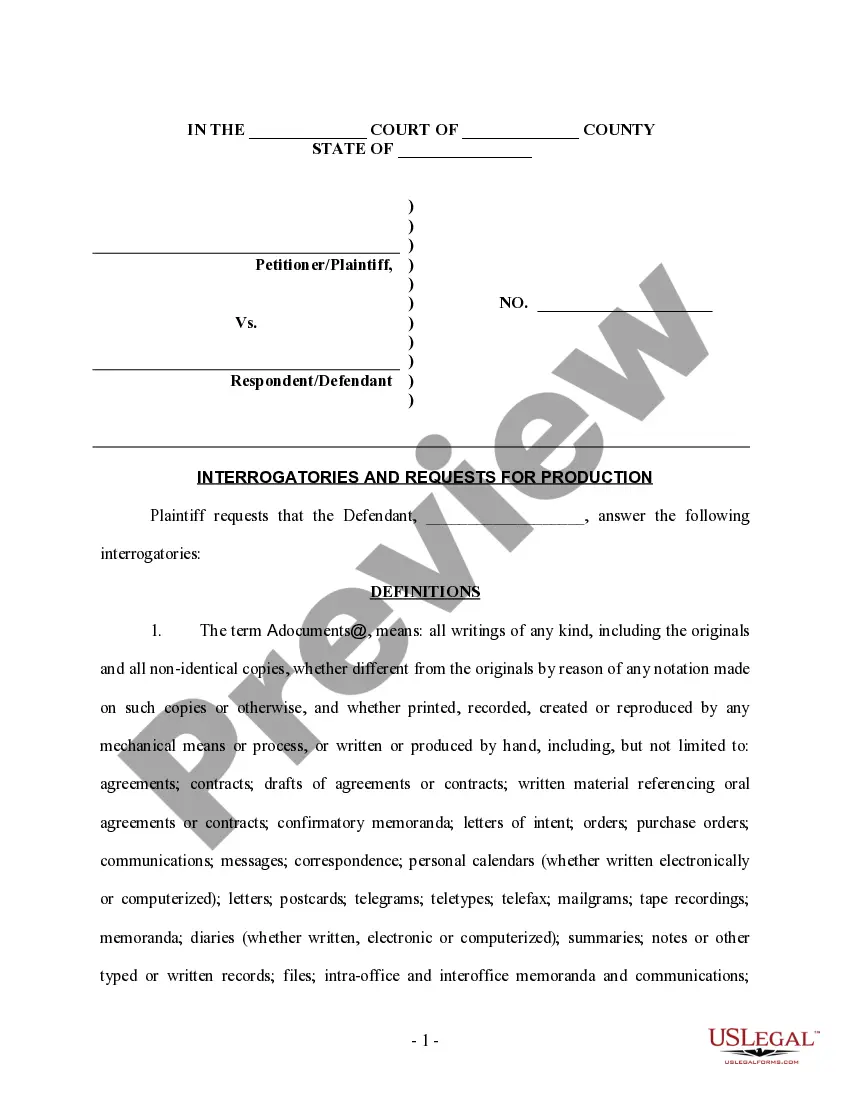
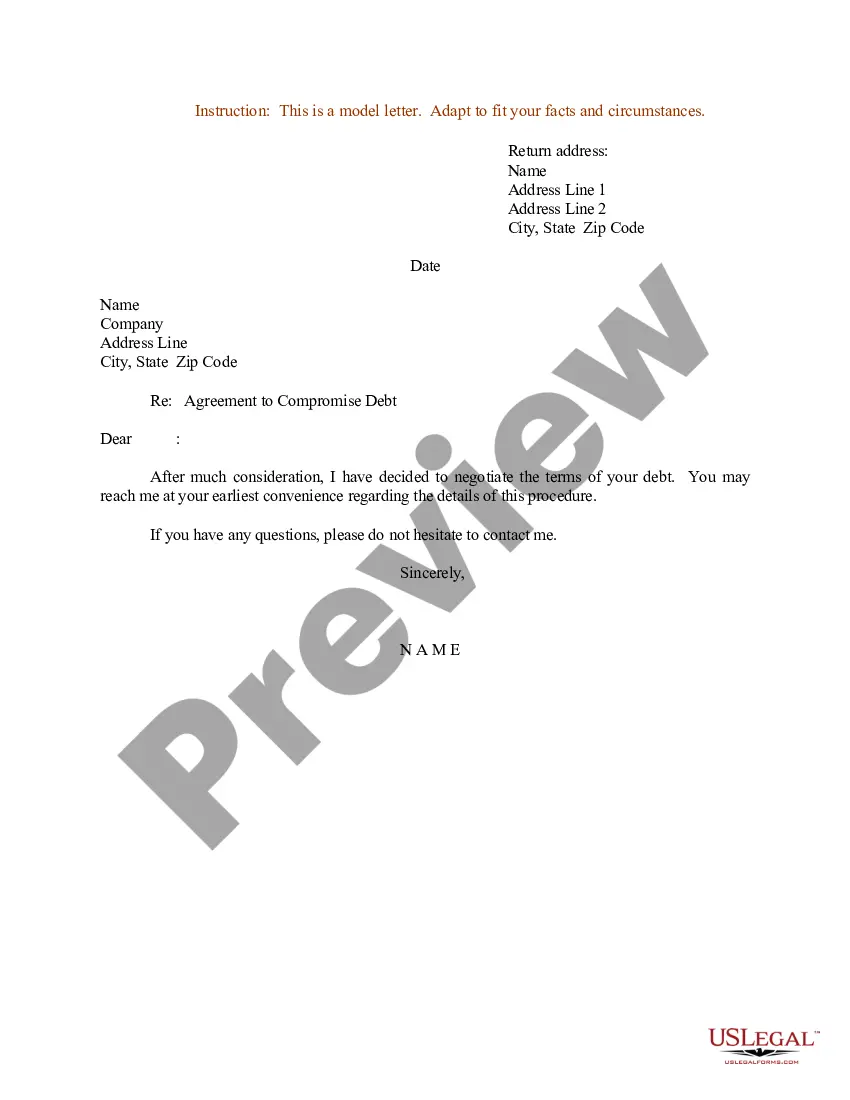
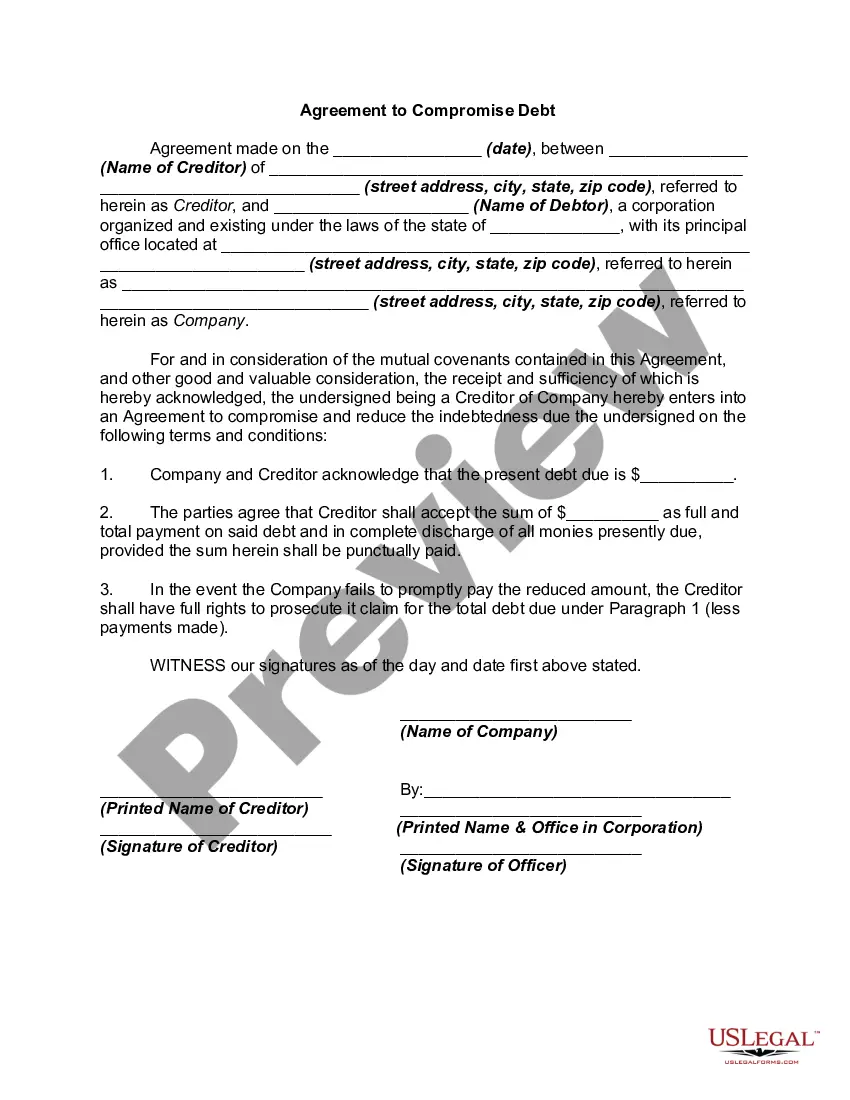
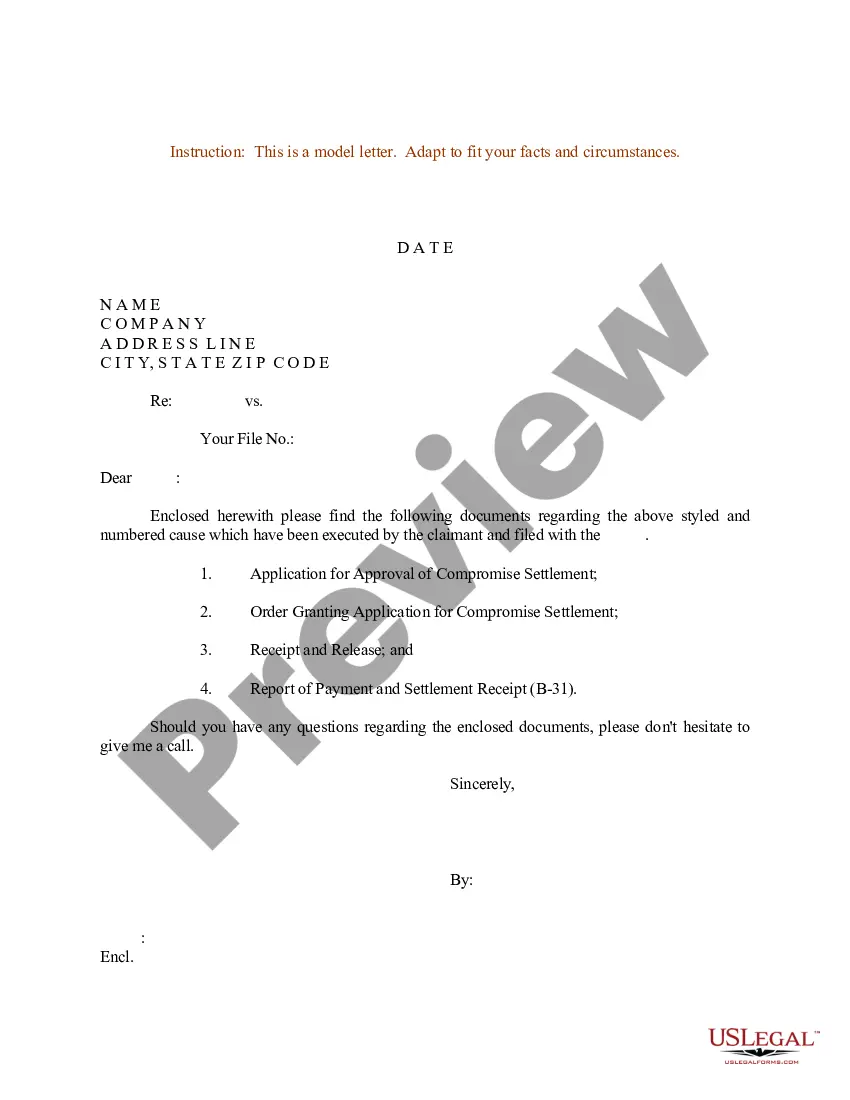
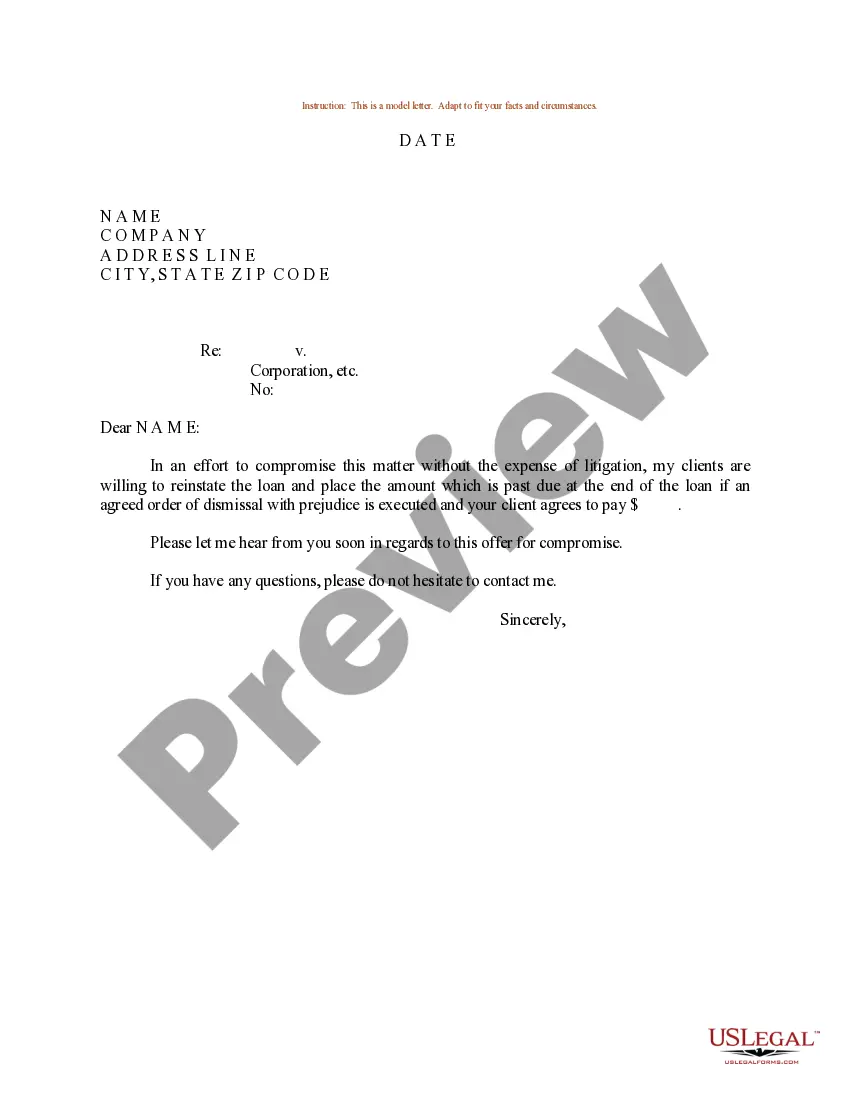
The Sample Letter for Agreement to Compromise Debt is a formal document drafted for individuals or entities looking to negotiate a settlement for outstanding debts. This letter serves as a proposal to the creditor, outlining the terms of the debt compromise. It helps facilitate communication and agreement between the debtor and creditor, making it distinct from other debt settlement forms by focusing specifically on written negotiations rather than just payment plans or proposals.
Form components explained
- Return address of the debtor, including name and contact details.
- Date of the letter.
- Recipient's information, including name, company, and address.
- Subject line indicating the purpose: Agreement to Compromise Debt.
- The body of the letter outlining the terms and proposed settlement.
When to use this document
This form is used when a debtor wishes to formally propose a compromise of their debt to a creditor. It is typically employed when the debtor is unable to meet the full terms of the original debt agreement and seeks a negotiated settlement for a lesser amount. Common situations include financial hardship, unemployment, or unexpected expenses that impact the ability to pay debts in full.
Intended users of this form
- Individuals facing financial difficulties who owe money to creditors.
- Business owners seeking to negotiate debts with suppliers or lenders.
- Anyone wanting to propose a formal agreement for a reduced debt settlement.
Completing this form step by step
- Start by entering your return address at the top of the letter.
- Include the date when you are drafting the letter.
- Add the recipient's name and address right below your information.
- Clearly state the purpose of the letter in the subject line.
- Detail the terms of your proposed settlement within the body of the letter.
Is notarization required?
This form does not typically require notarization unless specified by local law. However, it's always wise to check state-specific requirements regarding debt agreements, as certain situations may necessitate additional verification or notarization for legal effectiveness.
Get your form ready online
Our built-in tools help you complete, sign, share, and store your documents in one place.
Make edits, fill in missing information, and update formatting in US Legal Forms—just like you would in MS Word.
Download a copy, print it, send it by email, or mail it via USPS—whatever works best for your next step.
Sign and collect signatures with our SignNow integration. Send to multiple recipients, set reminders, and more. Go Premium to unlock E-Sign.
If this form requires notarization, complete it online through a secure video call—no need to meet a notary in person or wait for an appointment.
We protect your documents and personal data by following strict security and privacy standards.

Make edits, fill in missing information, and update formatting in US Legal Forms—just like you would in MS Word.

Download a copy, print it, send it by email, or mail it via USPS—whatever works best for your next step.

Sign and collect signatures with our SignNow integration. Send to multiple recipients, set reminders, and more. Go Premium to unlock E-Sign.

If this form requires notarization, complete it online through a secure video call—no need to meet a notary in person or wait for an appointment.

We protect your documents and personal data by following strict security and privacy standards.
Mistakes to watch out for
- Failing to provide complete contact information for both parties.
- Not clearly stating the offer and terms of the compromise.
- Ignoring to proofread for errors before sending the letter.
- Using overly aggressive language that may alienate the creditor.
Advantages of online completion
- Easy access to a legal document template that can be downloaded and edited.
- The form is drafted by licensed attorneys, ensuring it is legally sound.
- Editable format allows for personalization to meet individual needs.
- Convenience of completing and storing documents digitally.
Legal use & context
- This letter serves as a formal communication to creditors regarding a debt compromise.
- While not required by law, it provides a record of your intention to negotiate, which may be useful in case of disputes.
- The terms agreed upon should be documented to protect both parties' interests.
Main things to remember
- The Sample Letter for Agreement to Compromise Debt is essential for negotiating with creditors.
- Clearly state your proposed terms to initiate constructive dialogue.
- This form is adaptable to various state regulations, making it a versatile choice for debt negotiation.
Looking for another form?
Form popularity
FAQ
I am responding to your contact about a debt you are attempting to collect. You contacted me by phone/mail, on date. You identified the debt as any information they gave you about the debt. Please stop all communication with me and with this address about this debt.
Tips To Write A Debt Compromise Letter Keep it precise with all relevant information underlined. Provide Evidence: Make sure you attach a photocopy of documents related to the matter. In your letter, highlight the list of copies you have attached to it. Make sure these documents are self-attested.
Offer a specific dollar amount that is roughly 30% of your outstanding account balance. The lender will probably counter with a higher percentage or dollar amount. If anything above 50% is suggested, consider trying to settle with a different creditor or simply put the money in savings to help pay future monthly bills.
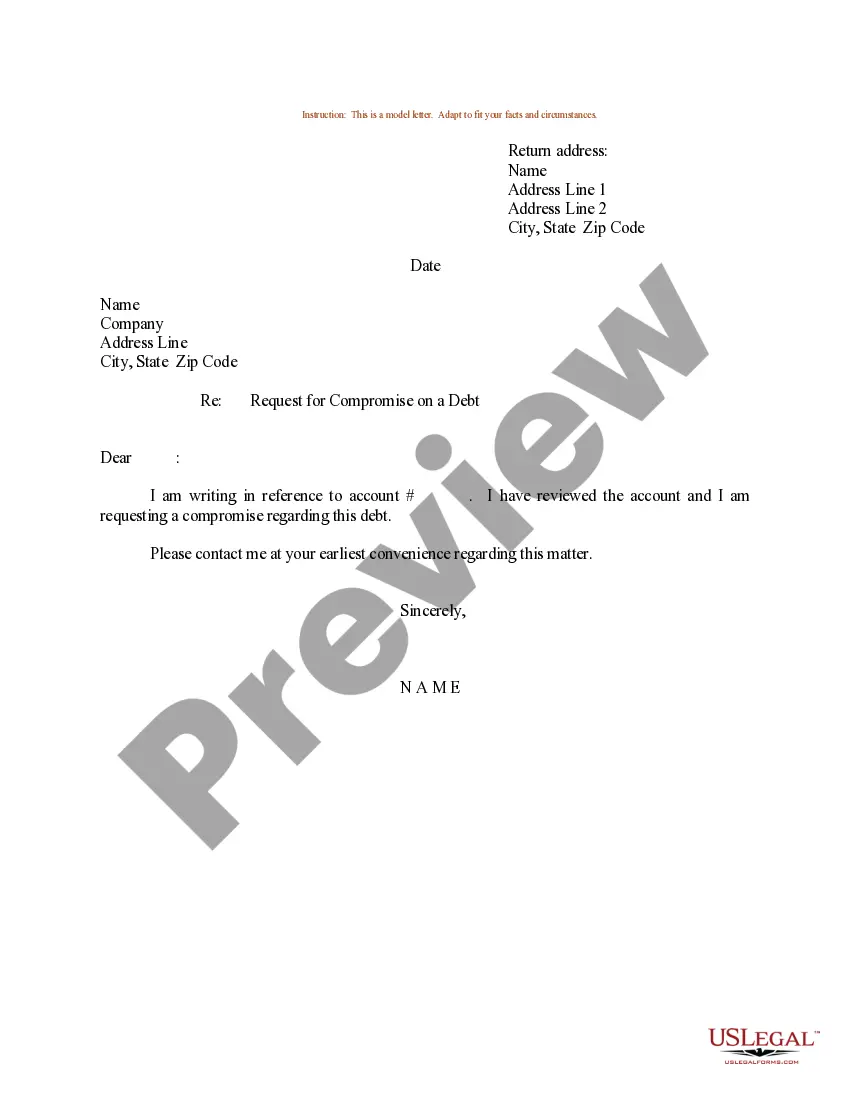
The creditor and/or debt collectors name. The date the letter was drafted. Your name. Your account number.
A study by the Center for Responsible Lending showed that on average debts are settled at 48% of the outstanding balance. But that balance increases 20 percent due to late fees and other charges the creditor might impose during negotiation.
Writing the Agreement First, give the document a title that describes the settlement. Next, write a paragraph that identifies all parties involved in the lawsuit and indicates their roles. This should also include their addresses and note that they have the authority and capacity to sign the agreement.
Original creditor and collection agent's company name. Date the letter was written. Your name. Your account number. Outstanding balance owed on the account (optional) Amount agreed to as settlement.
Write a debt settlement letter to your creditor. Explain your current situation and how much you can pay. Also, provide them with a clear description of what you expect in return, such as removal of missed payments or the account shown as paid in full on your report.
It depends on what you can afford, but you should offer equal amounts to each creditor as a full and final settlement. For example, if the lump sum you have is 75% of your total debt, you should offer each creditor 75% of the amount you owe them.