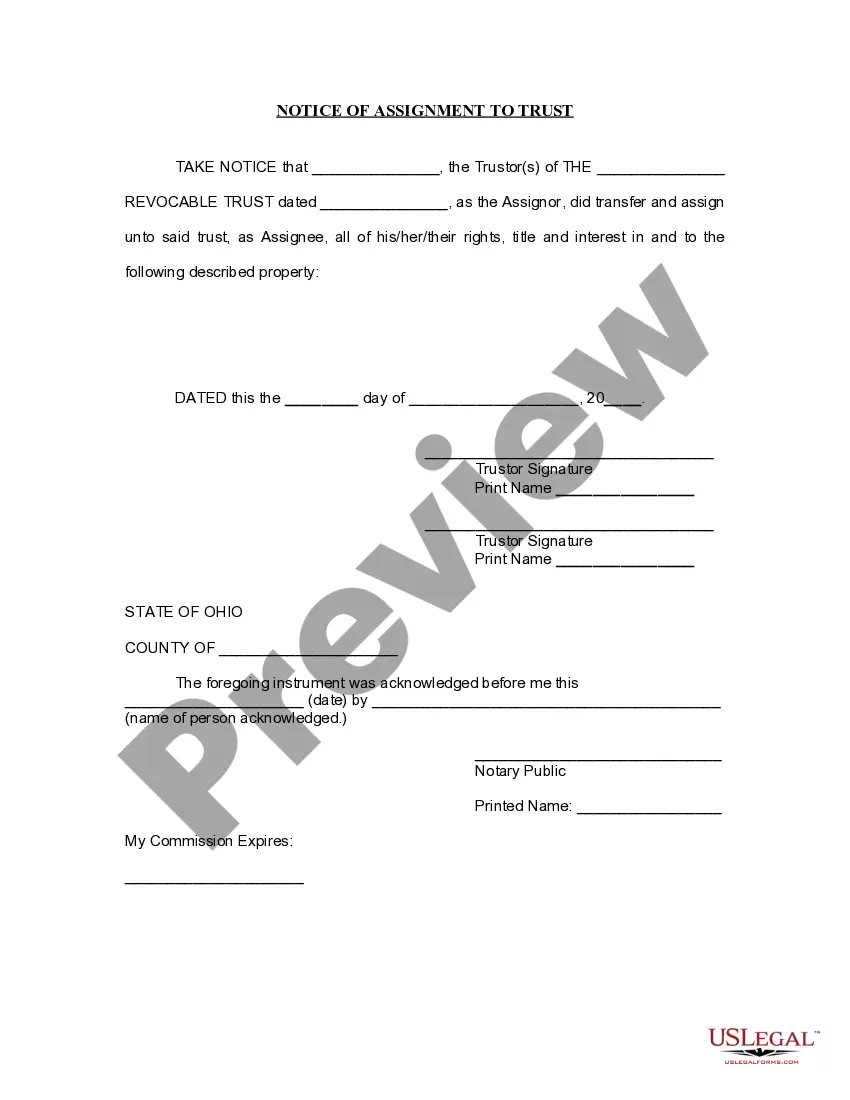
Memorandum of Option to Lease (For Radio Tower and Communications Equipment)
Description
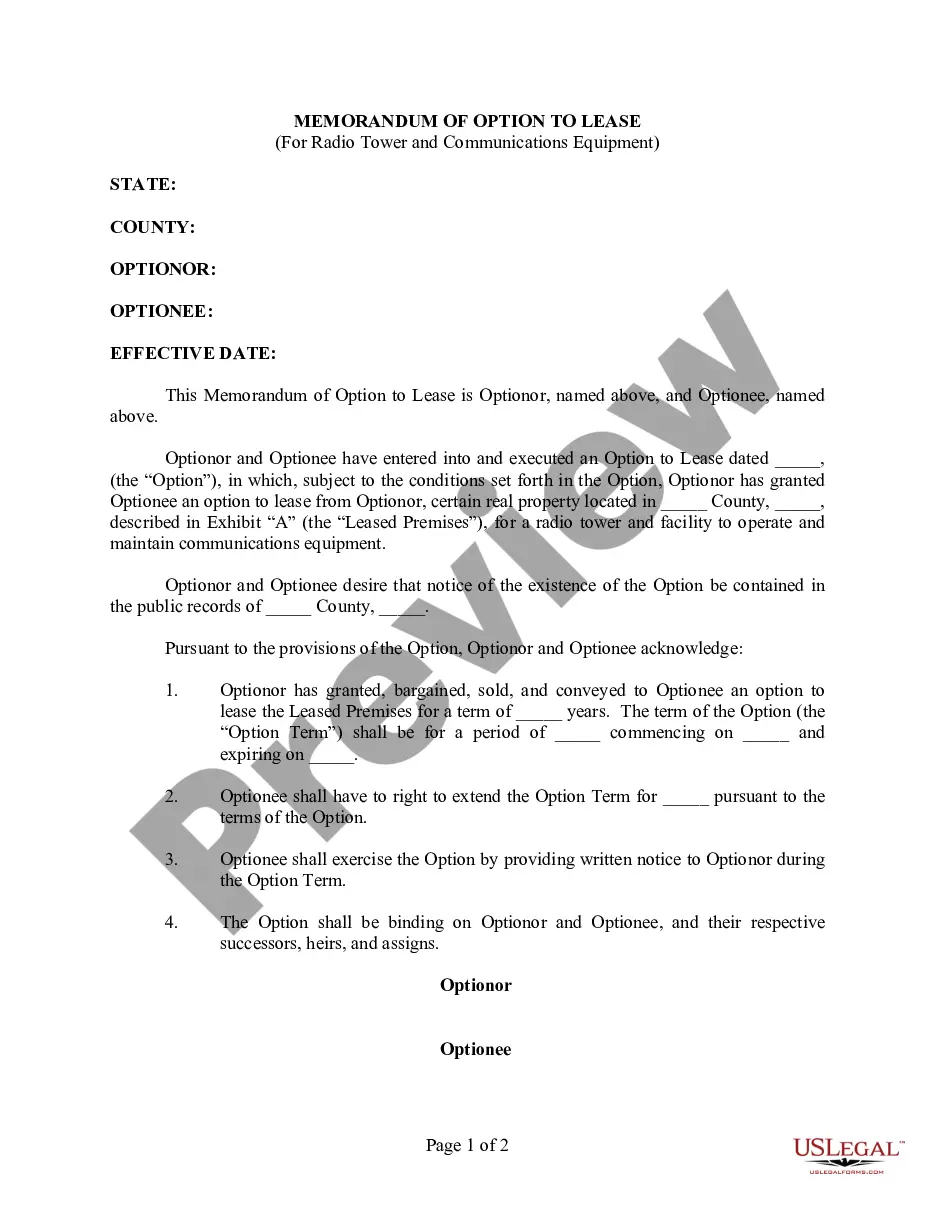
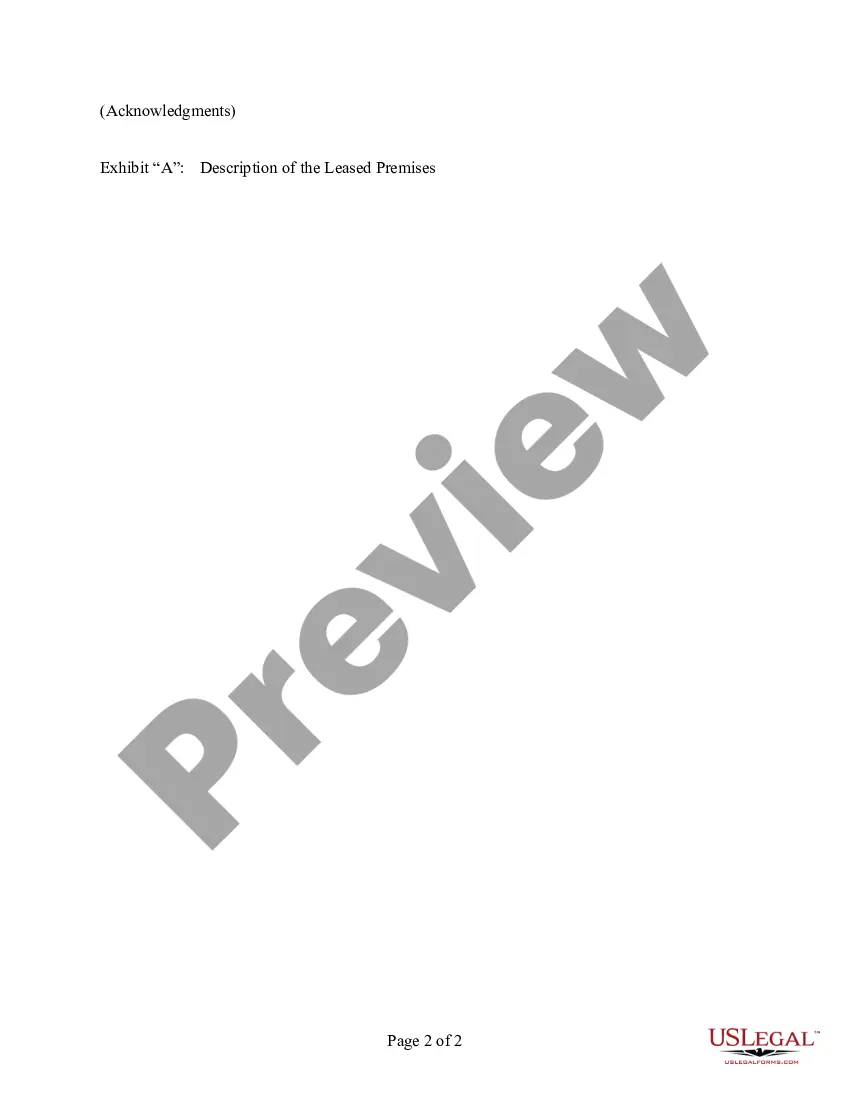
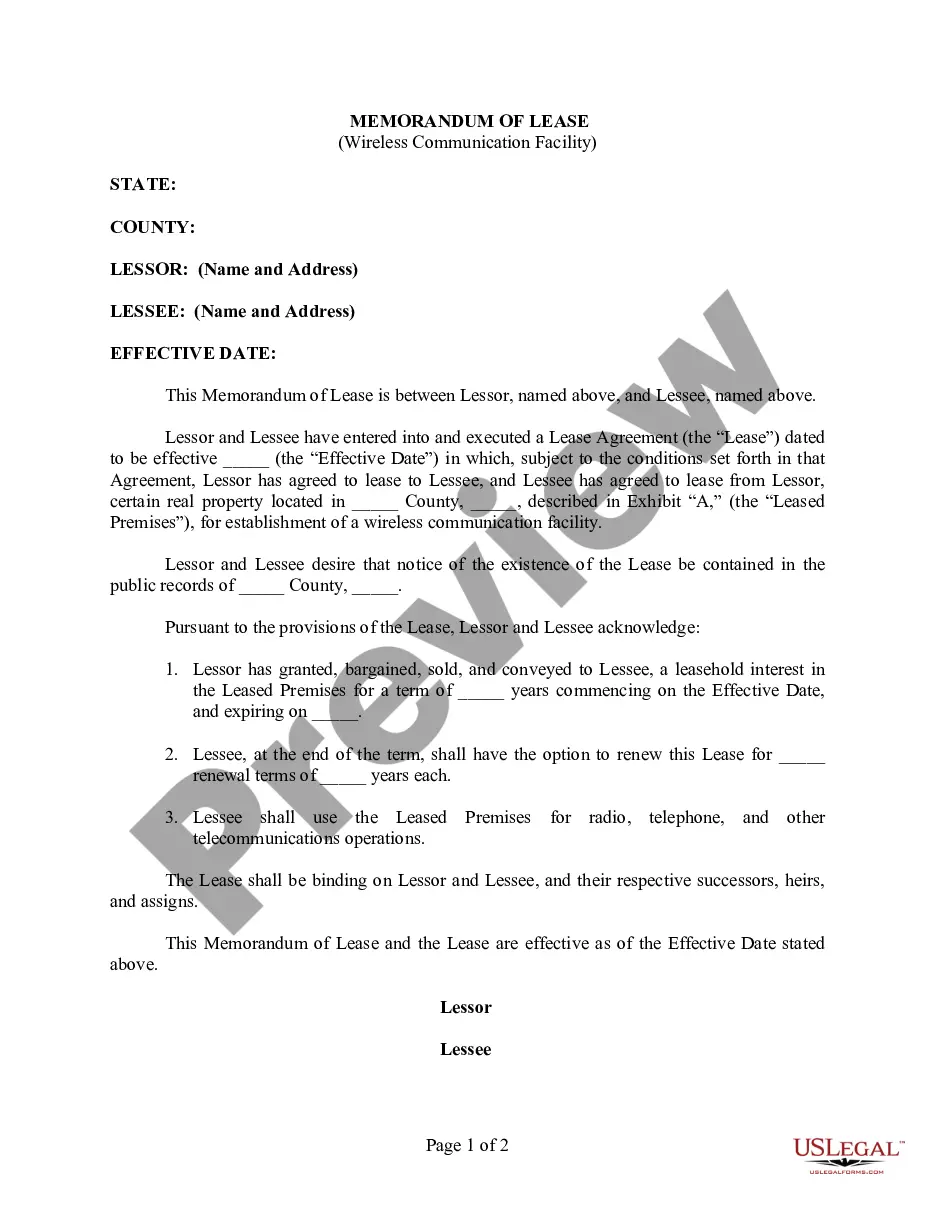
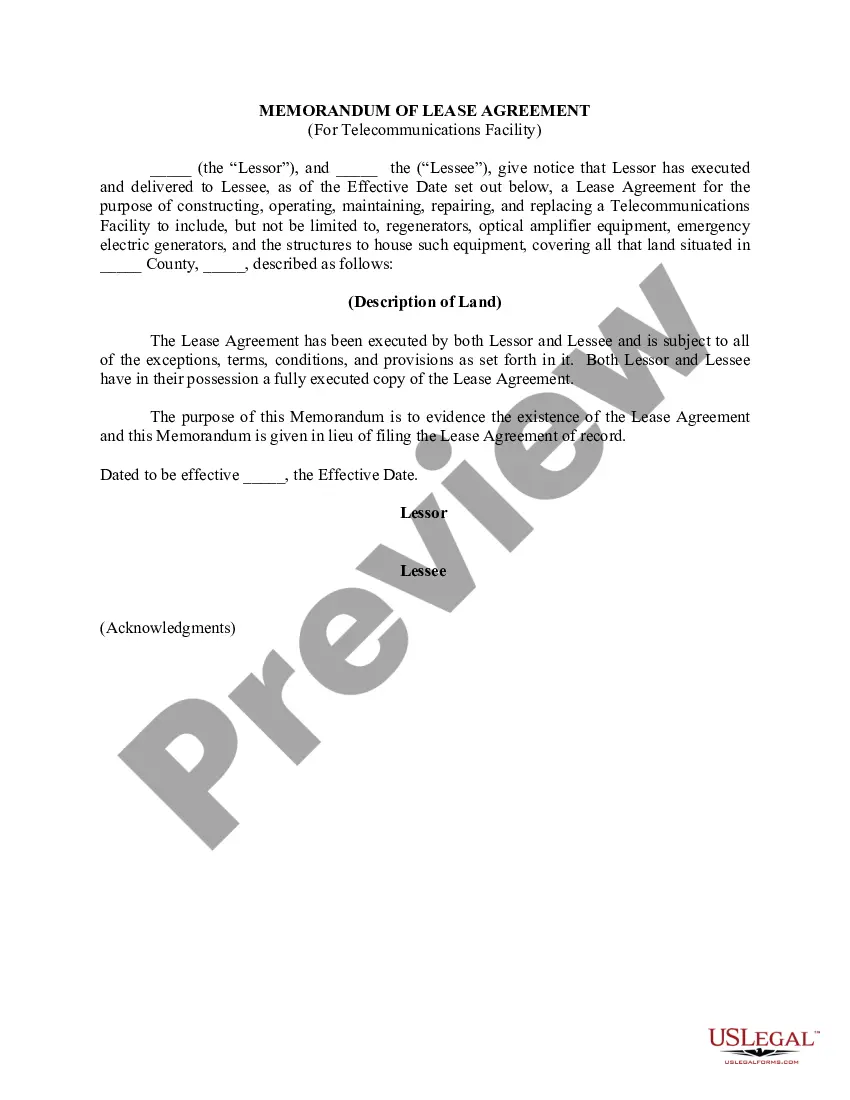
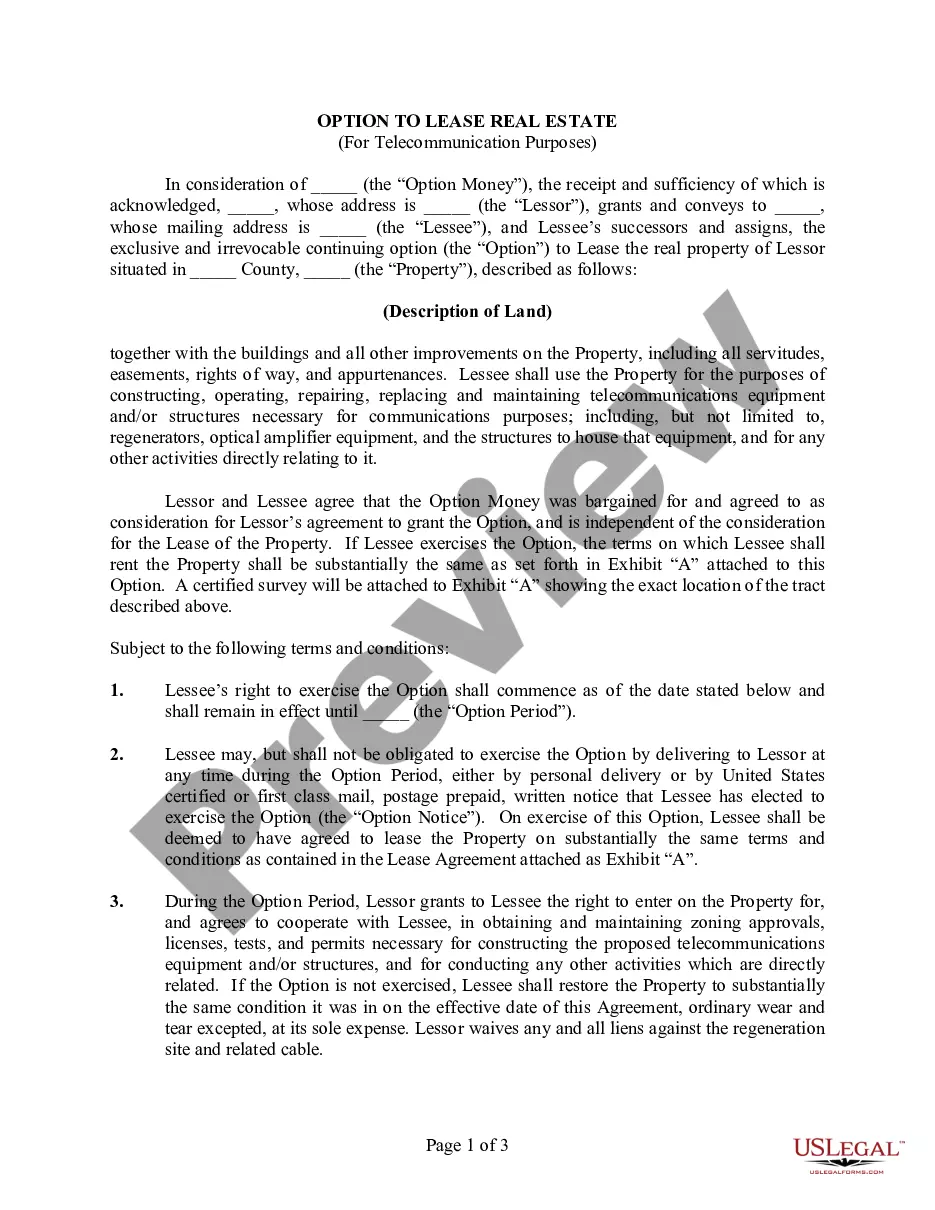
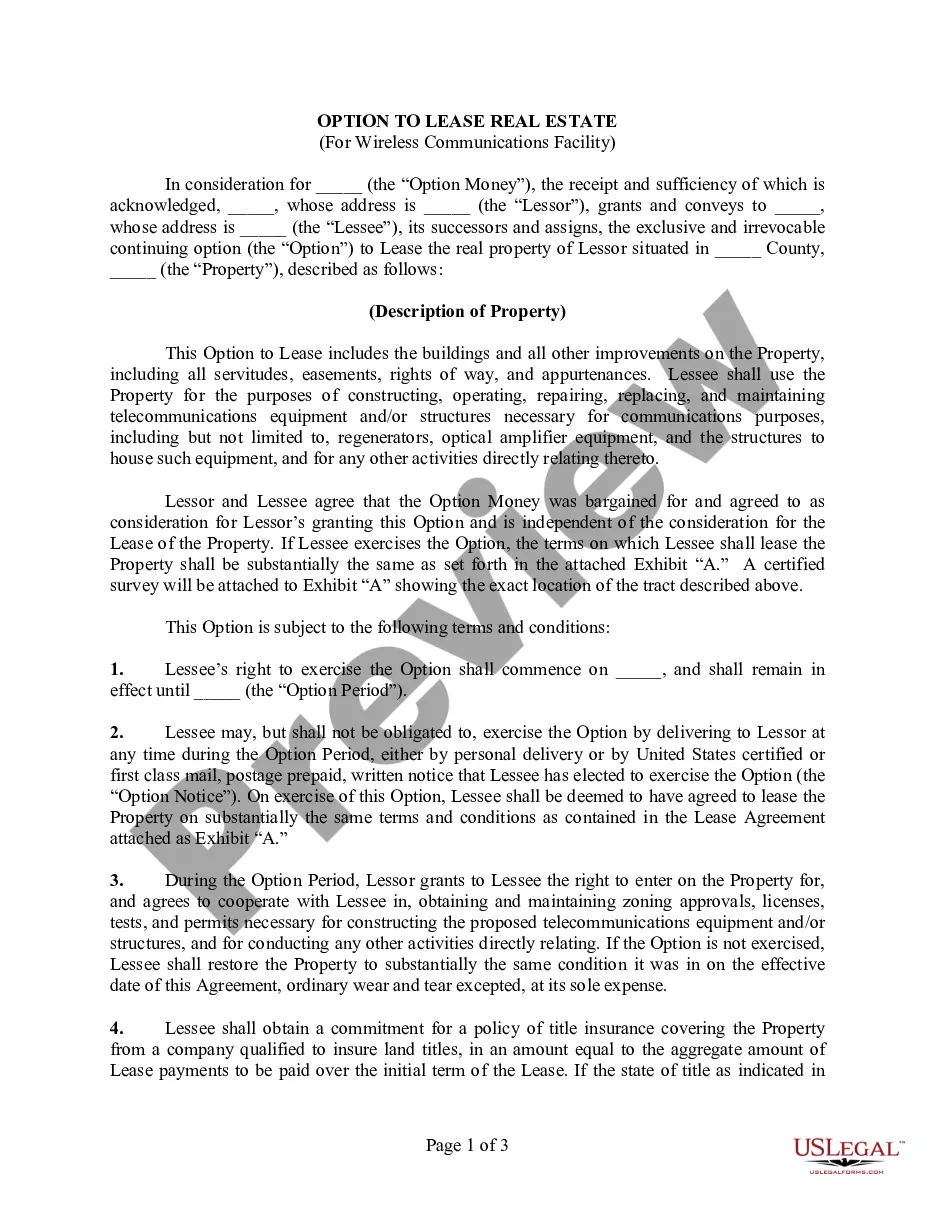

How to fill out Memorandum Of Option To Lease (For Radio Tower And Communications Equipment)?
When it comes to drafting a legal document, it is easier to delegate it to the professionals. Nevertheless, that doesn't mean you yourself cannot get a template to utilize. That doesn't mean you yourself can’t get a template to use, nevertheless. Download Memorandum of Option to Lease (For Radio Tower and Communications Equipment) from the US Legal Forms site. It offers numerous professionally drafted and lawyer-approved documents and templates.
For full access to 85,000 legal and tax forms, users just have to sign up and select a subscription. As soon as you are signed up with an account, log in, search for a specific document template, and save it to My Forms or download it to your device.
To make things easier, we’ve incorporated an 8-step how-to guide for finding and downloading Memorandum of Option to Lease (For Radio Tower and Communications Equipment) fast:
- Make confident the document meets all the necessary state requirements.
- If available preview it and read the description before buying it.
- Press Buy Now.
- Select the suitable subscription to suit your needs.
- Make your account.
- Pay via PayPal or by debit/credit card.
- Select a preferred format if a number of options are available (e.g., PDF or Word).
- Download the file.
After the Memorandum of Option to Lease (For Radio Tower and Communications Equipment) is downloaded you are able to complete, print out and sign it in any editor or by hand. Get professionally drafted state-relevant documents in a matter of seconds in a preferable format with US Legal Forms!
Form popularity
FAQ
The Letter of Intent should include the names of the parties negotiating, such as the name of the Tenant and the Property Owner/Landlord, and a list of industry standard list items. You should also include items that are important to your business when leasing commercial real estate.
Inspect the Property and Record Any Current Damages. Know What's Included in the Rent. Can You Make Adjustments and Customizations? Clearly Understand the Terms Within the Agreement and Anticipate Problems. Communicate with Your Landlord About Your Expectations.
Justify Why You Need Free Office Rent. Don't just ask for it for no reason. Build-Out Period. Base Rent Free OR Base Rent & Operating Expenses? Early Occupancy. Ask For More Free Rent Than You Need. Consider Adding More Term to The Lease. Offer to Spread The Free Rent Out Over a Period of Time.
Step 1: Write a Cover Letter. Step 2: Provide a Summary of the Proposal. Step 3: Specify the Operations of the Tenant. Step 4: Present the Cost Summary. Step 5: List the Terms of the Contract. Step 6: Mention the Benefits. >
Settle ahead of time on your budget, your must-haves, and your nice-to-haves. Get an agent or lawyer to negotiate for you. Do negotiate on more than one location at the same time. Don't pay asked base rent. Check the square footage yourself.
The Person Liable for the Lease. Your Business Structure. How Long You Have Been in Business. The Nature of Your Business. Contact Information. Your Proposed Terms (or, Counter Offer) The Length of the Lease. Condition of the Property.
What is a Lease? Why You Need an Ironclad Lease Agreement. Before You Write the Lease. Step 1: Title & Format Your Document. Step 2: Make a List of Lease Provisions. Step 3: Flesh Out Each Clause. Step 4: Check Local Laws. Step 5: Create a Signature Section.
The Introduction. The beginning of the lease agreement should contain the name of the landlord and tenant, as well as a statement of the agreement into which they are entering. Rent. Deposit. Taxes. Property Insurance. Utilities and Amenities. Remodeling and Improvements. Repairs and Maintenance.
Names of all tenants. Limits on occupancy. Term of the tenancy. Rent. Deposits and fees. Repairs and maintenance. Entry to rental property. Restrictions on tenant illegal activity.