Certificate of Trust for Testamentary Trust
Overview of this form
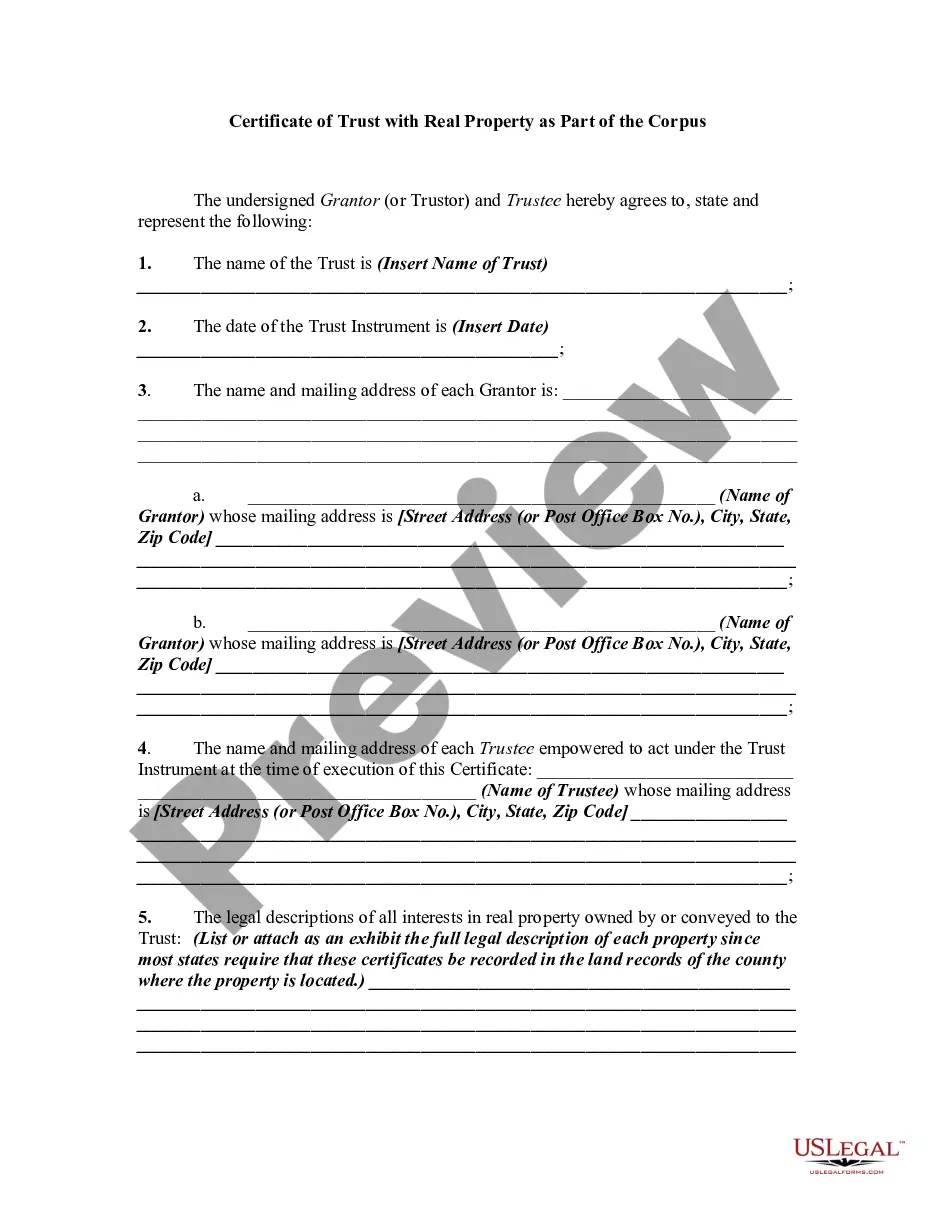
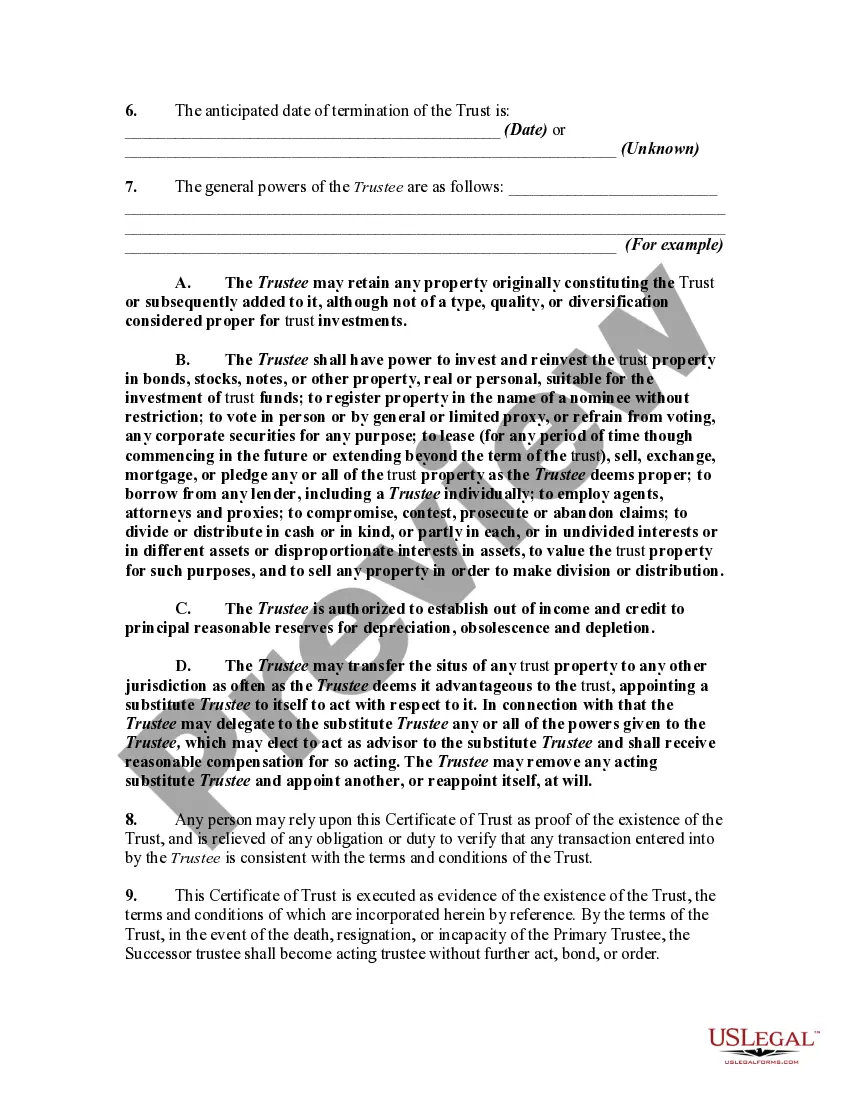
The Certificate of Trust for Testamentary Trust is a legal document that verifies the existence of a testamentary trust. It provides essential information about the trust, including the powers granted to the trustee and the identification of any successor trustees. This certificate serves as a simplified version of the trust, distinguishing it from the complete trust document while offering proof to third parties of the trust's validity and the authority of its trustee.
Main sections of this form
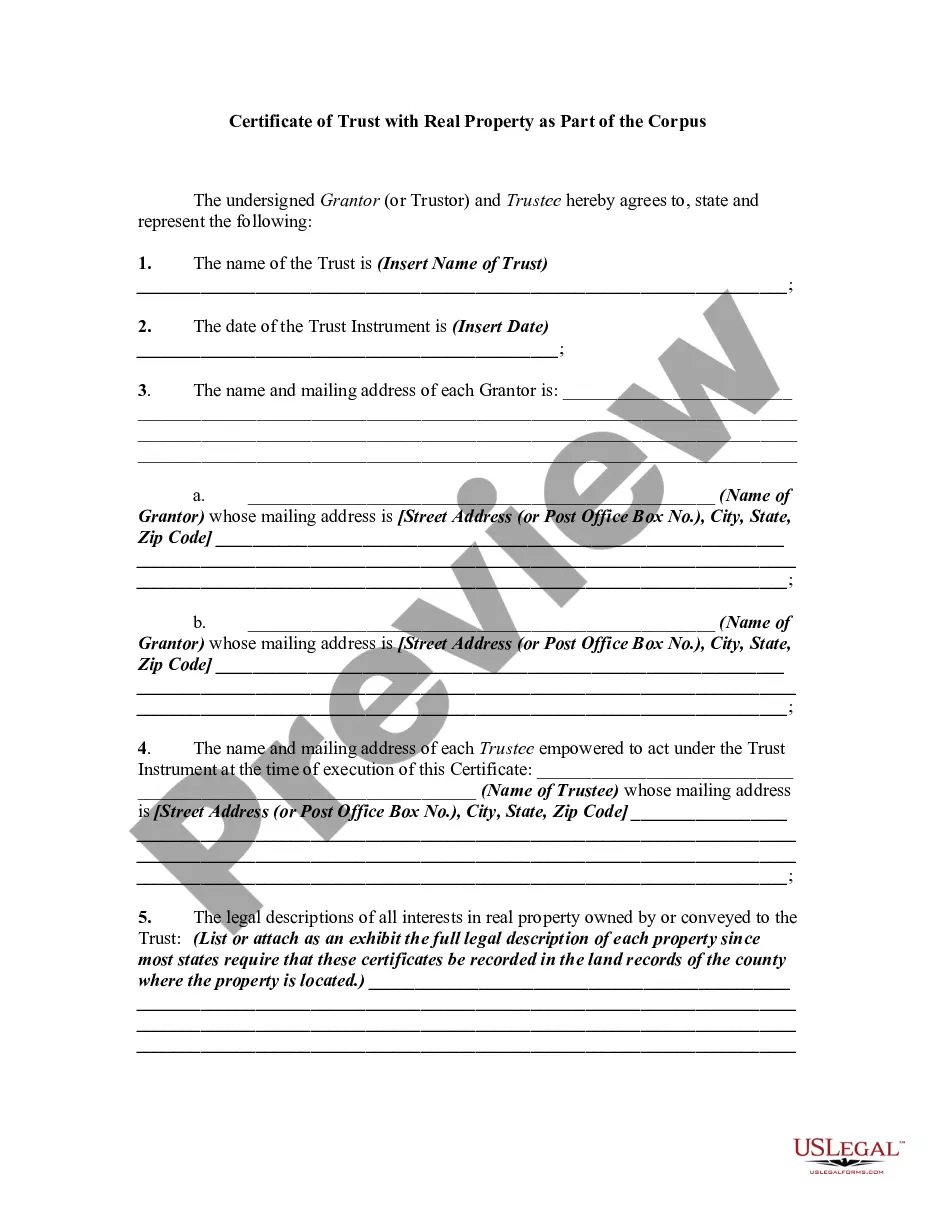
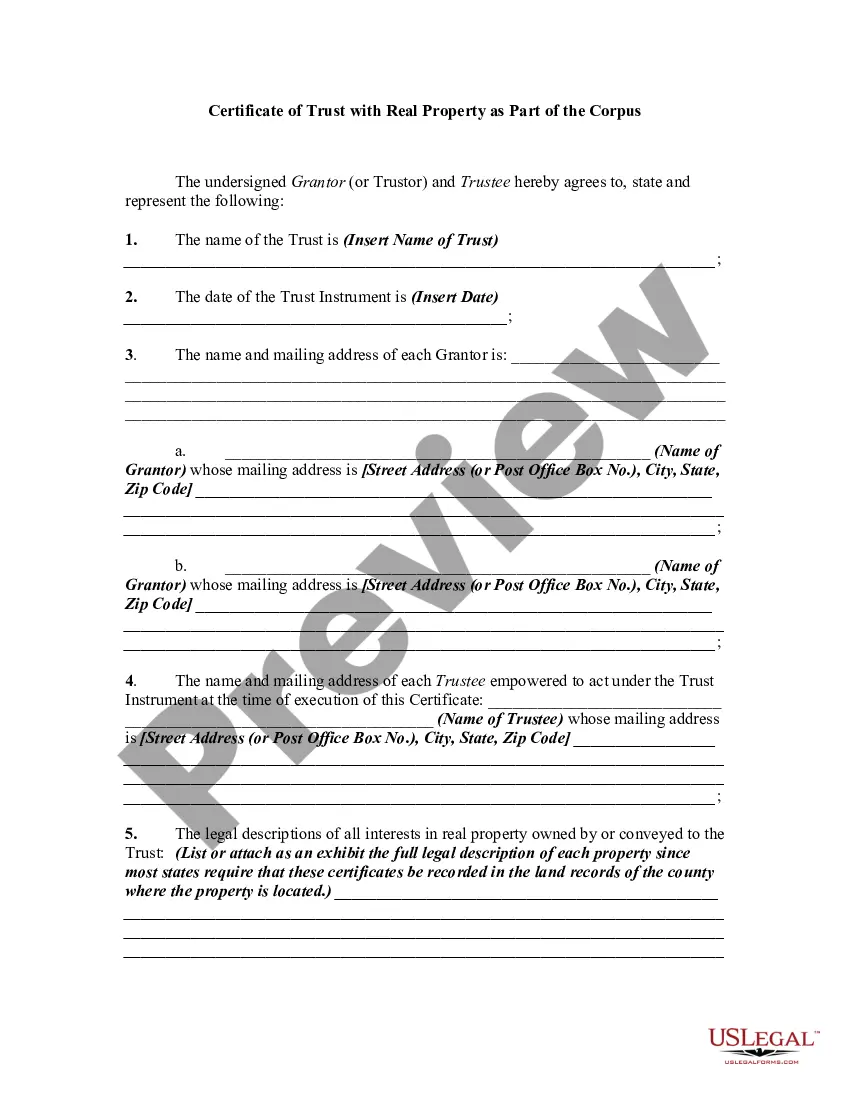
- Name of the trust and trust instrument date
- Identification of grantors and their mailing addresses
- Identification of trustees and their contact details
- Legal descriptions of real property involved in the trust
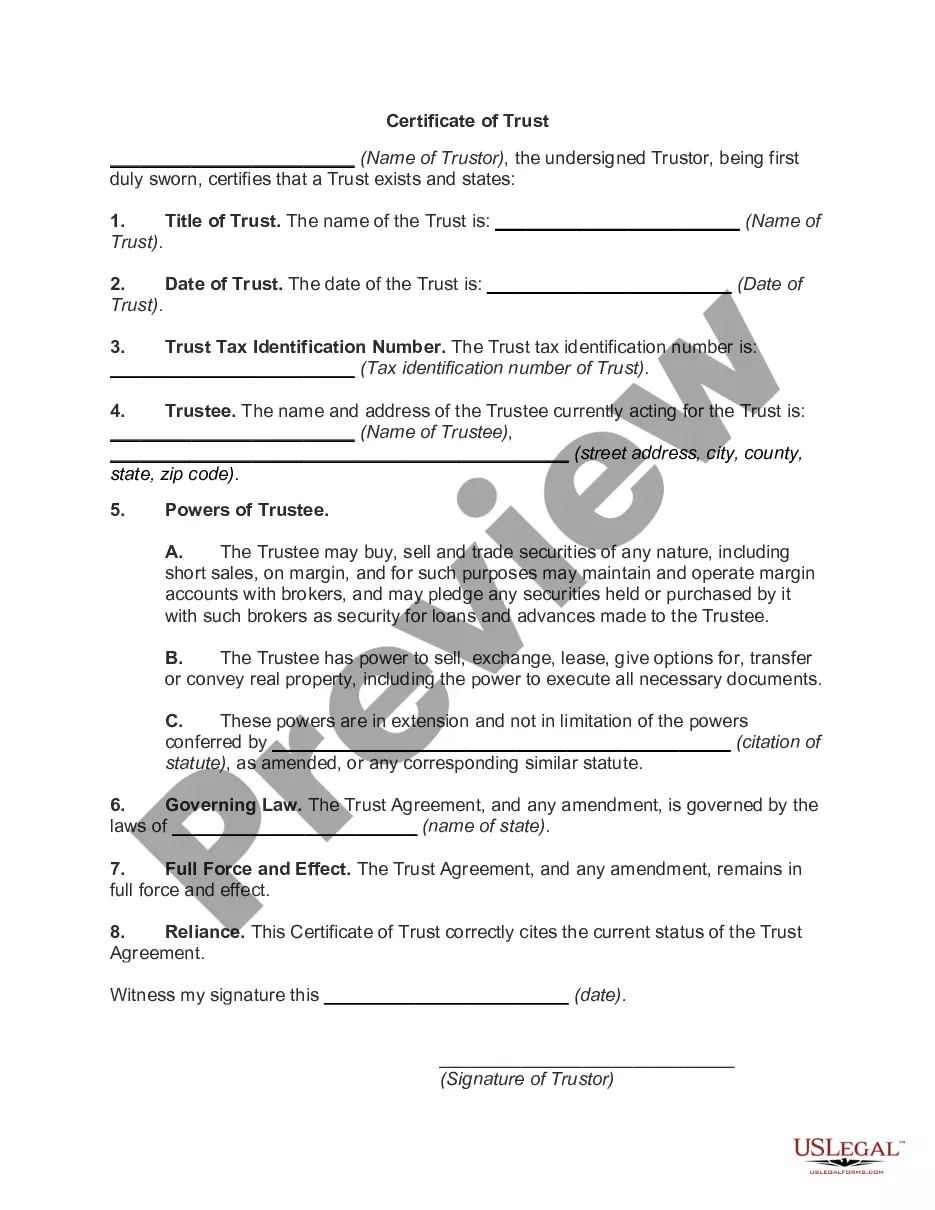
- General powers of the trustee
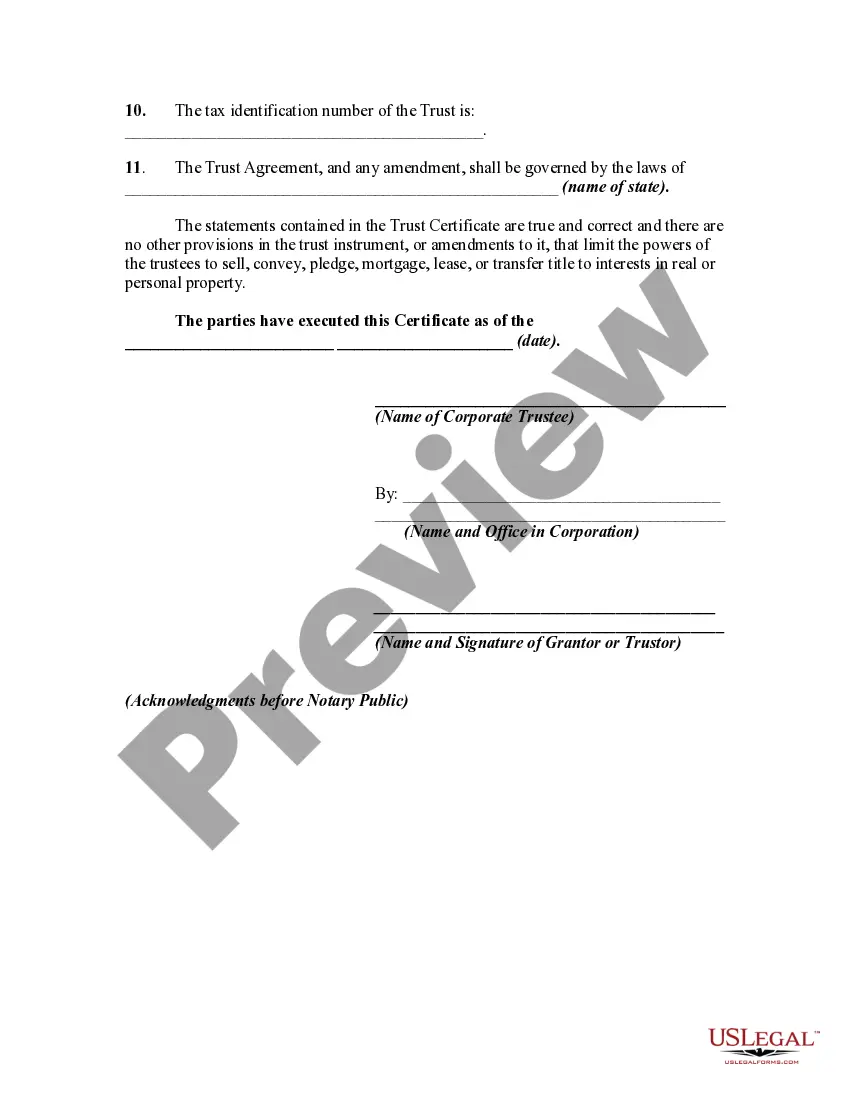
- Tax identification number of the trust
- Governing state laws for the trust agreement

When to use this form
This form should be used when establishing a testamentary trust, particularly to clarify the roles and powers of the trustee to third parties. It is commonly needed when dealing with financial institutions, real estate transactions, or any situation where the trustee's authority must be confirmed. Additionally, this certificate is useful during estate settlement or when distributing assets to beneficiaries under the terms of the trust.
Who should use this form
- Grantors or trustors who establish a testamentary trust
- Trustees responsible for managing the trustâs assets
- Beneficiaries needing to verify trust details
- Financial institutions or third parties requiring proof of a trustee's authority
Steps to complete this form
- Provide the name of the trust and the date of the trust instrument.
- List the names and mailing addresses of each grantor involved.
- Identify the trustees and include their contact information.
- Detail the legal descriptions of any property associated with the trust.
- Specify the powers of the trustee as outlined in the trust agreement.
- Fill in the tax identification number and the governing law for the trust.
Notarization guidance
This form does not typically require notarization unless specified by local law. However, it is recommended to check your state's regulations regarding notarization and compliance for legal validity.
Get your form ready online
Our built-in tools help you complete, sign, share, and store your documents in one place.
Make edits, fill in missing information, and update formatting in US Legal Forms—just like you would in MS Word.
Download a copy, print it, send it by email, or mail it via USPS—whatever works best for your next step.
Sign and collect signatures with our SignNow integration. Send to multiple recipients, set reminders, and more. Go Premium to unlock E-Sign.
If this form requires notarization, complete it online through a secure video call—no need to meet a notary in person or wait for an appointment.
We protect your documents and personal data by following strict security and privacy standards.

Make edits, fill in missing information, and update formatting in US Legal Forms—just like you would in MS Word.

Download a copy, print it, send it by email, or mail it via USPS—whatever works best for your next step.

Sign and collect signatures with our SignNow integration. Send to multiple recipients, set reminders, and more. Go Premium to unlock E-Sign.

If this form requires notarization, complete it online through a secure video call—no need to meet a notary in person or wait for an appointment.

We protect your documents and personal data by following strict security and privacy standards.
Typical mistakes to avoid
- Failing to include the complete legal descriptions of properties held in trust.
- Omitting the tax identification number of the trust.
- Not providing accurate contact information for grantors and trustees.
- Neglecting to have the document notarized if required by local law.
Why use this form online
- Convenient access to downloadable legal templates drafted by professionals.
- Editable format allows for easy customization based on individual needs.
- Time-efficient process saves effort compared to manual drafting.
- Reliable service ensures that you receive up-to-date legal documents.
Looking for another form?

Form popularity
FAQ
A Certificate of Trust for Testamentary Trust is a short document that confirms a testamentary trust exists and identifies the trustee and their authority. It is used in real property transactions and other dealings to show the trust is in effect without disclosing its terms, typically after the will is probated.
Typically from an attorney or reputable legal forms provider. It is used after the will creating the testamentary trust is probated to prove the trust exists and to authorize the trustee to act with respect to trust property, without disclosing the trust's full terms.
Yes, you can draft your own, but accuracy is crucial: it must clearly identify the trust, the trustees, and their authority, and must meet your state's formalities (execution and notarization). Errors can delay or invalidate dealings with trust property. Consider having it reviewed by an attorney.
A testamentary trust is created by a will and becomes effective after probate; the certificate of trust is a separate document used to prove the trust exists and identify the trustee, not the full trust terms. The will or trust instrument contains the actual provisions.
A testamentary trust is created by a will and takes effect upon the grantor’s death through probate; if a trust is described as created by will and activated after death, it is testamentary. The Certificate of Trust can be used to verify the trust's existence after probate.
This certificate applies to trusts created by a will (testamentary trusts) and typically is used after probate to show the trust exists and who may act as trustee; a certificate for a living (revocable) trust covers a trust created during life and may not require probate to activate.