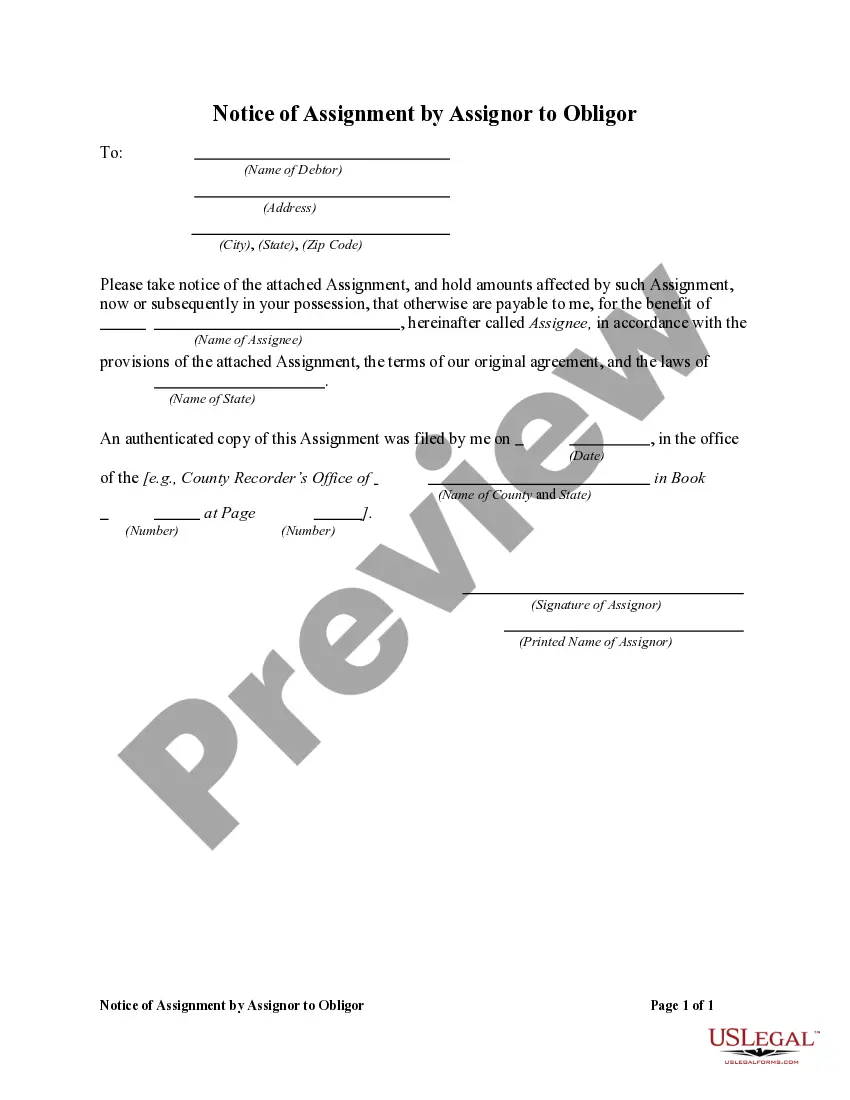
Notice of Assignment by Assignor to Obligor
About this form
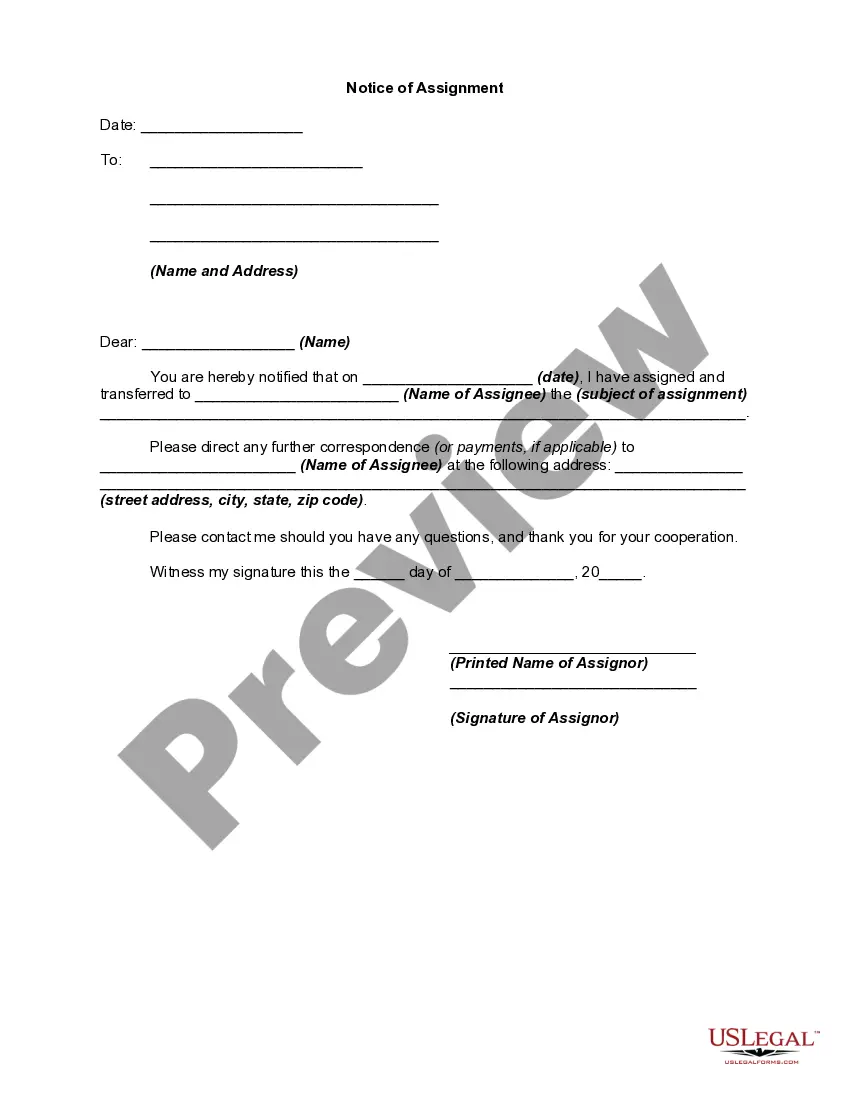
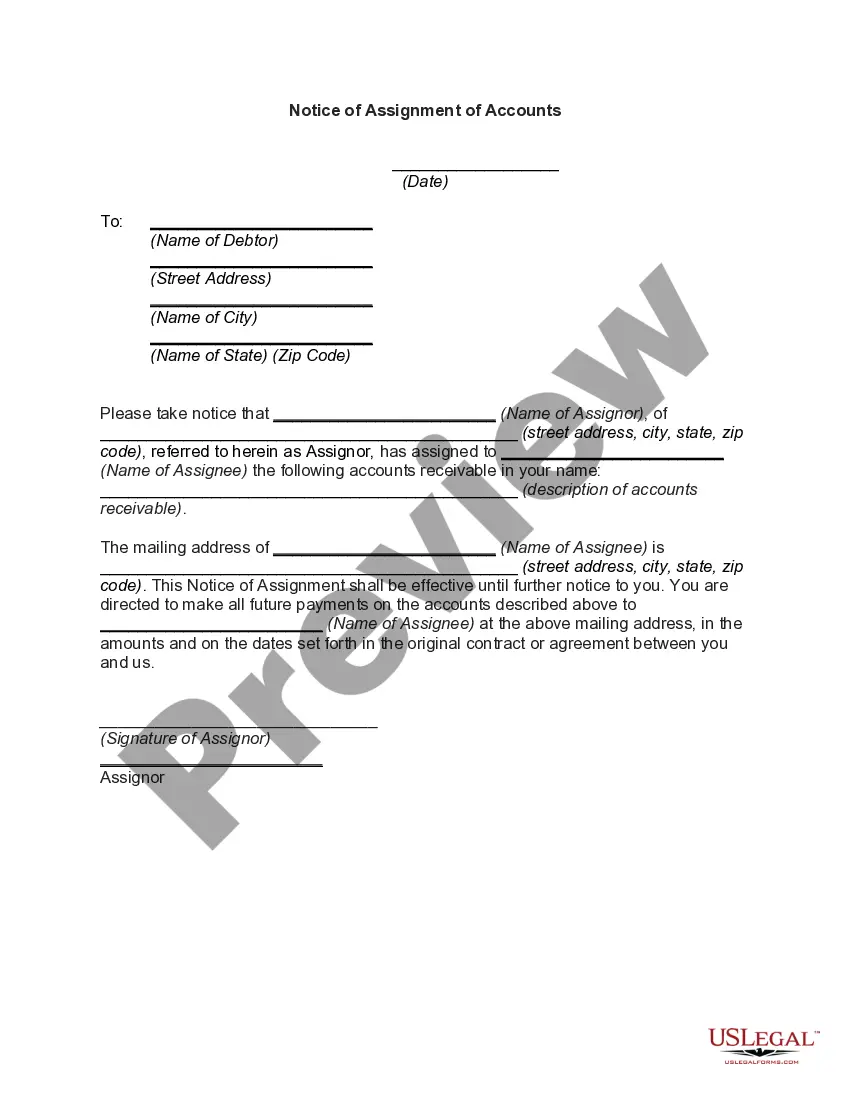
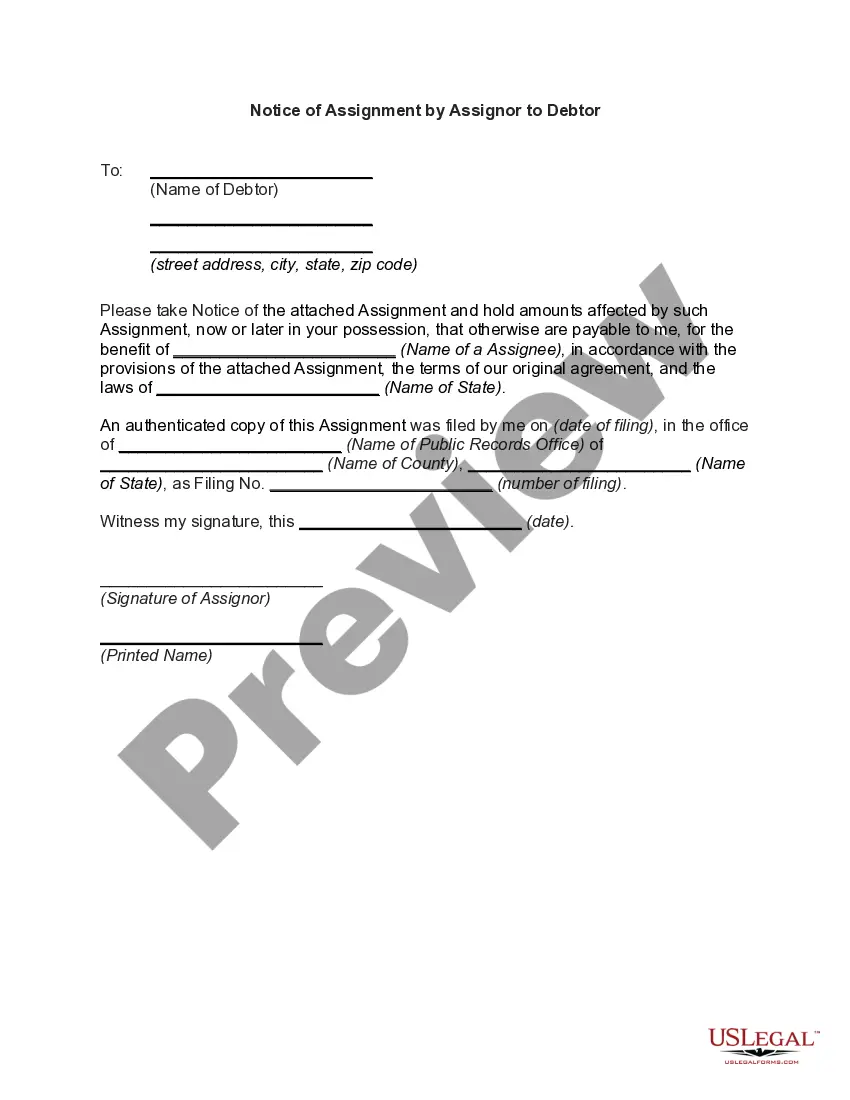
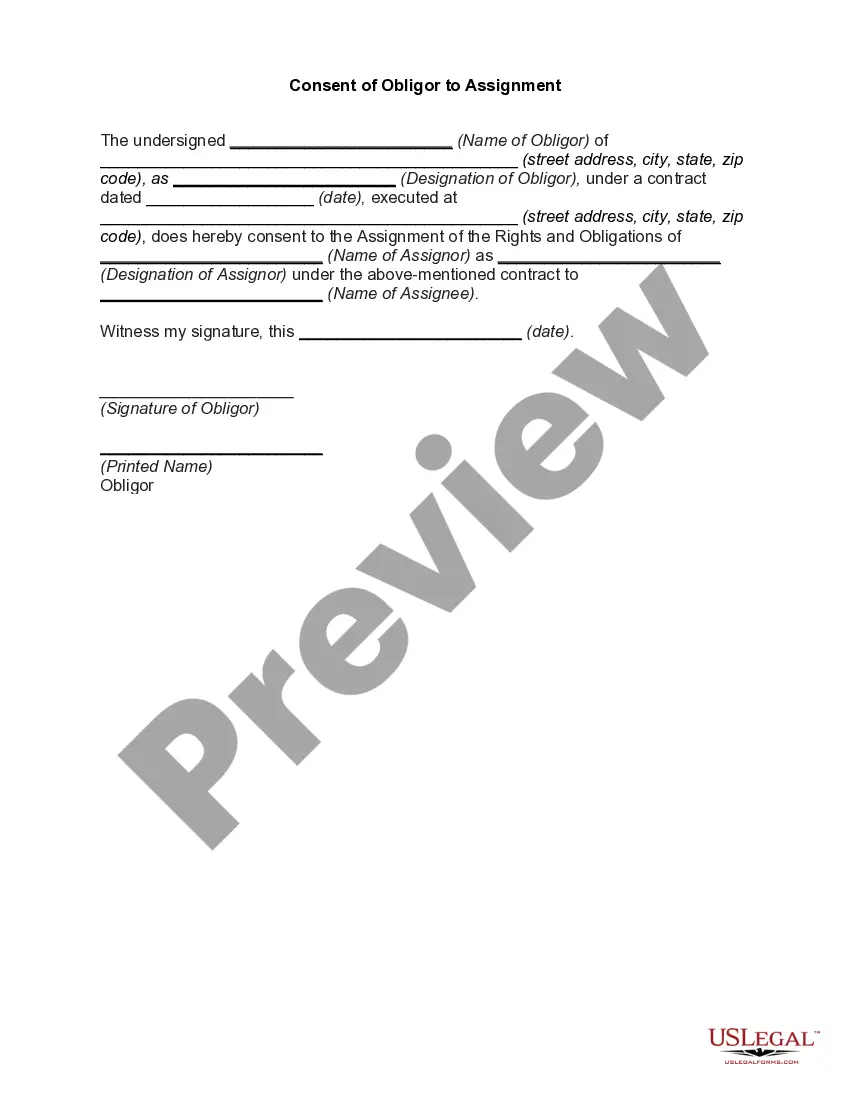
The Notice of Assignment by Assignor to Obligor is a legal document used to inform an obligor that the assignor has transferred their rights to receive payment to an assignee. This notice ensures that any future payments by the obligor are directed to the assignee rather than the assignor. It is crucial for establishing clear communication about payment obligations and preventing any misunderstanding regarding who is entitled to receive payment under the contract.
Form components explained
- Identifying information: Names and contact details of the assignor, obligor, and assignee.
- Details of the assignment: Description of the rights being assigned and any relevant contract information.
- Notice to obligor: A declaration stating that the obligor must now direct payments to the assignee.
- Signature line: Spaces for signing, acknowledging the notice of assignment.
When this form is needed
This form is needed when an assignor wants to officially notify an obligor that their rights to receive payments have been assigned to another party (the assignee). It should be used in situations such as assigning a rental payment agreement, the transfer of payment rights for a loan, or any contractual agreement involving future payments.
Intended users of this form
- Assignors looking to transfer their rights to receive payments.
- Obligors who need to be informed of the assignment to avoid future payment disputes.
- Assignees expecting future payments under an assigned contract.
How to complete this form
- Identify the parties: Clearly state the names and contact details of the assignor, obligor, and assignee.
- Specify the assignment: Describe the rights being assigned, including relevant contract details.
- Provide notice: Include a clear statement notifying the obligor that future payments must be directed to the assignee.
- Sign and date: Ensure the assignor signs and dates the notice to validate it.
Notarization requirements for this form
In most cases, this form does not require notarization. However, some jurisdictions or signing circumstances might. US Legal Forms offers online notarization powered by Notarize, accessible 24/7 for a quick, remote process.
Get your form ready online
Our built-in tools help you complete, sign, share, and store your documents in one place.
Make edits, fill in missing information, and update formatting in US Legal Forms—just like you would in MS Word.
Download a copy, print it, send it by email, or mail it via USPS—whatever works best for your next step.
Sign and collect signatures with our SignNow integration. Send to multiple recipients, set reminders, and more. Go Premium to unlock E-Sign.
If this form requires notarization, complete it online through a secure video call—no need to meet a notary in person or wait for an appointment.
We protect your documents and personal data by following strict security and privacy standards.

Make edits, fill in missing information, and update formatting in US Legal Forms—just like you would in MS Word.

Download a copy, print it, send it by email, or mail it via USPS—whatever works best for your next step.

Sign and collect signatures with our SignNow integration. Send to multiple recipients, set reminders, and more. Go Premium to unlock E-Sign.

If this form requires notarization, complete it online through a secure video call—no need to meet a notary in person or wait for an appointment.

We protect your documents and personal data by following strict security and privacy standards.
Common mistakes
- Failing to notify the obligor about the assignment.
- Not including all necessary party details.
- Using vague language regarding the rights being assigned.
- Neglecting to sign and date the form.
Why use this form online
- Convenience: Access the form anytime and complete it at your own pace.
- Editability: Modify the form easily to suit your specific needs.
- Reliability: Ensure the form is drafted by licensed attorneys, enhancing its legal validity.
Legal use & context
- The Notice of Assignment serves as a formal acknowledgment of the transfer of rights or obligations.
- Failure to notify the obligor could expose the assignor to liability for any payments made after the assignment.
- This document helps protect the assignee's rights to collect payments directly from the obligor.
Quick recap
- This form is essential for notifying an obligor of an assignment of rights.
- Properly completing and delivering this form protects the interests of both the assignee and the obligor.
- Always consult legal guidance for state-specific variations or requirements.
Looking for another form?
Form popularity
FAQ
When an assignor hands over their contracts rights to an assignee, they are signing away their obligation to perform and putting that obligation on a new party. The other party involved in the contract should see no difference in how the agreement plays out.
In order for an assignment to be a legal assignment, the assignment must be agreed in writing, signed by the assignor, and the other party to the contract must be given notice of the assignment.Contracts often require the consent of the other party before any assignment can take place.
Whereas assignment only transfers a party's rights under a contract, novation transfers both a party's rights and its obligations. Strictly speaking, the original contract is extinguished and a new one formed between the incoming party and the remaining party to the original contract.
In other words, the assignee can sue the obligor if they fail to render the rights and benefits. This is usually the most common situation in assignment lawsuits. Also, it is common for the assignor to remain liable to the obligor.
In general, liability is shifted from between the obligor and the assignor and transferred to the obligor and the assignee. In other words, the assignee can sue the obligor if they fail to render the rights and benefits. This is usually the most common situation in assignment lawsuits.
Generally speaking, contracts can be freely assigned to third parties.This contract cannot be assigned to anyone without the written consent of both parties.
The ASSIGNNEE should notify the obligor. If an obligor renders performance to the assignor without notice of the assignment, the obligor has no further liability under the contract to pay the correct party which would now be the assignee.
Assignment is a common practice in contracts law.The assignee is the party that receives the rights and obligations under the contract, but wasn't an original party to the contract. The assignor was an original party to the contract and is the party that transfers its contractual rights to another party.