Notice of Assignment by Assignor to Debtor
What this document covers
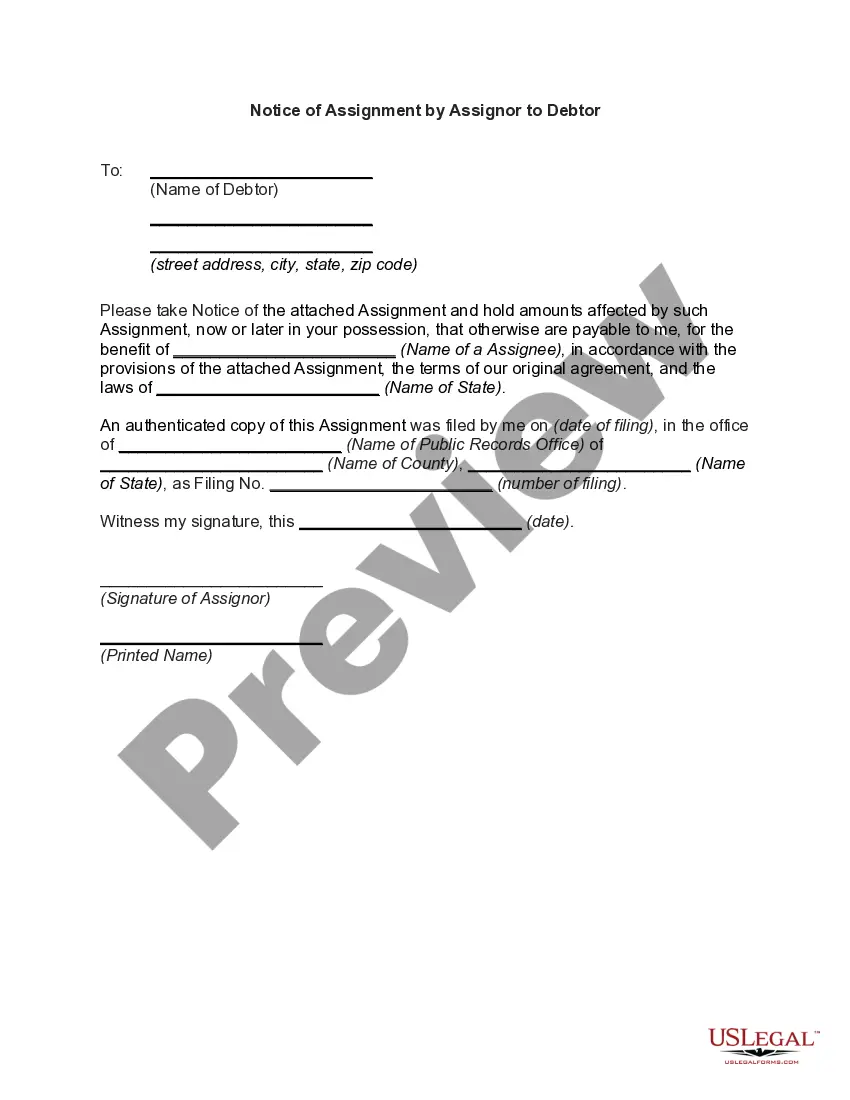
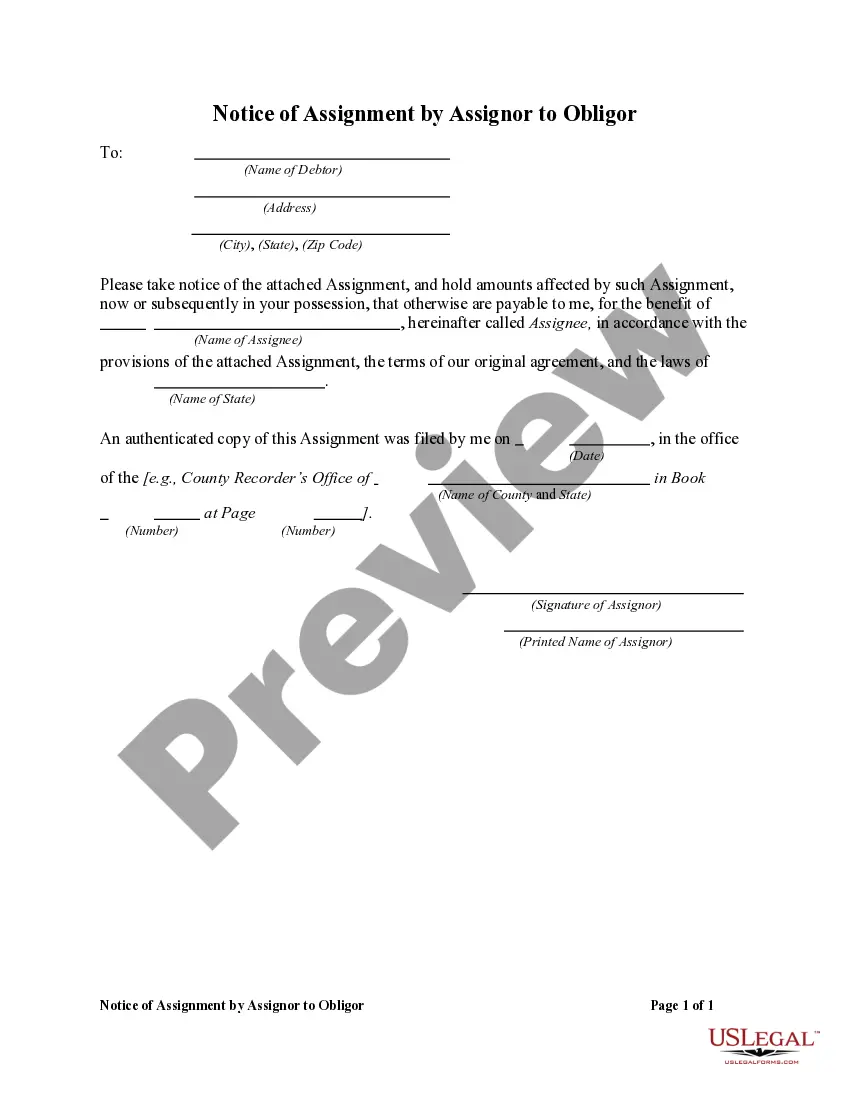
The Notice of Assignment by Assignor to Debtor is a legal document that informs a debtor about an assignment of rights or interests from the assignor to an assignee. This form serves to ensure that the debtor is aware of the change in obligation and must hold any amounts due to the assignor for the benefit of the assignee. Unlike similar documents, this notice specifically addresses the responsibilities of the debtor in relation to the assignment.
Form components explained
- Name and address of the debtor.
- Identification of the assignee receiving the benefits of the assignment.
- Details of the assignment being referred to, including the date and filing information.
- Signature of the assignor to validate the notice.
- Date of the notice to establish when it was served.
When to use this document
This form is used when an assignor transfers rights to an assignee and needs to notify the debtor about the assignment. It is especially relevant when the assignment requires the debtor to redirect payments or other obligations to the assignee. It may be necessary to provide this notice depending on the agreement terms and state laws governing assignments.
Intended users of this form
- Assignors seeking to notify a debtor about the transfer of rights.
- Debtors who have received a prior assignment and need clarification on where to direct payment or obligations.
- Attorneys advising clients on the legal requirements for notifying debtors of assignment.
Completing this form step by step
- Identify the debtor by entering their name and address in the designated areas.
- Specify the name of the assignee who will receive the benefits of the assignment.
- Include details about the assignment, such as its filing date and relevant office.
- Sign and date the form to validate it as the assignor.
- Ensure all necessary parties have copies of this notice once completed.
Is notarization required?
This form does not typically require notarization unless specified by local law. However, it is a good practice to check specific state regulations. Ensure that all necessary signatures are clearly documented.
Get your form ready online
Our built-in tools help you complete, sign, share, and store your documents in one place.
Make edits, fill in missing information, and update formatting in US Legal Forms—just like you would in MS Word.
Download a copy, print it, send it by email, or mail it via USPS—whatever works best for your next step.
Sign and collect signatures with our SignNow integration. Send to multiple recipients, set reminders, and more. Go Premium to unlock E-Sign.
If this form requires notarization, complete it online through a secure video call—no need to meet a notary in person or wait for an appointment.
We protect your documents and personal data by following strict security and privacy standards.

Make edits, fill in missing information, and update formatting in US Legal Forms—just like you would in MS Word.

Download a copy, print it, send it by email, or mail it via USPS—whatever works best for your next step.

Sign and collect signatures with our SignNow integration. Send to multiple recipients, set reminders, and more. Go Premium to unlock E-Sign.

If this form requires notarization, complete it online through a secure video call—no need to meet a notary in person or wait for an appointment.

We protect your documents and personal data by following strict security and privacy standards.
Common mistakes
- Failing to provide accurate names and addresses of the parties involved.
- Not including all required details about the assignment, such as filing information.
- Omitting the date or signature of the assignor, making the notice invalid.
Benefits of completing this form online
- Convenience of accessing and completing the form from anywhere at any time.
- Easy editability to ensure all information is accurate before submission.
- Reliable format that includes all necessary legal language and components, drafted by licensed attorneys.
Looking for another form?


Form popularity
FAQ
The party that creates an assignment is both the obligee and a transferor. The assignee receives the right to acquire the obligations of the promisor/obligor. The assignor can assign any right to the obligor unless: Doing so will materially alter the obligation.
An assignee is a person, company, or entity who receives the transfer of property, title, or rights from another ing to the terms of a contract. The assignee receives the transfer from the assignor. For example, an assignee may receive the title to a piece of real estate from an assignor.
The ASSIGNNEE should notify the obligor. If an obligor renders performance to the assignor without notice of the assignment, the obligor has no further liability under the contract to pay the correct party which would now be the assignee.
Once a valid assignment of rights has been made to a third party, the third party (the assignee) should notify the obligor of the assignment. N.B. Notice that we say ?should,? rather than ?must,? because the assignment is effective immediately, whether or not notice is given to the obligor.
The notice should be issued by the seller's solicitor within one month.
The assignee is the party that receives the rights and obligations under the contract, but wasn't an original party to the contract. The assignor was an original party to the contract and is the party that transfers its contractual rights to another party. The other original party to the contract is the obligor.
The ASSIGNNEE should notify the obligor. If an obligor renders performance to the assignor without notice of the assignment, the obligor has no further liability under the contract to pay the correct party which would now be the assignee.
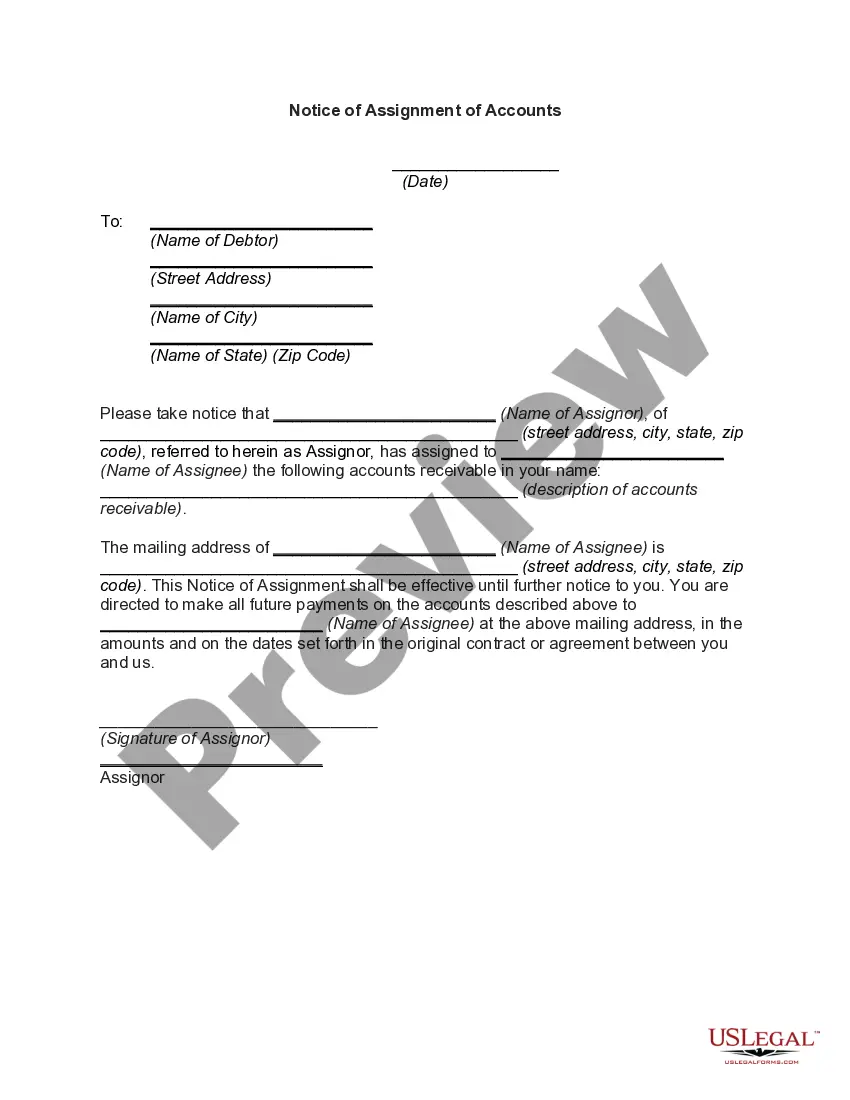
A Notice of Assignment is used to inform debtors that a third party has 'purchased' their debt. The new company (assignee) takes over collection procedures, but can sometimes hire a debt collection agency to recover the money on their behalf.