Louisiana Motion to Suppress Evidence
About this form
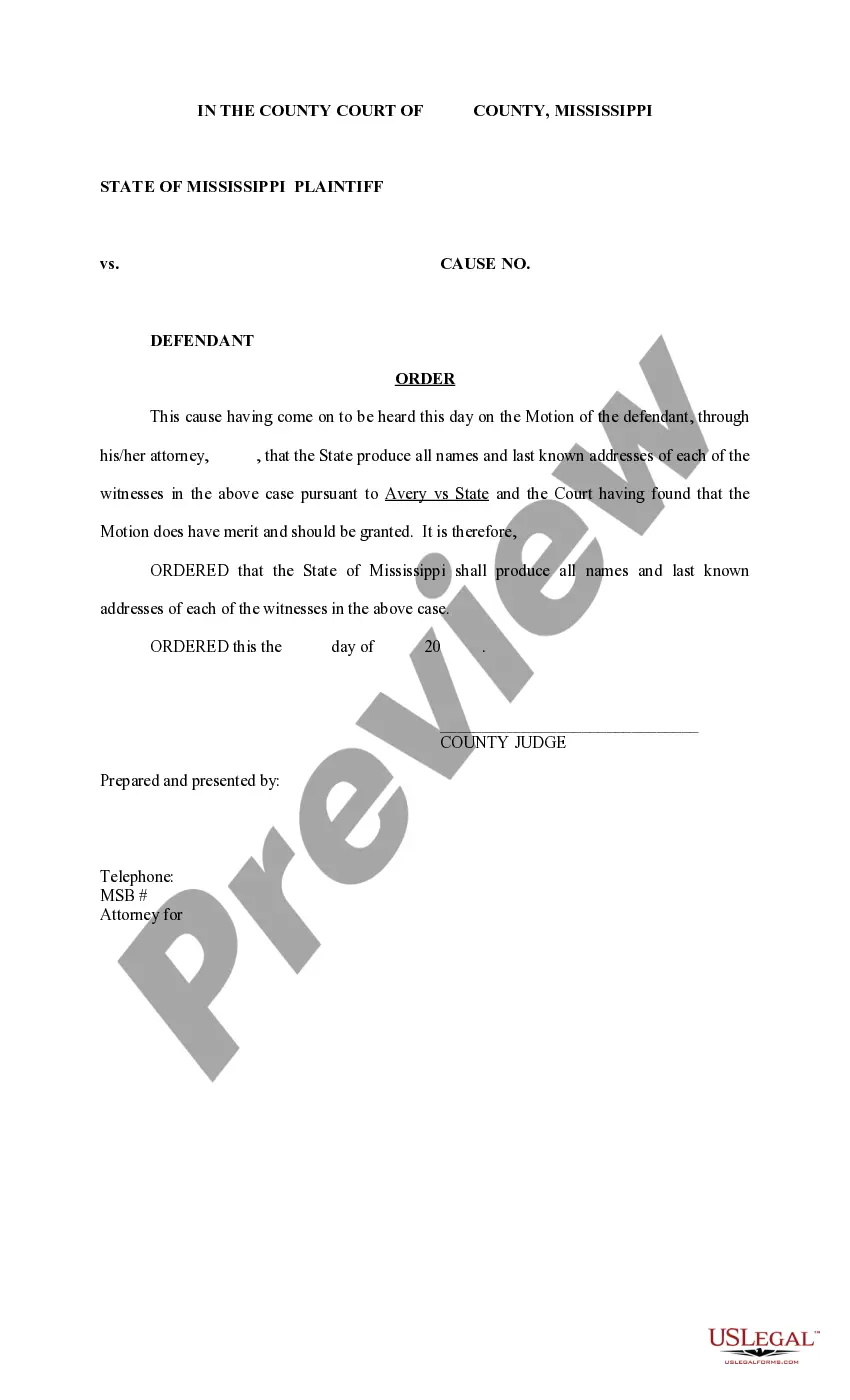
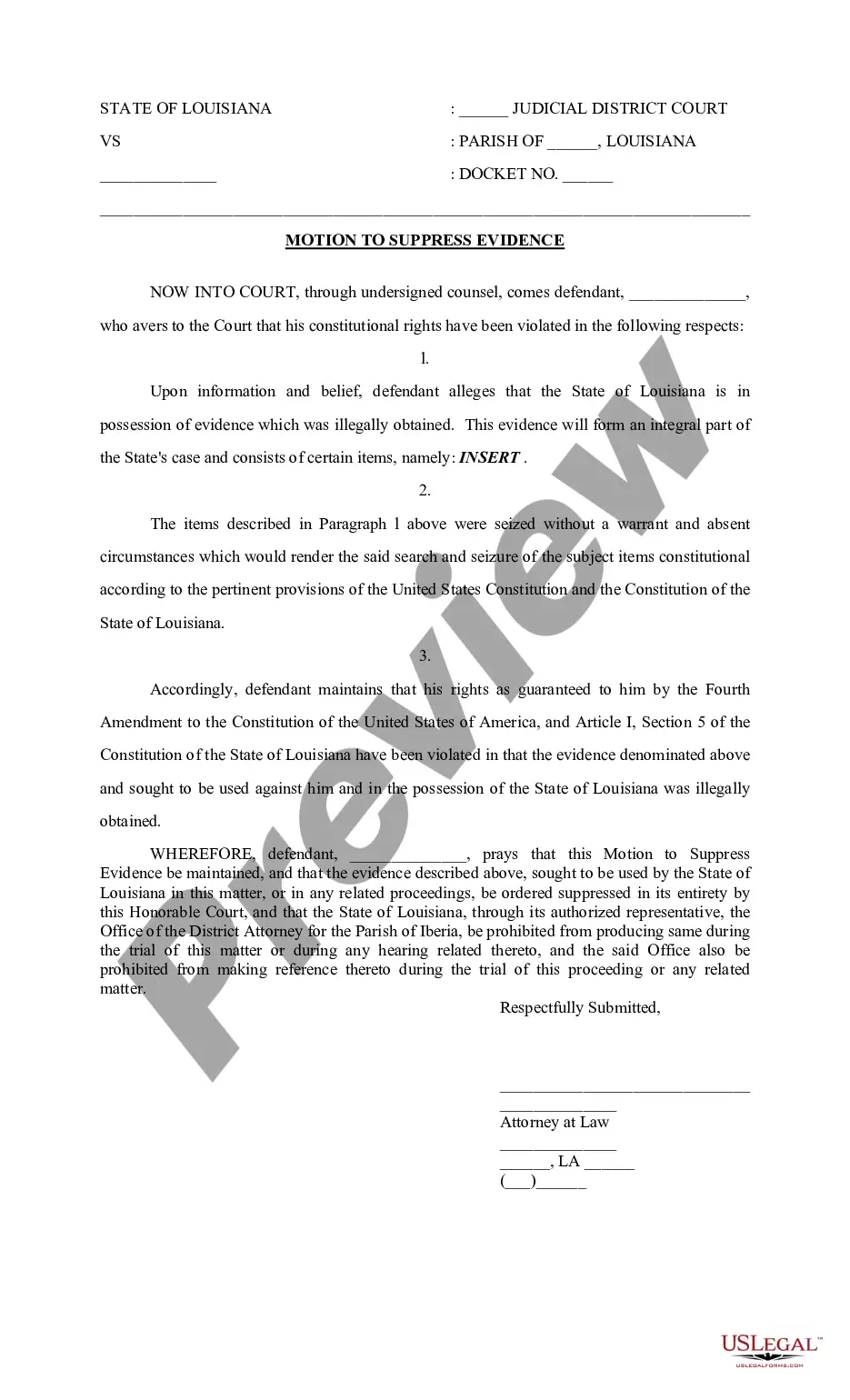
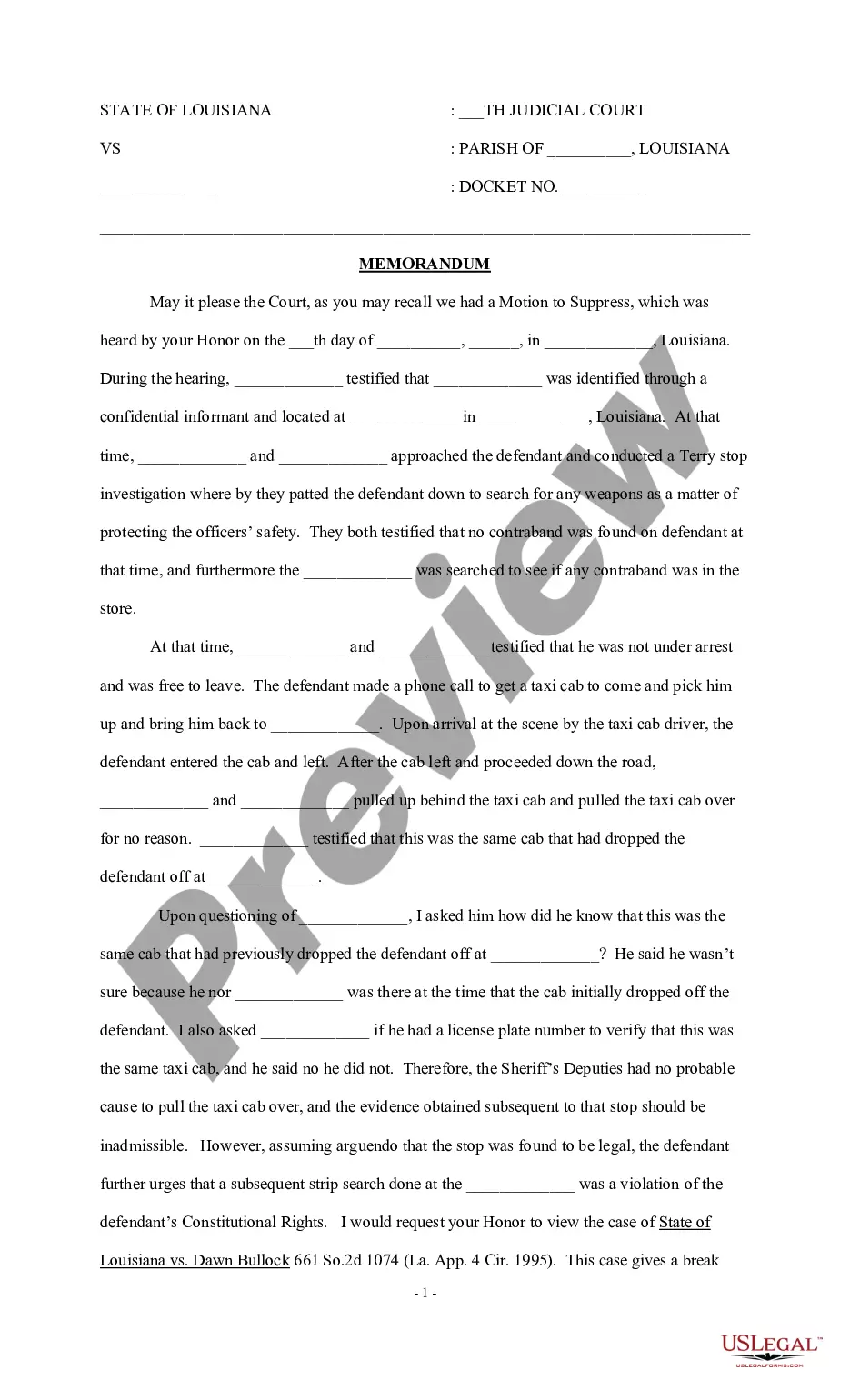
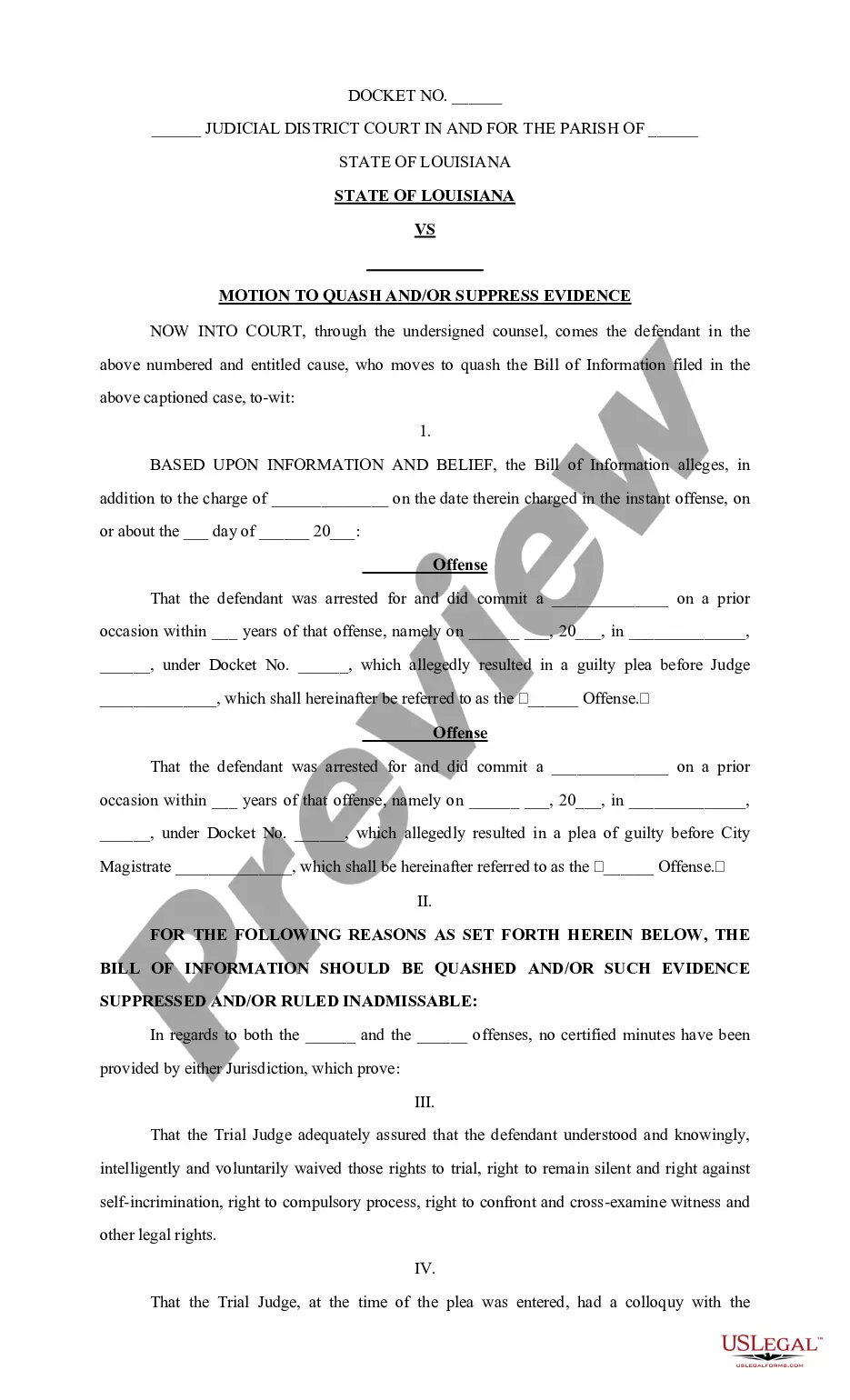
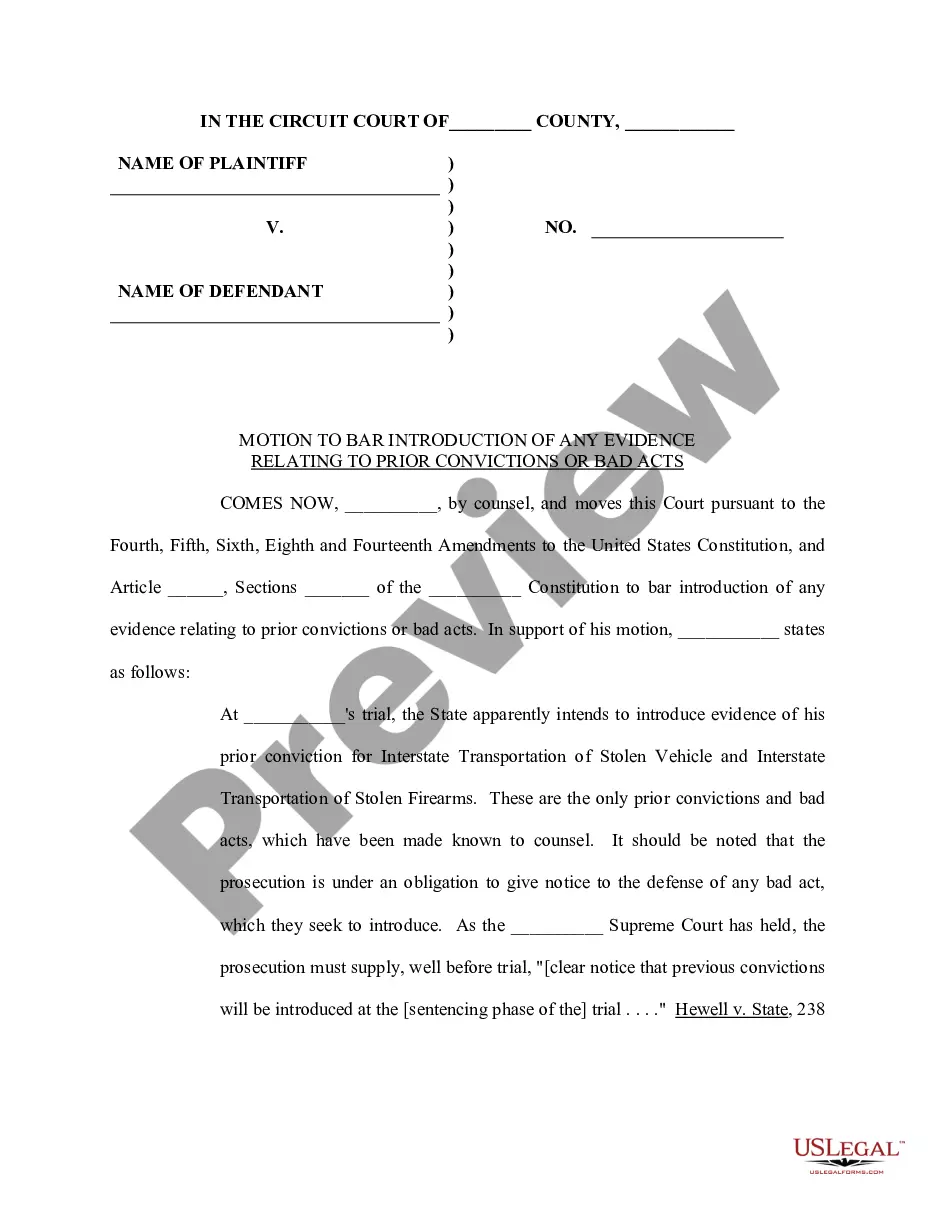
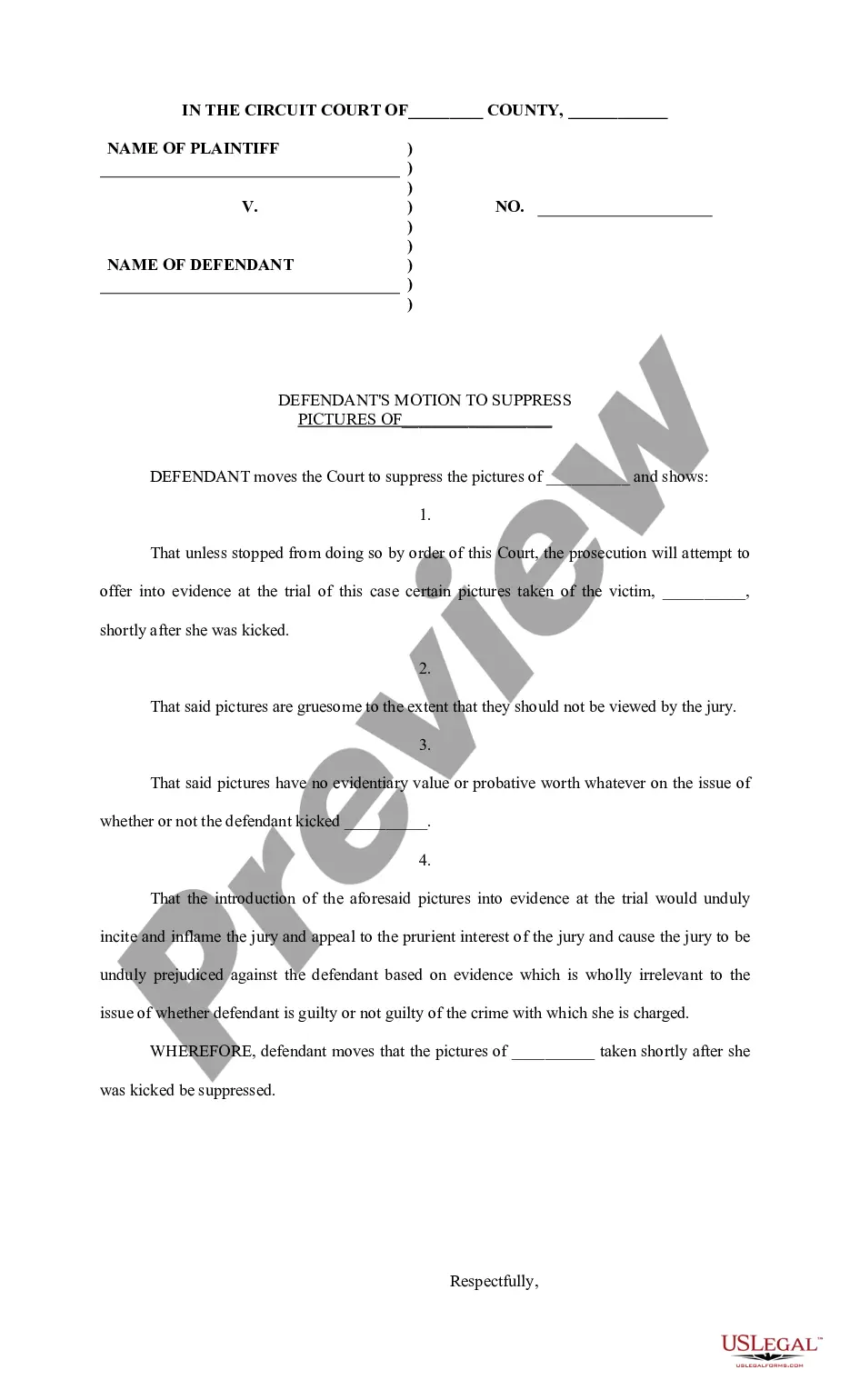
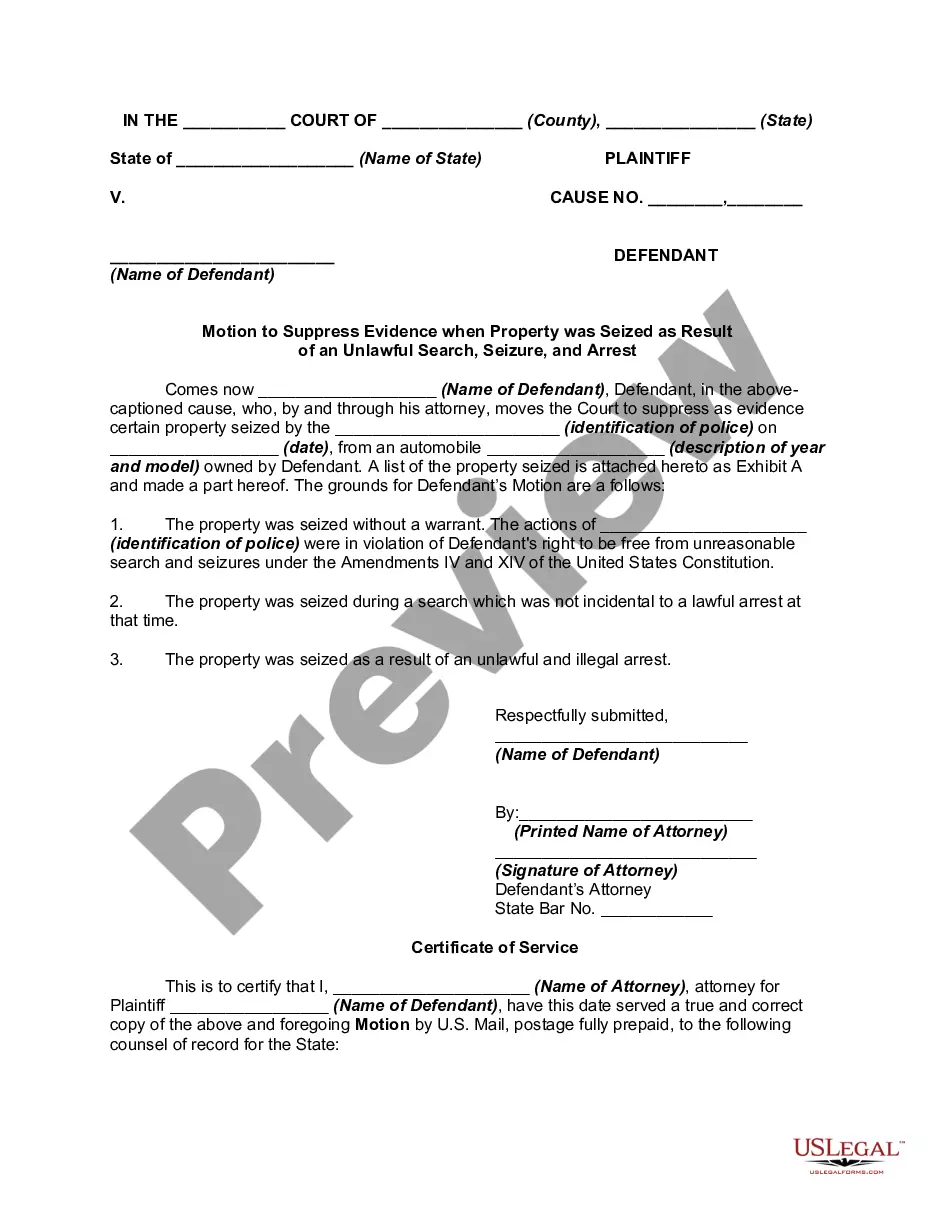
The Motion to Suppress Evidence is a legal document filed by a defendant who believes that certain evidence against them has been obtained in violation of their constitutional rights. This form specifically argues that the evidence was seized without a warrant and did not meet any exceptions that would make the seizure lawful. By filing this motion, the defendant seeks to prevent the prosecution from using this evidence during their trial.
Main sections of this form
- Defendant's identity and case number
- Allegation of illegal evidence possession by the State
- Details of the improperly obtained evidence
- Request for suppression of the evidence
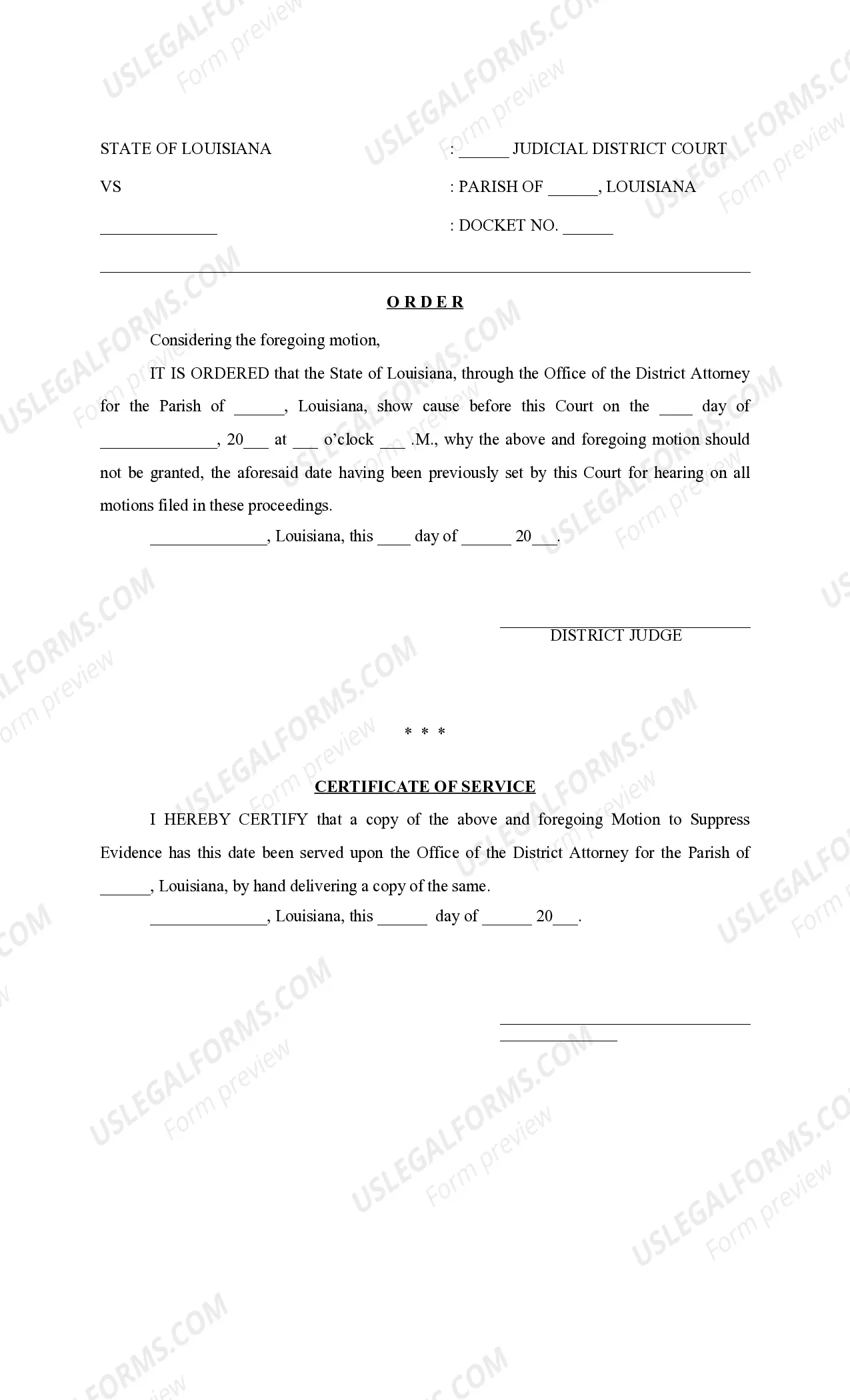
- Order to show cause for a court hearing
- Certification of service to the District Attorney's office
Common use cases
This form is typically used during criminal proceedings when a defendant believes that evidence being presented against them was acquired through illegal means. This situation commonly arises when evidence is collected without a warrant or in violation of constitutional protections against unreasonable searches and seizures.
Who should use this form
- Defendants in criminal cases who wish to challenge the admissibility of evidence
- Individuals who believe their Fourth Amendment rights have been violated
- Those seeking to prepare for a hearing on the legality of evidence in their case
How to complete this form
- Enter the names of the parties involved and the case docket number at the top of the form.
- Clearly state the items of evidence that you believe were obtained illegally.
- Reference the specific legal provisions or amendments that support your claim of unlawful seizure.
- Sign and date the form, including your attorney's information if applicable.
- Ensure a copy is served to the Office of the District Attorney for record-keeping.
Notarization guidance
This form usually doesn’t need to be notarized. However, local laws or specific transactions may require it. Our online notarization service, powered by Notarize, lets you complete it remotely through a secure video session, available 24/7.
Get your form ready online
Our built-in tools help you complete, sign, share, and store your documents in one place.
Make edits, fill in missing information, and update formatting in US Legal Forms—just like you would in MS Word.
Download a copy, print it, send it by email, or mail it via USPS—whatever works best for your next step.
Sign and collect signatures with our SignNow integration. Send to multiple recipients, set reminders, and more. Go Premium to unlock E-Sign.
If this form requires notarization, complete it online through a secure video call—no need to meet a notary in person or wait for an appointment.
We protect your documents and personal data by following strict security and privacy standards.

Make edits, fill in missing information, and update formatting in US Legal Forms—just like you would in MS Word.

Download a copy, print it, send it by email, or mail it via USPS—whatever works best for your next step.

Sign and collect signatures with our SignNow integration. Send to multiple recipients, set reminders, and more. Go Premium to unlock E-Sign.

If this form requires notarization, complete it online through a secure video call—no need to meet a notary in person or wait for an appointment.

We protect your documents and personal data by following strict security and privacy standards.
Common mistakes to avoid
- Failing to include all necessary details about the evidence being challenged.
- Not citing the relevant constitutional provisions clearly.
- Missing the deadline to file the motion before the trial.
Benefits of using this form online
- Convenient access to legal documents from home.
- Easy to edit and customize for individual circumstances.
- Reliable legal forms drafted by licensed attorneys.
Summary of main points
- The Motion to Suppress Evidence can help protect your rights in a criminal trial.
- Filing this motion requires attention to detail and correct legal citations.
- Understanding your rights regarding evidence collection is crucial for a fair trial.
Looking for another form?

Form popularity
FAQ
The Louisiana Motion to Suppress Evidence is a document filed in criminal cases when a defendant believes evidence against them was illegally obtained. It argues the evidence was seized without a warrant and no exception applies, and it asks the court to suppress its use at trial. The form includes sections for the defendant’s identity and case number, details of the illegal evidence, the suppression request, and an order to show cause with service to District Attorney.
To file this form, fill out the defendant’s identity and case number; describe the alleged illegal possession of evidence by the State; provide details of the improperly obtained evidence; request suppression of the evidence; include an order to show cause for a court hearing; and certify service to the District Attorney’s office.
According to this form, evidence can be suppressed if it was obtained in violation of constitutional rights, typically seized without a warrant and with no valid exception. The defendant describes the alleged illegality, provides details of the evidence, and requests suppression to prevent its use at trial.
An example would be evidence seized without a warrant and without a valid exception. If the court agrees that the seizure violated the defendant’s rights, the form’s suppression request would bar that evidence from being used at trial in court.
Evidence becomes unusable in court when it was illegally obtained or otherwise fails to meet admissibility standards because of Fourth Amendment violations. Filing this form asks the court to suppress such evidence, ensuring it cannot be introduced at trial proceedings.
This form is tailored to Louisiana practice and includes state-specific elements like certifying service to the District Attorney’s office and seeking an order to show cause for a hearing. A generic motion to suppress may lack these Louisiana-specific steps and the form’s defined sections for defendant identity, case number, evidence details, and a formal suppression request.