Interim License Agreement
About this form
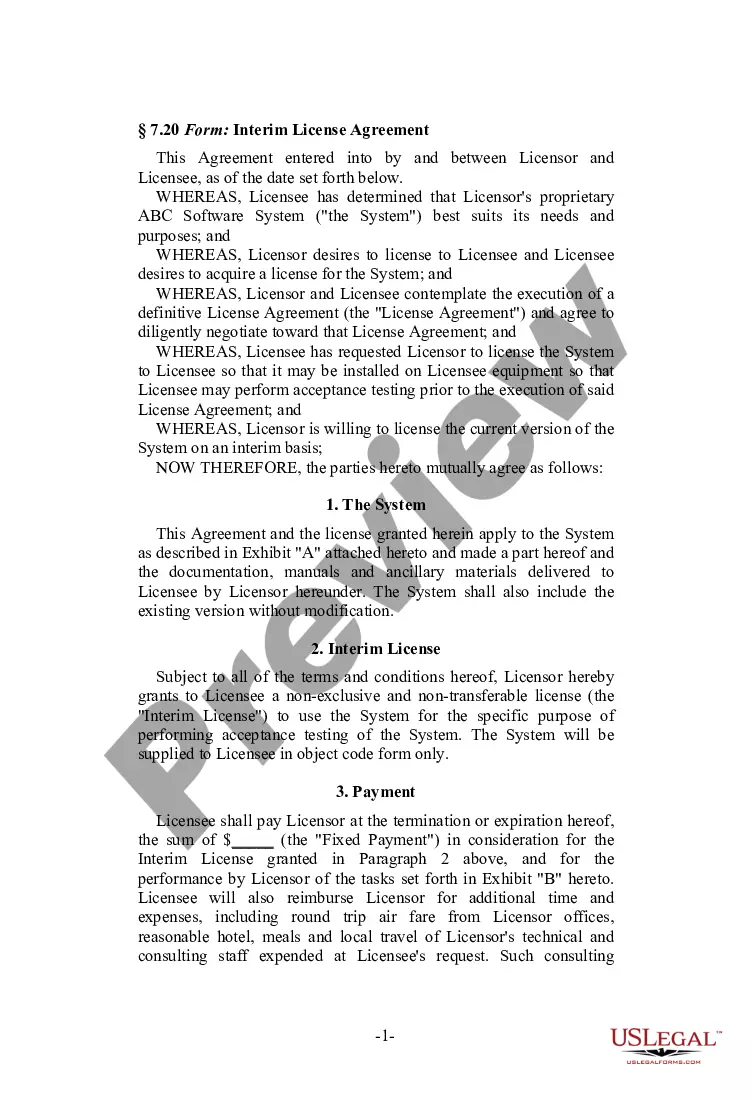
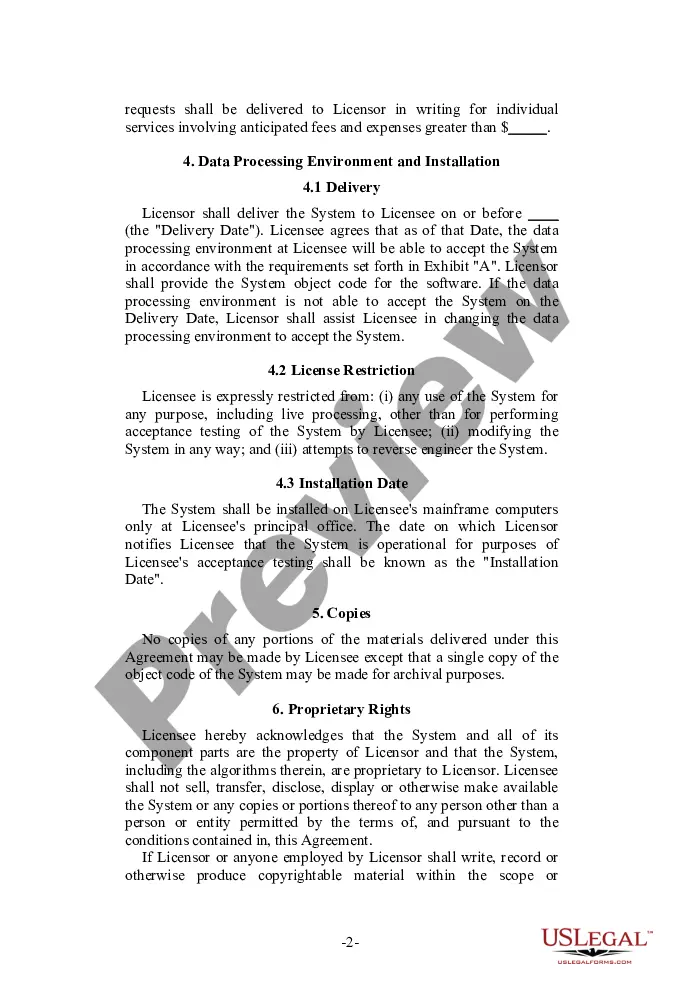
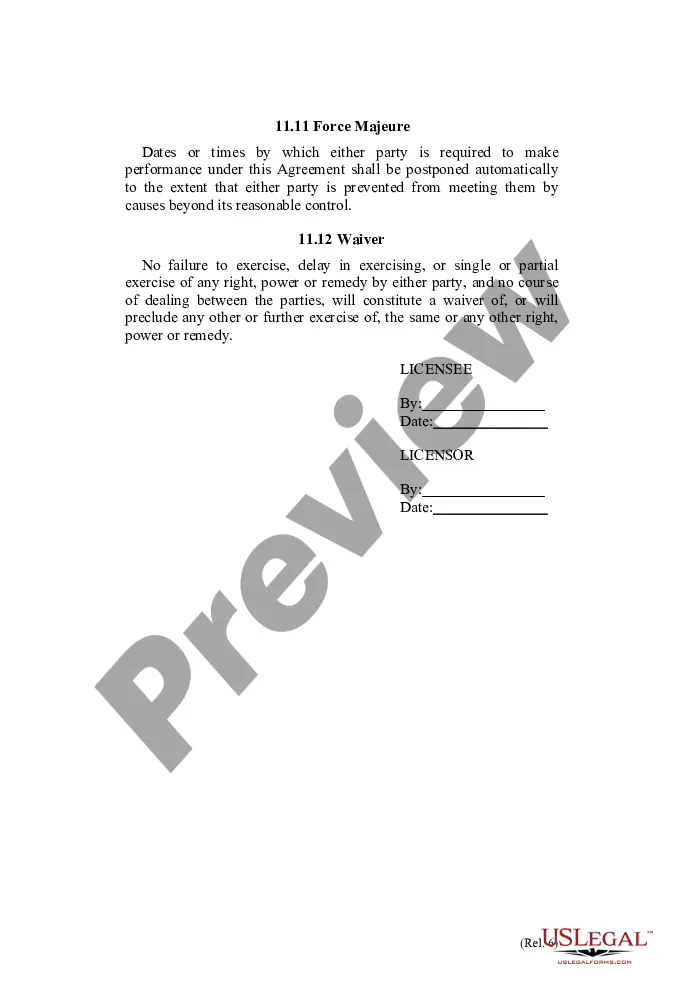
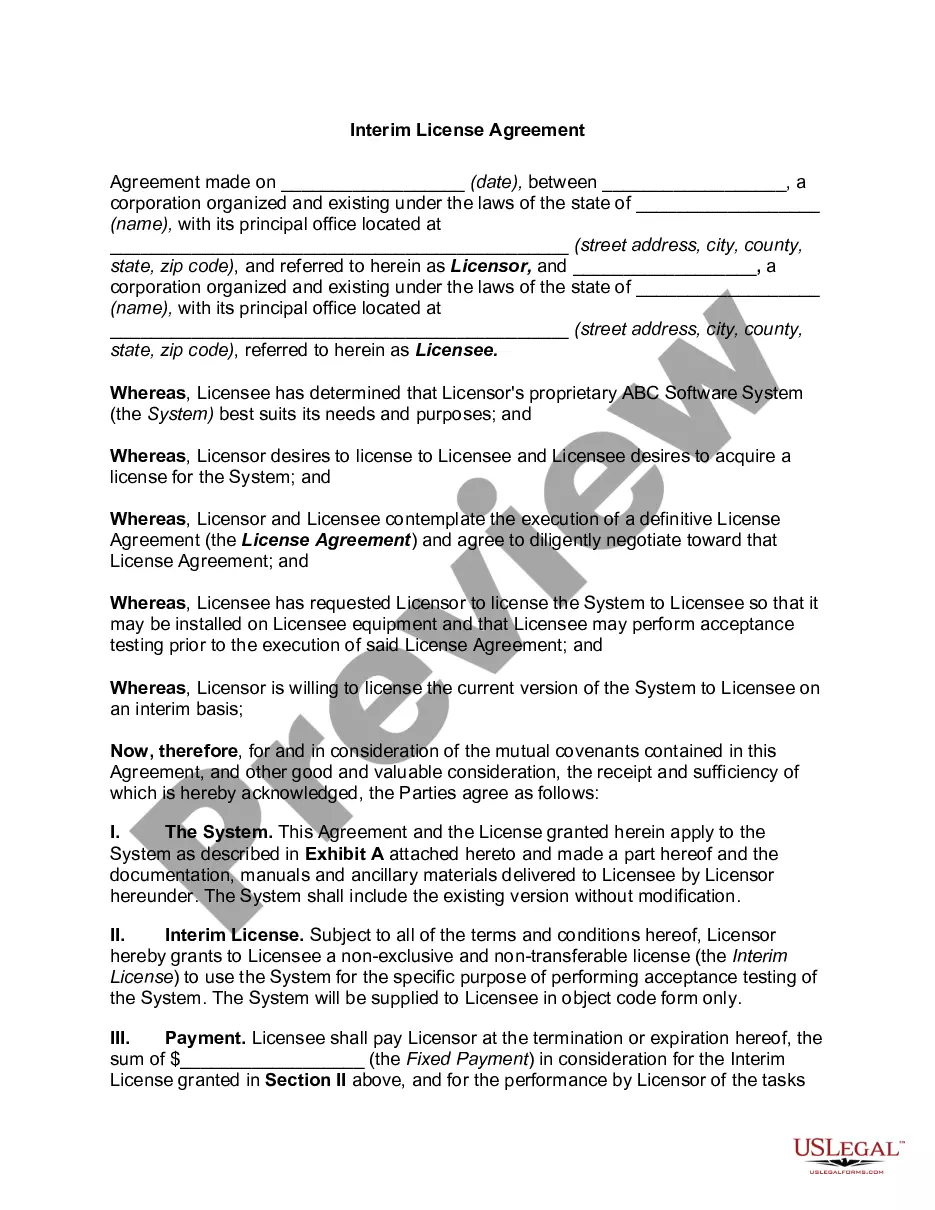
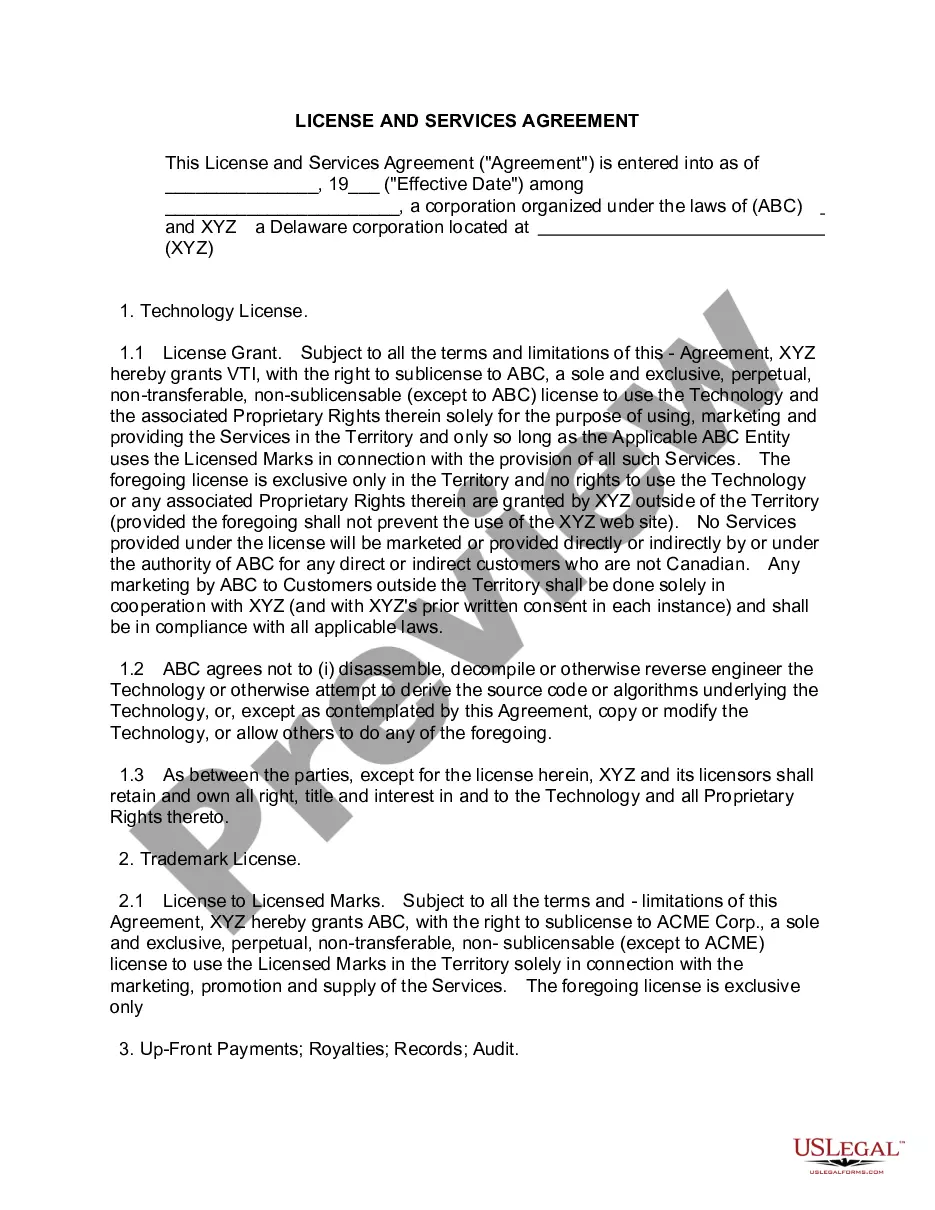
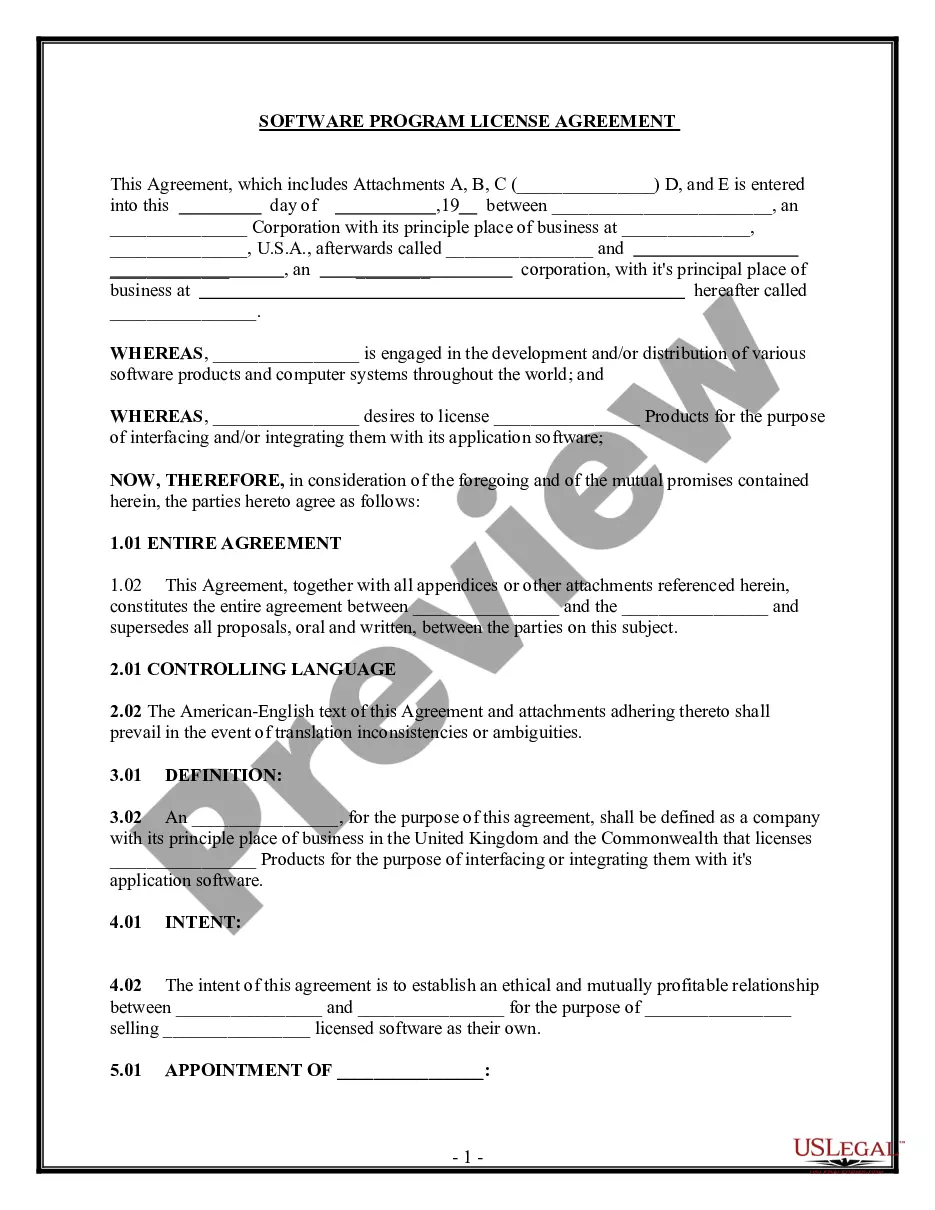
The Interim License Agreement is a legal document that allows a Licensee to use specified software, known as the System, from a Licensor on a temporary basis. This form is common in the computer, internet, and software industries, facilitating acceptance testing before a definitive license agreement is made. This agreement distinguishes itself from a traditional software license by focusing on interim usage and specific testing conditions.
What’s included in this form
- Identification of Licensor and Licensee.
- Definition and description of the software System being licensed.
- Terms governing the use of the System during the interim period.
- Payment obligations and terms associated with the interim license.
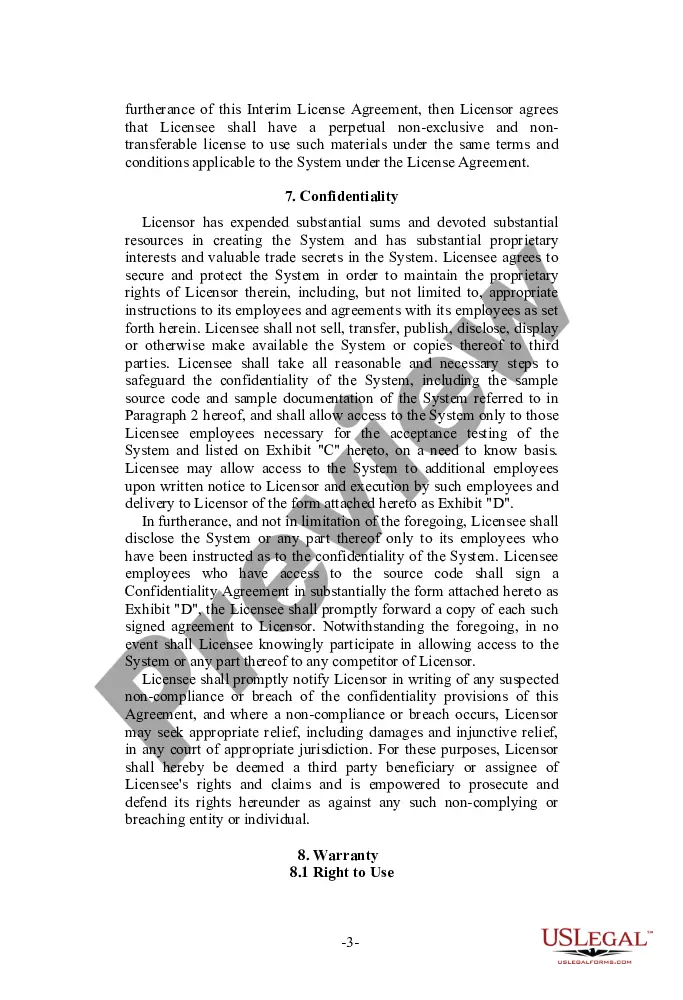
- Confidentiality requirements to protect proprietary information.
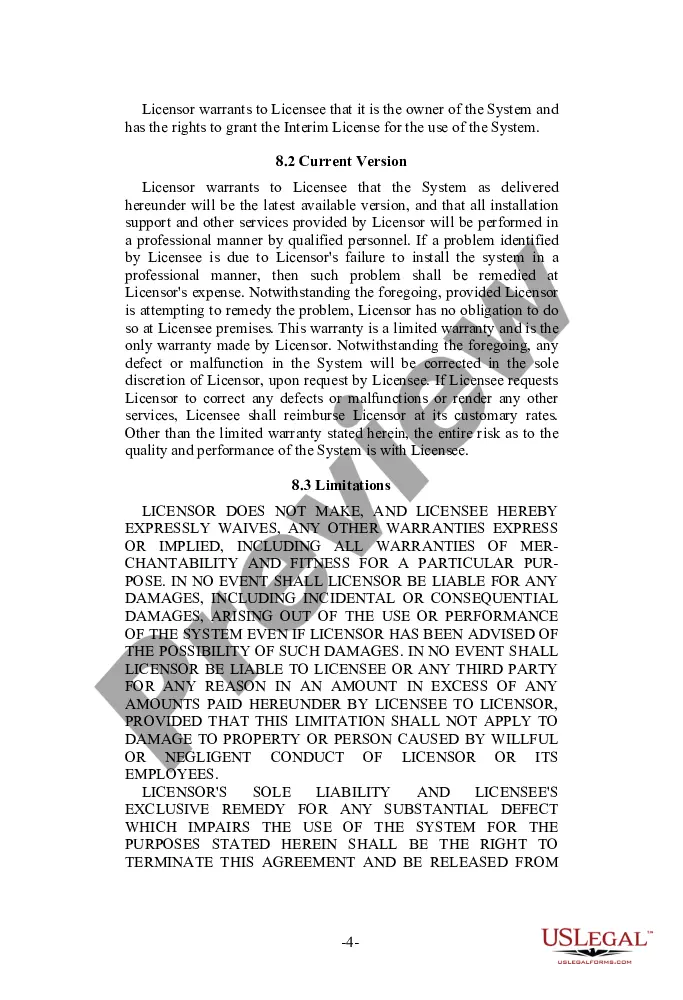
- Warranties related to the system's functionality and installation.
Situations where this form applies
This form is used when a Licensee needs to test a software product from a Licensor before committing to a long-term license agreement. It is particularly useful when the Licensee wants to ensure that the software meets their needs and specifications, while also providing the Licensor an opportunity to showcase their product's capabilities.
Who needs this form
This form is intended for:
- Software developers or companies acting as Licensors.
- Businesses or individuals interested in using software on a trial basis, acting as Licensees.
- Legal professionals preparing interim licensing agreements for clients in the technology sector.
Steps to complete this form
- Identify the parties involved: fill in the names of the Licensor and Licensee.
- Describe the System: include details about the software being licensed as outlined in the associated exhibits.
- Specify the payment terms: enter the fixed payment and any other financial obligations as per the agreement.
- Outline confidentiality measures: include clauses to protect proprietary information from unauthorized disclosure.
- Indicate the delivery date: set a date for the Licensor to deliver the software System to the Licensee.
Does this document require notarization?
Notarization is not commonly needed for this form. However, certain documents or local rules may make it necessary. Our notarization service, powered by Notarize, allows you to finalize it securely online anytime, day or night.
Get your form ready online
Our built-in tools help you complete, sign, share, and store your documents in one place.
Make edits, fill in missing information, and update formatting in US Legal Forms—just like you would in MS Word.
Download a copy, print it, send it by email, or mail it via USPS—whatever works best for your next step.
Sign and collect signatures with our SignNow integration. Send to multiple recipients, set reminders, and more. Go Premium to unlock E-Sign.
If this form requires notarization, complete it online through a secure video call—no need to meet a notary in person or wait for an appointment.
We protect your documents and personal data by following strict security and privacy standards.

Make edits, fill in missing information, and update formatting in US Legal Forms—just like you would in MS Word.

Download a copy, print it, send it by email, or mail it via USPS—whatever works best for your next step.

Sign and collect signatures with our SignNow integration. Send to multiple recipients, set reminders, and more. Go Premium to unlock E-Sign.

If this form requires notarization, complete it online through a secure video call—no need to meet a notary in person or wait for an appointment.

We protect your documents and personal data by following strict security and privacy standards.
Common mistakes
- Failing to clearly define the System being tested.
- Omitting payment specifics, including fixed payments and reimbursement terms.
- Not including adequate confidentiality provisions to protect sensitive information.
- Neglecting to specify the duration of the interim license period.
Why complete this form online
- Convenience: Downloadable format allows for easy access and completion.
- Editability: Tailor the form to meet specific circumstances and requirements.
- Reliability: Prepared by licensed attorneys to ensure legal adequacy.
Legal use & context
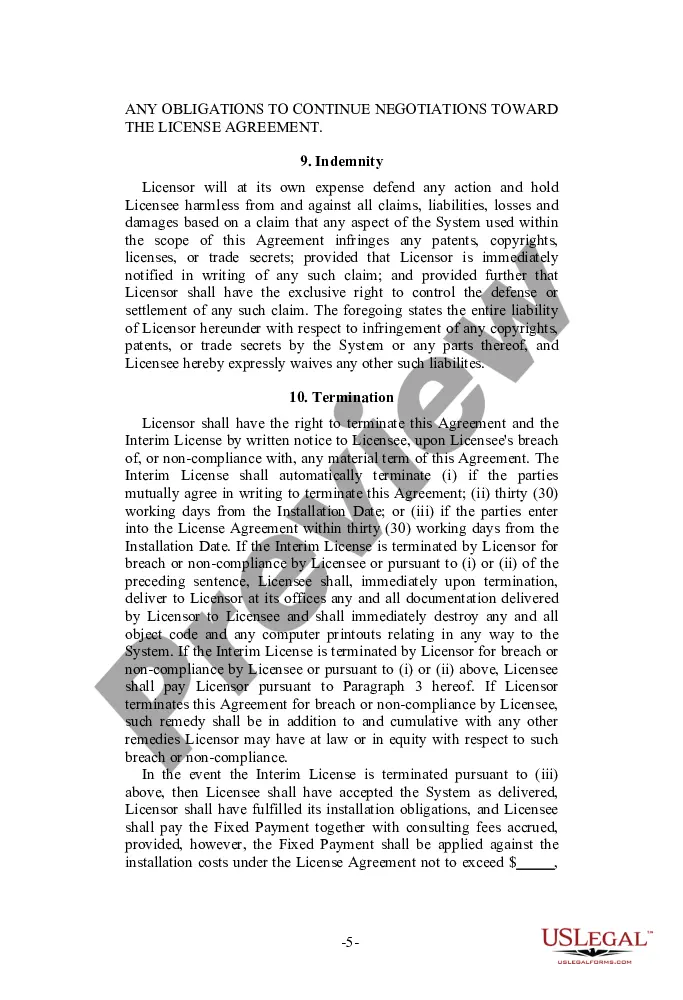
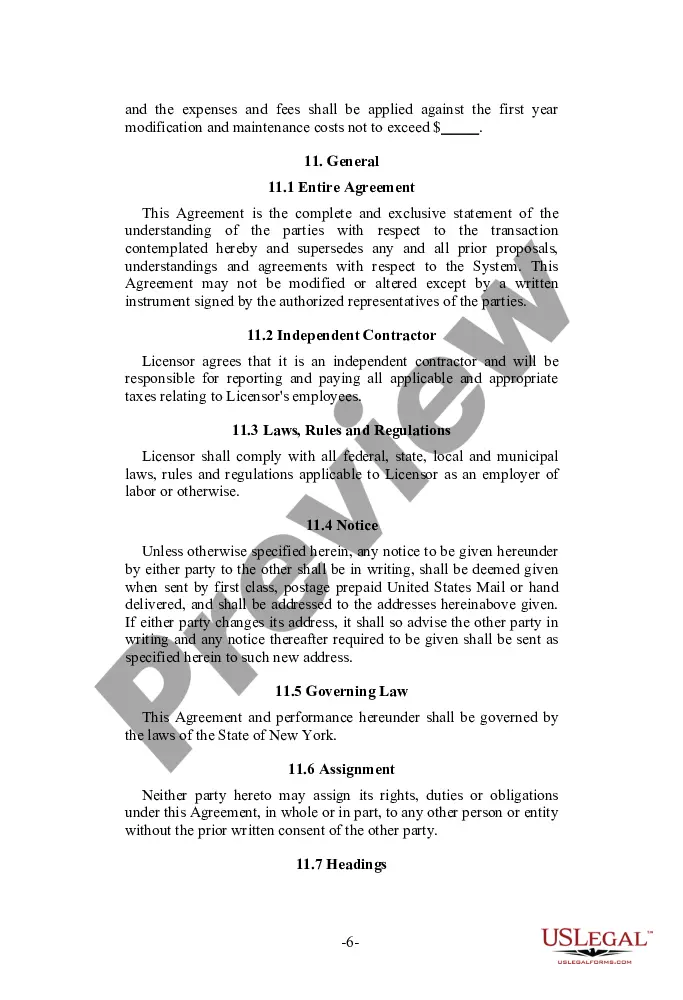
- This agreement facilitates the testing of a software product and outlines the rights and obligations of both parties.
- Understanding the warranty limitations is crucial as they restrict the Licensor's liability.
- Ensure compliance with confidentiality provisions to avoid potential legal issues.
What to keep in mind
- This form is vital for temporary software licensing while testing for compatibility and performance.
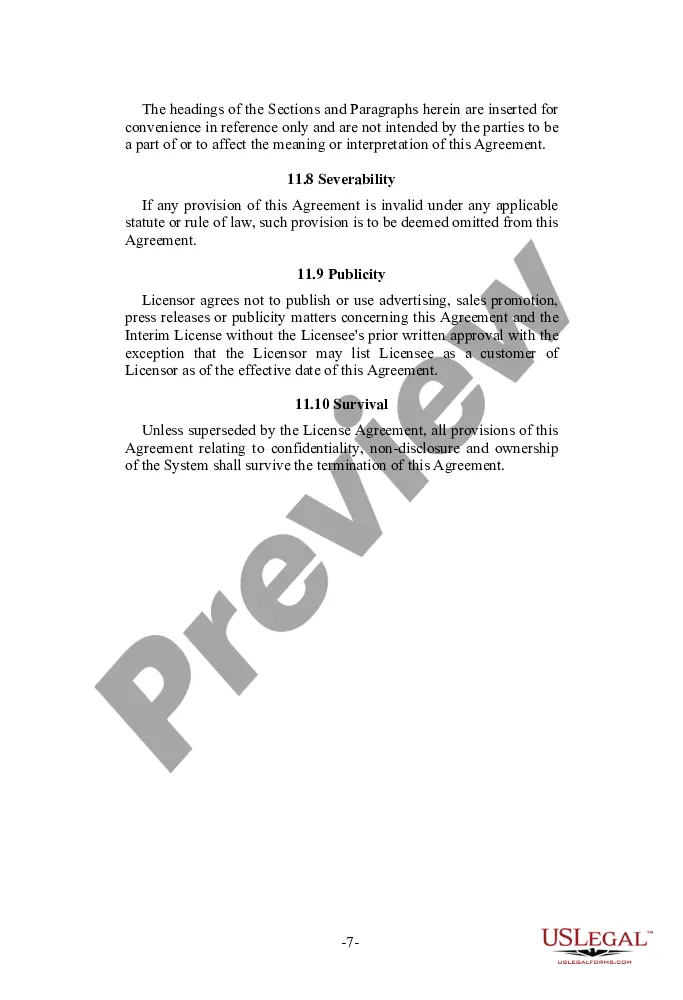
- It protects the proprietary rights of software developers by stipulating confidentiality and usage limitations.
- Ensure all components are completed accurately to avoid disputes or misunderstandings between parties.
Looking for another form?




Form popularity
FAQ
A lease is a contract between a tenant and a landlord that provides the tenant with exclusive interest in the property. A license, on the other hand, is when the owner gives permission to a licensee to conduct an action on the owner's property.
A licensing agreement allows one party (the licensee) to use and/or earn revenue from the property of the owner (the licensor). Licensing agreements generate revenues, called royalties, earned by a company for allowing its copyrighted or patented material to be used by another company.
An example of a licensing agreement is a contract between the copyright holders of software and another company, allowing the latter to use the computer software for their daily business operations.
A lease is a transfer of an interest in a specific immovable property, while licence is a bare permission, without any transfer of an interest.A lease creates an interest in favour of the leassee with respect of the property, but a licence does not create such an interest.
A lease is a transfer of an interest in a specific immovable property, while licence is a bare permission, without any transfer of an interest.A lease creates an interest in favour of the leassee with respect of the property, but a licence does not create such an interest.
A lease serves as a binding, legal agreement between the property owner and the tenant. As such, it is very important to make sure it thoroughly addresses the rules, policies, and conflict resolution procedures for living in the rental property, and clearly defines tenant and landlord responsibilities.
The term licensing agreement refers to a legal, written contract between two parties wherein the property owner gives permission to another party to use their brand, patent, or trademark.
Exclusive or non-exclusive. In an exclusive license, the intellectual property holder is licensing the work only to one person, for that particular use/territory. Territory. Use. Attribution. Derivative works. Confidentiality. Time frame. Termination.
A licence grants a personal right to use the property or part of the property in a certain way. A lease, on the other hand, is the grant of a right to the exclusive possession of land for a determinable period of time. It is important for both parties to understand the type of agreement into which they are entering.
What is a Licensing Agreement? A licensing agreement is a contract between two parties (the licensor and licensee) in which the licensor grants the licensee the right to use the brand name, trademark, patented technology, or ability to produce and sell goods owned by the licensor.