Mississippi Memorandum in Opposition to Summary Judgment Motion
What is this form?
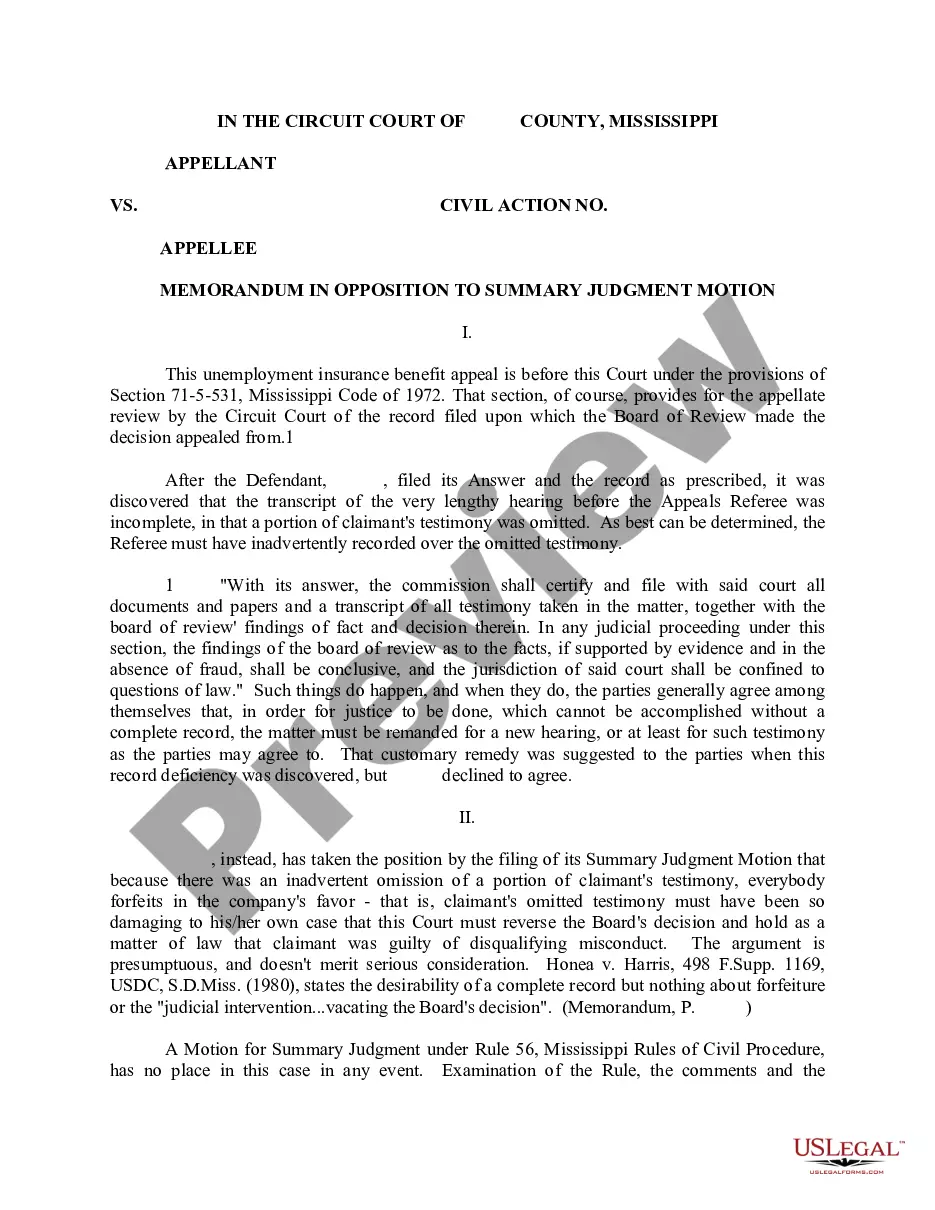
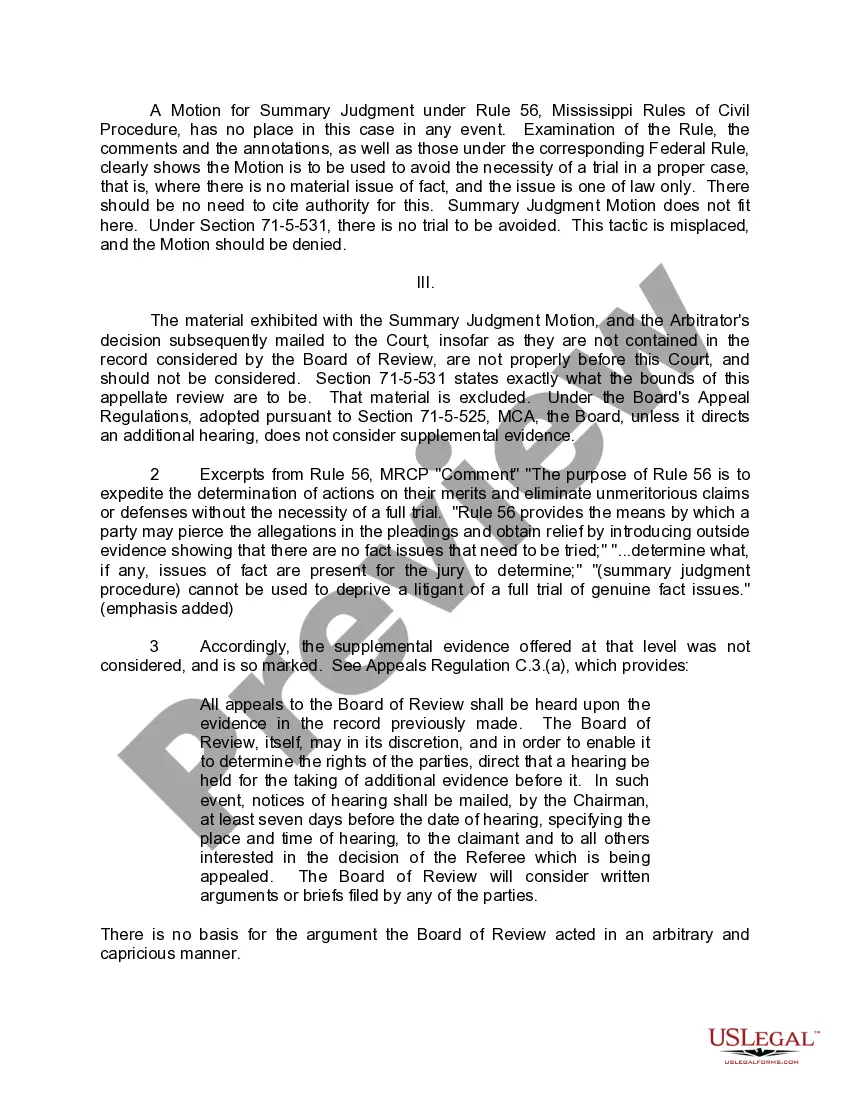
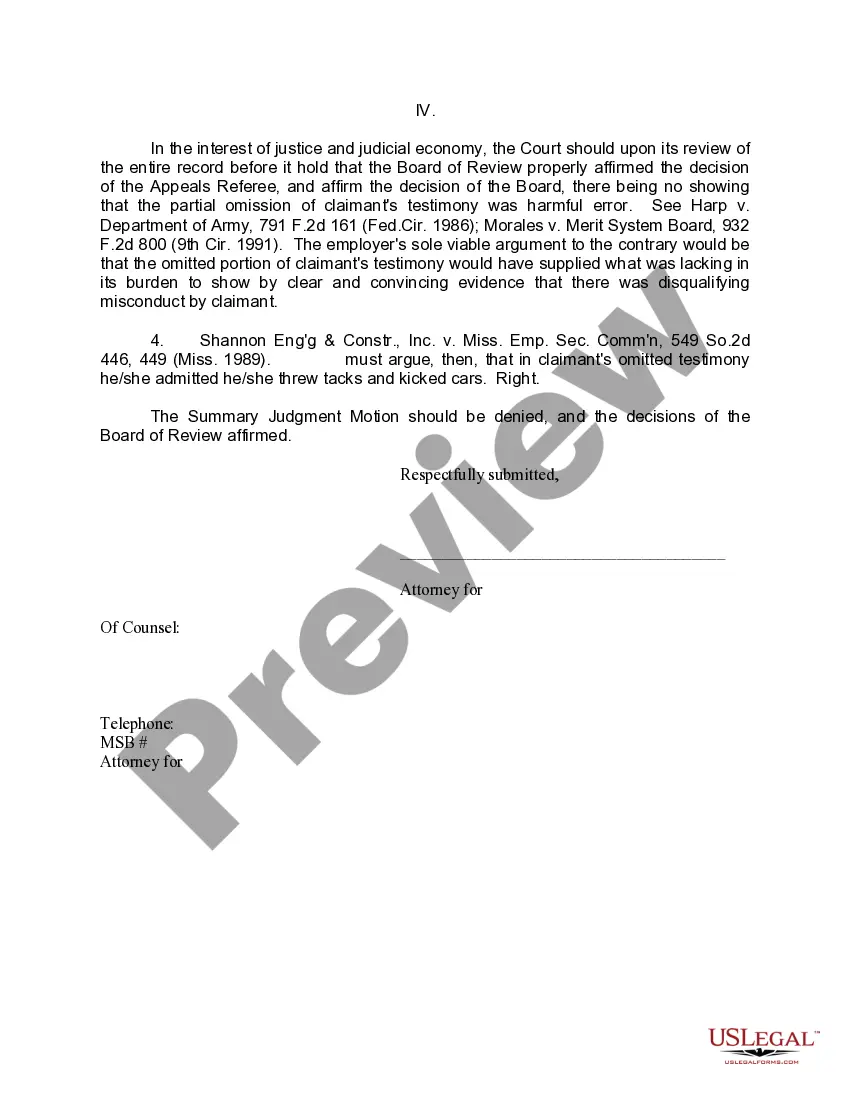
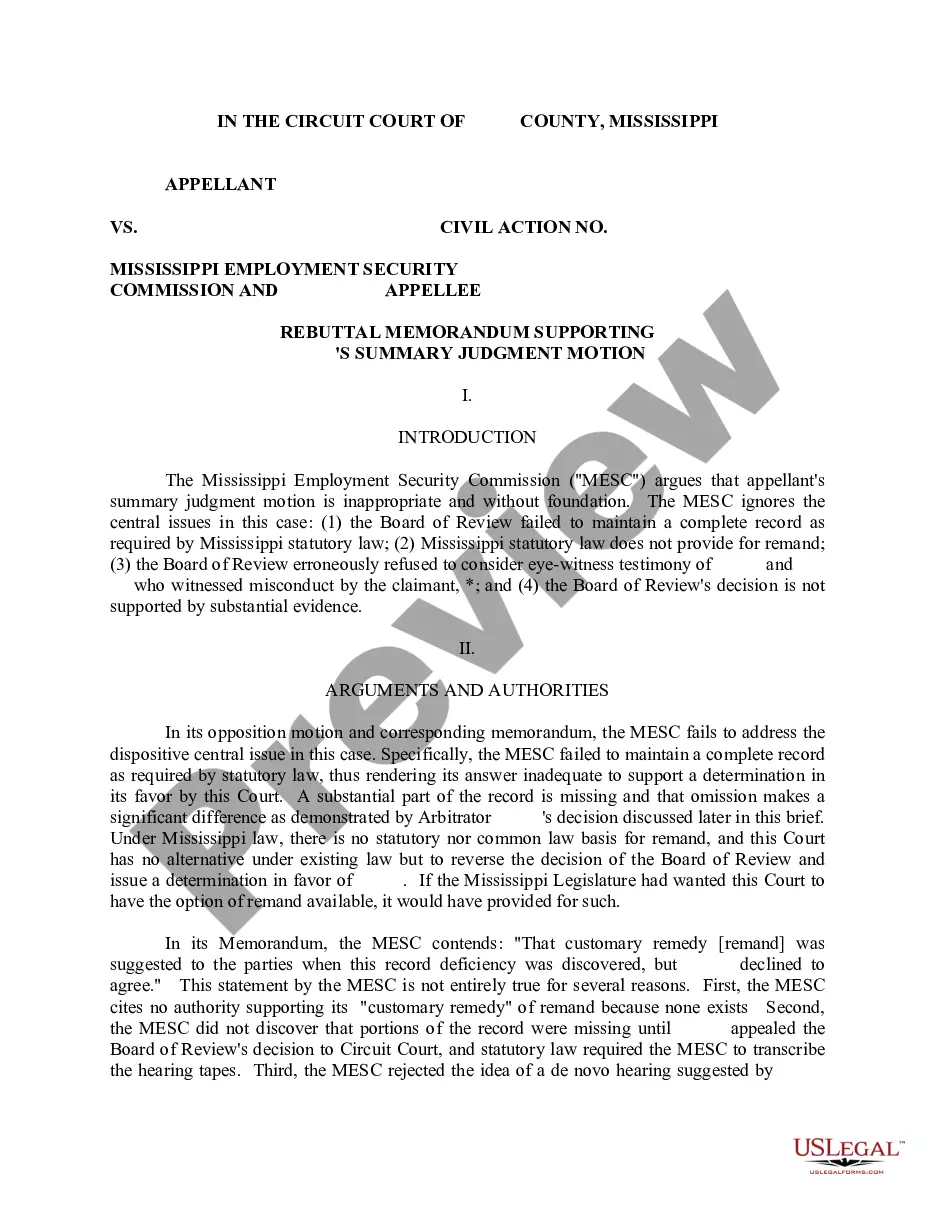
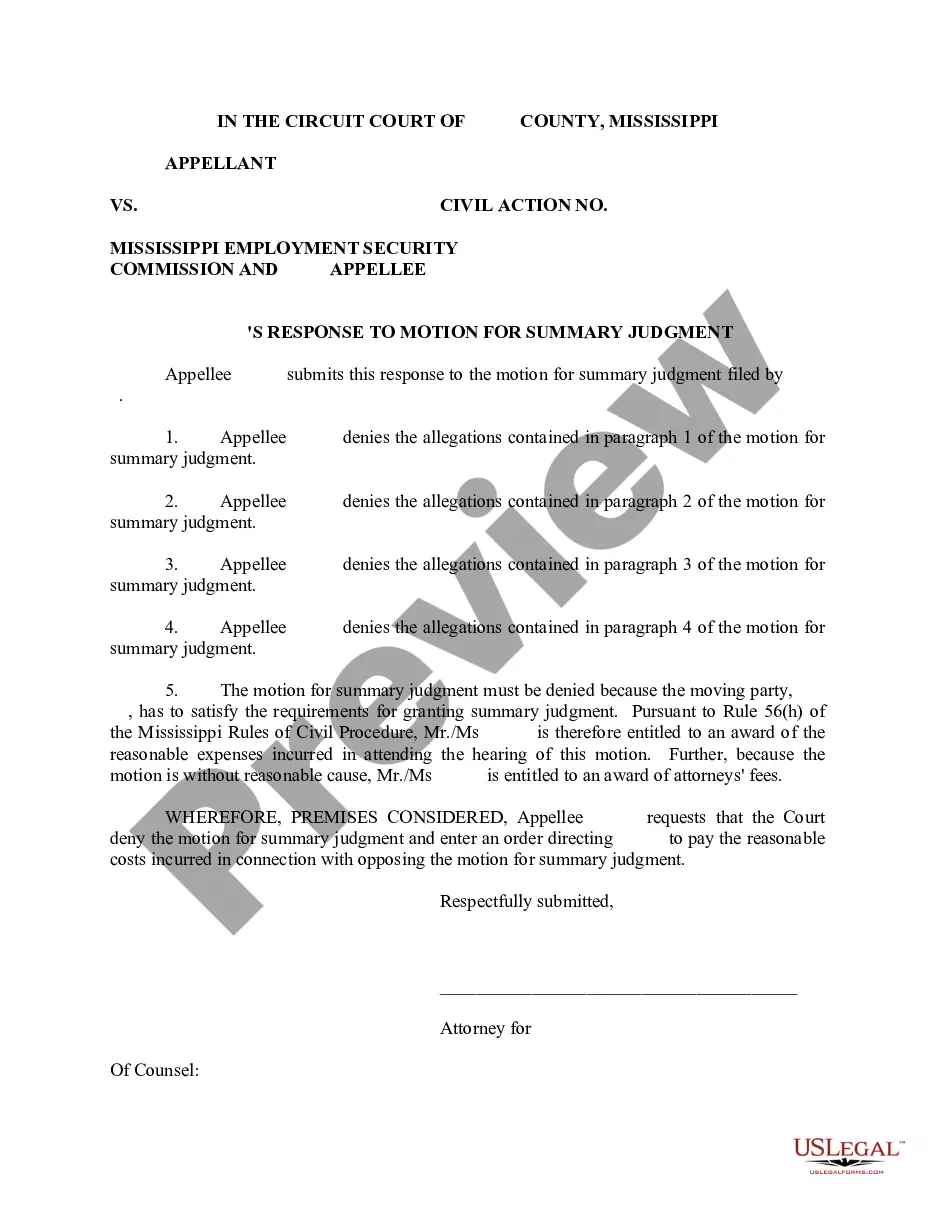
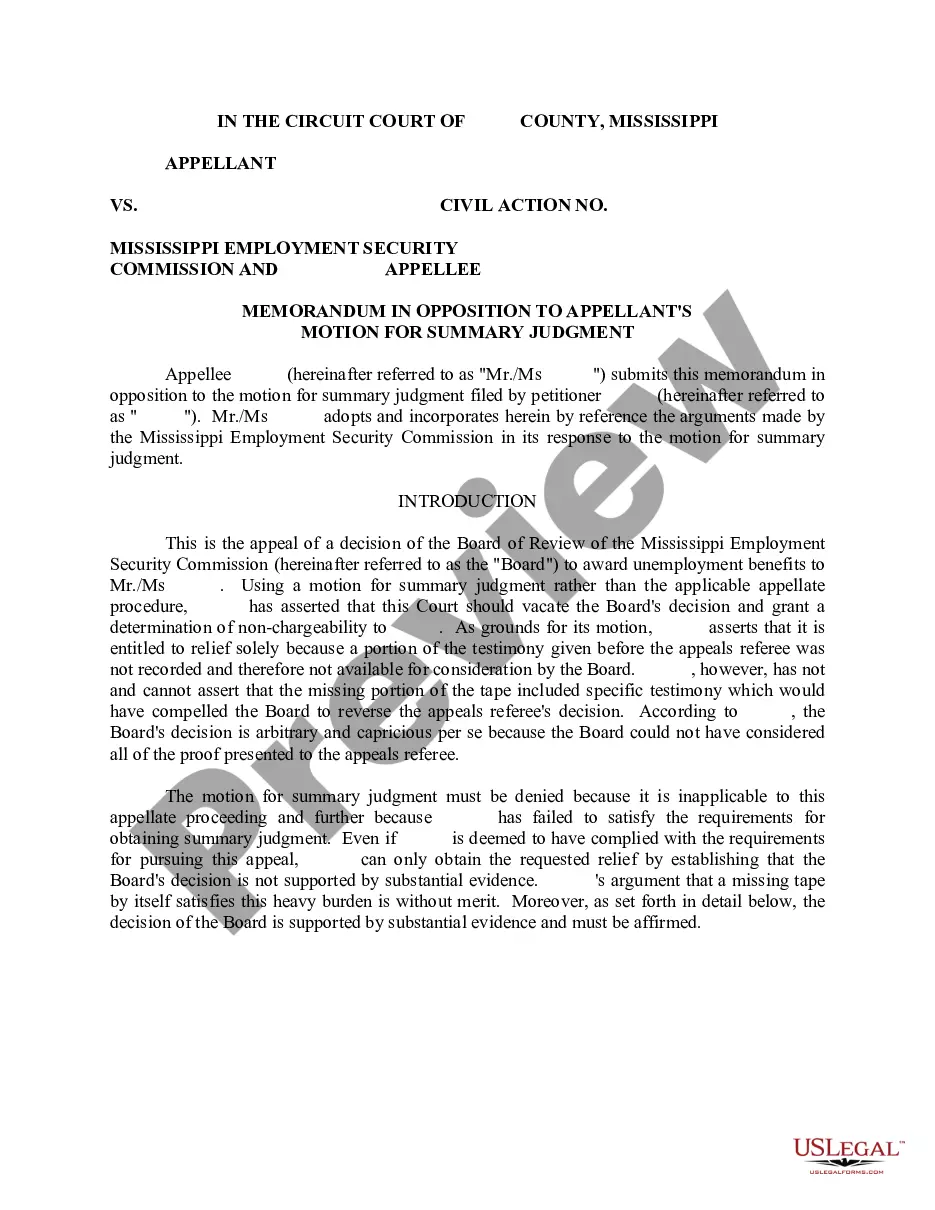
A Memorandum in Opposition to Summary Judgment Motion is a legal document used to oppose a request by one party to resolve a case without a full trial. By submitting this memorandum, the opposing party aims to assert that there are genuine issues of material fact that warrant a trial. This form differs from a regular motion in its specific focus on countering the claims made in a summary judgment motion, making it essential for disputing a summary judgment effectively.
Key components of this form
- Identification of parties involved in the case
- Reference to specific legal standards and rules related to summary judgment
- Arguments against the motion for summary judgment
- Statement of material facts that dispute the claims
- Conclusion urging the court to deny the motion
Common use cases
This form is appropriate when you need to contest a summary judgment motion filed by the opposing party in a legal case. You may use it if you believe that there are important facts or legal issues that have not been resolved and that therefore require a trial. Common scenarios include cases involving landlord-tenant disputes, contract disagreements, or personal injury claims where factual disputes exist.
Intended users of this form
- Litigants who are opposing a summary judgment motion in court
- Individuals representing themselves in a legal matter (pro se litigants)
- Attorneys acting on behalf of their clients to detail counterarguments against a motion for summary judgment
Steps to complete this form
- Clearly identify all parties involved in the case.
- Summarize the basis of the opposing argument against the summary judgment motion.
- Reference relevant laws, rules, or precedents that support your position.
- Present material facts that are disputed and require examination in a trial setting.
- Sign and date the document as required by your jurisdiction.
Is notarization required?
This form usually doesn’t need to be notarized. However, local laws or specific transactions may require it. Our online notarization service, powered by Notarize, lets you complete it remotely through a secure video session, available 24/7.
Get your form ready online
Our built-in tools help you complete, sign, share, and store your documents in one place.
Make edits, fill in missing information, and update formatting in US Legal Forms—just like you would in MS Word.
Download a copy, print it, send it by email, or mail it via USPS—whatever works best for your next step.
Sign and collect signatures with our SignNow integration. Send to multiple recipients, set reminders, and more. Go Premium to unlock E-Sign.
If this form requires notarization, complete it online through a secure video call—no need to meet a notary in person or wait for an appointment.
We protect your documents and personal data by following strict security and privacy standards.

Make edits, fill in missing information, and update formatting in US Legal Forms—just like you would in MS Word.

Download a copy, print it, send it by email, or mail it via USPS—whatever works best for your next step.

Sign and collect signatures with our SignNow integration. Send to multiple recipients, set reminders, and more. Go Premium to unlock E-Sign.

If this form requires notarization, complete it online through a secure video call—no need to meet a notary in person or wait for an appointment.

We protect your documents and personal data by following strict security and privacy standards.
Mistakes to watch out for
- Failing to provide specific evidence to support your claims against the summary judgment motion.
- Not citing relevant legal standards or rules in your arguments.
- Submitting the memorandum after the deadline for opposition.
- Omitting necessary signatures or dates on the document.
Why complete this form online
- Immediate access to a professionally drafted legal memorandum tailored to your specific needs.
- The ability to modify and personalize the document before printing or filing.
- Time-saving by eliminating the need for in-person consultations with attorneys.
- Access to resources that ensure you are following current legal standards and practices.
Legal use & context
The Memorandum in Opposition to Summary Judgment Motion is crucial in legal proceedings where a party is seeking to contest a motion that could potentially end a case without a full trial. Understanding its use can help safeguard the right to a fair litigation process.
Looking for another form?

Form popularity
FAQ
Under Rules 8.104 and 8.108, three possible deadlines govern the filing of a notice of appeal: (1) 60 days from service of either the judgment or appealable order; (2) 30 days from the denial of a timely-filed post-trial motion; or, (3) if neither of the first two applies, then 180 days after entry of judgment or
Overview. If one party to a case has filed a motion with the court, the other side can file an opposition. An opposition is a written statement explaining to the judge why the other side is not entitled to whatever he is asking for in his motion. It is your opportunity to oppose the other side's request.
If a defendant refuses to produce documents or witnesses for depositions, you can oppose the summary-judgment motion by submitting your declaration and showing that facts essential to justify your opposition may exist but cannot for reasons stated be presented to the court.
Ordinarily, a party cannot appeal a denial of summary judgment after trial has taken place, unless the arguments were renewed in a motion for judgment as a matter of law under Federal Rule of Civil Procedure 50.Denials of summary judgment generally cannot be appealed after a full trial on the merits.
An Affidavit of Opposition, according to Data Segment, is a written document (affidavit) that a person files in protest to another document that has already been filed. It also is called a Counter Affidavit because it counters previous documentation.
A memorandum of law is also often called a brief. It is essentially a written legal argument.A memoranum of law in opposition to defendant's motion to strike would usually be plaintiff's legal argument about why the court should not do that.
If the motion is granted, the judgment on the issue or case is deemed to be a final judgment from which a party may seek an appeal. The court of appeal can reverse the grant of summary judgment and reinstate the claim in the lower court. However, this is rarely done and most summary judgments are upheld on appeal.
A motion for summary judgment filed by an opposing party claims that you cannot prevail in the case because there is no legal dispute or your claim is without merit or a defense. Failure to respond to a motion for summary judgment can result in your case being dismissed or a judgment being rendered against you.
Attack the Legal Argument. The first place to look for a weakness in your opponent's motion is at their legal argument. Attack the Evidence. Attack the Separate Statement. Consider Whether Your Opponent's Motion Meets its Burden. Consider Seeking a Continuance to Conduct More Discovery. Conclusion.