Mississippi Rebuttal Memorandum Supporting Summary Judgment Motion
Understanding this form
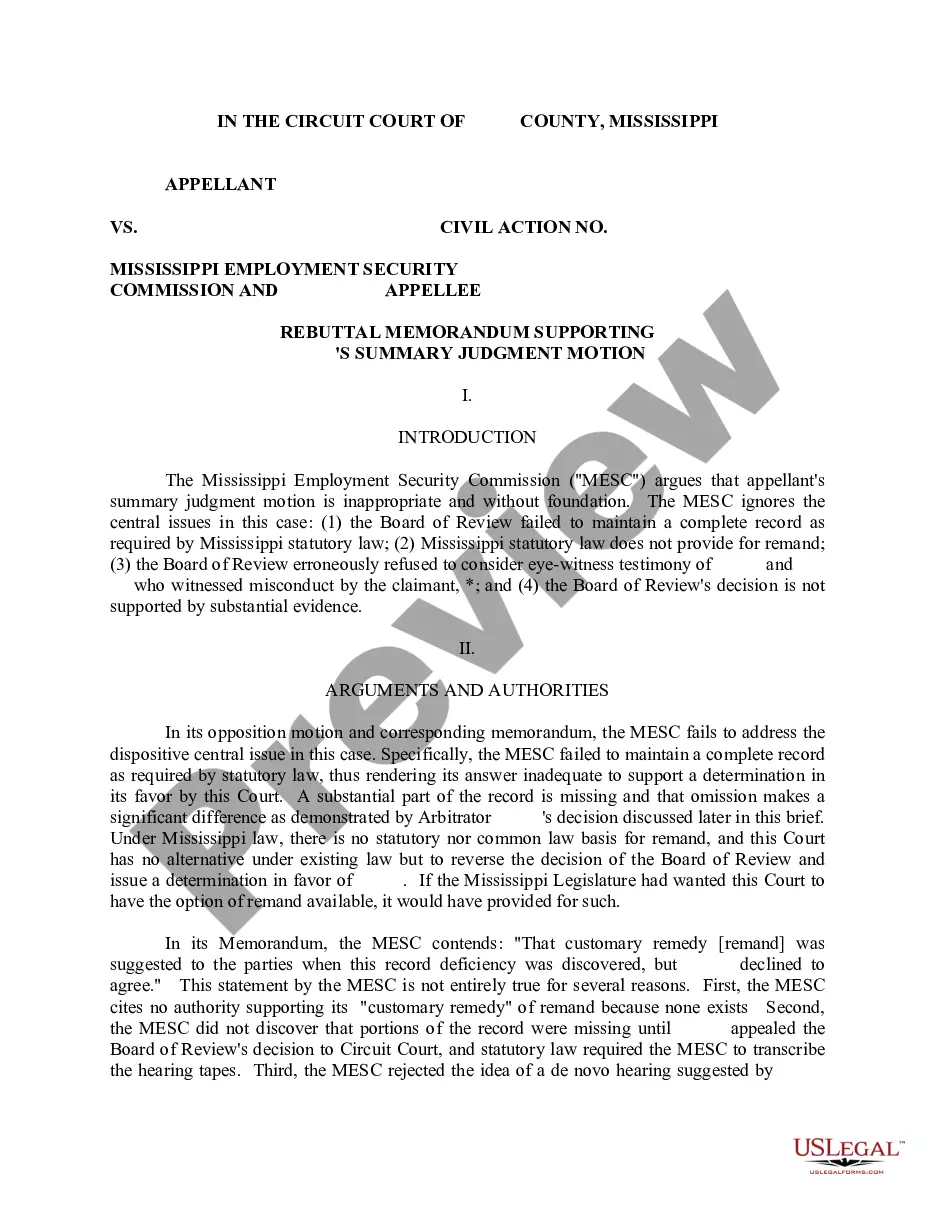
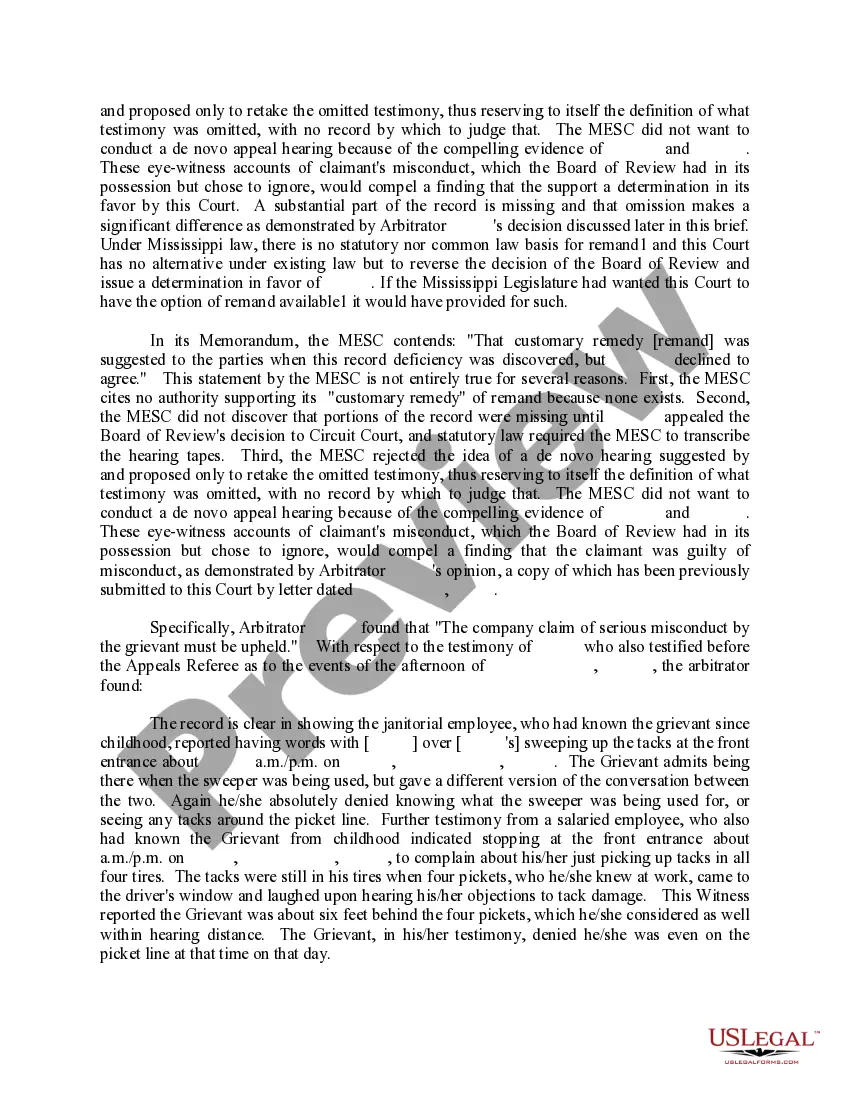
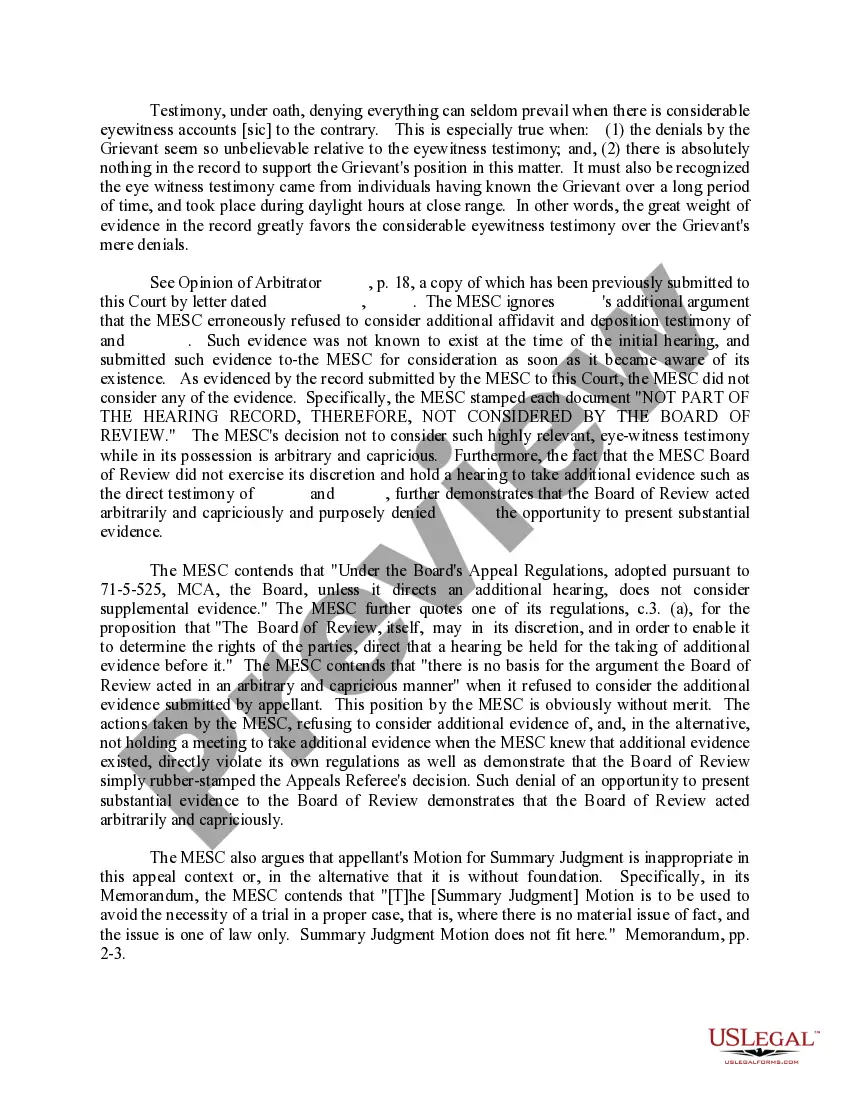
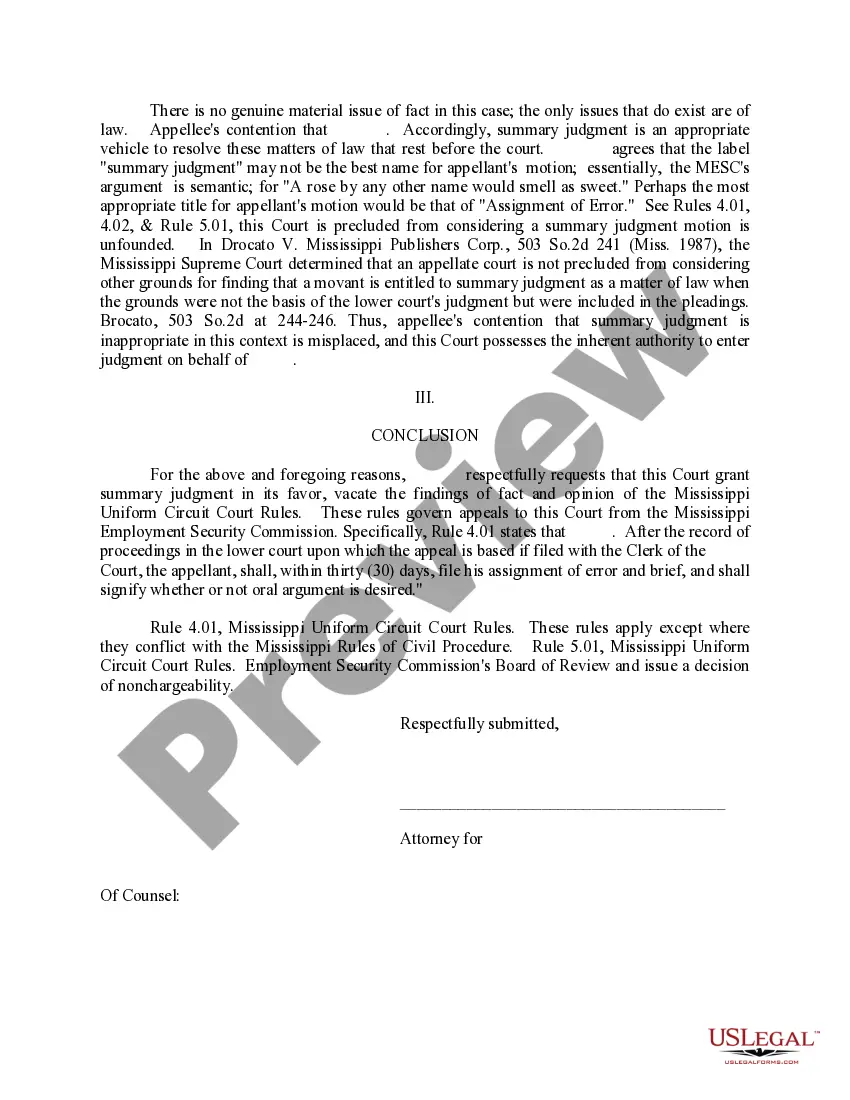
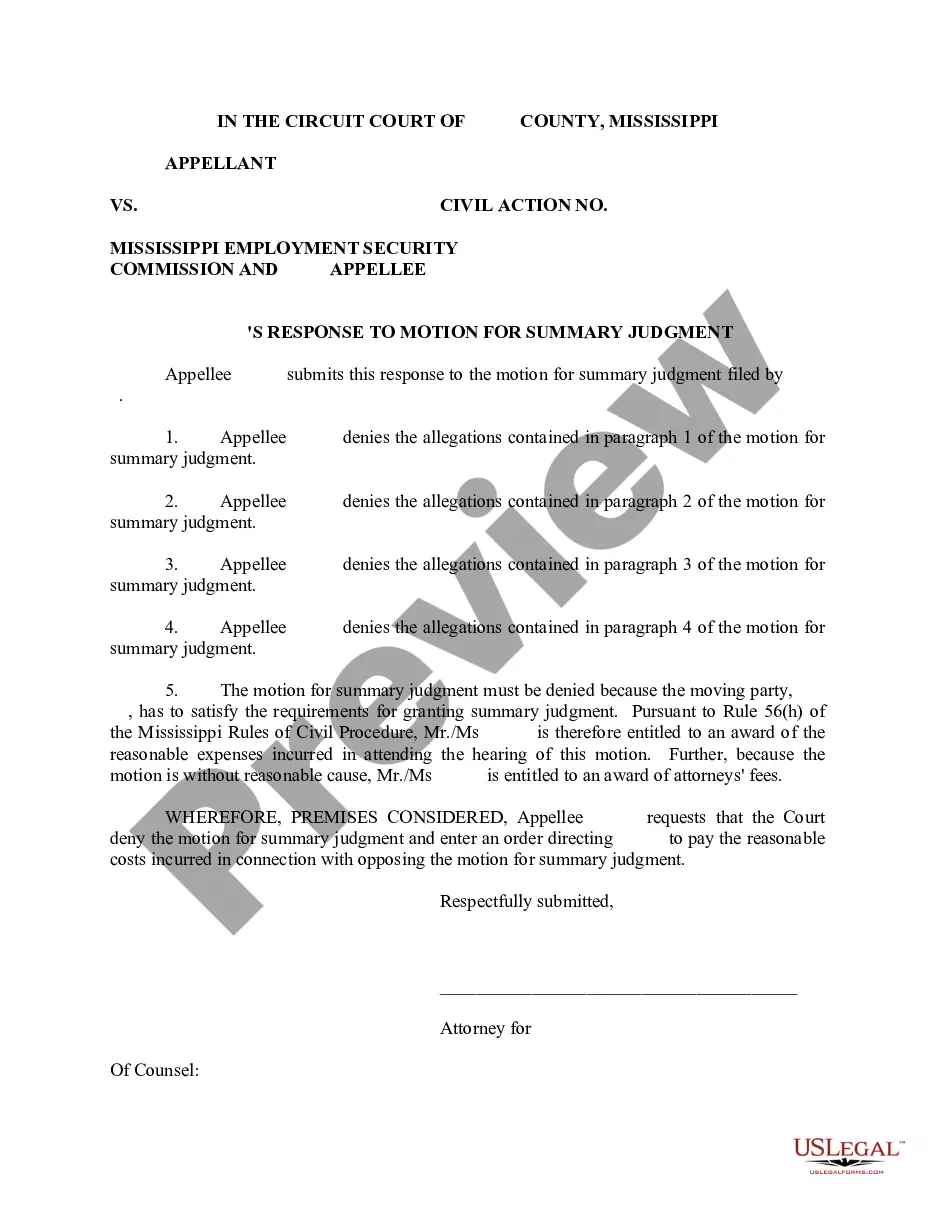
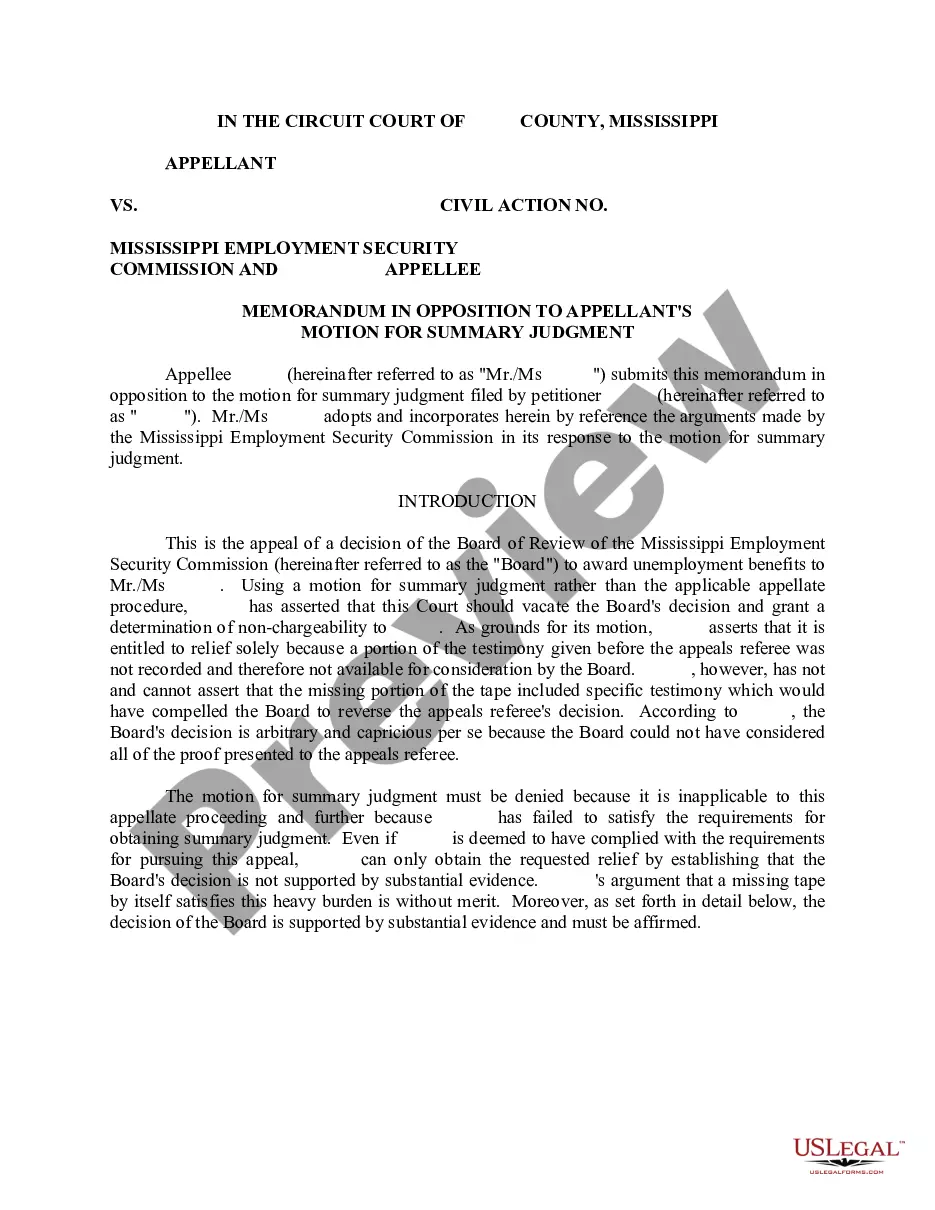
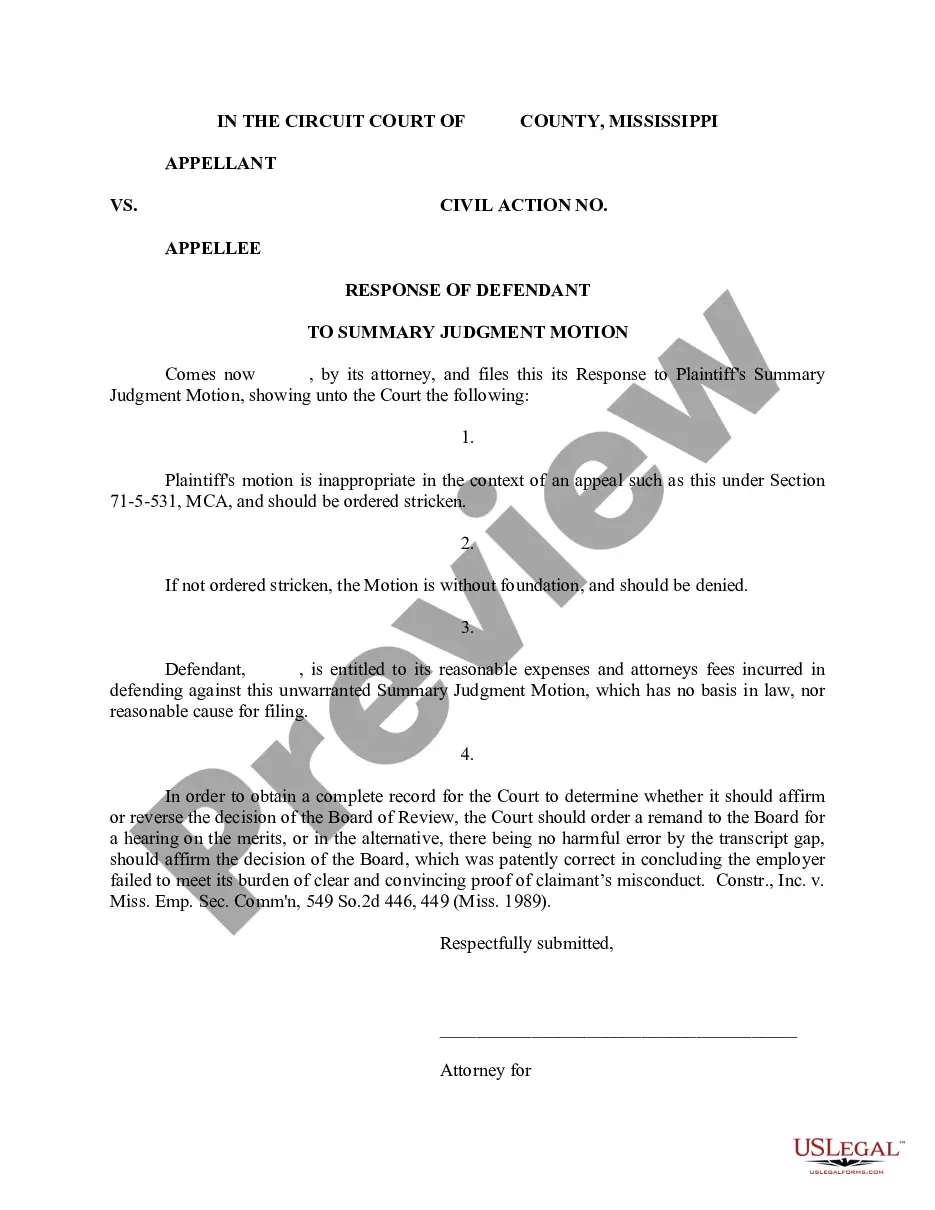
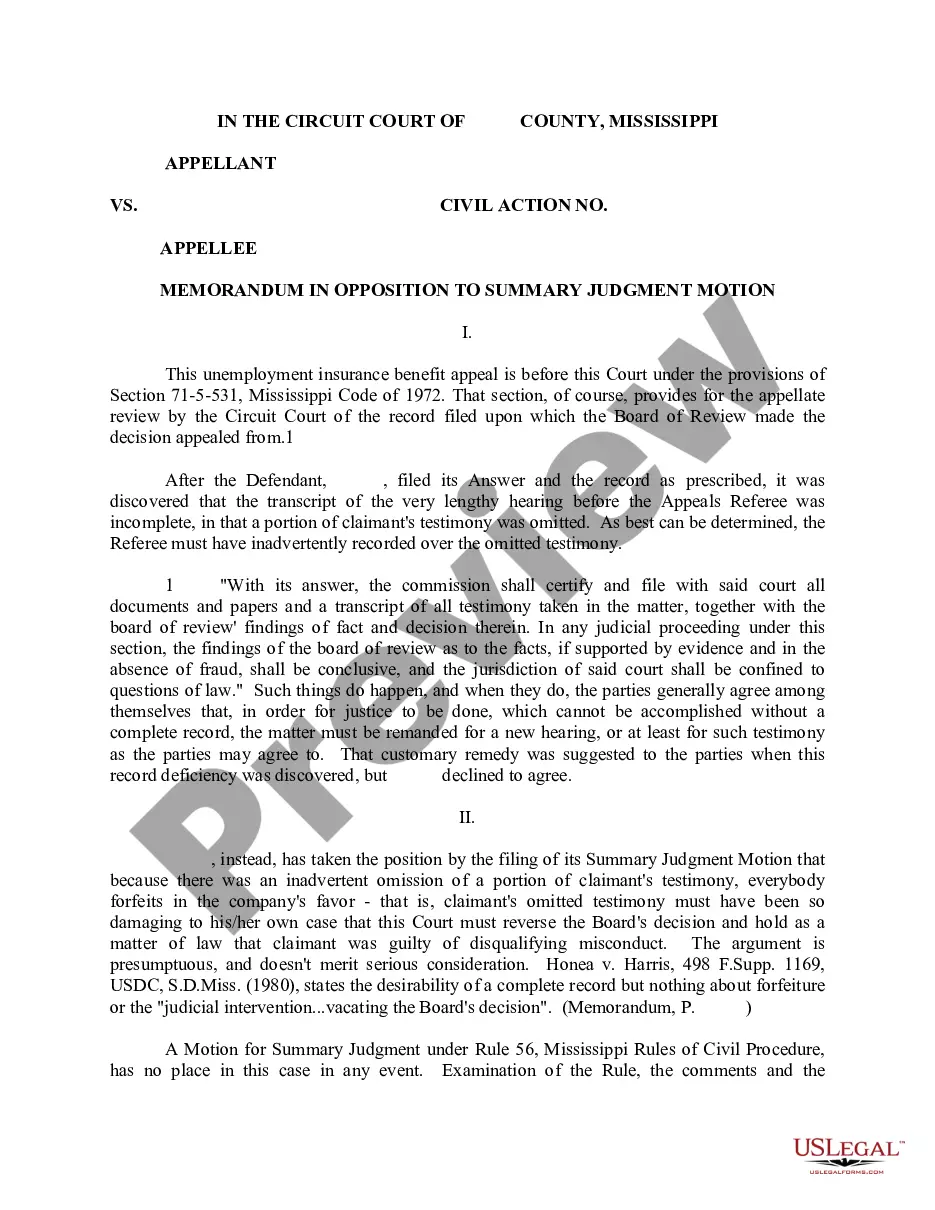
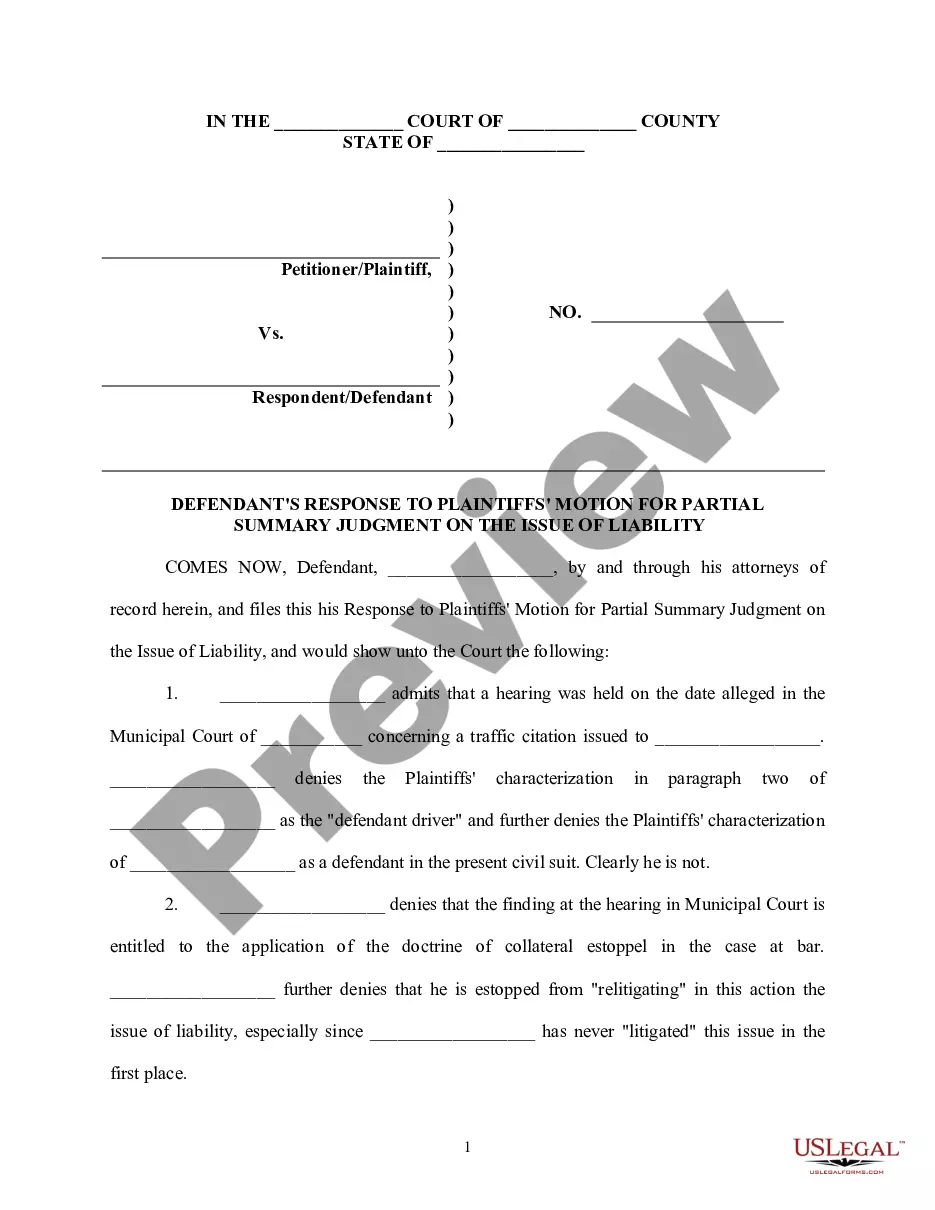
The Rebuttal Memorandum Supporting Summary Judgment Motion is a legal document used in court to contest an opposing party's motion for summary judgment. This form helps demonstrate why the motion should be denied based on factual disputes or legal errors. Unlike an initial summary judgment motion, this rebuttal provides a counter-argument, focusing on the legal foundation and contextual importance of a trial.
Main sections of this form
- Case details: Identifying information related to the case, including court name and case number.
- Argument structure: Sections outlining opposing arguments and presenting counter-evidence.
- Citation of law: References to relevant rules and legal precedents that support your position.
- Statute of limitations: Information regarding deadlines for filing and responding to motions.
- Signature block: Space for the appellant's signature to affirm the content of the memorandum.

Common use cases
This form is essential when responding to a summary judgment motion made by the opposing party. It is best used in civil litigation cases where the issues are complex, and there are material questions of fact that must be resolved through a trial. If the opposing party is attempting to bypass a trial through a summary judgment motion, utilizing this rebuttal memorandum can help assert your position and defend your right to have the facts evaluated by the court.
Intended users of this form
This rebuttal memorandum is intended for use by:
- Litigants (individuals or organizations) involved in civil lawsuits.
- Legal representatives, including attorneys, who need to rebut opposing motions regarding summary judgment.
- Defendants or plaintiffs who want to contest evidence suggesting that no material issues exist for trial.
How to complete this form
- Identify the parties involved in the litigation and the case number.
- Clearly articulate the arguments against the summary judgment motion, citing relevant laws and case precedents.
- Provide detailed facts that contradict the points raised by the opposing party.
- Include a signature block at the end of the document for the appellant's signature and date.
- File the completed form with the court and provide copies to all relevant parties as required by court rules.
Notarization requirements for this form
This form does not typically require notarization unless specified by local law. Confirm any specific requirements with the relevant court or jurisdiction before filing.
Get your form ready online
Our built-in tools help you complete, sign, share, and store your documents in one place.
Make edits, fill in missing information, and update formatting in US Legal Forms—just like you would in MS Word.
Download a copy, print it, send it by email, or mail it via USPS—whatever works best for your next step.
Sign and collect signatures with our SignNow integration. Send to multiple recipients, set reminders, and more. Go Premium to unlock E-Sign.
If this form requires notarization, complete it online through a secure video call—no need to meet a notary in person or wait for an appointment.
We protect your documents and personal data by following strict security and privacy standards.

Make edits, fill in missing information, and update formatting in US Legal Forms—just like you would in MS Word.

Download a copy, print it, send it by email, or mail it via USPS—whatever works best for your next step.

Sign and collect signatures with our SignNow integration. Send to multiple recipients, set reminders, and more. Go Premium to unlock E-Sign.

If this form requires notarization, complete it online through a secure video call—no need to meet a notary in person or wait for an appointment.

We protect your documents and personal data by following strict security and privacy standards.
Mistakes to watch out for
- Failing to cite relevant legal authority that supports your arguments.
- Not adhering to the filing deadlines set by the court rules.
- Neglecting to proofread for clarity and coherence, which can weaken your argument.
- Omitting necessary signatures, which can invalidate the document.
Benefits of using this form online
- Convenience of downloading and filling out the form at your own pace.
- Editability allows for easy customization to fit the specifics of your case.
- Access to legal forms created and reviewed by licensed attorneys, ensuring reliability.
- Lower cost compared to hiring an attorney for drafting documents from scratch.
Looking for another form?


Form popularity
FAQ
The key to defeating a motion for summary judgment is to show the court that there are still facts in dispute. Summary judgment is only appropriate if none of the facts are disputed.
If a defendant refuses to produce documents or witnesses for depositions, you can oppose the summary-judgment motion by submitting your declaration and showing that facts essential to justify your opposition may exist but cannot for reasons stated be presented to the court.
Attack the Legal Argument. The first place to look for a weakness in your opponent's motion is at their legal argument. Attack the Evidence. Attack the Separate Statement. Consider Whether Your Opponent's Motion Meets its Burden. Consider Seeking a Continuance to Conduct More Discovery. Conclusion.
When a motion for summary judgment is denied, the nonmoving party achieves a form of premium that enables a case to settle for an additional amount. Put simply, the settlement value of a case increases when a motion for summary judgment is denied. Thus, denials of summary judgment up the ante in the litigation game.
The moving party has the initial burden to show that summary judgment is proper even if the moving party would not have the BURDEN OF PROOF at trial. The court generally examines the evidence presented with the motion in the light most favorable to the opposing party.
If the motion is granted, the judgment on the issue or case is deemed to be a final judgment from which a party may seek an appeal. The court of appeal can reverse the grant of summary judgment and reinstate the claim in the lower court. However, this is rarely done and most summary judgments are upheld on appeal.
An order granting summary judgment determines the parties' rights, but it is not appealable.