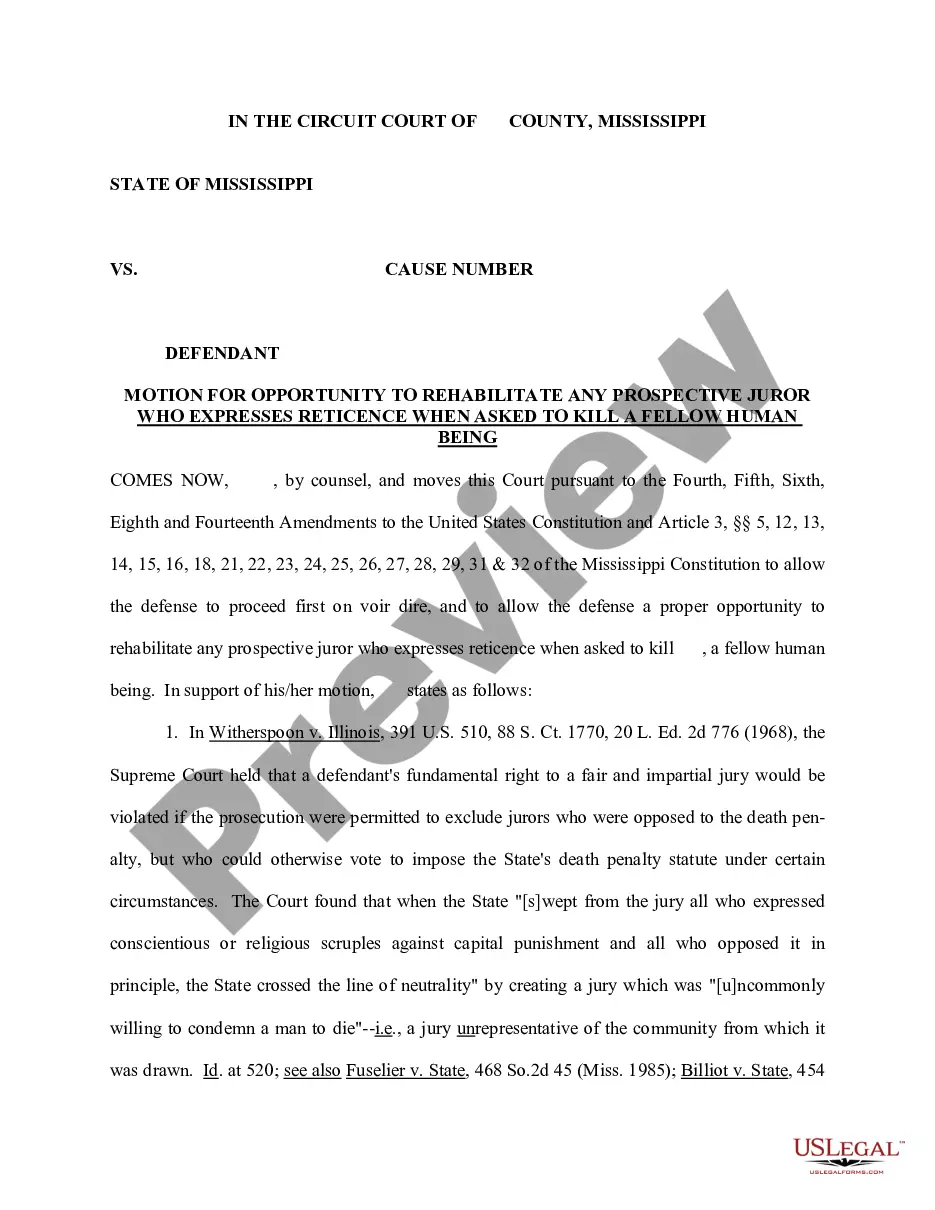
Louisiana Notice of Intention to Apply for Writs of Certiorari, Mandamus and Prohibition
What this document covers
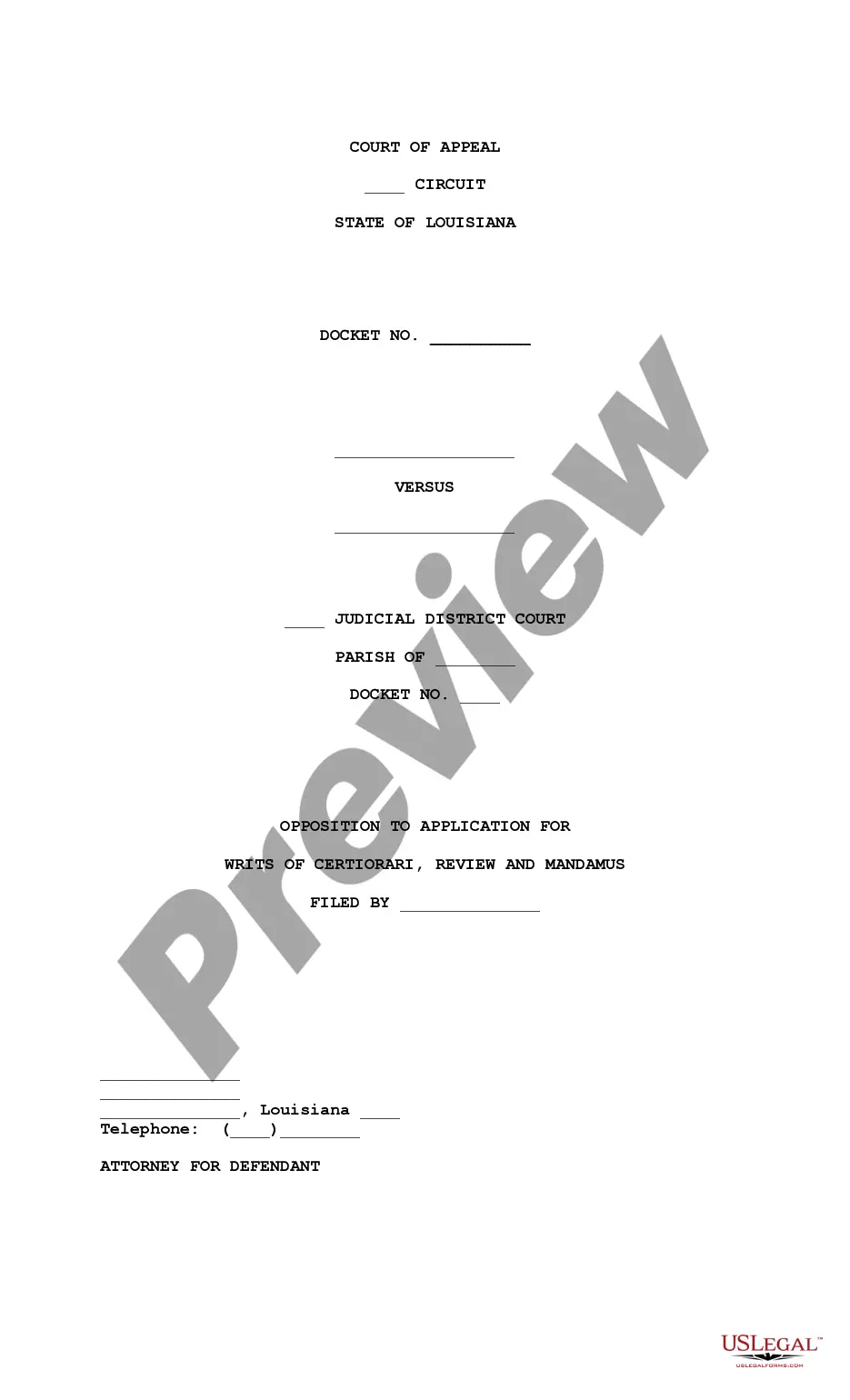
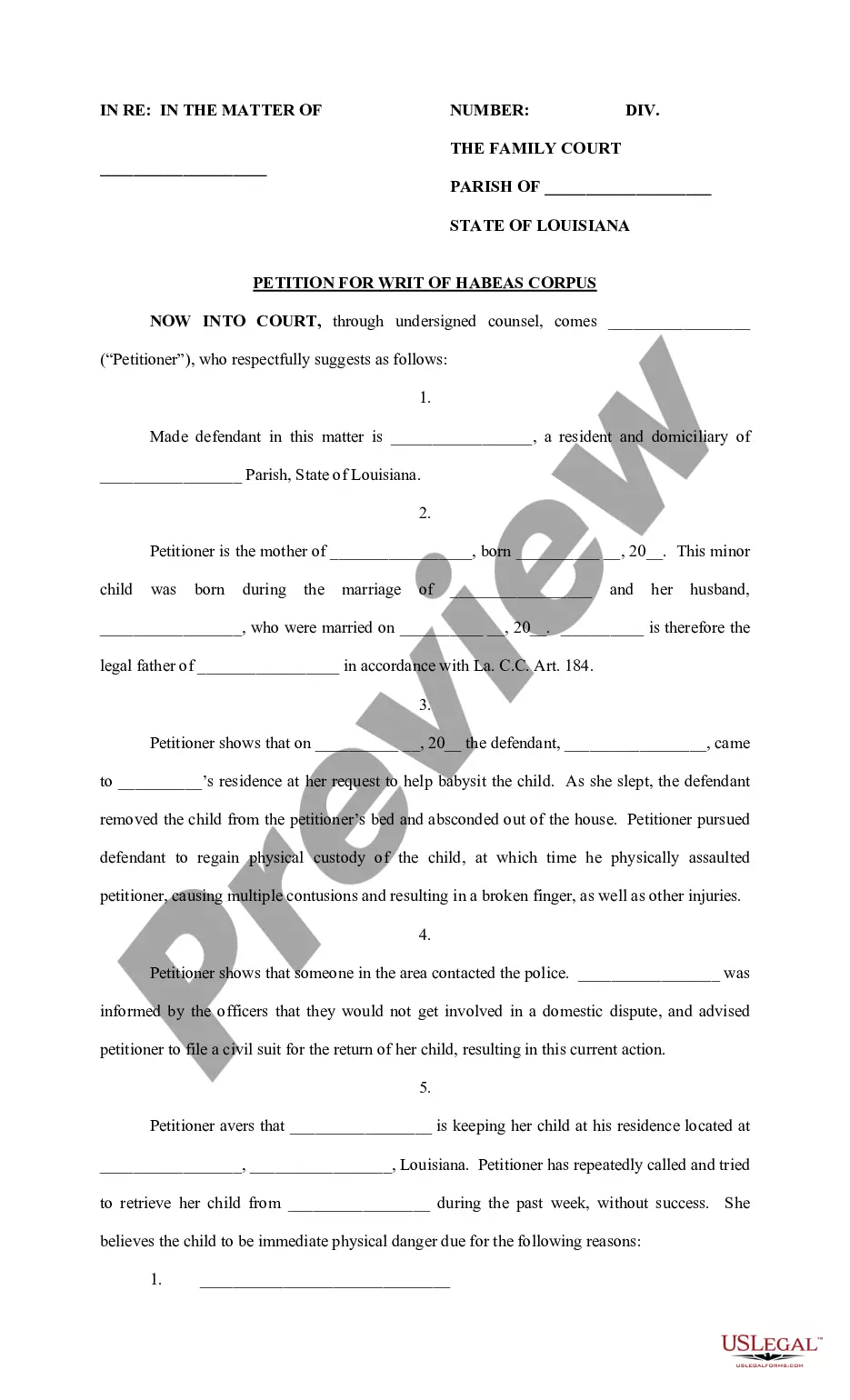
The Notice of Intention to Apply for Writs of Certiorari, Mandamus, and Prohibition is a legal document that informs the court and relevant parties of a defendant's intention to seek specific judicial orders in a civil case. This form serves as a precursor to applying for writs, allowing the defendant to request a review of prior court rulings, particularly concerning jurisdiction or other legal rights. It is essential for initiating an appeal process in Louisiana's judicial system.
What’s included in this form
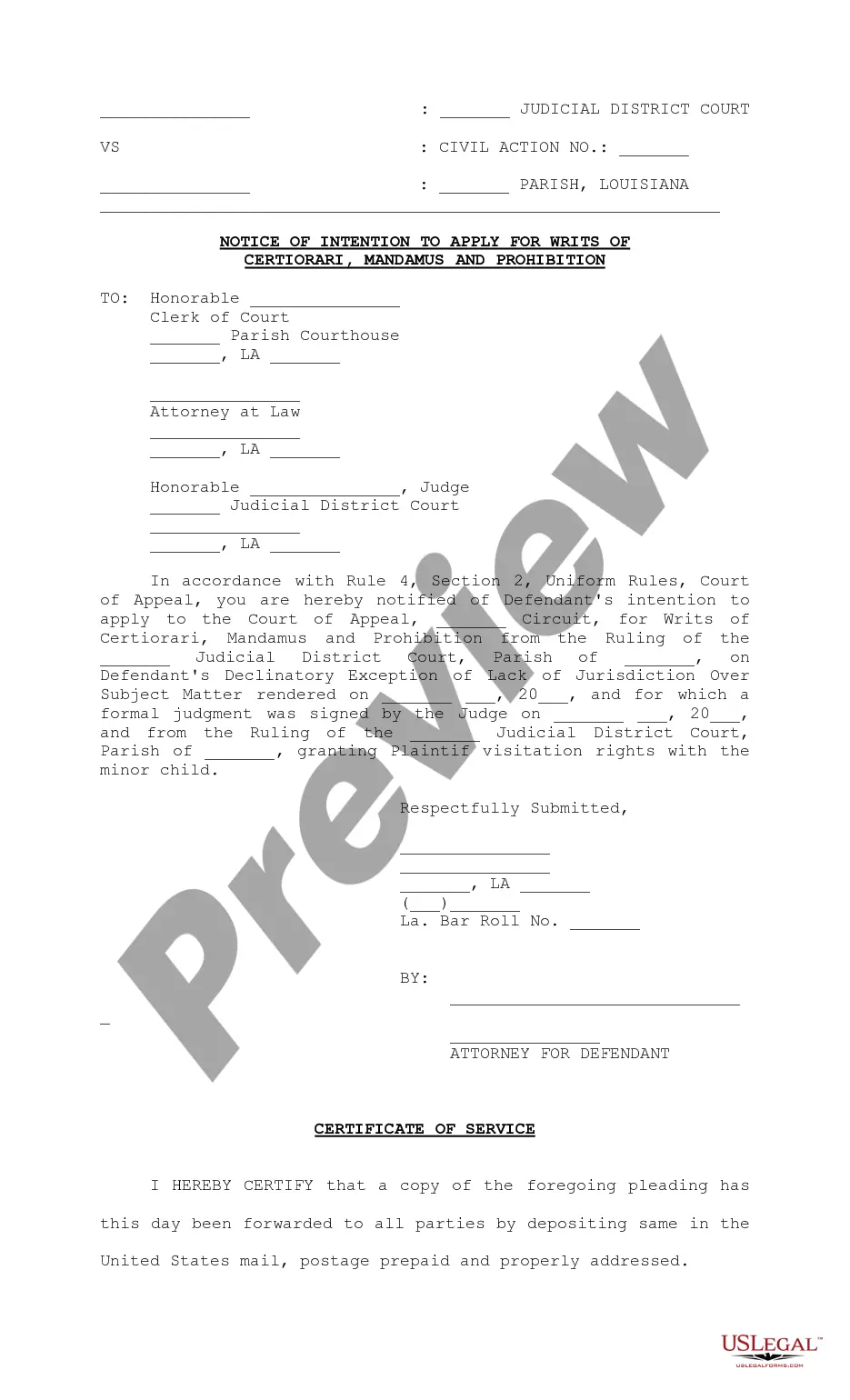
- Title and identification of the case, including the civil action number.
- Notification of intent to apply for writs and specification of the court involved.
- Details regarding the original court ruling prompting the appeal.
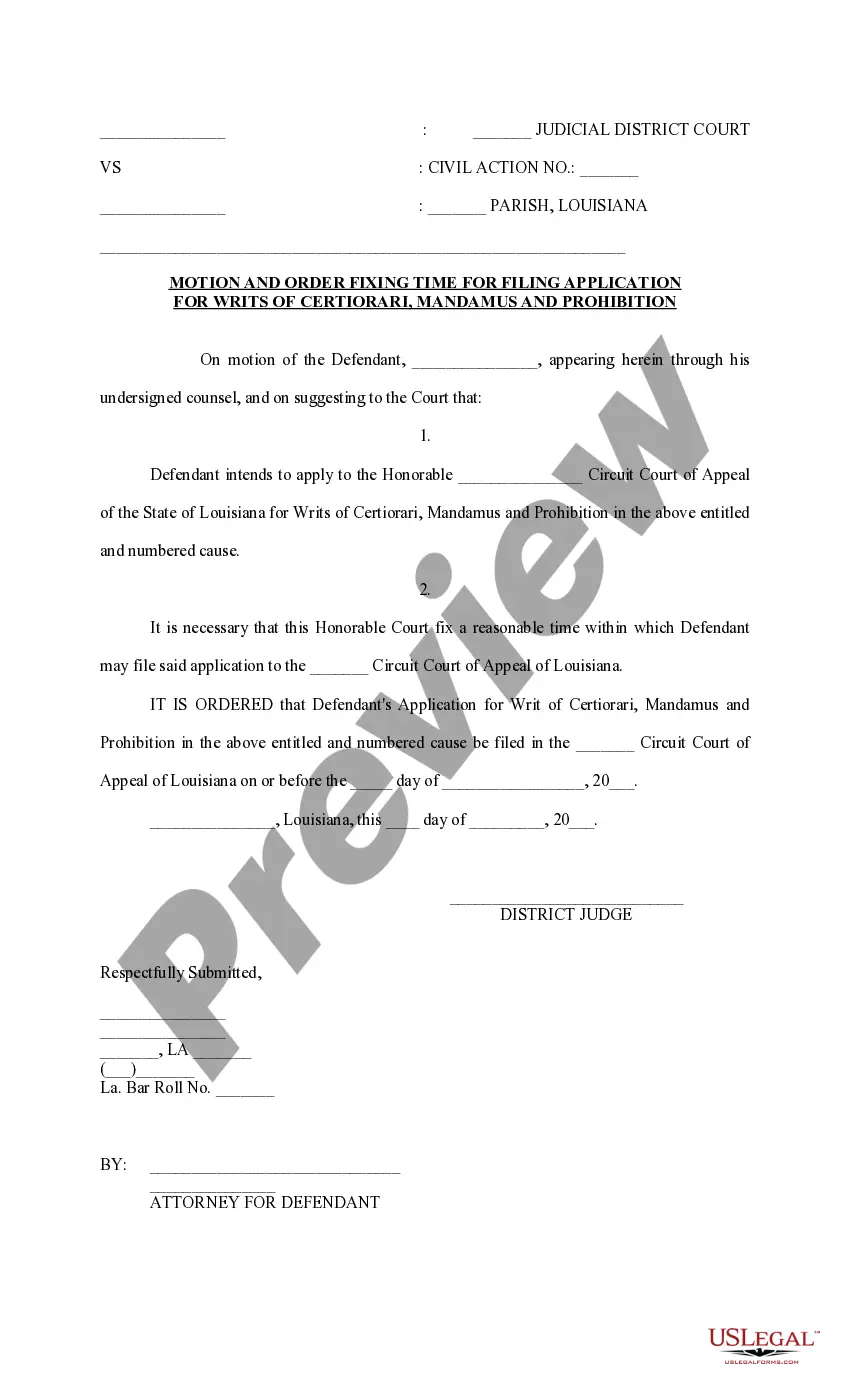
- Motion and order fixing a timeline for the filing of the application.
- Signature and contact information of the defendant's attorney.


When this form is needed
You should use this form when you need to formally notify the court and other parties of your intention to apply for writs of certiorari, mandamus, and prohibition. This is typically necessary after a ruling has been made against you in a lower court, particularly if you believe the court lacked jurisdiction or if the ruling adversely impacts your legal rights, such as in matters involving custody or property rights.
Who needs this form
- Defendants in civil cases who wish to appeal a court ruling.
- Individuals or entities facing jurisdictional issues in court decisions.
- Attorneys representing clients in appellate proceedings.
Instructions for completing this form
- Identify the parties involved in the case, including the plaintiff and defendant.
- Fill in the civil action number and the names of the courts relevant to the appeal.
- Clearly state the reasons for the writs and reference the specific prior rulings.
- Include a motion requesting the court to set a timeline for filing the application.
- Sign the document and provide your attorney's contact information and bar number.
Notarization guidance
Notarization is not commonly needed for this form. However, certain documents or local rules may make it necessary. Our notarization service, powered by Notarize, allows you to finalize it securely online anytime, day or night.
Get your form ready online
Our built-in tools help you complete, sign, share, and store your documents in one place.
Make edits, fill in missing information, and update formatting in US Legal Forms—just like you would in MS Word.
Download a copy, print it, send it by email, or mail it via USPS—whatever works best for your next step.
Sign and collect signatures with our SignNow integration. Send to multiple recipients, set reminders, and more. Go Premium to unlock E-Sign.
If this form requires notarization, complete it online through a secure video call—no need to meet a notary in person or wait for an appointment.
We protect your documents and personal data by following strict security and privacy standards.

Make edits, fill in missing information, and update formatting in US Legal Forms—just like you would in MS Word.

Download a copy, print it, send it by email, or mail it via USPS—whatever works best for your next step.

Sign and collect signatures with our SignNow integration. Send to multiple recipients, set reminders, and more. Go Premium to unlock E-Sign.

If this form requires notarization, complete it online through a secure video call—no need to meet a notary in person or wait for an appointment.

We protect your documents and personal data by following strict security and privacy standards.
Mistakes to watch out for
- Failing to provide accurate case numbers or names of parties involved.
- Not stating a valid reason for seeking the writs.
- Missing the deadline for filing the notice or application.
- Neglecting to serve all relevant parties with the notice.
Why complete this form online
- Convenience of downloading the form at any time.
- Editable templates that allow you to input specific details easily.
- Access to forms created by licensed attorneys, ensuring legal validity.
Looking for another form?
Form popularity
FAQ
Difference between Mandamus and Prohibition: While Mandamus can be issued against any public official, public body, corporation, inferior court, tribunal or government; prohibition can be issued only against judicial and quasi-judicial authorities and not against administrative authorities, legislative bodies.
A lower court or a body receives a writ of prohibition, also known as a 'stay order', to stop acting beyond its powers. The court issues a writ of mandamus for any illegal activity. Whereas, it issues the writ of prohibition against the lower courts to condemn their inactivity in the concerned matter.
Mandamus can be issued where there is duty to exercise discretion, such a duty of the tribunal to hear and determine a case within its jurisdiction. Section 10 of the Tribunals & enquiries Act, 1992, imposes a duty on tribunal to give reasons for its decisions.
A (writ of) mandamus is an order from a court to an inferior government official ordering the government official to properly fulfill their official duties or correct an abuse of discretion.
Sample Format of Affidavit for Writ of Mandamus in High Court under Article 226 of Constitution is as under. I, __________________ , S/o Shri _______________, Aged about ___ years, R/o ___ ________________ _______________ the Petitioner do hereby solemnly state and affirm as under: 1.
Section 13 of the Judiciary Act of 1789 authorized the Supreme Court to issue writs of prohibition to the district courts, when proceeding as courts of admiralty and maritime jurisdiction, and writs of mandamus, in cases warranted by the principles and usages of law, to any courts appointed, or persons holding office,
A writ of prohibition is a writ directing a subordinate to stop doing something the law prohibits. This writ is often issued by a superior court to the lower court directing it not to proceed with a case which does not fall under its jurisdiction.
The Writ of Mandamus, where the court like the High Court, directs the performance of an activity to a lower court. Whereas in the Writ of Prohibition, the higher court like the Supreme Court orders to stop doing something which is in excess of their jurisdiction.
A (writ of) mandamus is an order from a court to an inferior government official ordering the government official to properly fulfill their official duties or correct an abuse of discretion.