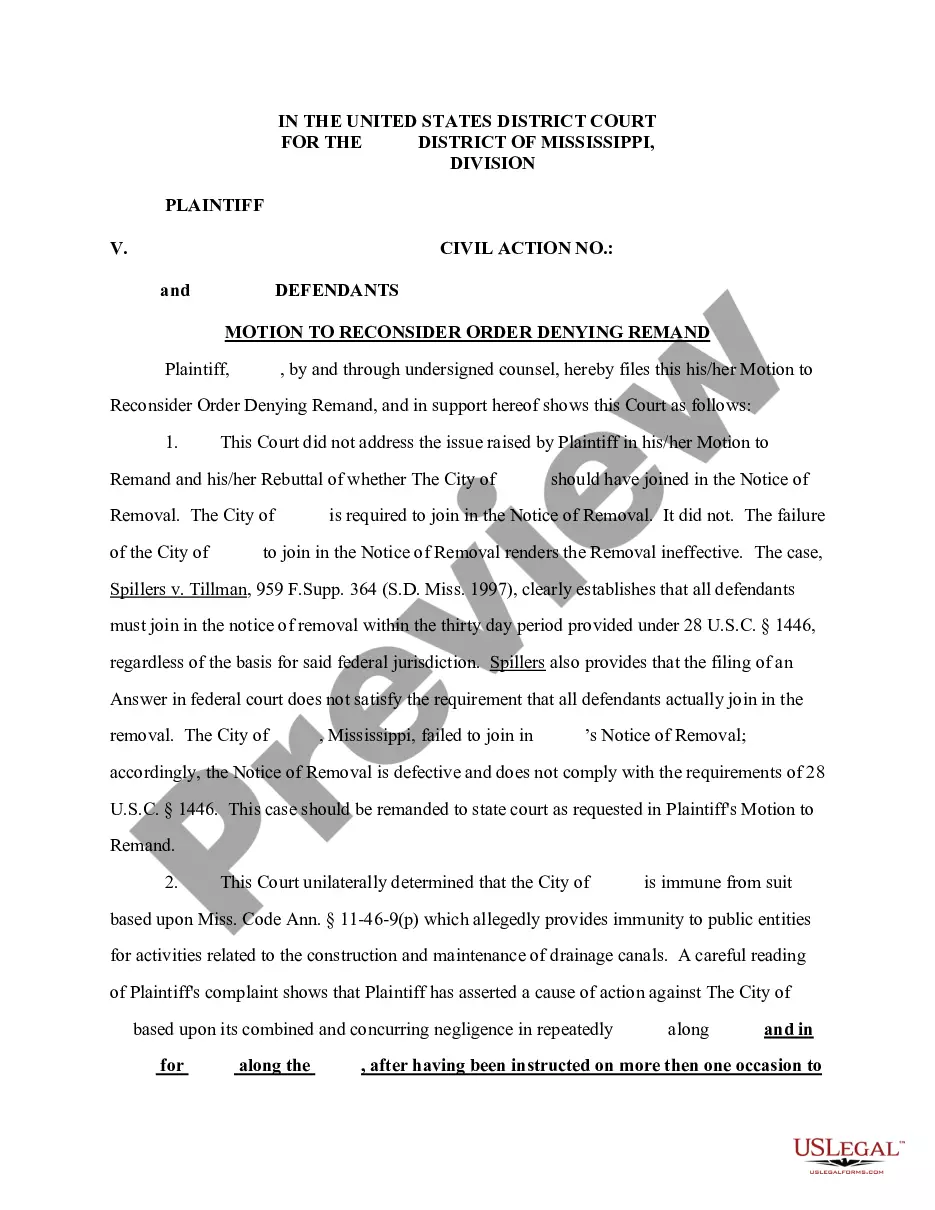
Mississippi Rebuttal to Defendants' Responses to Plaintiff's Motion to Remand
Overview of this form
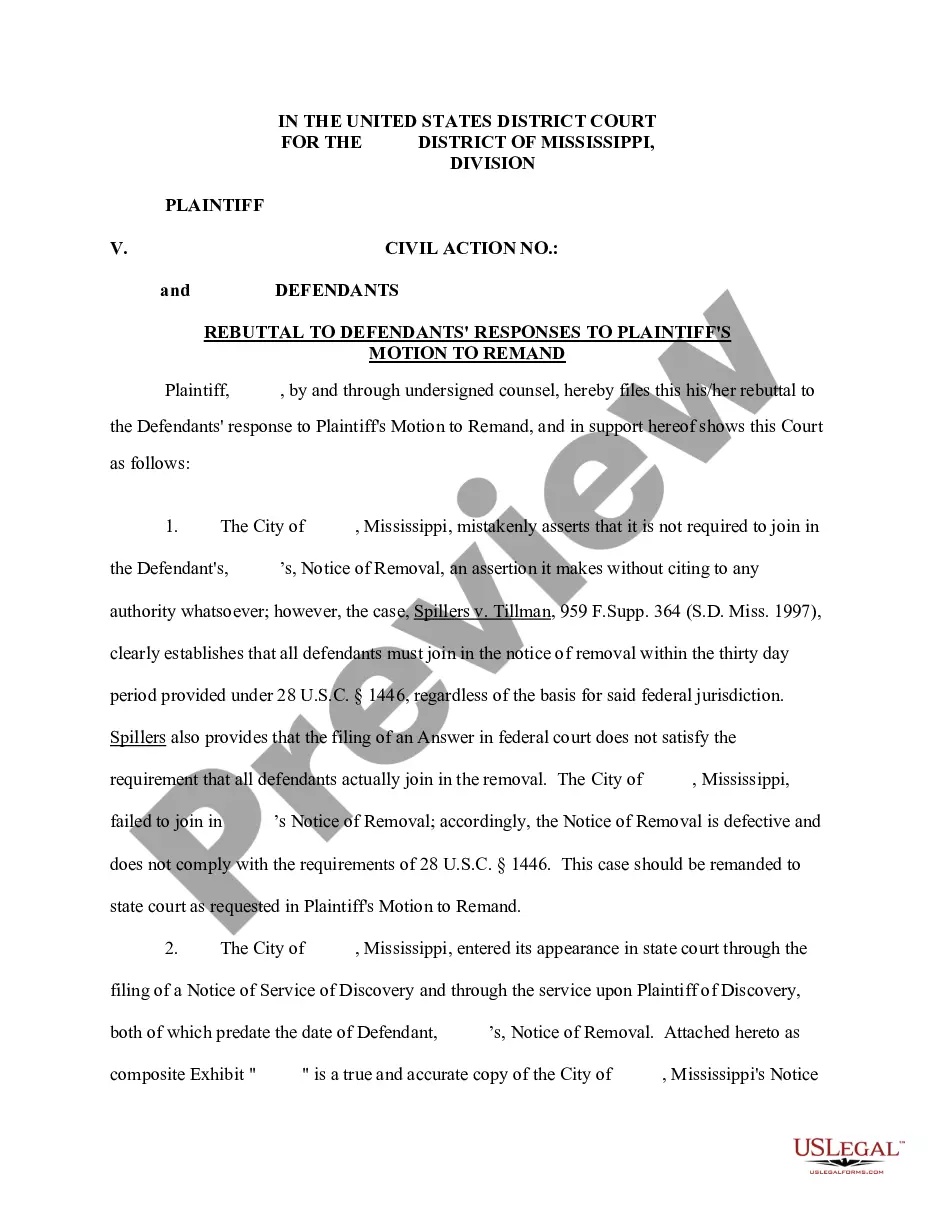
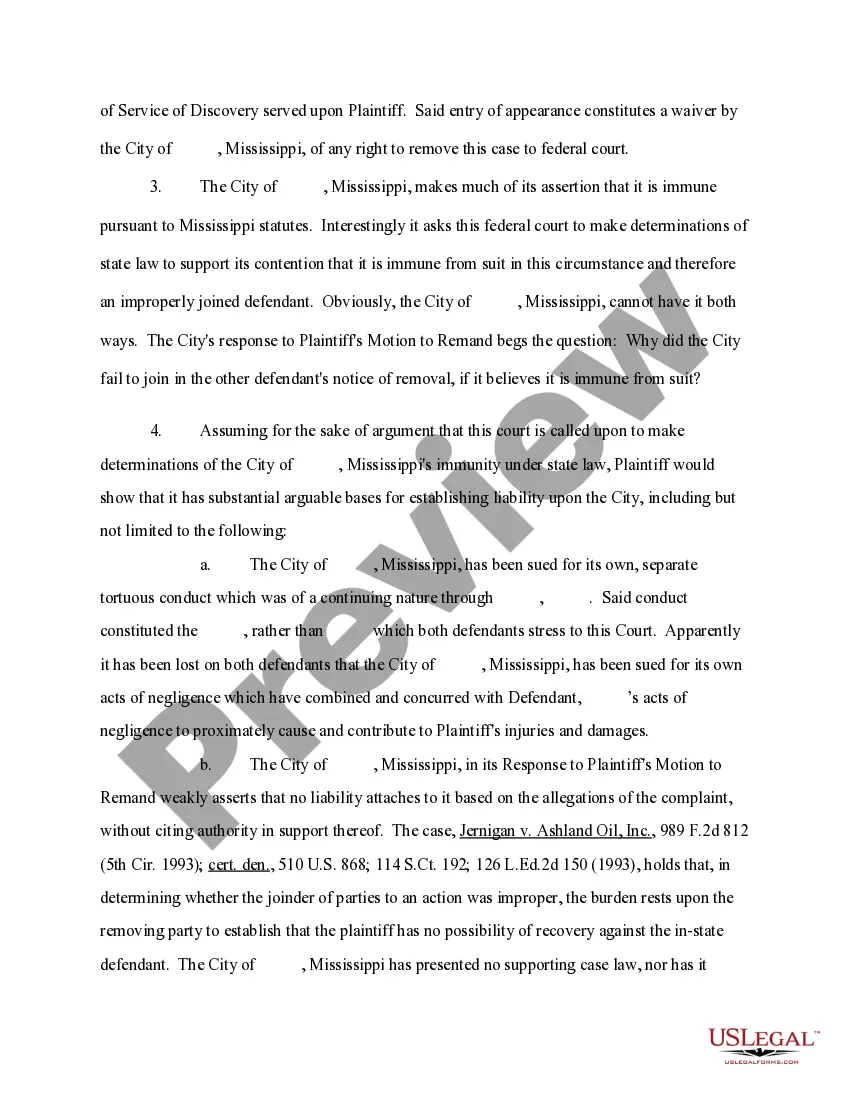
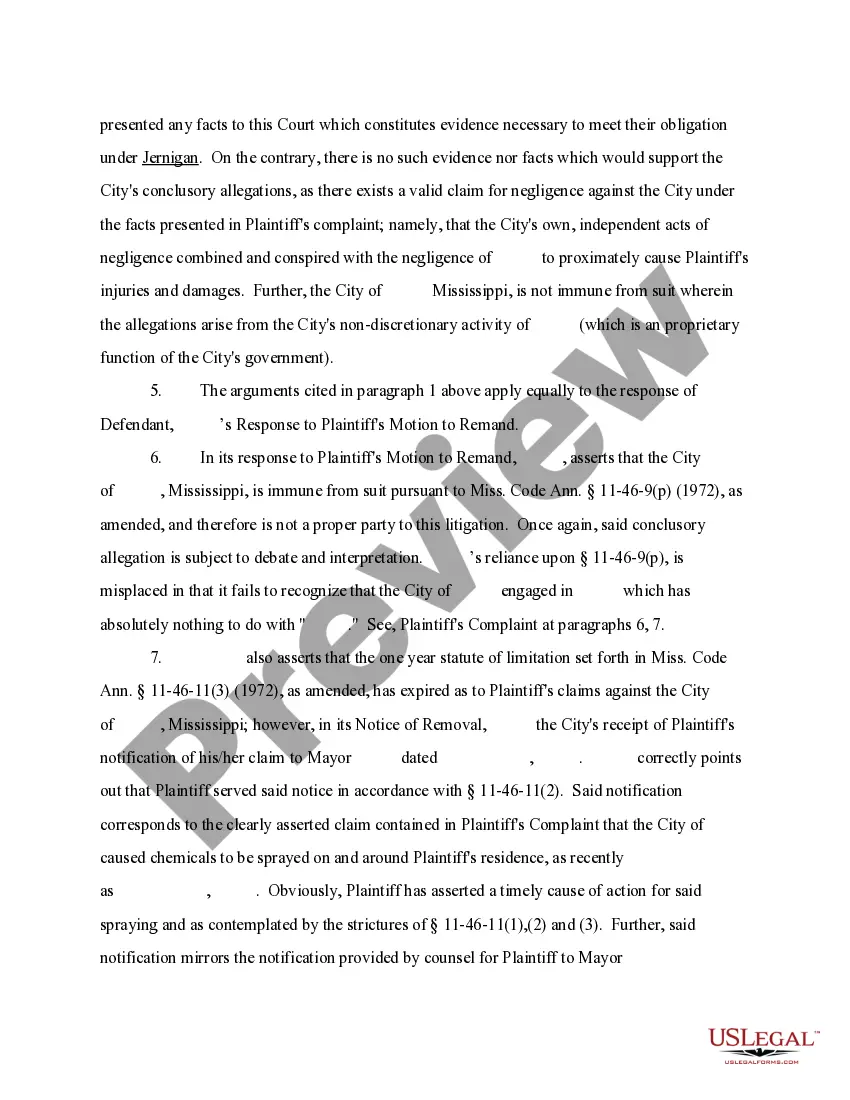
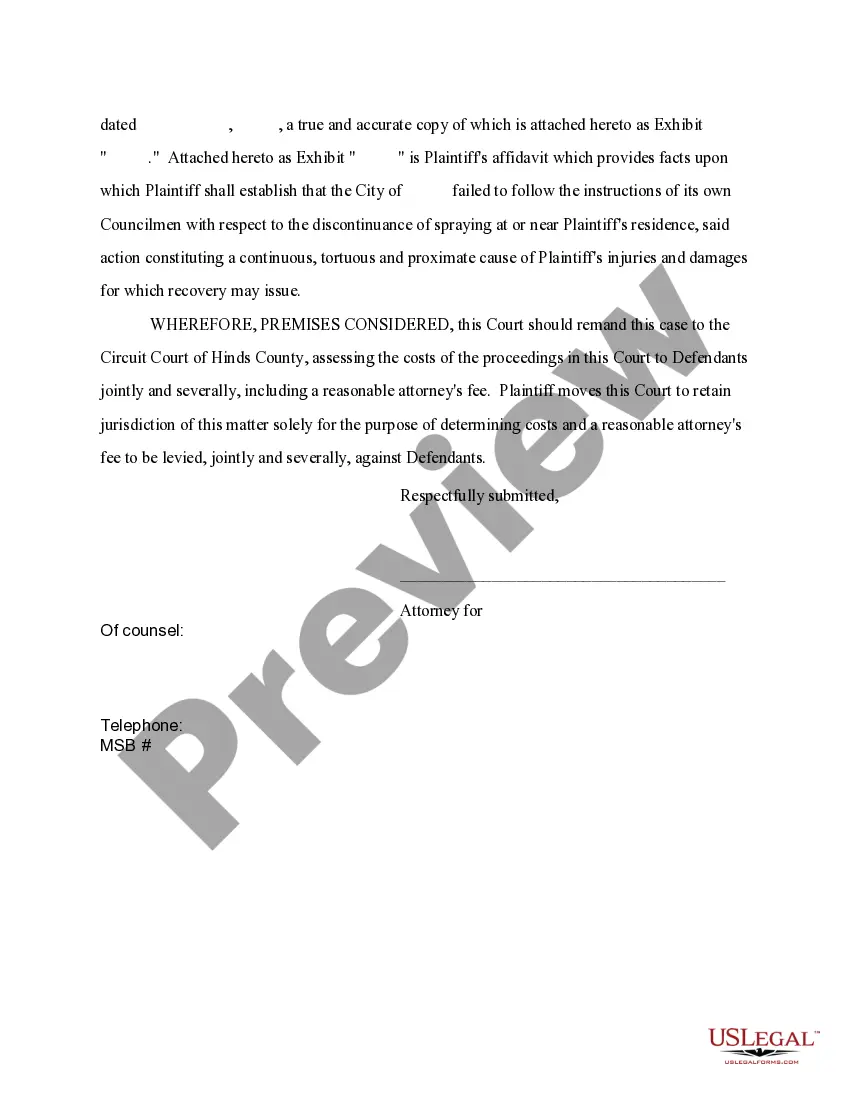
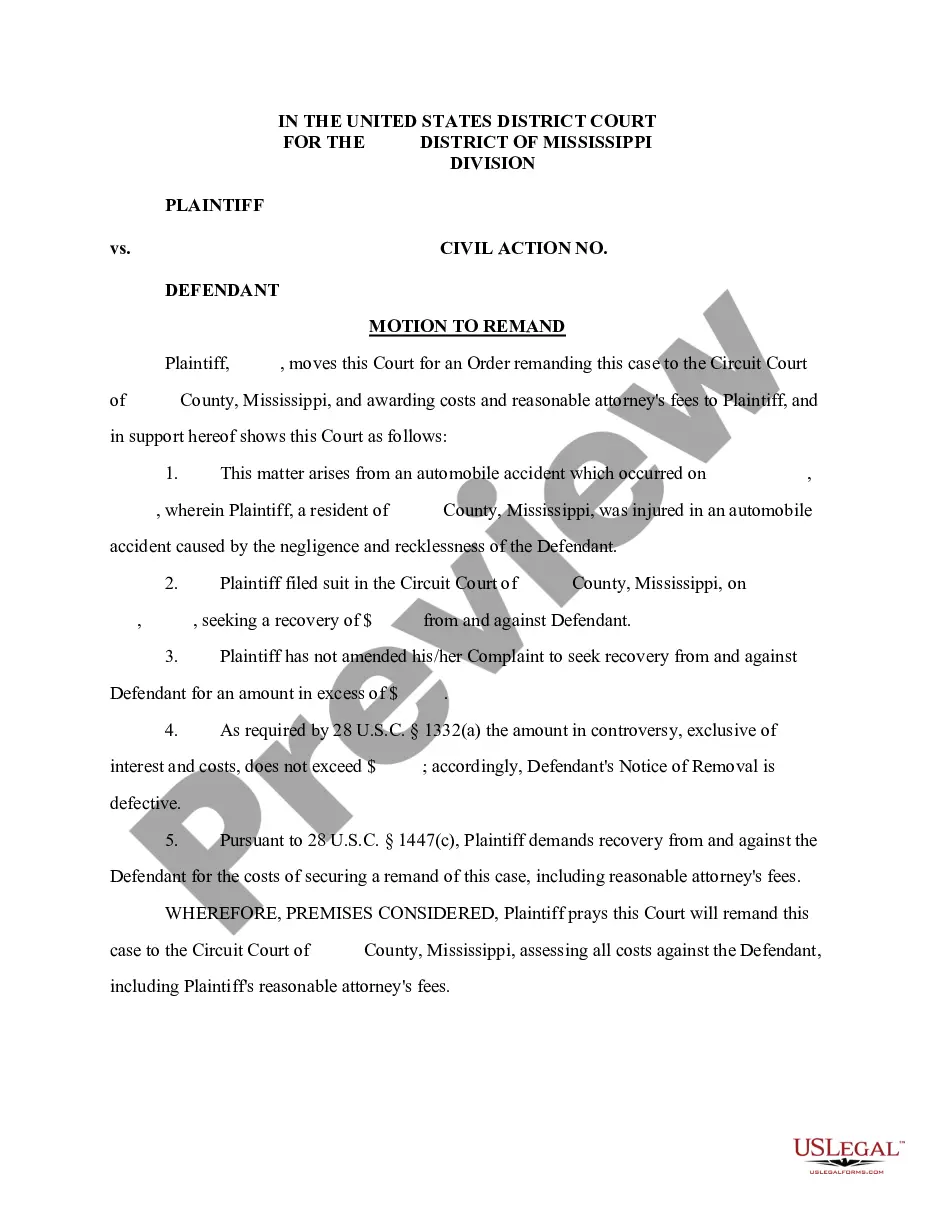
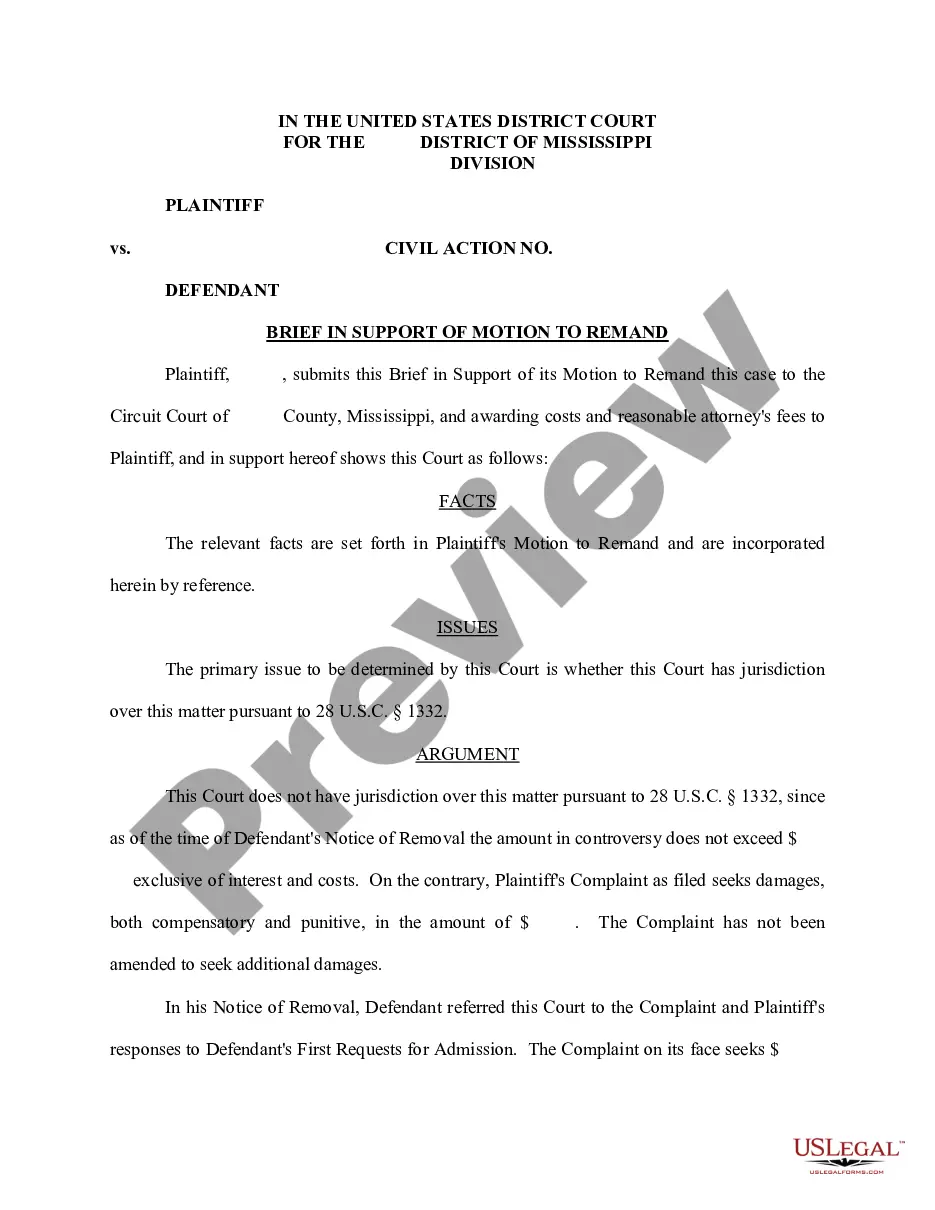
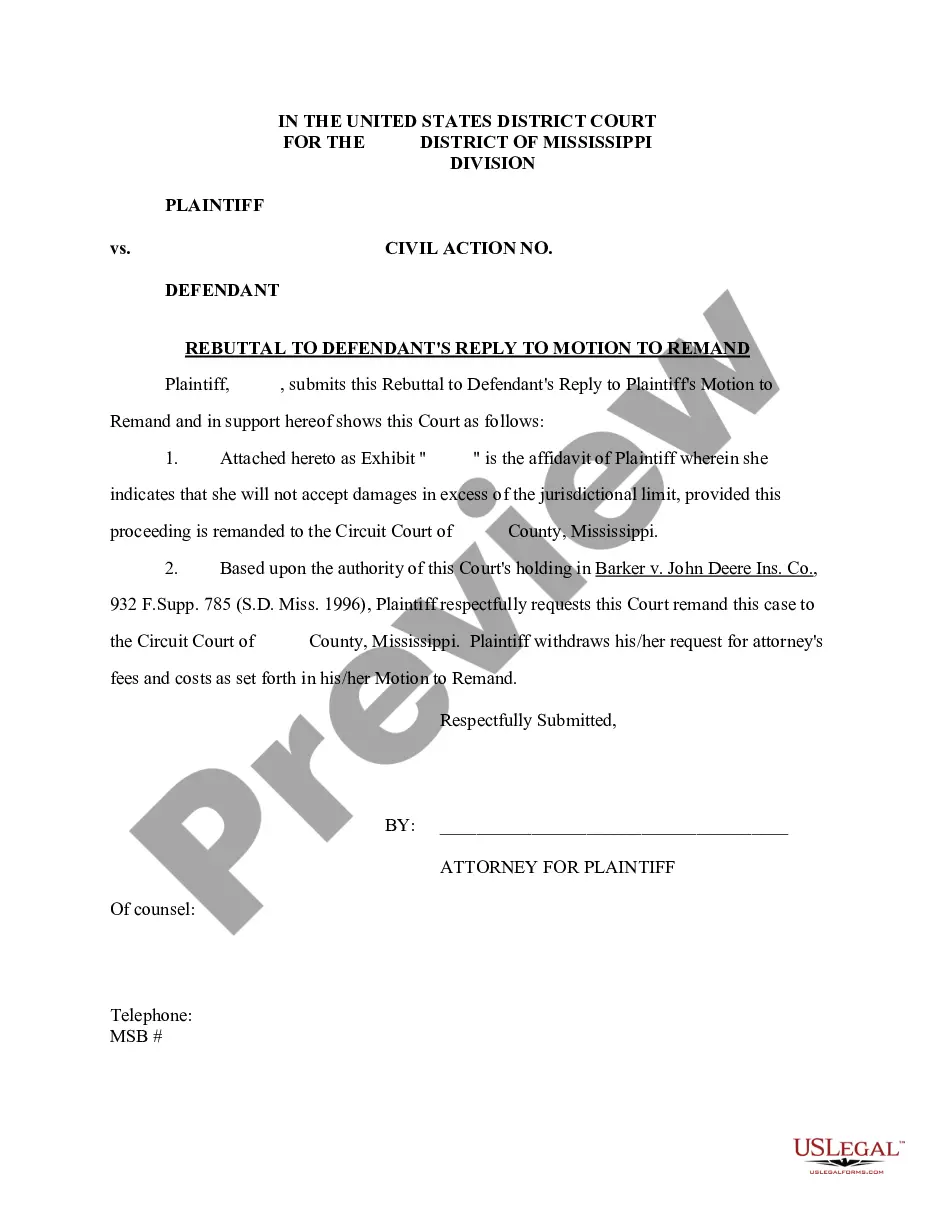
The Rebuttal to Defendants' Responses to Plaintiff's Motion to Remand is a legal document used in civil litigation. It allows the plaintiff to respond to the objections raised by defendants against the motion to remand the case back to state court. This form is essential for maintaining the plaintiff's position and arguing against the defendants' claims, differentiating itself from other response forms by focusing specifically on remand issues.
Form components explained
- Caption: Includes the case title and court information.
- Introduction: Briefly states the purpose of the rebuttal and identifies the plaintiff.
- Argument: Presents the plaintiff's response to the defendants' claims regarding the motion to remand.
- Conclusion: Summarizes the request for the court to grant the motion to remand.
- Signature line: For the plaintiff or their attorney.

Common use cases
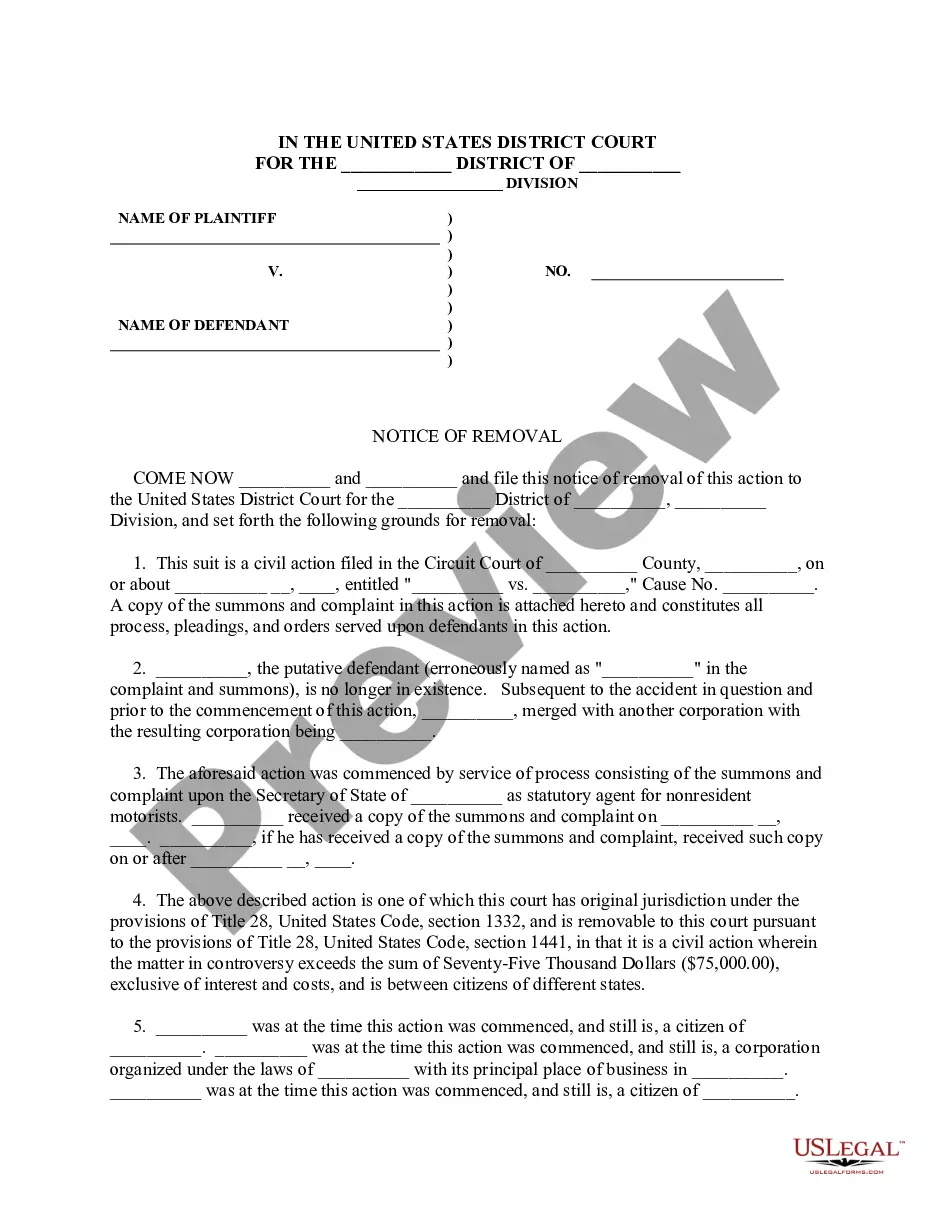
This form is needed when a plaintiff has filed a motion to remand a case from federal court back to state court, and the defendants have responded with objections. If you need to argue against those objections and provide a rebuttal to strengthen your motion, this form is appropriate to use.
Who should use this form
- Plaintiffs who have filed a motion to remand and received responses from defendants.
- Attorneys representing plaintiffs in civil cases involving jurisdiction issues.
- Individuals involved in litigation who need to assert their position regarding court jurisdiction.
Instructions for completing this form
- Identify the parties involved in the litigation and accurately fill in the caption.
- State your position clearly in the introduction, including your reasons for rebuttal.
- Address each argument made by the defendants in their response with a counter-argument.
- Summarize your rebuttal in the conclusion and request that the motion to remand be granted.
- Sign and date the form, including your title if you are an attorney.
Is notarization required?
This form does not typically require notarization unless specified by local law. However, it is essential to check your jurisdiction's specific requirements to ensure compliance for court submission.
Get your form ready online
Our built-in tools help you complete, sign, share, and store your documents in one place.
Make edits, fill in missing information, and update formatting in US Legal Forms—just like you would in MS Word.
Download a copy, print it, send it by email, or mail it via USPS—whatever works best for your next step.
Sign and collect signatures with our SignNow integration. Send to multiple recipients, set reminders, and more. Go Premium to unlock E-Sign.
If this form requires notarization, complete it online through a secure video call—no need to meet a notary in person or wait for an appointment.
We protect your documents and personal data by following strict security and privacy standards.

Make edits, fill in missing information, and update formatting in US Legal Forms—just like you would in MS Word.

Download a copy, print it, send it by email, or mail it via USPS—whatever works best for your next step.

Sign and collect signatures with our SignNow integration. Send to multiple recipients, set reminders, and more. Go Premium to unlock E-Sign.

If this form requires notarization, complete it online through a secure video call—no need to meet a notary in person or wait for an appointment.

We protect your documents and personal data by following strict security and privacy standards.
Common mistakes to avoid
- Failing to accurately reference the defendants' arguments in the rebuttal.
- Neglecting to proofread for clarity and legal jargon that may confuse the court.
- Not adhering to court formatting rules, such as proper line spacing and font size.
- Missing the signature line, which could invalidate the document.
Why use this form online
- Convenient access from anywhere, allowing you to complete the form at your own pace.
- Edit and customize the form easily to ensure it fits your specific case circumstances.
- Reliable templates drafted by licensed attorneys, ensuring compliance with legal standards.
Legal use & context
- This form is used as part of the legal process in civil litigation.
- It is essential for effectively arguing against defendantsâ claims in remand motions.
- Failure to properly complete this form can lead to missed opportunities to have the case remanded.
Summary of main points
- This form allows plaintiffs to effectively respond to defendants' objections to a motion to remand.
- Clear organization and precise arguments are critical to making your case.
- Utilize the form's structure to guide your rebuttal to strengthen your legal position.
Looking for another form?

Form popularity
FAQ
A defendant may respond in an answer that admits or denies each of the plaintiff's allegations in the complaint. The answer will list defenses and counter-claims or cross-claims against the plaintiff or other defendants. The answer will state whether the defendant wants a jury trial. The case will then continue.
Responding to Form InterrogatoriesAnswer each question, being careful to answer each subpart, if one exists. Read the question carefully, and answer only what it asks. You may attach exhibits, if necessary. The response must be verified, meaning you must swear that the responses given are true.
There is no obligation to respond to alleged affirmative defenses....they can be contested at trial or summary judgment.
The Reply is a legal document written by a Party specifically replying to a Responsive Declaration and in some cases an Answer. A Reply may be written when a Party or non-moving Party (the Party who is not requesting relief from the court) is asserting a counterclaim or the court has ordered a Reply.
Failure to Respond: If a defendant fails to answer the complaint or file a motion to dismiss within the time limit set forth in the summons, the defendant is in default. The plaintiff can ask the court clerk to make a note of that fact in the file, a procedure called entry of default.
Each court has different rules about how long you have to respond to this motion, but usually you will have at least two or three weeks to file an opposition to the defendant's motion to dismiss.
The plaintiff must give you responses to your request for admissions within 30 days. You do not need to do anything if you do not get a response. The plaintiff has 30 days to deny or object to the statements.
Your answers to the interrogatories should usually be short, clear, and direct and should answer only the question that is being asked. This is not the time to set out your entire case or defense to the other side. Take the time to make sure your answers are correct and truthful.
In your discovery response, you would include a time and place for the inspection and the other party has an opportunity to go and review the requested items at that time.There are cases though where the court, not the other party, will request information. This usually happens in divorce or child support cases.