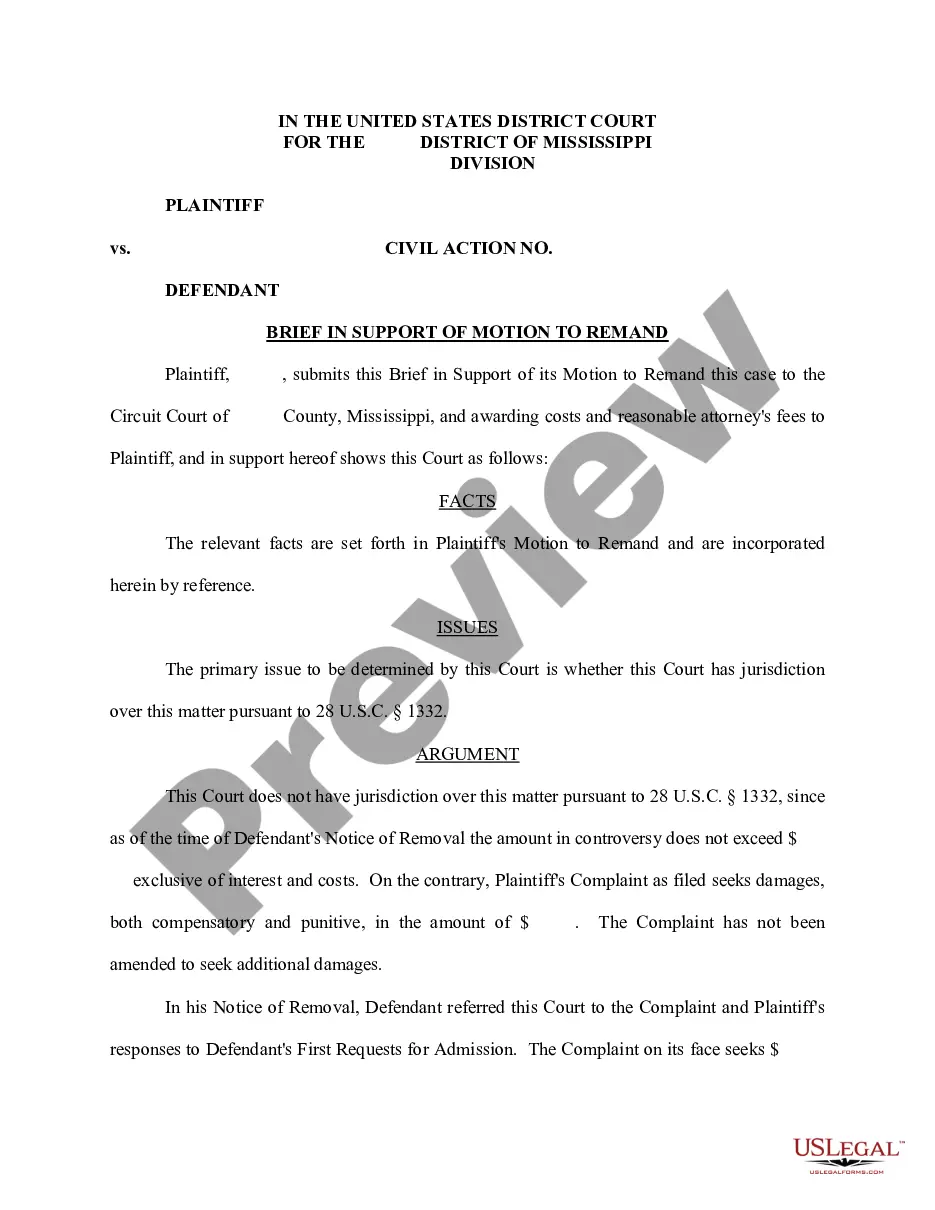
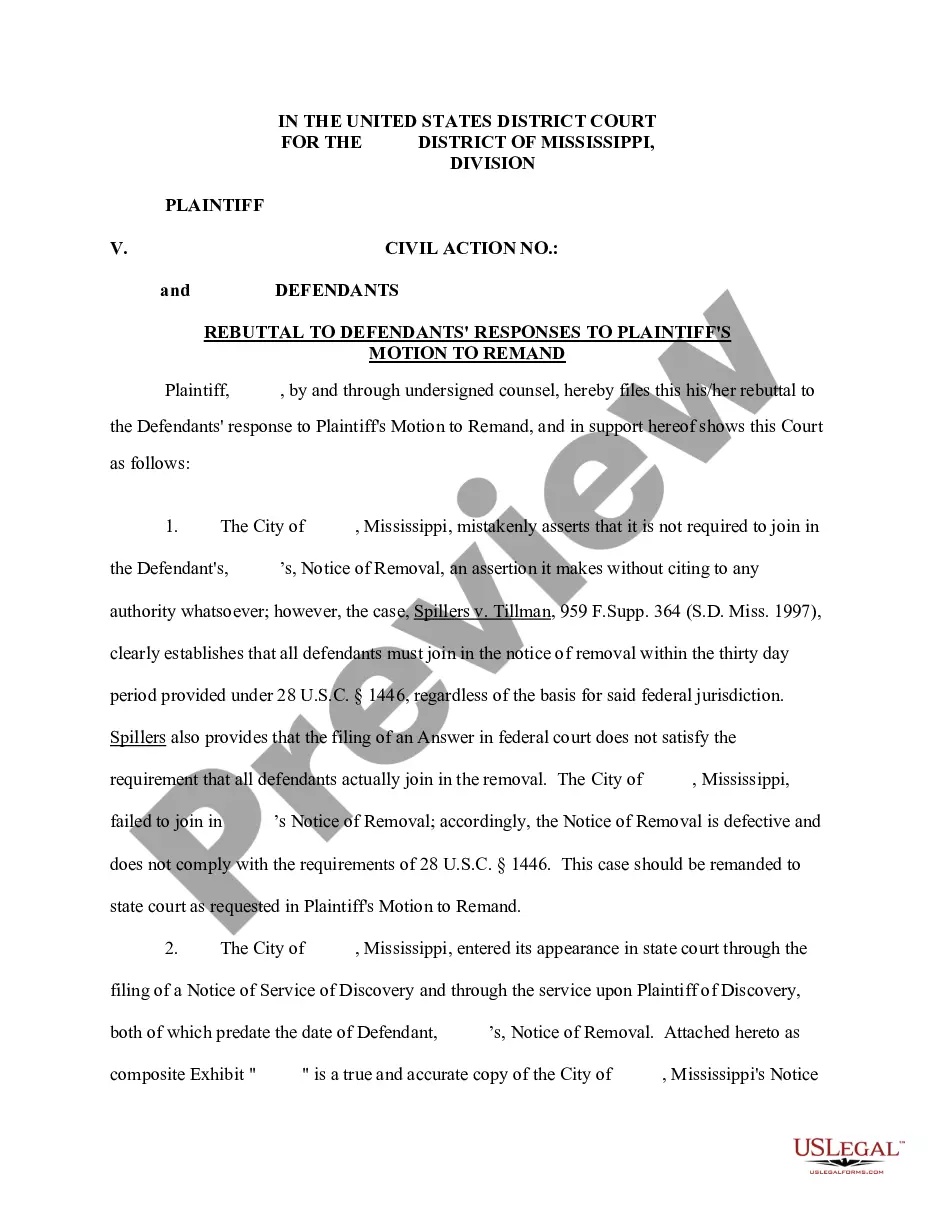
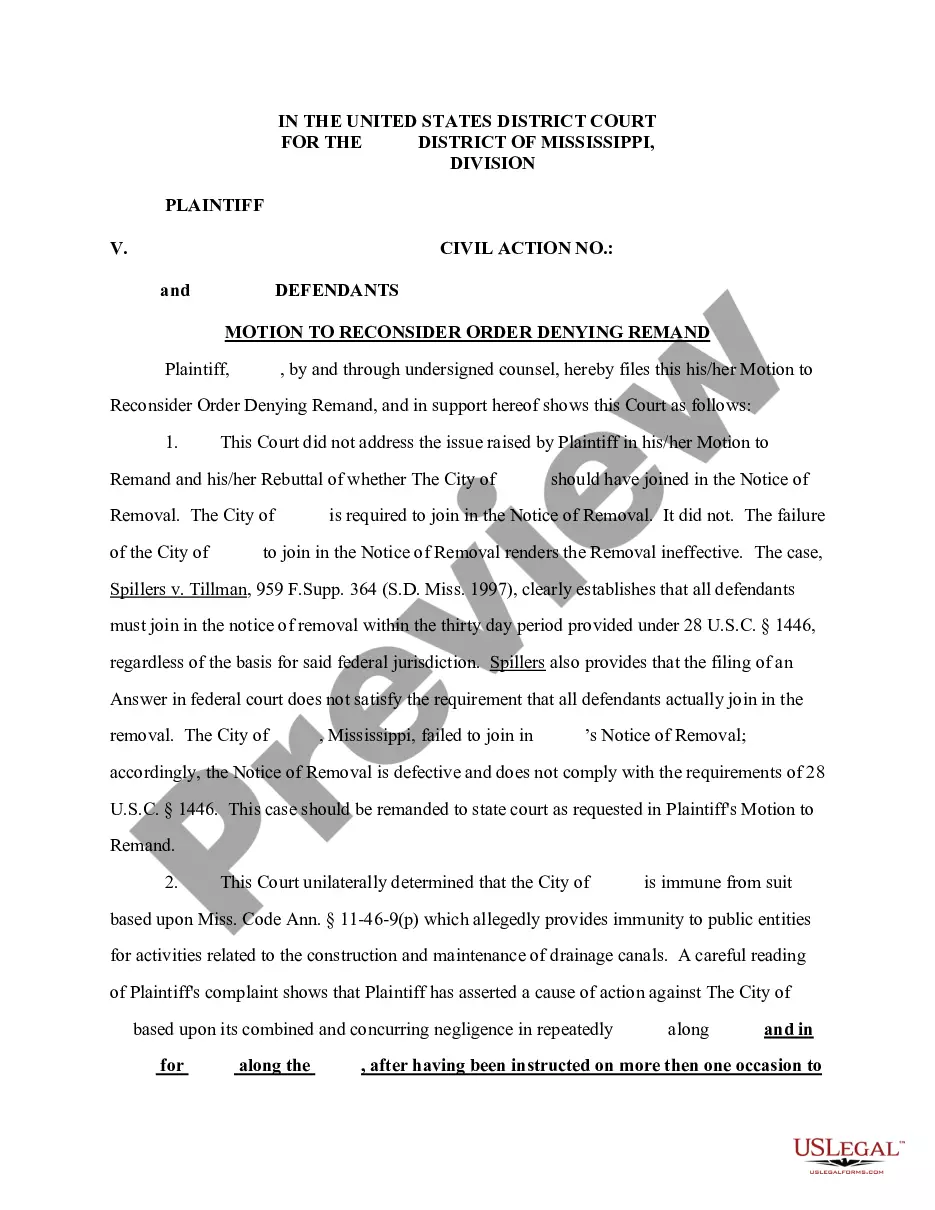
Mississippi Rebuttal to Defendant's Reply to Motion to Remand
Description
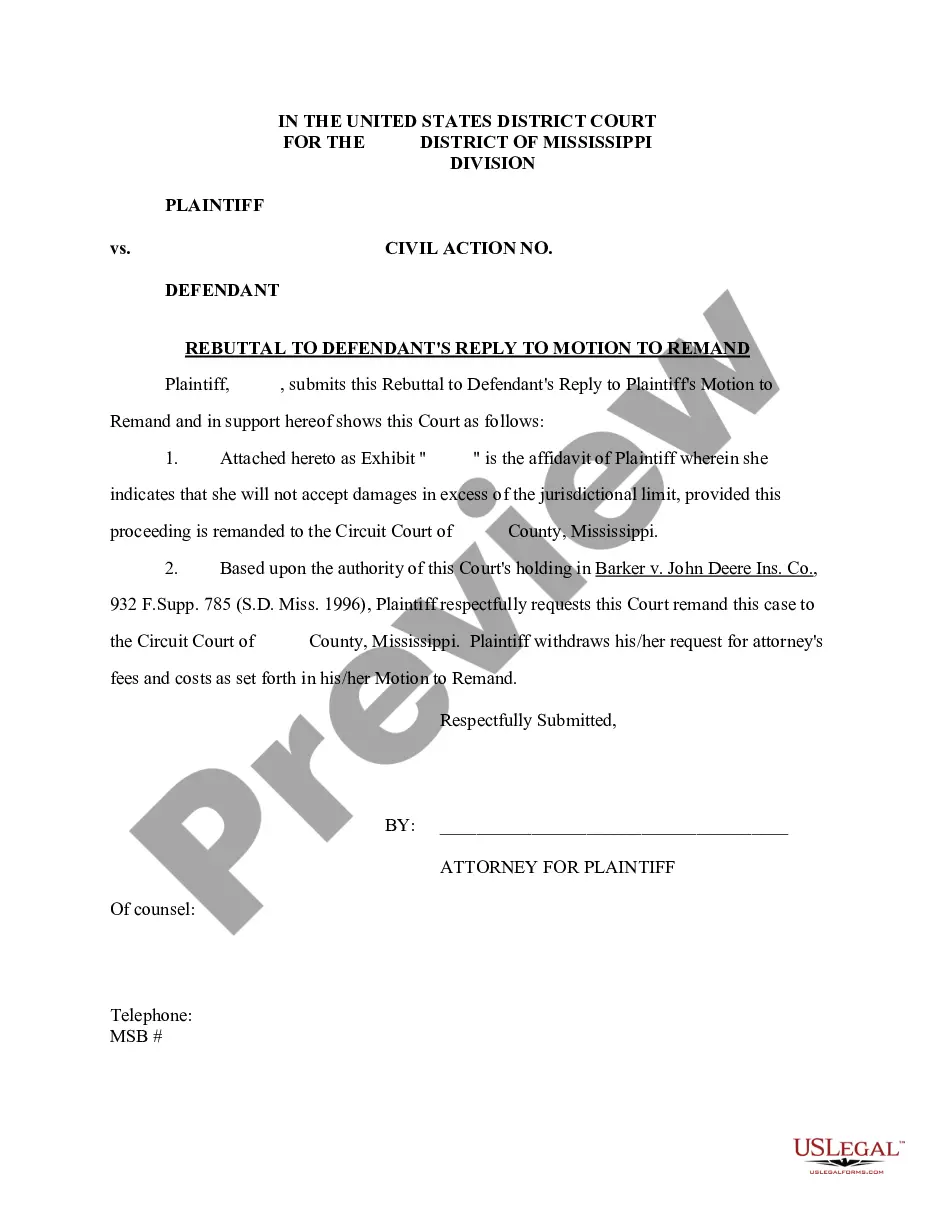
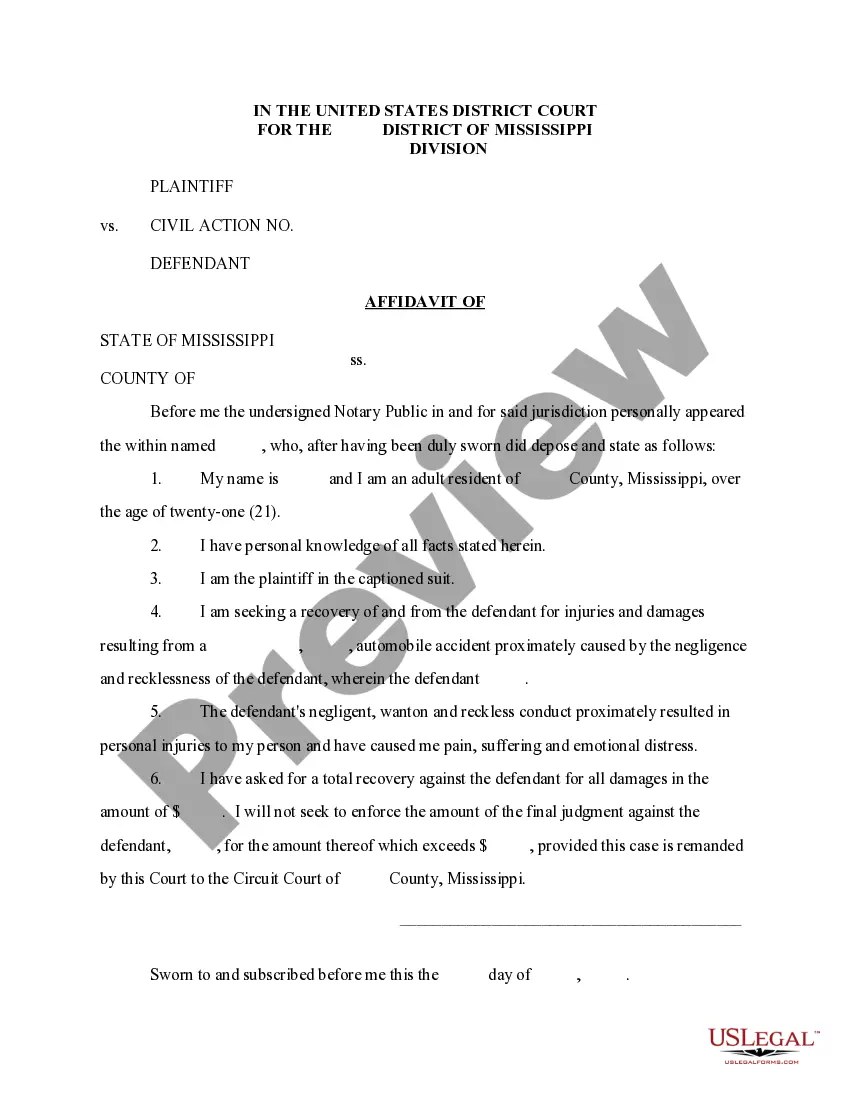

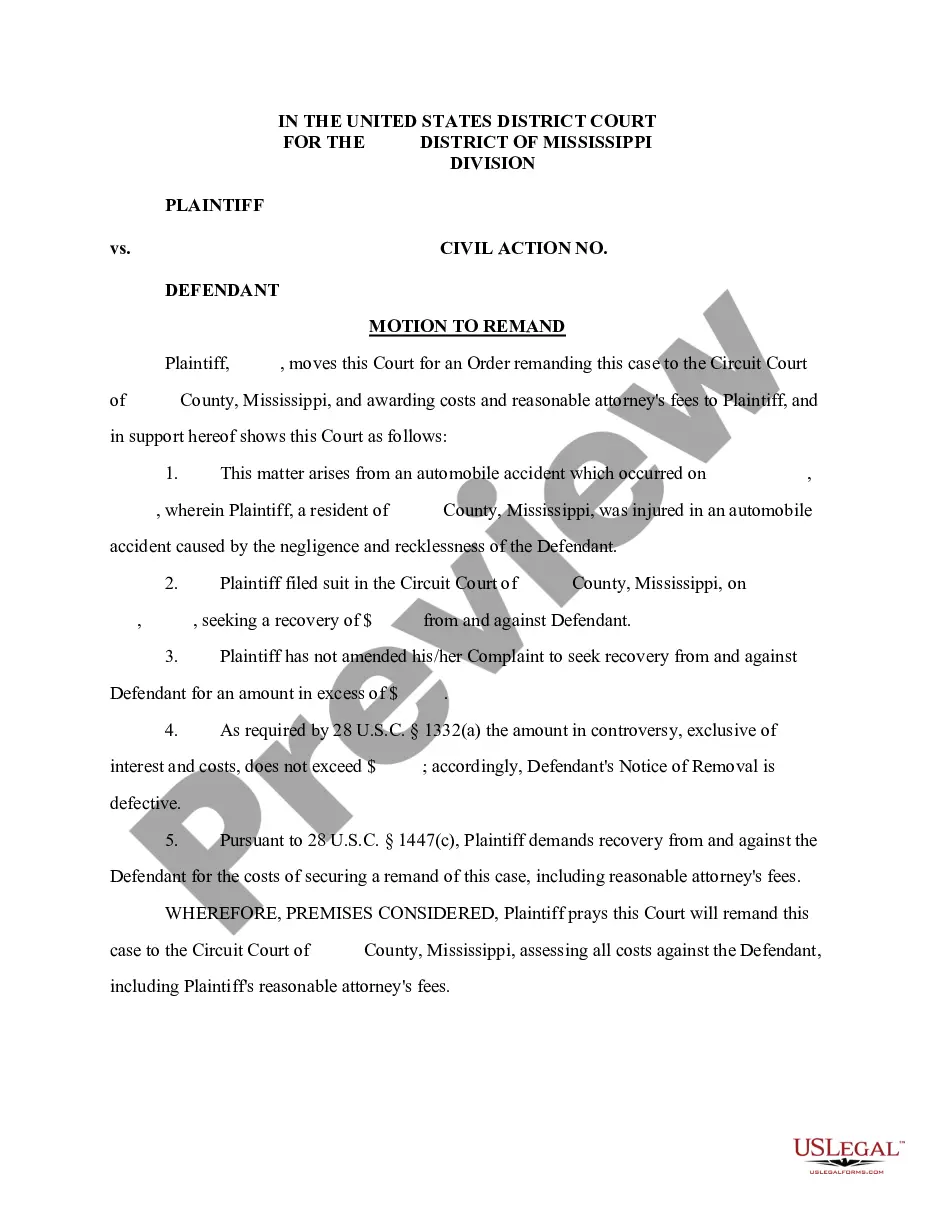

How to fill out Mississippi Rebuttal To Defendant's Reply To Motion To Remand?
Obtain a printable Mississippi Rebuttal to Defendant's Reply to Motion to Remand within several mouse clicks in the most comprehensive catalogue of legal e-documents. Find, download and print out professionally drafted and certified samples on the US Legal Forms website. US Legal Forms is the Top supplier of affordable legal and tax forms for US citizens and residents on-line since 1997.
Customers who have a subscription, need to log in directly into their US Legal Forms account, get the Mississippi Rebuttal to Defendant's Reply to Motion to Remand and find it saved in the My Forms tab. Users who don’t have a subscription are required to follow the steps below:
- Make sure your form meets your state’s requirements.
- If available, read the form’s description to find out more.
- If accessible, review the form to view more content.
- Once you’re confident the template suits you, just click Buy Now.
- Create a personal account.
- Pick a plan.
- through PayPal or bank card.
- Download the template in Word or PDF format.
Once you have downloaded your Mississippi Rebuttal to Defendant's Reply to Motion to Remand, it is possible to fill it out in any online editor or print it out and complete it manually. Use US Legal Forms to to access 85,000 professionally-drafted, state-specific forms.
Form popularity
FAQ
So why would a defendant want to remove the case to federal court? Well, removing a case may alleviate certain concerns about prejudice or bias against an out-of-state defendant. Removal also allows the parties to use federal procedural rules instead of state rules.
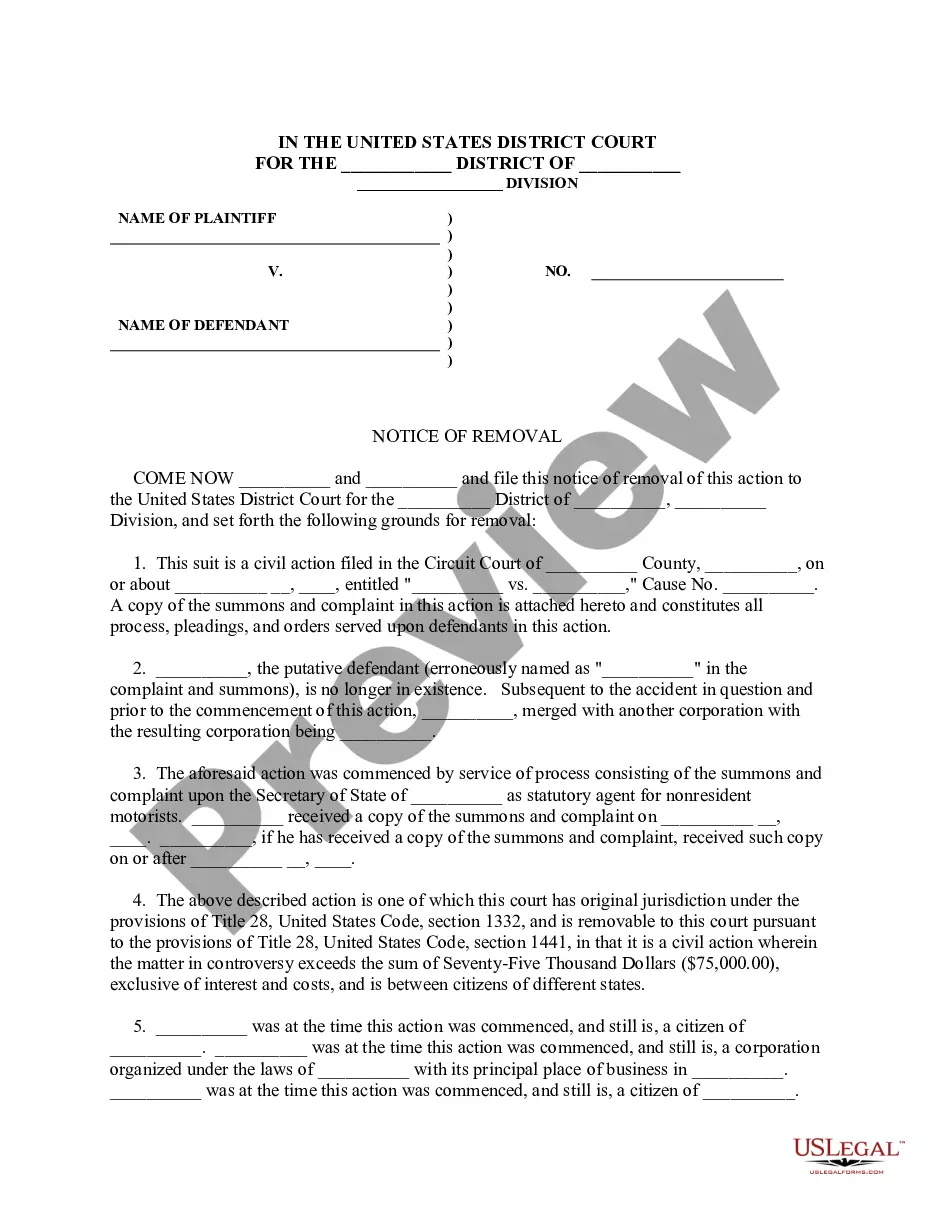
A defendant can remove a case from state to federal court by filing a notice of removal in federal court and then notifying the state court and the other parties.After removal, the state court no longer has jurisdiction over the lawsuit.
Act May 24, 1949, § 83(a), provided that the petition for removal need not be filed until 20 days after the defendant has received a copy of the plaintiff's initial pleading, and provided that the petition for removal shall be filed within 20 days after the service of summons.
Removal refers to the transfer of a civil action from state trial court to federal district court. Notice of removal:In such a case, the defendant or defendants may remove the case to the federal district court for the district and division in which the action is pending.
The magic trick for plaintiffs seeking to avoid removal of their case to federal court is to plead only state claims (to avoid federal question removal) and sue at least one party from the same state (to avoid diversity removal).
In order to remove a case to federal court, the federal court must have subject matter jurisdiction over the matter. If there is no federal jurisdiction, the case cannot be removed. Generally speaking, a case can be removed to federal court if it could have been filed in federal court by the plaintiff.
Some courts require pre-answer motions to dismiss to be made within 21 days of service of the complaint. Other courts require only that they be made before the deadline for filing responsive pleadings, whether that deadline is within 21 days or later.
A plaintiff can file a motion to voluntarily dismiss the case before the defendant has filed their answer. After the defendant has filed their answer to the complaint, the plaintiff and the defendant can come to an agreement and file a motion with the court to dismiss the case.
Federal Appellate Courts Provide Long-Overdue Guidance on Removal to Federal Court by Home-State Defendants. A civil action brought in state court over which a federal district court would have jurisdiction may generally be removed by a defendant to the district court where the state action is pending.