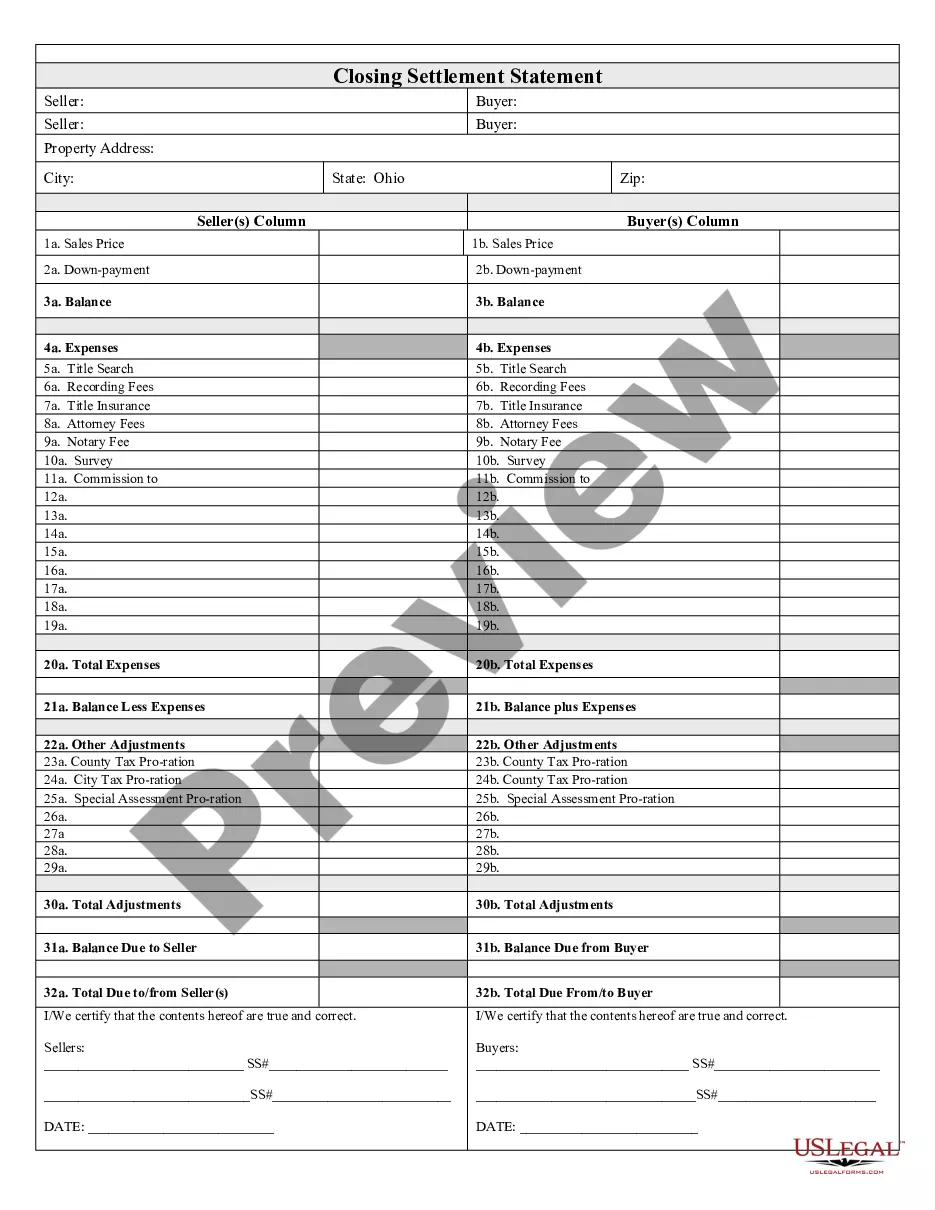
Agreement with New Partner for Compensation Based on Generating New Business
What this document covers
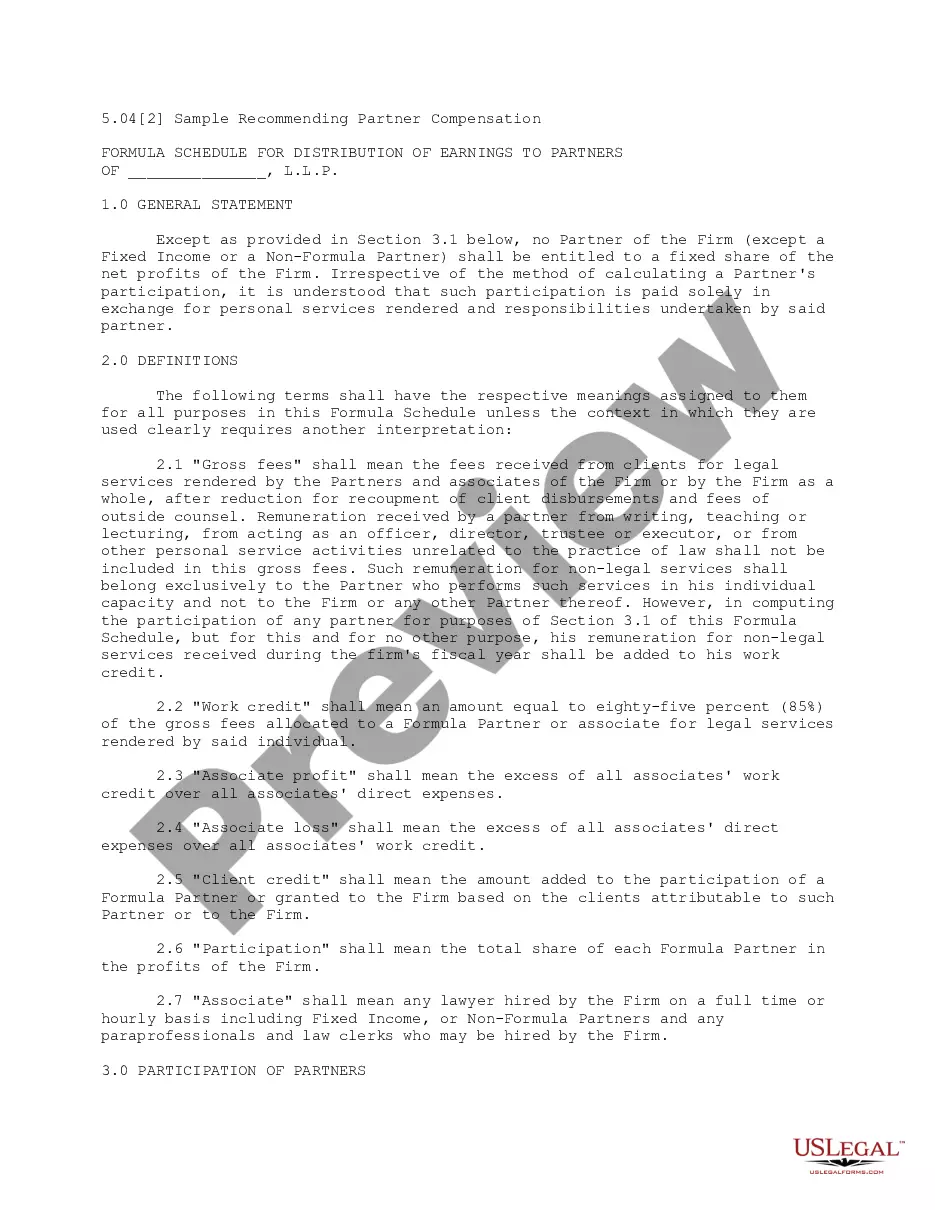
This Agreement with New Partner for Compensation Based on Generating New Business is a legal document that outlines the terms of compensation for a new partner in a law firm. It specifies how the partner will be compensated based on the new business they generate while also detailing additional provisions like office support and insurance benefits. This form is crucial for formalizing the partnership arrangement and ensuring clarity on compensation structures that differ from typical salary-based models.
What’s included in this form
- Confirmation of the partnership start date.
- Description of base salary and additional compensation via percentage of fees generated.
- Provisions for office space and secretarial assistance.
- Details on insurance coverage including medical and malpractice insurance.
- Terms regarding compensation in the event of retirement, disability, or death.
- Indemnification clauses protecting the firm from past claims.




When to use this document
This form is typically used when a law firm is bringing on a new partner whose compensation will be largely contingent on their ability to generate new clients. It helps clarify financial arrangements and expectations, ensuring both the partner and the firm have a mutual understanding of their professional relationship. This agreement is essential especially in partnerships based on performance and contribution to business growth.
Who needs this form
This agreement is suitable for:
- Law firms looking to establish clear compensation terms with new partners.
- New partners in law firms who will be compensated based on their individual business generation.
- Legal professionals transitioning to a partnership role requiring defined financial arrangements.
How to prepare this document
- Identify the parties involved in the agreement, including the law firm and the new partner.
- Specify the effective date of the partnership.
- Fill in the base salary and the percentage of generated fees the partner will receive.
- Select the office space and detail any secretarial assistance provisions.
- Complete the insurance coverage details and indemnification requirements.
- Provide the expiration date of the agreement and any terms related to termination.
Does this document require notarization?
This form does not typically require notarization unless specified by local law. However, having a notarized document can provide additional legal assurance and validate the agreement in case of disputes. Ensure to check state-specific requirements regarding notarization for legal agreements.
Get your form ready online
Our built-in tools help you complete, sign, share, and store your documents in one place.
Make edits, fill in missing information, and update formatting in US Legal Forms—just like you would in MS Word.
Download a copy, print it, send it by email, or mail it via USPS—whatever works best for your next step.
Sign and collect signatures with our SignNow integration. Send to multiple recipients, set reminders, and more. Go Premium to unlock E-Sign.
If this form requires notarization, complete it online through a secure video call—no need to meet a notary in person or wait for an appointment.
We protect your documents and personal data by following strict security and privacy standards.

Make edits, fill in missing information, and update formatting in US Legal Forms—just like you would in MS Word.

Download a copy, print it, send it by email, or mail it via USPS—whatever works best for your next step.

Sign and collect signatures with our SignNow integration. Send to multiple recipients, set reminders, and more. Go Premium to unlock E-Sign.

If this form requires notarization, complete it online through a secure video call—no need to meet a notary in person or wait for an appointment.

We protect your documents and personal data by following strict security and privacy standards.
Avoid these common issues
- Failing to specify the percentage rate of fees generated, leading to ambiguity.
- Neglecting to enter the effective date or termination date of the agreement.
- Omitting details about insurance provisions and secretarial support.
- Not discussing and clarifying expectations with all parties prior to signing.
Advantages of online completion
- Convenient access to downloadable templates that can be customized for specific needs.
- Easy editability to adjust terms as necessary.
- Quick completion process without the need for in-person visits to legal offices.
- Reliability from professionally drafted forms that comply with standard legal requirements.
- The agreement created through this form is legally binding if completed correctly.
- It is essential for parties to review and understand all terms before signing.
- This form may be subject to state-specific regulations; ensure compliance based on location.
Looking for another form?

Form popularity
FAQ
Name of your partnership. Contributions to the partnership and percentage of ownership. Division of profits, losses and draws. Partners' authority. Withdrawal or death of a partner.
Divide the total number of shares among the partners based on each owner's percentage of ownership. Draw up an agreement containing all details of the business arrangement including each person's percentage of ownership and number of shares.
Share the same values. Choose a partner with complementary skills. Have a track record together. Clearly define each partner's role and responsibilities. Select the right business structure. Put it in writing. Be honest with each other.
Name of your partnership. Contributions to the partnership and percentage of ownership. Division of profits, losses and draws. Partners' authority. Withdrawal or death of a partner.
Ask yourself if your potential new partner shares your vision. Conduct a SWOT on them and yourself. Address what your exit strategy will be in the partnership agreement. Decide between offering equity versus non-equity distribution.
There's no right or wrong way to split partnership profits, only what works for your business. You can decide to pay each partner a base salary and then split any remaining profits equally, or assign a percentage based on the time and resources each person contributes to the company.
General partnership A general partnership is the most basic form of partnership. It does not require forming a business entity with the state. In most cases, partners form their business by signing a partnership agreement.For example, say a general partnership has three partners.
Obtain a federal employer identification number. A new partnership must obtain a federal employer identification number (EIN). Obtain licenses and permits. Choose a location. Obtain insurance.
Ask yourself if your potential new partner shares your vision. Conduct a SWOT on them and yourself. Address what your exit strategy will be in the partnership agreement. Decide between offering equity versus non-equity distribution.